Tag Archives: Abbie’s column

Abbie’s newspaper columns

There are no shortcuts when it comes to notable trees in the landscape

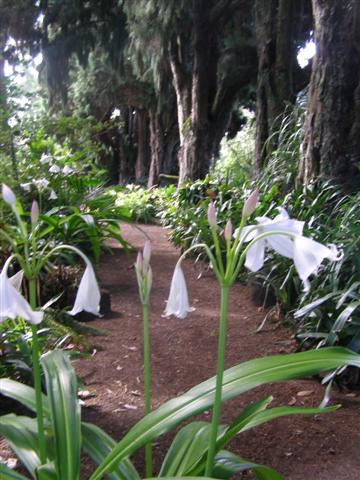
A great grandfather's legacy - the canopy of rimu trees planted in 1880 as a shelter belt.

A great grandfather's legacy - the canopy of rimu trees planted in 1880 as a shelter belt.

New Zealand is a windy country. It seems self evident but it wasn’t until I started travelling overseas that I realised that the wind we have learned to live with here is not the experience of many. But you just have to look at a map and see our long thin islands surrounded by vast bodies of ocean and it is hardly a surprise that we have on shore winds, off shore winds, winds from the south, the north, the east and the west. It is the norm and consequently shelter belts in rural areas are also part of our landscape. Australians have commented to me about the predominance of clipped hedging in our garden landscape too and a lot of that has to do with minimising wind.

Many readers will be aware that hedges and plants are better at dissipating the blast of wind than a solid barrier. Walls and fences can funnel the wind up and over, protecting only the area in the immediate lea of the barrier because the air then flows down again. Even then, you are only protecting for the height of the wall so any time a plant gets its head above, it catches the full blast.

But it is not hedging for urban gardens that I have been thinking about, rather the benefits of a bit of creative thinking and plantsmanship when it comes to utility shelter belts. Here we benefit greatly from the vision of Mark’s great grandfather when he settled here 130 years ago. Presumably Tikorangi had already been cleared of most of its native tawa forest cover because the first thing Thomas Jury did was to get in and plant some shelter from the prevailing winds. Those trees give us our stately garden avenues today and we have learned much from looking at them. The more spectacular is the rimu avenue, often likened by visitors to the effect of a vaulted cathedral ceiling. Now those trees give us an environment which is one of the most special areas of our garden – and as it has taken well over a century to reach this stature, it is not easily replicated.

Our other avenue comprises mere pine trees, but pines of huge grandaddy stature – towering over 40 metres high and a mixed blessing. At ground level they give us wonderful gnarled old trunks, again in rows because of course they started life as a shelter belt. Above is a little more problematic with falling pine cones and a few swinging branches but nobody has been injured so far. Both avenues continue to perform their initial function – they break the wind and shelter the garden.

How many of today’s shelter belts will still be around in another century? And how many are planted in trees with the potential to add significant impact to the landscape? Leightons Green, phebalium, nasty yellow conifers or pittosporumns … I don’t think so.

After 130 years, our Pinus muricata are somewhat more compact than the P. radiata windbreak trees of the same vintage.

After 130 years, our Pinus muricata are somewhat more compact than the P. radiata windbreak trees of the same vintage.

It is of course Arbor Day tomorrow and that is a good time to make some shelter belt resolutions. These wind breaks do not have to be 100% cheap, utility and uniform. Dropping it to 90% cheap, utility and uniform is fine and there is the opportunity to use these shorter term plants of little or no aesthetic value to act as nurse trees for the long term landscape trees. For who will plant the rimu, totara, araucaria (Norfolk Island pines, monkey puzzle and the like, along with our own kauri), picea, abies, tawa, beech, oaks and other splendid trees with the potential for stature and longevity? As the size of town sections grows ever smaller, the need to continue planting potentially large trees in positions where they have the opportunity to reach maturity becomes correspondingly more important. Owners of lifestyle blocks have a chance to make a significant long term contribution and leave a worthwhile legacy if they just plant some decent trees. It is all very well thinking farmers should do it. Some do, but you can’t just plant trees in paddocks which are grazed. Trees have to be fenced off and that is very expensive and fiddly on a large scale. By their very nature, shelter belts are double fenced and planting is the easy part.

When it came to our own roadside shelter belts some fifteen years ago, Mark went for the mixed and layered approach. Quick, cheap cover came from expendable alders. Long term landscape trees are mostly kauri, rimu and totara, planted perhaps for our grandchildren and great grandchildren. Then, because we don’t have to buy the plants, seasonal impact has been added with magnolias – both showy deciduous types and larger growing evergreen michelias. The final layer is the roadside camellias – larger growing varieties surplus to garden requirements. They are a bit of a seasonal statement, some of our shelter belts, but also practical and planted with an eye to the long term future.

Many years ago, I wrote a column advocating that every person should plant at least one good, long term, landscape tree in a position where it has the chance to reach maturity. I recall two responses. The first was: “What, only one?” Fortunately a few will plant many but that only compensates for some of those people who will never, ever plant a decent tree in their entire lifetime. The second person castigated me for being too honest about how large a large tree will eventually grow. “We will never sell any if people know how big they can get,” she said.

In my books, landscape trees are large, handsome and long lived. These are not to be confused with pretty but low-grade, short term, quick impact trees favoured in most home gardens – the Albizia julibrissin, flowering cherries, robinias and their ilk. As a general rule, fruit trees will never make a landscape tree either. By definition, any plant with the telltale words compact or dwarf in the description will lack stature.

Our country is still somewhat raw and utility in our approach to trees. To many farmers, they are a waste of valuable grazing space and they get in the way of machinery in this heady world of high production but green desert farming. To many town dwellers, they block views and are messy. In a country with a tendency to cold houses, the shadow they cast is another black mark. Any tree of stature is measured in terms of timber potential, not landscape value. Compare that to the pride taken in the UK with their champion trees – those specimens judged to be the largest of their type in the country and awarded accordingly and in Europe where trees of ancient pedigree are venerated. I have seen the plane tree, now some 2500 years and definitely ailing, beneath which Hippocrates apparently sat to write the Hippocratic Oath. We have a long way to go yet here. Arbor Day would be a good place to start.
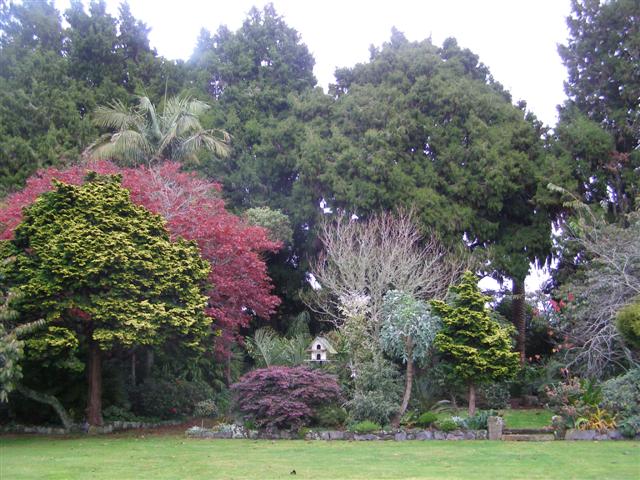
Rimu trees from 1880 in the background, mixed plantings from 1950 to now in the middle ground
Rimu trees from 1880 in the background, mixed plantings from 1950 to now in the middle ground

The perils of the monochromatic colour scheme in gardening

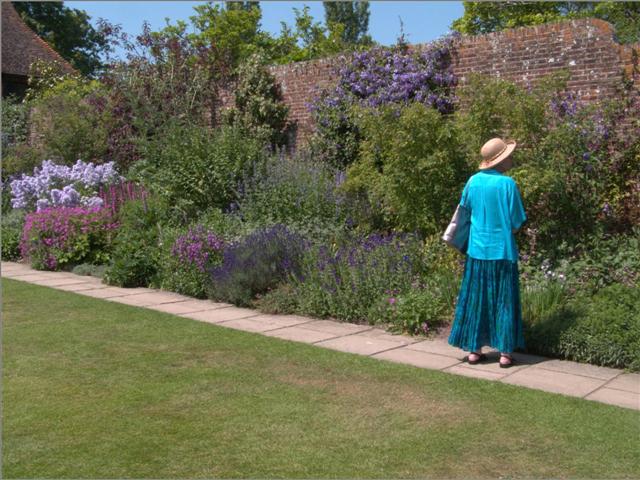
A random stranger in blue beside the blue and purple border at Sissinghurst

Back in the days when I first started writing this column and we were in the grip of seven day a week retail and mailorder plant supply, I used to despair at the numbers of well-heeled women in search of plants for their white garden. Mostly from Remmers, dear, and most had been to the ultimate white garden – designed and planted by Vita Sackville West at Sissinghurst in England. It was seen as the benchmark for restrained style and class and all wanted to emulate that standard. So all plants had to have white flowers and preferably be scented. Yellow stamens were permitted and cream was allowed but no other colour in the flowers. Fading out to white fell short and white flushed pink flowers were usually rejected as impure.

There were rules for foliage too. Green was fine, silver foliage even better. Variegations were acceptable as long as they were white and green with no yellow or red.

Apparently the secret of the white garden is revealed at night when all those pure flowers light up under moonlight to glow with ethereal beauty. Experienced gardeners realise instantly that this means it needs to be a summer garden because who wants to go out in winter or early spring to see the glowing white rhododendrons and camellias but not many white garden devotees of the early nineties were experienced. I recall reading a critique at the time that far too many of the white gardens were thrown together solely on the basis of colour. As long as it was white, it could be included. Gardens were criticised for the lack of thought given to planting combinations and inappropriate conditions for many of the plant subjects.

When we finally visited Sissinghurst, I was excited at the prospect of seeing the ultimate white garden put together with skill – where plant composition, shape and foliage combinations rule supreme, without the distraction of colours beyond white and green. Alas I was underwhelmed, disappointed. It rather looked to me like plants selected solely on flower and foliage colour bunged in together. So much for setting the standard. It may well have been different in the original days of Vita Sackville-West but in 2009 it didn’t quite cut the mustard.

Colour and flowers hide a multitude of sins. The purple border at Sissinghurst was far more successful on the day we were there and that in part could be attributed to the huge range of tones in blues and purples. There is not a lot of variation of hues of white and cream so it is harder to get visual oomph.

I suspect that monochromatic garden schemes are often the refuge of less experienced gardeners but in fact they require considerable knowledge and skill to get them looking good. They are not actually monochromatic because gardens have green as a base colour but that is generally treated as colour neutral. If you garden only with foliage or with foliage and only one additional colour, then form and texture are your tools and the plants you chose to complement each other and to fill the picture become critical. At its best, it is a restrained and disciplined approach to gardening which can be very restful to the eye. More often, alas, it is a hodgepodge – sometimes a pretentious hodgepodge – or downright dull.

The Tui NZ Fruit Garden – dear oh dear.

The latest update on this article is The Sequel, a second coming for Tui NZ Fruit Garden

Sally Cameron is attempting to punch well above her weight in her book The NZ Fruit Garden. Her main experience seems to be in food writing and cooking and she runs a catering company in Auckland. Her gardening credentials are very limited and it shows in this Penguin publication sponsored by the Tui garden products company.

There is nothing wrong with using a researcher to pull together a comprehensive book as long as the editor/publisher ring-fences her with an expert panel to review the information. There is no evidence that this was done. Alas, being a keen home gardener on the North Shore is not sufficient. There are too many errors and in places the information is simply not adequate. Even worse, there are sufficient instances of unacknowledged quotes to make me breathe the dreaded word: plagiarism.

All those multitudes of fruit trees and plants sold in the past two years need attention. Clearly the time is right for a manual. And a manual is what this book is. To be fair, it is a well-presented book designed to be used often – good-quality paper, opens flat and even has a thoughtful heavy-duty plastic cover. The majority of the book is an alphabetical listing of 58 fruits and nuts, each giving some information on the origin, recommended varieties and the where, when and how of growing them. In addition to that, the first 50 or so pages give a great deal of generic information on propagation, planting and care. At the end of the book, there is a section on pests and diseases and a monthly diary for maintenance and harvest tasks. From almonds and apples to walnuts, most of the crops you will ever want to try growing are included – along with quite a few that you cannot grow, though you are not likely to learn that from this book. Tui’s sponsorship is generally unobtrusive. Superficially, the book looks really helpful and the design is good. Sadly, looks can deceive.

I went to double-check some of the information on apricots, particularly the claim that ‘‘many people think they are subtropical’’. In New Zealand, we all know the best apricots come from Central Otago and nobody ever claims that area to be subtropical. According to Cameron, apricot trees are considered subtropical, which means they can tolerate temperatures from 0 degrees Celsius to over 35 degrees Celsius and still remain healthy. Puhlease. That is not a definition of a subtropical plant. Elsewhere in the book, she recommends them as a suitable crop for Northland. But worse was when I found the Wikipedia entry and thought it seemed familiar. It was. I had just read it in the book.

Cameron: There is an old adage that an apricot tree will not grow far from the mother tree.
Wikipedia: There is an old adage that an apricot tree will not grow far from the mother tree.
Cameron: Although often regarded as a subtropical fruit, the apricot is native to a continental climate region with cold winters.
Wikipedia: Although often thought of as a ‘‘subtropical’’ fruit, this is actually false – the apricot is native to a continental climate region with cold winters

The guava entry is a worry. Actually, it’s even more than a worry when I compared it to easily tracked online sources, to which it owes a rather large debt. Cameron: The guava succumbs to frost in any area – it is a tropical fruit after all. Even if summers are too cool, the tree will die back.

There’s a slight problem here. She is writing about the large growing tropical guava, Psidium guajava, which you may have tried eating in Asia (I found it disappointing). But what we can and do grow here – and which has similar hardiness to a lemon – is the strawberry guava, Psidium littorale. The recommended varieties and some of the photos in the Cameron book are of P. littorale, but they are included under the tropical guajava and there is no indication that Cameron knows the difference. In our 30 years of experience with growing littorale, it does not suffer from any of the hideous pests and diseases she lists at length. Added to that is the propagation information, which is bizarre. Why even mention air-layering when it is not recommended and is so rarely done in this country as to be virtually unknown? The reason: because it appears to be cut and pasted from an easily traced Californian website that was all about guajava. Had Cameron known her material, she would have explained that littorale is commonly raised from seed in this country.

Cranberries: what is grown widely and successfully in New Zealand and indeed is now branded the New Zealand cranberry is, in fact, Myrtus ugni. Most New Zealanders wouldn’t even know that it is not the true cranberry and that the fruit used for Ocean Spray cranberry juice and dried or frozen cranberries is, in fact, a vaccinium.We have never heard of proper cranberries being grown in this country, though presumably you could grow them in Southland, because they need cold temperatures and may be happy in the southern peat bogs. Presumably the author didn’t know about cranberries, because the book doesn’t even mention Myrtus ugni, which you can buy from pretty well every garden centre here, but instead is all about vacciniums. That is the problem with using overseas references without local knowledge. Even then the information given is contradictory. In one sentence, vaccinium is recommended for growing around ponds and other soggy areas. In another, it is recommended that you plant it in the coldest, wettest spot in your garden, but adds that the ground should never be waterlogged. Has the author never heard of the cranberry bogs in North America and seen the deliberate flooding of them? And honestly, what rush of creative frivolity led to the recommendation that they are suitable for growing in hanging baskets?

Gooseberries: according to this book, gooseberries need 800 to 1500 hours of chilling in order to fruit well. Really? What constitutes chilling? Is it temperatures below 5 degrees Celsius – 3 degrees, maybe – or below freezing? Nowhere is that information given, which means that it is very hard to start counting your hours of chill. And the huge range is questionable. Does the author mean that gooseberries require a minimum of 800 hours of winter chill below a certain temperature, but if your hours are much more than 1500 (which presumably takes you to alpine areas in this country), the growing season may be too short?

What the New Zealand reader really needs to know is that because gooseberries need a cold winter to fruit well, you are probably wasting your time unless you live in the centre of the North Island or from Christchurch southward. Measuring winter temperatures in hours of chilling is an American custom not usually seen in this country.

Avocados: the advice is that avocados do best inland away from ocean winds. This could be interpreted as suggesting that they will grow more successfully in Inglewood than Waitara, but we can tell you that in this part of the country, you can only grow avocados successfully in mild coastal areas. In fact, even in warmer areas of New Zealand, you can get frosts if you’re more than 5 kilometres inland. So in this country, avocados have to be grown in coastal areas. Again, I tracked the source of Cameron’s information to a Californian website.

The entry on lychees is lifted pretty much word for word from a copyrighted website belonging to the California Rare Fruit Growers (I started with Wikipedia and found it one click through.)

Under quinces, one of the photographs labelled quince blossom is in fact chaenomeles blossom. And while one of the photos of the fruit is indeed a quince, the other one is chaenomeles. And the photo by the quince header is, we suspect a crabapple. It is certainly not a quince. One is left with the uncomfortable suspicion that nobody involved with this book realised that quinces (cydonia) are an entirely different plant to japonica apples (chaenomeles).

I could keep going, listing the glaring deficiencies in this book. It is riddled with them. You can spend $45 on it if you wish and I am sure it will receive glowing reviews in other media because, superficially, it looks good. It is a book that was probably rushed out to meet a market demand and escaped anything but the most perfunctory of editing. It lacks rigour in every aspect. Near enough is close enough and it all looks just lovely, darling.

I don’t wish to be accused of going on a witch-hunt, but I turned back to Cameron’s earlier volume, The NZ Vegetable Garden, also published by Penguin and sponsored by Tui. I actually gave it a good review in this publication. I randomly inspected the garlic entry and went to check a rather odd piece of information. It took me all of two minutes to find a copyrighted website, http://www.garliccentral.com/varieties.html, which contributed at least some of the exact wording for page 116 in that book.

It should be an embarrassment to a credible publishing house like Penguin, but presumably nobody bothered to check for relevance, accuracy, or plagiarism. Looks are all in this current world of publishing and cut and paste has a lot to answer for.

POSTSCRIPT: My, but Penguin acted quickly to recall the book from sale. Given an advance copy of this column, they issued a recall within 24 hours.

The myth of the mixed border

A typical type of mixed border with boundary hedge behind

A typical type of mixed border with boundary hedge behind

Just at the moment I am somewhat fed up with mixed borders, or mixed beds for that matter. I am of the opinion that it is a myth that the mixed border is easier to maintain than the herbaceous border. It is easier to leave alone, but not to maintain.

The mixed border is a term coined to describe plantings which are typically a blend of small shrubs, perennials and annuals all frothing together to create a picture of flowers and foliage. It is pretty much how most people garden, certainly in freshly planted situations. The woody shrubs give year round structure often with the bonus of seasonal flowering while the clumping perennials and showy annuals fill in the spaces between and give a well furnished look, usually with the attribute of prolonged flowering. The calibre of the plant combinations speaks volumes about the skill and experience of the gardener.

This is also the face of the modern rose garden. Gone are the designated rose beds where there were only roses planted in well cultivated but bare soil with plenty of air movement – utility, lacking in aesthetics but a practical approach to growing these thorny, disease prone plants with fantastic flowers. Nowadays we generally integrate roses into mixed plantings which have a fair debt in history to the chocolate box English cottage garden. Most rose plants are not attractive in their own right so the mixed plantings mask the ugly bushes and, commonly, the diseased foliage while allowing the flowers to star.

So you plant a mixed border or bed and it looks perhaps a little new and bare in its first year, good in its second year, possibly even fantastic in its third year and then, imperceptibly, season by season, it changes over the subsequent years to the point it all becomes a little blah. The woody plants grow and start to dominate while at the lower level, it is survival of the fittest amongst the perennials. Anything rare or choice is by definition not a plant thug so will give up the fight and disappear quickly. Besides, the establishment of the woody plants is likely to have changed the micro climate and that will be compounded exponentially if you also enclosed your bed or border in a nice little hedge. Soon the well cultivated, freshly dug soil and open, airy, sunny conditions that your perennials loved has become compacted and congested with competing root masses from the woody plants, not to mention growing areas of shade.

This is the voice of experience here. I have been micro gardening the area we loosely refer to as the rose garden. By micro gardening, I mean taking apart as much as I can of the whole area and reassessing the role of every single plant. Because we also garden extensively with bulbs, there are limited times of the year when we can take apart a garden to recultivate and replant in this manner. As well as the roses, I had planted dwarf camellias for winter interest and all year round form and the site demanded a carpet of low growing perennials and annuals below. Said carpet had been looking a little moth eaten for some time – too many holes I had attempted to plug (or darn). In fact it all looked rather tired and messy. Successive applications of mulch had raised the soil levels above the surrounding edgings, compounded by the escalating invasion of masses of fine roots from an avenue of huge trees some distance away.

I am so over roses. Every time I turn around or move, I seem to get snagged on their thorns. There are times this week when I have contemplated pulling out and burning all but the standard roses. It is only the memory of their stunning November display that has given them a stay of execution. That, and the feeling that a complete garden includes at least some roses. I certainly will not be wanting to use roses extensively in any future mixed plantings.

Painful irritant though the roses are, they are not the major problem of the mixed border. It is what goes on below the ground that is the inherent structural weakness of the concept. We only view what happens above the ground but that is entirely contingent on the roots below. And the problem is that perennials and annuals are not particularly compatible with many woody plants. The latter determinedly extend their roots and prefer to be left undisturbed. In fact they can get downright touchy if you do too much poking around in their root zone. Whereas clumping plants like perennials and indeed all annuals much prefer extremely well cultivated, friable soil along frequent lifting and dividing of the former. Long term they are mutually exclusive plant families and it is the permanent roots of the woody plants which will dominate. In fact, the mixed border concept is a garden solution for the short to mid term only. In the long term, the bottom story planting of perennials goes into decline, only the tough thugs survive and it gets increasingly difficult to maintain suitable conditions even for them.

The classic herbaceous border is seen as extremely labour intensive and accordingly admired but shunned by most gardeners in this day and age when we lack legions of loyal, hardworking, devoted minions to do our bidding in the garden. Herbaceous plants are those leafy, clumping plants without woody stems and trunks and they tend to be seasonal. In fact many, such as hostas and asters, go dormant and disappear over winter. As I micro garden our mixed plantings in the rose garden area, I am thinking to myself that the digging, dividing and replanting that is the key to a good herbaceous border is not necessarily to be feared and it would be a great deal easier if there were no woody plants (and definitely no roses) in amongst them. No bulbs either. There are other places in the garden for bulbs but they don’t exist that happily in areas where you are forever plunging the spade into the soil to keep it friable and to lift plants for dividing. I have stumbled on rather too many by severing them in half.

Using hedges as a backdrop or as an edging is also problematic. At Great Dixter in the south east of England, Christopher Lloyd paid tribute to his father’s foresight in establishing a solid barrier below ground at the time when he planted the yews which are now major topiary features and hedging in that garden. It is more likely that Lloyd Senior had a man in to do it, but such long term vision stops the problem of competing roots. This sort of below ground barrier is recommended when planting invasive bamboos but I have not seen it done as a matter of course in this country with hedges. It makes sense if you garden with a long term view in mind even if it requires considerable effort in the establishment stages. You need to make sure that the barrier is far enough away to allow the hedge roots sufficient space or you will end up with poor, stunted and yellowed specimens.

If you want to reduce the amount of maintenance your garden requires to keep it looking good, turn to the shrubbery concept in preference to the mixed border and reconsider the role played by dinky little edging hedges beloved by gardeners throughout the country. What these do is give a sharp line, a definition which can also be achieved by the use of pavers, hard edges or even a low wall. None of these alternatives will cause problems with their roots, require clipping or suffer from the dreaded buxus blight.

A tale of the future of Pukeiti Rhododendron Trust and ratepayer money.

“So what do you think about Taranaki Regional Council taking over Pukeiti?” is a question we have been asked by a number of people recently. Speaking initially out of complete self interest, we have to say that we think it is a good thing. We are deeply involved with the open garden sector, particularly our annual festival, because that makes it worthwhile for us to maintain our own garden to opening standard. For Taranaki to retain a pre-eminent position in the open garden scene, we need a solid core of professional gardens with a secure future and the public garden sector has a big role to play in that. We have a proud tradition here of splendid private gardens but over the past two decades we have seen quite a few come and go. Ageing owners, sales of properties, ill health and, alas, deaths can see a first rate private garden closed overnight. I could reel off a list of a dozen excellent gardens which no longer open or have simply gone. So the public gardens give a level of stability for the rest of us.

That is not to say that we don’t have reservations about ratepayers picking up the tab for Pukeiti. We certainly don’t blame the trustees of that garden for trying to sell their dream to Regional Council to ensure preservation in one form or another, even if Mark has been quipping that he would like to place a death notice for demise of the original vision of founder Douglas Cook and his colleagues. There always have been some issues with Pukeiti, particularly a degree of cargo cult mentality (build the facilities and the crowds will come) and a level of grandiose vision which was overly optimistic. The remarkable achievement in establishing an international reputation rests on a few key individuals over time backed up by great support from volunteers. Pukeiti was particularly lucky to attract and retain the services of its now retired director, Graham Smith, who more than anyone fronted at an international level and established the credentials of the rhododendron collection here. But times change and an organisation which always had trouble living within its means, failed entirely to keep a lid on the budget to the point where its very existence is threatened. So what to do? Transfer it to the ratepayer.

I imagine that every single elected councillor and senior officer of the three district councils in our area are heaving a collective sigh of relief that the problem that is Pukeiti has landed on Regional Council, not at district council level. But they are also probably wondering just how Regional Council can ease this whole situation in under the ratepayer radar. When every dollar the district councils spend is scrutinised closely, even to the provision of public toilets, somehow the TRC can get away with massive new spending and little is said.

TRC claim that the decision to take over the management and ownership of Pukeiti is currently out for consultation but I have yet to hear from anyone who is being consulted. And as the latest Pukeiti newsletter tells us that the CEO has been made redundant and gone already, it all looks like a done deal to us. Rather it appears as if the lid is being kept tightly pressed down to discourage any public debate and consultation is probably limited to those who are going to give the right answers. As I say, a done deal.

It is a slight mystery to us as to why the TRC are so hellbent on owning and running gardens. District Councils run parks (Pukekura Park in New Plymouth and Stratford and Hawera have their own established city parks) but TRC has taken on extremely labour intensive gardens, by no means in the best locations or with the most friendly terrain and with no record of being financially viable. What is more, TRC policy is that these gardens have free entry, not even raising money through gate charges or added value experiences. So moving against the national tide of change where there is a trend to more and more user-pays, TRC is determined to provide these facilities with free entry. Except that there is no such thing as free. It is merely a case of transferring who pays and spreading it across the total ratepayer base. This is interesting when the target visitors go well beyond locals to include both international and domestic tourists. Why would you Qualmark a garden unless you wanted to attract tourists?

The TRC has gone beyond providing quality gardens. The add-on now to justify the spending is swelling the numbers tracked in the garden gates with free entertainment. Except it is not free. It is ratepayer funded. In saying that, I do not denigrate the efforts by the TRC staff and the regional gardens’ manager who are working hard to attract the punters and clearly there is some considerable success in the numbers game. All credit to them for their gardening workshops and tours. I question a little how farmers markets fit in with the vision of Bernie and Rose Hollard which is meant to drive the ethos of Hollard Gardens. But more incongruous is the cheap cuts cooking workshop at Tupare (Relive the Splendour, I think was how the vision of Tupare was encapsulated by TRC). I am not sure that the style and panache of Sir Russell and Lady Matthews sits easily alongside cheap meat cuts. But all is fair when you measure gardens’ success by numbers through the gate. Except that people who go to farmers markets or to cooking demonstrations are not bona fide garden visitors. It is one thing to count people who go to garden workshops run by the garden staff, it is quite another to count people who go to free entertainment or unrelated activities which could just as well be hosted in any number of other more convenient locations.

Some might be wondering what lies in store for Pukeiti. What hoops will the garden managers be expected to leap through in order to attract bigger visitor numbers to that somewhat out of the way location with its relatively inhospitable climate? I for one don’t envy them though I would suggest that if they could just negotiate with John Rae to get Americana based at Pukeiti next time, they might reach their targets without having to stage jelly wrestling, big time wrestling or other crowd pleasers.

Personally, we don’t mind paying a little extra in our rates to see these gardens managed well but we would like to see some wider debate about TRC’s activities. The justification of preserving our heritage has a whiff of empire building about it. Now that we have the gardens, are they going to be looking at other heritage places and activities. Chaddy’s Charters has a sense of heritage. When Chaddy wants to retire, will TRC take over the lifeboat and offer it free to all comers? If the Mokau cream boat run would just move to the south side of the river, would it be eligible as Taranaki heritage? Maybe we should just be grateful that it is too late for the regional ratepayers to pick up the tab for the Patea chimney preservation.