Truly, I have never given much thought to plectranthus. They are just one of those filler plants that can occupy a difficult waste space and put on a good show in flower but need a tight hand to control their spread. Not unlike abutilon and brugmansia, perhaps.
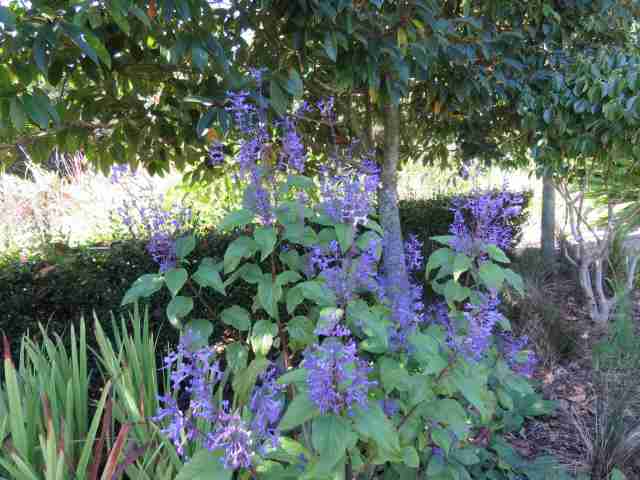
And then there is this one. I have no idea where it came from although I must have planted it in the borders. Maybe it was in an unlabelled pot in the old nursery and, as a juvenile plant, I mistook it for a salvia? That seems the most likely scenario. It is really pretty and, considering the family it comes from, well behaved. It is also a woody shrub.
Most plectranthus are herbaceous perennials that can spread far and wide. There are about 85 species, mostly from tropical and southern Africa and all in the sage family. Presumably frost controls their spread in colder climates but here it is human hands that keep them contained. Mark tells me there is a large patch in our stand of native bush on our property across the road that we need to eradicate. I don’t go over there much so I haven’t seen it but he described it as now taking about the space of our house beneath the stand of tawa trees. That is not the place for it; we can control it in a garden situation but we try and keep that bush restricted to natives, eliminating exotic interlopers.
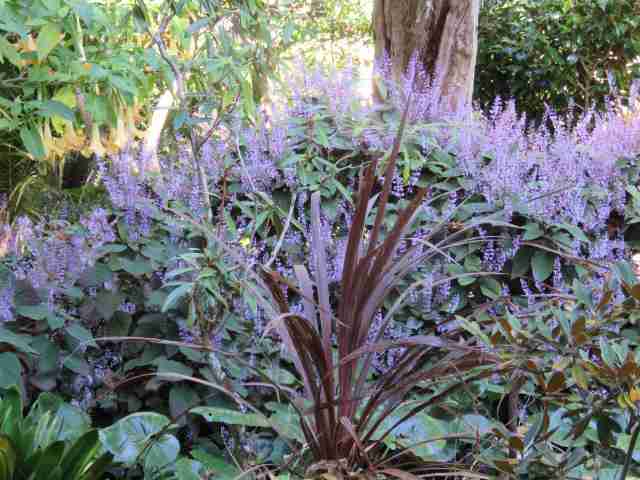
I had assumed that the plant in the borders must have crept in from another part of the garden so I set off to look at the others we have. Nope, it is different. It is a more intense colour and definitely woody as opposed to a spreading perennial. I see it has a layer on it so I will remove that and it should also propagate easily from cutting. I want more of it in the borders as a splash of autumn colour.
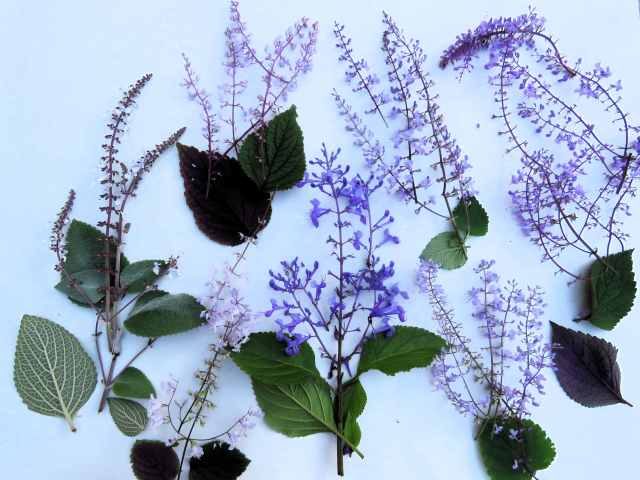
In looking up plectranthus, I see the silver one we have with pastel flowers and which we knew as Plectranthus argentatus is in fact an Australian native and is part of a whole group of plectranthus that have now been transferred to the coleus family, so it is now known as Coleus argentatus. It is always interesting to learn something new.
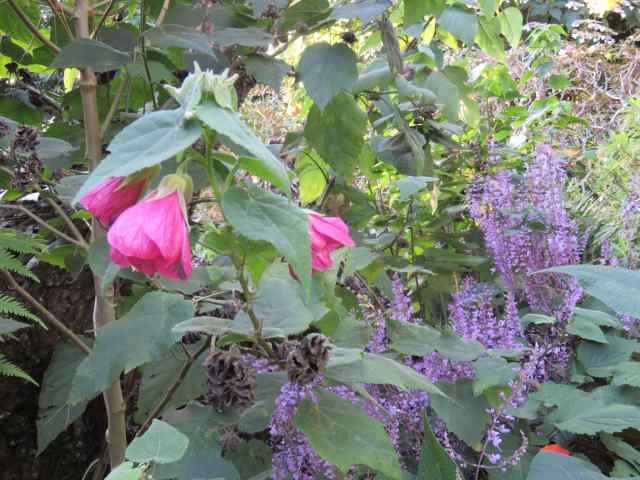
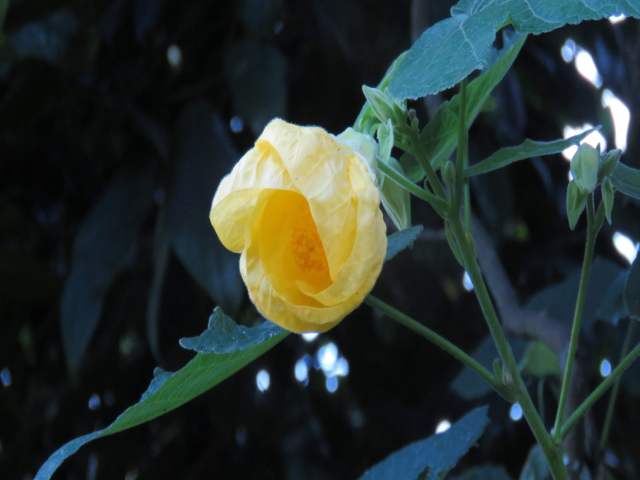
I mentioned abutilons and brugmansia as similar fillers, except they spread by seed. I can’t get excited about abutilons but they fill a space. They cross readily and I only want clean colours so I pull out any murky colour mixes, keeping only the good reds and pure yellows or oranges. I did see a beautiful, big, bushy one in an open garden last year that was laden with bell flowers in the prettiest shade of lilac. It was a showstopper but the owner, one of the best plantsmen in our area, told me it was also the most difficult abutilon he had ever come across to strike from cutting. It won’t grow true from seed, assuming it even sets seed.
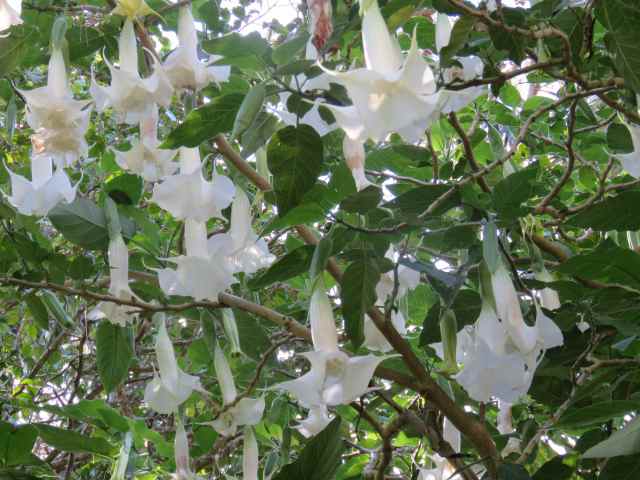
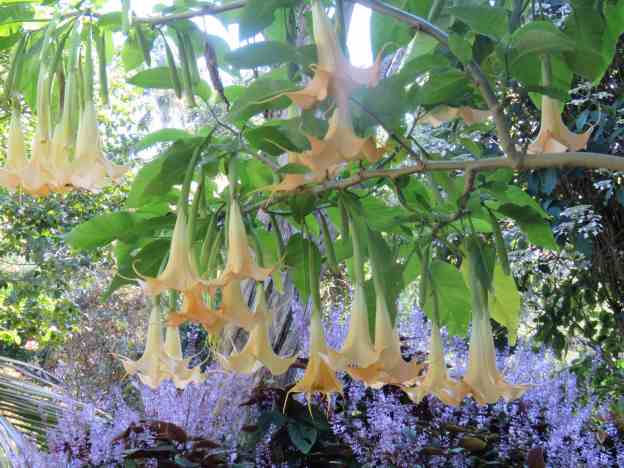
Brugmansias are also a great autumn feature. They are very brittle and can get extremely tall but the flowers are best observed from below or from some distance. The few we have are generally in shade so they stretch for the light rather than spreading sideways. They are not what one could call a tidy plant but at this time of the year, they can be striking.
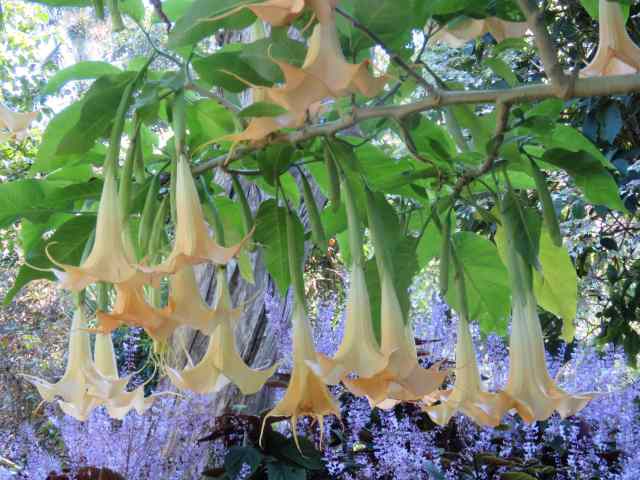
How do you tell a brugmansia, common name angel’s trumpets, from its close relative the datura, known as devil’s trumpets? Brugmansias have pendulous flowers that hang down while daturas face upwards or outwards. Both are highly poisonous but it seems only datura has psychoactive properties as well, known to kill suicidal youth who don’t factor in the toxicity in their search for a free hallucinogenic experience. Interestingly, brugmansias are now rated as extinct in the wild; it is only their use as a garden plant that has ensured their survival.
Some plants need a closer eye kept on them than others. If you have spreading plectranthus, never turn your back on it because, in our climate, it will get away and smother whatever it comes across.
 Tikorangi The Jury Garden