
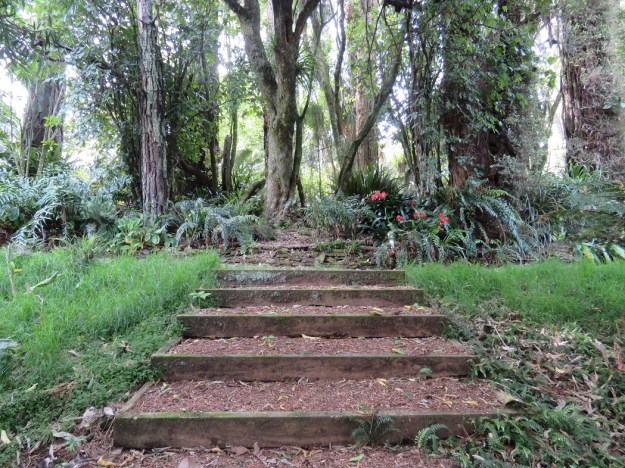
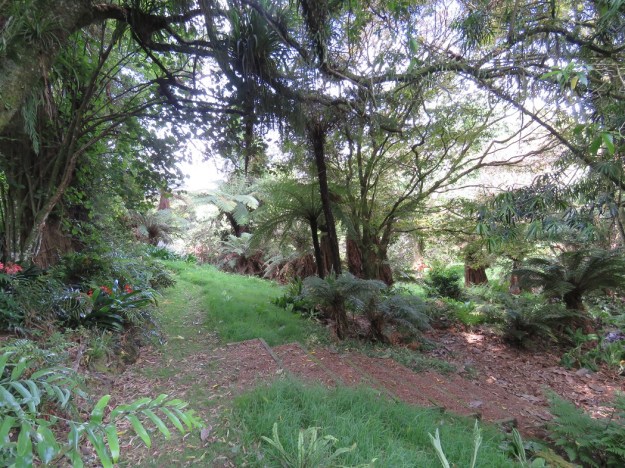
One of the access paths linking the park to the avenue gardens
When you garden on a town section, boundaries are usually clearly defined, most often by fences or hedges. Some lucky gardeners are in a situation where they can visually *borrow* a wider view of the neighbours or maybe some bush or landscape to draw the eye out from the rigidly confined boundary. More often, the situation imposes limitations that mean the garden has to be inward looking and confined to its allotted space. Some people like that sense of a contained space, accentuating it further with tall fences. Whether you see that as security and privacy or self-imprisonment depends on the individual.
It is different when you garden in the country and that clear definition of an end point is arbitrarily imposed on a larger landscape. Or not, as the case may be.
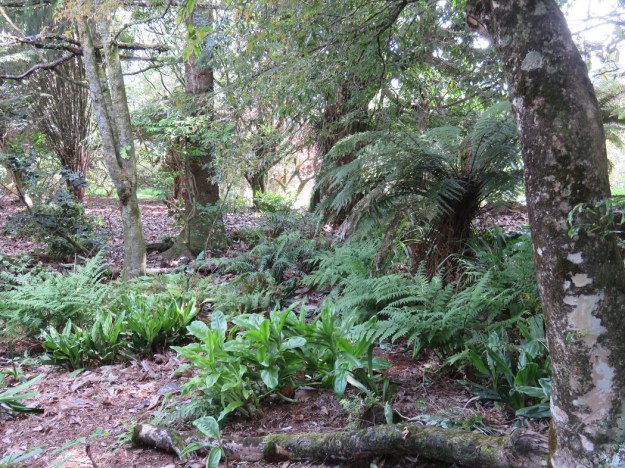
Scadoxus to the right, calanthe orchids to the left along with self-sown ferns and tree ferns – subtropical woodland, I guess
I had never really thought about what Mark was doing in one area where our avenue gardens meet the area we call the park. I had vaguely noticed that he was drifting down the hill with some plantings of pretty choice material like some of the interesting arisaemas, calanthe orchids and scadoxus, but in a casual, naturalistic manner. We were in that area together recently when he commented that he was attempting to blur the line between highly cultivated garden and wilder areas, to transition seamlessly. It was like a penny dropping for me. Of course that is what he was doing.
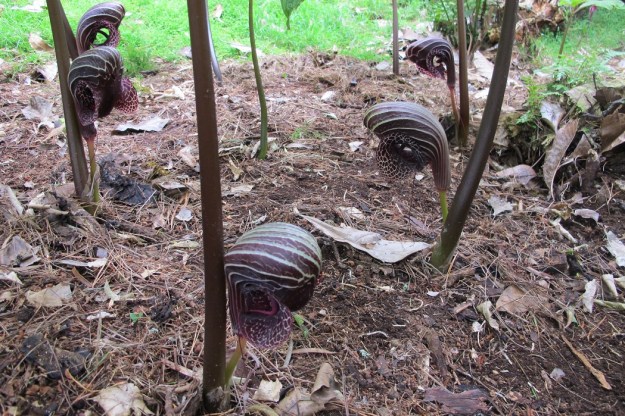
Arisaema dahaiense!
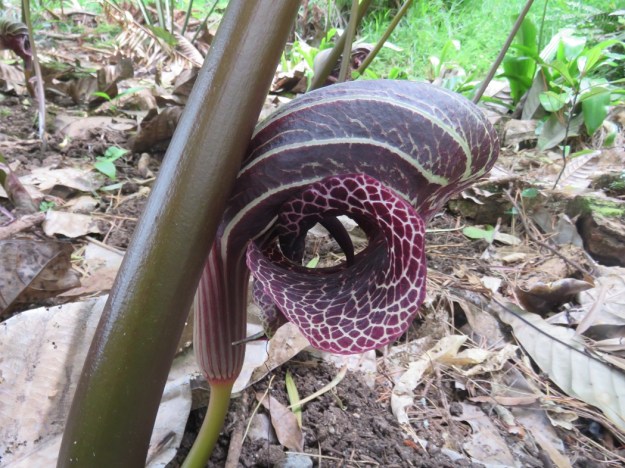
This inspired me to get into that area where I have never done anything before, bar the occasional quick tidy-up. It was a perfect place for a few clivia plants. I am trying to rehome the last of the clivias red, orange and yellow that had been potted up by the last of our nursery staff and that must have been back in 2011. They are amazingly resilient plants. Some were in very small planter bags and all that has happened in the intervening years is that the pots have been moved out of the former nursery area and beneath trees. They have not been fed, let alone nurtured and loved but still they are green (some more greenish than dark green), many are flowering and seeding. Enough is enough, I thought. These need to planted out.
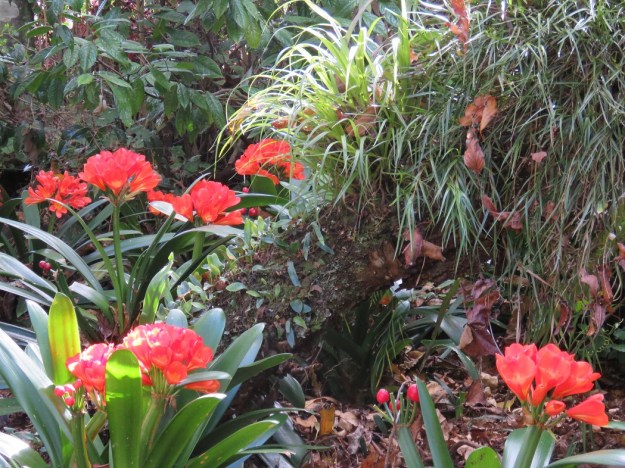
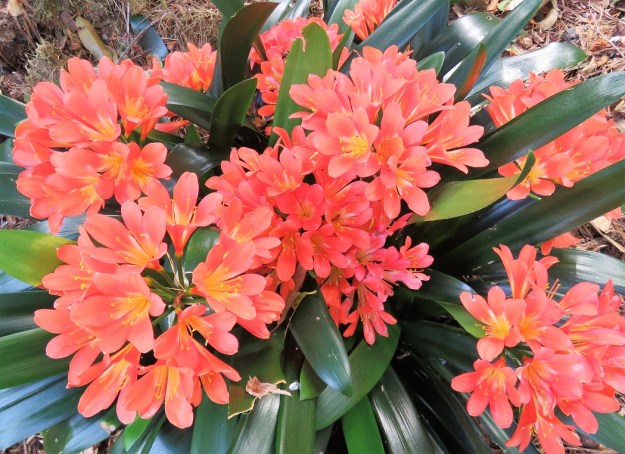 Having seen the occasional garden that suffers from the ABC syndrome (another bloody clivia, mass planted), I have been trying to drift them through the shaded areas, mostly areas that are loosely maintained at best. It takes longer to plan a drift than a mass planting and drifting a couple of hundred clivia plants without making them a mass takes a while.
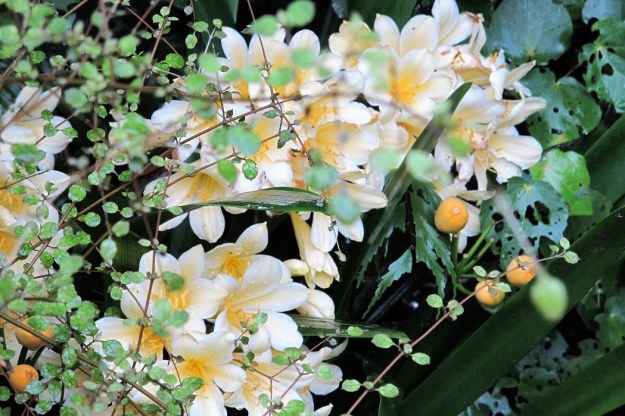
Yellow seeds from last year’s flowering, visible here, will flower yellow.
Not for us all the yellows in one area, oranges in another and reds elsewhere. There is nothing wrong with that. I have seen it done and it is what I describe as the ‘landscaper look’, usually done with plants that have been purchased and are identically matched, being the same clone. It is just not our style. We prefer a looser look, using seedling raised plants so there is subtle variation, the mix of colours being more suggestive of the gentle hand of Nature enabling plants to seed down in situ. Which they will do over time – we have clivia seedlings popping up around the garden but to leave it all to Nature will take longer than we have left. We are just hurrying the process along by a decade or two when we use established plants.
If you are going to raise your own seed, it pays to start off with the best parents. This means selecting the ones that flower well every year and have the best flower heads of the type you want. For showy garden plants, we want ones with fuller heads rather than too many with the hanging bells. The red clivia seed will eventually bloom orange and red; yellow clivias come from yellow seeds. True. I am not sure what colour seeds the peach ones have (we only have a few in the new peach shades) and we don’t have any of the green and white clivias in the garden yet.
When I think about it, blurring the lines are the tool we use to get to a seamless transition between different garden spaces. The soft transitions within the garden are all part of refining our thinking about how important it has become to us, personally, that we garden confidently with a strong sense of place, as referenced in this piece I wrote in March last year.
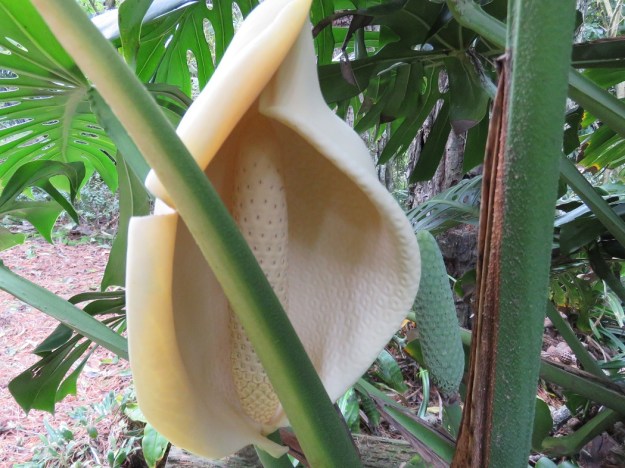
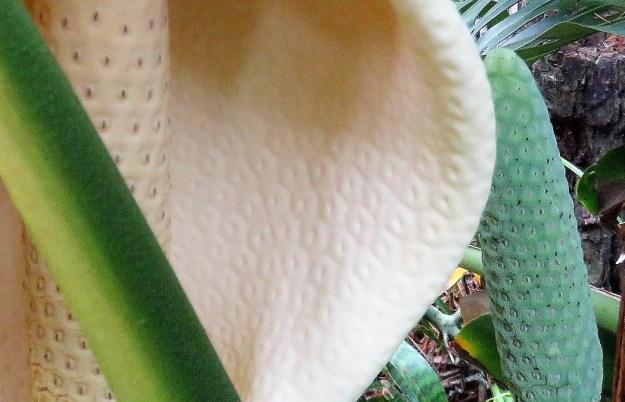 I had not noticed until yesterday that the interior of the spathe on the Monstera deliciosa is delightfully quilted. For quilting enthusiasts, they are hexagons – six-sided figures. The spathe is the curved hood on the flower – botanically a modified leaf but most of us will continue to call it a flower. Some readers will know the monstera better as the fruit salad plant – most often seen as a house plant or perhaps more as an office plant where there is greater space. I would rather doubt that it flowers, let alone fruits, when it is treated as an indoor plant.

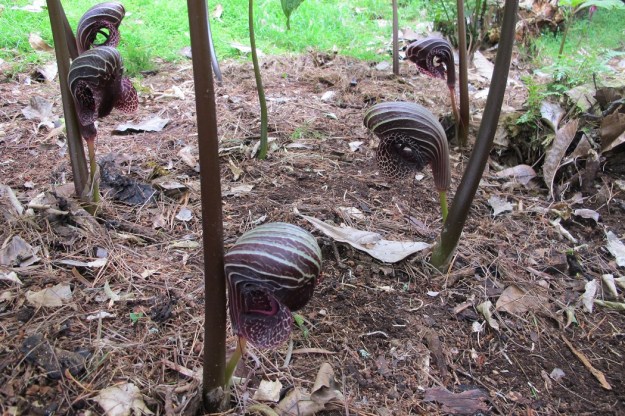
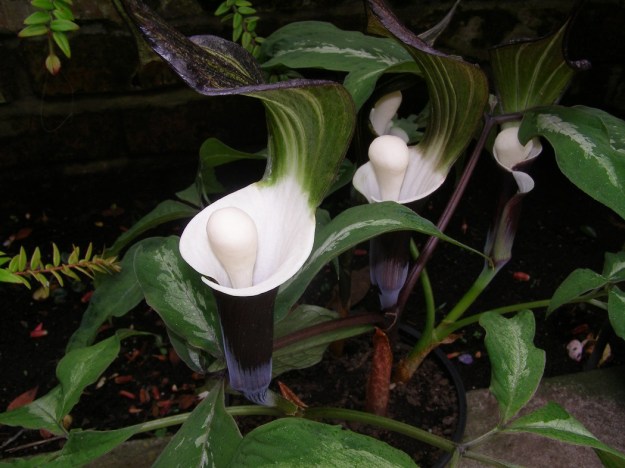
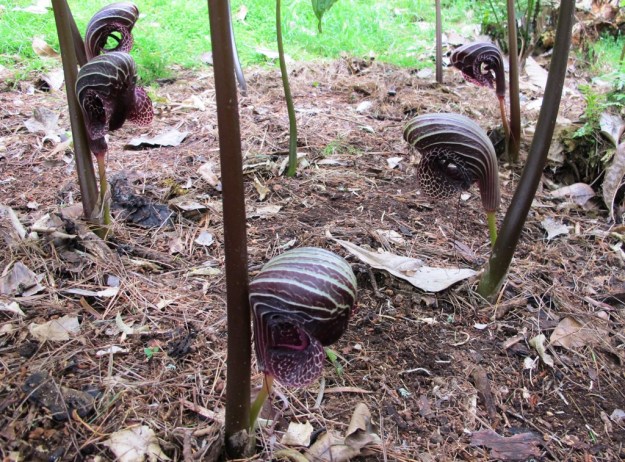
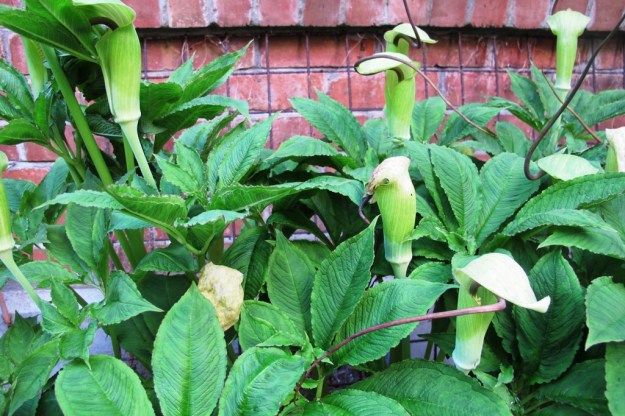
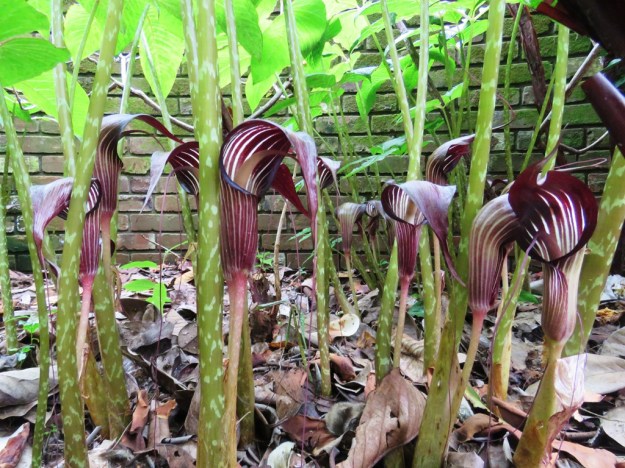
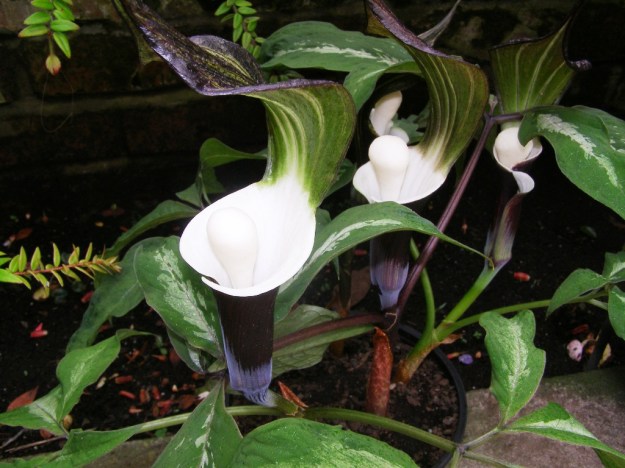
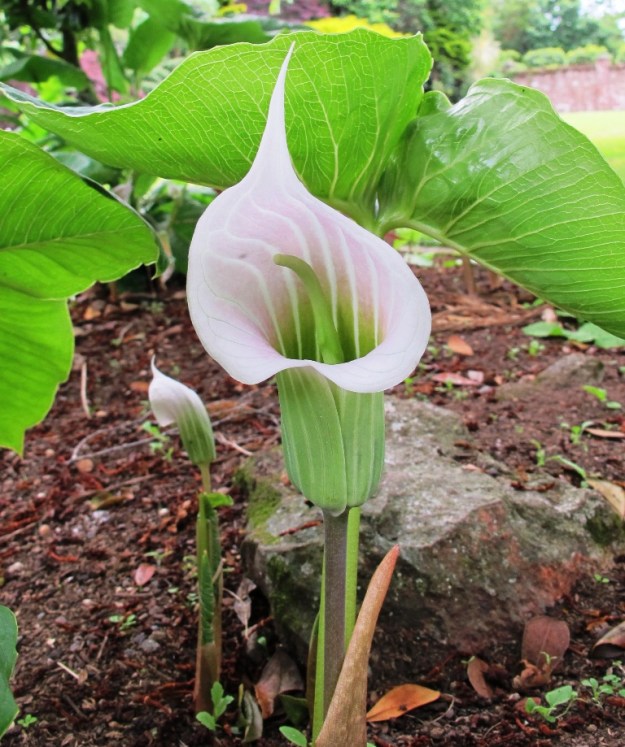
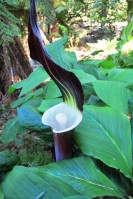 And then there are the tricksy ones, few more so than the Japanese A. sikokianum with its phallic spadix and hooded spathe rising prominently above the foliage. It is a show stopper in spring, though definitely curious rather than beautiful. After many years of growing it, I can tell you that it is difficult. We have never seen it increase from the corm. Growing well, it will set seed but these need to be raised in controlled conditions because it will not seed down naturally here. Even then, the patches tend to get smaller with time, rather than larger. It was for this reason that Mark experimented with hybridising it, to try and get increased vigour. This is known as hybrid vigour, in a similar way that the controlled breeding of designer dogs can make the offspring a stronger genetic strain than the highly refined parentage of pure breds. It has worked for us. The offspring carry all the best characteristics of A. sikokianum but they grow more strongly and are reliable as garden plants. Few would pick the difference to the lead species, but we know they are actually hybrids.

 First published in the December issue of NZ Gardener and reprinted here with their permission.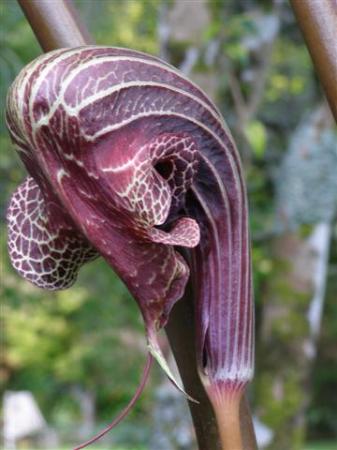
 Tikorangi The Jury Garden