Tag Archives: asters

When good plants go feral

While I like the smaller flower and the airiness of the plant, the aster must go

I have spent the better part of the last week digging out an invasive aster. Pretty it may be in flower but I am now aiming at total eradication from the twin borders and I am looking at in askance in the Court Garden.

I don’t know what the species is but I am pretty sure it is a species, not a named hybrid. I see it was back in 2020 when I first decided it could be a problem. I lifted masses of it but left a few bits behind to see if it could stay with closer management. I would have started with just one small pot of it but from modest beginnings and despite some intervention along the way, I could now measure it by square metres. It has to go.
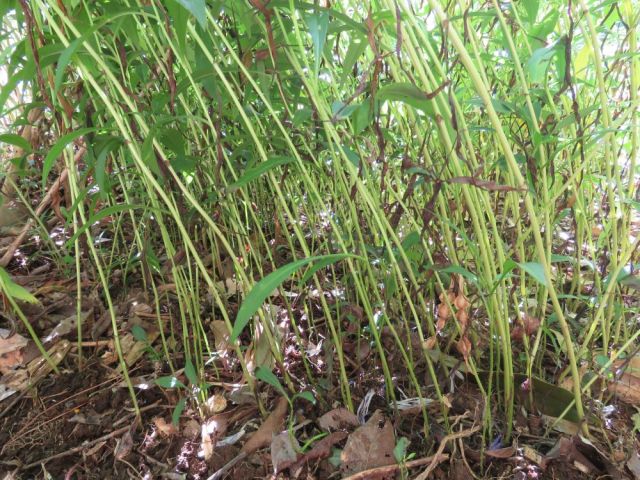
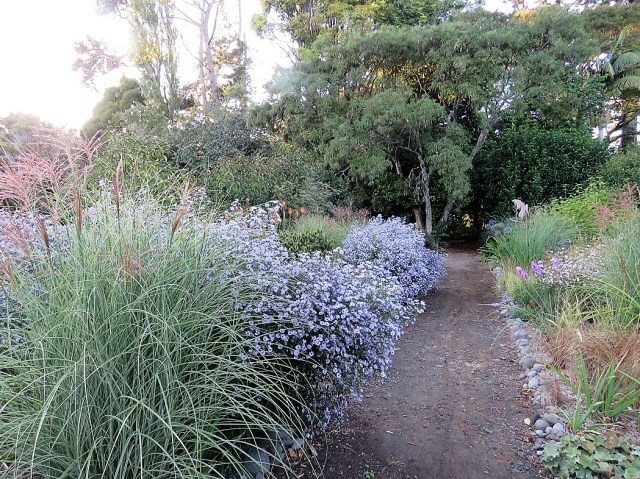
Veritable thickets of aster in the borders

The problem with this aster is not just that it needs staking in our climate because it reaches maybe 1.3 metres high in flower and flops over under its own weight, smothering everything around it. I could have coped with some seasonal staking and restricting its spread from seed by deadheading it, but it is what is happening just below the surface that is frankly alarming. It runs in every direction with huge enthusiasm. I am lifting it out of areas where I never planted, several metres away from the original clumps.

Surface rooting but it is those runners that are the real problem. They will put up shoots along the length and just keep running in every direction.

Because it is shallow rooted, I can lift the mats of roots okay and often just grab each runner in turn and carefully pull it out for most of its length – which can be 30cm of runner at a time. The problem is where it has invaded the root systems of its neighbours and the runners break off. It is going to take me years to achieve total eradication from the borders.
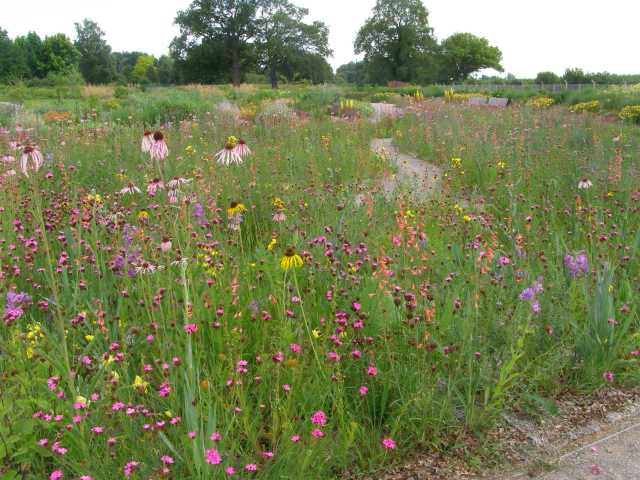
The Missouri Meadow at Wisley in 2009 – simply magical
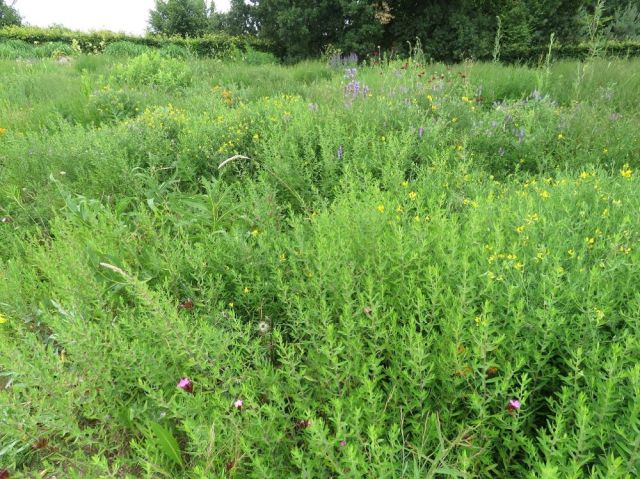
and in 2017 – the Missouri Meadow choked by aster
That Missouri Meadow aster looks very similar to the one I am eradicating, although we were there too early to see any more than just the occasional flower

At the back of my mind is what happened to the Missouri Meadow at the RHS flagship garden Wisley, in the UK. When we first saw the meadow in 2009, it was in its second year and remains in our memory as one of the most enchanting plantings we have ever seen. By, 2017 it was a real mess because – wait for it – an invasive blue aster had taken hold and run wild. I would guess the whole garden has long gone now and been replaced by something else because getting rid of just the aster would have been impossible. I don’t know if it was the same aster but I could see that, left unchecked, my twin borders would have gone the way of the Missouri Meadow in just a few more years.

We have maybe half a dozen other named cultivars of asters in shades of blue and pink and they are fine. They are all hybrids, not species, and while they will form a fairly dense surface mat of roots, they are not invasive in the same way. And they do tend to have stronger stems so hold themselves upright, even the ones that are waist height.
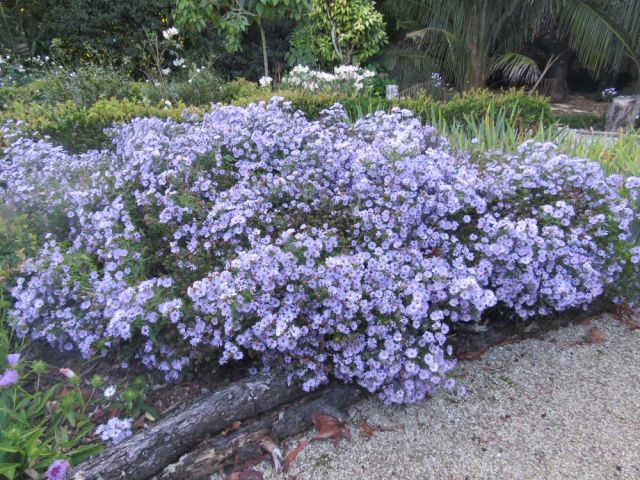
Aster novi-belgii ‘Professor Anton Von Kippenberg’ is more of a compact bedding plant and I have used it in the Wave Garden. It needs digging and dividing regularly but it doesn’t keep trying to stage an escape, trampling its neighbours in the process

Also going from the borders are all the Miscanthus ‘Morning Light’. This is not because they are invasive, although they do seed a little more than Mark thinks they do. I know this because it is I who weeds out the seedlings. Beautiful they may be, especially in flower in late autumn as the sun drops in the sky and illuminates the plumes in the lowering light levels. But they are relatively demanding and, if not managed tightly, they grow too dense and fall apart in heavy rain and wind. Basically, they need to be lifted and divided every three years and root-pruned in the intervening years and that is a big job in densely planted borders.
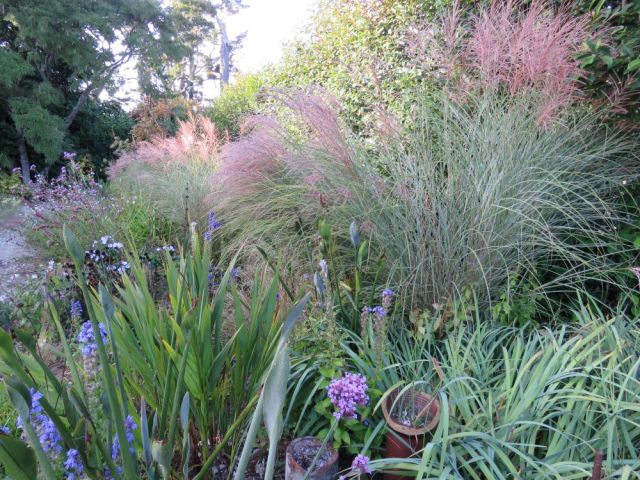
Alas the Miscanthus ‘Morning Light’ must also go from the borders

I have used the same miscanthus extensively in the Court Garden and they can stay there, even though the lot need to be lifted and divided this winter. That can be done when the flowering is past its peak. But it is another lesson we learned from several visits to Wisley that led to my decision to get them out of the borders next to the Court Garden. It seemed to us that Wisley had used Stipa gigantea in almost every garden there and, while a most obliging plant with the prettiest flowers of any grass I know (golden oats, is its common name), when it is used in many garden beds, it just ends up making them all look the same. Too much of a good thing. I have generally avoided repeating plants in the different summer gardens so that each one has a different look. Miscanthus ‘Morning Light’ was one of the very few plants I repeated and, with hindsight, that was not a good decision in our growing conditions as far as the twin borders go.

So I have spaces to fill but plenty of other material to use that will be better. The thing about gardening is that it is a constant learning process but that is also what keeps it interesting. A stitch in time may indeed save nine when it comes to sewing; in the garden, removing certain plants in time may avert a takeover that will choke everything else out.
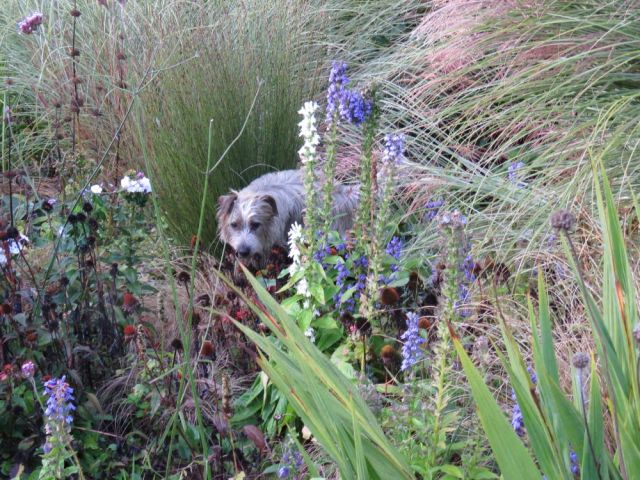
Ralph is no respecter of gardens, especially as this border is adjacent to The Rabbit Family Who Live Beneath the Swimming Pool Deck and he is on their case every day.

The tall and the short of it

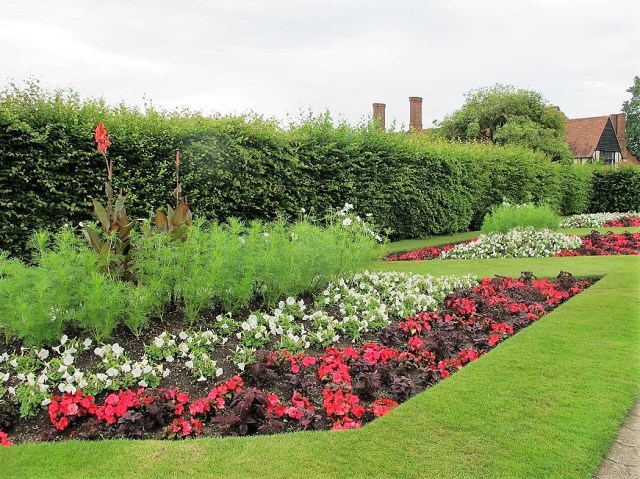
I struggle to appreciate bedding plants. I really do. To me, they belong in dated floral clocks and on traffic islands. Maybe in the occasional garden bed in public gardens to appeal to older folks who have not updated their ideas since the 1960s.

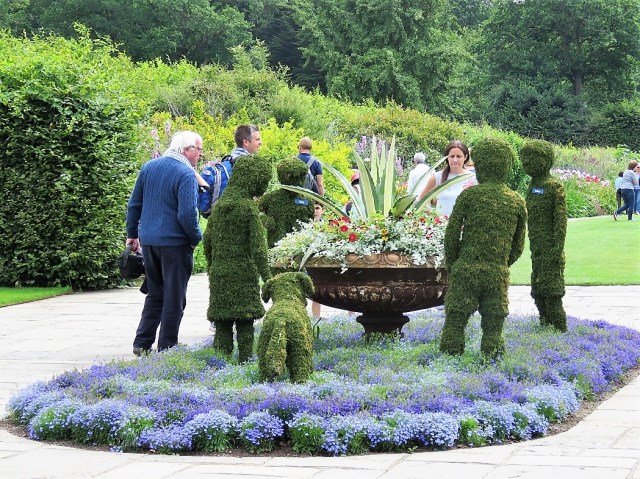
I don’t have many photos on file of bedding plants but these two are from RHS Wisley, south of London and they are certainly not representative of 99% of those magnificent gardens. But there are requirements for such places to be all things to all people. That Is Enid Blyton’s Famous Five clipped amongst the blue which speaks volumes about the age demographic for that particular garden. To this day, it worries me that George on the right looks from behind as if he is having a pee.

Mark is inclined to dismiss the scaling down of plants, rendering them more suitable for suburban gardens. Our garden is anything but suburban but, by all means, if your garden is smaller and you crave a suburban look, stack it with these compact versions of the original. He doesn’t often name-drop, my Mark, and usually only in private but he reminded me that he had discussed this very matter with the late Beth Chatto when we met her and she was in complete agreement with him. He felt vindicated.

The compact form of helianthus is a named variety, though I have mislaid the name.
The larger form of helianthus, rangy, brittle but with a grace and presence I prefer

I was thinking about this because the helianthus are in full bloom. One day they were just the promise of buds showing, the next day they were in flower – one of the last of the summer glories. The common sunflower is a member of the helianthus family. Until this year, I had only seen the compact form of helianthus bloom here and very showy it was. Then my gardening friend, Susan, gave me some of a large form which I put into the Court Garden. I had been waiting for it to bloom, worrying as some of the outer stems snapped off from their weight. It is not a tidy plant, but look at it. It is glorious in its late summer raiment of garish yellow. I love it at this time of the year. And I love the big, rangy form, brittle though it is, more than the tidy, compact form.

The carpet of blue asters which I refer to as ‘the Kippenberg aster’ because I will never commit its full name to memory

Don’t get me wrong; the scaled down version is very good and it has its place in the garden but the bigger, more open form delights me more. The lower version is knee-high on me, the taller one is shoulder height. So, too with the asters. I have used the compact little blue carpet aster which I think bears the full name of “Aster novi-belgii ‘Professor Anton Von Kippenberg’ “ – sounds like those extended names given to miniature horses. In fact I have two carpets of it in the Wave Garden where it is much loved by the bees and the butterflies. I say carpets because, at its best, the plants form a carpet of blue at about 30cm high.

We have a number of taller asters and this gentle cloud of small blue flowers is likely a species, or close to it, It is certainly less obedient but I like its grace and lightness in the garden.

I haven’t come to grips with the aster species (Michaelmas daisies) but Kippenberg is either a dwarf species selection or a dwarf hybrid, probably the latter. The other asters we grow are much taller and rangier – think chest or even shoulder height and I have used them more extensively because they blend well with other plants rather than being best as a mass carpet.

I have noticed with both the aster and the helianthus that the dwarf versions mass flower in one hit. All the blooms open at once, which is very showy but once they are over, that it is for the season. The rangier, taller versions set flowers down the stems which come out in sequence and so give a longer season in bloom.

We only have one dwarf dahlia and it is banished to an insignificant spot
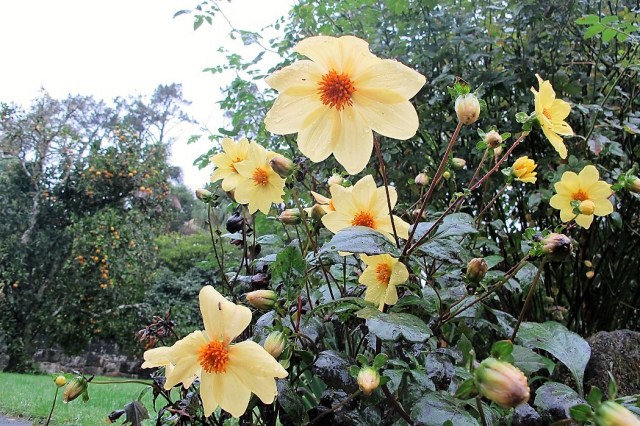
We do, however, have plenty of these larger growing types and our preference is for single blooms

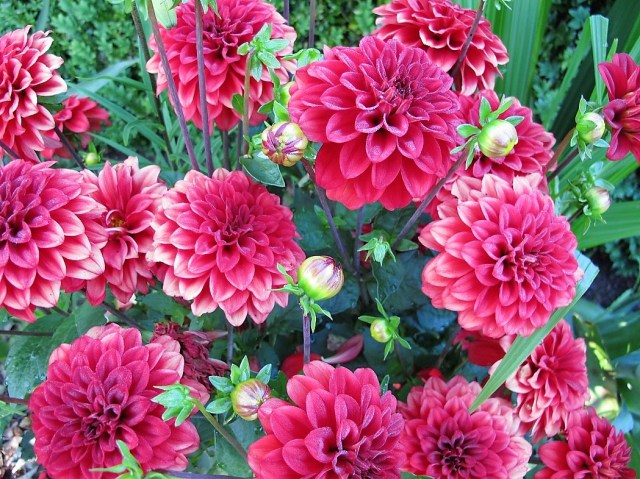
I am not sure about dwarf dahlias. Years ago we were given a little red one and while it is a tidy little plant and it blooms well, I do not find it charming. I much prefer its larger, less controlled relatives.

So too with alstroemerias. Yes, the big ones can be problematic. They need support and they are inclined to spread rather enthusiastically. Unless you dig out every last bit of their fleshy roots, they also stage a second coming. But I like them.

Very (very) compact. Barely ankle height.

I was given one of the compact new dwarf varieties. Okay, it flowers very well over an extended period and it is easy to divide and increase. But it is so stunted, to my eyes. So… tidy. I don’t dislike it so much that I have dug it out – yet – but I would never buy one.

It comes down to taste and garden style in the end. We have plenty of space. In smaller gardens, just beware of stacking too many of these tidy, compact, scaled-down versions in unless you like the traffic island look at home.

If you only have a small area and are looking for inspiration on how to create a garden that is less suburban and constrained in style, you may enjoy having a look at Christchurch gardener, Robyn Kilty’s site. She has managed to fill her small spaces with a garden that looks deceptively free, graceful and exuberant while not being wild or out of control at all. It takes more skill to garden in this style but it can be done in smaller spaces.

Look at all the buds still to open down the stems of the helianthus