Tag Archives: Austroderia fulvida

Groomin’ grasses

The Court Garden in winter

I do not subscribe to the notion of no maintenance gardening. There is low maintenance gardening, lower, lowish, high and very high maintenance gardening. The grasses are generally on the lower side of the spectrum.  
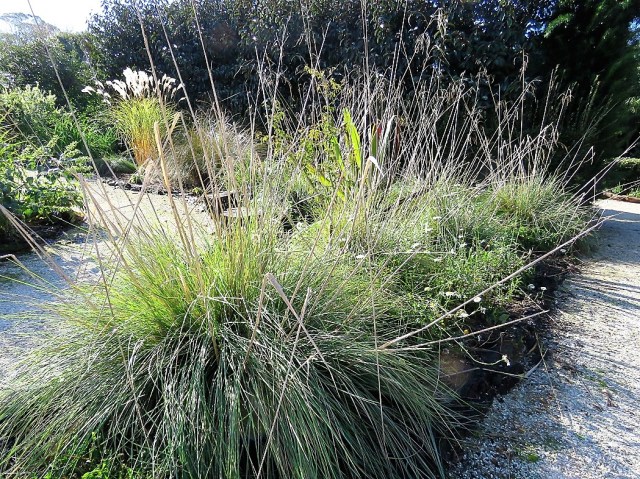
Before on the Stipa gigantea

I certainly don’t groom ornamental grasses in wilder, more naturalistic settings but the Court Garden requires some quite precise maintenance to keep its looks, although it is not usually onerous. This train of thought came about because I have been grooming the Stipa gigantea and that has been more major than I anticipated. At least I have worked out that every established clump is putting up maybe 40 flower spikes which is a lot, really. But there are 24 large plants of it in that garden (yes, I counted!) and every one takes up to an hour for a thorough dead heading and grooming out the dead leaves with a few also needing to be reduced in size. It is not such low maintenance and it is entirely optional but the plants do look tidier for it.
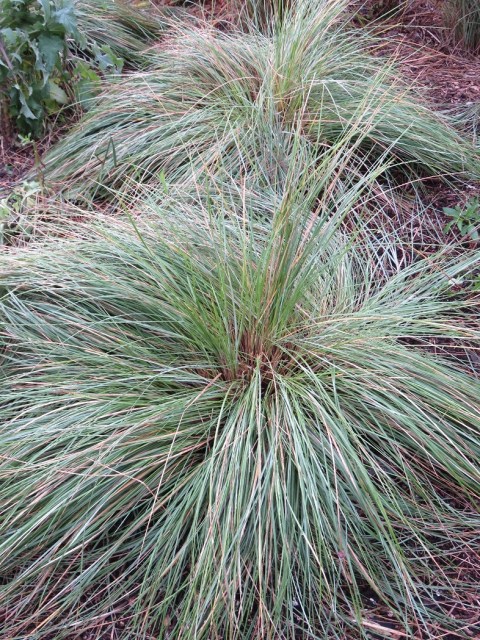
and after on the Stipa gigantea. There is at least half a barrow load per plant removed.

The lowest maintenance option are the deciduous grasses that just get cut down to the ground. That is Miscanthus sinensis ‘Morning Light’. We also cut down Calamagrostis ‘Karl Foerster’ and ‘Overdam’ which are not deciduous but look pretty scruffy and of no merit by late autumn. We have plenty of other evergreen plant material in that garden that gives winter interest and, when cut down, the calamagrostis return with pristine fresh foliage in spring.

Cut to the ground. Maybe don’t try this with clumps that have yet to establish well because you may run the risk of them rotting out over winter but ours are now solid plants.

If you have a very sharp spade and sufficient strength, it is possible to reduce the size of the clumps when they are cut down without having to lift the plants and disturb the roots. I have our Zach with a sharp spade to do this very job, as he has done on the calamagrostis last week and will do on and miscanthus that are looking too large when we cut those down soon.
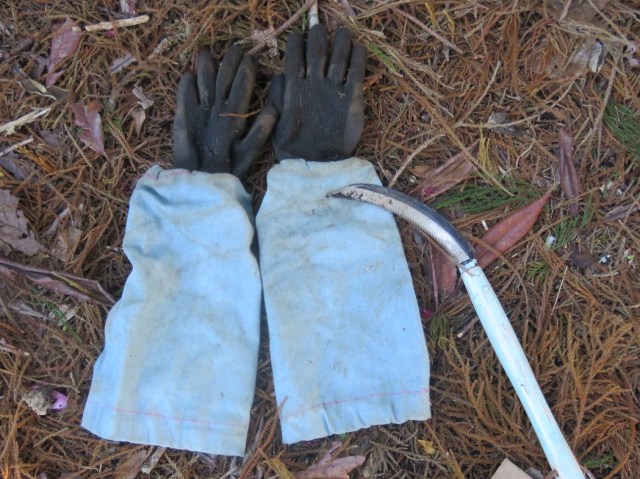
A simple tool, cheap enough and sometimes sold here as a flax cutter. Along with my homemade arm protectors and garden gloves.

For cutting down grasses or perennials, buy yourself one of these very handy little tools with serrated teeth and a curved blade. I think I bought my latest one described as a ‘flax cutter’.
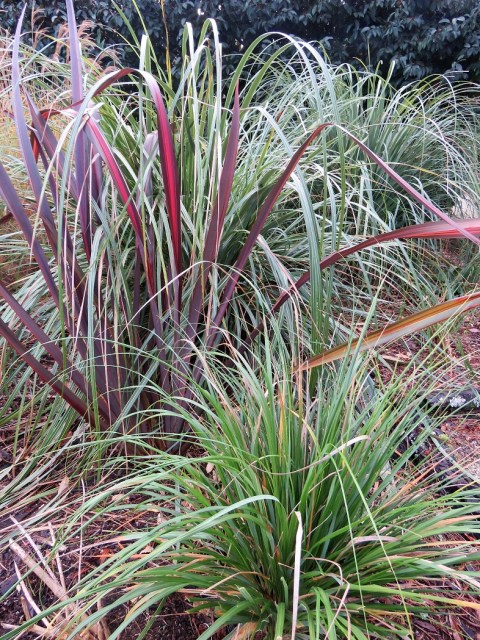
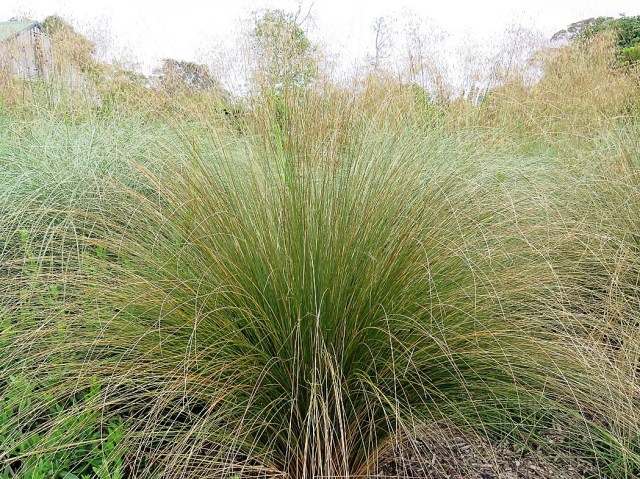
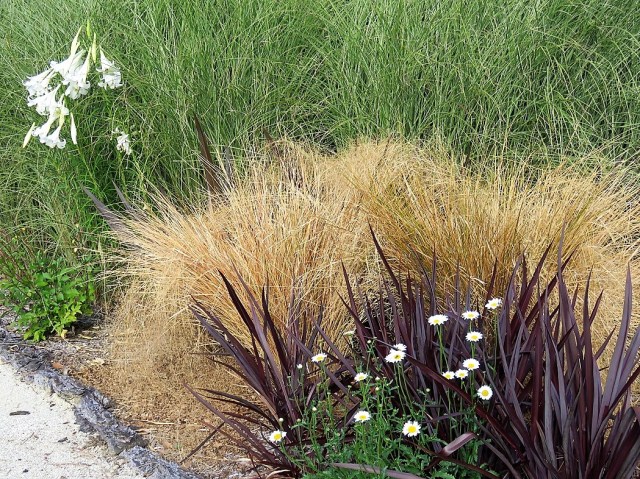
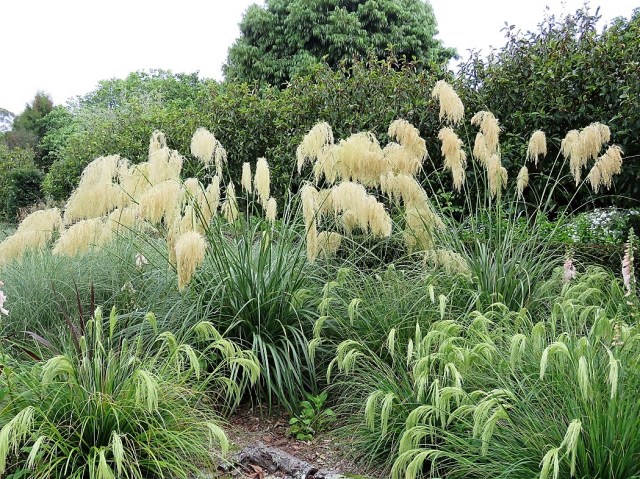
Chionochloa flavicans at the front with an unnamed red phormium or flax and the rather large Austroderia fulvida or proper toetoe behind.

Our native Chionochloa flavicans (dwarf toe toe) has a reputation for ‘whiffing off’, as Mark is wont to say. In other words, it grows beautifully for a few years and then starts dying out. I feel that the proper toetoe we grow – Austroderia fulvida – is showing signs of the same trait and I put it down to a build-up of detritus and dead foliage in the middle of the plants. In the wild, it will be part of the natural cycle; in the garden, we don’t want to cope with half dead plants needing replacement. My theory is that if I keep the plants cleaned out, they won’t suffer that fate. Ask me in five years’ time if I am right on that. I cleaned the plants up in summer, after flowering. The chionochloa were fine to do and did look better for it. The mature toetoe were not much fun to groom because, like a number of our native grasses, they are a form of cutty grass and cut they do. I always wear gloves and I also covered my arms but my ears, my ears! Those very long leaves can cut ears readily. At least it is only a once-a-year job.

The adjustable metal leaf rake, long handled hand rake and flax cutter

The Stipa gigantea does not cut flesh and is probably fine to be left without intensive grooming. I have never done it this thoroughly before so maybe it is overkill or maybe just something to do every few years. You can take the Monty Don of BBC ‘Gardener’s World’ approach and just use your hands as a comb to pull out the dead leaves. He doesn’t even wear gloves that I have seen so I guess they don’t have cutty grasses. I have used the metal leaf rake before and that does a pretty good job when you have room to move around the plants. This time I got in for a thorough clean using our useful little hand rake that you won’t be able to buy at the garden centre. Mark tells me it once  belonged to his father but that he replaced the broken handle with a beautifully whittled, sanded and oiled handle that is longer than the original. Not only is this a useful implement for getting in to plants, it is also very nice to handle.

Chionochloa rubra
Anemanthele lessoniana

A few of the grasses don’t need much attention at all – notably our native Chionochloa rubra (red tussock) and Anemanthele lessoniana (gossamer grass). They may need digging and dividing every few years to reduce their size in a garden situation, but they don’t need routine maintenance, bar weeding out the many self-sown seedlings of anemanthele. It is the only prolific seeder we are using in the Court Garden. The miscanthus throws a few seedlings; the stipa is sterile; the others I have yet to find seedlings of (a thick mulch discourages seed germination) but the anemanthele… It is just as well it is both native and has merit because it certainly seeds down.
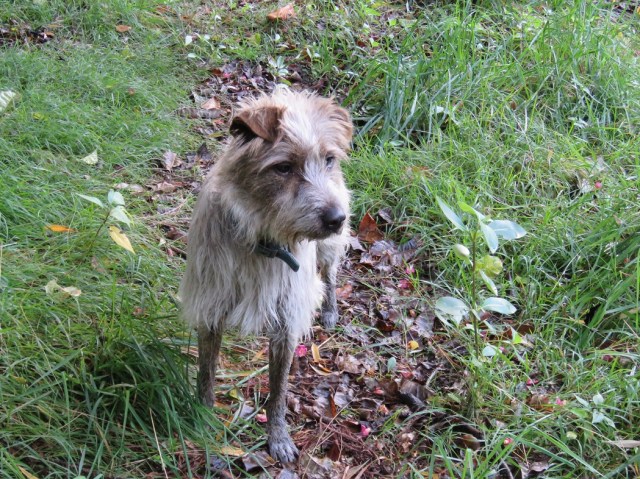
Ralph

Finally, may I introduce Ralph? Ralph came to us from the city pound. He is a little larger than our usual grade of dog but he has settled in here instantly with no doubt that this is his home. Life is terribly exciting for Ralph with so many interesting smells. He is constantly on the move outside and most of my photos end up being a passing blur. But he makes us laugh and it seems that everybody loves a scruffy dog. Come the evening, tired Ralph decides he is now a lap dog and that can be a bit challenging with one his size.  Engaging but challenging.
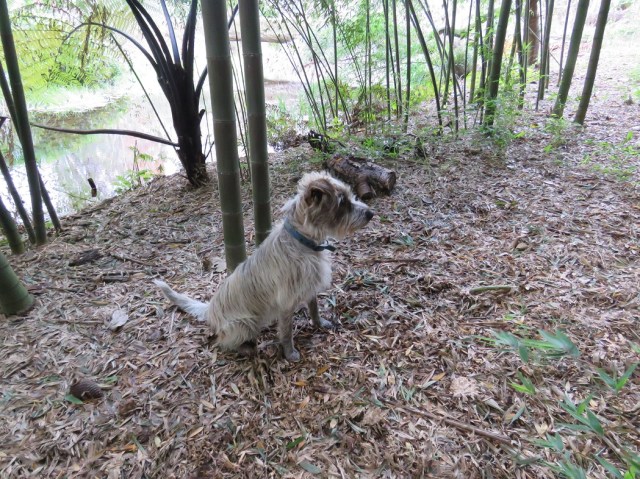
Ralph, briefly sitting down to order, in the Wild North Garden – or dog heaven as he prefers to call it

The grass report

I feel sufficiently confident to give an interim report on the grasses I have used in the new Court Garden although it will take another few years before I can give a definitive verdict. These are bigger growing grasses because we had the space and I wanted an immersive effect that wraps around when we walk through the area.

The site is the hottest area in our garden but, being lowered, it can also be frosty in winter. Cold air flows down to lower levels to settle. The ground is typical free-draining, Taranaki volcanic soils that do not become water-logged and never dry out entirely. We haven’t added any fertiliser and once planted, we never water. The area is mulched with wood chip.

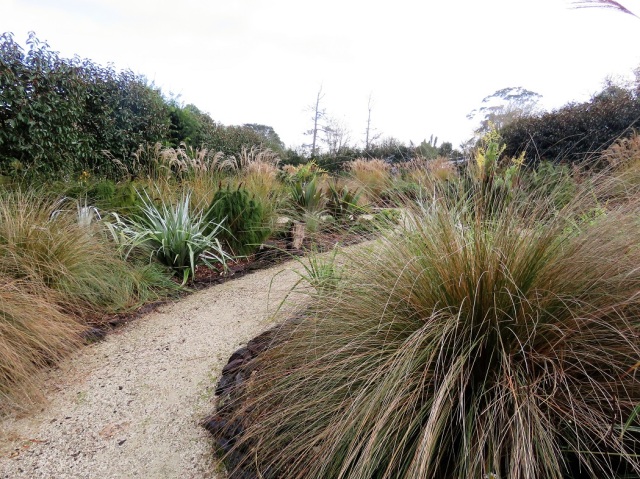
Chionochloa rubra – commonly known as red tussock but this form is only brownish red in winter

Chionochloa rubra – NZ native so evergreen. It takes first prize for graceful form because it fountains out from a narrow base and that form makes it a real star in the winter garden. Its flowering is relatively insignificant but I don’t have to groom the plants to remove dead sections. We started with just one plant and I kept dividing it, which it does easily. I have never lost a plant. It needs space to be able to appreciate the graceful form and the best plants are now 120cm high with a spread up to 2 metres.

Chionochloa flavicans, sometimes sold as ‘miniature toetoe’ though it is a different family

Chionochloa flavicans – also a native, sometimes referred to as ‘miniature toetoe’, so evergreen. At its best in spring but holds its showy flowers right through until autumn. Rabbit fodder when young. Has the reputation of ‘whiffing off’ unpredictably and it certainly doesn’t appreciate being crowded by other plants. Again, we started with a single plant and kept dividing. I have overplanted it so will lift the lot shortly and split the plants, replanting fewer and at wider spacings. I am hoping that by dividing, it will stimulate more growth and delay any inclination to ‘whiff off’. Plants are now about 75cm high and up to 140cm wide.

Anemanthele lessoniana or NZ wind grass, sometimes gossamer grass (you can see the ethereal flowers in pink tones) in the borders before I moved it over to the Court Garden
Anemanthele after moving – it turns golden under stress and it was still hot weather when I moved these plants but I expect them to recover

Anemanthele lessoniana – another native – so evergreen – with a vase shaped habit of growth and more colour variation in the foliage. Lovely in bloom with a cloud of fine flower heads. I had this in the twin borders but the plants were getting too large so I have now moved them to the Court Garden. When stressed (and my plants have often been stressed as I have lifted and divided them to increase the number from the original three), it turns an attractive gold but I will need to groom the foliage to remove dead thatch when the plants make fresh growth. It has reached about 90cm high and up to 140cm wide.

The tall plumes are the austroderia – NZ toetoe and a better choice than Argentinian pampas

Austroderia fulvida – toetoe so another evergreen native.  Very large growing and too early for me to comment on its longer term performance. I bought three small plants through Trade Me and they have already reached 1.7m high and 2.4 metres wide.

Stipa gigantea I have referenced countless times. It, too, is evergreen in our conditions and I  give it the occasional groom (by hand or with a leaf rake) to remove dead foliage. Excluding the tall flower spikes, it is about 80cm high and 160 cm wide as it matures. It divides and increases easily so just start with a single plant but you do need a certain critical mass to have sufficient to share with the sparrows. We found the pesky birds stripped the blooms in the first season and the whole reason for growing this grass is for its showy, long-lived flower spikes so that was disappointing. This year we have had plenty to share with the birds. The foliage has a glaucous tint which is a contrast.

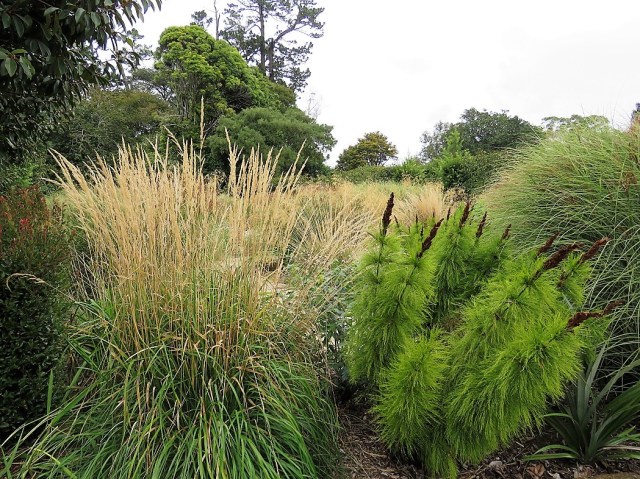
Calamagrostis ‘Karl Foerster’ to the left with the plumes still looking good after four months

Calamagrostis ‘Karl Foerster‘ – I have written about this before. It is such a strong grower, spreading at an alarming speed, that I reduced it down to just six plants which I am hoping I can keep in check by root pruning on an annual basis. By root pruning, I mean getting a very sharp spade and cutting back the size of the clump without digging it all out. That way, I can get the spreading fresh growth off it. This works because it makes its new growths on the outside of the clump. It is evergreen in our climate but the foliage looks pretty scruffy by the end of season. I am pretty sure I cut it back hard last winter so the spring growth was all fresh and lush. It is one of the first grasses to flower in spring and those lovely plumes hold all summer and into autumn. It is all about the plumes because the foliage and form are nothing remarkable.

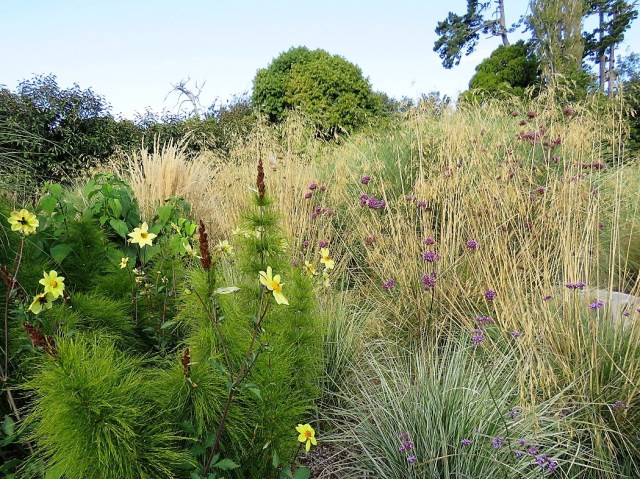
That is what I think is ‘Overdam’ in the front right, Stipa gigantea behind

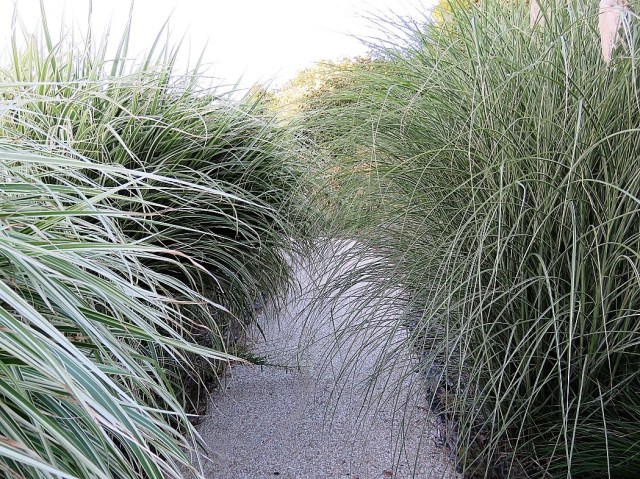
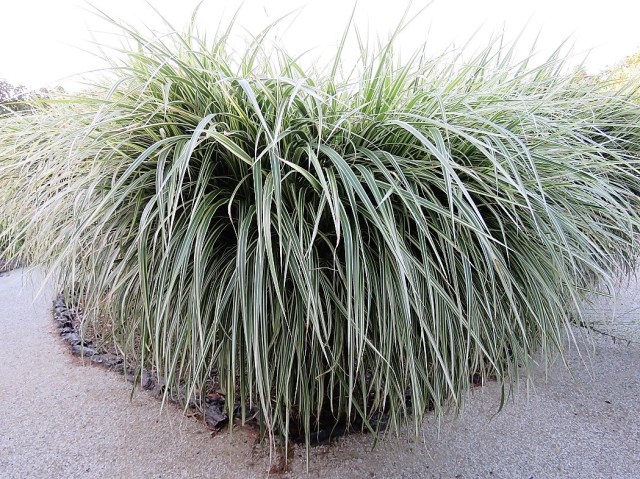
Calamagrostis ‘Overdam‘. At least, I think it is Overdam. It was given to me. It is strong growing too, but not as threatening as Karl. It has the same lovely plumes but the bonus of clean, variegated foliage which stays looking fresh through the season, somewhat like a lower growing variegated miscanthus, though it spreads sideways rather than up. It will likely need root pruning, too.

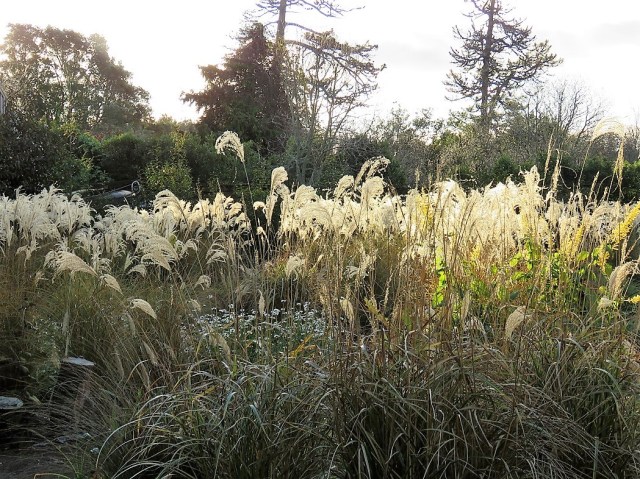
Miscanthus is a lovely grass from spring onwards but the glow of those white plumes in the low winter sun is nothing short of amazing

Miscanthus sinensis ‘Morning Light’. Look, we started with one plant in the garden years ago that just sat, grew annually and fell apart because it needed dividing. As soon as I started dividing it (done variously with a sharp spade, an old handsaw or a small axe), it responded by growing with huge enthusiasm. I overplanted badly and need to take out at least half of the plants but as it is all about the plumes in late autumn and early winter when they glow white in the low sun angles, I will wait. The plants are around 1.7 to 1.8 metres high with flower spikes on top of that so it is very tall. If it is divided often enough, it will stay together – falling apart from the middle is a sign it needs dividing. It is fully deciduous, fine leaved and variegated. Mark is sure that the old foliage has potential for thatching but he has yet to test this theory. This is the only grass that I have spotted seeding down so far but the seedlings are easy to pull out when small.

Miscanthus ‘Morning Light’ on the right, giant miscanthus on the left

Miscanthus whatever whatever – may be just a larger growing form of sinensis with a wider leaf but it should be called Miscanthus giganteus variegatus. The leaves are wider and with a most attractive, clean variegation but the vigour and size is daunting. We ended up digging out three massive plants because I couldn’t hold them together and, as they fell apart, they blocked the path entirely. This is a triffid of a grass. Gardening friend, Susan, suggested that maybe the way forward is to do the Chelsea chop on them – cut them back to ground after the first big flush. I think she is right and I will be cutting them back to ground level about mid November. The second flush of growth should be more compact and shorter. If I can’t keep them under control this way, they will have to go. The plants are too big for me to lift alone and I don’t want to commit to plants that need lifting and dividing annually.

Just too big – they grew even larger and floppier after I took this photo

Lomandra We had a named variety in the garden but I found a better option to replace it with. I rate lomandra as one of the world’s more boring plants and I suggest you leave lomandras to supermarket carparks and roading roundabouts. We have more interesting and attractive native grasses without having to resort to this utility Aussie in NZ gardens.   

Here endeth the interim grass report. Except to say that I am moving and dividing some now because we still have at least six to eight weeks of the growing season left before temperatures drop and growth slows or stops over winter. That said, I have done this in winter and we can get away with it but it is not recommended in less benign conditions where the plants may just sit and decompose in sodden, cold soils.