Tag Archives: autumn bulbs

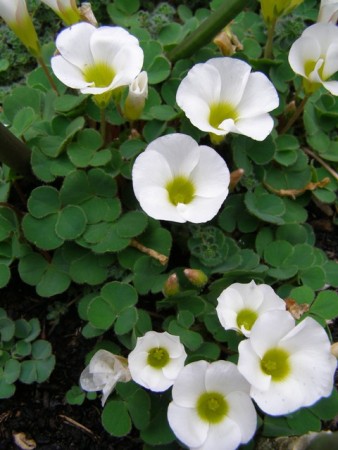
Plant Collector: Oxalis purpurea alba

Oxalis purpurea alba - one of the very best forms

Oxalis purpurea alba - one of the very best forms

At this time every year, I embark on a crusade to win new converts to the world of oxalis. The whole oxalis family suffers from the bad habits of just two or three members and it means that many people miss out on the seasonal delights of some of the highly ornamental forms. Purpurea alba is one of the very best. It is not in the least bit invasive and I have no problem at all in recommending it for sunny spots in the garden where it forms a flat mat of slightly hairy, clover-like foliage topped with big white flowers with a yellow throat. Where it excels above most others is in the length of its flowering season. It is one of the first to flower and continues through to pretty much the end of the season in winter.

Oxalis purpurea is a highly variable species. The red leafed form with big pink flowers comes into growth much later and is invasive. Decorative but dangerous so keep it confined to a pot. The green leafed form with big pink flowers shares a long flowering season almost on a par with alba and does not appear to be invasive. There are apparently yellow forms of this species too. Overall, there are large numbers of different oxalis. They occur in both South America and South Africa but it is the African ones which give us most of the showy varieties for garden use. Most come into growth with the autumn rains and they have to be planted in full sun because they don’t open their flowers unless it is sunny. They make a wonderful show in shallow containers on a sunny doorstep and you can always refer to them euphemistically as wood sorrel, if you don’t want to own up to growing oxalis.
Tikorangi Notes: Friday, April 1, 2011

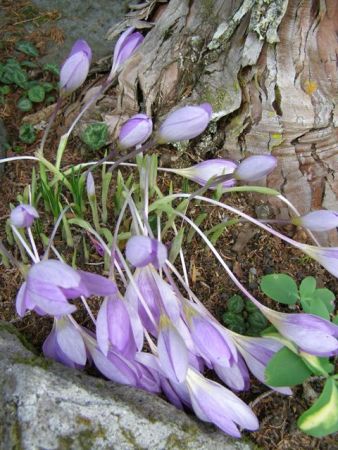
The blue autumn crocus - a fleeting seasonal delight

The blue autumn crocus - a fleeting seasonal delight

Nerines flowering in the rockery

Nerines flowering in the rockery

Latest posts:
1) Camellia sinensis is grown for harvesting, not for its floral display though its little pink flowers are charming if you look closely. The tea camellia in Plant Collector this week.

2) Garden tasks this week as we enter the second month of autumn.

3) Fifty Plants that Changed the Course of History – book review.

4) Outdoor Classroom this week looks at options for garden mulches in the first of a two part series. I was a little surprised to find that the dreaded scoria is still available.

Latest posts: While early spring is widely seen as the prime season for bulbs, autumn can be pretty rewarding too. The nerines are currently at their peak, the Moraea polystachya, zephyranthes and Spiloxene alba have particularly long flowering seasons, the Cyclamen hederafolium create carpets of pink and white, while the autumn crocus, colchicums and sternbergia are more fleeting delights. April heralds the start of our off season when we say the garden is closed, except by appointment. Mark stood in the rockery today, wondering why we advertise such an early closing date when there is still so much colour and interest.

In the Garden: January 7, 2011

• Now is the time to get straight on to dividing and replanting autumn bulbs because they will be starting to come into growth very soon. Belladonna lilies and nerines both get planted with their necks above ground level. Cyclamen hederafolium (I spotted the first flower this week), sit just nestled into the soil, like round discs. Their roots and their flowers both come from the top so it does help to get them the right way up. Ornamental oxalis and colchicums (autumn crocus) are other common autumn bulbs to divide now.

• Summer is the best cherry pruning time to avoid the dreaded silver blight getting in to the cut surfaces. If you have a flowering cherry with patches which did not flower last spring and the leaves are clustered much more densely, you have witches broom which needs to be cut out before it takes over the entire tree. Unfortunately the very popular Prunus Awanui is susceptible to witches broom, as are many other ornamental cherries of the Japanese type.

• You can cut most hybrid clematis off close to the ground if they have finished flowering or are looking mildewed (powdery white leaves). Feed them, keep them watered and they will grow again and flower in six weeks. This works for most of the large flowered types.

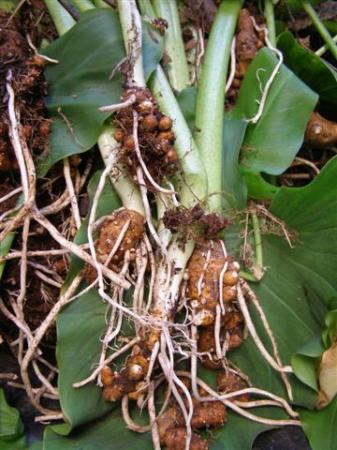
Arum lilies may be prized as cut flowers overseas but one look at the root system shows why they are a noxious weed on the banned list here

Arum lilies may be prized as cut flowers overseas but one look at the root system shows why they are a noxious weed on the banned list here

• If your New Year’s resolution was to start a vegetable garden, start preparing the ground now for planting winter vegetables soon. It needs to be in full sun. If you make the effort to get the soil right, it will pay dividends. If you are starting with lawn or grass, skim off the turf before you start digging and stack it to one side to rot down. Then start digging, and digging again to get the soil light and friable. Add in compost or manure and then leave it all to settle, push-hoeing off any germinating weed seeds as they appear.

• Garlic can be harvested now, but leave onions until the tops turn brown and bend down. To store garlic for the rest of the year, it will need drying – plaiting and hanging is the traditional method but you can also lay it out in a well ventilated area. Super fresh garlic is delicious to use in cooking.

• Arum lilies are a menace and on the banned list. I dug out a few remnant plants of the green and white flowered form called Green Goddess. You can see in the photograph how the roots are a rhizome with a multitude of little round babies ready to detach from the main body and to grow. These need to removed from the site too or they will continue to cause problems. We put them out in the rubbish, rather than trusting to the composting process and I will keep checking the area on the look out for babies germinating.

Flowering this week: Moraea polystachya

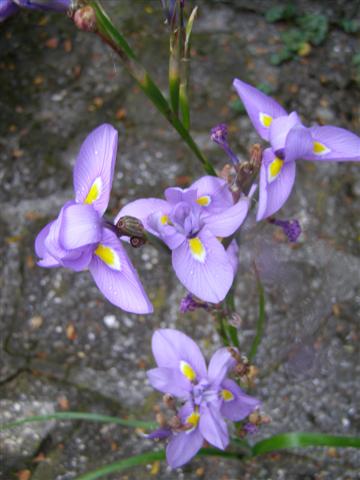
Moraea polystachya - blue lilac flowers all autumn into winter

Some bulbs are a fleeting seasonal delight but you can’t say that about Moraea polystachya which has been a sight to behold for many weeks in our rockery and which will continue to flower for some time to come. The wiry stems are about 50cm high and while individual flowers don’t last long, fresh buds keep opening because it flowers down the stem, a bit like a bearded iris. The colour is an intense blue lilac with yellow markings. When the foliage follows, it is narrow and unobtrusive so these are not plants which take up much room.

Moraeas grow from corms, like gladiolus, and most of the family hail, yet again, from South Africa. It is the spring flowering M.villosa which has given the common name of peacock iris to the whole family (its flattish blooms have markings like the eye of a peacock feather). Polystachya looks more akin to a dainty iris. It is not tricky to grow and seeds down easily in well drained conditions without becoming weedy. If you can find somebody with one, it sets seed freely and is easy to raise. I have never timed its flowering season from go to whoa but it is more likely into the months rather than days or weeks.

Tikorangi notes: April 23, 2010

Latest posts.
1) Nerines, mostly sarniensis hybrids, are a mainstay of our autumn rockery.
2) Instead of thinking buxus hedges, think instead about lines and definition in the garden. There are other ways to achieve a similar outcome without the blighted buxus hedge – Abbie’s column.
3) Our mild and dry autumn continues – weekly garden tasks and hints.
4) It may be six months until our annual Garden and Rhododendron Festival here in Taranaki, but dedicated garden openers are hard at work and counting down already.

Autumn in the rockery at Tikorangi

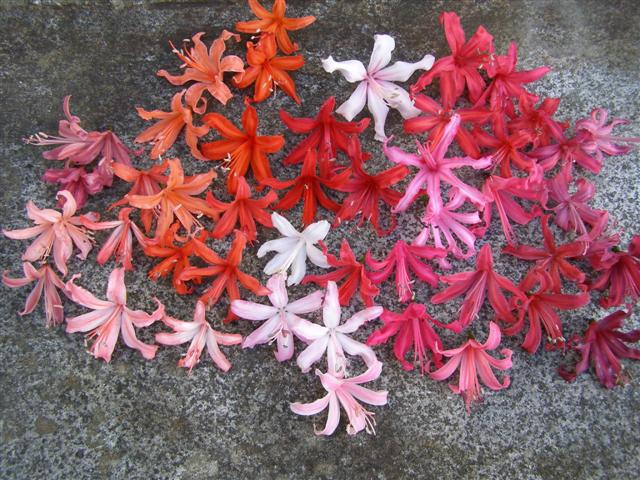
Our rockery has two main periods when it is at its fullest and most colourful – in the early spring when dwarf daffodils, snowdrops and many other tiny treasures bloom and right now in autumn when the nerines and cyclamen hederafolium are at their best. My summer mission taking apart every pocket in the rockery has borne fruit with renewed vigour apparent throughout. Some may think the nerines on the garish side but we love their autumn display. We have a whole range of colours now from nearly apricot through coral, orange, reds, pastel pinks to highlighter pink and deeper, smoky colours bordering on purple. Felix Jury worked with the nerines, mainly sarniensis hybrids and he acquired some of the Exbury hybids over 40 years ago. Most of the cultivars in our garden are unnamed hybrids from that time although Mark has also had a play in his turn and did name one, Coral Star, which we have sold in the past. Felix’s preference leaned towards the smoky plum colours and he named two: Smoky Queen and Nelson’s Blood.

From near apricot to near purple with plenty of oranges, reds and pinks between