Tag Archives: autumn garden

From flowers in the gloom to the Coronation quiche

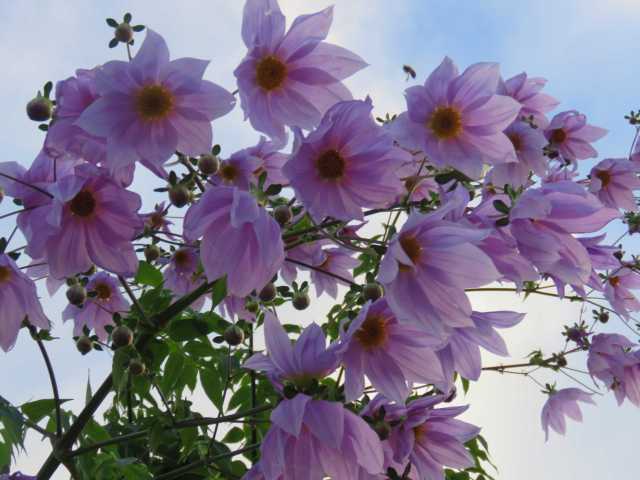
You can tell from the peeping blue sky that this photo is from my archives and not from the unrelenting greyness of yesterday. But the Dahlia imperialis is in flower again and looking very pretty, despite the rains.

We may be growing older but at least we keep learning things. I recall when our nation first learned about liquefaction in the Christchurch earthquakes. Next was graupel which must have been during the snow event of 2011. This year it is atmospheric rivers. I doubt too many of us knew about these before the Auckland anniversary floods followed by Cyclone Gabrielle. We received weather alerts this week about a potential atmospheric river becoming stalled over Taranaki from Wednesday.

In the event, it didn’t amount to anything close to the devastating floods suffered by many in more northerly and eastern areas of the North Island already this year. It rained hard on Wednesday night – over 90ml which is heading towards 4 inches, Mark tells me from his rain gauges – but since then it has just been showery and drizzly and unusually gloomy. Given that an atmospheric river can release more water than is in the Amazon, we feel we may have dodged a disaster this time.
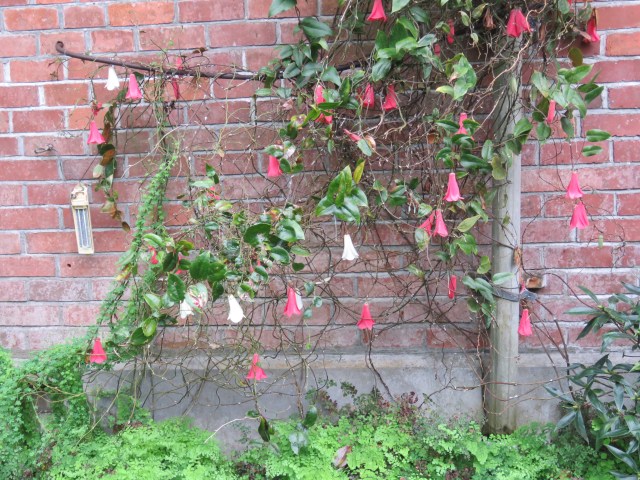
Lapagerias in red and white at the back of the house beside the wheelie bins. They are not a tidy climber and usually need a great deal of patience but, once established, their flowers through autumn and winter are a pleasure.

But gloomy is as gloomy does. At least it is not cold. While autumn is here, our daytime temperatures are still sitting around a pleasant 20 celsius and the nights are mild. When the rain stopped yesterday, even though it remained unrelentingly grey, I walked around the garden looking for bright spots.

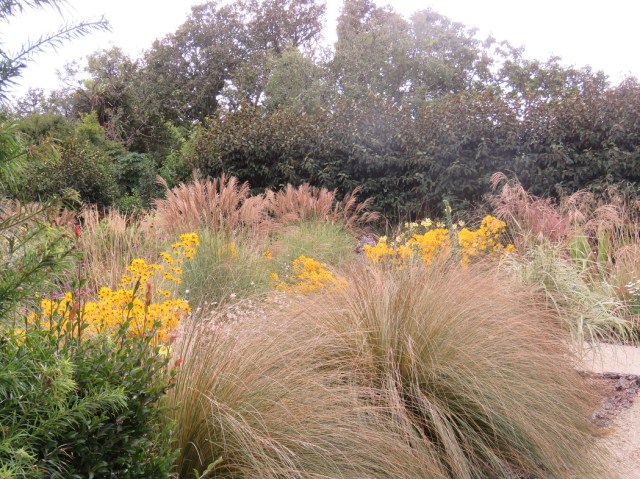
Salvia madrensis in yellow with Chionochloa rubra in front and Miscanthus ‘Morning Light’ behind
Salvia mexicana ‘Limelight’ with Elegia capensis

I have been slow to be won over to the charms of the salvia family. The plants tend to be rangy, leggy, things lacking form but now I have the right places to grow them. They are generous in their blooming habits, flowering for months on end and what I earlier saw as formless sits comfortably in more casual plantings. I think I may need to expand the range and there are certainly plenty to choose from.
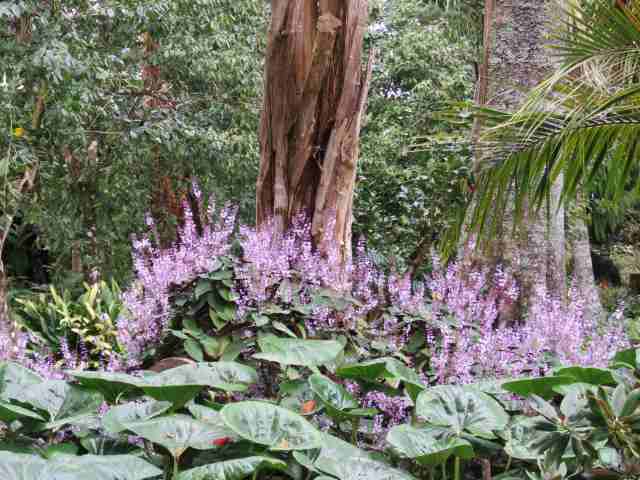
Plectranthus don’t have a good reputation but we accept a few in more casual areas. At least they are easy to hack back and to pull out when they start straying beyond their designated home space. I enjoy that lilac-blue haze behind the Ligularia reniformis. I have no idea which plectranthus this one is but it has a lovely burgundy colour on the underside of the foliage. That gnarly, dead-looking trunk in the centre of the photograph is the remains of my treasured jacaranda that was taken out by Cyclone Dovi in February last year.
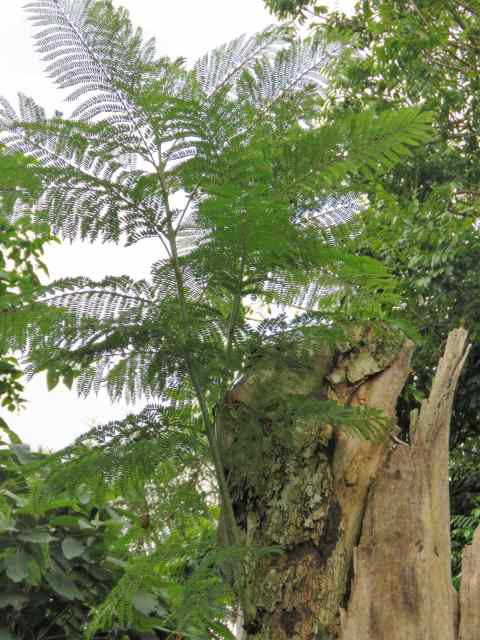
But wait! That is new life on the gnarly old jacaranda trunk. To our great surprise it is shooting again. When Zach spotted the first tiny signs of life, we thought it unlikely to survive because the outer layer of bark on the trunk had been stripped away entirely and we didn’t see how it could sustain new life. But here we are. That shoot is already quite substantial.
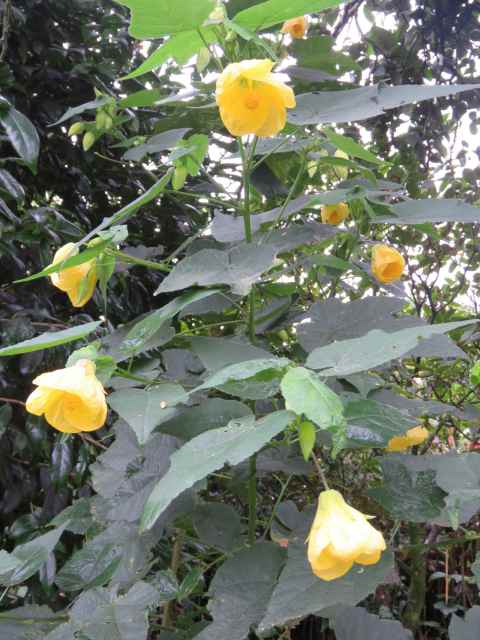
I am somewhat dismissive of abutilons which seed way too readily. We weed out most of them but I try and keep the odd one in pure yellow, at least one pure red one and any that have clearly crossed and come in a pleasing orange shade. Anything in murky colours – and there are plenty of those – or in the wrong place is unceremoniouly pulled out and consigned to compost.

Underneath the rimus, the bromeliads provide us with winter colour and a somewhat unique perspective on exotic woodland plantings. Ralph is a bit underwhelmed but he does have a resting sad face and that does not indicate a sad nature. The startling pink variegations in that photo with him are pretty interesting and seem to have stronger colour this year for no discernable reason.
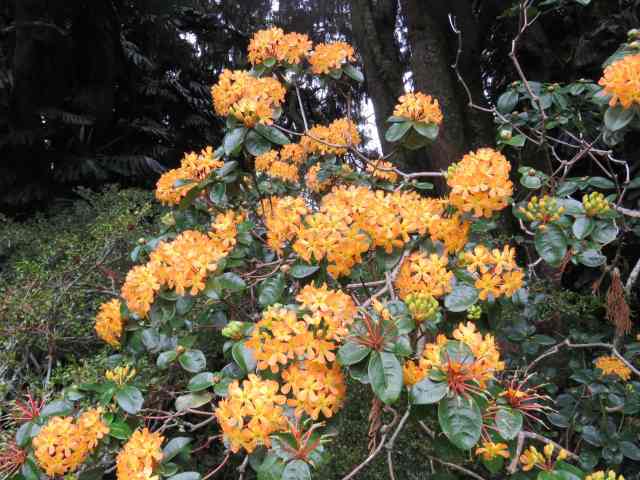
Vireya rhododendron macgregoriae

Right on cue, Felix’s New Guinea collection of R. macgregoriae flowers again, as it has done for sixty-five years now. For a vireya, that is an extraordinarily long life span. In our conditions, they are all too often short-lived. All we ever do is dead head it and take out any dead wood. It doesn’t get fed at all but each year it puts on a mass display.

I can not in all honesty say that my corner of the world has been gripped by Coronation fever but I was amused when Canberra daughter announced that the Coronation Quiche looked preferable to its predecessor, Coronation Chicken. Never having tried the latter, I had to google the recipe and that combination of chicken and dried apricot with mayonnaise is very 1950s/60s. Daughter entered into the spirit of the occasion by making an acquaintance with lard, albeit Australian lard, and even posted a photograph of her preparations.

Sadly, she was underwhelmed by the result. While the lard gave a good, flaky pastry, she declared the ratios to be “a bit weird, it’s a lot of cheese and a lot of spinach. The spinach made it a bit earthy and herbaceous. Plus I had forgotten I don’t really like tarragon.”
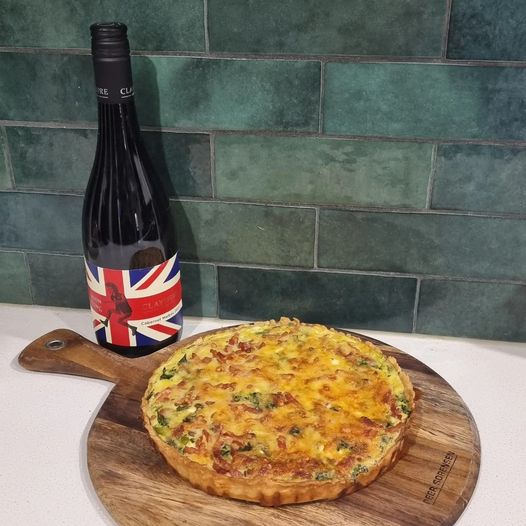
Not the Coronation quiche, in the end

She remade it, substituting parsley for much of the spinach and adding bacon and declared that preferable.

Going back to Coronation Chicken, I do hope that the New Zealand version was not prepared with Highlander mayonnaise back in the day, Highlander mayonnaise being of a similar era and based on a can of sweetened condensed milk. But I bet it was. With added curry powder from Greggs. ‘The horror, the horror.’
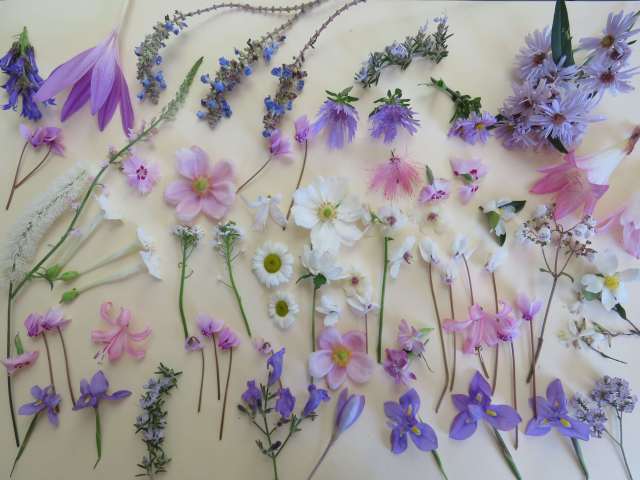
‘Say it with flowers’

Back in the prehistoric times before the internet, sending flowers to somebody in another place usually happened through Interflora – organised by telephone (land line, of course) or in person. The Interflora group ran extensive advertising and their slogan was ‘say it with flowers’. I have been thinking about that all week in various contexts – letting the flowers tell the story.

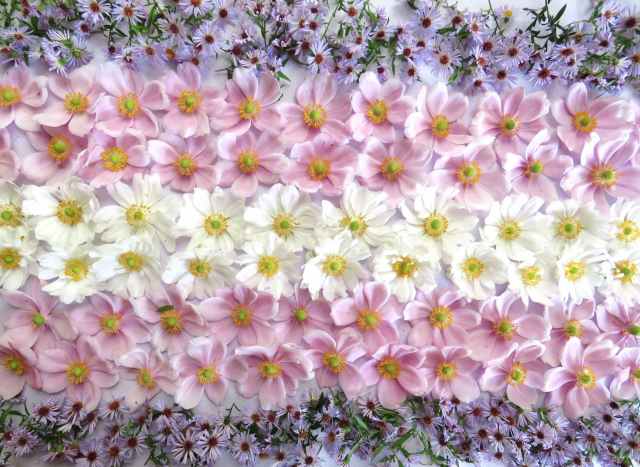
The free-form version

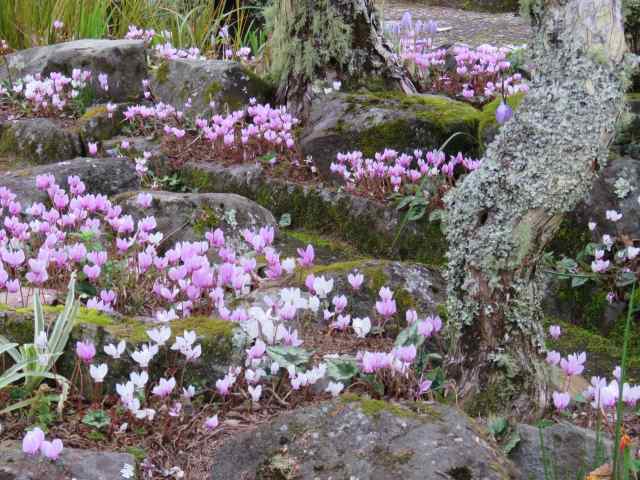
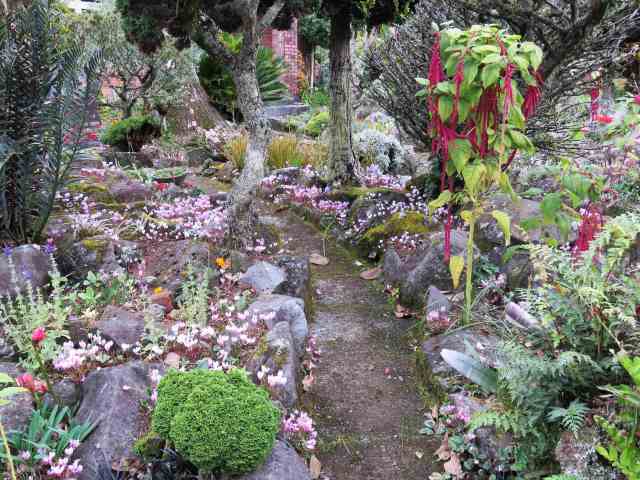
When daylight saving ends here in the southern latitudes, we have to accept that autumn has arrived and this always happens around Easter. The rockery has its second coming and oh my, but it is pretty at this time of year.

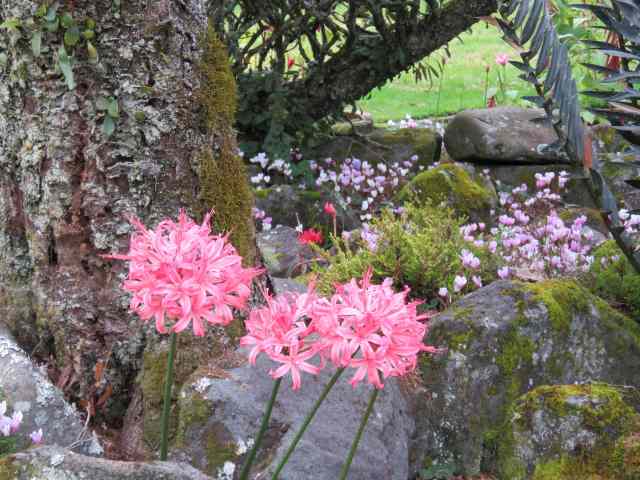
Cyclamen with amaranath and the first nerines

In early spring, the highly detailed rockery is dominated by the yellow of dwarf narcissi and every lachenalia we can grow here, across the range of colours. In autumn, it is mostly pink and white with masses of Cyclamen hederafolium and the Nerine sarniensis hybrids we can grow well.

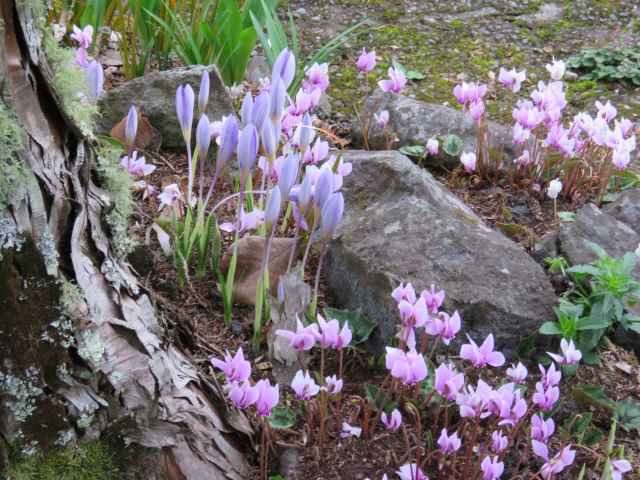
Can one ever have too many of the species cyclamen? I think not. They are seen here with the lilac blue of the autumn crocus from the C. serotinus group, maybe salzmanii. Our rockery is immediately in front of the house so we walk past it often every day and really it is very, very pretty at this time.

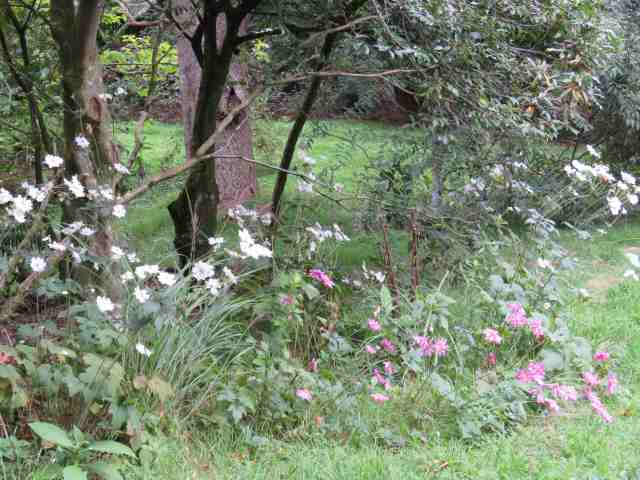
The Wild North Garden has largely become our gardener Zach’s domain and he is continuing to add suitable plants that are surplus to the more tightly managed garden areas. He was so pleased with how the Japanese anemones he planted last year have settled in that he is adding more this year.

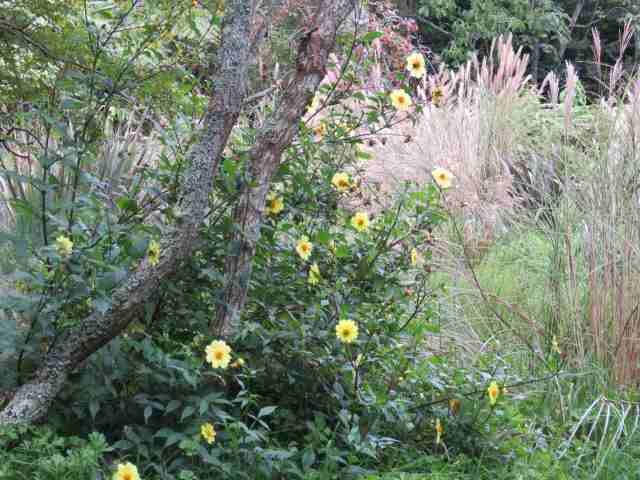
The dahlias have also settled in well to this controlled wilderness. I am pretty sure this is Dr Keith Hammet’s Dahlia ‘Conundrum’ which certainly increases well and flowers for a very long time.

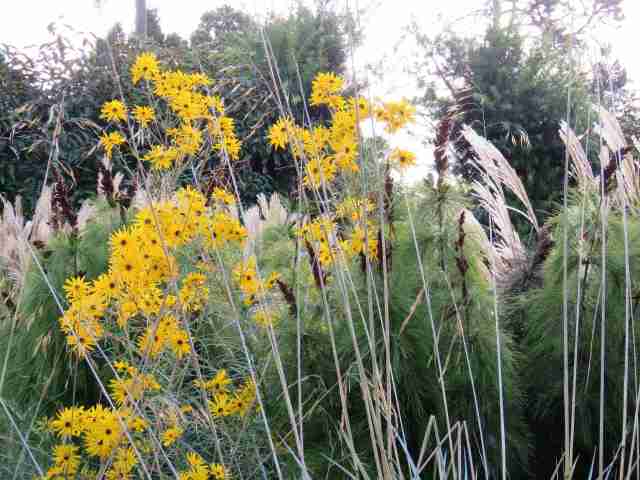
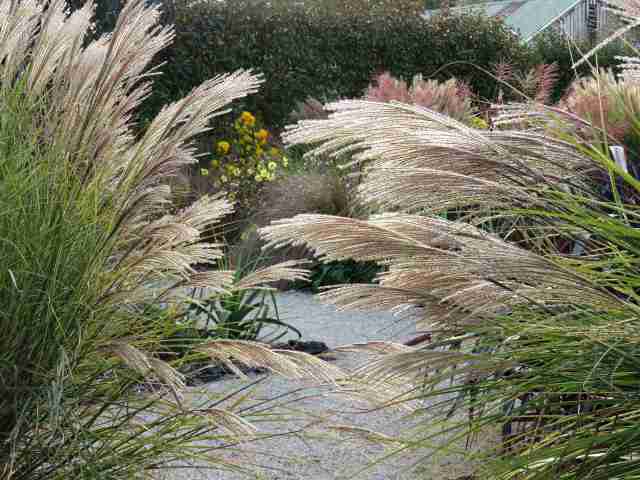
The Wild North Garden may be Zach’s special area but the summer gardens are mine and I love the Court Garden in early autumn as the tall helianthus come into flower and the sun drops lower in the sky to shine through the flower spikes of the tall grass, Miscanthus ‘Morning Light’.

Personally, I would have called it ‘Evening Light’ or maybe ‘Late Afternoon Light’ but that has to do with location and the direction of our lowering sun.

I captioned the top pastel pink, blue and white confection as ‘the free-form version’. This more explicit floral version of a flag would have worked better had Japanese anemones also come in pale blue as well as white and pale pink but we make do with what we have. It reminds me of the floral confections the very late Queen Mother used to wear. Some of you may remember her many appearances where it looked like she was wearing pretty hydrangeas on her head. I went looking for images but they were all copyrighted so if you are curious, google ‘Queen Mother’s petal hats’ to behold the visions.

Sometimes in life, we need to stand up to be counted and I will stand up and be counted in support of the extremely marginalised group this flag stands for as they face an onslaught from people who want to erase them from history, from the present and from the future.

The Court Garden in early autumn

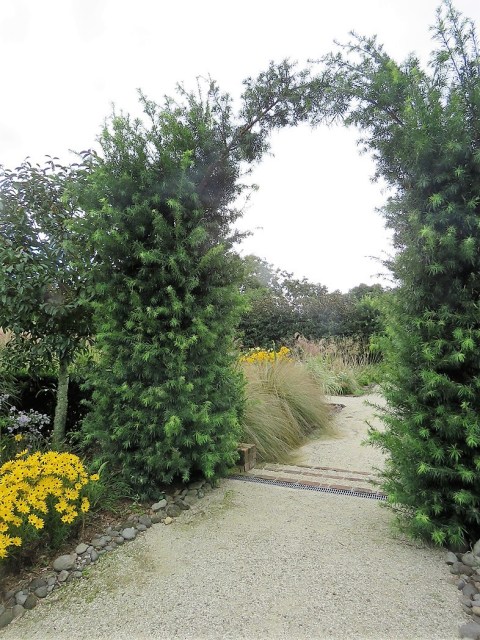
Forming the archway with Podocarpus parlatorei which leads into the Court Garden

Today, fingers crossed, all going well, negative RAT tests and no flight cancellations, we are winging our way across the Tasman to reunite with our three children and only grandchild, all of whom live in Australia. It feels momentous because it will be the first time we have seen them all for between two and three years. The small grandson is literally twice the age he was we last saw him. We are all meeting up in Bateman’s Bay, a few hours’ drive south of Sydney. I mention this because there won’t be a post next Sunday and I was chastised by a loyal reader for skipping a couple of weeks recently.

And a close-up of that view through the podocarpus archway – mostly Chionochloa rubra and helianthus

Just occasionally, I look at part of the garden and utter a sigh of utter joy and contentment. It is that glorious feeling that everything is just right, a vision realised at that moment in time on that particular day. When it is a garden that has been my vision, my plant selection, my plant combinations and largely my efforts, the feeling of deep satisfaction is even more rewarding.

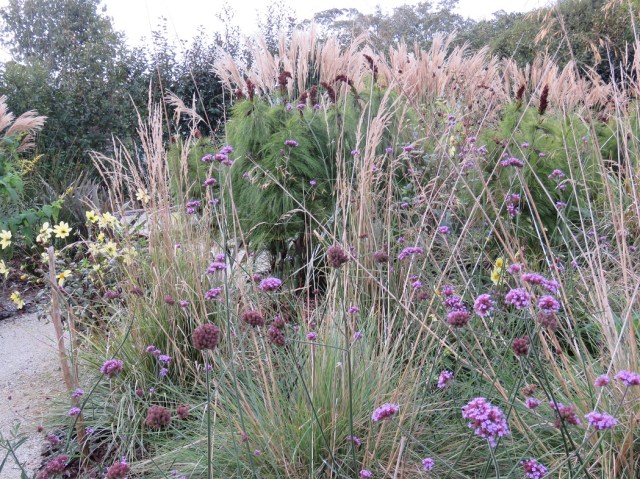
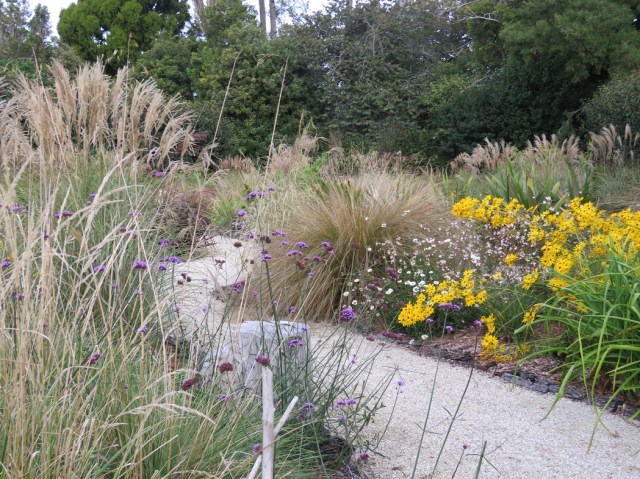
Calamagrostis ‘Overdam’ at the front with self-sown Verbena bonariensis, Elegia capendis with Dahlia ‘Conundrum” in the mid ground and Miscanthus ‘Morning Light’ at the back

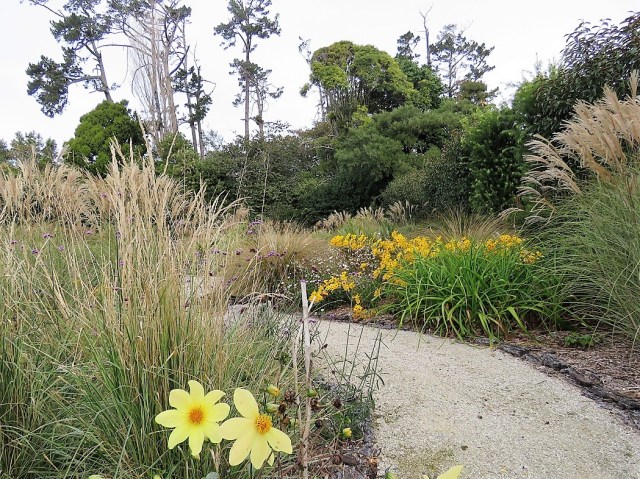
I experienced that feeling this week in the Court Garden. While it is part of the new area we call the Summer Gardens, it really stars in autumn. I wanted this area to be a wrap-around, enveloping experience –  where we are IN the garden, not looking AT the garden. And this week, I felt that it had all come together.

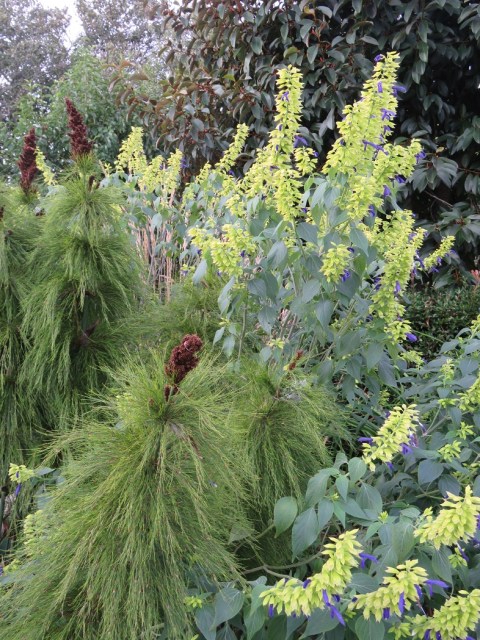
I like the combination of Elegia capensis and Salvia mexicana ‘Limelight’

Of course there are areas that I will tweak further. Zach has been reducing the size of the Elegia capensis and one of the patches of black phormium (flax) this week. I need to give the Chionochloa rubra more space if they are to be left to gain their full potential glory. I am still learning about which plants we will need to manage and control and how often this will need to be done. But this week I sighed with pleasure.

The concept works. It is an immersive experience. It is generally low(ish) maintenance – certainly lower than other areas of the Summer Gardens. It is very different to all other areas in our garden. The fact that it looks okay in winter, good in spring and summer but it really stars alone in autumn is a bonus.

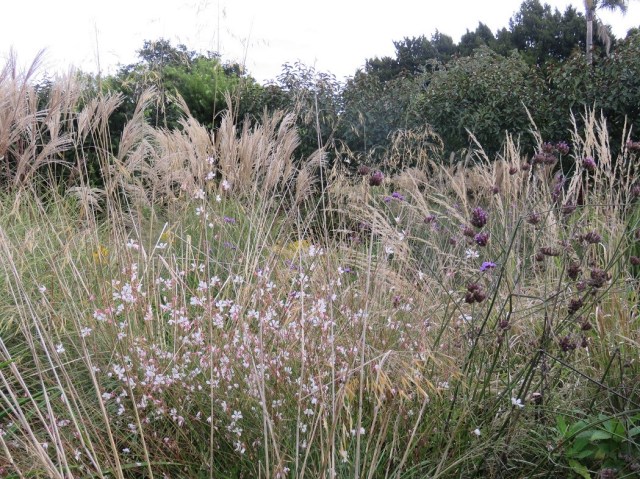
Gaura with Stipa gigantea and Miscanthus ‘Morning Light’

These photos were all taken in late afternoon on a grey day with lower light levels. It looks spectacular on blue sky days as the autumn sun is lower in the sky and highlights the plumage of the grasses in flower. On a windy day, it is full of movement but even on calm days, the slightest breeze will catch the tall plants and they will gently wave.

In fact, it works just as I hoped it would.

An understated beauty – autumn seed heads

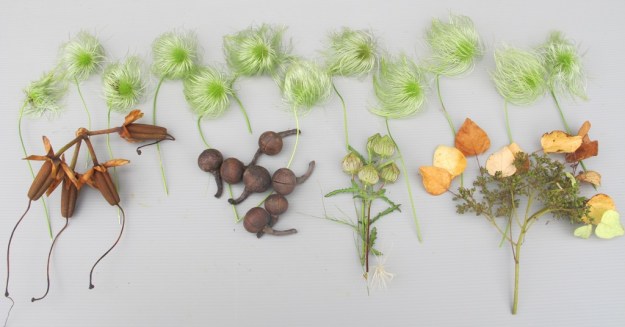
Clematis at top, left to right  rhododendron, Schima khasiana, Hibiscus trionum, Schizophragma hydrangeoides

Clematis at top, left to right rhododendron, Schima khasiana, Hibiscus trionum, Schizophragma hydrangeoides

When I was doing my informal census on autumn flowering plants last week, my eye kept being drawn to equally attractive seed heads. I see I recorded some of these last year when I was still writing for the newspaper , but it has taken me quite a few years to get my eye in for these seasonal pictures of understated beauty.

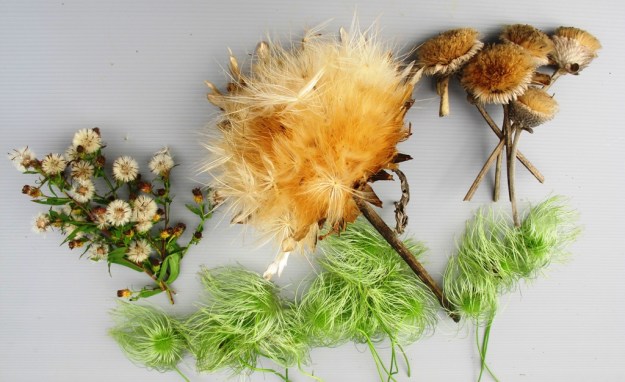
Cardoon!

Cardoon!

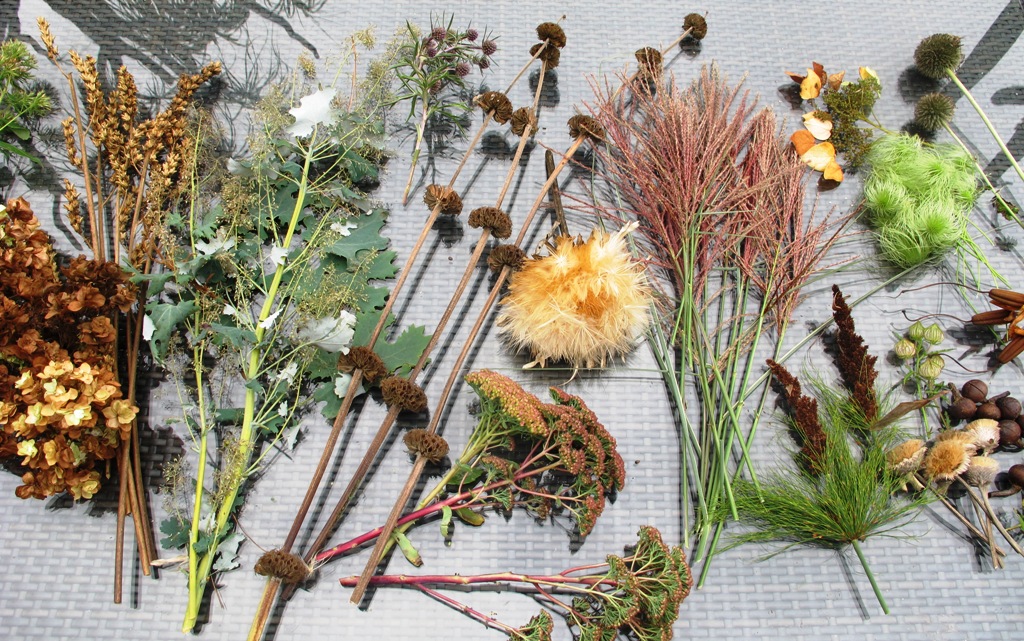
It is hard to beat the big fluffy heads of the cardoon. I don’t do dried flower and seed head arrangements for indoors, but if you are thinking that way, be warned that all that soft fluff is designed to detach easily and float away in the lightest breeze to disperse. Indoors this head will fall apart very quickly.
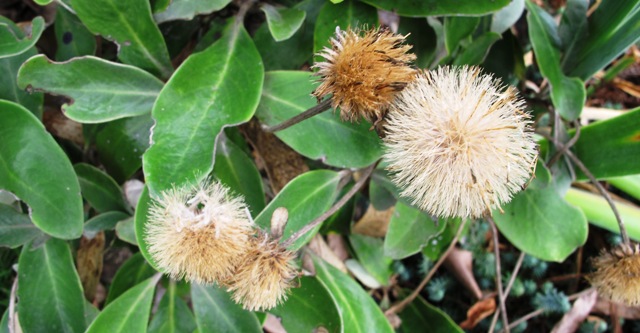
???????????????????????????????The aster to the left has a similar fluffy seed head, as does the pachystegia to the right. Along the bottom are the highly decorative clematis seed heads – in this case C. tangutica.

The lovely Hibiscus trionum seed heads

The lovely Hibiscus trionum seed heads

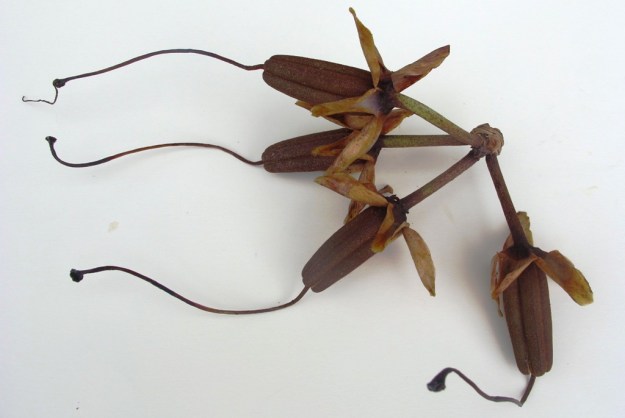
Rhododendron sino nuttallii seed head

Rhododendron sino nuttallii seed head

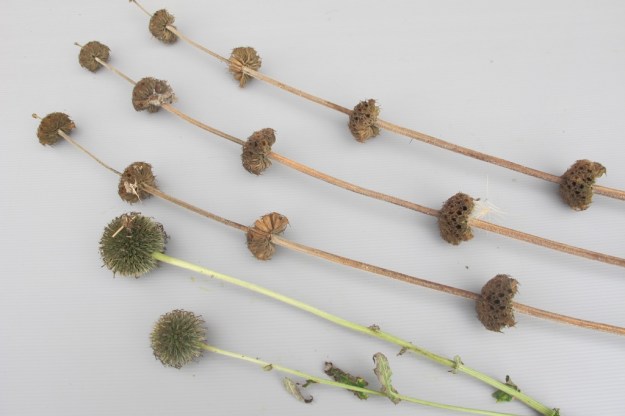
Phlomis russeliana at top, one of the echinops below

Phlomis russeliana at top, one of the echinops below


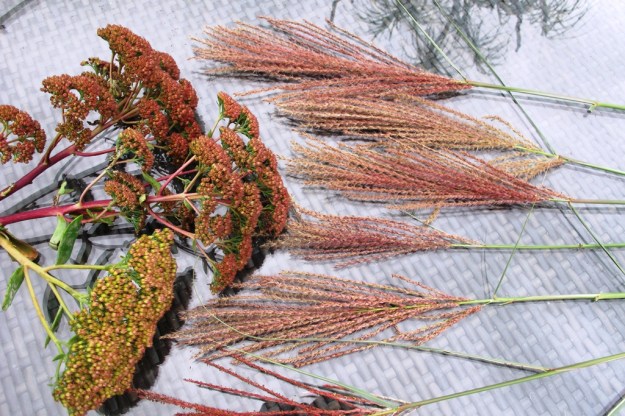
Sedum and miscanthus

Sedum and miscanthus

Francoa and Hydrangea quercifolia 'Snowflake'

Francoa and Hydrangea quercifolia ‘Snowflake’


I have often read advice to leave all seeding plants standing until early spring as they are a valuable food source for birds. This is cold climate advice that is much less of an issue in our temperate climate and our own situation which is rich in food sources all year round. However, we do get a great deal of pleasure watching the quail feeding from an assortment of seed sources. Pansies appear to be a particular favourite. We try and dead head problem plants that seed down far too freely but I am cultivating a more relaxed attitude to others. It is all about the cycle of nature and the change of season.
???????????????????????????????

Autumn seed

Autumn can seem a slightly melancholy time of year, the opposite to the bright promise and floral extravagance of spring. It is that sense of ‘passing over’, of annuals dying and other plants retreating in preparation for winter. We tend to focus on the flowering capacity of most plants but some have a subtle, understated beauty on the other side with their seed heads. Not all, of course. Some simply look scruffy, brown and of no interest. But once you get your eye in, there is an astonishing range of different forms and some are well worth admiring in their own right. Where plants are not weedy, leaving the seed heads in place provides a valuable food source for birds.

Fennel - foeniculum vulgare

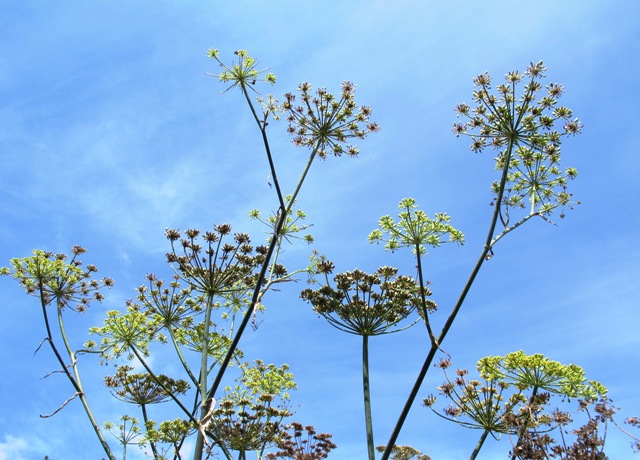
Fennel – foeniculum vulgare

“Don’t buy any more fennel seed,” he said as these plants crossed over from flowering to seeding. Fennel is one of my favoured cooking herbs. In fact these are the seed heads of Florence fennel or finocchio which never made it as far as the vegetable garden. The common fennel that flowers on many a roadside but never develops that edible bulbous base is the usual one that is harvested for herbal purposes.

Phlomis russeliana

Phlomis russeliana

We find Phlomis russeliana an undemanding, handy little perennial which flowers well even in conditions of high shade. Its flowers are soft yellow, arranged like a tiered cake stand and the stiff seed heads retain that interesting form. I had to pick these to photograph them and you can see the see the seed falling out. Usually the birds – and maybe the mice – will clean up this seed.

Clematis tangutica

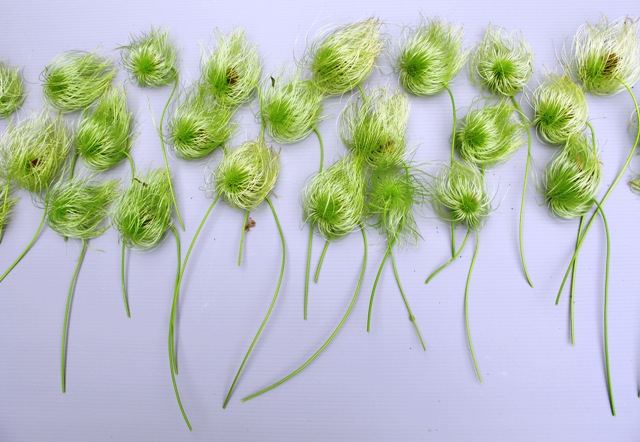
Clematis tangutica

While these cute seed heads are from Clematis tangutica, it is a typical clematis seed form, although these are silkier and greener because it is a late season bloomer. That light ethereal form is usually a sign that the seeds are spread by wind, as indeed is thistledown from dandelions. The plant of course has evolved not to please humankind but to ensure its own survival.

Pachystegia rufa

Pachystegia rufa

Pachystegia have fluff balls of seed, another wind dispersal candidate. This one is P. rufa, a different form of the Marlborough rock daisy to the highly prized, larger-leafed P. insignis. There is something very tactile about these soft pompoms.

Arisaema seed head, in this case A. tortuosum

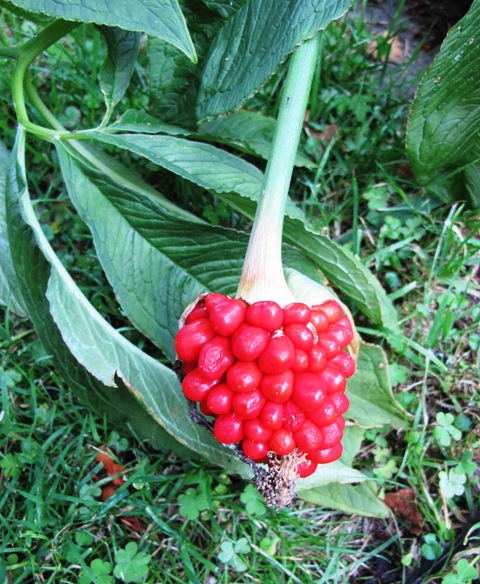
Arisaema seed head, in this case A. tortuosum

Arisaemas are bulbs from the Asian subcontinent with hooded flowers somewhat reminiscent of a cobra. Many of the arisaemas, and indeed other aroids like arum lilies and zantedeschia, set attractive seed pods. The birds don’t touch these which is usually an indication that they are poisonous. Small children are not as discriminating as our feathered friends and it pays to check the safety of any plant which sets such attractive seed, as well as teaching your little ones not to put stray seeds and berries in their mouths.

Agapanthus - weed or wildflower?

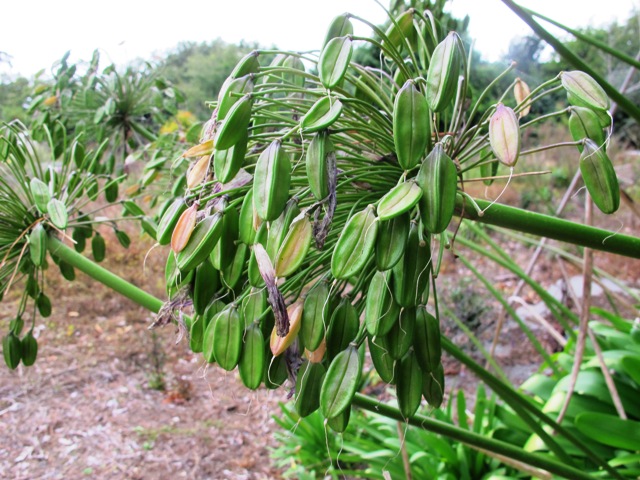
Agapanthus – weed or wildflower?

Even the humble and often maligned agapanthus has an attractive seed head. These are heavy seed and don’t often fall far from the parent plant but, given the concern about weediness, dead heading seems a wise move, especially if you have them near waterways or reserves. Water is an efficient method of seed dispersal as can be witnessed by downstream and riverbank weeds.

First published in the Waikato Times and reprinted here with their permission.