Tag Archives: banned plants

Of matters related to fertility and sterility

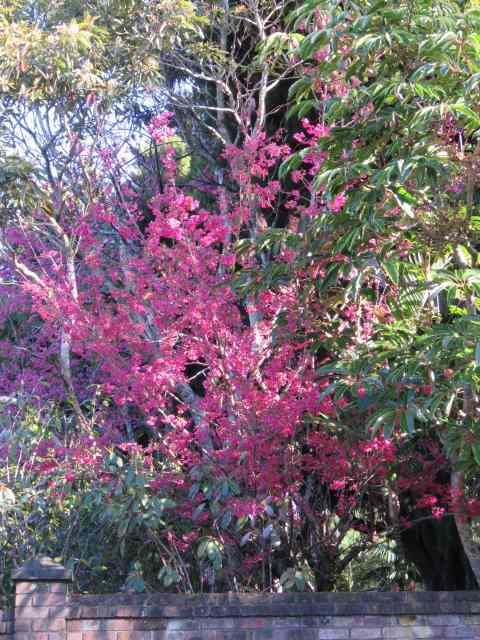
Prunus ‘Felix Jury’ by our driveway. It is a handy, small tree with good colour but beware its seeding ways.

I received a phone call on Friday from a garden centre in another area. The caller wanted me to confirm that Prunus ‘Felix Jury’ was sterile. Their regional council had asked them to remove their plants from sale because they seed everywhere but their supplier had assured them it was sterile.

Reader, Prunus ‘Felix Jury’ is NOT sterile. The woman on the other end of the phone was perfectly pleasant and thorough and said she would immediately remove the remaining plants from sale. All credit to her.

I feel like I am shouting into the abyss when I say that Prunus ‘Felix Jury’ is not and never has been sterile. I have even written to a nursery and garden centre to advise them of this fact when I saw them advertising it as sterile. I was ignored. They are still advertising it as sterile. The original plant was raised here by Felix himself and it was Duncan and Davies Nursery who named it for him and put it into production. So it is a Jury plant but not one that we have any control over at all in the market place and Felix was never paid for it.
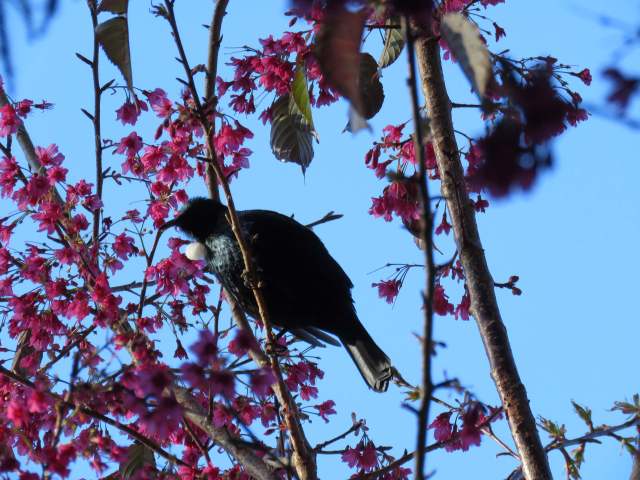
Our native tui, feeding from ‘Felix’

Times were different 50 years ago. We didn’t realise that campanulata cherries would become invasive weeds which are extremely difficult to eradicate because if you just cut them down, they grow again. The seed is spread far and wide by our native birds who eat the small cherries that form after flowering and excrete the inner pit or seed as they fly. Back then, they were just a pretty, flowering tree providing valuable food to tui, who adore them, in late winter. Now they are on the banned list – as in banned from sale, not banned entirely from gardens – in a number of areas and for good reason.

Once and for all: PRUNUS ‘FELIX JURY’ IS NOT STERILE.

If it was sterile, there wouldn’t be a problem because none of the seed is fertile so it can’t spread. The only Jury-bred campanulata hybrids that are sterile are ‘Pink Clouds’ and ‘Mimosa’ and they are sugar pink, not the carmine red of the campanulatas.
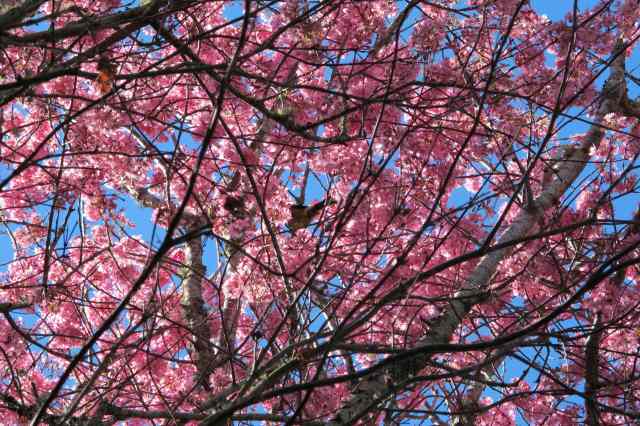
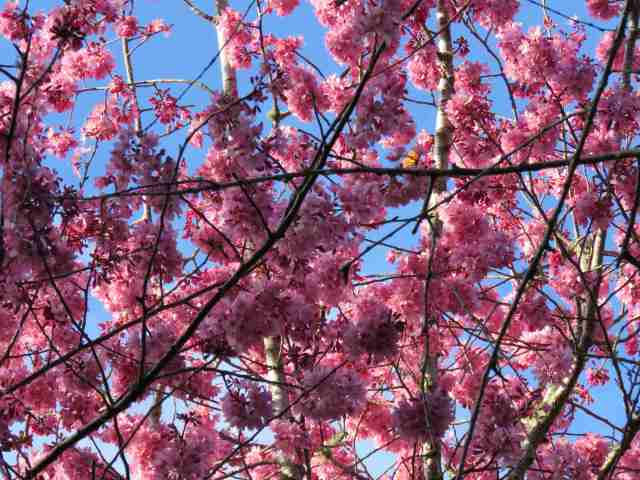
Prunus ‘Mimosa’, named by Felix for his wife. I took this photo to try and capture the korimako, our native bellbird, in the very centre.
I only add this photo because in the top left quadrant, you may spot the orange wings of a monarch butterfly feeding on ‘Mimosa’

We haven’t cut out our campanulatas and seeding cherries… yet. We derive a great deal of pleasure from watching scores of tui making the trees dance with movement as they feed and then fly on to the next tree. Mark is making mutterings about them. I think it likely we will keep the trees in the areas we actively garden; we are vigilant weeders and constantly pull out seedlings at a very early stage. We can manage them. But the ones on the margins and in wilder areas where we don’t spot the seedlings until they are too large to pull out by hand may get the chop in the next few years. It will be a big job because not only do they get the chop but the stumps have to be poisoned to prevent regrowth.  

I would be thinking twice before planting one and, were we still in the nursery trade, you can be sure we would no longer be selling them. Times change, knowledge grows and we need to recognise that and respond.
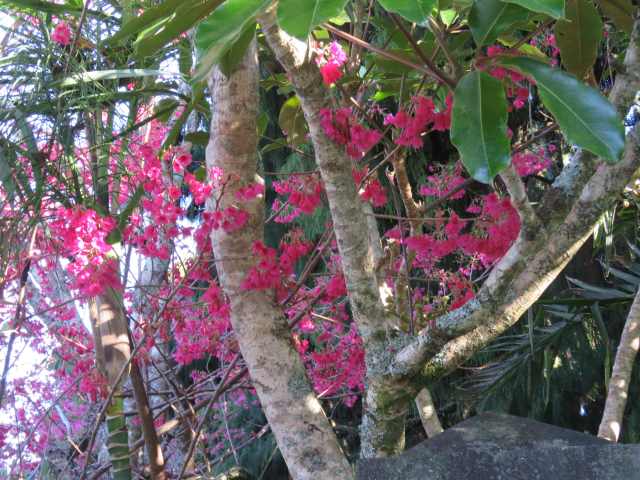
‘Felix Jury’ again

Banned plants in New Zealand

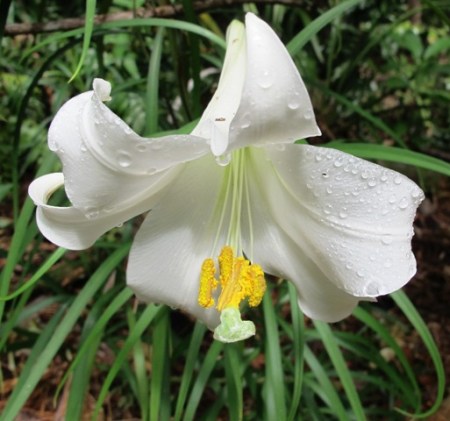
The offending Lilium formasanum

The offending Lilium formasanum

I have to start with a mea culpa today. Last Friday I featured Lilium formasanum on Plant Collector. I wouldn’t have done so had I known it was on the Pest Plant Accord list. In other words, it is banned from propagation and sale in this country.

To be honest, we are a bit surprised it is on the banned list. While it seeds down, in our experience it does so gently and has never shown invasive tendencies here and it is not strong enough to out-compete native plants that we can see. However, we respect the spirit of the Pest Plant Accord and I would not have praised the merits of this lily had I known.

Being on that list, does not mean it has to be eradicated – just that it can’t be produced for sale and that gardeners should be cautious with it. My general advice is that if you live near native bush or a reserve and certainly near a national park, the responsible action to take is to get rid of these plants from your garden altogether. In more suburban areas, it is not likely to be a problem but keep an eye on what they are doing and don’t let them escape. You also need to be careful what you do with garden waste because too many of our weeds are garden escapes.

So embarrassed was I at having been caught out making a public slip-up that I started to browse the National Pest Plant Accord booklet, the website of the Ministry for Primary Industries and some of the regional council websites. After encountering some of the most confused and badly designed websites I have seen in a while, I rang our local pest plant person to confirm my interpretations. There are no simple answers and there is a wonderful level of inconsistency in language, classifications and recommendations. It is all as clear as mud really. So here is my attempt to translate it to home gardener level.
???????????????????????????????
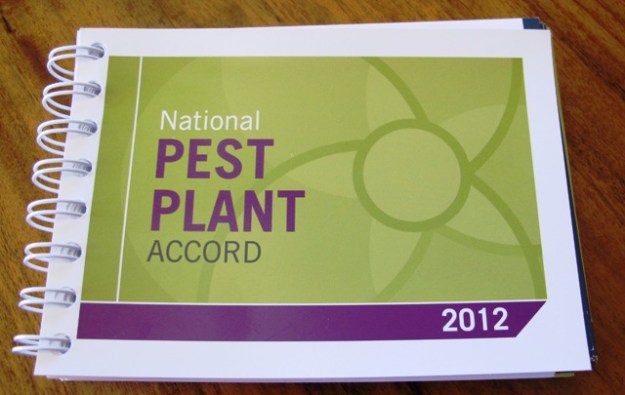
The handy little spiral-bound book entitled the National Pest Plant Accord is a listing agreed to by various bodies including the Nursery and Garden Industry Association of NZ. You can request a copy of this booklet from the Ministry or your regional council. It has photos and descriptions (one plant per page) but no advice on dealing to individual plants – every page tells you to contact your regional council for this advice. The plants included are a little… random, shall I say. Lilium formasanum is there but I don’t know where it is a particularly problematic weed.

Curiously, Rhododendron ponticum is also included. Now, R. ponticum is a blue rhododendron species that has been used extensively to breed many of the big blue hybrid rhododendrons favoured by gardeners. It is a real problem in the UK where it has established itself in the wild by layering and seeding but I am not aware of it ever being produced much, if at all, in the nursery trade in this country because the hybrids are so superior. The hybrids are not a problem. In other words, ponticum is not a problem in this country but it could be if we let it get established. Well, if this Pest Plant Accord were to include every potential weed in the world that could establish here, it would be a massive tome.

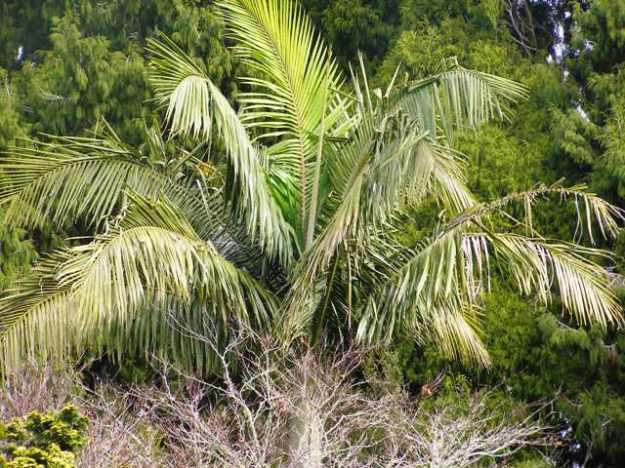
We have not cut our bangalows out at this stage, but we are alarmed at their weed potential

We have not cut our bangalows out at this stage, but we are alarmed at their weed potential

But the Accord misses out on some significant plants because the nursery industry has dug its toes in and refused to play ball. I have written before about the bangalow palm (Archontophoenix cunninghamiana) which we regard as having significant pest potential, and we are not alone in that opinion. Similarly the Chinese Windmill Palm (Trachycarpus fortunei) is pretty questionable but so strong in the trade that it may never make the Accord. We’d say the same about the Himalayan Daphne bholua too.

The problem with the Accord is that it is national and what is a significant or major weed in one area, may not be at all problematic in another. That is where the regional councils come in. As far as I know, their pest plant lists are not dependent on cooperation from the nursery industry and being based on local experience, they are more relevant to local gardeners.

In Northland there are huge issues with seedling campanulata cherries and I have been told that only sterile varieties can be sold there now. Similarly Buddleia davidii and agapanthus, but they are not on the national Accord. Taranaki completely bans both species of the giant Chilean rhubarb (Gunnera tinctoria and manicata) and insists on total removal.

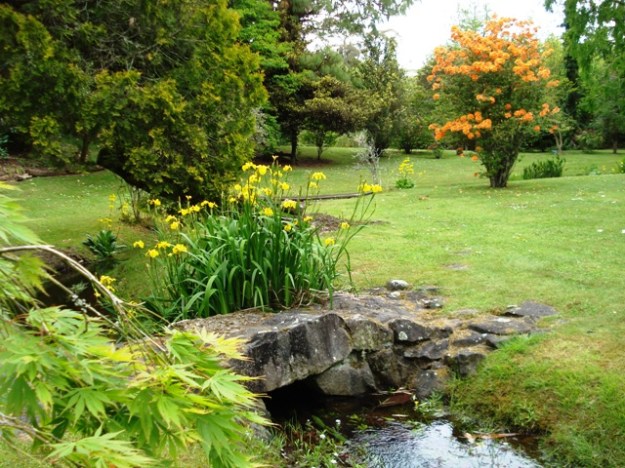
Waikato Regional Council has lists on its website though you do have to know the common name (often confusing) because apparently it is too complicated to list under both botanical and common names on the directory page. Plants are classified as eradication (Council will deal to it for you), containment (landowner’s responsibility), potential pest and merely nuisance status (presumably waiting to move up the ranks). There is information on how to deal to these plant pests. A quick look suggests that not many of them are common garden plants (though we will be getting rid of our yellow flag irises here), but it is worth having a look.

I just can’t help but think that some analytical thinking, better writing, consistency of information and good website design would make this stuff a whole lot more useful for responsible gardeners. These are important issues but the powers-that-be haven’t made it easy to use the information.

The days are numbered here for the yellow flag iris

The days are numbered here for the yellow flag iris

First published in the Waikato Times and reprinted here with their permission.