
Beth Chatto’s dry garden in the UK was a revelation for us and, to this day, we see it as a major influence in the whole shift of direction with the New Perennials or New Naturalism movement that is more commonly attributed to Piet Oudolf.

Beth Chatto was planting on an old riverbed in an extremely low rainfall area and she wanted a garden that did not rely on any irrigation at all. Clearly this bears no relationship to our conditions. We never irrigate because we don’t have to; we never suffer from low rainfall. But it is the absence of garden edgings I want to draw attention to.
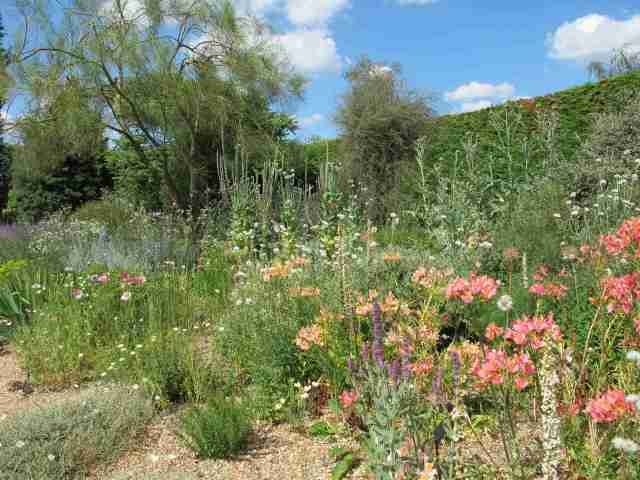
Garden edgings are basically about containing the garden and giving definition. To do away with them altogether completely changes the look and makes it far more natural in appearance – albeit while not being natural at all. I really like the look and debated about it when we were putting in the Court Garden but decided not to for practical reasons.
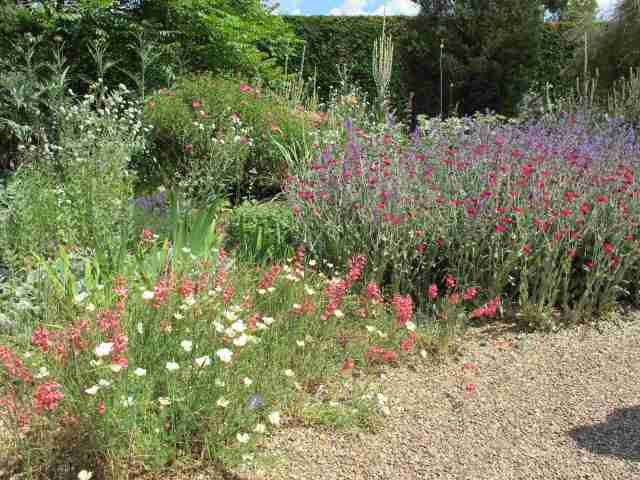
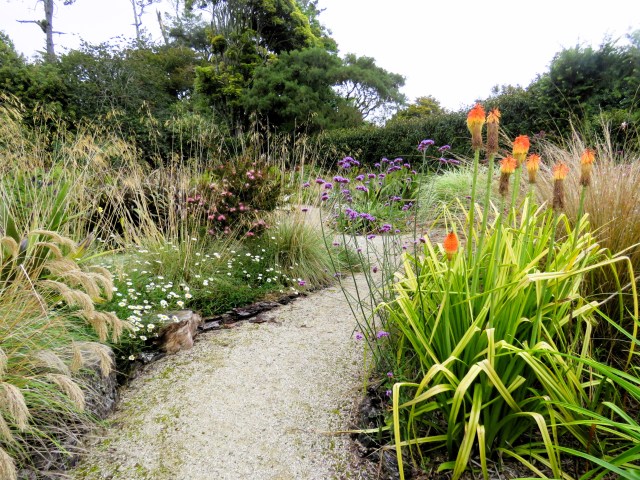
It came back to mind recently, firstly with the visit of Australian, Michael McCoy and then looking at some of Penny Zino’s photographs of her summer gardens in North Canterbury. I don’t have permission to use their photos here but you can find them both on Facebook where they post photos able to be viewed by anyone or go to their own sites – https://www.flaxmeregarden.co.nz/gallery for Penny Zino and https://thegardenist.com.au/ for Michael McCoy. I am not an Instagram user but Michael is active on that forum too as @michaelmccoyongardens. If you browse their photos, you will find examples of these seamless transitions – paths meandering through plantings in the Chatto style and very charming it is, to my eyes at least.
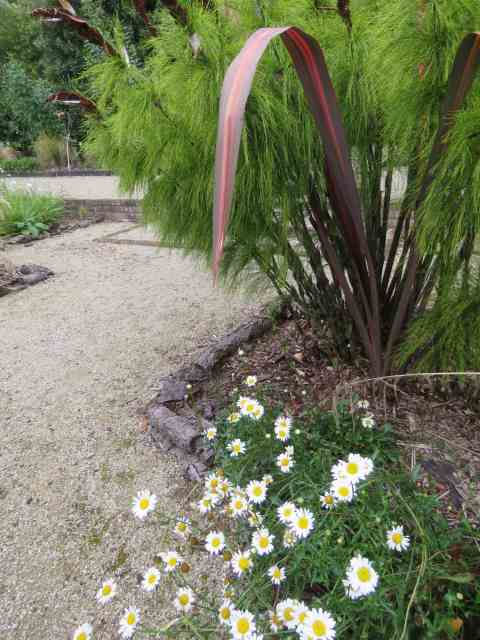
All of us appear to have chosen the same path surface in fine, cream grit and that, in itself, gives definition and lightness. Our grit is 50% crushed limestone and 50% crushed shell, bought from a local supplier of gravels and rocks. Beth Chatto used a mulch around the plants that is the same colour as the path grit but pebble-sized so it looks the same at first glance but it is in fact easier to rake to the side when digging is required. I didn’t notice that at the time but it is clear in my photo records. Not having seen their gardens except in photos, I don’t know whether Zino and McCoy have also carpeted their entire area in the same as mulch or whether they just allow the paths to peter out into leaf litter and soil as it goes further into the plantings.
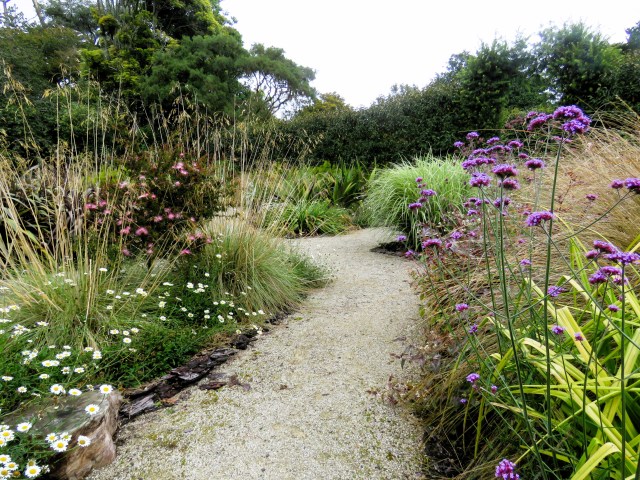
It made me reflect on why it is not a practical option for us and why I decided against it. There are several reasons – climate, the presence of large trees, plant selection and maintenance. I think it is a dry garden technique and we are anything but. If the path surface extends through the garden as mulch, it looks best if there isn’t a whole lot of leaf litter and debris on the surface. With the number of large trees we have and being in a windy climate, we have falling leaves and debris all year round. Keeping the cream-coloured paths clear is a big enough job for us, without having to leaf rake or blow all the garden surface too.
Added to that, in our soft climate, we have rampant growth and managing perennials means constant cutting back, digging and dividing, restricting and deadheading to prevent too many self-sown seedlings. Plant selection becomes critical if you want that seamless look because every time you dig a plant, you disturb the mulch and make a mess. When set in cream grit mulch, it would be easier from the start to choose plants that grow from a central stem – lavender, euphorbias, roses, and salvias come to mind. Plants that form rosettes or spread beneath the ground – like perennial lobelias, alstromerias, asters, echinaceas, rudbeckias – all need regular attention to restrict spread or to keep healthy by dividing. I want to grow all these, too.
It is why we favour composted wood chip mulch. It is easy to top up at the end, cheap to use and, when weathered and composted, it just adds natural humus to the soil. It is best to source a woodchip that isn’t too coarse. Some mulching machines make a big chunky chip which takes much longer to weather and is not attractive to my eyes. Our friendly, local arborist (he lives up our road) provides a good grade of chip which soon becomes anonymous in appearance. When I cut back or deadhead, I often snip the pieces to smaller sizes and leave them in situ to break down naturally. If I had decorative mulch, I couldn’t do that.
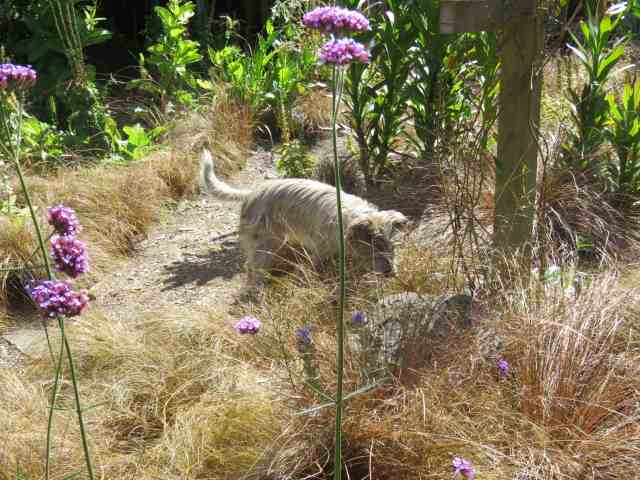
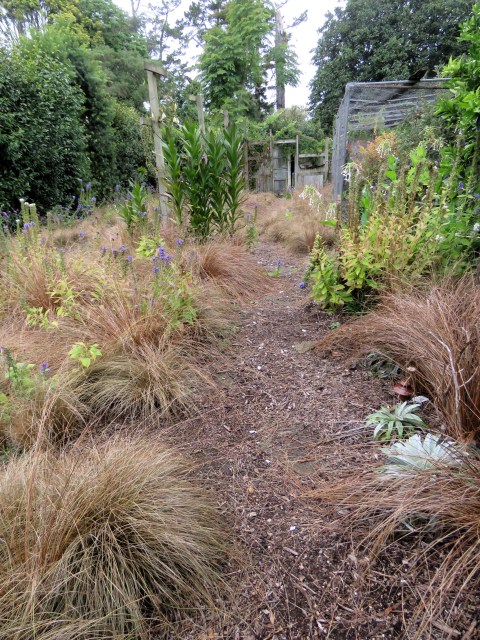
Our compromise was to go for that seamless look and meandering paths in the area we now loosely refer to as ‘the grassland’. It is a transitional filler space, primarily using just two native brown grasses, Carex buchananii and Carex coman’s ‘Bronze’ along with a fair swag of interlopers (‘volunteers’ as we call plants that just arrive of their own accord), residual survivors from its earlier uses and bulbs I have added for seasonal interest. So, a limited plant palette overall and most of the maintenance is pulling out seedlings (particularly of the carex) and a bit of occasional grooming of the grasses. It is not carpeted in cream grit but in woodchip – paths and mulch. It is a lower-key look that lacks the contrast and lightness given by the cream grit but it is a long-term, sustainable option in our conditions.
 Beth Chatto dead? This should not be a surprise.
 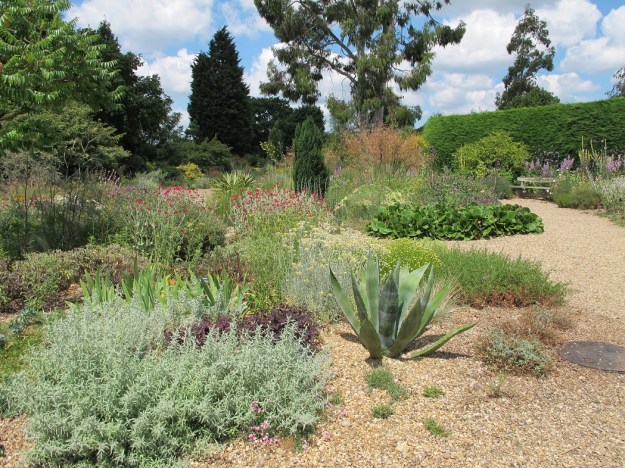 We returned to her garden with Charles in 2014 but she was too frail that day to join us. It was a bright, sunny day and I have since regretted that I did not get good enough photos of her dry garden in the glaring light.
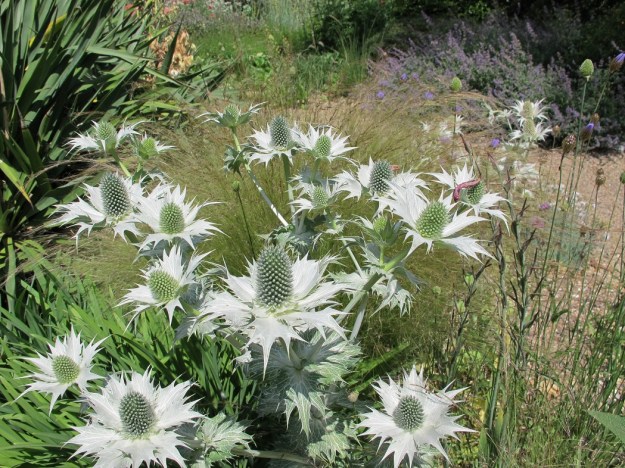
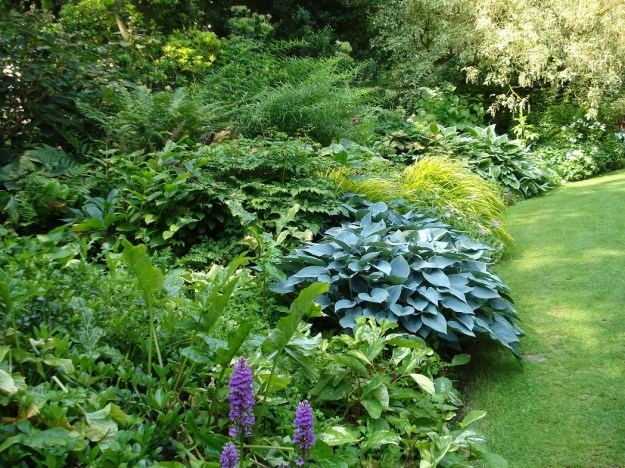 The original garden is perhaps a little dated by modern standards – rather a lot of curvy, hose-pipe borders – but always managed to the highest horticultural standards and underpinned by that knowledge of which plants will perform in those conditions and co-exist well with each other. I would love to see the woodland area in early spring when it must be magical but the UK in early spring is a bit cold for us these days. It is the dry garden that lifts a visit to another level altogether.
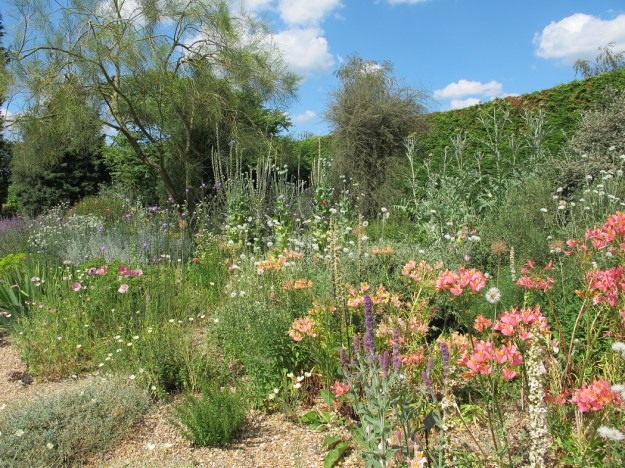 We have spent quite a bit of time making sense in our own minds of contemporary European and UK gardening trends – New Perennials (where Piet Oudolf’s work is still the gold standard), the New Naturalism, meadows, prairies, ecological gardening, matrix planting, sustainable plant communities and what we call the romantic revival or, simply, romantic gardens. And in Beth Chatto’s garden, thirty years ago, she was creating the precursor to all these modern trends in her new dry garden. In a very dry climate, nothing is irrigated in this garden built on a compacted carpark and river gravel. The skills lie in plant selection and the light-handed but deft management which allows plants to have their own space and follow their own natural inclinations. She had a rare combination of exceptional plantsmanship and top-level gardening skills.
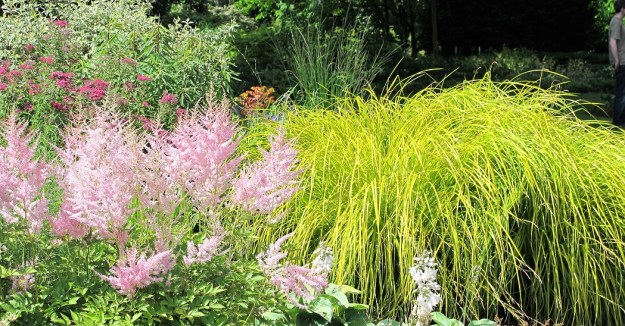 I did not so much appreciate her
 Tikorangi The Jury Garden