“What do you think the ingredients of a typical English or British garden are?”
“That is an interesting one. I would say hedges, borders, grass, (something inaudible to a NZ ear) and enough manicuring in some parts that it looks cared for. I think it is that mix of formality, the manicured elements and the wilder, more romantic parts that make the British garden especially British.”
Monty Don in conversation with Chris Crowder, head gardener at Levens Hall in episode two of the TV series ‘British Gardens’.
“Yesss!” I said out loud and went back and replayed it. Not just British gardens – that is a pretty accurate description of how we personally garden in Aotearoa NZ. I would qualify that we don’t do topiary here so much as some heavy clipping but it serves the same end of giving definition and form in the garden. And I would add a high level of plant interest which is another feature of British gardens (and very much so in our own garden). It is perhaps an understandable omission on Chris Crowder’s part, given that he manages a garden that dates back to 1690 (!) and is famed for its topiary.
In brief, Monty Don’s summary of the essence of British gardening seemed to come down to a few key points.

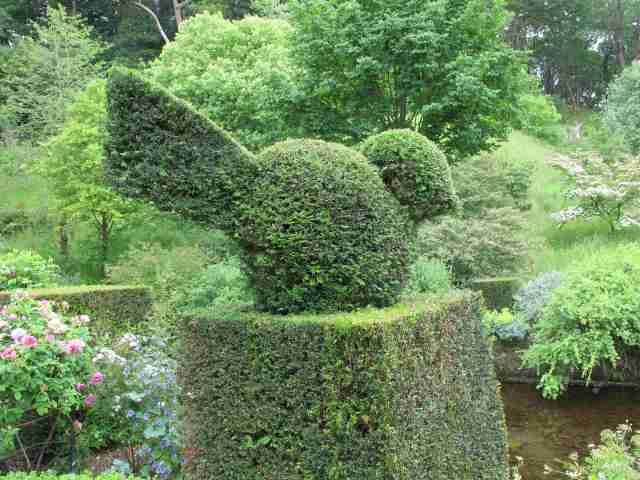
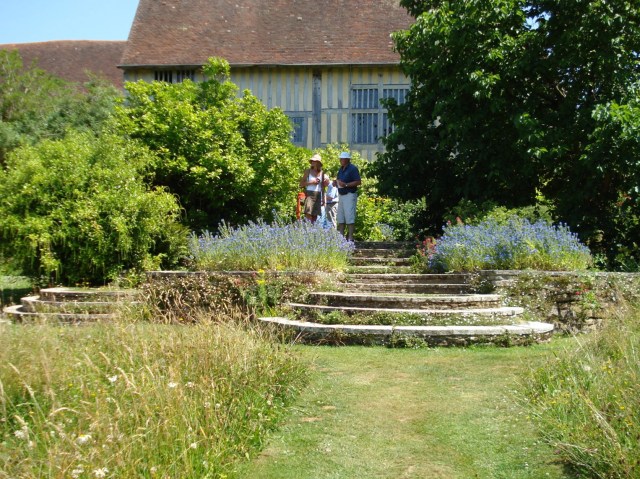
Firstly that British gardening is deeply rooted in eighteenth century landscape design (think Capability Brown and his peers designing grand landscapes for the rich and powerful) and that, to this day, a high value is placed on that long history. Many British gardens have wonderful, historic architecture features – be they massive walls from old walled gardens, ruins, follies, pretty manor houses or even castles.
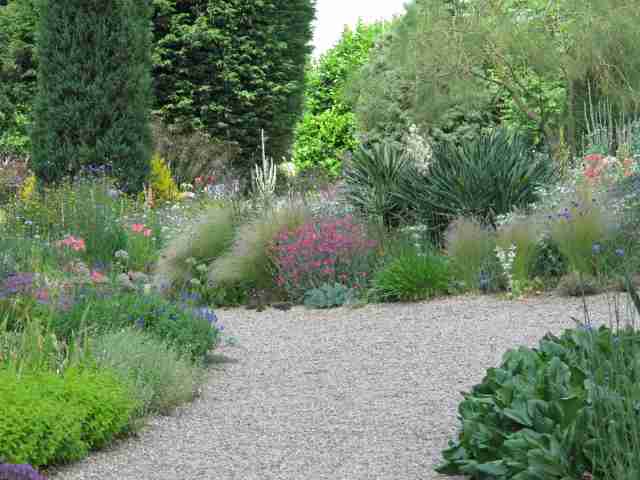
Those early funders also supported plant hunters combing the world for new plants which were welcomed with delight back in their homeland in a rarified pursuit of competition and one-upmanship. To this day, British gardening is a celebration of the ability to grow a huge range of different plants collected from around the globe and plant range is a defining feature. I remember quipping after my first trip to Italy – a magnolia conference tour – that they basically gardened with the same ten plants but that is not true of British gardens, or indeed New Zealand ones.
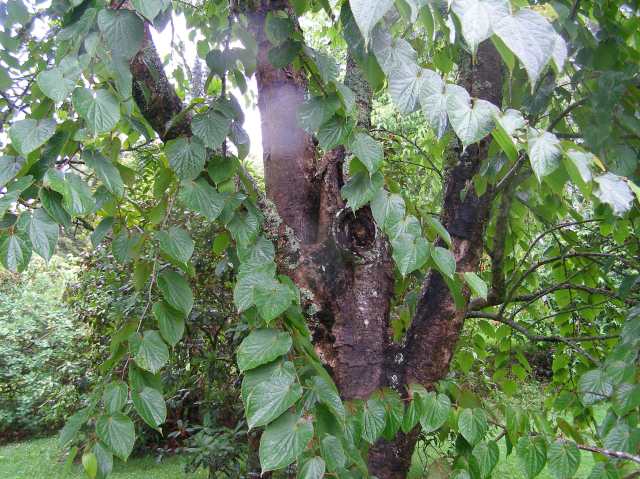
Secondly, climate. In global terms, Britain generally enjoys a moderately temperate climate and there is no doubt that it is easier to garden in a climate without extremes. I don’t think their climate is quite as good as some of the people in the programme asserted but I would say that, as a New Zealander.
Thirdly, Monty Don talked about his homeland as a place where people ‘learn the language from an early age’. I think it is a bit more complex than that. What I see is a place where gardening has been both professionalised and institutionalised over a long period of time, which has given leadership and placed a value on it which is often lacking in other countries. Gardening, not just the broader notion of horticulture, is a respected profession. There is an established career path and high-quality training. Added to that, there is considerable support from institutions like Kew, The Royal Horticulture Society with their major gardens and in the media. BBC Gardeners’ World has been running since 1968 on primetime television, for goodness sake, and still has a loyal following. There is quite the collection of other TV garden programmes, both good and execrable, and garden celebrities who are actually celebrated, as opposed to just being recognisable. The vast majority of domestic gardening is done by amateurs but there is institutional knowledge to underpin much of that, and a strongly educative side.
In this country we haven’t had a proper TV garden programme for over two decades. That is despite census data regularly showing that gardening is one of the most popular leisure pursuits. I have long figured that nobody in the TV programme commissioning area has understood this simple fact, nor have they seen past the dated formula of instant garden makeovers.
Britain is a densely populated country with much more restricted personal space. This means that large numbers of people want to get out and about in their leisure time. With gardening so embedded in the national psyche, that often includes garden visiting and the level of visitor numbers supports both public and private gardens.
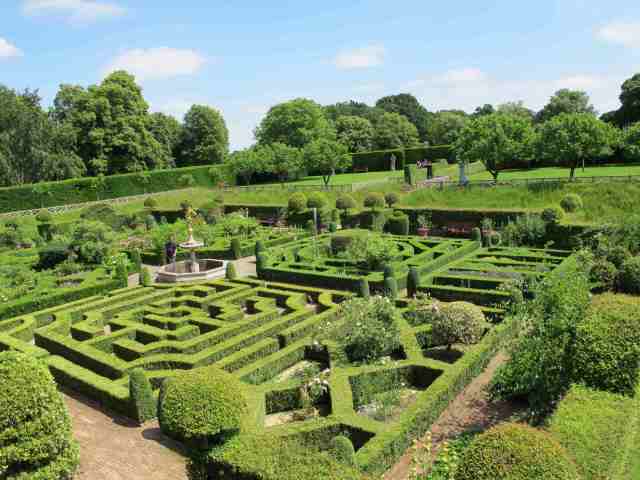
In Aotearoa NZ, we have taken on some of the same gardening values, although our colonial interpretation of British garden design is more Arts and Crafts (garden rooms) than 17th century pastoral landscape. With our benign climate, we certainly place a high value on growing a wide range of plants and having an attractive home garden – albeit quite a few want it to be both attractive and low maintenance. With a small population and overall low density of housing, the majority of people have private outdoor space. So yes, we do garden a lot. But overall, we lack that professional and institutional backbone of British gardening.
It was interesting to hear discussion on the impacts of climate change threaded throughout all the episodes. Many gardeners and Don himself referenced it as they discussed the gardens and future considerations. All I can say is that I am not seeing that sort of discussion in this country where the prevailing views seem to be either a loud ‘harrumph’ of denial or, at best, issues of climate change are pushed out to the margins as not being a relevant issue at a personal or local level. We have not normalised it as a factor in planning for the immediate – or even distant – future. We may be in for a shock as we continue to treat extreme weather events as one-offs rather than part of a larger pattern which is set to get considerably more extreme in a shorter space of time than originally thought.

Facebook showed me a post by Gardens Illustrated on one of our most favourite gardens, Wildside and I read the comments. “Lovely series but it would be nice to see some ‘normal’ gardens”. Reader, what is a ‘normal garden’? The series gave considerable attention to both the wonderful British phenomenon of allotments as well as community gardens, alongside a potted history of the evolution of gardening down the past 450 years, touching on the most innovative recent developments.
I suspect a ‘normal garden’ equals ‘a garden like mine’ to that Facebook commenter.
“Rewilding” will have to wait. I will return to Knepp Castle and Waltham Place and the questions they raise in the future.
 Tikorangi The Jury Garden