Tag Archives: calanthe orchids

Orchids a-plenty

It is magnolia season and I have been photographing magnolias to share on a Facebook page I belong to, mostly populated with Northern Europeans which is how I learned yesterday morning that Mark’s Magnolia ‘Honey Tulip’ is performing well and bringing delight to a magnolia enthusiast in Ukraine. That seemed a little poignant. But this lovely yellow orchid has been sitting in my photo files waiting for its week to star so it is the turn of orchids to feature in this busy spring season.
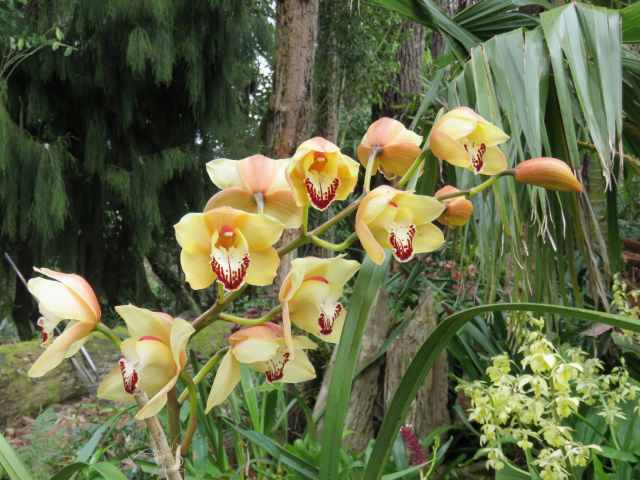
I can’t recall seeing this yellow one flower before. Our garden apprentice, Zach, is a keen orchid man and I asked him if he had moved it to its current location, fed it or done anything to encourage it to burst into bloom and he thought not. It may be that after Cyclone Dovi, we have more light in this area and that spurred it on. It is lovely.
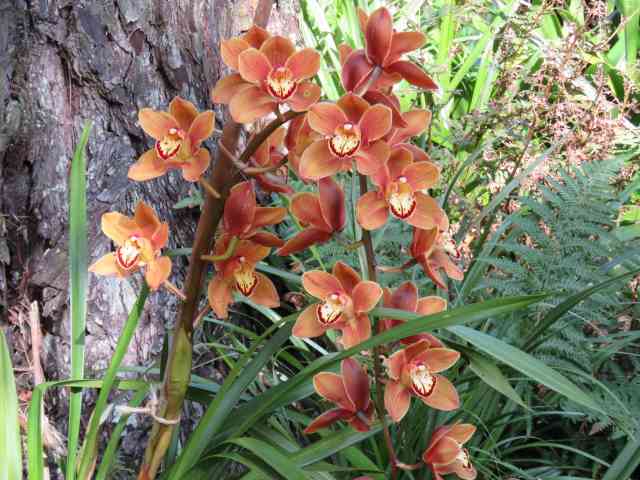
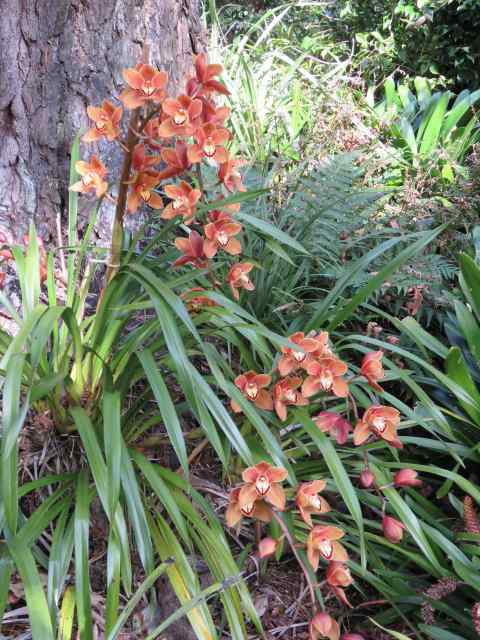
Brown shades are not my favourite but it earns its keep every year

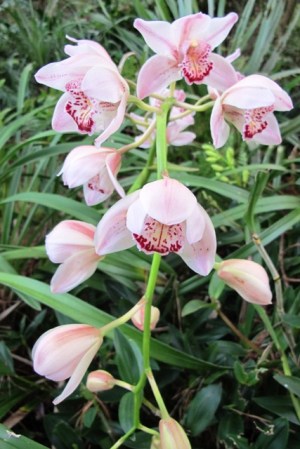
Cymbidiums have long been imbued with an aura of luxury because of their role in floristry but have, perhaps, been somewhat overlooked as garden plants in areas where they can be grown. The flowers last for many weeks in excellent condition and then die off fairly gracefully. Of all the orchids we grow, they have the longest season in bloom and are very showy, even if they lack the more delicate charm or curiosity of many other members of the same family. And they are easy-care. We have had most of ours for decades and the only attention they ever had was to stake flower spikes when necessary. They are getting a bit more love from Zach who is dividing larger clumps to spread around and giving them a bit of compost from time to time but they still rate as low maintenance plants.
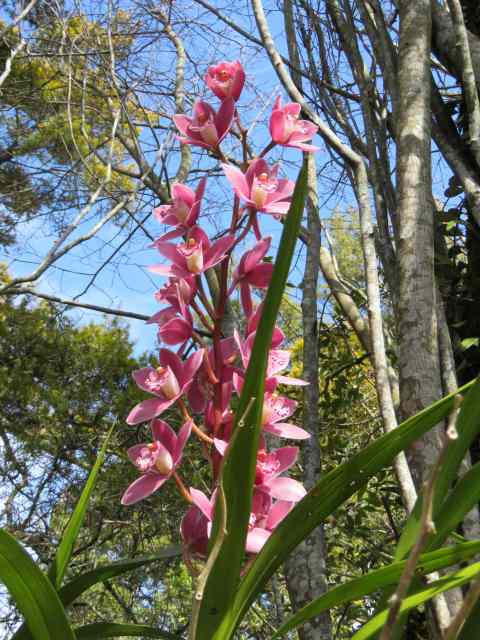
This one is growing in the fork of a tree and gets completely ignored until it comes into flower each year

Our style is to work them into woodland plantings in conditions of high shade and go for the natural look. I have seen them used in mass plantings and I am guessing that is an expensive option because it involves buying mature plants with spikes forming from a commercial grower. The problem with sourcing plants from a commercial grower is that their main market is floristry and the flowers can look a bit over the top in a garden – a bit too large. That is fine if it is the look you are after but it is not our preferred look.
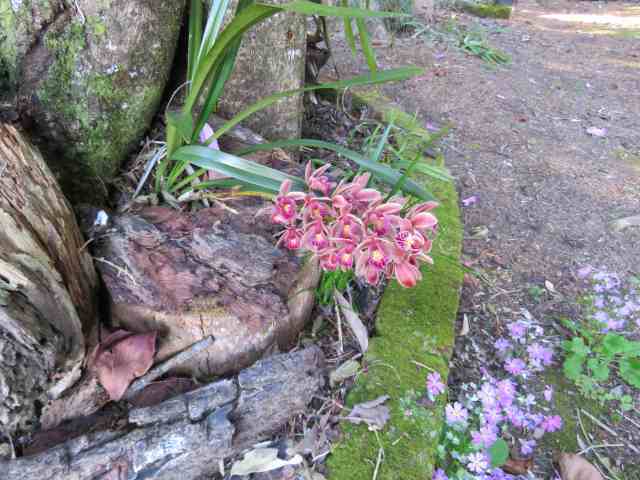
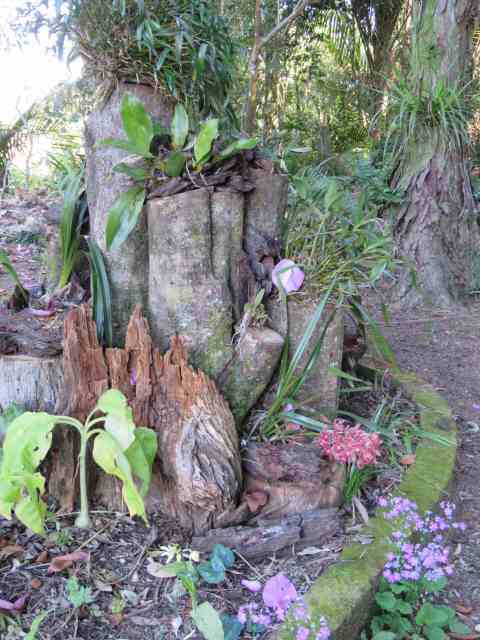
This one is small, dainty even for a cymbidium. Bigger is not always better.
For context, it is in the bottom right of the photo, in Zach’s most recent orchid and fern construction to add some height in a formerly dull end-point of a border

We are not experts in orchids. Aficionados – and the incredibly complex family of orchids attracts its own devotees who often develop an extraordinary in-depth knowledge of different orchid species and groups – tend to be collectors who lavish a great deal of time and love to growing their orchids in pots, often under cover. But they aren’t often gardeners. Our interest in orchids is pretty much focused on what we can grow in the garden here. Over time, that has come down to a limited range as we have learned what will thrive and lost what does not.
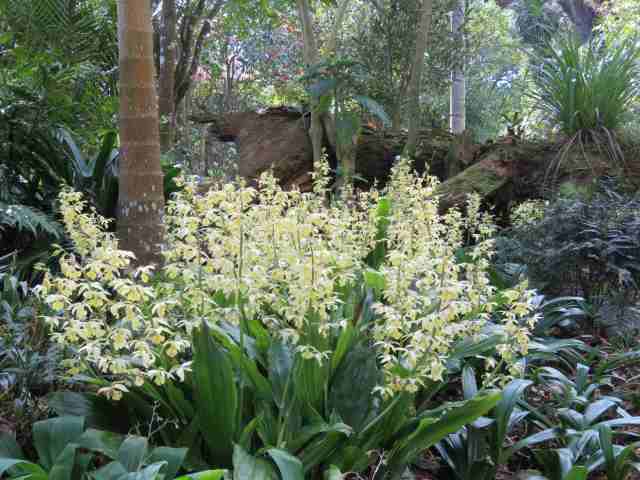
Calanthes

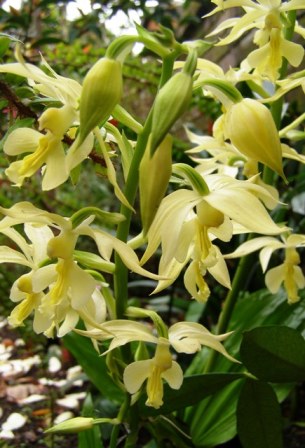
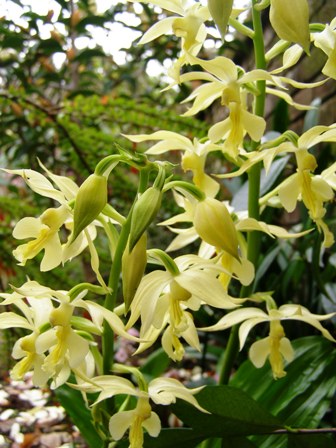
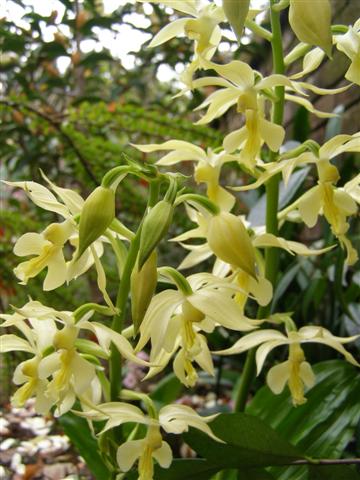
Cymbidiums are the current stars, along with calanthes. We only have four different calanthes and I am sad I lost the pretty lilac one but we have A Lot of those four different ones, particularly the pale yellow one which I am told is Calanthe ‘Higo’ (C. sieboldii x C. aristulifera). As Zach and I stood admiring them, he commented that they look way better in the large drifts we have, that a single plant in a pot is not particularly remarkable. What a difference 50 years of allowing them to multiply in the garden can make. The calanthes last for several weeks in flower and having different ones means we will have them flowering from now through until the start of November.
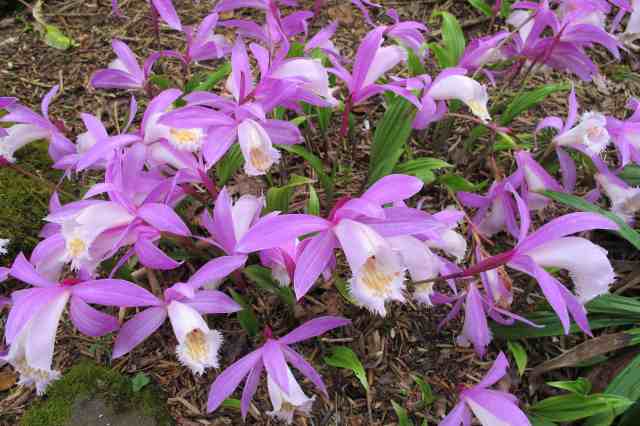
Pleiones

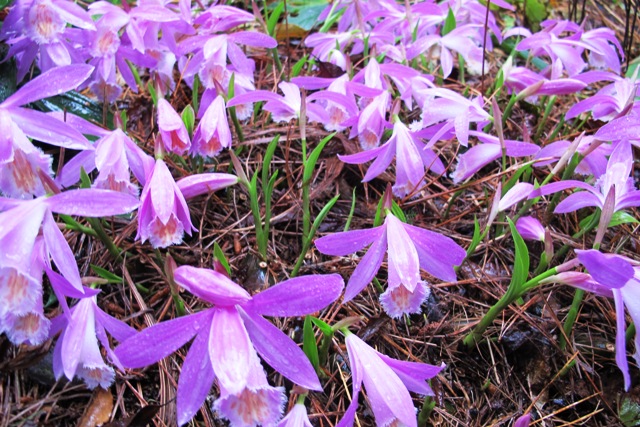
Pleiones are another ground orchid. They are just starting to put up flower spikes so I had to find a photo from previous years. They are much more delicate in texture, their season is pretty short and they need more care and management to keep them thriving because their bulbs sit half in and half out of the soil and die off after flowering. But they are one of the prettiest orchids and worth the effort. Ours are all in white and shades of lilac and purple. There are lovely yellow ones and we built them up into the hundreds but they did not last in the garden. The yellow ones need more of a winter chill than they get here. We will give plants some care but not the level of mollycoddling required to lift them each season and reproduce the chill factor by refrigerating them and then planting them out again.
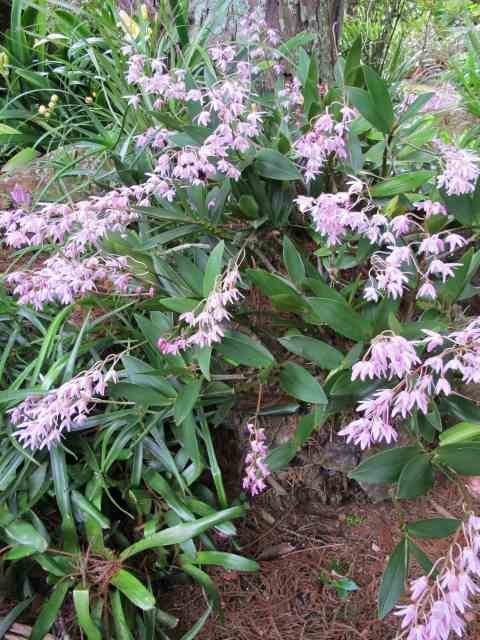
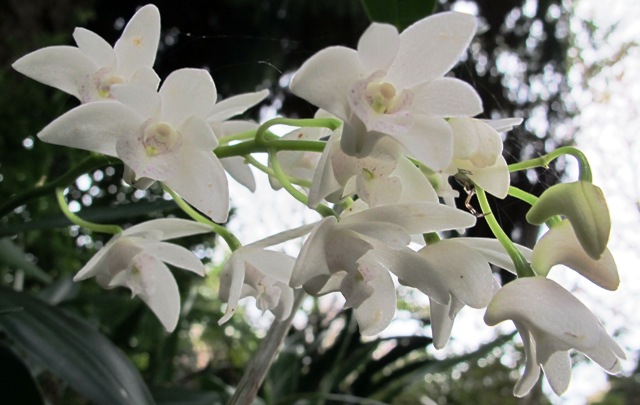
Dainty Bardo-Rose dendrobiums which we have in shades of pink, lilac, lemon and white

Dendrobiums can be fantastic garden plants and the Bardo-Rose hybrids are just opening their first flowers. They are another easy-care woodland option but much daintier and more refined than the cymbidiums. Later in  spring, will see the Satyrium corrifolium which is happy in the rockery and demands only admiration and no care, followed by the Dactylorhiza (maybe maculata) which is slowly and quietly in retreat – which is probably a reflection of our warmer winters in recent times.

I have just discovered that we have around 120 native orchids, almost all of which are so modest (read: tiny and often green or greenish flowers) that they might be described as visually insignificant. At least one of the native earina species appears naturally over trees all through the garden but only orchid devotees will find it thrilling to see. I went to photograph one but it is not in flower yet so must close with more cymbidiums.
Orchids as garden plants

Referred to here as the Aussie dendrobes - dendrobiums

Referred to here as the Aussie dendrobes – dendrobiums

We are at the peak of orchid season in the garden. There can be few plants which carry the aura of luxury and exotica accorded to orchids. They belong to a huge and complex family, second only to the daisy family in number and go well beyond the common cymbidium. Yet they are not a plant that is common in New Zealand gardens.

Besotted by calanthes

Besotted by calanthes

The calanthe orchids are particularly rewarding as garden plants but you need to take the long view. We use them mainly as woodland plants. The blooms are a bit frost tender. Some we had on the margins were once hit by a memorable late frost but that was a one-off event. After about five decades of building them up, we have large swathes or drifts. In fact we have so many that a gardening ingénue who saw them recently drew the conclusion that they must be an unusual but easy bedding plant. Ah, no. But for those who have the time and inclination, they are a very rewarding branch of the family. Over time, they form a string of back bulbs below ground and can be increased from these.

For orchid enthusiasts who want the technical data, we understand that it is mostly forms of striata that are showiest for us. We have a pale lemon one which flowers in early spring and a much brighter yellow form that comes later. We used to have them under different species names but have come to the conclusion that they are more likely just different striata forms. Note: I have now been informed that the pale yellow calanthe shown is in fact Calanthe ‘Higo’ (C. sieboldii x C. aristulifera) which makes sense to us. We also use the white C. arisanensis but alas we failed with a lovely lilac species and appear to have lost it. All of these are evergreen varieties, though I understand there are deciduous species as well. The fresh spring leaves are large and could, at a pinch, be thought of as looking like pleated hosta leaves. A fair number of garden visitors over the years have asked us about the yellow flowered hostas. (Hint: hostas only flower in white or shades of lilac to purple.)

The Australian dendrobiums make compact, clumping plants with many smaller flowers and are pretty as a picture in the subtropical woodland areas. They combine very well with bromeliads and ferns and are an easy care garden plant. We have them in pinks, lilacs, white and yellow. We don’t know much about the hardiness of these. Ours are in positions where they never get frosted but they will get cold and they never turn a hair. They are probably similar to cymbidiums in hardiness.

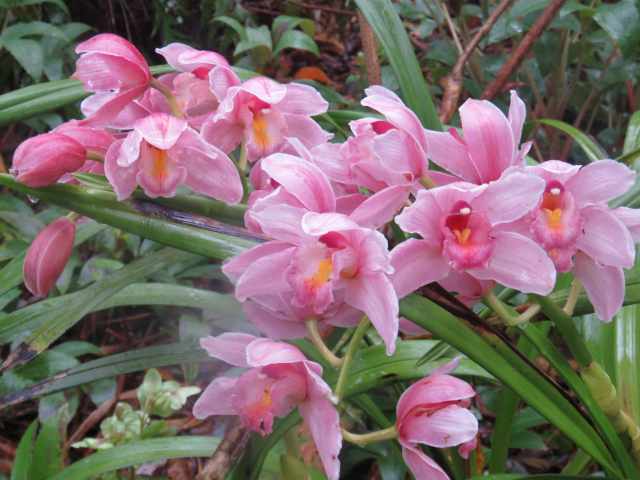
Cymbidiums give long lived blooms, even outdoors

Cymbidiums give long lived blooms, even outdoors

DIY bamboo stake

DIY bamboo stake

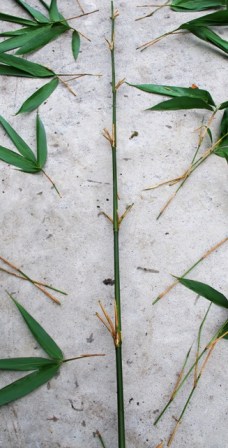
Cymbidiums are the usual florist’s choice and are surprisingly easy as garden plants, given the right conditions. All of ours are grown in the ground, not containers. We don’t get florist quality blooms but they last an amazingly long time in flower and put on a splendid show as long as I remember to stake the flower spikes at the right time. I see I started photographing the flower spikes a full two months ago and those same flowers are now a little weather beaten but still showy. These days I harvest stems of green bamboo which still have convenient leaf axils because I can gently engage the flower spikes in the leaf axils and don’t have to tie each one which makes staking much faster and more discreet. I admit this only works if you have a convenient stand of bamboo to harvest.

The jury is still out on whether we can get the disa orchids naturalised by the stream. They were fine for the first two seasons but the proof of the pudding is in the five to ten year cycle – whether they are still strong and flowering after that time. At this point it is not looking good. The native English field orchid, Dactylorhiza maculata, has gently ticked on here for decades but is romping away more enthusiastically now we are trying cooler, damper positions. We didn’t succeed with the masdevallias (though we probably didn’t try very hard) and the tropical orchids like phalaenopsis (moth orchids) won’t do as garden plants for us.

One of the easiest orchids to grow - pleiones

One of the easiest orchids to grow – pleiones

This week it is the pleiones which are the stars. Their flowering season is nowhere near as extended as some of the other orchids, but they form pretty carpets, are not at all tender and are dead easy to increase. Most bulbs will make one or two offsets a year. Along with the dactylorhiza, they are deciduous, becoming dormant in autumn. The yellow pleiones want more of a winter chill and have gradually died out for us but we have an abundance of purest white ones and an array of lilacs and purples.

These are not generally plants that you will find offered for sale at garden centres (which may be why they are not often seen in gardens). You probably need to find your nearest Orchid Society and enquire about sales tables. Orchid enthusiasts tend to be a different breed. At the risk of making sweeping generalisations, Orchid Society people are more often collectors than gardeners. More than any other horticultural group we have come across, orchid people have well above average technical knowledge and like to show off their treasures in bloom. They are also generous and encouraging to any novice who shows an interest. Much of our collection has come from Orchid Society people over the years. We cannot speak highly enough of them as a repository of knowledge about a very complex plant genus.

For details on how to multiply calanthe orchids, check out our earlier Outdoor Classroom on the topic.

First published by the Waikato Times and reprinted here with their permission.

Dividing calanthe orchids

1) We are besotted with calanthes which are an obliging ground orchid suitable for humus rich woodland areas which do not get too frosty or cold. Mark is out digging and dividing them right now, though he feels he should have been onto it in June or July. He is having to take great care not to break off the flower spikes which are showing now.

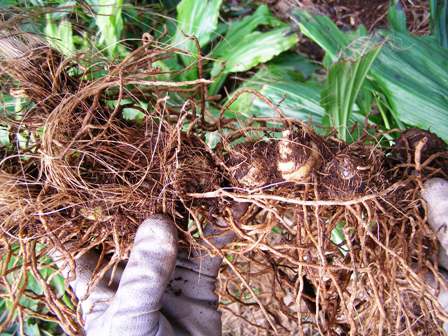
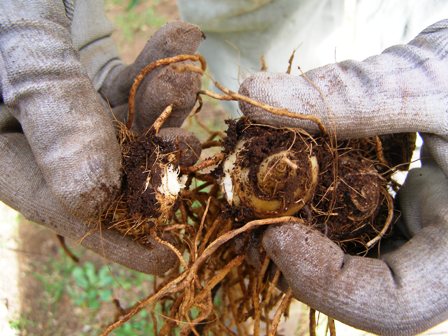
2) When the clumps are teased apart, it becomes clear that each section of foliage has a chain of rhizomes attached.

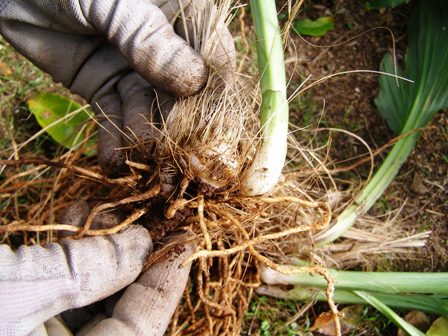
3) Break the rhizomes apart with care. Each will form a new plant. Discard any soft or mushy rhizomes. While these orchids will make a full set of new roots each year, leaving the old ones on at this time gives something to anchor the nubbly rhizome into place when you replant it.

4) The top rhizome of the chain will have the foliage attached. Leave this intact and attached to the first rhizome. Replant in well cultivated soil with plenty of compost or humus added. As the rhizomes tend to run along very close to, or on the surface, they only need to be lightly covered but they need well tilled soil below to get their roots down. The division with foliage will still flower this year. The dormant rhizomes should come into growth soon and some may flower next year, the remainder the year after.

Plant Collector: Calanthe orchids

Calanthe orchids - happy growing in our woodland

Calanthe orchids - happy growing in our woodland

Orchids are one of the largest and most complex groups in the plant world – fearfully complicated to try and navigate your way through. Our interest here is in orchids as garden plants and one of the star performers is the calanthe family. These are called ground orchids or terrestrial orchids – in other words they are happy to grow in good garden soil. In the right conditions, you can plant them and leave them alone for many years where they just gently build up and make a better display with more flower spikes. There are well over 150 different species of calanthes and inevitably some will be better and showier as garden plants in our conditions than others. There is a bit of a question mark over the correct name for this lovely soft yellow one- probably a form of sieboldii or striata. Note: I have now been informed that in fact it is Calanthe ‘Higo’ (C. sieboldii x C. aristulifera) which makes sense to us.

Most of the calanthes come from tropical and sub tropical Asia and are generally evergreen. Presumably the forms thriving with us are the sub tropical types because tropical, we are not. We use them as woodland plants and have only once ever had them tickled up by a vicious frost. Their only downside is that they are quite leafy and the foliage hangs on for grim death long after it has become tatty and shredded. They benefit from an occasional tidy up. The new growth comes in spring and is quite lush so that every year garden visitors ask us which variety the yellow flowered hosta is.

Probably because orchids are such a complex plant family, orchid societies continue to grow, show and share when many other specialist groups have gone out of existence. They are a friendly and knowledgeable bunch and if you want to start building up a collection, either joining the local branch or visiting their shows is the best place to start.