
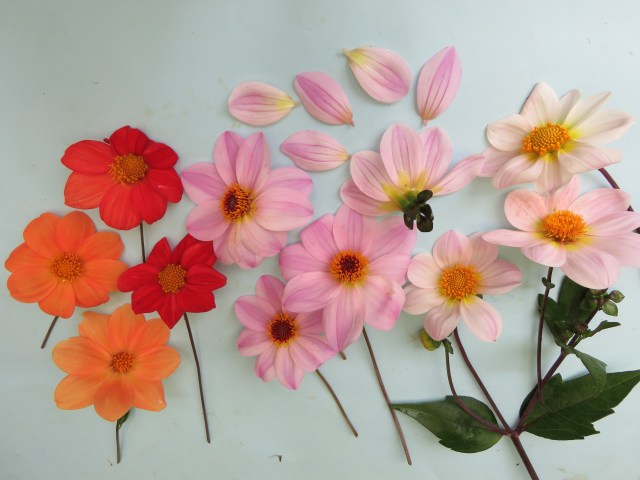
I was intending to write about dahlias this week. Not that we grow many dahlias but I see friends posting many photos of huge, specimen blooms in a range of colours and complex forms. I was going to plead the case for the simplicity of single and semi double blooms in a garden setting and argue that those big novelty blooms are perhaps better grown in a row in the cutting garden than in mixed plantings in flower beds. I like the light, airiness of the simpler forms in the garden.
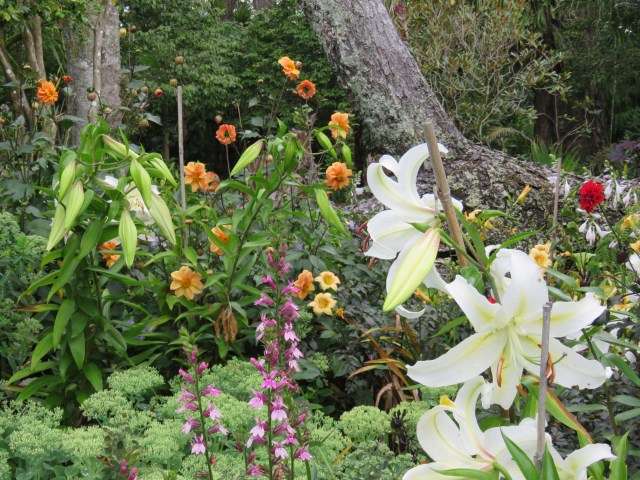
But then I got distracted by the colour orange because this year, my favourite dahlias are the orange ones and I have not been greatly enamoured of that colour since I was a child when I desperately wanted an orange bedspread. My dear mother always did her very best to meet our requests but we were only ever a step or two above the poverty line so it was always a case of near enough has to be good enough. She found some velvet being remaindered but it was more red than orange so she made the bedspread and assured me it was *tangerine*. It may have been tangerine-ish but it wasn’t the pure orange I had dreamed of. I remember swallowing my disappointment to express appreciation, knowing she had done the best she could.
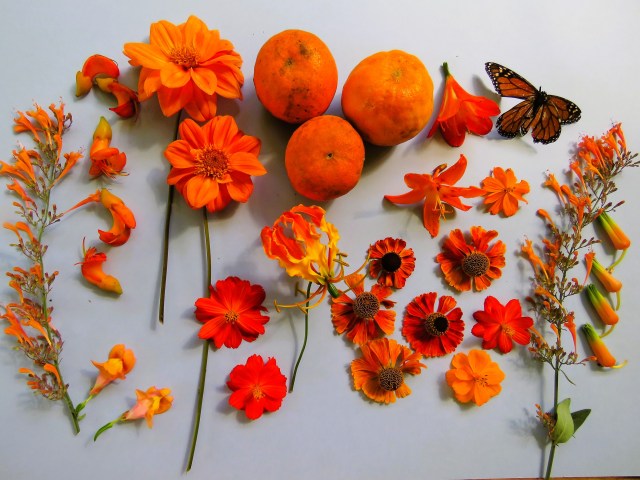
I turned my eyes to orange flowers in the garden and was surprised when I picked flowers from a dozen different plants. The orange – and yellow – cosmos we planted in the rockery for late summer and autumn colour are looking particularly cheerful and they started flowering within two weeks of my planting out tiny seedlings a few centimetres high. And this week, it is the heleniums that are the stars of the twin borders.
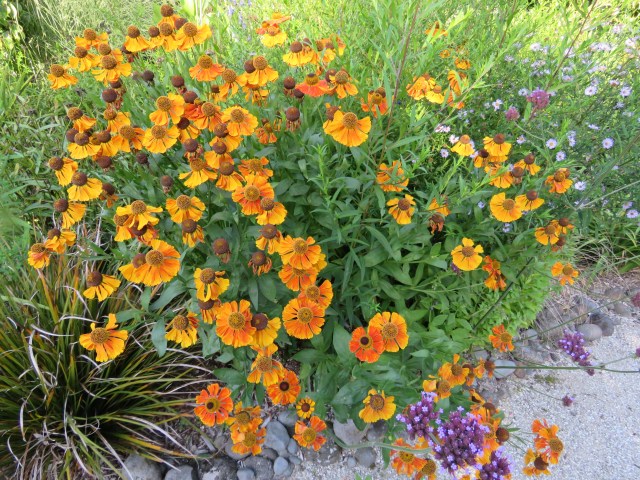
Every year, I forget whether these are helenium, helianthus or helianthemum and I have to google them to refresh my memory. Maybe I could call them sneezeweeds instead. That is the common name conferred upon them when, in times gone by, the dried leaves were used in snuff to encourage sneezing in order to rid the body of evil spirits. Fellow sufferers of hayfever, take heart. We just didn’t know that we were expelling the bad spirits from our bodies without having to resort to snuff. That said, I am not aware of the helenium flowers making my hay fever worse.
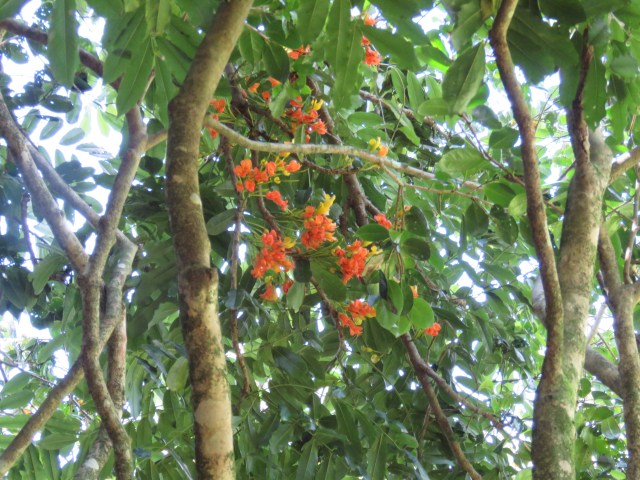
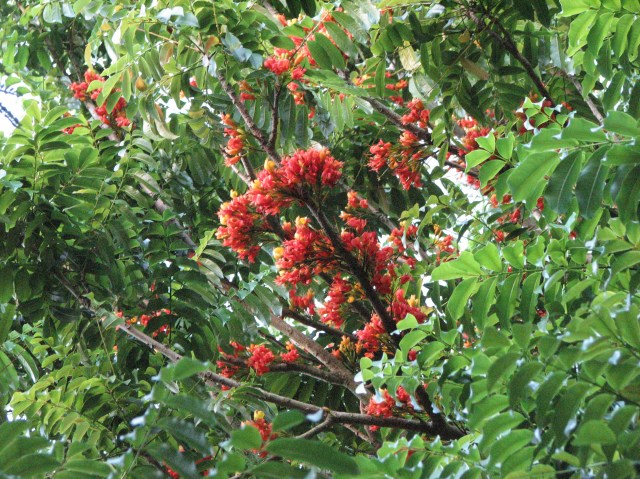
The Castanospermum australe is having a particularly good season. The tree is well over ten metres tall now and we usually only see the flowers from a distance right at the top. This year, we seem to have more growing beneath the foliage as well so they are only about eight metres up. Being native to the more tropical parts of Australia, it may be enjoying the milder winters and warmer summers we are now experiencing.
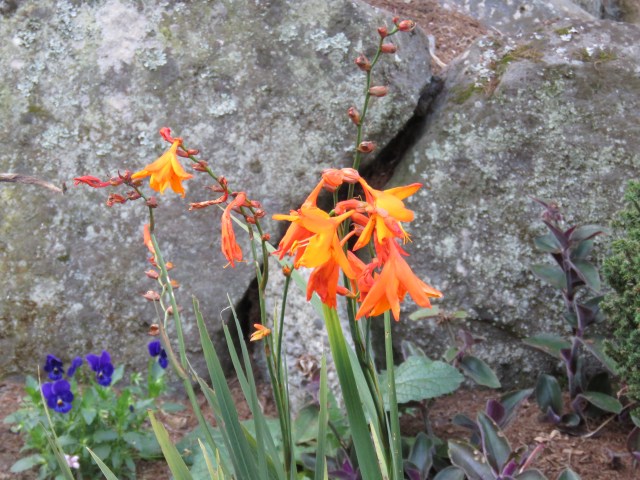
When it comes to orange as a colour in the garden, a little can go a long way. It is a very strong colour in its pure shades. Mark’s advice is to include plenty of other plants from the other side of the colour wheel – so in the blue and purple shades, although green also acts as a visual foil. Personally, I am not so keen visually on a whole lot of orange combined with either red or yellow and pastel pink is problematic.
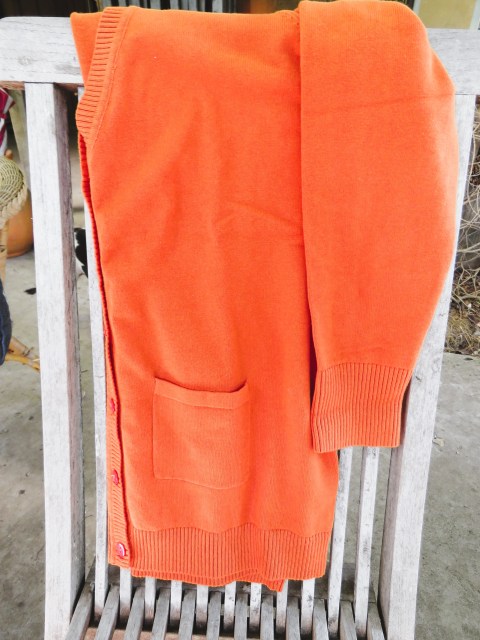
I would have said I never wear orange, but that changed as of yesterday when this orange cardigan arrived. In self defence, I tell you that it is just for summer gardening, 100% cotton, has the all-important pockets and was reduced from $100 to $25. I was just a little alarmed by the colour. I may have thought of it more as burnt orange when I ordered it but it is Very Orange. At least I will not be difficult to find in the garden. When I come to think of it, it is probably the very shade eleven-or-twelve-year-old me had envisaged for my bedspread.
My thoughts are with northerners this weekend, particularly in Auckland, Coromandel and Northland, who must feel as though they have the sword of Damocles poised above them as they await the arrival of Cyclone Gabrielle. It is one week off a year since we learned what cyclonic winds can do when we took a direct hit from Cyclone Dovi. That was bad enough and we didn’t get the torrential rain that is predicted with Gabrielle, falling on land that is already saturated and further threatening infrastructure already badly damaged by the recent extreme weather and flooding in those areas. May you stay safe. We will breathe a sigh of relief if the dire predictions do not come to pass for you in the next few days.



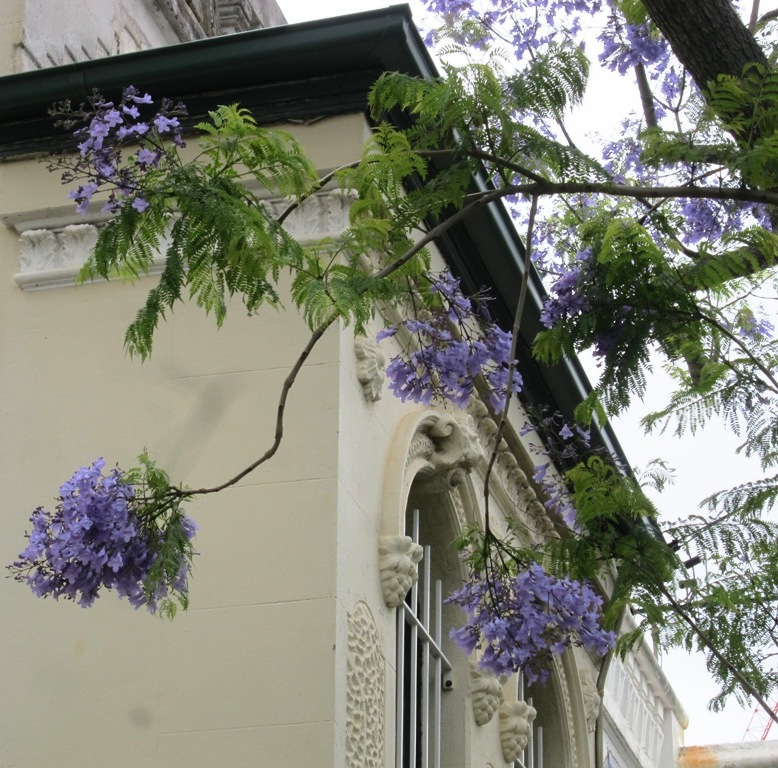 I spent the past week in Sydney, helping our second daughter move into her new apartment. This was a larger task than either she or I had anticipated so left little time for things horticultural. But oh the jacarandas were lovely, used widely as street trees and in front gardens in the eastern suburbs. Sydney is a great deal warmer than Tikorangi –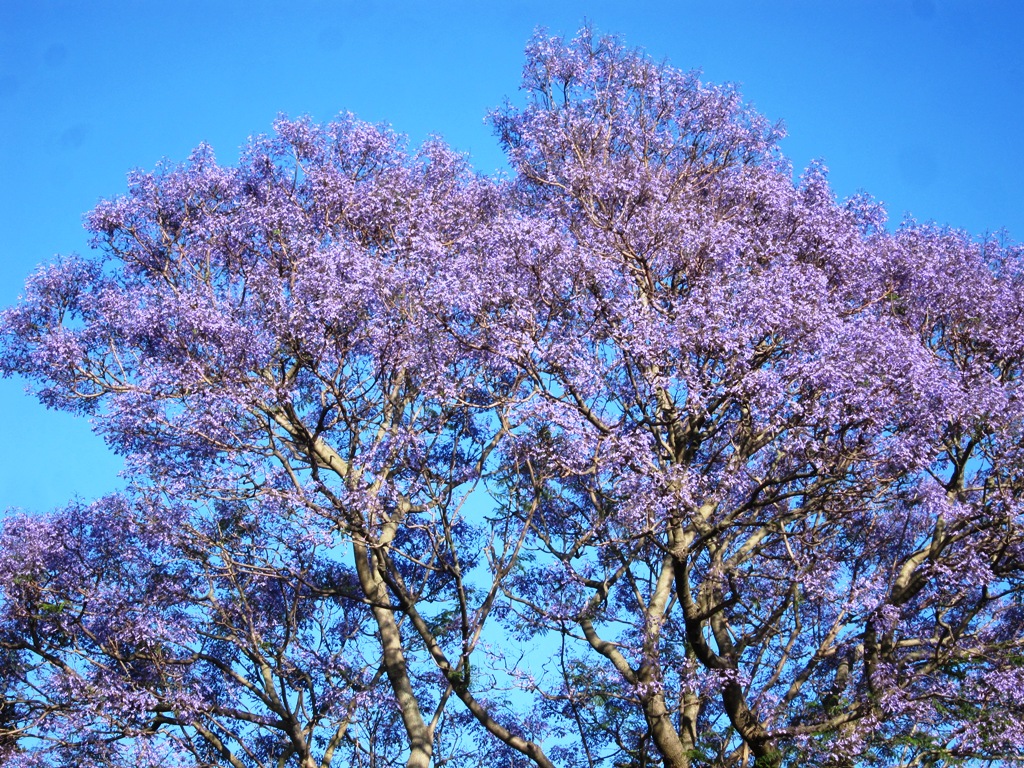
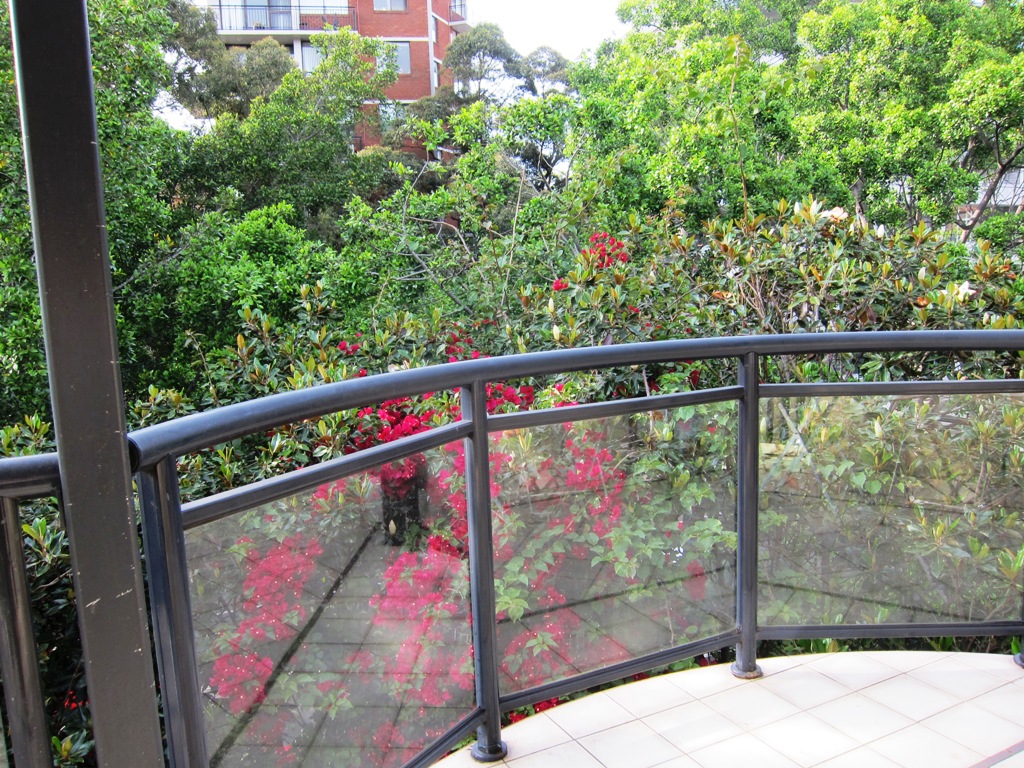 Daughter’s apartment is on the third floor. No lift. It’s not too bad – the stairs are well designed to make it easy. But I mention the third floor because that is several Magnolia Little Gems and a handsome red bougainvillea growing level with her apartment balcony. I have written about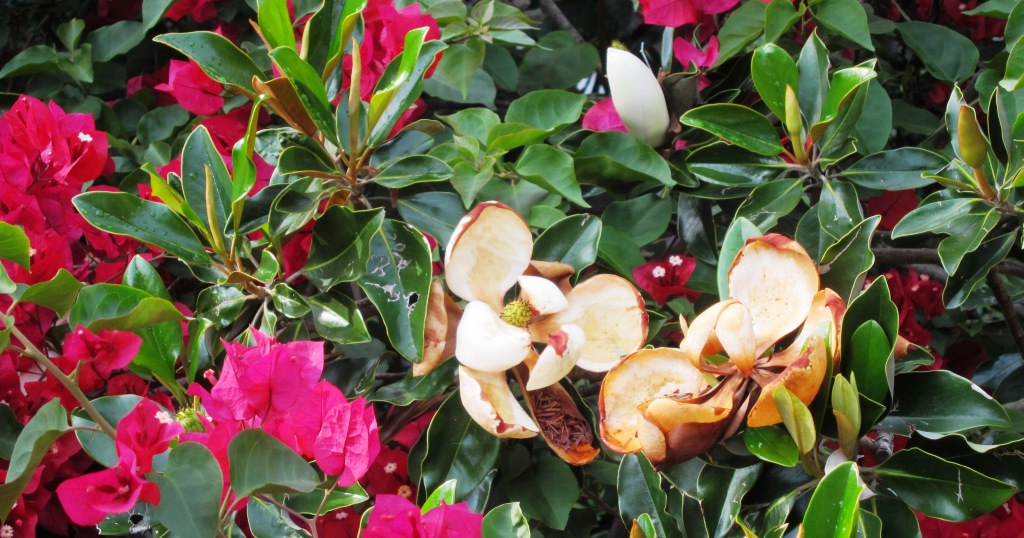
 Over the years I have seen a number of small English backyards where the only access way is via the house and thought that would be tricky. I can now say that these are eclipsed by apartments with no lift. ‘I will repot her container plants while I am here,’ I thought. Or at least the kentia palm and the tired peace lily which looked as if it was on the point of surrendering. I briefly toyed with carrying the plants down to the potting mix where there was a bit of communal garden so the mess wouldn’t matter, but decided it would be easier to carry the potting mix up and do it on the balcony. I wasn’t sure there was an outdoor tap and the rootballs needed a good soak. Logistically, it is harder than you think. Believe me. I was trying to contain the mess but even so some of the debris and the water went over the edge and I worried about alienating the lower apartment residents. The spent potting mix then had to be carried downstairs to spread. These were new challenges for me and I will look upon apartment gardeners with even greater respect. Undeterred, Daughter reclaimed her closed unit worm farm from a previous dwelling and located it discreetly at the back of the ‘landscaped’ communal area. Her kitchen scraps need to be carried downstairs anyway, so she figured she might as well keep them separate, feed the worms and use the liquid fertiliser they generate. It makes you proud to be the parent.
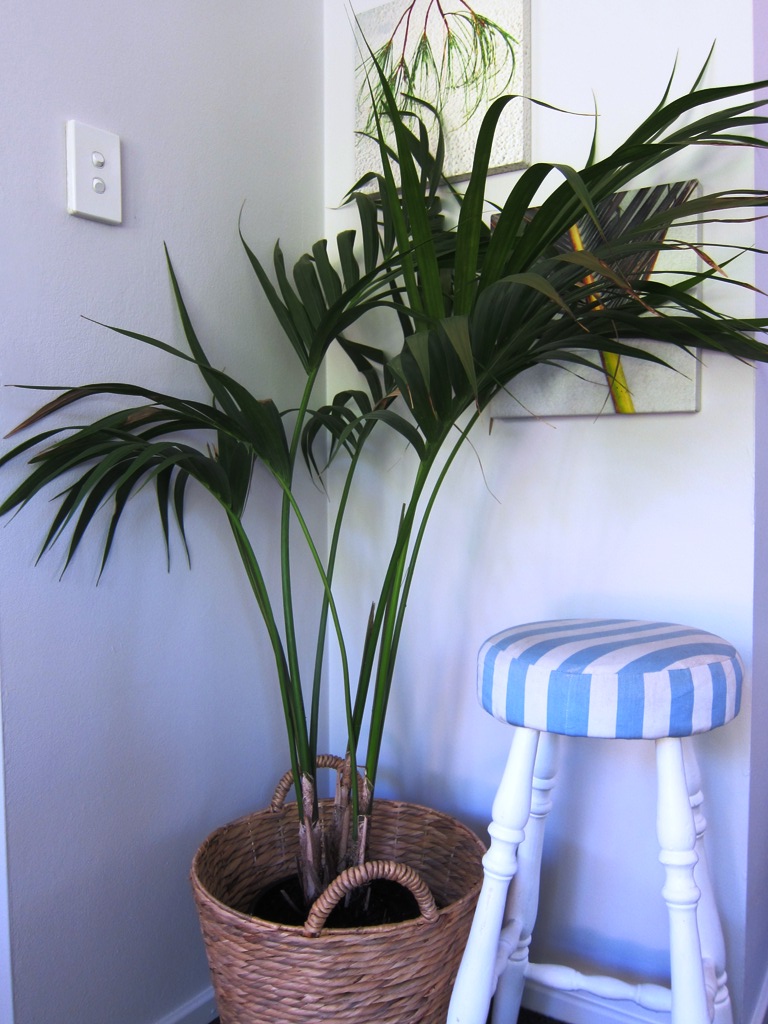 The kentia palm, I noted, is in fact three kentias (Howea forsteriana from Lord Howe Island) and there were at least five seeds sown in the original pot. That is a nursery technique to get a larger plant in a shorter space of time. Naturally I wondered about separating them but daughter needed one attractive kentia, not three smaller ones going into shock from such brutal treatment.
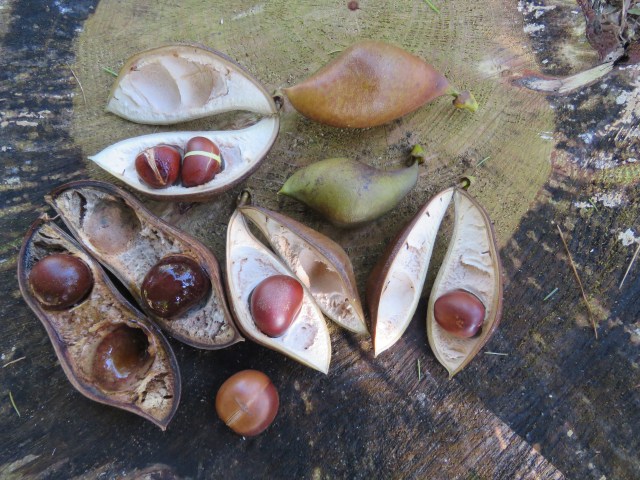
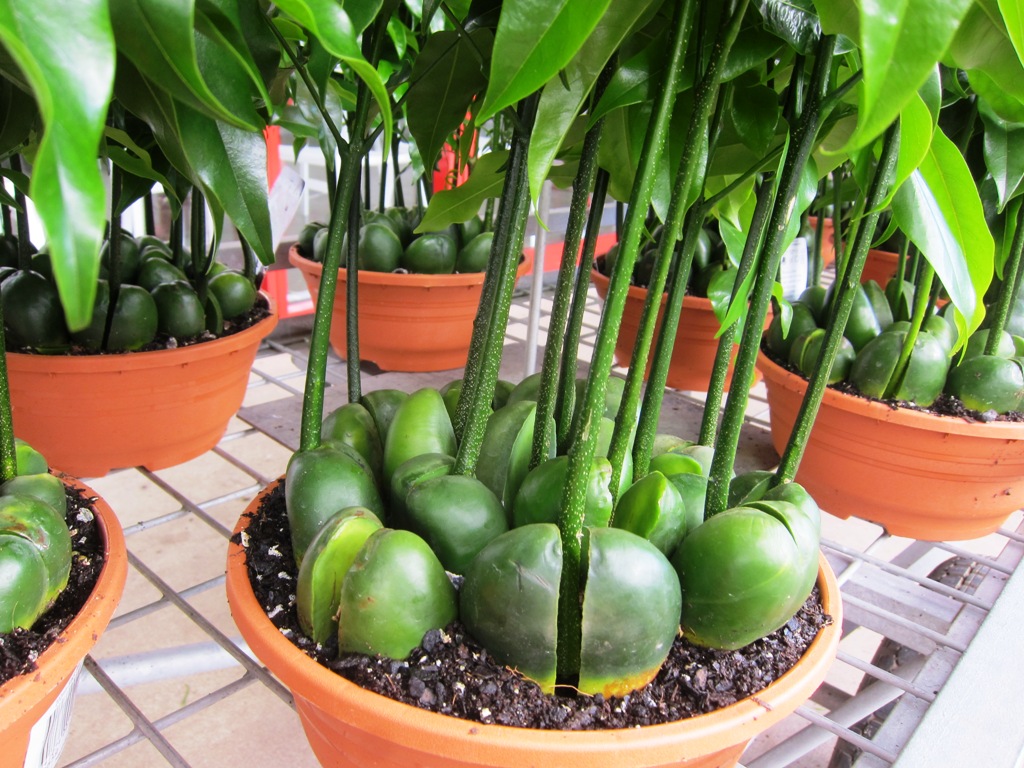 Greater love hath no mother than shopping for plastic items in Kmart but I did also get to wander through the plant section of a Bunnings store while we were doing a mission in search of home handyperson supplies. For $A26.90, you can buy a novelty houseplant of germinated “Black Bean” seeds. These are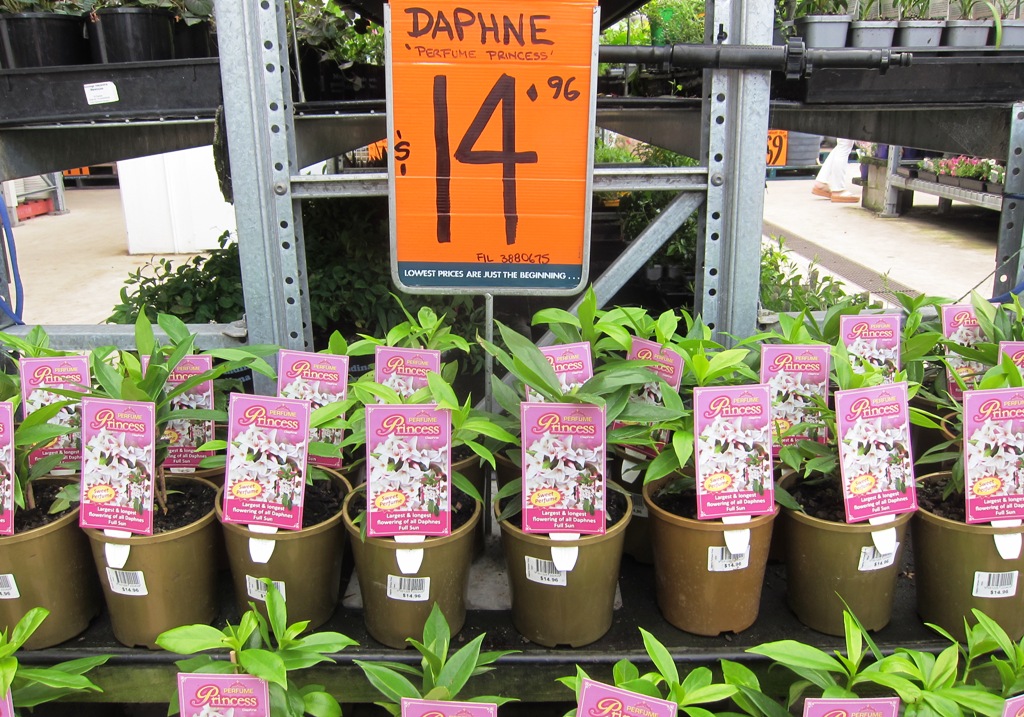

 Tikorangi The Jury Garden