

“A garden dies with its owner.” Those words were attributed to the late Christopher Lloyd of Great Dixter fame and repeated to us by one who worked with him. At the time, the renowned gardener Lloyd was being asked about succession plans. In the event, Dixter was transferred to a private trust and has continued to change and develop under the control of Lloyd’s former head gardener, Fergus Garrett, who has earned his own place in the annals of UK garden history. That is a comparatively rare example of the successful transfer of a garden after the death of its originator.
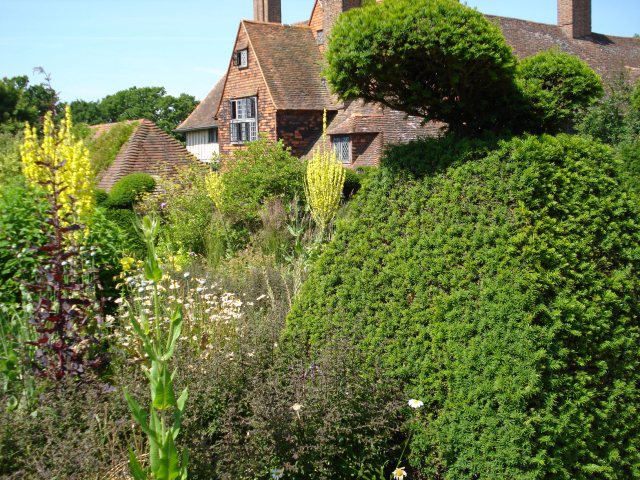
The big difference at Great Dixter is that Fergus Garrett was not tasked with the requirement that he preserve the garden as it was in the time of Christopher Lloyd, frozen in time, as it were. It appears he was given a free hand to continue to develop and change the garden as he saw appropriate. Too often, when a garden transfers ownership or management, with it comes the expectation that it will be preserved as the originator created it and that rarely, if ever works. Time moves on, trees grow, micro-climates change and so do techniques and expectations.

I realised recently that when I visit gardens, I want to see elements of dynamic change, of current energies, dreams and visions, not just the preservation of the past, no matter how famous or significant that past was. As Mark and I age, I often think how lucky Mark’s dad Felix was to have Mark at his gardening side for the last 17 years of his life. He died knowing that his garden was in safe hands, going forward, not just being maintained or, worse, going back. That is a rare situation. Most of us just have to accept that our gardens may well die with us and hope that at least the good long-term trees may survive. As I say, relatively cheerfully, we will be dead and we won’t know. Christopher Lloyd was just being realistic.
The Lloyd quote came from Australian garden designer, writer, educator and presenter, Michael McCoy who brought a tour through here last week. Michael first visited here this time last year as he was scouting for this tour and we spent a remarkable couple of hours going around our garden in the rain. I have never met anybody before who was so utterly in tune with how we garden here – with our dreams and aspirations, who knew and admired the same international gardens, trends and people who have inspired us, who has walked such a similar gardening path across the decades – yet we had never met before. We don’t accept many tour bookings these days but it was on the strength of that shared ground that I agreed to Michael bringing his masterclass tour here.
A tour is not the time for extended conversations between the tour leader and the garden host because it is focused on making the experience as good as possible for the tour participants but we did have a brief conversation – again – about garden edgings. Regular readers will recognise this topic from earlier writings. I am not a fan and I am busy removing unnecessary edgings, particularly in the Avenue Garden. Michael McCoy and I agree on this topic. As far as I am concerned, there are only a few reasons for garden edgings – be they in a row of identical plants or a more permanent material. One practical reason is to retain mulch on the garden bed when the birds will otherwise scratch and distribute it onto adjacent areas; another is to retain the garden when there is a variation in level with the path either higher or lower than the surrounding planted areas; the third reason is to stop people walking on planted areas but this no longer applies now that we no longer open to the public. I have been reviewing all our garden edgings and removing those that are not necessary. When we cut a sharp line at the edge of a lawn, do we need another sharp line on the edge of the garden? No, we do not.
The fourth reason for edgings is entirely aesthetic and values-based. It is to make a garden look tidy. I laughed when, immediately after the tour left, I came inside and my news feed showed me this: Gardening: Hedges and edges add structure – and hide weeds. It is paywalled, I am sorry, but just the heading, the accompanying photo and the bio note on the author will give you the flavour of the piece. I read the whole article and it is not that there is anything wrong in what the author has written. It is just that he is espousing the widespread use of both hedging and particularly edging plants to give definition to a garden and to add formality. His views on good gardening are very different to where our thinking is. Many gardeners favour this approach and will happily edge their gardens in compact buxus (B. koreana is a better option than the more common suffruticosa or sempervirens in these days of buxus blight), euonymus, liriope or dwarf carex.
It made me realise again just how far we have moved from seeing gardens as orderly, tidy affairs that sit on the landscape. Instead, we want to garden in a way that sits harmoniously within the wider environment, working with nature rather than imposing rigid control. Diff’rent strokes for diff’rent folks, as the saying goes. There are other ways to garden.
It was most affirming to meet somebody with considerable international experience who shares our gardening values. If you want to see more of Michael McCoy’s writings, photographs and videos on related topics, you will find him by his name on both Facebook and Instagram or his own site, https://thegardenist.com.au/
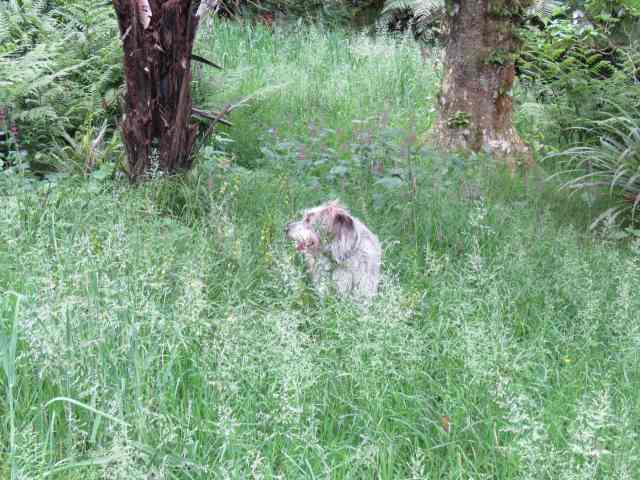
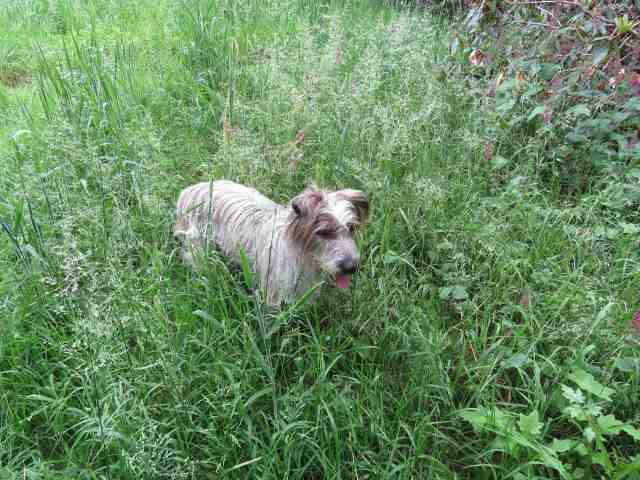
We have had Ralph for over two years now and he has met a reasonable number of visitors and several tours but I have never seen him perform as he did with this tour. He was sure he was the star in front of an appreciative audience. “Look at me! See how high I can jump! I can almost fly!” as he launched himself in the air after a passing bumblebee. “Follow me. This way please.” “Look over here!” “And here!” “Stand aside, dog coming through.” This continued all the way around the garden, where he must have covered ten times the distance of the humans. I suspect he was rewarded at afternoon tea with tastings of cake and biscuits – thereby breaking our iron rule of never feeding him tidbits when we are eating – but that is the way of tour groups. He was exhausted when they left and zonked out to sleep. Life has been very quiet for him in the days since.
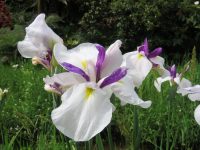
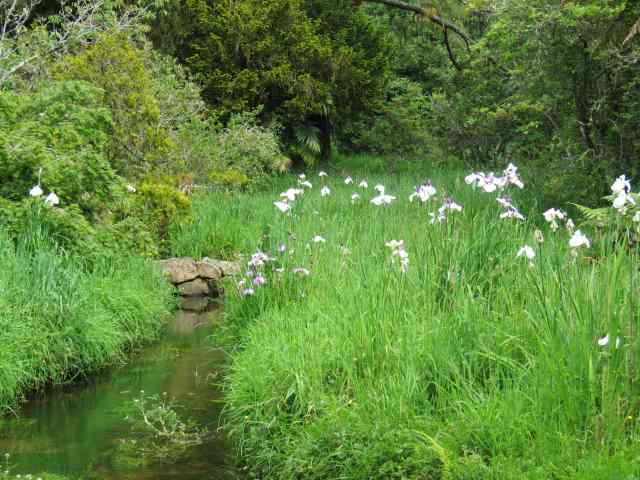
The Higo iris are flowering in the park and truly, it is one of my favourite times of year in that area. Every year they make my heart sing in delight.

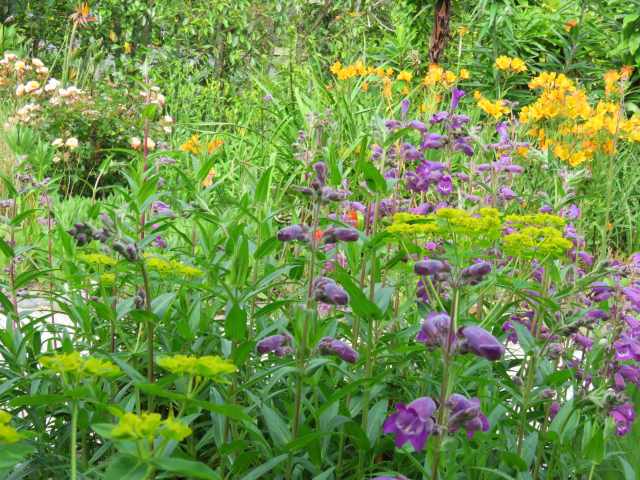
Purple penstemons, euphorbia and bright alstromeria in the borders. I haven’t had much success with penstemons in the past but now think I should try more.

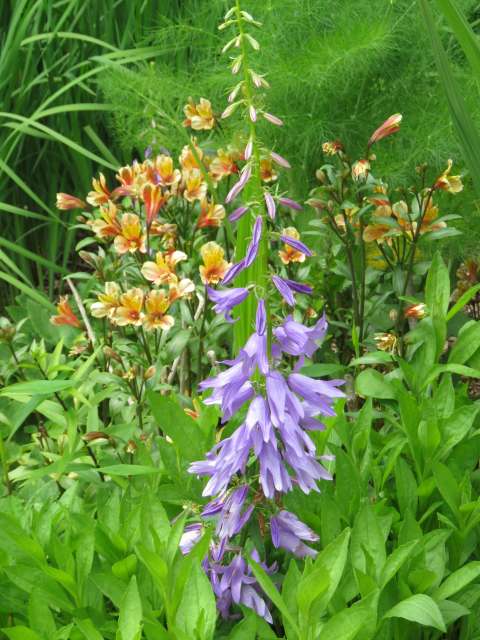
It seems that the rabbit family who live beneath the swimming pool deck, who used to chew the lilac blue campanula to the ground, have gone and the next generations haven’t realised they are edible. One of the more compact alstromerias behind – name unknown.

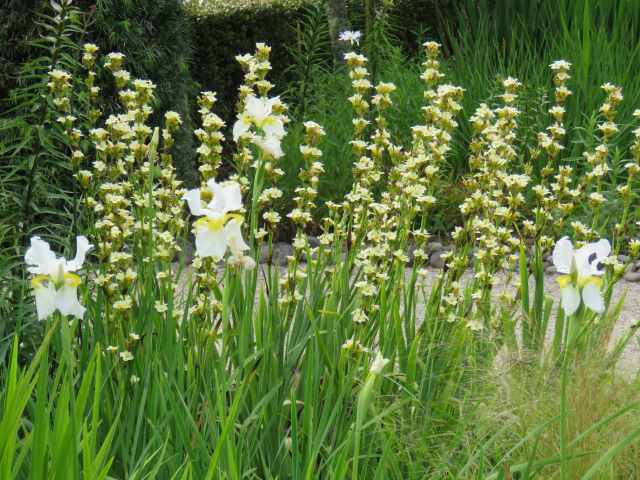
Sisyrinchium striatum, I think, with white Iris sibirica. It is a pretty iris but very soft in the petal so it is inclined to weather mark more than other Siberian iris we grow.
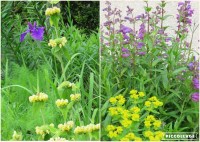
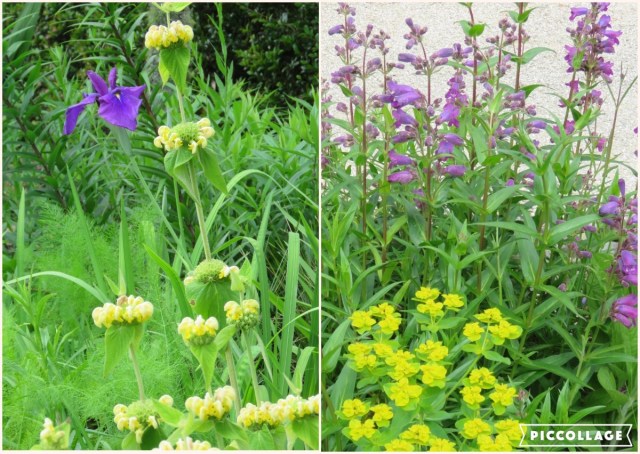
Even with the best laid plans, volunteers can arrive and look as if they belong. I have NO recollection of planting the purple Higo iris by the the Phlomis russeliana and I am sure I never planted the euphorbia. The colour contrasts are startling but I like that in the summer borders.

 Tikorangi The Jury Garden