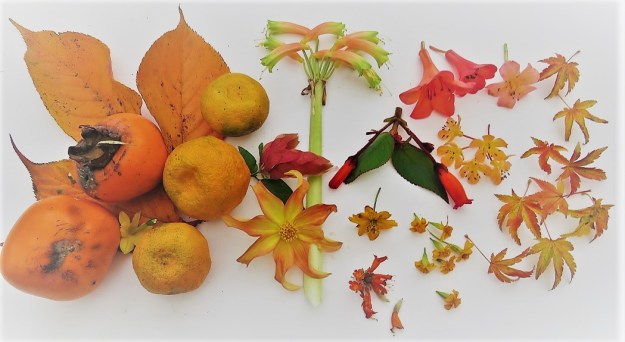
Orange is not my favourite colour. In this, I am unlike the bride who wore an orange wedding gown and themed her wedding on orange and brown. I mentally walked through every room in our house and there is no orange to be seen. Not a skerrick. And the only orange item in my wardrobe is a faded tee shirt. Clearly, orange is not a colour that I relate to in daily life.
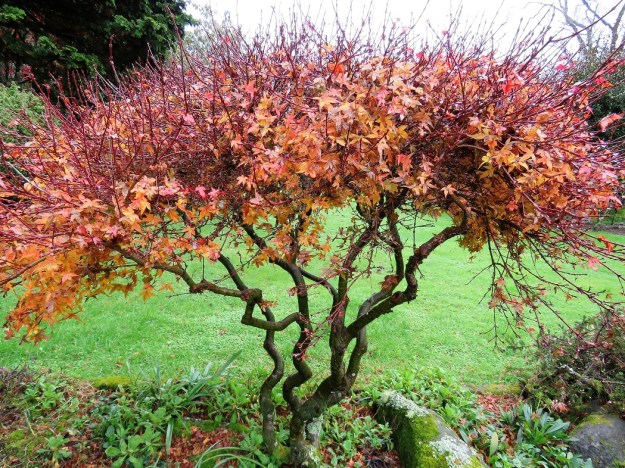
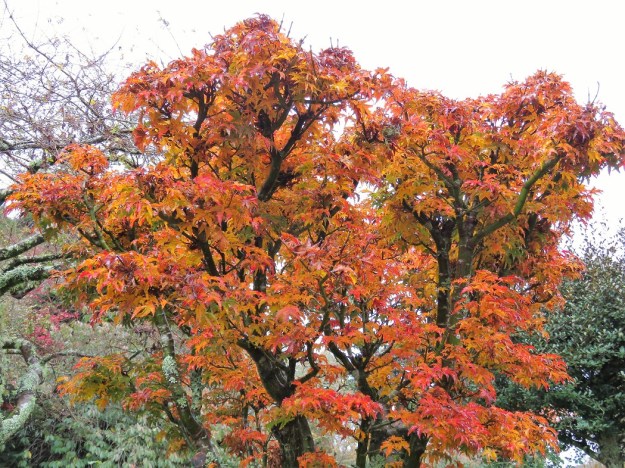 But as late autumn draws in, the orange outside is very cheering. On Monday, I thought I must get out and photograph the dwarf Japanese maple that turns its raiment from modest green to blazing orange as winter approaches.
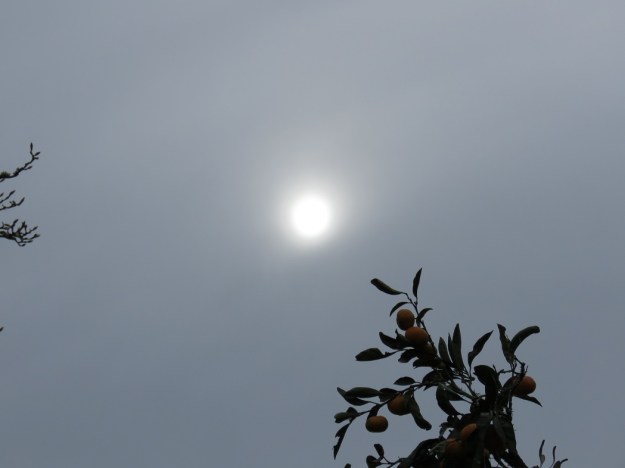 The day was grey with the sun attempting to break through, a light so unusual here that I also photographed it. I have only been to the UK once in December and I remember a similar light on the day we visited the Russell Page garden at Leeds Castle. The difference is that here, the sun did indeed come out and shine brightly – if intermittently – as the day progressed while my UK family said that was as good as it got there, closing in on the shortest day.
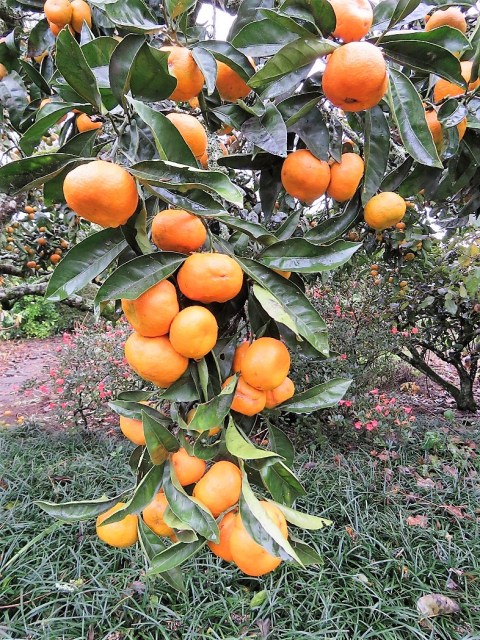
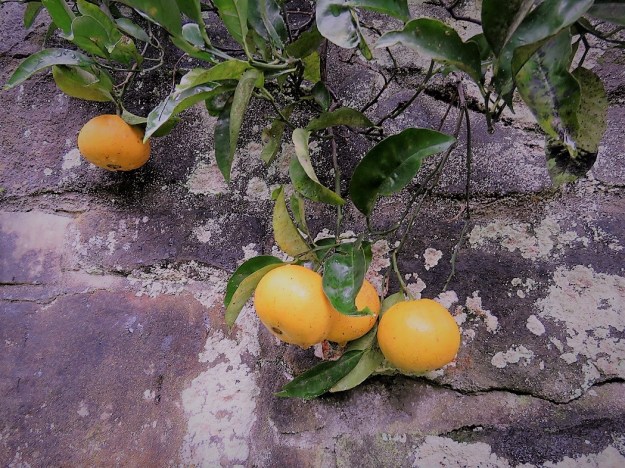 I became entirely focused on orange. Mind you, it is hard to ignore it as the citrus trees flaunt their wares. We are blessed to have a climate where we can grow citrus and also to have inherited a garden where the trees have large been included in the wider garden, rather than confined to an orchard situation. Citrus are both decorative and functional. I once wrote a fairly lengthy piece on growing citrus in our conditions if any readers in less traditional citrus areas are interested.
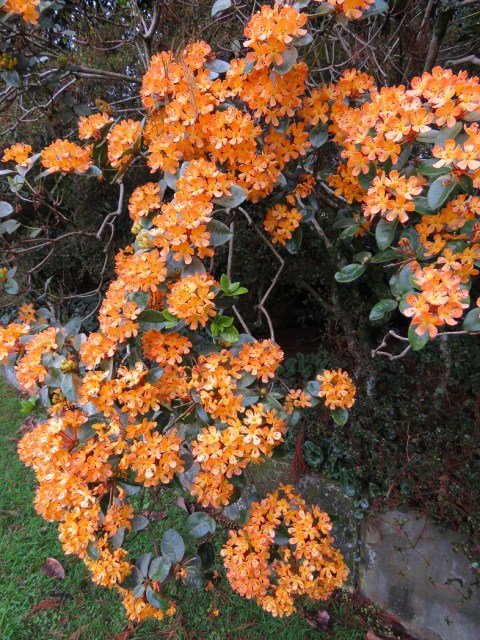
Vireya Rhododendron macgregoriae flowers like clockwork, as it has for nigh on sixty years now. That is a seriously advanced age for a vireya, which are not generally long lived, and this particular plant has a place in our family history, having been collected in the wild by Mark’s father, Felix, back in 1957. Orange is a common colour in vireyas and we have a number of other hybrids also in flower at the time. None mass flower like the species R. macgregoriae. It is a trade-off, I think. You can have either prolonged blooming over many months or mass flowering, but not both. At least when it comes to vireyas.
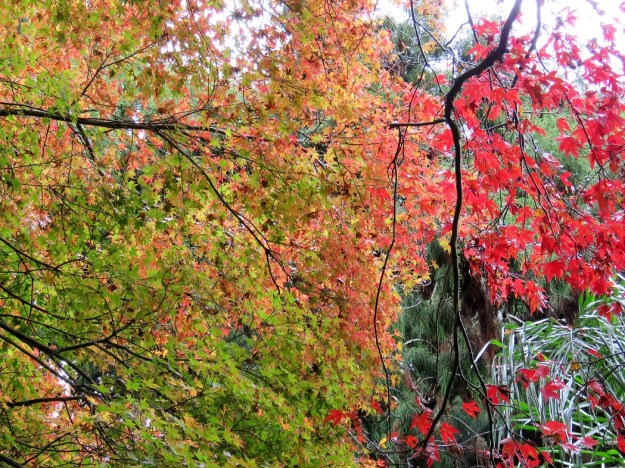
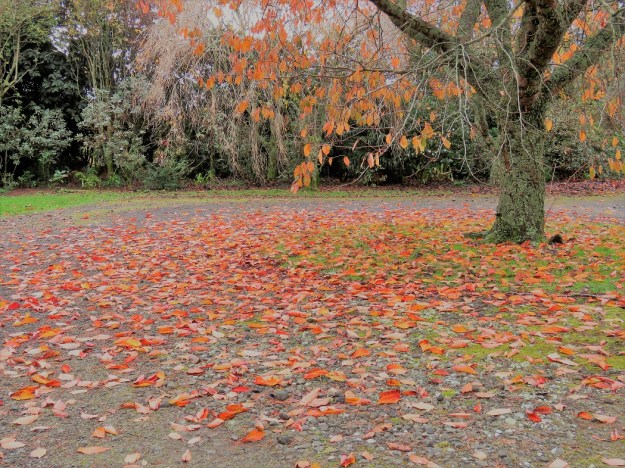
The maples and the flowering cherry trees produce many hues of orange and tend to colour in late autumn for us – or early winter as it is now. June usually feels autumnal for us, July is the bleakest month of winter and by August, we are bursting into spring growth and bloom. We really shouldn’t complain about a winter that is effectively about six or eight weeks in duration.
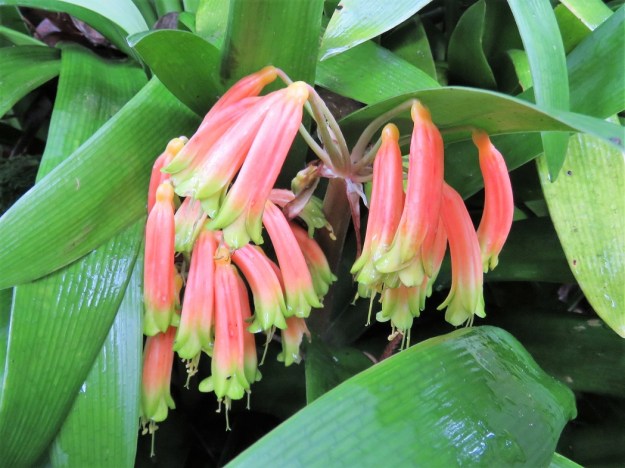
The first of the clivias are in bloom – looking a bit pink in this image but more soft orange in real life. I asked Mark which one this is and he thinks it is C. gardenii. It is nowhere near as showy as the C. miniata selections and some of the hybrids. But as I think an abundance of bright orange clivias can lead to the NABOC syndrome (Not Another Bloody Orange Clivia), the understated charm of this one pleases me.
The orange tones of autumn shone through the grey day. I looked around and thought yes! There is a time and a place for orange. It is in autumn and winter.
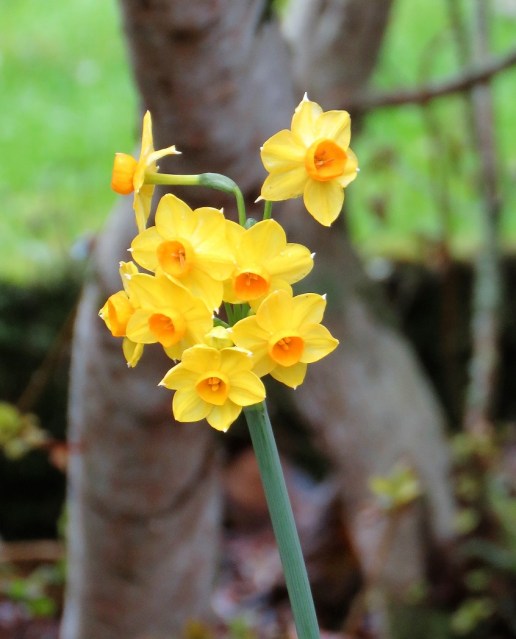
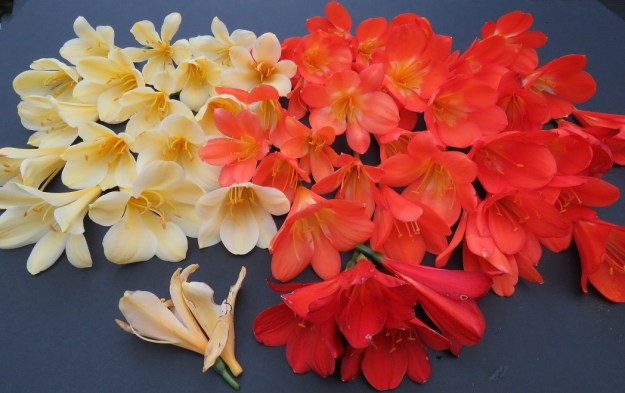 Mid spring brings us vibrant clivias in bloom. The ”contemporary” or “landscaped” look is to block plant in a single colour so you may have a swathe of orange clivias with the yellow ones segregated in a different area. This is not our style, in a garden where we strive for far more of a naturalistic, woodland look – “enhanced nature” seems to be the latest descriptor for this style though it is not a term you are likely to see me using often. We like to blend our plantings and combine the clivias with ferns, astelias, bromeliads and any and all of the other plants we use as the understorey in our shady areas.
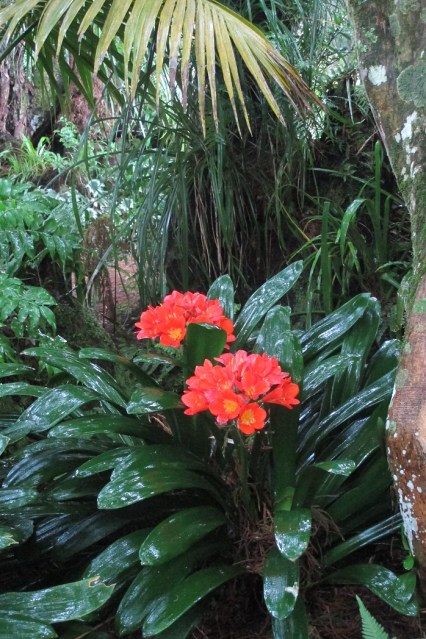 This completely confused a self-described Auckland landscaper I once took around the garden. This must have been back in the 1990s when ambitious but unqualified young people who, in a previous generation would likely have done an apprenticeship, discovered they could earn more money by dispensing advice and services to the growing wealthy of our largest city. He patronised me all the way around the garden – landscapers, you understand, rated themselves further up the social scale than mere gardeners – and at the end pronounced his surprise that we didn’t grow any clivias. I may have a been a little tart when I pointed out he just hadn’t noticed them, for they are there in abundance.
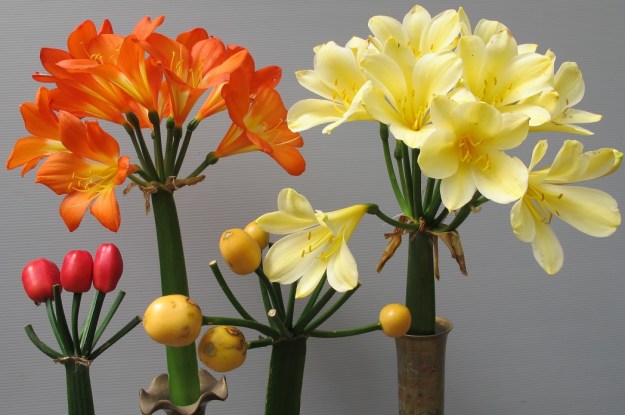
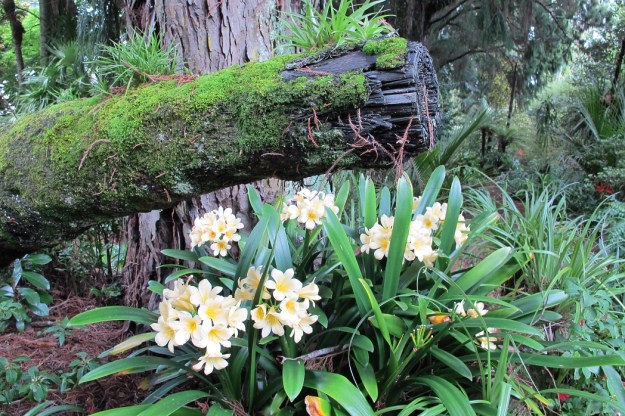 The soft yellows are still a recent introduction but already widely grown, readily available and making a huge contribution in gardens. Extending the colours into peach tones is well underway and of late the combination of white and green in clivias represents another development. One can, when all is said and done, have too much orange in the garden (NABOC syndrome – Not Another Bloody Orange Clivia) whereas the option of other, softer shades can bring welcome variety and interest. If you covet red clivias, you need to be aware that they open orange and age to red. Do not be like the gardener I heard of who bought a swag of large red clivia plants at considerable expense. When the first ones opened orange, she dug them all out.
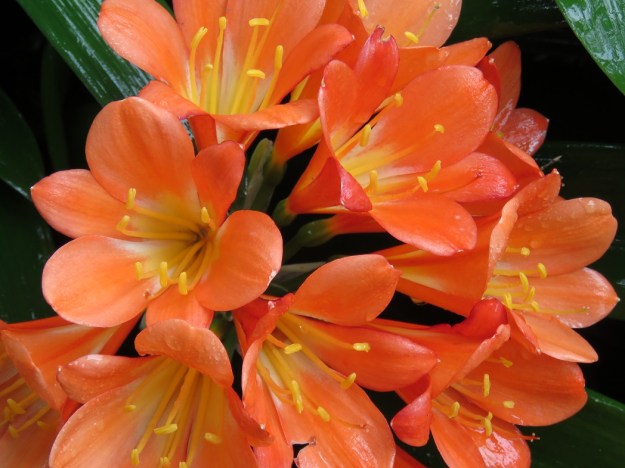 Considering the easy care nature of clivias, you may wonder why they are often relatively expensive to buy. It is all to do with time because they are slow to get established and to reach flowering size. In these days of instant gratification, most gardeners want plants that will perform and be showy in the garden from day one. In the case of clivias, be prepared to pay because it costs nurseries money to hold slow growing plants much longer to reach saleable size.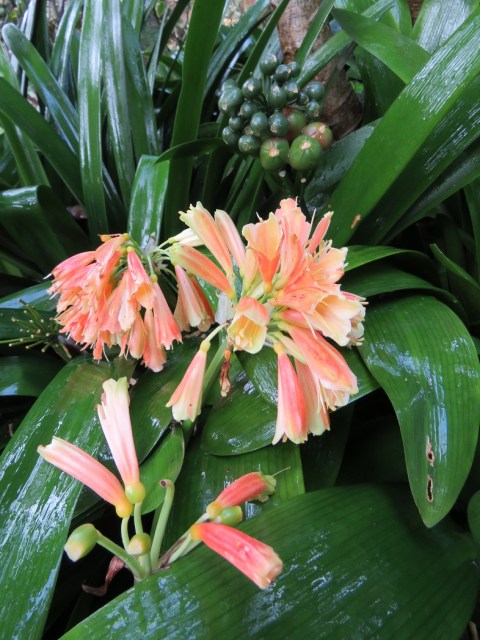
 Tikorangi The Jury Garden