Tag Archives: clivias

Good things take time *

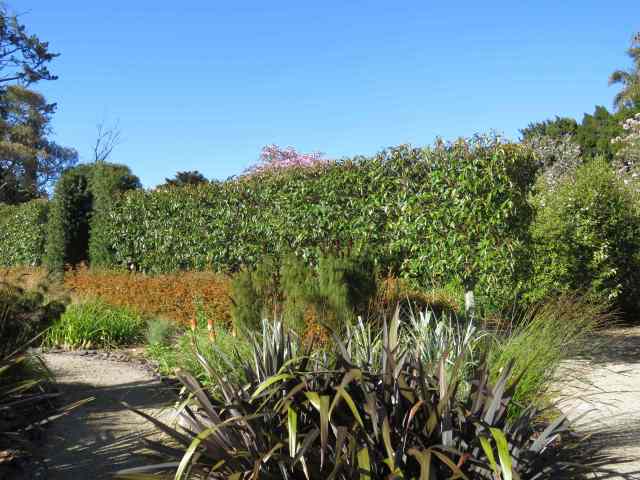
Pleached Fairy Magnolia Whites in a row shaped to a flat plane. We have two such rows.

Behold our pleached rows of Fairy Magnolia White! I am delighted. A goal has been achieved. It has taken 10 years and that was starting with big plants. In retrospect,  I admit that it seems quite a long time but such is the way of gardening. It has looked fine and established for maybe 6 or 7 of those intervening years but finally, we have it how it was envisaged.
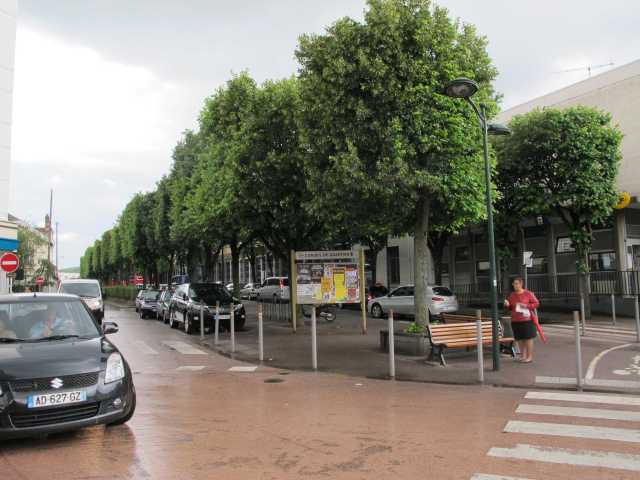
Pleached street trees in Vernon

Pleaching is creating a hedge on stilts where the foliage is knitted together to form a length that is more or less flat on two sides but uninterrupted in its length. I photographed pleached street trees in Vernon, the small French town closest to Giverny back in 2014 but I think it was Mark who drew my attention to them because he already had the plan of pleached rows defining our summer gardens, on which we had started the groundworks back at home.
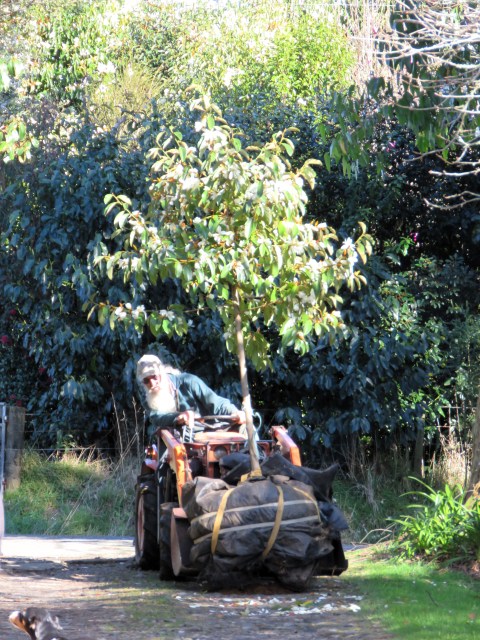
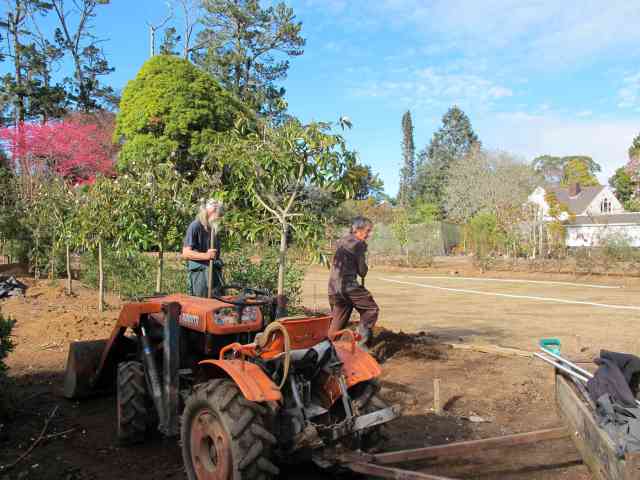
Lloyd on our baby tractor, moving in trees one at a time back in 2014
The start of the summer gardens, when we were all a decade younger. You can see the peg in the ground – they were working to string lines to get the spacings even and straight.

So it was Mark’s vision and his and Lloyd’s hard work that saw large plants going into the new ground in the spring of 2014 and autumn of 2015. We already had the plants growing in a field on our property across the road. They were our original stock plants from when we first released Fairy Magnolia White and they were trained to a strong central leader or trunk. It was no mean feat digging them and getting them across the road and planted but Mark and Lloyd were 10 years younger then. As an aside of useful advice, as soon as they were planted, Mark removed about a third of the foliage, which seemed brutal at the time but was all about reducing the stress on the plants after transplanting.
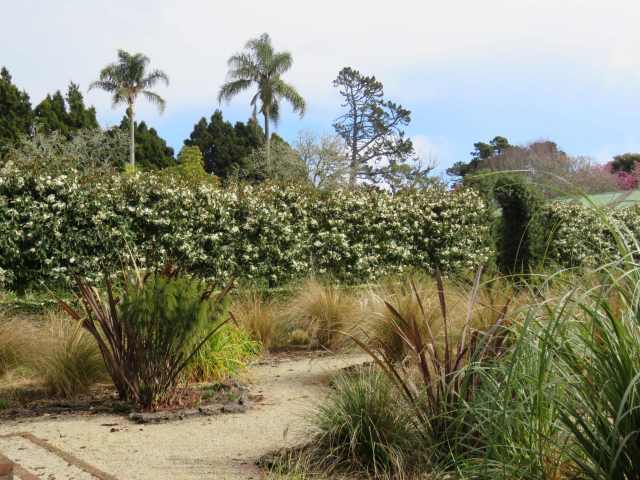
This is what it looked like a month ago when Fairy Magnolia White was in bloom

In the years since, they have been trimmed once a year – as flowering finishes – to get them to the form we want but it was when our gardener, Zach, joined us that it all started to come together. This must be the third or maybe fourth year that Zach has trimmed them and he has it just right now. As garden tasks go, it is not a massive job – I think it only took him just over two days – and the heaviest part is managing the ladders, which are large. But it is a skilled, precise job. It is all secateur and handsaw work – not hedge clippers.

Squared off to be narrow in width, as viewed from one end of a row

It will look sharper when the hedge of Camellia Fairy Blush beneath also gets its big trim this week and the gap between that hedge and the pleached michelias above is fully defined. I was impatient to record my delight with the clearly defined, more-or-less two dimensional appearance (height and length but little width).  
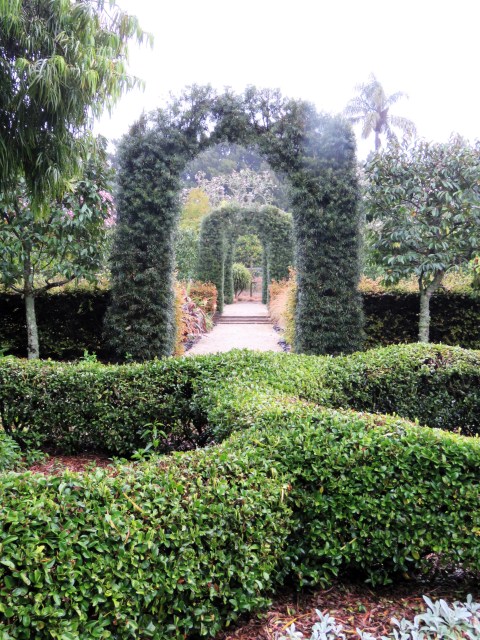
We have three archways of Podocarpus parlatorei. This front one still needs to thicken in the middle but it is getting there.

Credit to Zach, too, for creating the archways of Podocarpus parlatorei in the same garden. Mark had always planned either arches or gables – to echo the gables on the house. Realistically, had it been left to us, I am guessing we would probably have taken the easier route and just trimmed to tight columns but Zach has trained them over to be arches and they have almost filled out to final thickness. They are tied in, in case you are wondering how he did it. The key is getting it tied in when the new growth is soft enough to bend. When it has hardened, it will break. The podocarps are trimmed annually but he has kept the arch tied and trimmed every few months. Again, getting the ladder into place is the most onerous part of this task. Mark, Lloyd and I are all getting a bit old to be carting the largest ladders and working at height. This is just yet another reason why I appreciate younger generations.
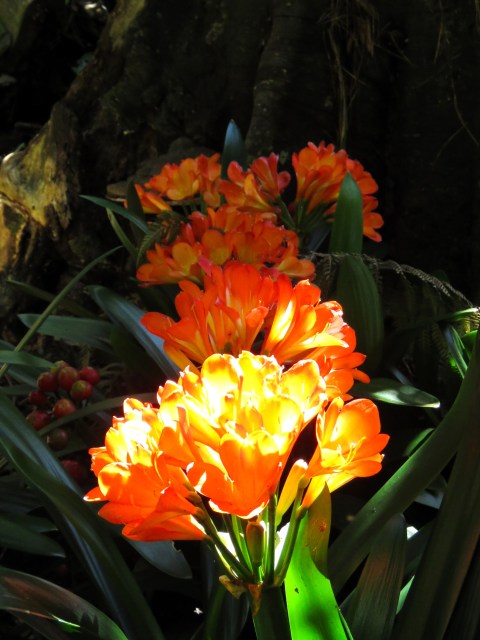
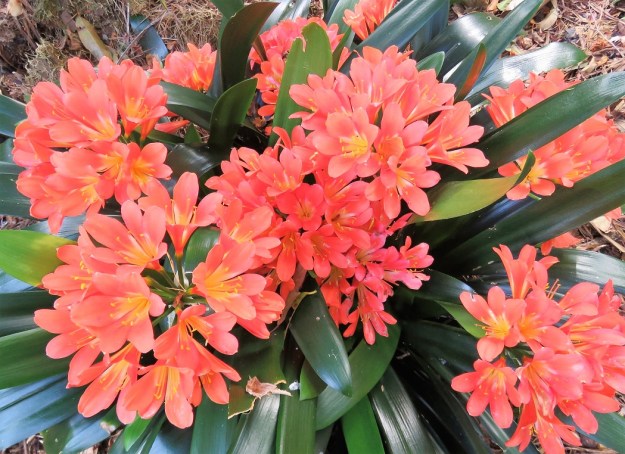
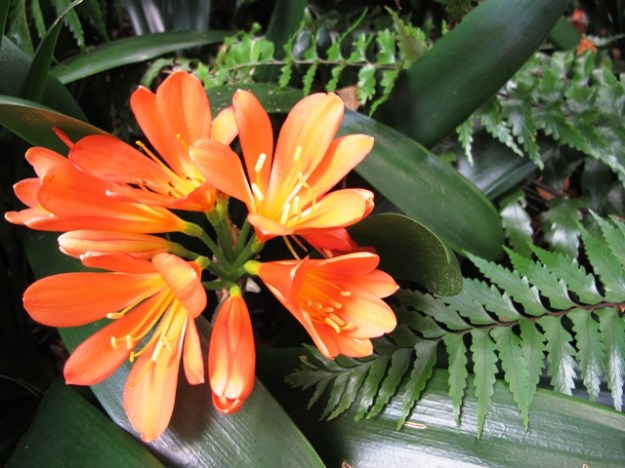
Time, too, has seen our clivia plantings go from strength to strength and they are certainly starring this spring. You can have too many clivias in a garden; the orange and red ones are very strident. I am not a fan of mass plantings of clivia but we have integrated them amongst other plants in shady areas and they glow. Ours are almost all seedlings raised here from controlled crosses. This means that Mark has taken the pollen from ones he thinks are good and used the pollen on other selected specimens, marked the pollinated flowers and gathered the ripened seed to sow in nursery conditions. It is quite a bit of faffing about but increases the likelihood of getting superior seedlings rather than leaving it all to Nature. We now have so many that we just weed out seedlings and thinnings.
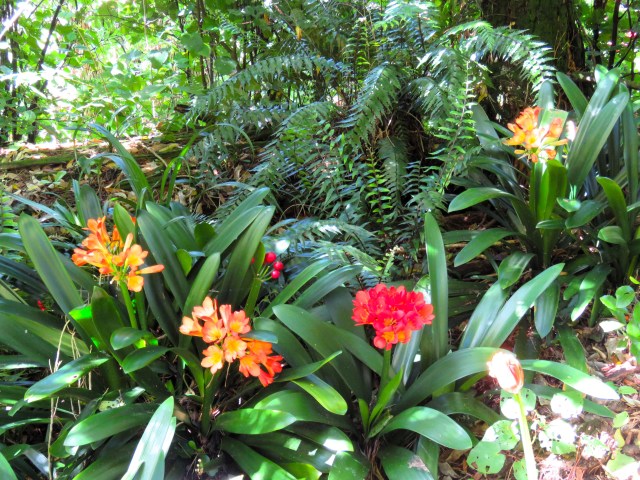
Mixed colours and mixed plantings are our style, not blocks of single coloured clivias

The reason why clivias are usually expensive to buy is that they are slow growing. It takes much longer than most common perennials to get them large enough to set flowers and sell in garden centres – years more, in fact.
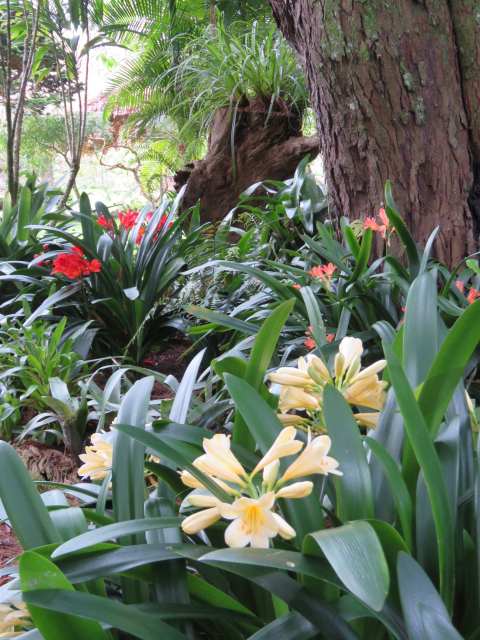
Gardening really is about the longer game but it is particularly rewarding when you see visions realised and areas that get better as plants mature.  

* The heading is a reference that it is likely only New Zealanders will understand. Cheese. Yes cheese. A reference to a long running advertisment for a brand of tasty cheese.
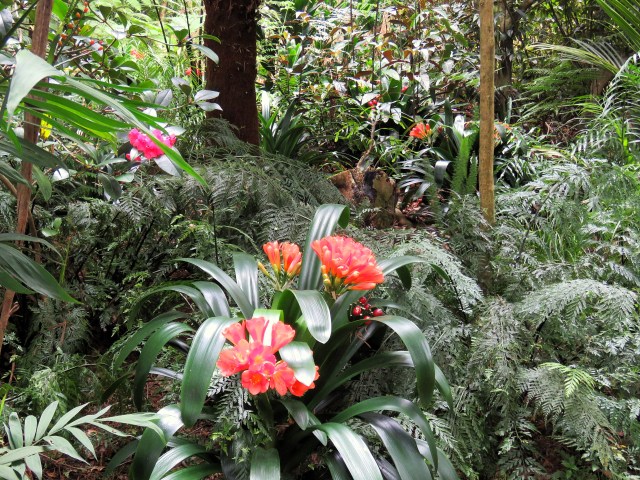
Blurred lines

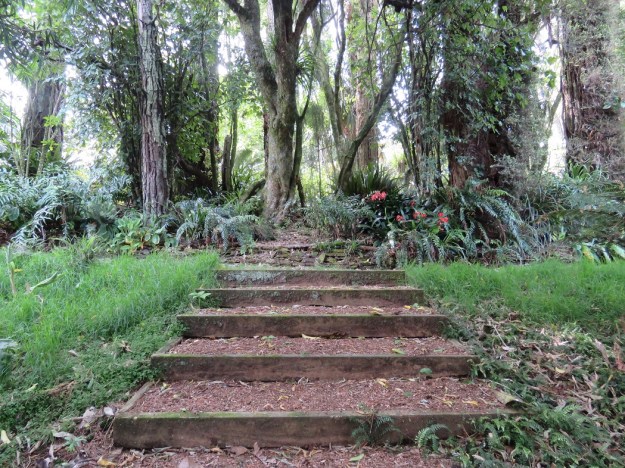
One of the access paths linking the park to the avenue gardens

When you garden on a town section, boundaries are usually clearly defined, most often by fences or hedges. Some lucky gardeners are in a situation where they can visually *borrow* a wider view of the neighbours or maybe some bush or landscape to draw the eye out from the rigidly confined boundary. More often, the situation imposes limitations that mean the garden has to be inward looking and confined to its allotted space. Some people like that sense of a contained space, accentuating it further with tall fences. Whether you see that as security and privacy or self-imprisonment depends on the individual.

It is different when you garden in the country and that clear definition of an end point is arbitrarily imposed on a larger landscape. Or not, as the case may be.

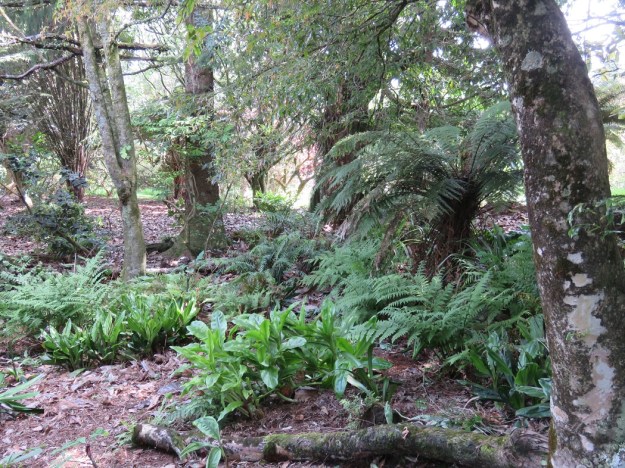
Scadoxus to the right, calanthe orchids to the left along with self-sown ferns and tree ferns – subtropical woodland, I guess

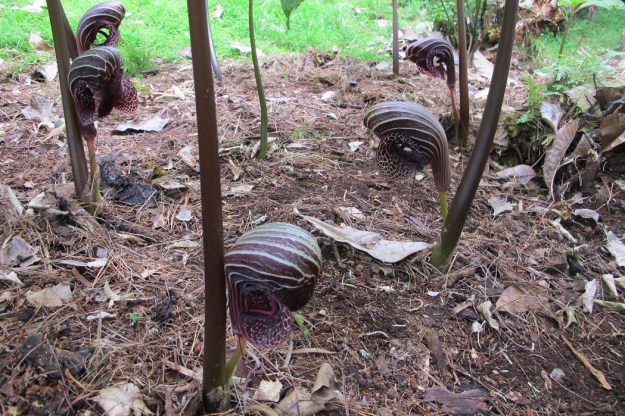
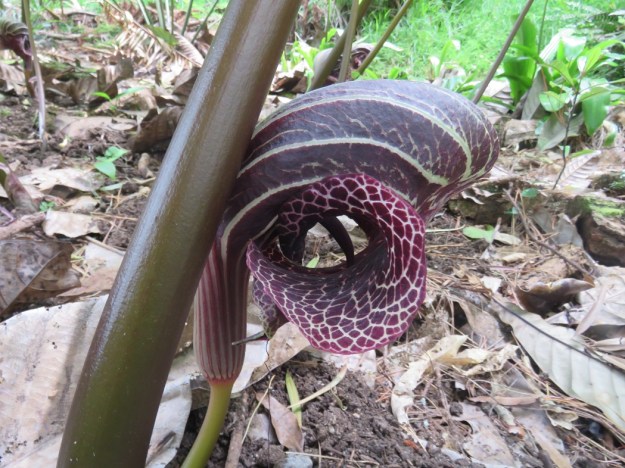
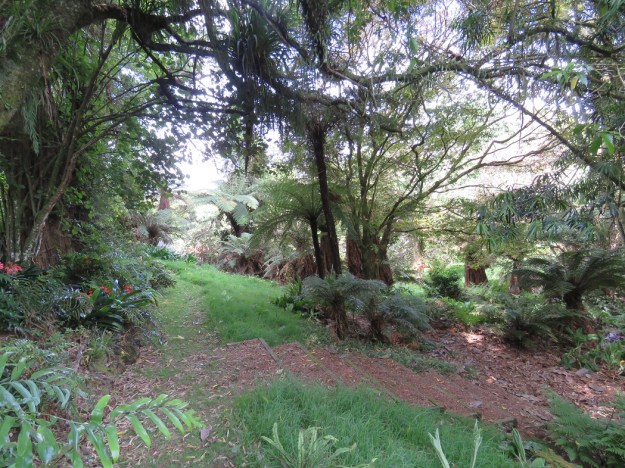
I had never really thought about what Mark was doing in one area where our avenue gardens meet the area we call the park. I had vaguely noticed that he was drifting down the hill with some plantings of pretty choice material like some of the interesting arisaemas, calanthe orchids and scadoxus, but in a casual, naturalistic manner. We were in that area together recently when he commented that he was attempting to blur the line between highly cultivated garden and wilder areas, to transition seamlessly. It was like a penny dropping for me. Of course that is what he was doing.

Arisaema dahaiense!

This inspired me to get into that area where I have never done anything  before, bar the occasional quick tidy-up. It was a perfect place for a few clivia plants. I am trying to rehome the last of the clivias red, orange and yellow that had been potted up by the last of our nursery staff and that must have been back in 2011. They are amazingly resilient plants. Some were in very small planter bags and all that has happened in the intervening years is that the pots have been moved out of the former nursery area and beneath trees. They have not been fed, let alone nurtured and loved but still they are green (some more greenish than dark green), many are flowering and seeding. Enough is enough, I thought. These need to planted out.

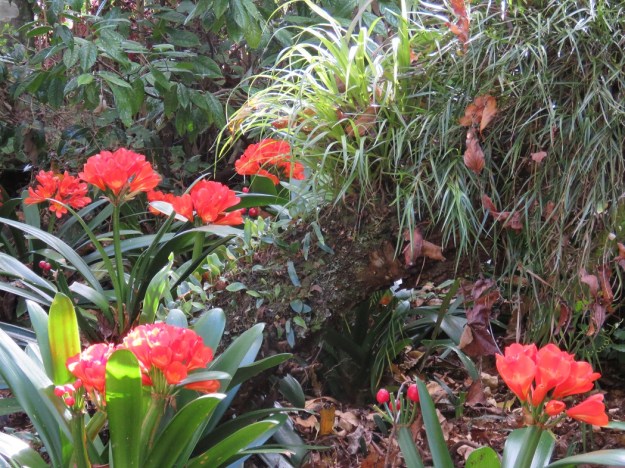
Having seen the occasional garden that suffers from the ABC syndrome (another bloody clivia, mass planted), I have been trying to drift them through the shaded areas, mostly areas that are loosely maintained at best. It takes longer to plan a drift than a mass planting and drifting a couple of hundred clivia plants without making them a mass takes a while.
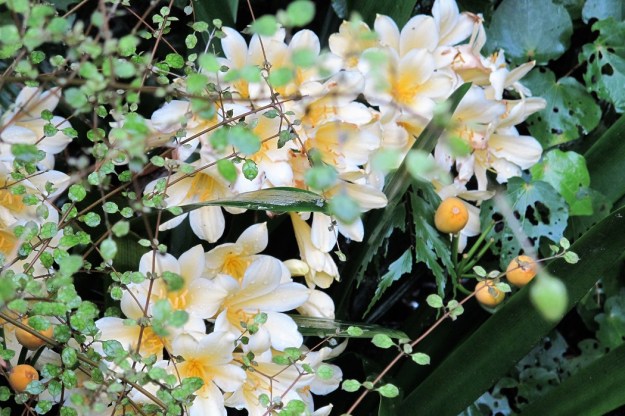
Yellow seeds from last year’s flowering, visible here, will flower yellow.

Not for us all the yellows in one area, oranges in another and reds elsewhere. There is nothing wrong with that. I have seen it done and it is what I describe as the ‘landscaper look’, usually done with plants that have been purchased and are identically matched, being the same clone. It is just not our style. We prefer a looser look, using seedling raised plants so there is subtle variation,  the mix of colours being more suggestive of the gentle hand of Nature enabling plants to seed down in situ. Which they will do over time – we have clivia seedlings popping up around the garden but to leave it all to Nature will take longer than we have left. We are just hurrying the process along by a decade or two when we use established plants.

If you are going to raise your own seed, it pays to start off with the best parents. This means selecting the ones that flower well every year and have the best flower heads of the type you want. For showy garden plants, we want ones with fuller heads rather than too many with the hanging bells. The red clivia seed will eventually bloom orange and red; yellow clivias come from yellow seeds. True. I am not sure what colour seeds the peach ones have (we only have a few in the new peach shades) and we don’t have any of the green and white clivias in the garden yet.

When I think about it, blurring the lines are the tool we use to get to a seamless transition between different garden spaces. The soft transitions within the garden are all part of refining our thinking about how important it has become to us, personally, that we garden confidently with a strong sense of place, as referenced in this piece I wrote in March last year.  


Garden Lore

“Hollyhocks are very aspiring Flowers.”
The Flower Garden by John Lawrence (1726)

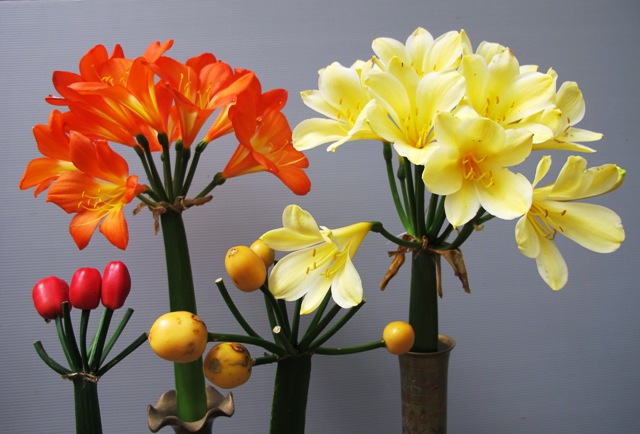
Clivia seeds and blooms

Clivia seeds and blooms

In the world of wonderfully random bits of gardening information, I thought I would demonstrate to you that red and orange clivias have red seeds while yellow clivias produce yellow seeds. Is that not an interesting fact? These seed are from last year’s blooms. They take a long time to mature. While you can, as we often do, leave them to seed down naturally where they are, picking them and sowing them in trays in more controlled conditions will usually give you a higher percentage.

The reason why clivia plants are often expensive has nothing to do with their being difficult to grow or propagate. It has to do with the time it takes for them to grow and reach flowering size. In this age of instant gratification, people want to buy big plants which will fill a space now and flower beautifully but all for $15, thank you. That is fine if it only takes three months to produce the plant but when it may be four years, you have to be prepared to either pay more or to buy small and be patient. If you have access to an established clump, these are not difficult plants to dig and divide.

First published in the Waikato Times and reprinted here with their permission.

Low(ish) maintenance shade gardening

016 (2)It is clivia season here though it may not be clivia season for those who live in colder areas. Despite being much favoured by modern landscapers, these plants do not like more than a light touch of frost at most.
There are reasons why clivias are loved by landscapers. Of all the options for shady areas, they must be one of the most tolerant, forgiving and easy-care there is. For the better part of the year, they sit as a tidy clump of strappy foliage requiring little or no attention and when they flower in spring, the showy blooms last for many weeks. Plants can be left for years requiring no attention.

I looked at a photo of a property where the owners had used a reputable landscaper and the shady side of the house consisted of an access path with two narrow borders either side bounded by a solid fence. Both borders had been planted with clivias in single file, surrounded by bark chip as mulch. It is a very tidy, utility solution which, if the fence and path are smart, can even look stylish. If you like that sort of look.

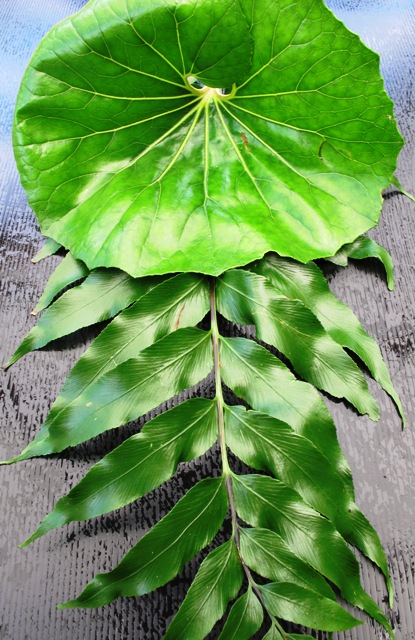
Everything looks better with ferns, in my opinion. Ligularia reniformis.

Everything looks better with ferns, in my opinion. Ligularia reniformis.

Clivias are not a great choice for inland areas unless you are confident that you are frost free, which most of Hamilton and the Waikato won’t be. Sometimes such borders are beneath the eaves of the house and that will afford protection. But you will often see the same look achieved with, maybe, the tractor seat ligularia (L. reniformis), Ligularia ‘Desdemona’ or a similarly reliable, evergreen perennial.

It will come as no surprise to regular readers that it is not a look I favour, personally. While I can see the logic to keeping clean, crisp lines and some degree of simplicity, I just think it would look so much more interesting with the introduction of another one or two types of plants. They don’t have to be expensive or choice plants but what they add is textural interest, variation in height and sometimes the bonus of seasonal flowers.

Most gardens have a shaded area – at least that narrow side that runs alongside the bathroom and laundry and is on the other side from the sunny living areas. If it is a little-used area which is primarily access and has no house windows that look out to it, then it hardly warrants great expenditure of either money or ongoing effort. But a small amount of effort can make it so much more attractive and the beauty of shade gardening is that it tends to be much lower maintenance.

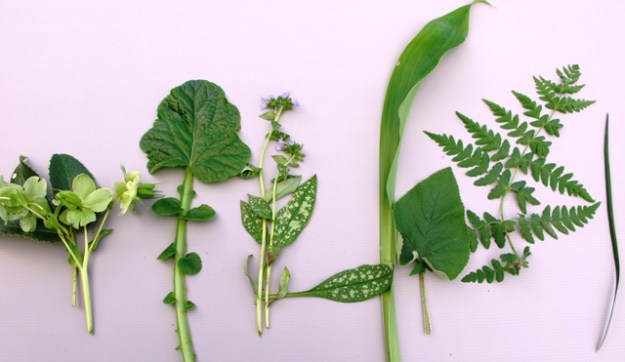
left to right: Helleborus x sternii, Francoa ramosa, pulmonaria, arthropodium (renga renga), phlomis, random fern and mondo grass - all cheap, reliable options for low maintenance shade gardening

left to right: Helleborus x sternii, Francoa ramosa, pulmonaria, arthropodium (renga renga), phlomis, random fern and mondo grass – all cheap, reliable options for low maintenance shade gardening

I headed out to the garden to look for options to add interest to a shade garden. There are plenty to choose from – just don’t choose them all if you want a clean look. Keep it to a maximum of three. Ferns. Pretty much everything looks better with ferns in the shade. They add a lightness of texture and detail of leaf to solid plants like clivias or ligularias and it is that contrast that can add interest.

Renga renga lilies are happy in more shaded areas and have the bonus of spring flowers. We have a lot of success with phlomis (P. russeliana or Turkish sage) with its yellow tiered flowers in summer. Similarly, the bridal wreath flower – particularly Francoa ramosa – is easy and obliging with summer flowers. The unattractively named lungworts or pulmonaria family combine very well with bigger, chunkier foliaged plants and add detail with their gentle variegation. Even common old mondo grass, be it black or green, can add a different texture. Helleborus x sternii is a reliable shade option with lime green flowers in winter.

If you keep to evergreen perennials which don’t require much more than an annual clean-up and which can be kept for several years without having to dig and divide them, you can make a low maintenance shade garden. Take care to plant them well in soil you have dug over, add plenty of humus or compost, mulch after planting and generally they can look after themselves.

It does not have to be expensive or difficult. If you can get simple combinations that are compatible, look good together, are happy in the conditions and meet the requirements of the gardener, it is a great deal more interesting than looking at a single plant variety en masse.

But that is the voice of a gardener, not that of a landscaper.

First published in the Waikato Times and reprinted here with their permission.