
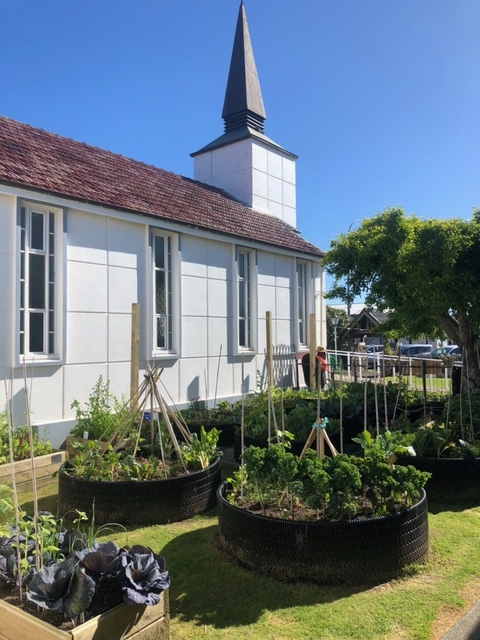
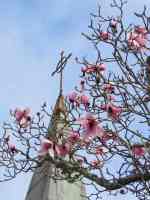
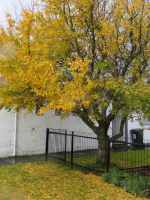
I have various photos of the modest little Anglican Church of St John the Baptist in my local town of Waitara. Until now, all have involved either the splendid Magnolia campbellii which brings me great delight every winter or the golden delight of their Ginkgo biloba. But look! Now they are supporting a community garden and the Waitara Foodbank, Pataka Kai. For overseas readers, kai is the Māori word for food while pataka is a place of food storage or pantry.
Just as with Pataka Kai’s free cooking classes, there is a strong element of learning and sharing in their community garden project. This is not just about crisis intervention for those who cannot afford food; it is equally about building community and sharing skills to equip people with confidence and knowledge, now and into the future.
I have no affiliation to any church but their act of making land available for a community garden is Christian outreach at the most local, grassroots level and that is to be lauded. The Magnolia campbellii remains untouched and is on the other side of the church. Where the garden is now, used to just be tidy, mown grass that contributed nothing obvious to the wellbeing of the congregation, the wider community or the environment.
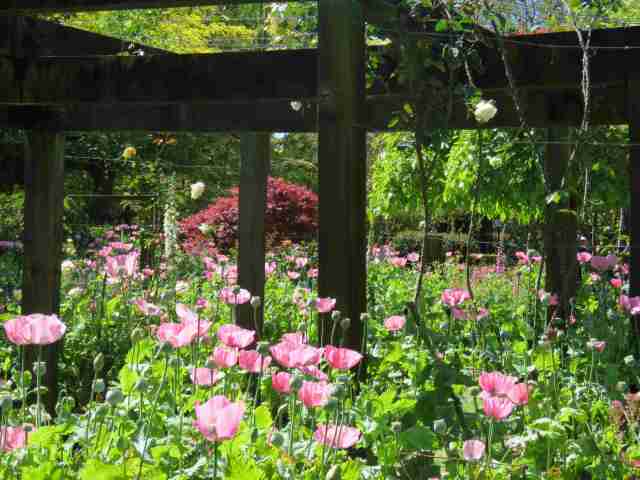
The annual Taranaki garden festival is now well behind us but we did get out to a few gardens. The bed of self-sown pink poppies in Waiongana Gardens was a particular delight in its charming simplicity, even knowing that it will have been an ephemeral affair.
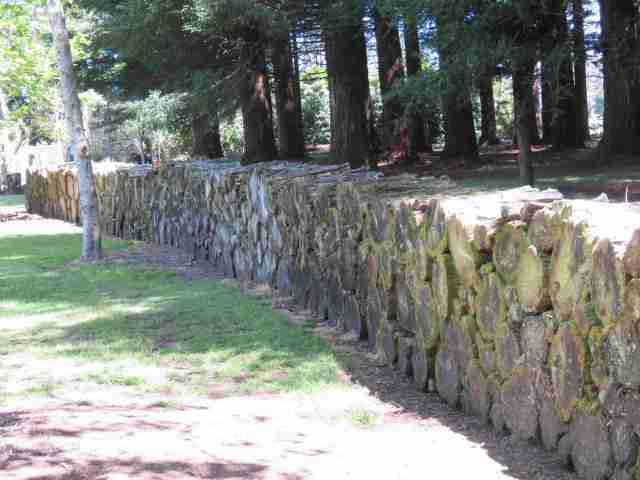
Their log walls are pretty unique and likely to stay that way when you consider the logistics of creating them, needing the raw material, the equipment to cut the logs and then the machinery to move them into place. Who needs insect hotels when you can edge your large property with au naturelle log walls providing habitats and acting as an attractive boundary?
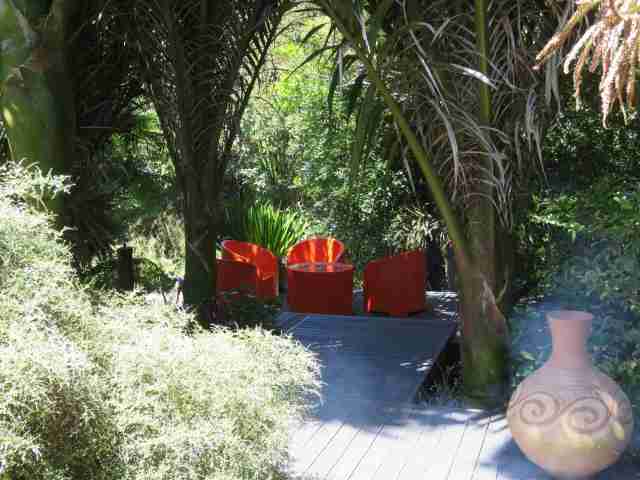
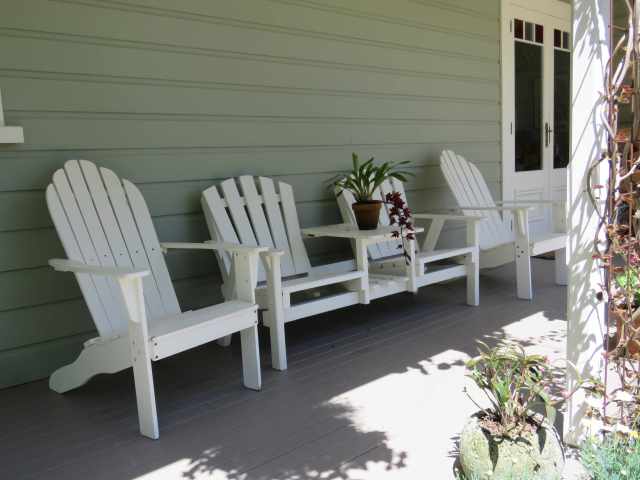
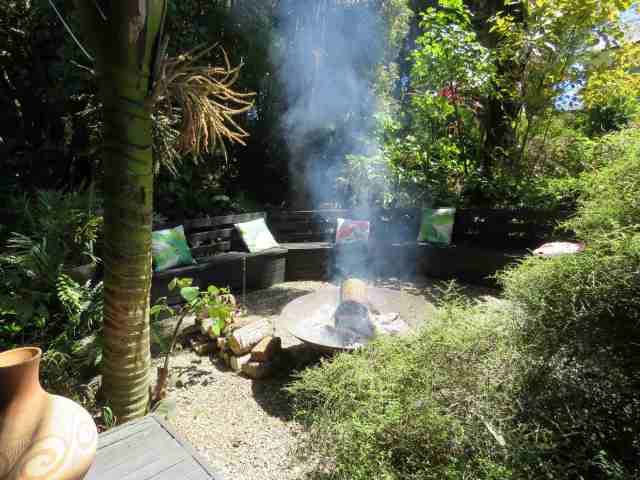
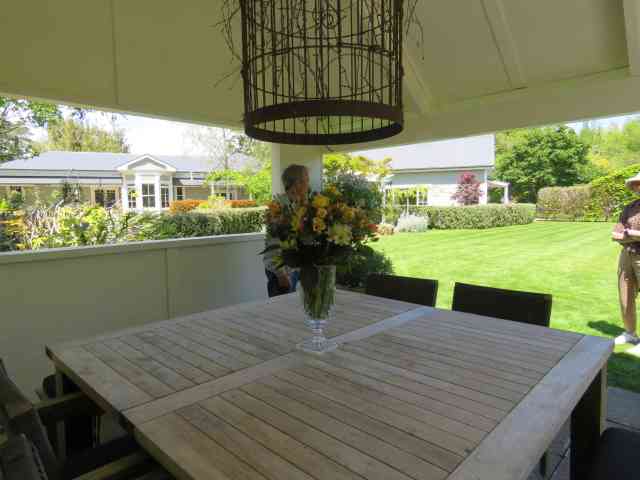
Riverlea is a stand-out garden for a number of aspects. I could highlight several but I would single out the placement of garden seating. Mark has always been adamant that gardens should, as he says, ‘make sense’. There needs to be an underpinning logic. He is not big on contrivances. So garden seating should be where you use it, not a single painted chair placed in the middle of a border as a dreaded focal point. Same with gazebos, summer houses – or *pavilions* as the aspirational call them these days. These should have a useful purpose and location, by very definition. Being an ornament or a statement of opulence is not enough, at least in our books. At Riverlea, every space to pause and sit a while, either alone or with friends, impressed with its placement and its welcoming feel. It makes a garden feel occupied, enjoyed and appreciated, personalised.
The devastation wrought by the storms at the beginning of November, particularly in Southland, brought up the thorny issue of trees and power lines. Again. The power was out in some areas for weeks and the photos of fallen trees showed some extreme scenes. We went through Cyclone Dovi a few years ago. That was bad enough but the Southland storms were way worse. Trees and power lines are not a good combination.
I have every sympathy with linesmen who go out in all sorts of extreme conditions to try and restore essential services. I can understand why the lines and power companies do not like trees and would like clearways around every power line.
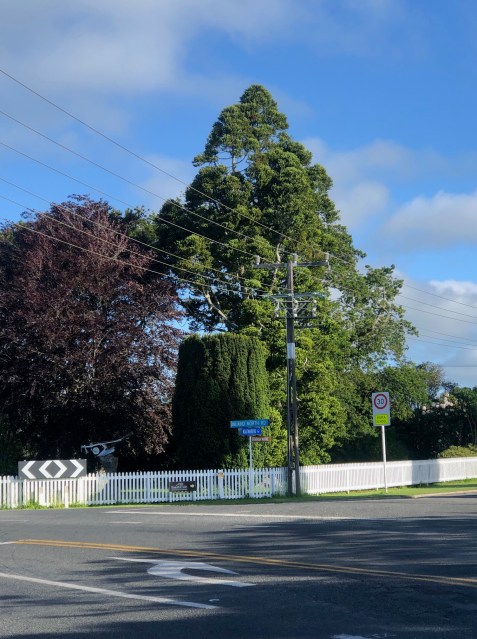
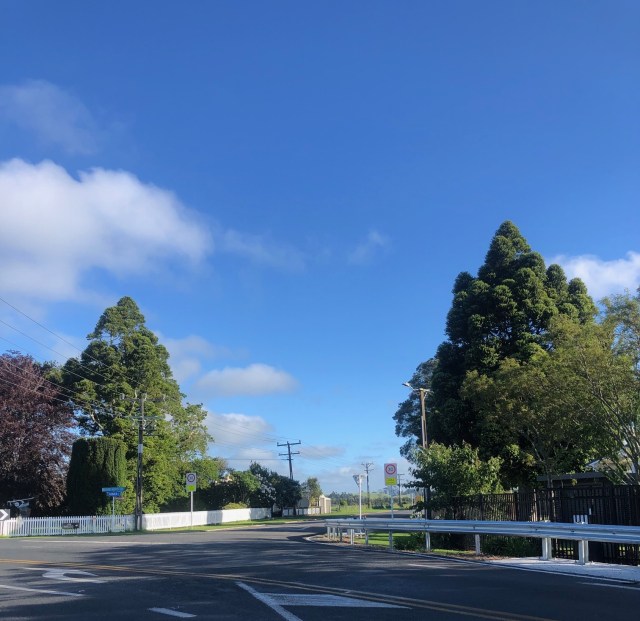
But what would clearways look like? It is one thing to expect trees to be kept out of the lines so that wind won’t blow the branches around and cause damage and power outages. It is quite another if every tree that could potentially fall upon a line were it to be uprooted had to be removed or have the top taken out of it as a precaution.
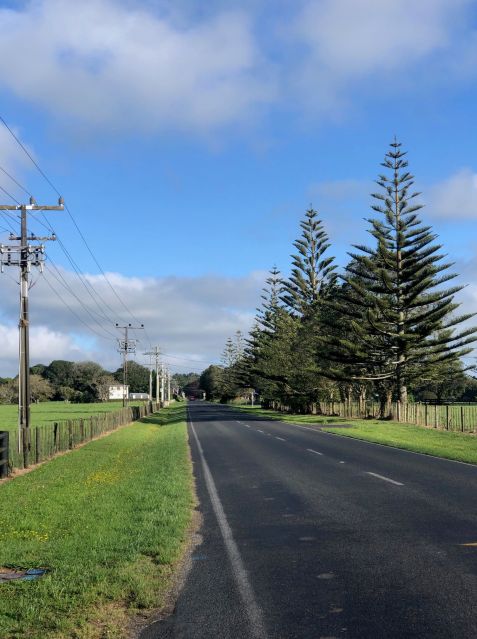
Climate change is here. It seems that what it will look like in our country includes extreme storms with increasing frequency. Trees, especially very large, mature trees, are a critical part of attempting to counter climate change. It takes decades for trees to reach maturity. Historically, we have many power lines which were placed where it was most convenient or the cheapest option and now they are in the wrong places, really. I don’t know what the answer is. How do we balance the environmental benefits of large trees with the need to keep electricity supply?

Sometimes life can deliver unexpected delights and so it was with a delivery of a magnificent book sent to us by the UK-based botanical artist, Barbara Oozeerally. There are several pages of paintings of Jury magnolias in a large format book full of exquisite magnolia paintings. It is a book to be treasured. When I wrote to thank her, it transpired that she is a long-time subscriber to this site and her love for magnolias goes beyond painting them. She has a collection of nearly 50 different magnolias in her own garden. If you don’t have space for 50 magnolias in your garden, I can recommend her book to experience the genus vicariously, all year round.

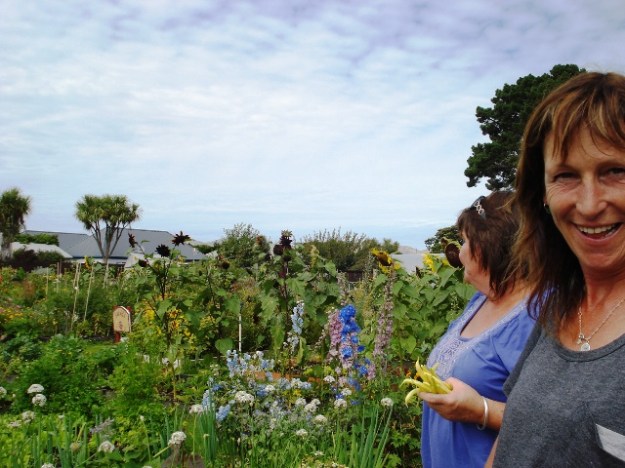
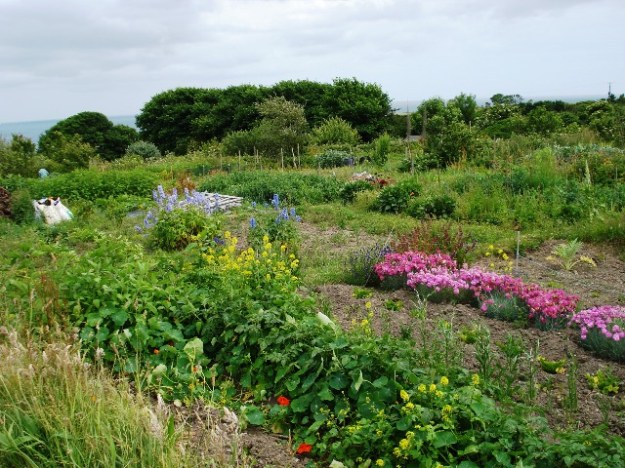
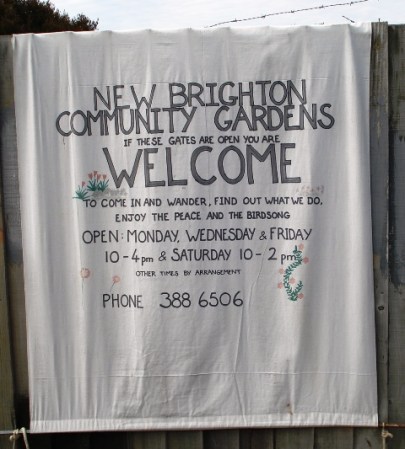 The New Brighton Community Gardens were created before the earthquakes but the coordinator, Catherine O’Neill, told me that interest had grown exponentially since those events and she now has around 100 volunteers registered. For two hours work a week in the gardens, they can take home free vegetables. This project goes way beyond just the gardens, though they are at the heart of it.
 Tikorangi The Jury Garden