Tag Archives: Cyclamen hederafolium

The folly of the quest for garden perfection

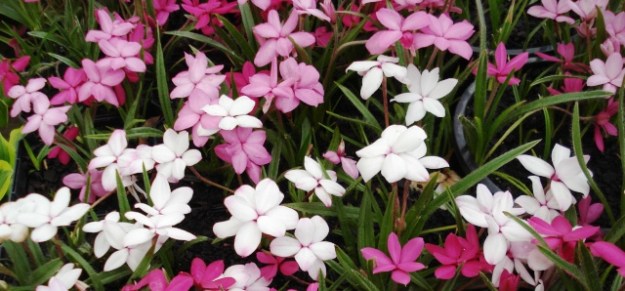
Rhodohypoxis are to be in drifts, not clumps, thank you.

Rhodohypoxis are to be in drifts, not clumps, thank you.

I commented to a photographer once about the immaculate interiors featured in glossy magazines and how our home could never look like that. She laughed and said she once went back to get some extra photos for a feature and the place did not look the same at all. Oh, so this is how they usually live, she thought.

It is an illusion made possible by the fact that photographs capture a single moment in time and it applies equally to gardens as to house interiors. I do it when I take photos. I look at the first image and then I will rearrange or remove something to get a clearer, more pleasing shot. The folly is when we think we can achieve and maintain that in real life. It is a trap to which many of us fall victim.

This train of thought came about recently as I spent a day redoing a garden bed. In my mind, I know exactly what I want and yet again, I am on a quest to make it happen. In this case, it is a bed with five clipped and shaped small camellias in it, backed by a clipped hedge. How much can you do with about 12 square metres of garden? A lot, it turns out.

This bed, in full sun, started as a cottage garden themed on red and yellow, full of roses, perennials and annuals. It looked lovely for 3 weeks of the year and messy for the remaining 49 weeks. It then went formal(ish) and I wrestled with finding the perfect ground cover. Rubus pentalobus (‘the orangeberry plant’) was too invasive. Violets were too vigorous. Cyclamen hederafolium were lovely for about 8 months of the year but were dying off during our peak visitor season. We changed the hedge last year from clipped buxus to clipped Camellia transnokoensis (tiny white flowers and small leaves). I reduced the number topiaried camellias which give the structure. I started inter-planting the cyclamen with rhodohypoxis for spring colour and a little ground hugging perennial called scutellaria with white flowers for summer cover.

How ironic that I still went searching for a photograph to show the garden bed looking good - but had to settle for Spike the dog creating a dust bath in the reworked ground covers. This is a long way from the mental image I have of what it is to look like.

How ironic that I still went searching for a photograph to show the garden bed looking good – but had to settle for Spike the dog creating a dust bath in the reworked ground covers. This is a long way from the mental image I have of what it is to look like.

My most recent effort was because the rhodohypoxis were looking too clumpy and I wanted them drifty, not clumpy so I spread them out, while trying to make sure that the cyclamen were sufficient in number to make an uninterrupted winter carpet. It is still looking dry and dusty at the moment but will it work?

Yes and no. It will, I hope, closely match my mental image at some points in the next year or two – but it won’t stay that way. Gardens have plants and plants are not static. The mistake is thinking that we can create constant pictures in our gardens and that when it most closely matches the mental image we have, that we can then keep it that way.

It is possible to achieve something nearing perfection in a garden. For a couple of weeks. For 52 weeks? Without an army of able staff and a stand out area of replacement plants “out the back” somewhere, I doubt it. None of us own Versailles where, reportedly, the entire colour scheme of the extensive parterre gardens could be changed overnight. Even Sissinghurst today has a large nursery out of sight, full of plants to bring in as required to spruce up the displays in the garden.

Does the answer lie in a very formal garden? Not unless you are going to use artificial plants. I have seen formal gardens where the hedges and shapes have lost their sharp edge because the wretched plants will insist on putting out fresh growth. When you lose the sharp edges in a formal garden, there’s not much of interest left.

It would be much better, surely, to rid ourselves of this idea that we can achieve photographic perfection in real life gardens. But that is easier said than done, as evidenced by my repeated efforts in the garden border mentioned above. When all is said and done, I am still worried about the scutellaria which may be better in partial shade than full sun.

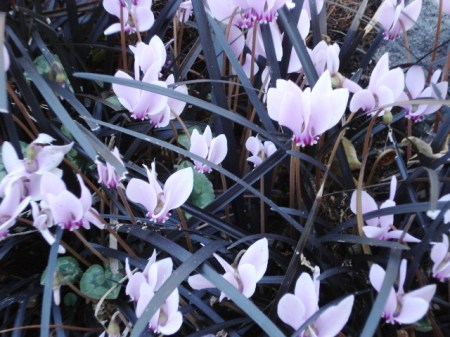
Cyclamen hederfolium give pretty flowers from summer through autumn and carpet of attractive foliage until mid spring

Cyclamen hederfolium give pretty flowers from summer through autumn and carpet of attractive foliage until mid spring

First published in the Waikato Times and reprinted here with their permission.
Plant Collector: Cyclamen hederifolium

???????????????????????????????
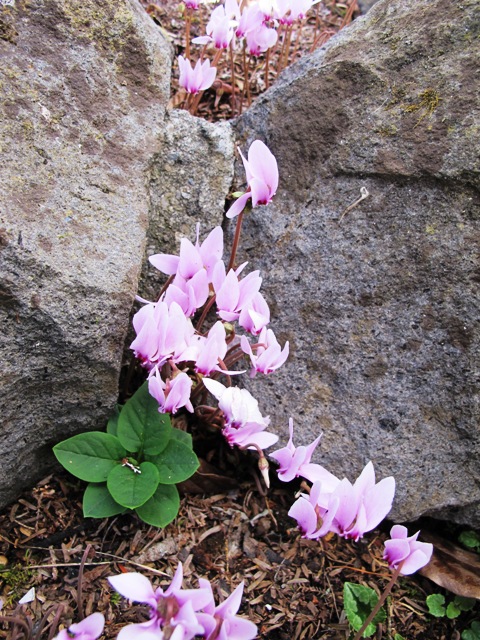
As early as January the first flowers on Cyclamen hederifolium start to appear on parched soils, though they are just coming into their own now. Some of you may know C. hederifolium by its earlier name of neapolitanum. It is the easiest of the dainty species to grow with one of the longer flowering seasons. The heart-shaped leaves, usually mottled and marked with silver, appear towards the end of flowering and make an attractive ground cover through until early summer.

Hederifolium comes in a range of pinks from light to mid, as well as in pure white. It hails from southern Europe through to Turkey and grows in hard, poor conditions, tolerating both heat and cold. What it doesn’t want is wet ground. We use it in open sun to semi shaded woodland margins where drainage is good.

Cyclamen grow from tubers which can develop to large, flat discs. Over the years, some of ours have reached up to 20cm or more across.

If you can’t find C hederifolium for sale, it is easy to grow from fresh seed and gently seeds down in the garden. If you know of somebody who already has it, the seed forms later in the year as a fleshy capsule at the end of a corkscrew stem. The secret is to sow it immediately and not try and store it.

The species cyclamen have a gentle charm which I personally find lacking in the big flowered hybrids which are sold as house plants. However most of those will survive as garden plants and live on if you find a suitable spot where they won’t get outcompeted by overhanging plants.

First published in the Waikato Times and reprinted here with their permission.
In the garden this fortnight: April 26, 2012

A fortnightly series first published in the Weekend Gardener and reproduced here with their permission.
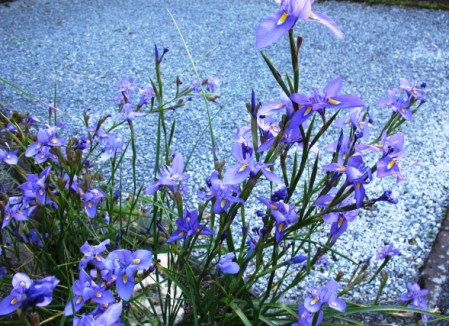
The pretty Moraea polystachya has a long flowering season

The pretty Moraea polystachya has a long flowering season

We are not noted for autumn colour here. I can’t think that anybody has ever said: “Oh but you simply must go to Taranaki to see the autumn display.” The trigger to deciduous plants to turn is temperature related and we drift so imperceptibly from summer through autumn to early winter, that even plants renowned for their capacity to blaze with colour are usually a disappointment. Besides, we are so verdant and green and our native plants are all so resolutely green that all we can do is to admire the occasional single deciduous specimen. Generally it is inland areas with drier climates and much sharper variation in seasonal temperatures which put on the big displays.

However, our autumn is marked by much smaller, pretty pictures of autumn bulbs. We garden extensively with bulbs. In a large garden with some huge trees, it is the dainty, often ephemeral pictures which give the charm and detail. Autumn flowering bulbs are harder to find for sale because most people don’t think beyond the more common spring bulbs.

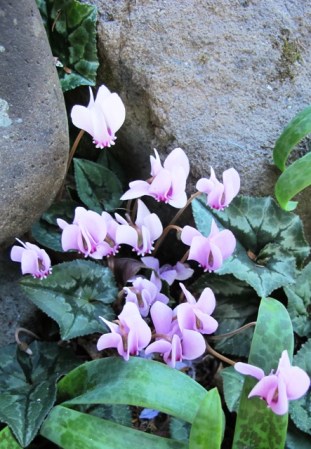
Cyclamen hederafolium - the easiest of the species in our climate

Cyclamen hederafolium - the easiest of the species in our climate

At the moment, it is the pink and white Cyclamen hederafolium, blue Moraea polystachya (autumn peacock iris), a rainbow of colours in the ornamental oxalis, bold lilac colchicums (often incorrectly referred to as autumn crocus), the real autumn crocus and the beautiful hybrid sarniensis nerines which are carrying the season in the rockery. Out on the roadside, the belladonna lilies are in bloom. Some, like the colchicums, do not flower for long but are very showy. Moraea polystachya is a gem of a bulb. It flowers down the stem so it has an exceptionally long season stretching into months rather than weeks. It can seed down but is easy enough to thin out if necessary.

Cyclamen hederafolium (formerly known as neapolitanum) is the easiest and most reliable of the species cyclamen. It too has a long flowering season, followed by attractive, heart shaped leaves with white markings. It combines very well with black mondo grass and in places we have English snowdrops (galanthus) to come through in late winter, extending the seasonal interest amongst the cyclamen foliage.

Top tasks:
1) Cut off all last season’s leaves on the Helleborus orientalis and remove them to the compost heap. We have done this for many years now, following the advice from Terry Hatch at Joy Plants. It removes any build up of aphids and it means that the flowers are highly visible as they come through with just delicate new leaf growth. As the season progresses, the new foliage takes over and fills the whole patch. Timing is important – if you leave it too late, you have to trim carefully around all the emerging flower stems.
2) After raking off the hellebore foliage, I will weed out the rash of germinating seedlings and then cover the whole bed with a mulch of compost to a depth of about 3cm. This feeds the soil and discourages weeds. Hellebores are one perennial that is best left undisturbed. It is better to raise seed than to try and divide existing clumps. They can sulk for years before recovering.

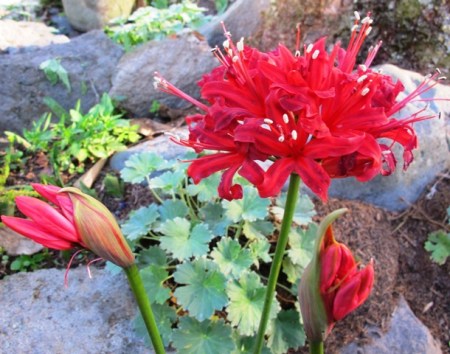
The Nerine sarniensis hybrids are a real autumn feature in the rockery

The Nerine sarniensis hybrids are a real autumn feature in the rockery

Tikorangi Notes: Friday April 13, 2012.

The Cyclamen hederafolium are a delight

The Cyclamen hederafolium are a delight

Latest Posts:

1) Those who shun all of the vast oxalis family because of the abominable habits of a few miss out on the autumn delights like Oxalis massoniana.

2) Raised beds and to dig or not to dig – that is the question. It seems these days that the rage is for raised beds, irrespective of whether they are needed.

3) GIY broad beans – we are very partial to this crop in our household.

4) Common wisdom is that you should only grow plants well suited to your area and conditions but Real Gardeners know this is a fallacy. It is wonderfully rewarding to succeed with marginal plants. My latest garden diary from Weekend Gardener magazine.

5) Secrets of a Lazy French Cook – nothing whatever to do with gardening, this one. But one of my other activities is book reviewing – mostly recipe books and children’s books (in addition to the gardening ones I receive.) This one is an entertaining read and a handy starting point for classic French dishes.

There has not been a whole lot of gardening going on here in the last week or two – too much energy and time required to renovate our one and only rental house on our property across the road. I think the role of property owner and landlord is much over-rated. But I did finally get to visit New Plymouth’s much loved and awarded new bridge on its coastal walkway. And it is a sensation, evoking the rolling waves so close by. It is wonderful to see a bridge that goes way beyond utilitarian and is dedicated entirely to pedestrians and cyclists. On a gloriously sunny and calm autumn day, it was a magical scene which left me in awe at the beauty of the district where we live.

Plants that Delight

This article was first published in the Weekend Gardener Magazine, issue 316, June 2 – 15, 2011

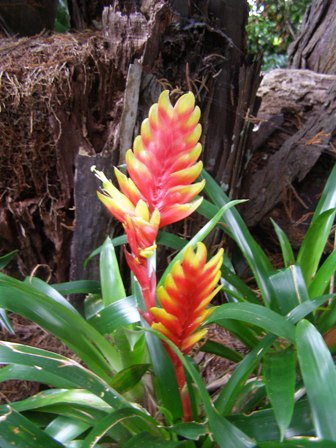
Bromeliads - a vriesea

Bromeliads - a vriesea

Bromeliads
Generally speaking, I am not a fan of prickly, spiky plants (I have always felt that yuccas in particular were aptly named) but I am willing to make an exception for the bromeliad family even though it means donning protective gear when it comes to working amongst them. We use them extensively in dry woodland conditions and for much of the year they just sit around being extremely undemanding, bar the occasional clean up to remove accumulated debris.

It is when they flower, that bromeliads look exotic. The range of blooms is extraordinary and there is nothing quite like them. Some of them have strange, flattish flowers which might be cast out of thick wax, dyed in parrot colours. What is more, the flowers last for ages. I haven’t timed them but we are into months, rather than weeks. This one is a vriesea of some sort but we have never become experts on the genus, despite growing a range of different ones. Our cool, frost free, high shade conditions keep them looking particularly lush. With some of our plantings dating back to the early 1950s, we would rate them as one of the lower maintenance garden plants.

Bromeliads are readily available and many are easy to multiply for the home gardener. If you want to learn more about bromeliads, check out “Bromeliads for the Contemporary Garden” by Weekend Gardener writer, Andrew Steens.

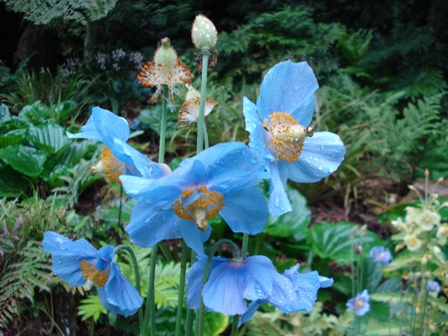
Meconopsis

Meconopsis

Meconopsis
The simplest poppy form – a mere four petals surrounding a ring of golden stamens – is always charming, no matter the colour. When it comes in pure blue, it enters a league of its own.

Coming from the Himalayas, these are plants which are happier in much drier, colder conditions. We have to work at keeping them going here, where we have high rainfall, high humidity and generally mild conditions. They certainly don’t seed down and naturalise for us as they will in parts of the South Island but when they come into flower each spring, it is worth every bit of effort.

We don’t generally let them flower in the first year because if they put their effort into setting seed, the young plants tend to die. If we delay the flowering, we have more chance of some at least becoming perennial, albeit still comparatively short lived. Fresh seed is easy enough to raise but best done in seed trays and not merely broadcast to the ground with a wish and a prayer.

Meconopsis are available in New Zealand both as seed and as plants. If you have a choice, Meconopsis x sheldonii shows a little more vigour than either grandis or betonicifolia. All come in blue, though there are also white, pale yellow and red meconopsis which are nice to add in to a garden but no replacement for the beautiful and eye-catching blue.

Magnolia Felix Jury

Magnolia Felix Jury

Deciduous magnolias
How could I be a Jury and not put deciduous magnolias in my top favourites? These trees are surely one of the most spectacular on the planet when in full flower, though it has to be said that the bigger the flower, the better in terms of impressive display.

Magnolia trees just get better with size and age which seems entirely appropriate for a genus which is ancient – so old that it does not even have proper petals. What we usually call petals are in fact tepals. They evolved before bees so originally adapted to be pollinated by beetles – hence the fact they have pollen but no nectar.

To get maximum flowering, select a variety which sets flower buds down the stem rather than just on the tips. Some varieties like the purple Lanarth can take your breath away but only for about 10 days. Others, like Iolanthe or Felix Jury, flower over many weeks, extending the display. Indeed, spring flowering on Iolanthe extends over at least eight weeks from first to last bloom and there is the bonus of random flowers over summer.

Daphne genkwa

Daphne genkwa

Daphne genkwa
A daphne with no scent? Yes, but it is so spectacular in flower that the absence of fragrance does not seem to matter. It is also deciduous, which we do not expect from a daphne and it flowers before it comes into leaf so all that is visible is a mass of graceful whips smothered in lavender blue flowers.
I think you can never have too much blue in a garden. It is a colour that complements all others and while I will admit that genkwa is not a pure toned blue, it is still blue enough for me.

D. genkwa is not easy to propagate and is generally increased from root cuttings. Neither is it easy to get established. In fact it is definitely on the touchy side. This plant was a particularly fine specimen but outgrew its allotted space so I pruned it after flowering, as you do. It promptly died, to my great disappointment. I am trying again, but this time as specimen shrubs with plenty of space to grow so they will not need to be pruned. Daphne genkwa is available in New Zealand but is not standard garden centre fare so you may need to find an obliging operator to order it in for you. It is a Chinese shrub and, being deciduous, it is generally rated as hardy.

Narcissus cyclamineus

Narcissus cyclamineus

Dwarf narcissi
In a large garden with some enormous trees, we love the tiny treasures that give detail to the bigger picture. We also have more success with the baby narcissus than with their larger cousins. They don’t seem to be quite so vulnerable to the dreaded narcissi fly, possibly because many of them flower earlier in the season.

These little cyclamineus seedlings always make us smile. With the reflexed skirt of petals, they are rather reminiscent of floppy eared dogs with the heads out the car window and ears streaming behind in the wind.

We grow a whole range of different dwarf varieties – species, named hybrids and unnamed seedlings, tucked into positions around the garden. The first to bloom are the Narcissus bulbocodium citrinus or hooped petticoat types which can show colour as early as late April while others continue the display through to late September. The best known dwarf variety is probably Tete-a- Tete, but there are innumerable others which are offered for sale from time to time.

Cyclamen hederafolium

Cyclamen hederafolium

Cyclamen species
These little treasures mostly hail from southern Europe and northern Africa but some varieties are particularly suited to New Zealand gardens.

The most widely available variety is Cyclamen hederafolium (formerly known as neapolitanum) which puts its first flowers up in our garden in January and flowers through until May or even June. After that, the marbled, heart-shaped leaves are attractive in themselves. C. hederafolium comes in shades of pink and pure white. Following on from them, we have a lot of success with C. coum in winter and C. repandum in spring.

Cyclamen are particularly successful planted in drifts on woodland margins in dappled light but they are pretty adaptable in a range of conditions as long as they have good drainage. They are easy enough to raise from fresh seed if you know of anybody with plants and they grow to form tubers which are like round, flattish discs.

Rhododendron Yvonne Scott

Rhododendron Yvonne Scott

Rhododendrons
Unfortunately, the glory days of rhododendrons have been and gone in this country, but we would not be without them in our garden. Our particular favourites are the nuttalliitypes with their large, waxy trumpet flowers, most of which are scented. Combine that with big, heavily textured leaves (the technical term is bullate foliage) and the most beautiful cinnamon brown bark which peels off in long tendrils leaving a shiny trunk behind.

Add in the fact that these plants show generally healthy characteristics in warmer climates. They can get a touch of thrip but nowhere near as much as colder climate plants and they are not susceptible to the brown crisping round the edges of the leaves which disfigures so many varieties.

If I could only grow one rhododendron, R. sino nuttallii would be my first choice. Sino just means it comes from China (there is another Himalayan form). Fortunately we can grow many so we have a fair range of the nuttalliis and their hybrids, including the lovely and distinctive Yvonne Scott. Huge lime green buds open to lime flowers which fade out to white within two days, but keep the green flare in the throat. Mi Amor is probably the most widely available nuttallii hybrid on the market. While we might not rate it as the best, nuttalliis are not readily available so you might have to grab whatever you can find.