
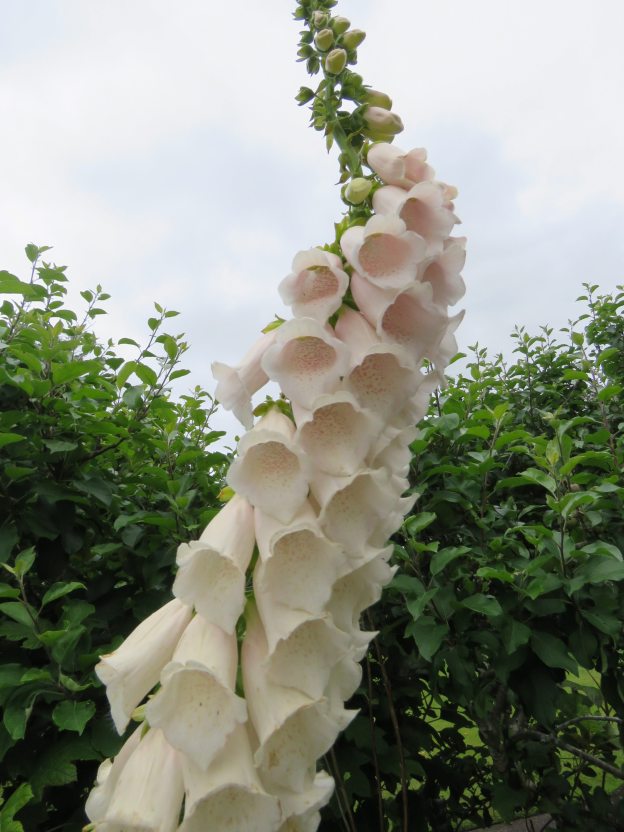
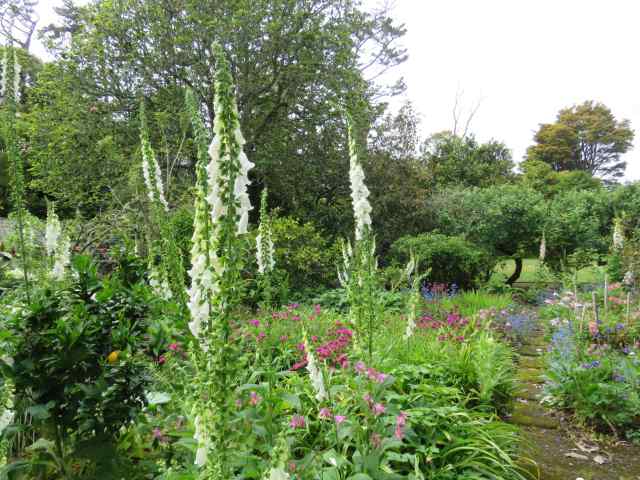
We no longer open for the springtime garden festival here but it is still a time of year when out-of-town friends come to see the garden. One such friend is an Auckland garden designer. I never ask for advice because I think seeking free advice is not much different to asking a medical professional for personal advice at a social event. Some lines should not be crossed. On the flip side, both Mark and I have a policy of not offering unsolicited advice in somebody else’s garden, no matter how tempting at the time, so this may all be a bit self-defeating. Our designer friend has a similar approach but he asked one simple question. We were looking at the Court Garden and he said three words, “Why the foxgloves’?
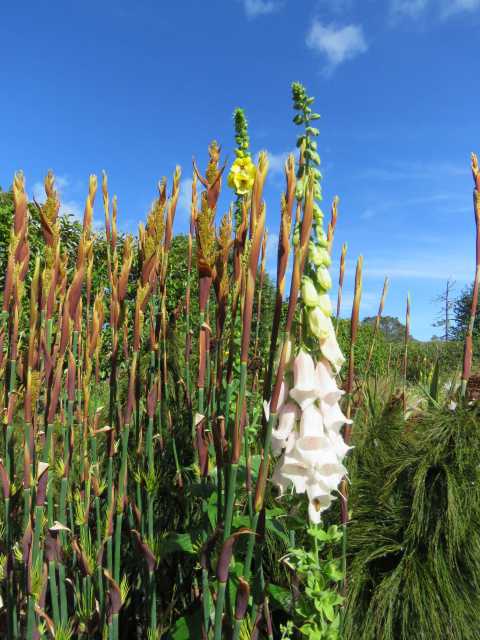
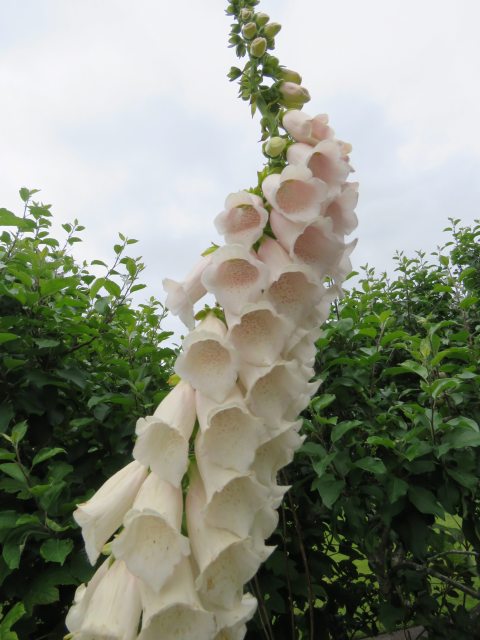
I suddenly looked through his eyes and indeed it was a good question to ask. I went to some trouble when I planted the garden back in 2019 to add palest, pastel coloured foxgloves to add some height and flowers in spring and I have let them gently seed down. Well, at the time they were meant to be pure white ones but they turned out pastel. I had not questioned their presence since but when I looked with different eyes, it occurred to me that they are, in fact, insipid in that situation. I looked at them for the next two days and on the third day, I pulled the lot out. When I sent a text to my friend to say they were gone, he just replied with the single word “Good”.
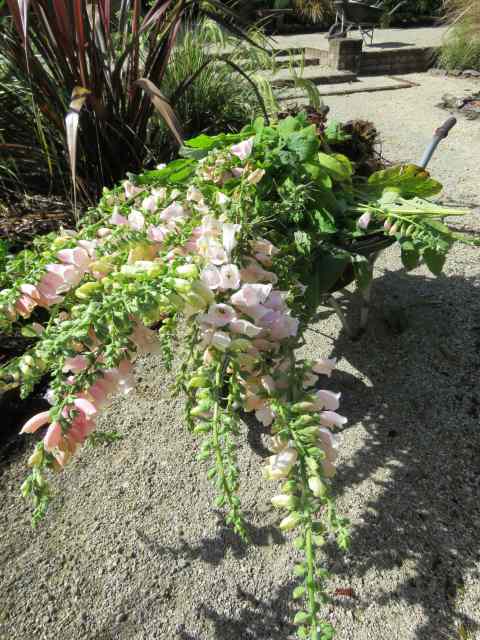
Besides, we were running the danger of TMF – Too Many Foxgloves. For years, I have been so focused on pulling out every common pink one and even paler pink versions of it (because foxglove seed will naturally revert to the unattractive pink form) that I hadn’t looked at the overall picture. While I am particularly fond of the pure white form, especially in the Iolanthe garden which is more perennial meadow than anything else and down in the park, we don’t want them everywhere. It is time to review all locations where we have allowed them to grow and time to limit their range.
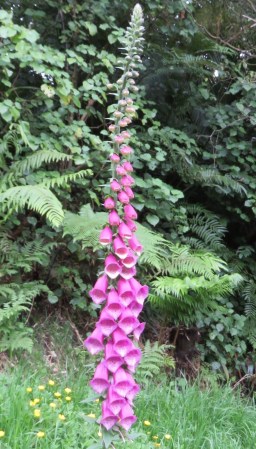
I went to see a garden during the recent festival which I hadn’t seen for many years and now has new owners. It was a very nice garden and well maintained but as I walked around, I thought to myself that if they asked me for advice, it would be to pull out 90% of their dark pink foxgloves (Digitalis purpurea) , if not the lot of them, leaving just the white ones. They have let them seed everywhere and, to my eyes, it was a definite case of TMF. They didn’t ask, so I didn’t comment. But it made me more aware of letting them grow here in our garden.
No matter how good a plant is, it is still a mistake to have too much of it. I refer not just to foxgloves but also forget-me-nots, mondo grass, common verbascums, Verbena bonariensis, pansies, aquilegias and a host of other plants that self seed around the garden. In our garden, I would also add tree ferns, nikau palms (Rhopalostylis sapida) and kawakawa (Macropiper excelsum) to that list.
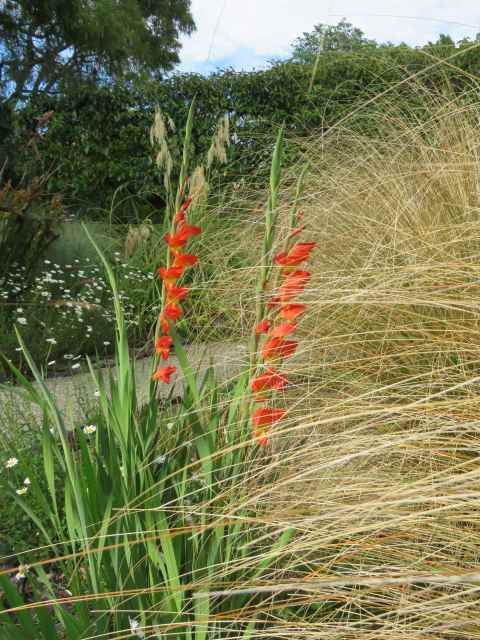
Interestingly, as soon as I removed the pastel foxgloves from the Court Garden, having decided they were the wrong plant and too pallid, the anything-but-insipid Gladiolus dalenii syn natalensis no longer looked out of place at all; it changed from looking somewhat garish to vibrant instead. It can stay after all. It has only just dawned on me that the reason the foxgloves looked insipid in that location is the background. In the Court Garden, they were surrounded by plants that were either pale green hues or silver or many shades of brown. They look more charming in situations surrounded by masses of darker or brighter shades of green. I should have noticed this earlier.
A garden is never finished and even with an established garden, fine tuning it is what keeps it interesting. Sometimes, seeing it through somebody else’s eyes can be very helpful and small changes can make a big difference. I might ask for more advice from people whose opinions I value. Maybe it is not the same as asking my dentist about toothache over social cocktails after all.
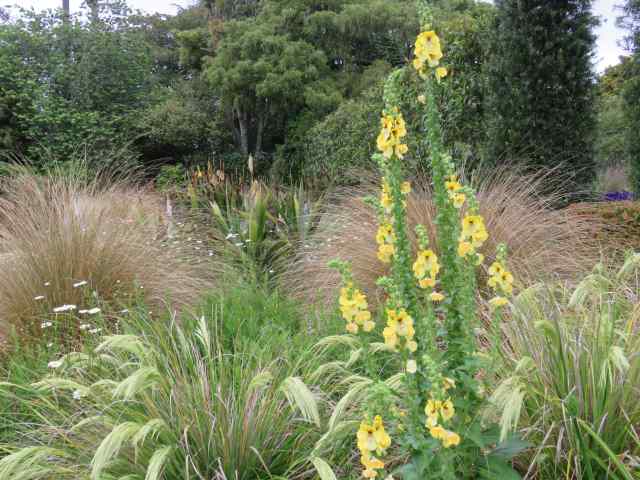


 I like foxgloves, in a wild flower sort of way. But the common pinky-purple form around here, not so much. In fact I have been pulling them out this week. I haven’t gone to the effort of trying to get white and pale ones established to see them all gradually returning to that hard shade of deep pink. I had a pretty honey peach coloured one that flowered in isolation in a gravel heap last year and left it to seed, thinking that as it was standing alone, the seedlings would be the same colour. There were over a hundred seedlings and at least half have gone back to the deep pink colour I spurn. I have been pulling them out as soon as they reveal their true colours to try and preempt the bees cross pollinating.


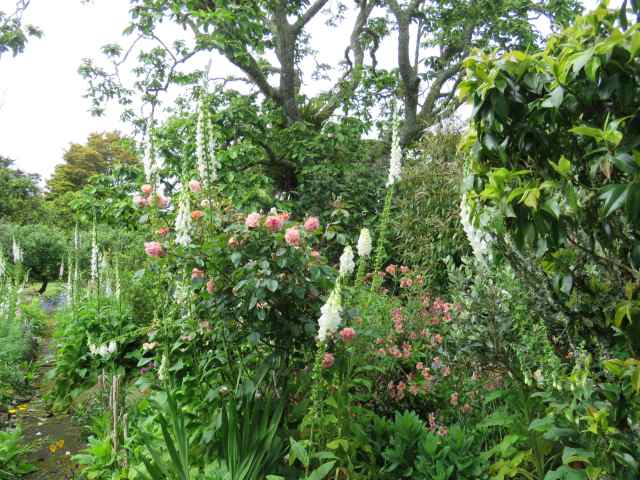
 The whites I wanted for my rose and perennial garden. After a few years, I am now moving them. They are too big and choke and swamp the smaller perennials I have in that area. I have found a couple of spots which they can have all to themselves. I was amused to see English gardener, Keith Wiley – for whom we have huge respect – on TV talking about growing plants in colonies but noting that some plants are so dominant that they do not want to grow in colonies. He cited foxgloves as an example. They are way too thuggish to co-exist happily with many other plants.
 Carol Klein on BBC’s Gardeners’ World, once said that she sorted her foxgloves as juvenile plants – the pink ones had pink veining in the leaves and the crown whereas the white ones were all green. I am not convinced she is right though I went through a stage of culling all pink-veined seedlings. I am happy to stand corrected if somebody has been more systematic in assessing this, but I am pretty sure that I have pink-veined ones flowering white and vice versa.
 Tikorangi The Jury Garden