
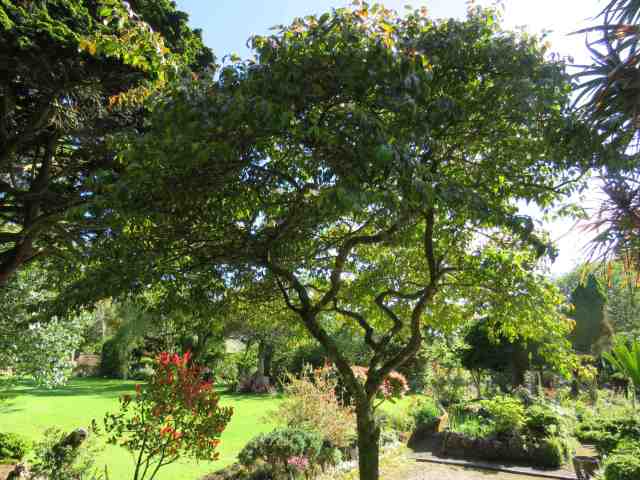
We carry out a lot of pruning in our garden but not a whole lot of drastic, hard pruning to reduce a plant to juvenility. Generally, we like to celebrate maturity in plants and to shape or clip to bring out their natural form if required. But sometimes there are plants that are beyond that and drastic action is needed because they have lost what ornamental merit they had.
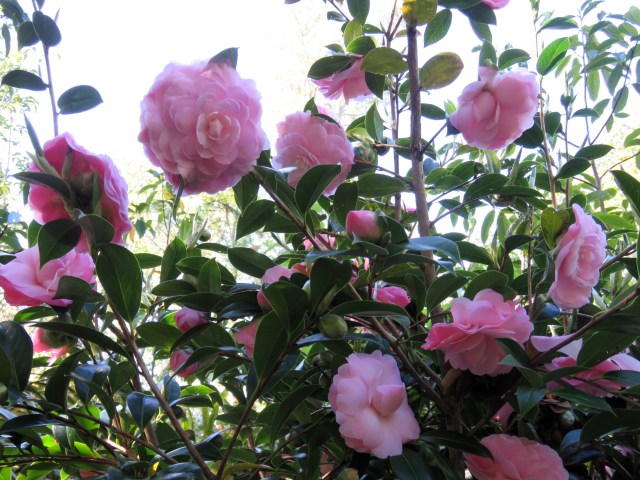
So it is with some of the original camellias bred by Felix Jury, some of which are now household names. We regard the original plants as having some intrinsic value simply because they are the very first one but there comes a time when they can lack any aesthetic merit, especially these days when camellia petal blight has robbed them even of pretty flowers. In particular, ‘Mimosa Jury’, ‘Waterlily’ and ‘Softly’ had reached for the sky and left nothing but bare legs and messy, blighted blooms and aborted buds visible at ground level.

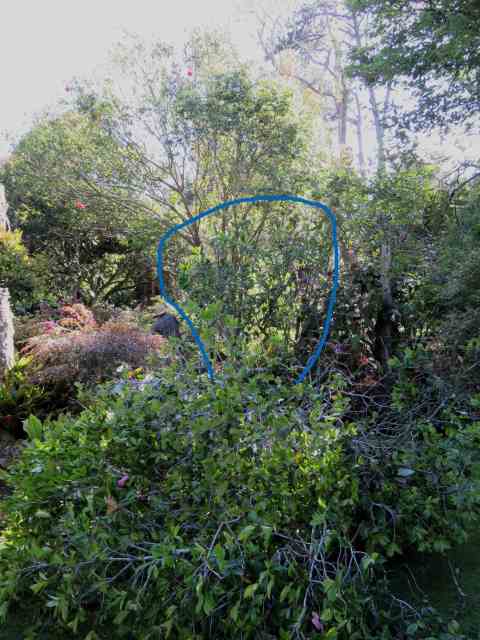
A word of warning: we have a fairly long season when we can do this sort of extreme pruning – late winter through spring is best, so August to October. We can get away with going into November this year because spring has been a little late and we get regular rain. It really is too late and risky for people in climates who are staring down the barrel of a long, dry, hot summer which may start very soon. Your plant may just sigh and die rather than springing into fresh growth.
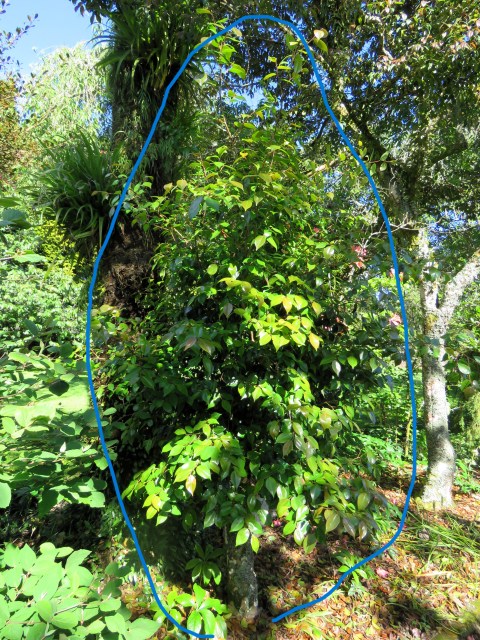
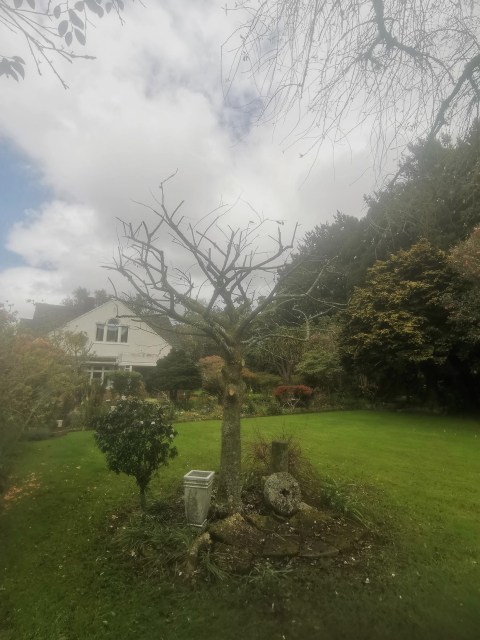
You can cut back to ground level with camellias and they will grow again but you get a thicket of young shoots and no form to the plant. We prefer to cut off to anywhere between a metre up to three metres, depending on the situation, so that the plant will look established again quickly. If we can, we will leave a few wispy branches that still have leaves on them, even if we trim them off later when the new growths have appeared. In this case, ‘Softly’ is back to bare wood while ‘Mimosa’ has a few thin branches with leaves. We shape the remaining trunks and branches, often reducing them to a strong central leader and maybe five or seven branches from that leader.
When I say reestablish ‘quickly’, I mean two years. The plants will push out new shoots this season and bush out again next growing season but they won’t flower and look lush until they have that second growing season behind them so into the third flush of new growth. Patience is a virtue in gardening.
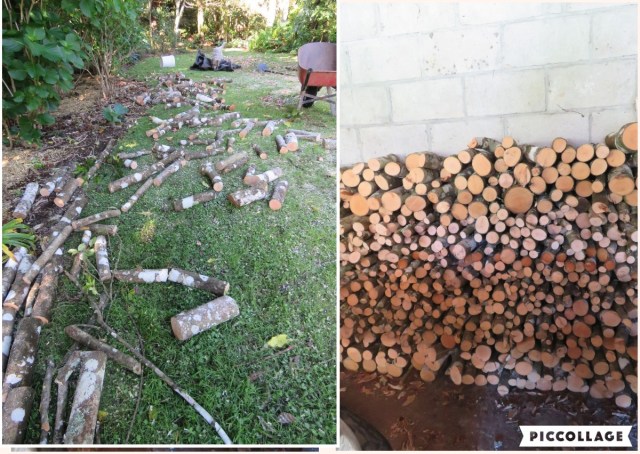
As is our usual practice, we deal with the waste by retrieving what is suitable for firewood and putting the leafy and twiggy remains through the chipper to use as mulch.
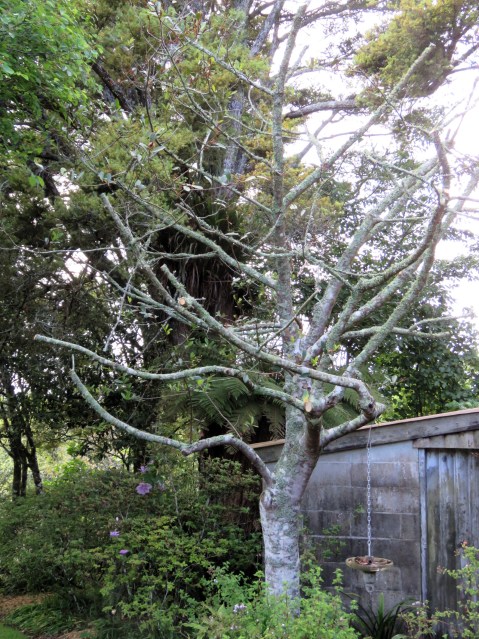
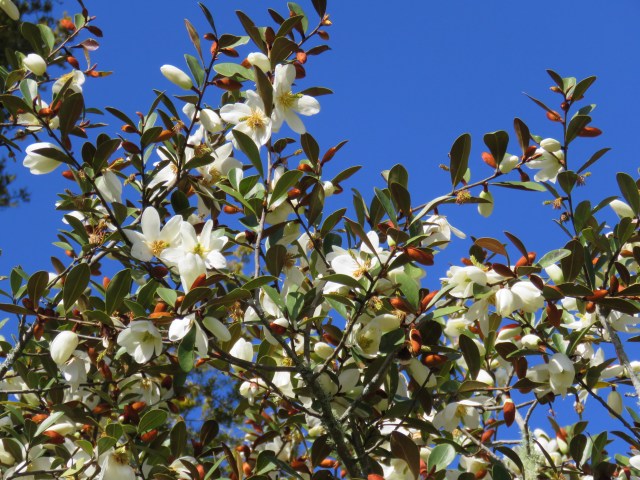
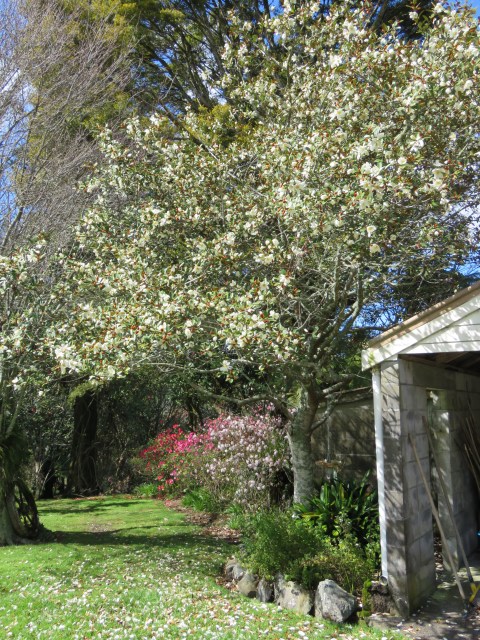
You can do this style of extreme pruning on michelias, too and we have reduced a M. laevifolia ‘Velvet and Cream’ to a leafless frame this week as well but you do need to start with a strong growing, healthy specimen. If it is not growing vigorously, it is may die. If you are wondering about hard pruning a michelia (botanically magnolias these days), there are more before and after photos over time here from an earlier effort on another specimen.
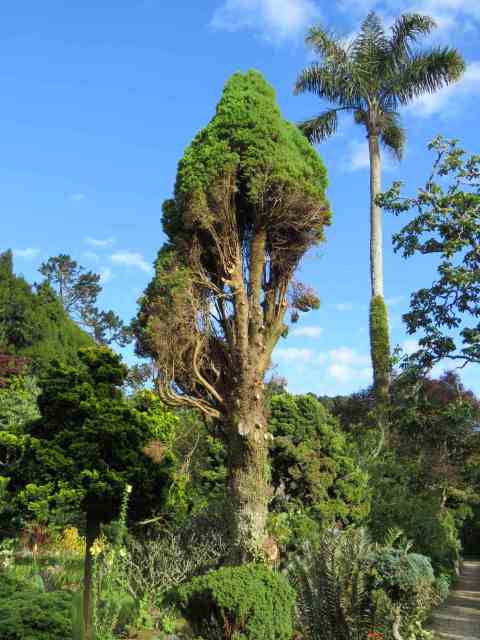
Some plants are beyond rescue. Work has stopped, temporarily, on the Picea albertiana ‘Conica’ in the rockery. It was once a fine specimen of admirable size and form. It was also kept in good health because Mark sprayed it for red spider once a year. As it grew larger, it became harder to spray and Mark – He Who Used To Do All The Spraying here – became increasingly reluctant to routinely spray to keep plants healthy. We decided that good environmental practice was more important than keeping inappropriate plants alive in the garden. In the years since he stopped spraying, the red spiders have pretty much taken over and the tree has gone into serious decline, as well as developing a pronounced lean. Time for it to go.
Cutting down has stopped because what remains houses a bird’s nest with babies. It may just be a common old blackbird but we are not willing to knowingly kill a family simply because we want to finish a task. Completion can wait a little longer until the branches are no longer occupied.
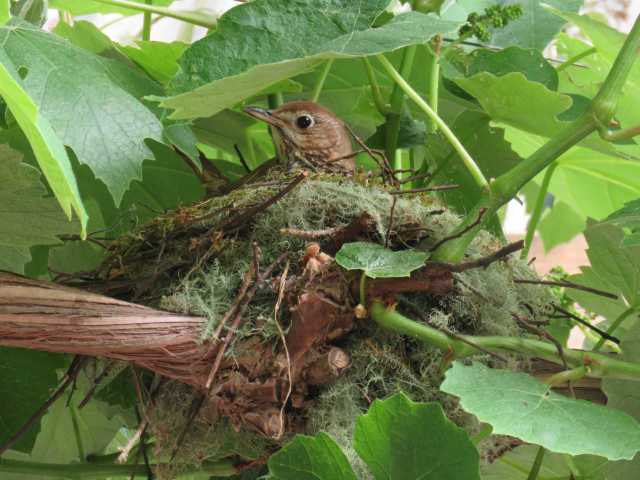
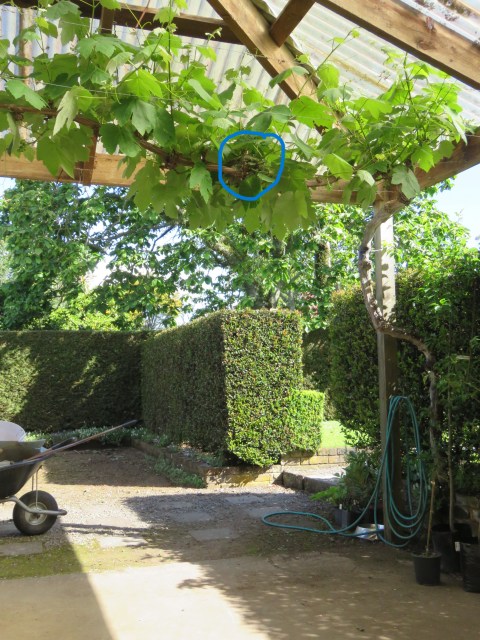
Talking of birds, Mama Thrush is bringing Zach and me delight although Ralph the dog is not so appreciative. She built her nest in the grapevine that grows beneath the verandah on the front of our shed which happens to be our main seating area when Lloyd and Zach are here at work. Her early anxieties appear to have faded and she has become accustomed to humans below. We can co-exist.

 Tikorangi The Jury Garden