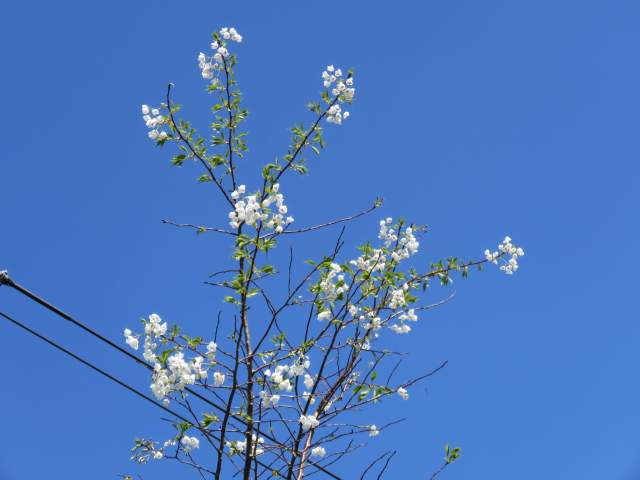
Springtime is very flowery and all tends to be forgiven when plants flower. However, I couldn’t help but notice that three common roadside wildflowers in bloom right now are indubitably weeds. Not harmless weeds that qualify as ‘just plants growing in the wrong place’ but actual, invasive weeds.
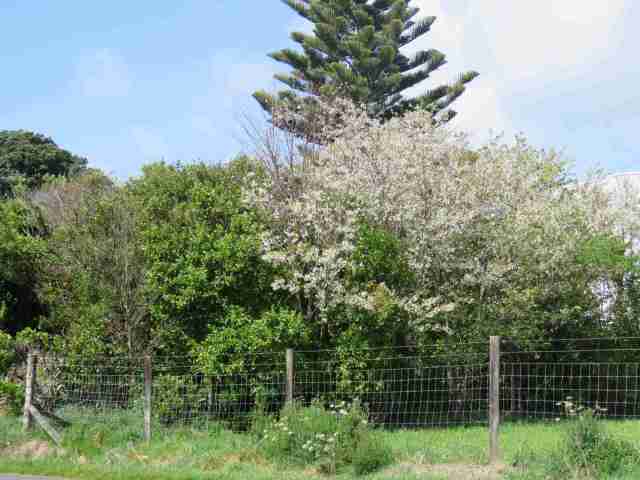
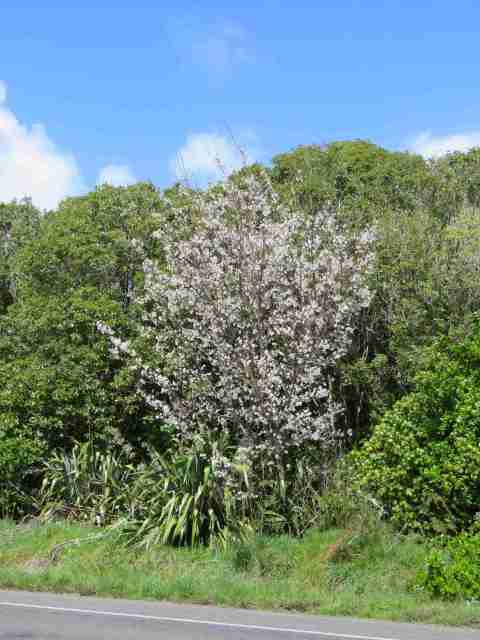
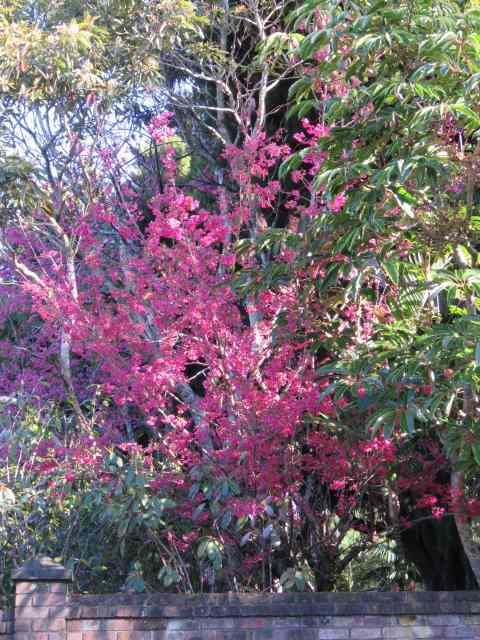
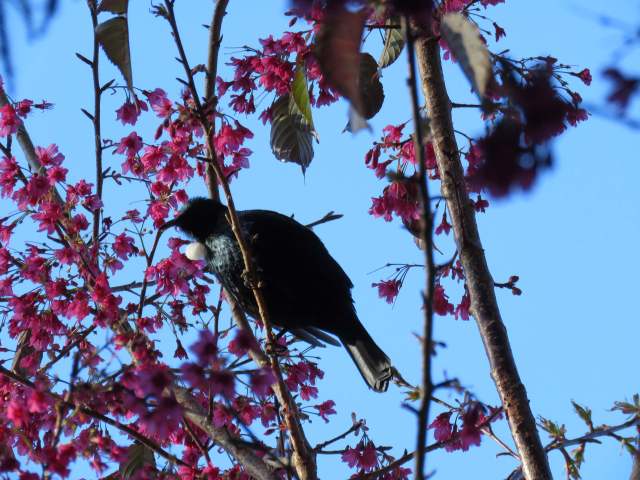
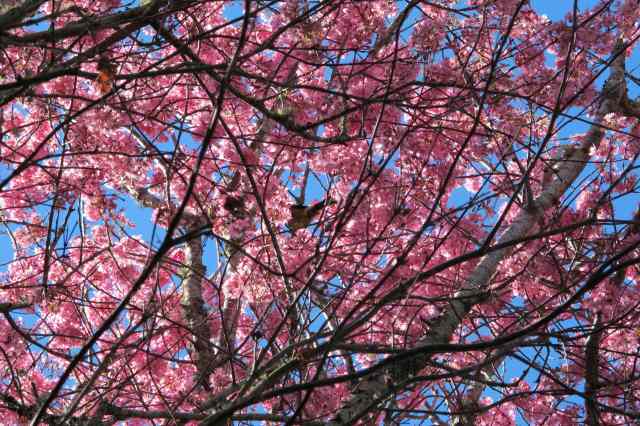
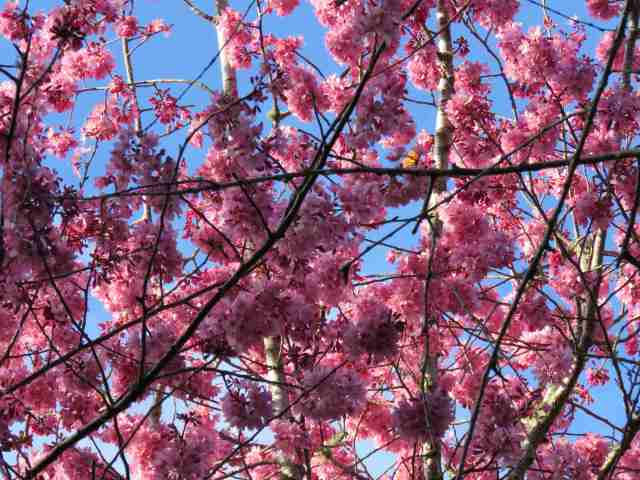
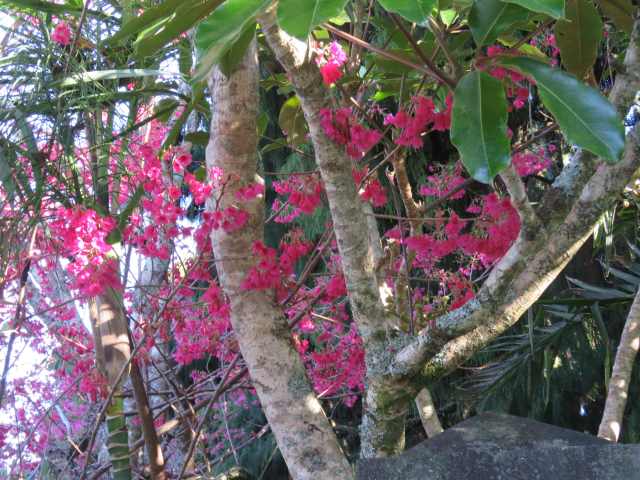
I have never noticed before just how many white flowering cherries there are all around the countryside but once I started looking, they were e v e r y w h e r e. There has been a lot of talk in this country about the evils of the-early flowering, carmine-red Prunus campanulata so favoured by our native tui. Some areas have gone so far as to completely ban it – around Nelson and in Northland, I understand. They are somewhat controversial to grow and most will seed around too freely. But I can’t find the same level of concern concerns expressed about white prunus spreading itself far and wide in this area. There is a whole lot more of it around this neighbourhood, clearly self-seeded, than P. campanulata. I am no expert on cherries but looking up the pest plant lists, I figured it is quite possibly Prunus serrulata. There is a list of 13 different prunus species on the national plant pest accord, all identified as problematic and banned from commercial production and sale. P. serrulata seems the best match to what I see in bloom right now.
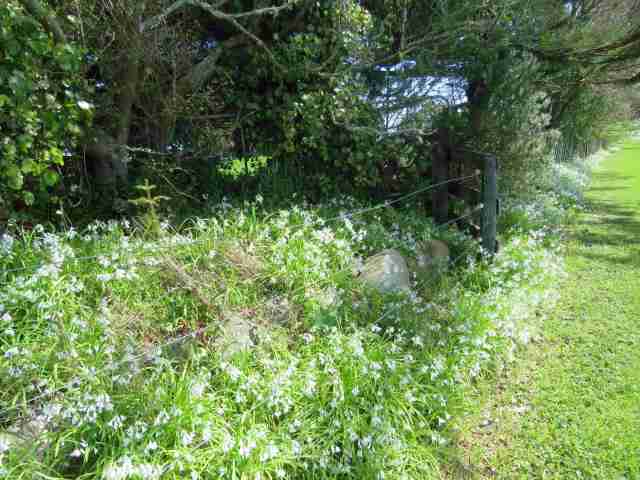
Onion weed is in full flower and it, too, is widespread, mostly on roadsides. It is quite pretty in bloom but spreads way too enthusiastically and is difficult to eradicate. I haven’t dug one up but I would guess it is a typical weedy allium where a single bulb is capable of producing baby bulb offshoots by the score or more. The ability of weedy alliums to reproduce is frankly alarming.
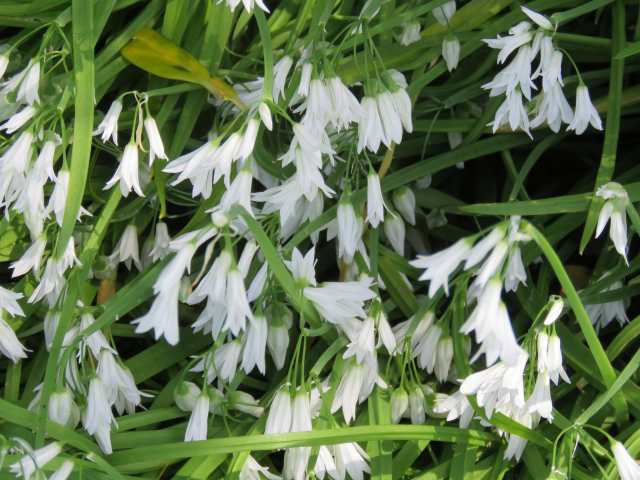
Mark was sure that onion weed is what is sometimes referred to as wild garlic but I see he is not correct on that. What we call onion weed is Allium triquetrum. What is usually referred to as wild garlic is a different species, A. ursinum. Proper garlic is yet another allium species, A. sativum. I doubt there is any reason to avoid harvesting our common onion weed, should you be keen on gathering wild foods. It certainly smells onion-y, as all the alliums do. Indeed, a quick net search came up with one enthusiast on Substack sharing his recipe for charred onion weed with cashews, curry leaves & gochujang ripple labneh. Not all of his recipes are quite so complex and the author is clearly better placed to advise on foraging than I am.
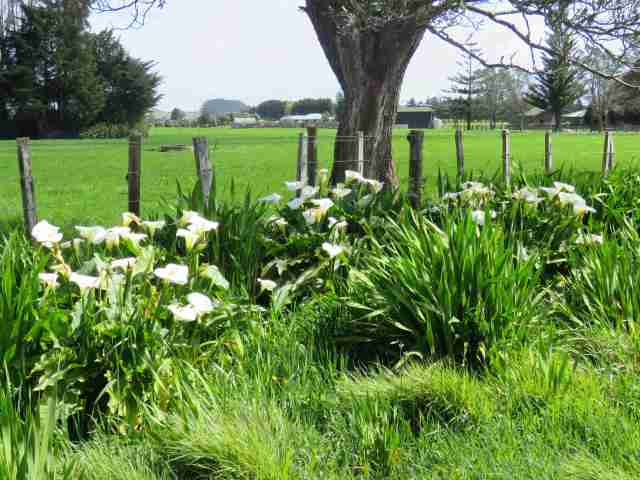
Arum lilies are a great deal more highly prized in other countries than here. I quote Bay of Plenty regional council: “Zantedeschia aethiopica Originates from South Africa. Introduced to New Zealand as an ornamental garden plant and thought to have naturalised by 1870. All parts of the plant (are) poisonous and it is one of the National Poison Centre’s top ten poisonous plants; being consistently involved in unintentional or childhood poisonings.”
Like all zantedeschia, they make a good cut flower but their reputation here is so tarnished by their invasive weed status that few people value them in that category. It is a very difficult plant to eradicate too, and I can tell you that from experience after working to eliminate the form once sold here under the name of ‘Green Goddess’.
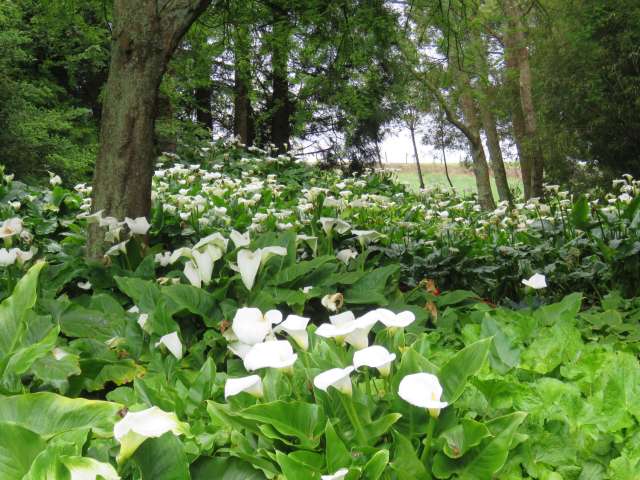
I have only once in recent years seen it used as an ornamental garden plant. It is certainly striking and the blooms are long-lived and robust. I can’t quite get over my squeamishness about featuring plants that we know are noxious weeds. Pampas grass is striking, especially the fluffy pink form. Giant gunneras are striking but they are a really invasive problem here. Last time I looked, they were banned entirely in Taranaki – as in, illegal to have on your property – which is the highest level of control. I feel that arum lilies, like giant gunnera, are much more valued in other countries where they don’t pose the same environmental problem as here.
When all is said and done, should famine strike, we can eat onion weed and the wild cherry trees can provide good firewood but the arum lily has no such saving grace.
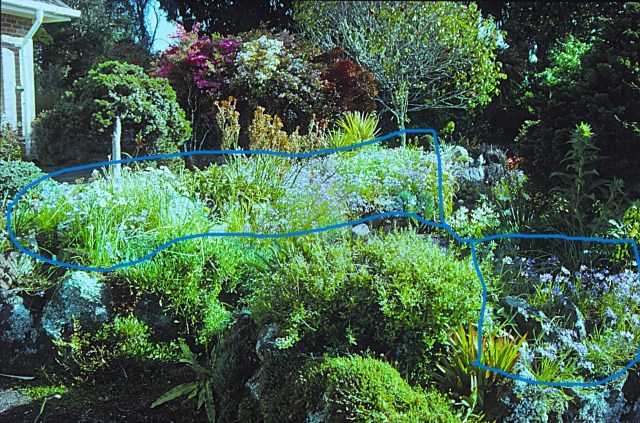
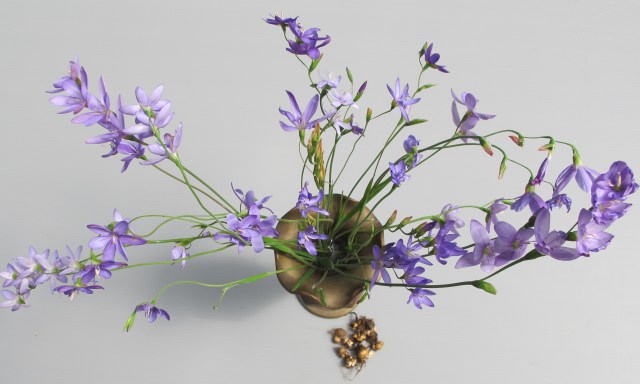
Postscript: While thinking of weeds, I was amused to find this low-grade photo of the rockery, taken in 1993, so 32 years ago. The blue – you are looking at the blue which I tried to bring up with a filter and then highlighted. Most of that blue is the Geissorhiza – probably G. aspera, seen here at its worst. To this day, I am still digging out every tiny bulb that germinates and grows to the point where I can identify it. Mark’s father, who planted it and then deeply regretted it, took to painting it with weedkiller and an artist’s paintbrush. I have even dug out and replaced all the soil in some of the rockery pockets with the worst infestations. Continued vigilance is all that stands between a well-tended rockery and a repeat geissorhiza takeover.
 Tikorangi The Jury Garden