Tag Archives: Fairy Magnolia Blush

Shaping up michelias

Written for and first published in the Royal Horticultural Society yearbook of the Rhododendron, Camellia and Magnolia Group 2025.

Over our years of experience with the michelia group of the magnolia family – en masse, so to speak – we have learned that we can treat them as we treat camellias when it comes to clipping and pruning in our climate. I italicise those last words because I hesitate to advise gardeners in more extreme conditions.
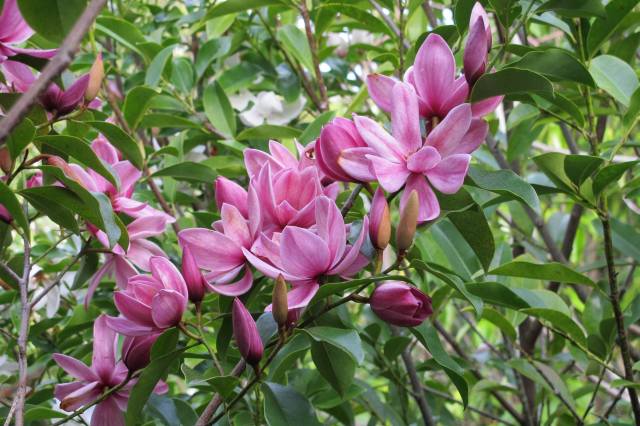
In a world where hardier michelia species are generally white or maybe cream, this is an example of Mark’s breeding programme getting more colour options into the future.

We have a very soft climate. We are never very hot and never very cold, regular rain falls all year round but our sunshine hours are high and we are on friable volcanic soils. If that sounds like gardening paradise, it probably is, as long as you can cope with the wind we get here on the west coast of the North Island of Aotearoa New Zealand.

We also have an abundance of michelias to work with, as a result of my husband, Mark Jury’s breeding programme with the genus down the past 30 years. We have never kept track of the numbers raised here but it will be in the thousands. From those, three have been released under the Fairy Magnolia™ branding; there are two more in the pipeline for release shortly and we are in the process of selecting maybe another three. That leaves many, many seedlings that have been rejected along the way, including entire crosses that he has decided are not worth pursuing. Most get cut out but some we have utilised as screen hedging and shelter belts. There is no shortage of raw material here.

I often claim that we don’t do a lot of heavy clipping and shaping; I have seen Italian gardens and compared to them we are minor players indeed. We do a lot of pruning because our garden is mature and is strong on trees and shrubs which take management down the decades. When it comes to detailed clipping and shaping, it is mostly on camellias and michelias.
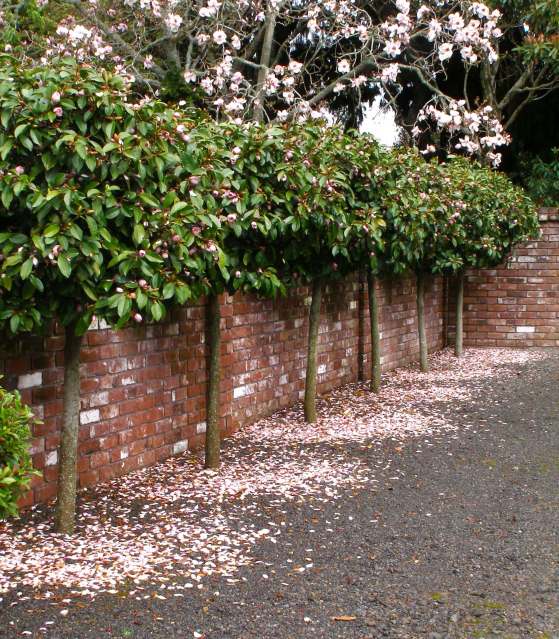
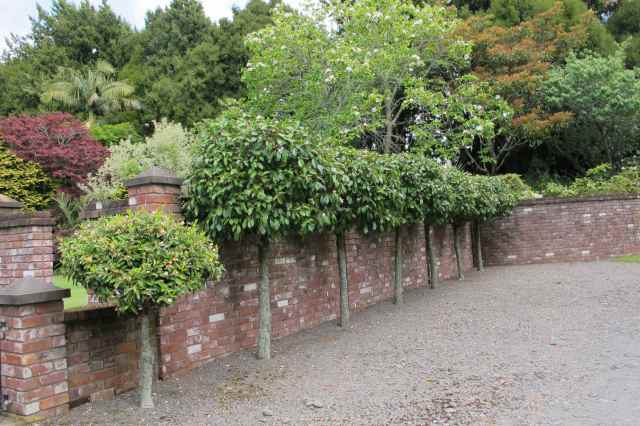
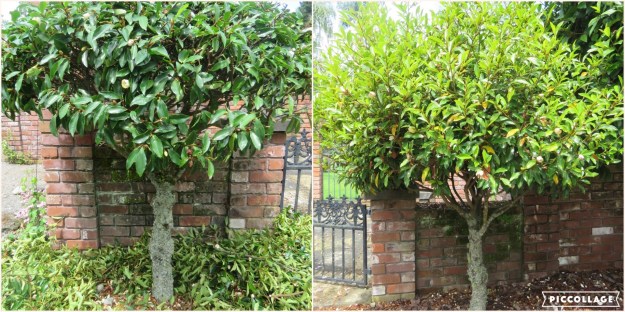
Fairy Magnolia® ‘Blush’ soon after planting, circa 2005
And in 2012

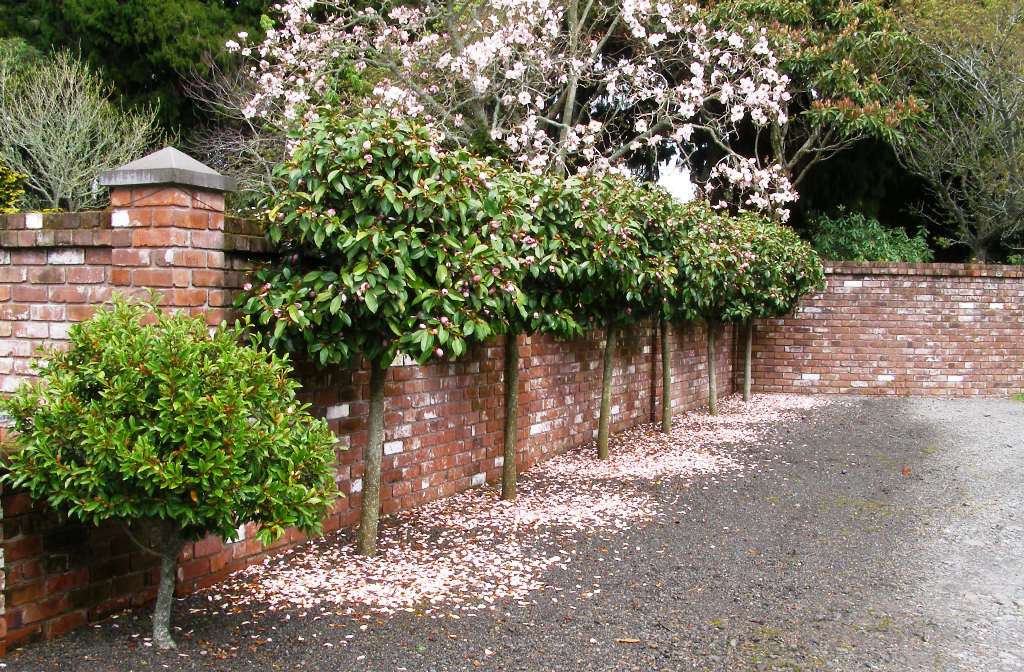
We started with Fairy Magnolia® ‘Blush’, planted twenty years ago in front of our brick wall. These were original stock plants grown in large containers in the nursery so they went into the ground with big root systems. We gave them a season to get established and then started shaping to lollipops. They have grown a little larger over the years but not hugely so. Every spring, as flowering finishes, we clip them hard, removing somewhere between 30% and 50% of their foliage.
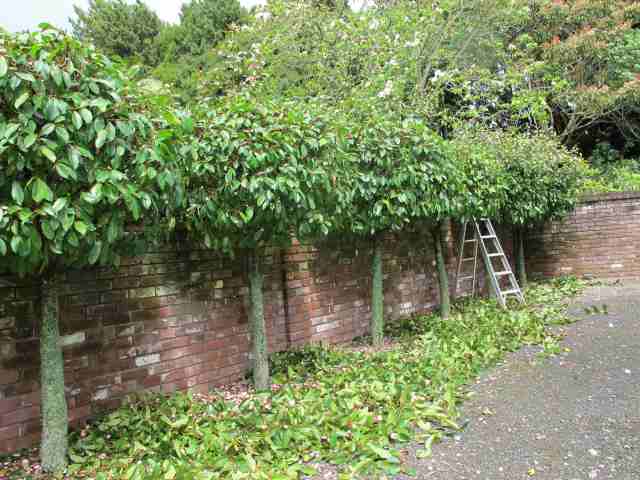
Pruning in 2013. We remove more these days to keep them to size.
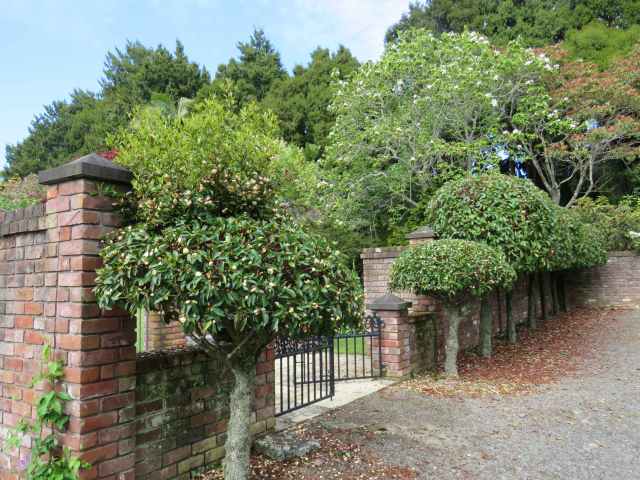
More or less frozen in time by 2020. The untrimmed section on the plant in the foreground is to allow the blackbird babies in a nest time to fledge and fly. We try to avoid ornithological infanticide – a hazard of early spring pruning.

We clip for future blooms so we only clip once a year, as they finish flowering. By the end of summer, they can be a bit woolly in appearance but if we cut again then, we would be removing many of the flower buds. If you want a sharp form all year round, don’t start with plants you want to flower well, at least not michelias or camellias. We use secateurs to trim. Hedgeclippers may be faster but they cut all the external leaves, the edges of which then go an unsightly brown. There is only a day’s work in clipping this row and cleaning up.

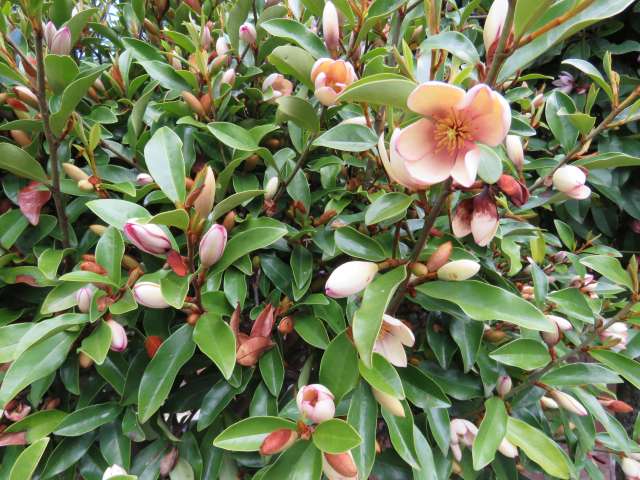
We have two smaller umbrella shapes which will now be well over 20 years old. The variety is to be released internationally this year under the name of Fairy Magnolia® Petite Peach. The photo above shows how much growth we are removing each year to keep the plants to a set size.
Fairy Magnolia® ‘Petite Peach’

If you want to create standardised lollipops, be patient. Let the plants become well established and growing strongly before you start serious shaping. You need a strong central leader to hold up the weighty head. Too often, I have seen plants in garden centres that have been *trained* to standards with a spindly trunk and all side growths removed, so it is entirely dependent on the strong stake holding it upright. You will have a higher success rate if you start with a plant which has a central leader as well as multiple side growths which you can trim but not remove entirely until later. Reduce particularly strong branches which are competing with the central leader but those side growths give the plant more strength and vigour. The leader doesn’t have to be dead straight to start with. What looks like a kink in a stem that is one to two centimetres across will have disappeared by the time it is five to ten centimetres in diameter. Don’t stake unless you have to. Long term, you want the plant to stand straight on its own and plants that are staked from the start come to depend on the stake rather than developing their own strength in the roots and stem. Once the plant has reached the height you want, then you can start serious shaping and when the central leader is strong, you remove all side growths below the top knot.
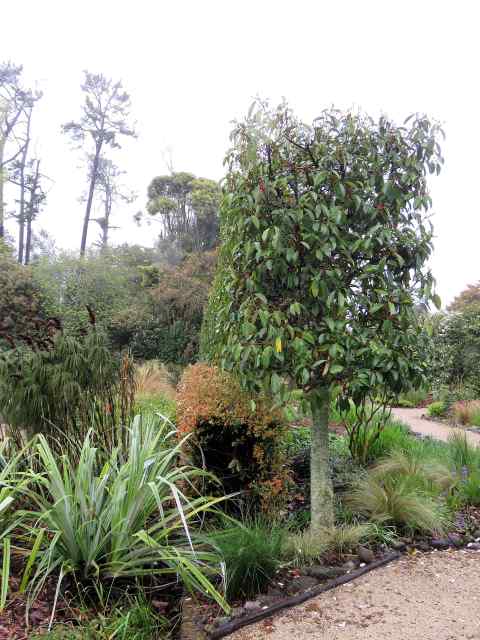

The side-on view shows the width we are keeping these plants – Fairy Magnolia® ‘White’
They were somewhat large plants on our very small tractor when we moved them from the open ground in 2015

Our pleached rows of Fairy Magnolia® ‘White’ have taken patience. Pleaching is basically a hedge on stilts. These came in as large plants we dug out from the field where they were growing in 2015. They have looked good and flowered well in the intervening decade but it took until last spring’s pruning for me to look at them and sigh with satisfaction. At last we had that two dimensional plane sitting above the camellia hedge below that we had envisioned from the start.
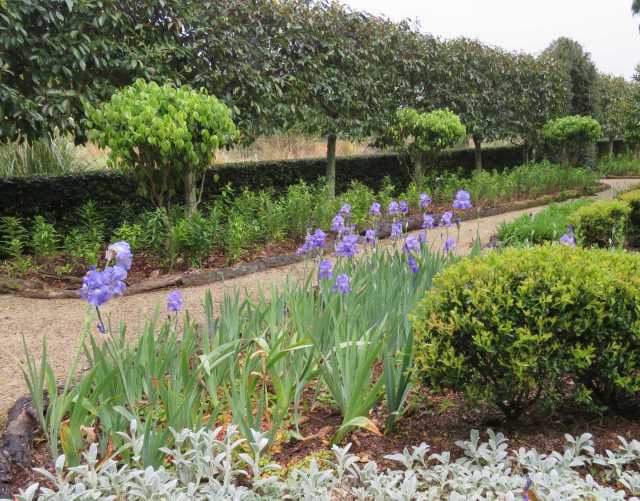
We have two matched lengths either side of a central court garden, trimmed flat down the length

Again we trim hard once a year, as flowering finishes, using secateurs and loppers to remove probably 40% of the foliage to freeze them in size and to create the form we want. They are bigger plants and surrounded by gardens, so trimming them is more challenging and slower than the aforementioned lollipops. Good ladders help. We bought both an orchard ladder and a platform ladder and I see our gardener, Zach, has both of these out when it comes time to trim the pleached rows.
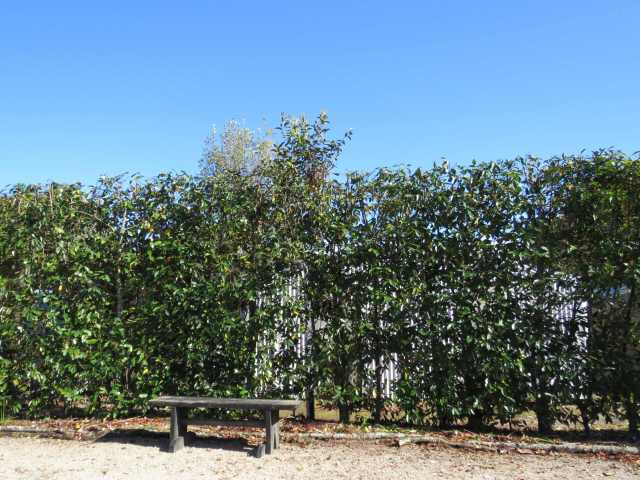

A tall hedge of michelia seedlings straight after trimming in October (above) and nine weeks later below, showing how quickly the new growth fills the gaps. The untrimmed tuft on top in the photo above is because of a bird’s nest. When we trim and prune in spring, we are mindful that it is nesting season and work around any we find.

We also use michelias as tall screening hedges kept to about three metres and these, too, get trimmed after flowering. They can look a little sparse when first done but it is only a matter of six weeks before the flush of new growth fills in the spaces.
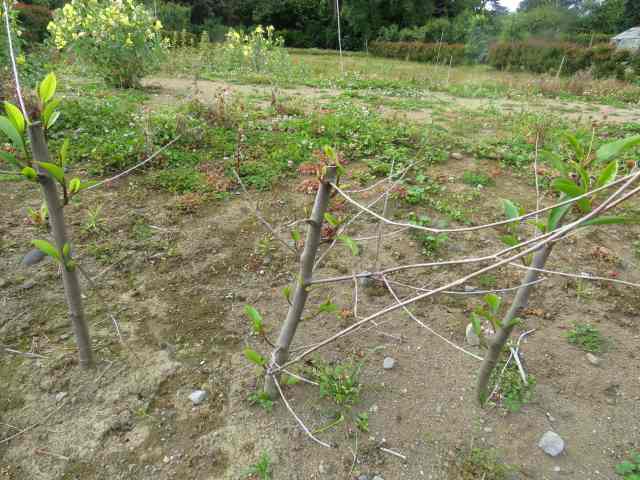
The same hedge as planted in 2017 – seedlings cut hard back to allow them to grow afresh.

About once every five years, these plants need to be picked over more thoroughly, to take out dead wood in the middle where branches have not resprouted. It saves them from getting woody and ugly over the longer term.
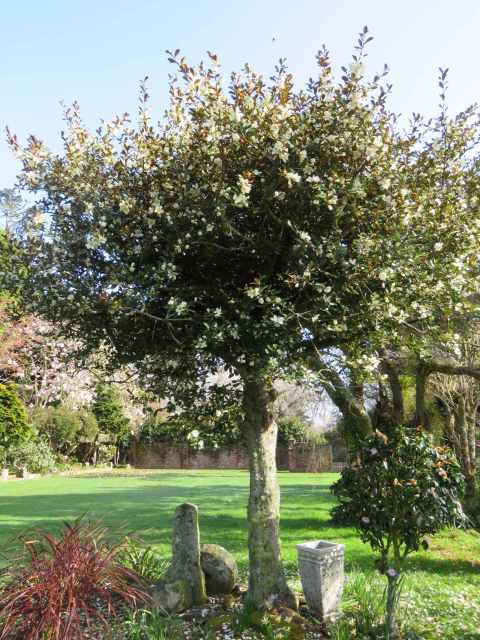
Magnolia laevifolia ‘Velvet and Cream’ was cut back hard to bare wood in 2023 but was bushy and flowering again the next season.
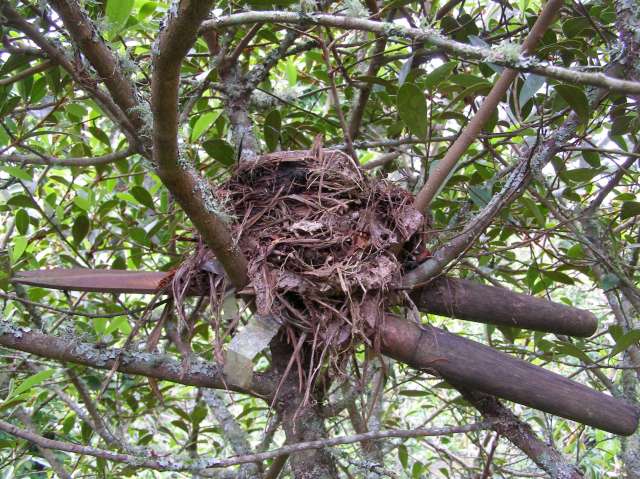
I only include this photo because it still makes me laugh. We used to trim with hedge clippers. When I found these making a handy platform for a bird’s nest in the M. laevifolia. Mark’s comment was, “Oh. So that is where I lost them.” 

Well established plants that are growing strongly can be trimmed back to bare wood, as can camellias and rhododendrons. It is a last resort when a plant has got away on us but we have done it successfully, notably on M. laevifolia. The plants may take another year or two to flower again but they will reshoot from bare wood.
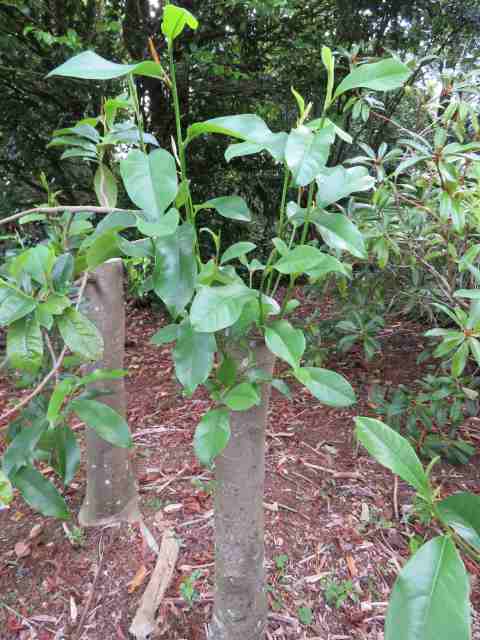
Michelias can be pollarded and respond by putting up straight shoots.

Unexpectedly, michelias also have potential as a coppiced crop, or what we refer to as a sustainable wood-lot, much as hazel is used in the UK. We found this out by chance when we were running low on winter feed for our very small number of beef cattle – more a group of cattle than a herd. Mark started trimming michelia branches as stock food (do NOT try this with rhododendrons which will kill animals) and they were perfectly happy eating the foliage. The plants which were cut to the ground, allowing us to use the trunks for firewood, responded by reshooting from the base with very straight stems.
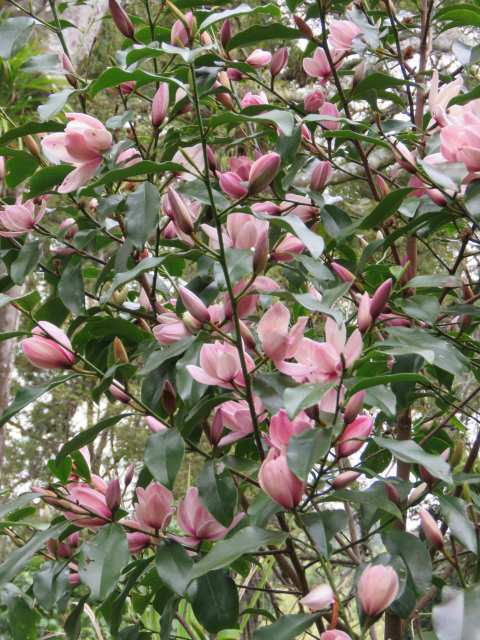
Another of Mark’s oretty seedlings

In our climate, michelias can set prodigious amounts of seed. In fact, setting too much seed is one of our most common reasons for rejecting a cultivar as unsuitable for commercial release. They are not as prolific in harder climates but if you can find one that sets seed, raising the seed is not difficult and the results are reasonably quick, by woody  tree and shrub standards. You will get seedling variation; if you want a hedge of identical plants you need to buy or propagate by cutting or grafting to get them all the same. We like the seedling variation which makes for a more interesting, though less formal, flowering hedge. If you are using seed from the same source, the variations are more likely to be subtle, not radically different. It is likely that Magnolia laevifolia will be the most common seed setter in the UK and Europe. It clips well but can be slow to get established. If you can find a hybrid that sets seed, it generally brings a degree of hybrid vigour.
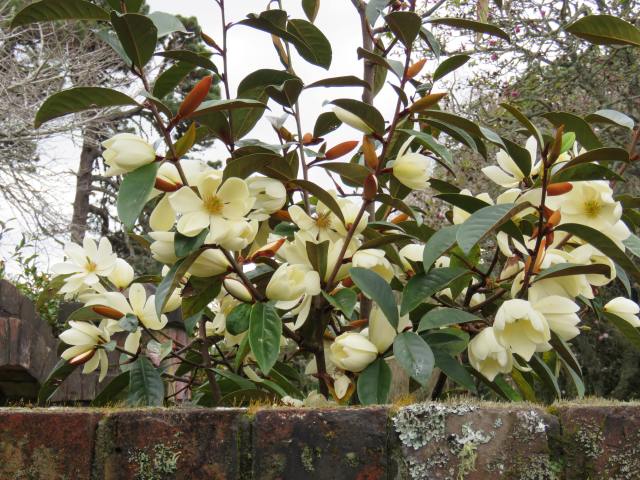
Fairy Magnolia® Cream is strongly scented

With most michelias, there is the added bonus of scent. In our humid climate, camellias are ravaged by camellia petal blight and we no longer get the mass displays on the reticulatas and japonicas. To some extent, the michelia group have filled the gap and they are rewardingly free of pests and diseases.

A note on nomenclature: Michelias have been reclassified as magnolias so all species are now listed as magnolia. The Jury hybrids are sold under the trademarked name of Fairy Magnolia®. For purposes of clarity, we continue to refer to them as michelias in common usage, to differentiate them from both deciduous magnolias and other species of evergreen magnolias, particularly M. grandiflora.
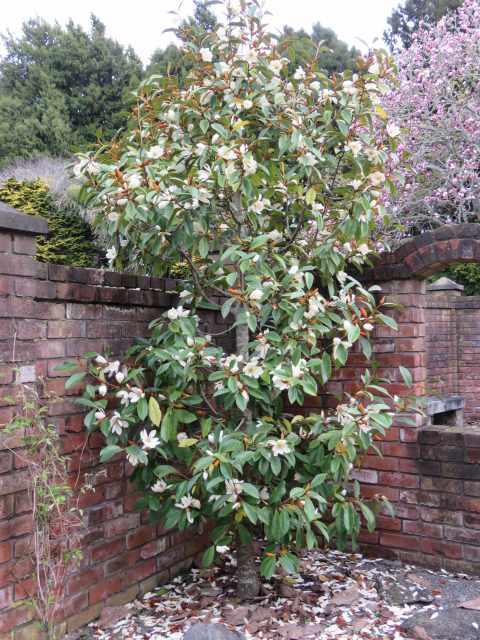
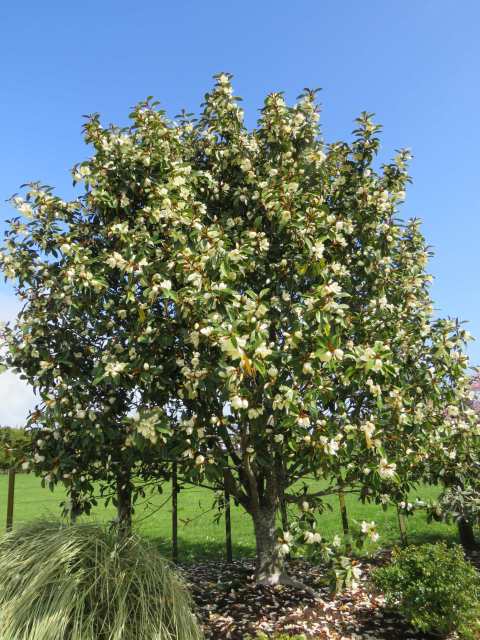
We have a matched pair of Fairy Magnolia® ‘Cream’ at our gateway which we prune to restrict each year. The photo below shows it growing as a roadside plant with no pruning. We can’t allow our gateway plants to get to that size in the space they are in so we are pruning to freeze them in size.

Spring pinks

Pink froth of Prunus Awanui  currently at its peak

I am a big fan of pink and not just in flowers, but my theme this week came because of two pink plants in bloom.

The balls of viburnum are at the front of the vase

The first is one of the Virburnum × burkwoodii cultivars. I am not sure which one it is but we have it planted beside the drive where it is largely anonymous for 51 weeks of the year. In the 52nd week, it opens its flowers to rounded balls of exquisite fragrance – strong enough to hang in the air several metres away. We would be lucky to get a full 7 days out of it but I am sure it does better in other climates – it probably wants it drier and colder. I picked a few balls to put in a vase with pink bluebells and late flowers of Mark’s Daphne ‘Perfume Princess’ (which still has flowers and has had since late March). It was lovely but the viburnum flowers promptly died overnight. They last longer than that on the bush, though not by much.

The view with our morning cuppa

Magnolia Serene

A prodigious carpet of petals beneath

The second pink to give me daily delight is Magnolia ‘Serene’ – bred by Felix and the marker of the end of the deciduous magnolia season for us. As we sit having our morning cup of tea, it is framed in the corner window of our bedroom. Not this morning, though. With daylight saving, it was a bit dark at 7am to see it so that may herald the end of that particular seasonal pleasure, too.

Rhododendron Coconut Ice

I am not the world’s biggest fan of the ball truss type of rhododendron but ‘Coconut Ice’ was looking particularly pretty earlier this week. Sadly, it is browning off already. Flowering is an ephemeral pleasure. Mark observes that the delight of rhododendrons lies in watching the buds for a long period of time before finally opening over a period of a couple of weeks. There is then a week, maybe 10 days, of full glory – sometimes cut shorter by an ill-timed storm – and then it is time to dead head it. In practice, we don’t dead head all our rhododendrons – just those that set large amounts of seed which can weaken the plant over time.

My rhododendron preference is for those with looser trusses that are sometimes so abundant that they can cover the plant.

Rhododendron Anne Teese

It took a couple of goes for Mark to remember the name of this beauty – Rhododendron Anne Teese. It is an Australian-bred hybrid coming from the Teese family (in this case the father, Arnold) who are well known through their nursery, Yamina Rare Plants in Monbulk, Victoria. Mark thinks it was named for the mother, presumably married to Arnold. Whatever, it is very lovely and I would be happy to have it named for me. It is a Maddenia hybrid (R.ciliicalyx x R.formosum) so scented and with a heavier petal, more weather resistant than ‘Charisma’, a similar R.ciliicalyx selection that used to be widely available here.

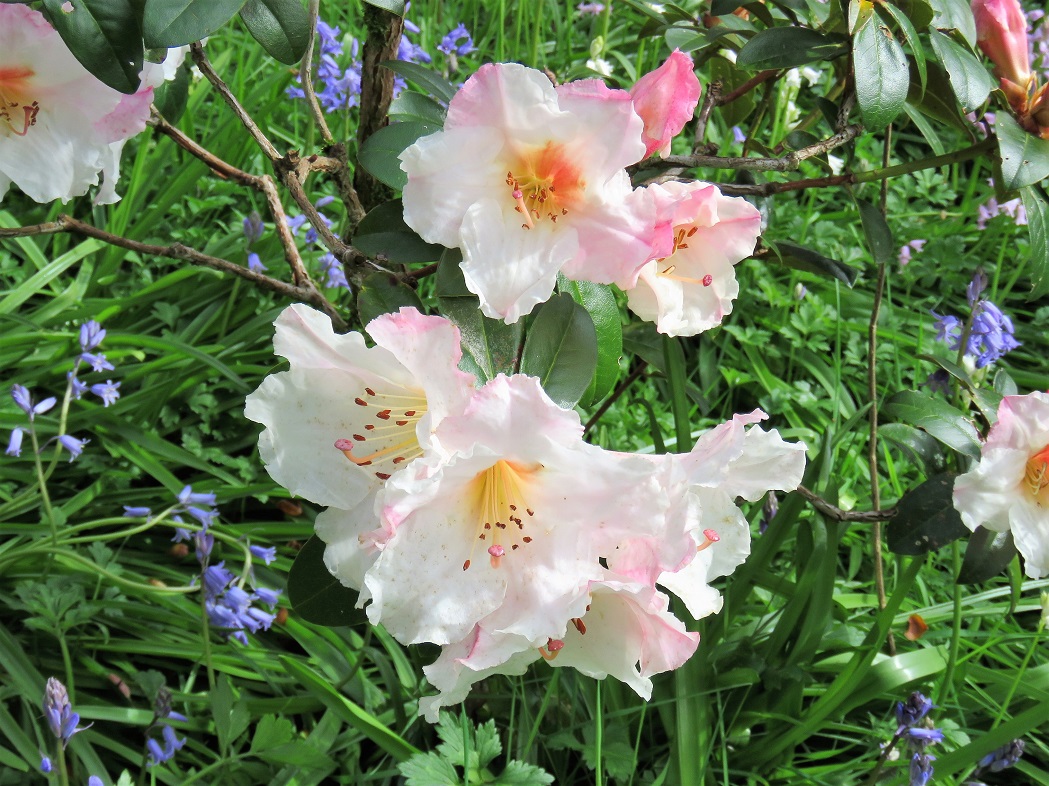
Rhododendron Floral Gift in a swathe of bluebells

With one notable exception – Magnolia ‘Felix Jury’ – Mark doesn’t name his cultivars for people. Or when he does, it is by oblique reference at best so an in-house tribute only. So this, his most fragrant rhododendron is ‘Floral Gift’, not ‘Abbie Jury’. It takes a while to get established but it is lovely and can be seen performing really well at Pukeiti Rhododendron Gardens. There are a whole lot of hybrids in this genre of scented, white flushed pink loose trusses; the best known is ‘Fragrantissimum’.  What sets ‘Floral Gift’ apart is the large flower and the very heavy petal texture giving it good weather resistance.

The reason I often reference weather resistance is because our spring flowering coincides with the spring equinox when we get the most unsettled weather, as evidenced this weekend – which, for us, means very heavy rain and wind which can wipe out fragile flowers in a matter of hours. And a few more pinks to finish off – this is one of the Dendrobium ‘Bardo Rose’ group of orchids which thrive in our open woodland areas. They flower for a long time and the scale is right for detailed woodland plantings – by which I mean, not as big and dominant as the cymbidiums.
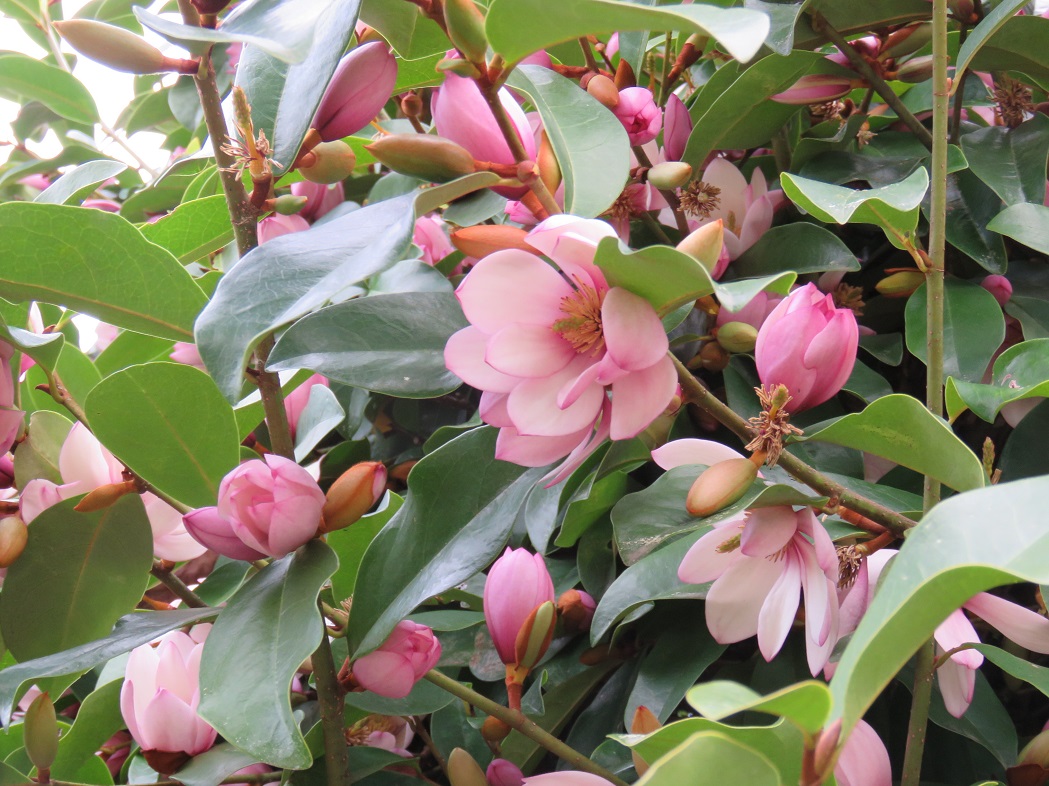
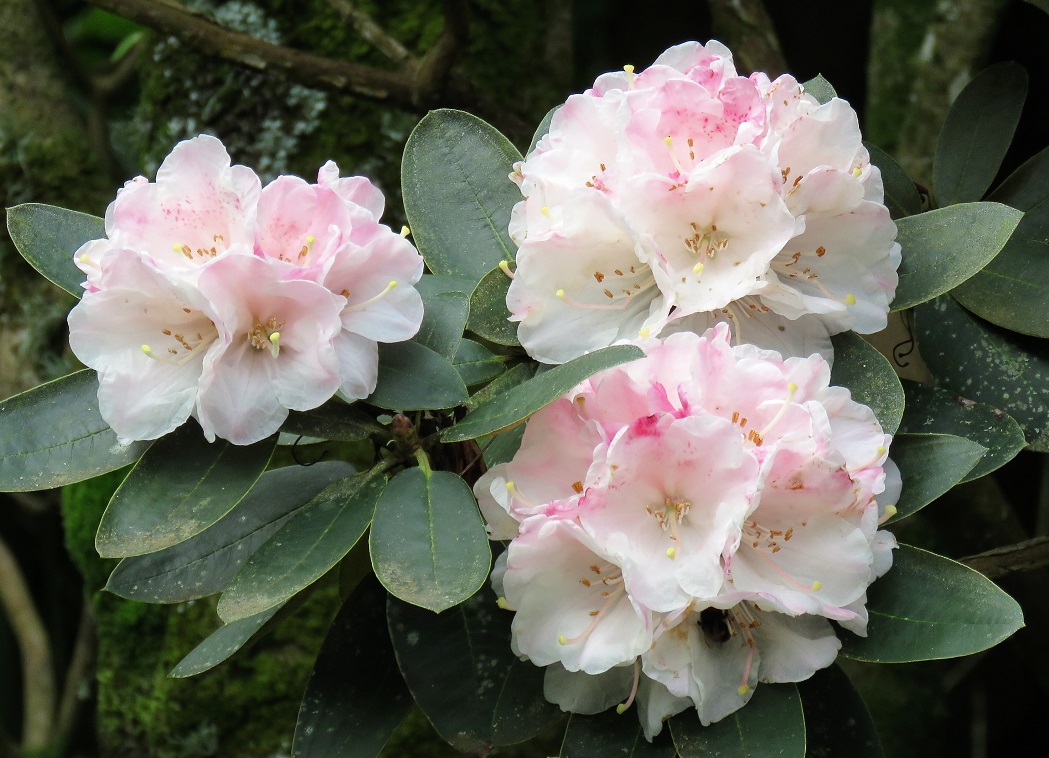
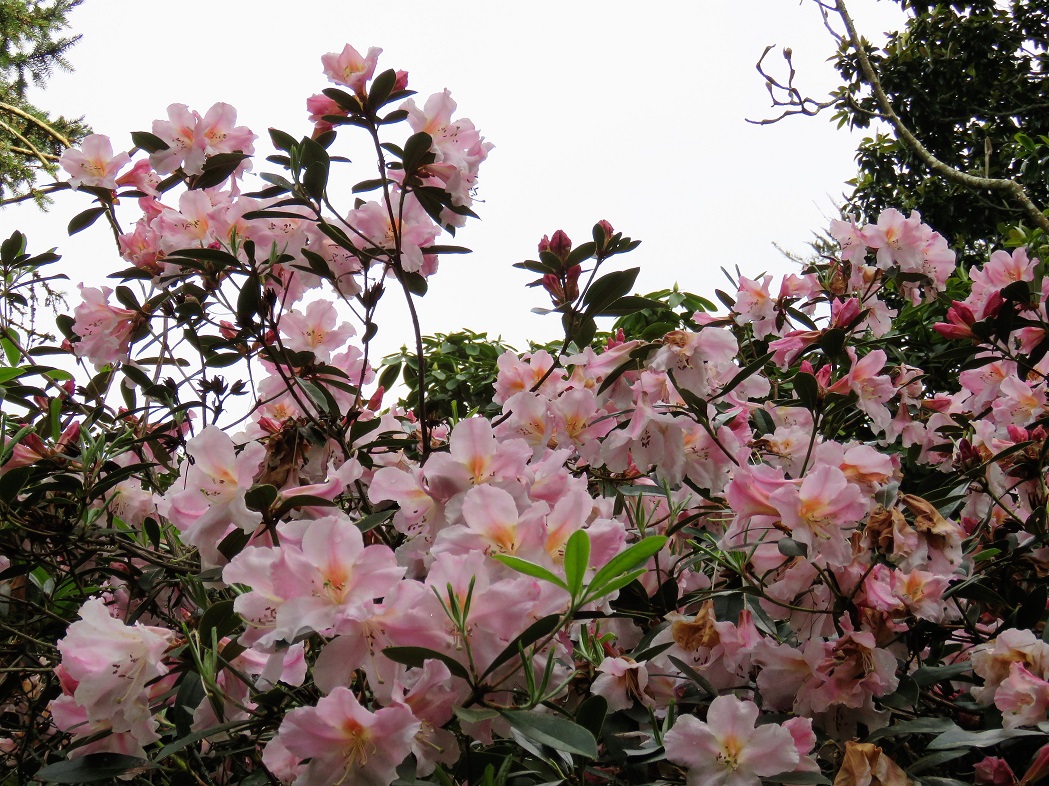
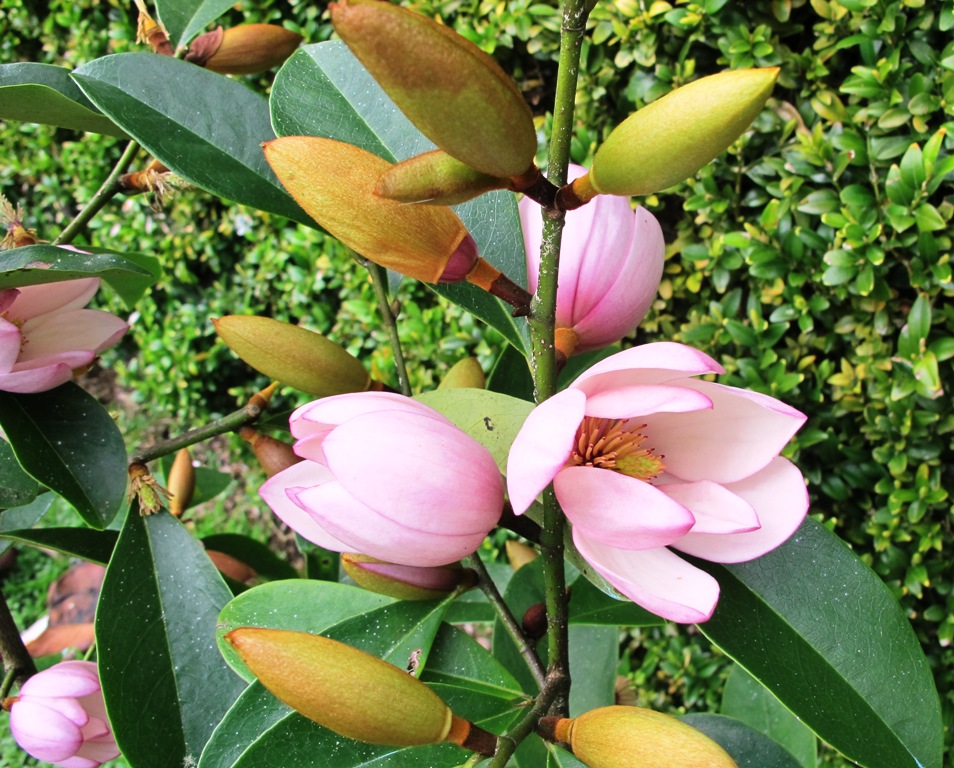
Fairy Magnolia Blush

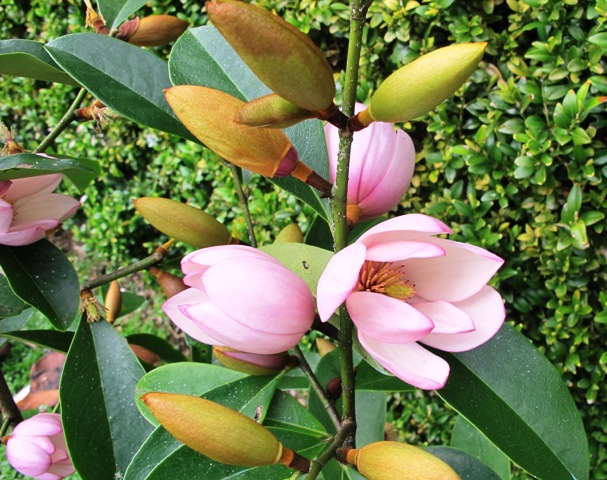
Fairy Magnolia Blush has a good, long flowering season, currently at its most charming stage of peak bloom. More lilac than pink, it is pleione orchid time. This is another group from the orchid family that thrives in pretty laissez-faire woodland conditions (in other words, benign neglect) but the flowering season is much shorter than the dendrobium ‘Bardo Roses’.


And the final bar of pink can be left to the evergreen azaleas. We have so many different ones that we get many months in flower but they are currently at their showiest.

Clipping the michelias

Starting on the left – the annual clip

This is what it will like when done – freezing the size of the plants in time with an annual clip

We have a row of lollipop michelias at our entranceway and it is time for their annual clip. Yes, one annual clip is all they get and we are maybe three weeks late on doing them this year. I did not intend to start yesterday, having other things planned. Besides, clipping the michelias feels like a Big Job. Well, it does involve a ladder for the taller ones.

I timed myself yesterday. It takes me 30 minutes a plant to clip with secateurs and to rake up the clippings. That is not long for annual maintenance on what are significant feature plants. You could do it faster with a powered hedge trimmer or even hand clippers but you lose the precision. Besides, I don’t like using the hand clippers because each time they snap shut it jars my wrists and the residual carpel tunnel syndrome I nurse in those joints.

Aesthetically speaking, cutting with secateurs means there is no leaf damage whereas the speedier clippers or hedge trimmer will cut almost every external leaf which will then discolour on the damaged edges. It is also easy to reach in at the time and remove dead wood and do a clean-up of the interior of the ball using secateurs and the finished result is less… brutally shorn, shall I say?
Most michelias can be clipped hard, especially these hybrids of Mark’s. The two smaller ones here are an unnamed hybrid from his breeding programme while the taller ones are Fairy Magnolia Blush. I have planted two Fairy Magnolia Cream in the vehicle entranceway to the left which will, over the next few years, be trained to lollipop standards.

Michelias are magnolias, just a grouping within that wider family. That is why Michelia yunnanensis has been renamed Magnolia laevifolia by the experts. Our position of continuing to refer to them as michelias is on shaky ground botanically but we find it a useful differentiation in common parlance. It is a handy point of difference to the big leather-leafed Magnolia grandiflora types which are what most people think of when evergreen magnolias are mentioned. Our agents chose to brand Mark’s hybrids as “fairy magnolias” to mark out that difference.

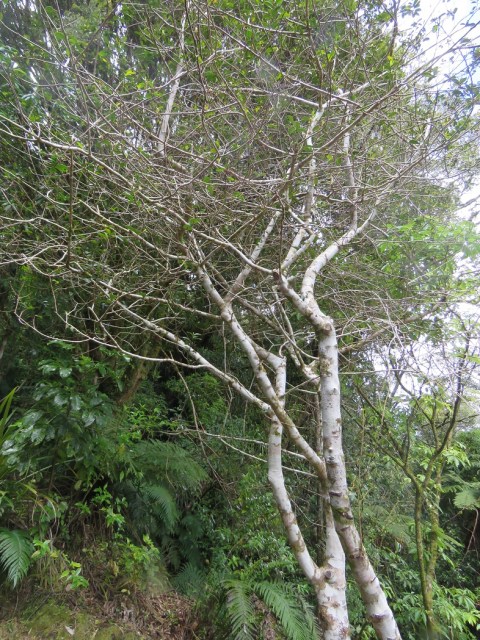
Magnolia laevifolia  (aka Michelia yunnanensis) defoliating in wet, cold climate

The aforementioned species, Magnolia laevifolia, is a lovely plant in bloom but not always the best garden plant. It has a tendency to defoliate in a wet spring and we have certainly had that this year. This plant is not in our garden. I photographed it at Pukeiti. It is neither dead nor dying. Nor is it deciduous. It has defoliated in the wet and that is a characteristic of this particular species that is not to its credit. Not far along the same track is a fine specimen of Mark’s Fairy Magnolia ‘Blush’ which, we were pleased to see, shows no tendency whatever to defoliate, even in the hard growing conditions of Pukeiti Gardens.

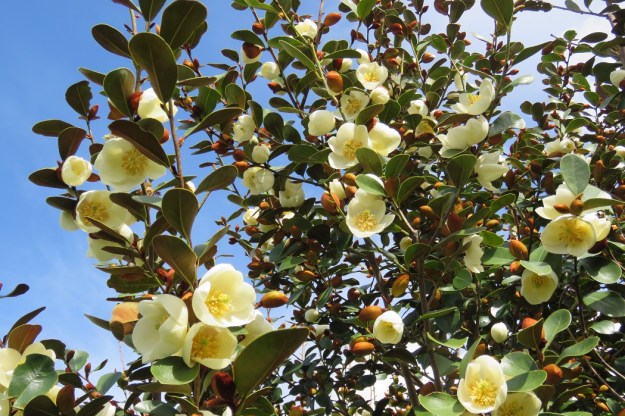
This is what Magnolia laevifolia looks like at its best, seen here in my friend Lorri’s garden 

As a piece of advice for local gardeners, if you into clipping camellias – and we clip a few now as feature plants as well as camellia hedging – the time to do it is right now. If you leave it much longer, you will be cutting off all next year’s flower buds.

We have renamed the area of our garden we used to refer to as “the park’. It is now The Meadow

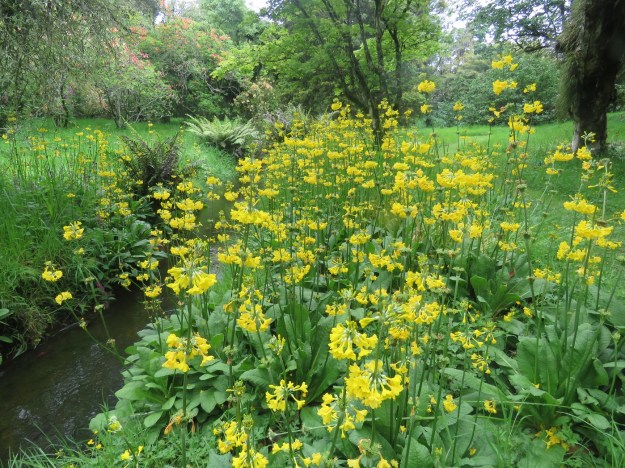
Finally, for a spot of colour, may I give you a host of golden primulas (not daffodils) in our meadow garden by the stream. It is just common old Primula helodoxa but so very pretty in its season.

Petal Pushers – the Jury Michelias


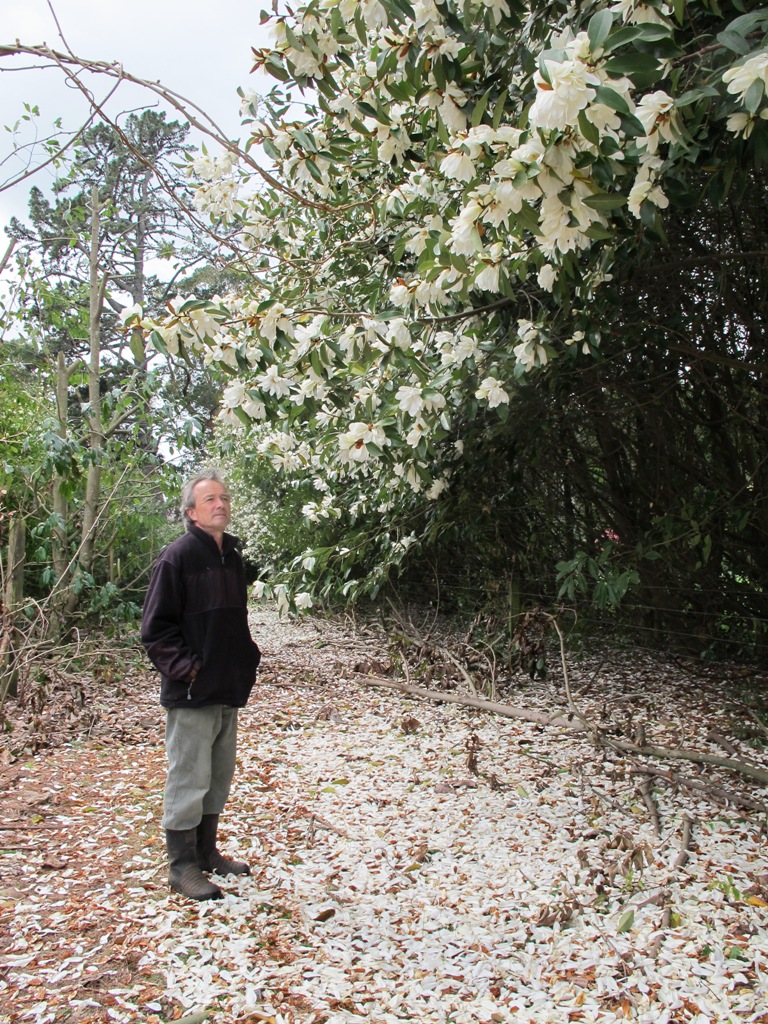
Mark Jury standing on a carpet of fallen scented petals, surveying one of his early shelter belts planted with michelia hybrids

Mark Jury standing on a carpet of fallen scented petals, surveying an early shelter belts planted with michelia hybrids

All michelias are magnolias but not all magnolias are michelias. We have always known them as very close relatives to magnolias but they sat in a group of their own. Now there has been some international reassignment after DNA testing and they have become magnolias, which has led to some confusing name changes. In common usage, they are still often referred to michelias and we are a bit betwixt and between on names.

Until very recent times, there weren’t many different michelias in New Zealand. Doltsopa (the best known cultivar being named ‘Silver Cloud’) and figo (common name of port wine magnolia) have been here for a while. It was an early cross between these two by the late Oswald Blumhardt that gave us ‘Mixed Up Miss’ and ‘Bubbles’.

Interest started to grow when yunnanensis was brought in some twenty years ago. It has spawned a gazillion named selections because it sets seed readily, but just to confuse you, it is now correctly referred to as Magnolia laevifolia. There are a few other species which are not widely available, including maudiae, and some obscure ones that are of interest to collectors only. But our borders closed to new introductions so there are a number of recent discoveries in Asia that we don’t have here. Yes, new plants are still being discovered in this world of ours but we can only look at them from afar with our bio-security rules.

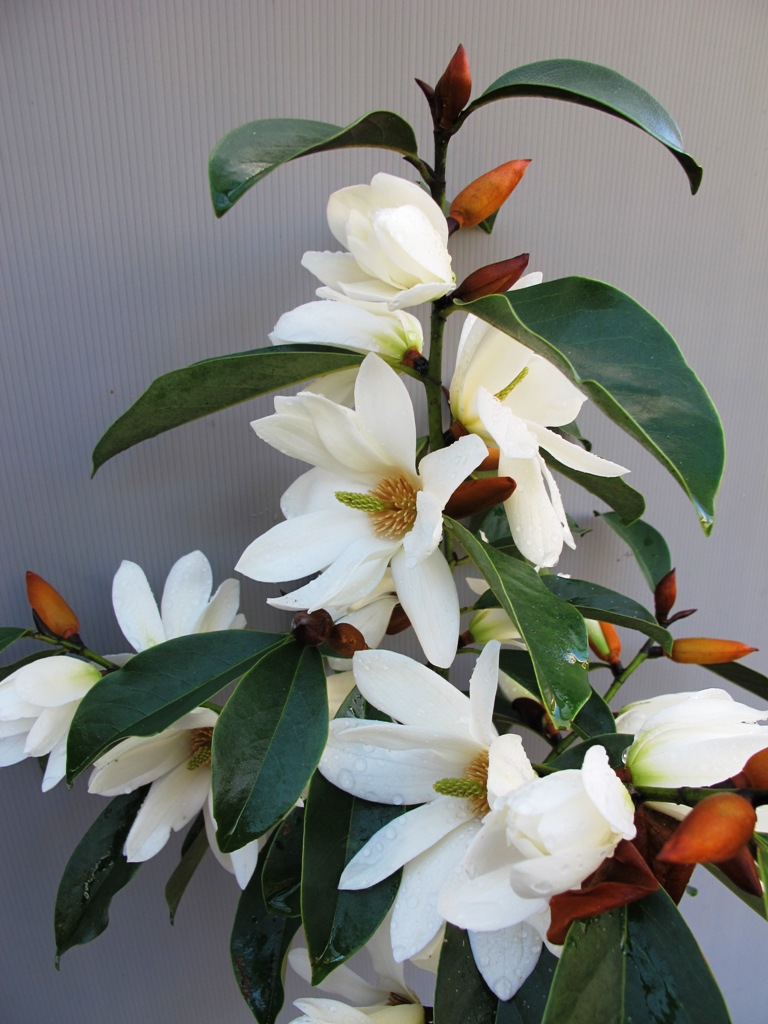
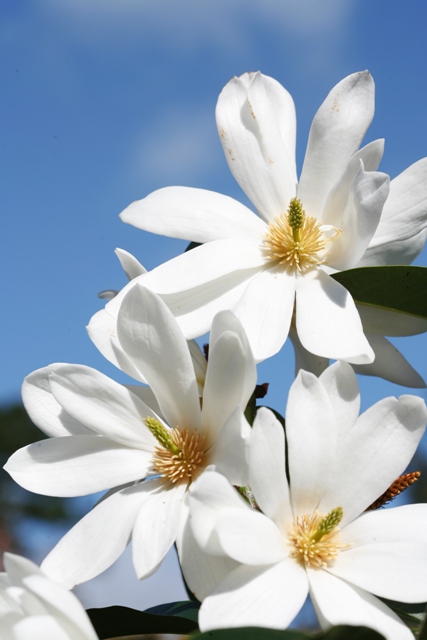
Fairy Magnolia White

Fairy Magnolia White

Mark started hybridising them here back in the 1990s. He figured there was room to improve on them as garden plants. Figo’s flowers are a bit insignificant and the foliage tends to go yellow in full sun. ‘Silver Cloud’ has a wonderful fragrance but the flowers are very floppy and lack good form. It also grows too large for many town gardens and it can defoliate – dropping all its leaves – after flowering. Laevifola (yunnanensis) can defoliate too, in spring conditions which are wet and cold. These are evergreen plants so defoliation is not a great look. ‘Bubbles’ and ‘Mixed Up Miss’ look great as juvenile plants but are pretty ordinary when they get bigger and older. Mark could see possibilities.

September and October are exciting months for us as the michelias bloom. We live and breathe michelias and magnolias at this time of the year. There are six hundred new michelia seedlings ready to flower this spring alone, part of a long term breeding programme. Out of the thousands he has raised, only three have been named and released so far.

Fairy Magnolia Blush

Fairy Magnolia Blush

There is a long way to go yet but some directions are emerging. Despite the vast majority of michelias being basically white, he has reached reds, purples and deep pinks and is working on deepening the pale yellows to get stronger colour. Along the way there are an awful lot of murky colour combinations that get the chop. There is a big range of flower form, foliage and growth habits. Perfume can be an issue when two of the most fragrant species spawn offspring with no scent at all. Bringing together all the different elements to get a new plant is an absorbing and time consuming occupation.

Along the way we have also learned that michelias are very tolerant of cutting and clipping and sprout again from bare wood. The row of lollipop Fairy Magnolia Blush at our entrance has been clipped and shaped over ten years now and we can keep it to the size we want by trimming just twice a year. They make excellent hedges and some of our roadside shelter belts are a feast of flower and fragrance at this time.

The sustainable wood lot

The sustainable wood lot

Regrowth

Regrowth

An unexpected bonus has been the sustainable woodlot. Because we heat our large house entirely with wood, we burn through a prodigious amount every winter. Mark had been thinking along the lines of establishing a sustainable woodlot for the future that we could harvest on a rotational basis. I even sourced a book on the very topic. But lo, he realised a few years ago that his reject michelia seedlings already filled that very niche, doing dual duty as winter feed for our very small herd of beefies that we keep to eat the paddock grass. I say very small herd – there are only four at the moment. Cut off close to the base, the plants soon shoot away again with long straight whips that could be used as poles or left to grow for firewood. Mark drags the branches into an adjacent paddock where the cattle enthusiastically eat the foliage. He then gathers the remaining trunks to cut up for next season’s firewood. It seems a good multi-purpose use of a plant breeding programme.

Fairy Magnolia Cream

Fairy Magnolia Cream

Mark’s three michelia selections to date are sold under the Fairy Magnolia brand and are widely available in New Zealand garden centres and in some overseas countries. Blush is a soft pink, Cream is very fragrant and grows in a similar, compact manner to Blush. White is a larger grower and the first in the season to flower. Mark has always seen it as a garden-friendly alternative to “Silver Cloud” with good fragrance and beautiful flower form.

First published in the September issue of NZ Gardener and reprinted here with their permission.

Lollipop Fairy Magnolia Blush at our entranceway. The smaller michelia to the left is an unnamed figo hybrid with masses of creamy yellow flowers.

Lollipop Fairy Magnolia Blush at our entranceway. The smaller michelia to the left is an unnamed figo hybrid with masses of creamy yellow flowers.

Magnolia – Michelia: the evergreens

Just another Magnolia laevifolia (syn Michelia yunnanensis) selection but in this case it is our selection which we called Honey Velvet

Just another Magnolia laevifolia (syn Michelia yunnanensis) selection but in this case it is our selection which we called Honey Velvet

I was surprised this week to have someone ask me what michelias are. I realised I have never written about them in a general sense. That is because I try and separate my published garden writing from our commercial interests and michelias are inextricably bound up with the latter.

Michelias are in fact a type of magnolia. They used to be seen as close relatives to magnolias, now they have been reclassified botanically as magnolias and this has involved a complete name change for some species.

Mention evergreen magnolias and most people think of the grandifloras from the southern states of USA. All readers will know these by sight, if not by name. They have big, tough, leathery leaves and they flower in summer with large creamy white blooms.

Personally, I am not a big fan of the grandifloras. They make big, chunky trees which are remarkably tolerant of harsh weather conditions. As such they have their place but I think that place is on golf courses and cemeteries. There is a row of them as you exit Huntly to the south and I am pretty sure they are on the edge of a cemetery.

Why am I not keen on them? They don’t mass flower, for one thing. In fact the flowering is generally random and intermittent. I find them a bit chunky in the landscape and if one is going to go chunky, I would rather have our native puka. The leaves are really tough and take forever to decompose.

That said, the varieties with deep velvety brown indumentums (the furry coating on the underneath of the leaf) can look attractive in the wind. Magnolia grandiflora “Little Gem” is a tough plant with exceptionally dark forest green leaves contrasting with cinnamon indumentum and is much favoured in modern gardens. Just be aware that it is only a little gem as opposed to an extremely giant gem. It will still get quite large over time and you will never get many flowers on it.

Fairy Magnolia Blush - bringing pink into the range

Fairy Magnolia Blush – bringing pink into the range

Michelias are very different. Their foliage is smaller and much lighter in substance so they are not an oppressive plant. And they can flower and flower because they set flower buds down the stem at nearly every leaf axel, not just on the tips. Most of them peak in spring but some keep on flowering for months on end and some will have a second blooming in summer.

There are a few michelias that are widely available here. M. figo has long been referred to as the port wine magnolia and many gardeners will know it. It has small leaves and is inclined to go a bit yellow in full sun. When it starts pushing out its scent in late afternoon, it smells remarkably like Juicy Fruit chewing gum.

There are various forms of doltsopa, the most common in this country being “Silver Cloud”. It has wonderfully large, pure cream blooms which are very fragrant. But, there are always buts, the flowers are floppy and often get frosted in colder areas, the tree tends to drop most of its leaves after flowering and it gets rather larger than most people expect. M. maudiae is a better bet as a garden tree but difficult to propagate so not generally available.

What we used to know as Michelia yunnanensis is certainly a popular addition to the garden plants of this country. It had a brief flirtation with being called Magnolia dianica before its current name was settled upon. It is now correctly known as Magnolia laevifolia but you are still more likely to find it sold as M. yunnanensis. It sets seed really freely so just about every nursery around the country has made a selection and named it (including us!). You can recognise it by its small leaves and creamy cup shaped blooms. You can hedge it and clip it but it is easier to start with a variety which is more generous in the leafage department.

Several decades ago, the late Northland plant breeder Os Blumhardt released Bubbles and Mixed Up Miss onto the market and these hybrids had many advantages over the species as garden plants. They are still tidy plants when juvenile, but nothing remarkable as they mature.

Now there is an explosion of new michelias on the market. Many are just the aforementioned M.laevifolia selections. Some are hybrids. I must declare an interest here. The ones you see being marketed as “Fairy Magnolias” are ours. For we are in the midst of a longstanding love affair with the michelias.

When camellia petal blight first showed up, my plant breeding husband immediately abandoned camellias and started on michelias. After about 17 years we have many, probably into the 1000s by now but we have never counted, as he has pursued breeding goals. They are in shelter belts, hedges, around the garden, through the nursery areas – anywhere there is space. Fairy Magnolia Blush was the first release a few years ago, bringing pink into the colour range. Cream and White are being released this year.

What we love about michelias is their versatility. They can be clipped tightly, even in topiaries. They make good hedges, even pleached into hedges on stilts. Some can become specimen trees without being forest giants. They give us masses of flowers, many are scented and they are pretty much free of all pests and diseases. They are an all round useful plant family.

We would not be without them.

Our new star - Fairy Magnolia White to be released this year

Our new star – Fairy Magnolia White to be released this year

First published in the Waikato Times and reprinted here with their permission.