Tag Archives: Fairy Magnolia Cream

Shaping up michelias

Written for and first published in the Royal Horticultural Society yearbook of the Rhododendron, Camellia and Magnolia Group 2025.

Over our years of experience with the michelia group of the magnolia family – en masse, so to speak – we have learned that we can treat them as we treat camellias when it comes to clipping and pruning in our climate. I italicise those last words because I hesitate to advise gardeners in more extreme conditions.
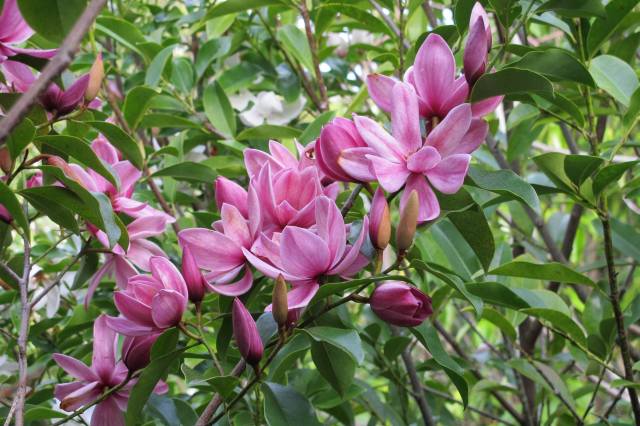
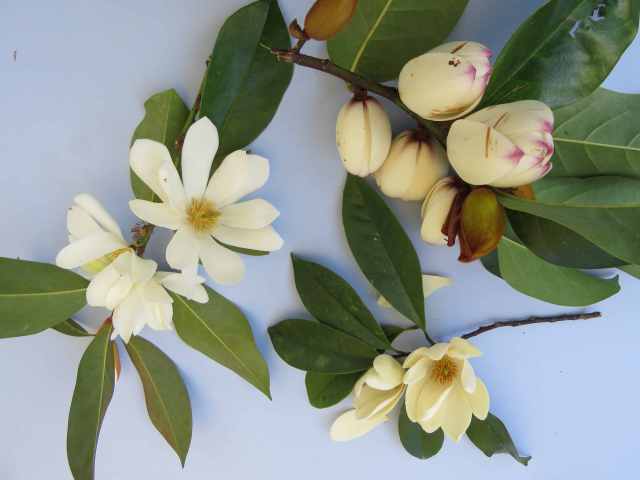
In a world where hardier michelia species are generally white or maybe cream, this is an example of Mark’s breeding programme getting more colour options into the future.

We have a very soft climate. We are never very hot and never very cold, regular rain falls all year round but our sunshine hours are high and we are on friable volcanic soils. If that sounds like gardening paradise, it probably is, as long as you can cope with the wind we get here on the west coast of the North Island of Aotearoa New Zealand.

We also have an abundance of michelias to work with, as a result of my husband, Mark Jury’s breeding programme with the genus down the past 30 years. We have never kept track of the numbers raised here but it will be in the thousands. From those, three have been released under the Fairy Magnolia™ branding; there are two more in the pipeline for release shortly and we are in the process of selecting maybe another three. That leaves many, many seedlings that have been rejected along the way, including entire crosses that he has decided are not worth pursuing. Most get cut out but some we have utilised as screen hedging and shelter belts. There is no shortage of raw material here.

I often claim that we don’t do a lot of heavy clipping and shaping; I have seen Italian gardens and compared to them we are minor players indeed. We do a lot of pruning because our garden is mature and is strong on trees and shrubs which take management down the decades. When it comes to detailed clipping and shaping, it is mostly on camellias and michelias.
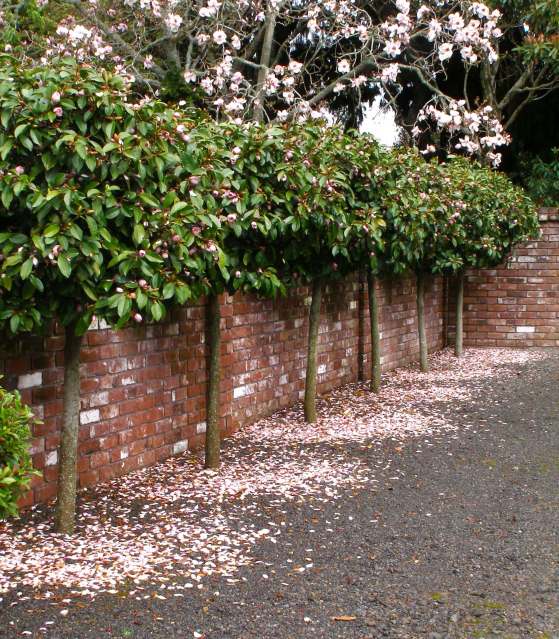

Fairy Magnolia® ‘Blush’ soon after planting, circa 2005
And in 2012

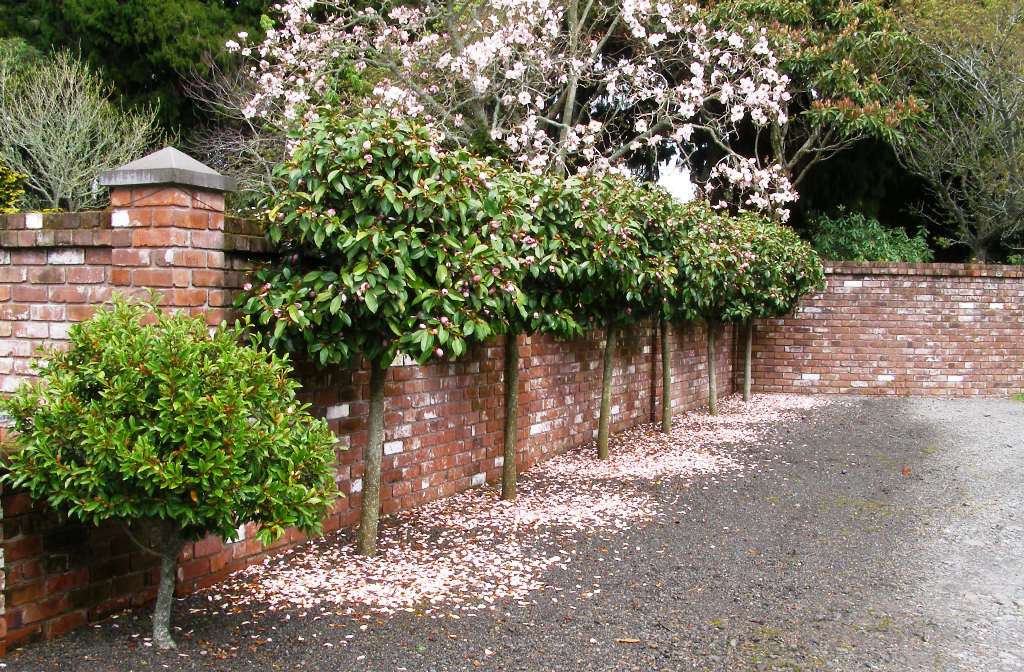
We started with Fairy Magnolia® ‘Blush’, planted twenty years ago in front of our brick wall. These were original stock plants grown in large containers in the nursery so they went into the ground with big root systems. We gave them a season to get established and then started shaping to lollipops. They have grown a little larger over the years but not hugely so. Every spring, as flowering finishes, we clip them hard, removing somewhere between 30% and 50% of their foliage.
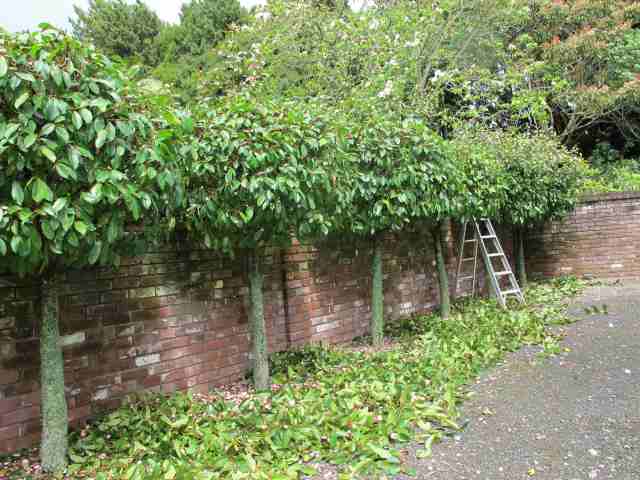

Pruning in 2013. We remove more these days to keep them to size.
More or less frozen in time by 2020. The untrimmed section on the plant in the foreground is to allow the blackbird babies in a nest time to fledge and fly. We try to avoid ornithological infanticide – a hazard of early spring pruning.

We clip for future blooms so we only clip once a year, as they finish flowering. By the end of summer, they can be a bit woolly in appearance but if we cut again then, we would be removing many of the flower buds. If you want a sharp form all year round, don’t start with plants you want to flower well, at least not michelias or camellias. We use secateurs to trim. Hedgeclippers may be faster but they cut all the external leaves, the edges of which then go an unsightly brown. There is only a day’s work in clipping this row and cleaning up.

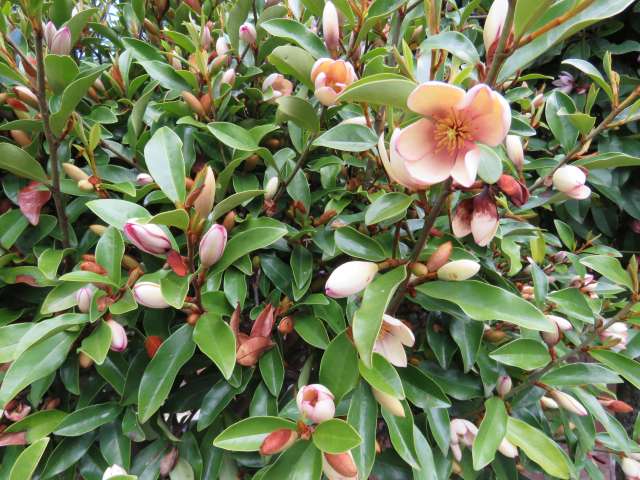
We have two smaller umbrella shapes which will now be well over 20 years old. The variety is to be released internationally this year under the name of Fairy Magnolia® Petite Peach. The photo above shows how much growth we are removing each year to keep the plants to a set size.
Fairy Magnolia® ‘Petite Peach’

If you want to create standardised lollipops, be patient. Let the plants become well established and growing strongly before you start serious shaping. You need a strong central leader to hold up the weighty head. Too often, I have seen plants in garden centres that have been *trained* to standards with a spindly trunk and all side growths removed, so it is entirely dependent on the strong stake holding it upright. You will have a higher success rate if you start with a plant which has a central leader as well as multiple side growths which you can trim but not remove entirely until later. Reduce particularly strong branches which are competing with the central leader but those side growths give the plant more strength and vigour. The leader doesn’t have to be dead straight to start with. What looks like a kink in a stem that is one to two centimetres across will have disappeared by the time it is five to ten centimetres in diameter. Don’t stake unless you have to. Long term, you want the plant to stand straight on its own and plants that are staked from the start come to depend on the stake rather than developing their own strength in the roots and stem. Once the plant has reached the height you want, then you can start serious shaping and when the central leader is strong, you remove all side growths below the top knot.
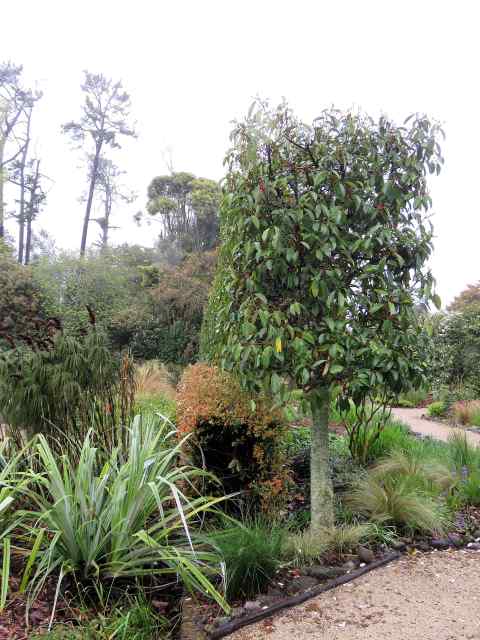

The side-on view shows the width we are keeping these plants – Fairy Magnolia® ‘White’
They were somewhat large plants on our very small tractor when we moved them from the open ground in 2015

Our pleached rows of Fairy Magnolia® ‘White’ have taken patience. Pleaching is basically a hedge on stilts. These came in as large plants we dug out from the field where they were growing in 2015. They have looked good and flowered well in the intervening decade but it took until last spring’s pruning for me to look at them and sigh with satisfaction. At last we had that two dimensional plane sitting above the camellia hedge below that we had envisioned from the start.
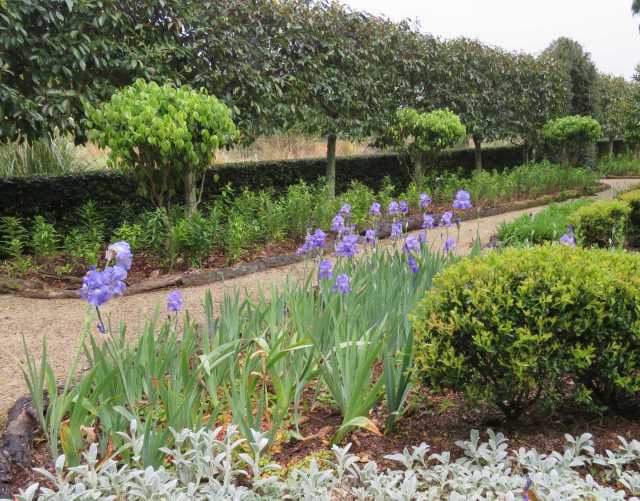
We have two matched lengths either side of a central court garden, trimmed flat down the length

Again we trim hard once a year, as flowering finishes, using secateurs and loppers to remove probably 40% of the foliage to freeze them in size and to create the form we want. They are bigger plants and surrounded by gardens, so trimming them is more challenging and slower than the aforementioned lollipops. Good ladders help. We bought both an orchard ladder and a platform ladder and I see our gardener, Zach, has both of these out when it comes time to trim the pleached rows.
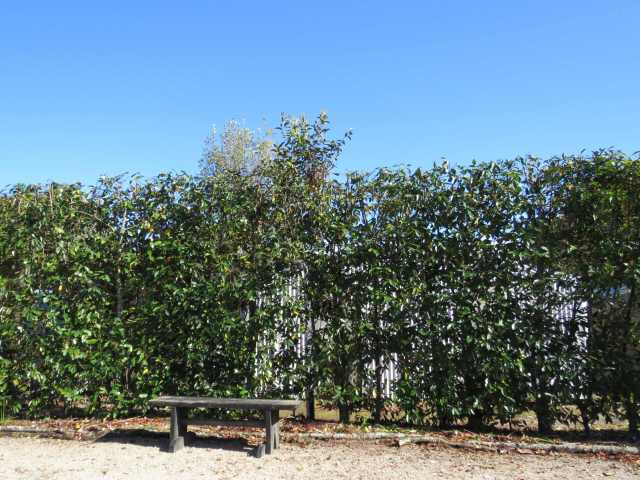

A tall hedge of michelia seedlings straight after trimming in October (above) and nine weeks later below, showing how quickly the new growth fills the gaps. The untrimmed tuft on top in the photo above is because of a bird’s nest. When we trim and prune in spring, we are mindful that it is nesting season and work around any we find.

We also use michelias as tall screening hedges kept to about three metres and these, too, get trimmed after flowering. They can look a little sparse when first done but it is only a matter of six weeks before the flush of new growth fills in the spaces.
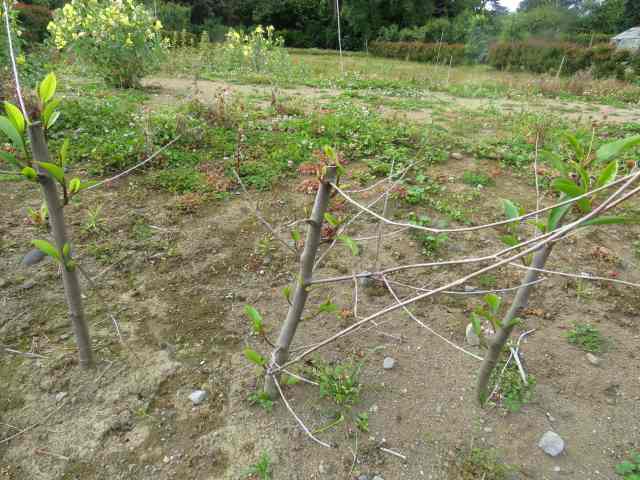
The same hedge as planted in 2017 – seedlings cut hard back to allow them to grow afresh.

About once every five years, these plants need to be picked over more thoroughly, to take out dead wood in the middle where branches have not resprouted. It saves them from getting woody and ugly over the longer term.
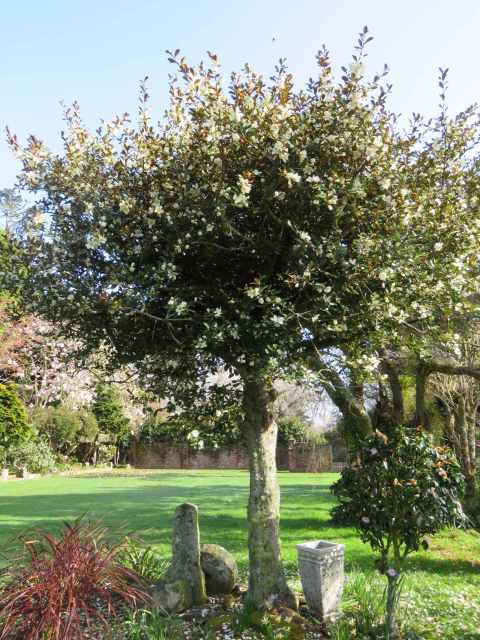
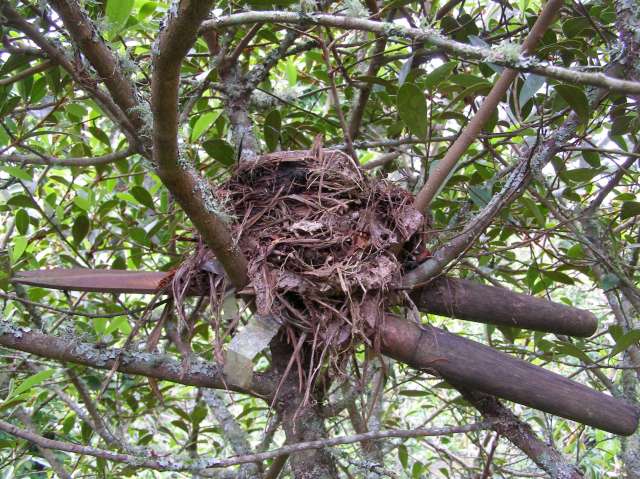
Magnolia laevifolia ‘Velvet and Cream’ was cut back hard to bare wood in 2023 but was bushy and flowering again the next season.
I only include this photo because it still makes me laugh. We used to trim with hedge clippers. When I found these making a handy platform for a bird’s nest in the M. laevifolia. Mark’s comment was, “Oh. So that is where I lost them.” 

Well established plants that are growing strongly can be trimmed back to bare wood, as can camellias and rhododendrons. It is a last resort when a plant has got away on us but we have done it successfully, notably on M. laevifolia. The plants may take another year or two to flower again but they will reshoot from bare wood.
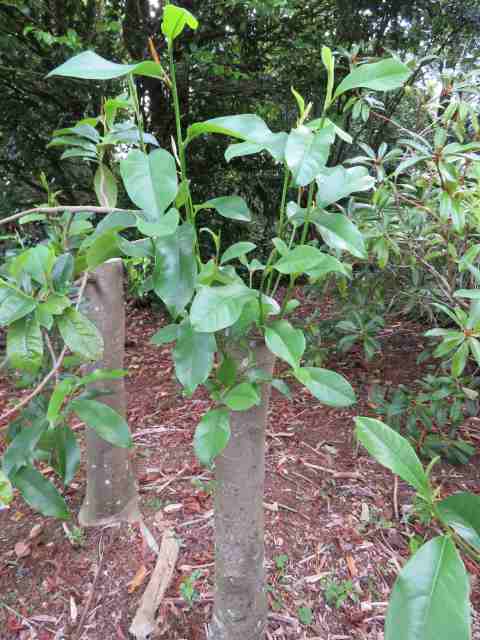
Michelias can be pollarded and respond by putting up straight shoots.

Unexpectedly, michelias also have potential as a coppiced crop, or what we refer to as a sustainable wood-lot, much as hazel is used in the UK. We found this out by chance when we were running low on winter feed for our very small number of beef cattle – more a group of cattle than a herd. Mark started trimming michelia branches as stock food (do NOT try this with rhododendrons which will kill animals) and they were perfectly happy eating the foliage. The plants which were cut to the ground, allowing us to use the trunks for firewood, responded by reshooting from the base with very straight stems.
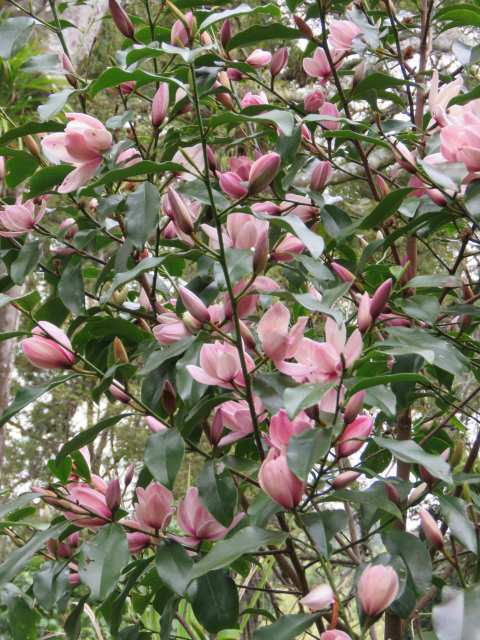
Another of Mark’s oretty seedlings

In our climate, michelias can set prodigious amounts of seed. In fact, setting too much seed is one of our most common reasons for rejecting a cultivar as unsuitable for commercial release. They are not as prolific in harder climates but if you can find one that sets seed, raising the seed is not difficult and the results are reasonably quick, by woody  tree and shrub standards. You will get seedling variation; if you want a hedge of identical plants you need to buy or propagate by cutting or grafting to get them all the same. We like the seedling variation which makes for a more interesting, though less formal, flowering hedge. If you are using seed from the same source, the variations are more likely to be subtle, not radically different. It is likely that Magnolia laevifolia will be the most common seed setter in the UK and Europe. It clips well but can be slow to get established. If you can find a hybrid that sets seed, it generally brings a degree of hybrid vigour.
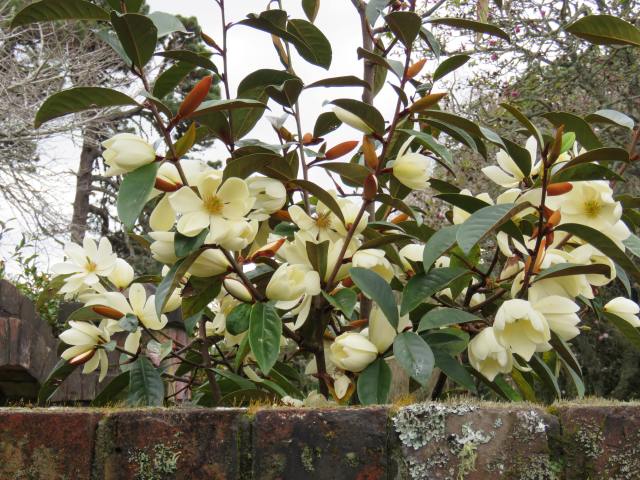
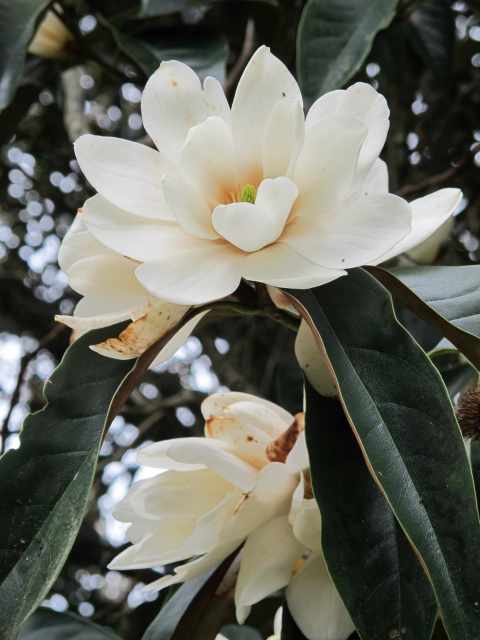
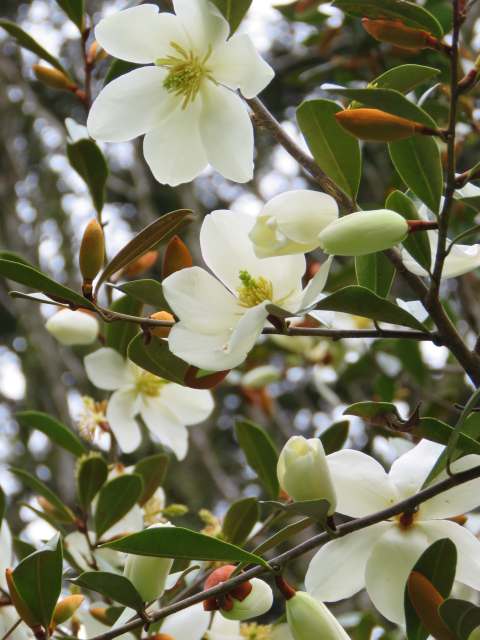
Fairy Magnolia® Cream is strongly scented

With most michelias, there is the added bonus of scent. In our humid climate, camellias are ravaged by camellia petal blight and we no longer get the mass displays on the reticulatas and japonicas. To some extent, the michelia group have filled the gap and they are rewardingly free of pests and diseases.

A note on nomenclature: Michelias have been reclassified as magnolias so all species are now listed as magnolia. The Jury hybrids are sold under the trademarked name of Fairy Magnolia®. For purposes of clarity, we continue to refer to them as michelias in common usage, to differentiate them from both deciduous magnolias and other species of evergreen magnolias, particularly M. grandiflora.
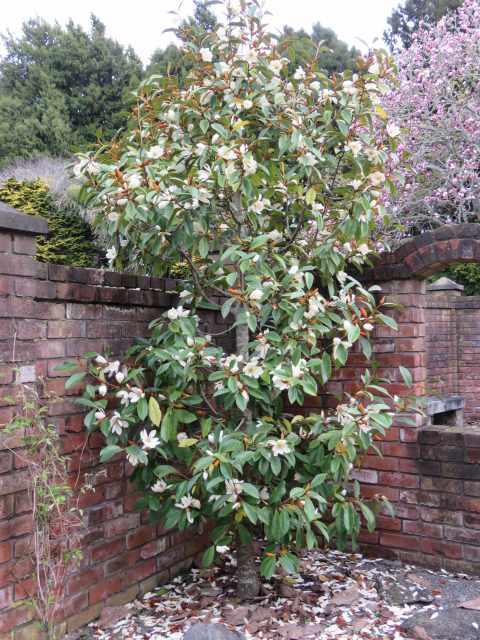
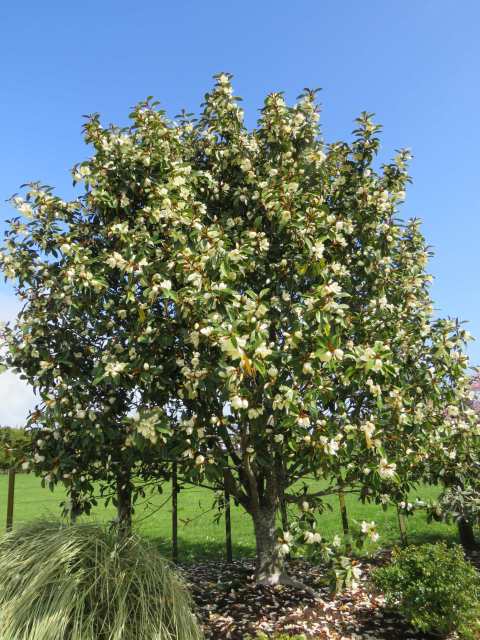
We have a matched pair of Fairy Magnolia® ‘Cream’ at our gateway which we prune to restrict each year. The photo below shows it growing as a roadside plant with no pruning. We can’t allow our gateway plants to get to that size in the space they are in so we are pruning to freeze them in size.

Magnolia delight

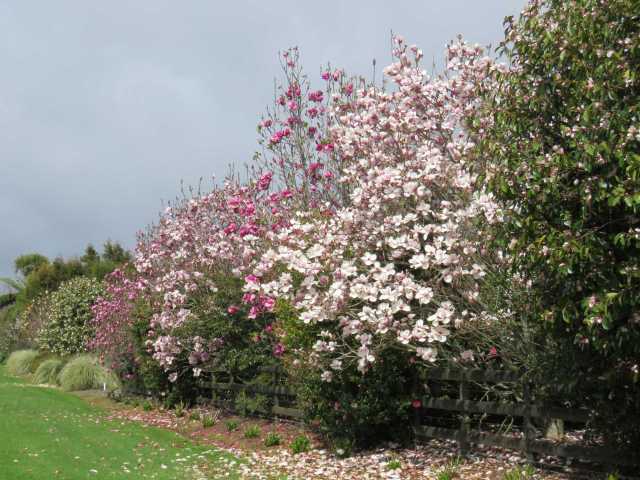
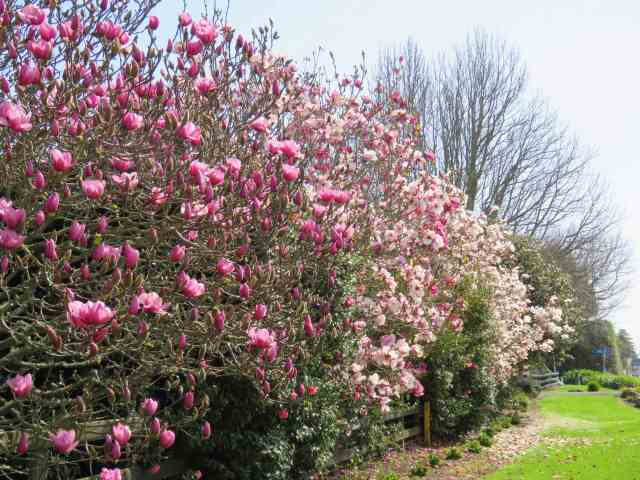
The roadside. On the far left is Honey Tulip and there is a Black Tulip also there that is not visible. Fairy Magnolia Cream, Serene, Iolanthe, Felix Jury, Athene and Fairy Magnolia Blush.

I see it was twelve years ago that I wrote about generous gardeners. Not those who readily share plants but those who plant up areas for other’s enjoyment. I remembered that article this week because of a beautiful stretch of roadside on the outskirts of our small town that I drive by almost every time I leave our property. It is a spectacular row of magnolias that goes from strength to strength every year. It edges grass paddocks where the owners graze a few stock.

Looking back from halfway along the row

The thing about this row of magnolias is that its purpose is to delight passers-by. The owners, Pat and Brian, can’t see it from their house which is on the adjacent section. Pat, in particular, is a keen gardener and they keep a detailed and heavily ornamented garden around the house but the row of magnolias is for the benefit of passing traffic, be it in vehicles or on foot.

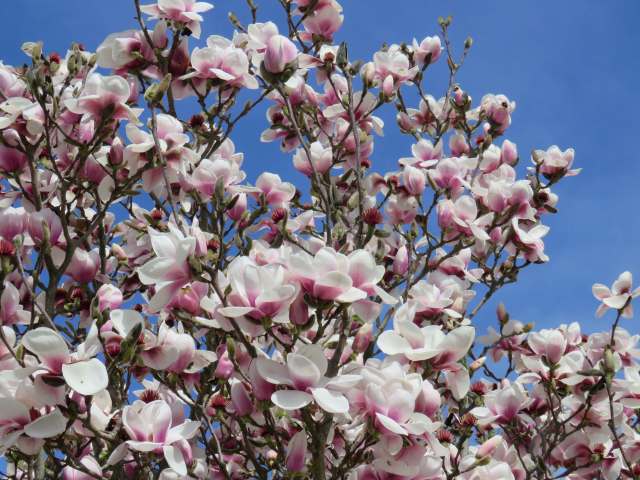
Magnolia Athene
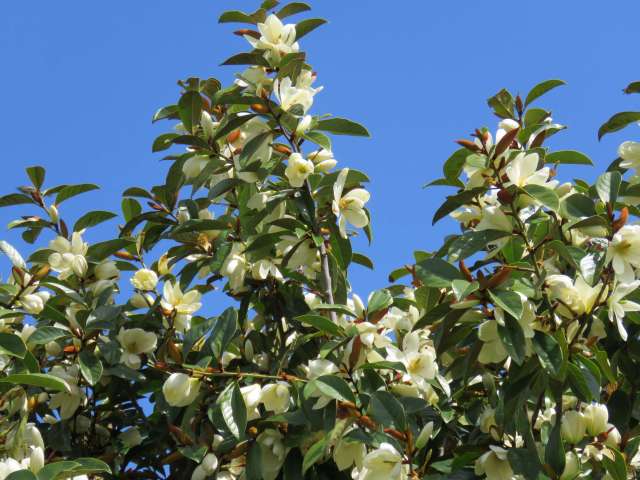
Fairy Magnolia Cream

I called in yesterday to ask their permission to share the photos and, with their usual generous spirit, they said ‘any time. Our garden is your garden’. I had thought I might ask Pat if I could photograph her but it was a rushed visit and I didn’t want to embarrass her. She commented that she thought the magnolias were better this year than ever before and many people are admiring them. “I tell everybody they are Abbie’s magnolias.”

Magnolia Felix Jury just finishing flowering in Pat and Brian’s roadside row

We have had this conversation before. What you have to understand is that this row of magnolias is not far off being a complete collection of Jury magnolias. In vain, do I tell her that they are Felix and Mark’s plants. In Pat’s mind, they are mine.

I do remember giving Pat this plant of Honey Tulip
Honey Tulip – Mark’s only yellow on the market. So far.

She remembers me giving her most of the plants. I remember giving her one and may have given her a few more but she was a very good customer of ours in the days when we used to retail plants. I have always admired Pat’s eye for a good plant. She lacks any curiosity about plants, rarely remembers names, won’t grow bulbs because they are untidy when they finish flowering but she has a good eye and picks out plants she likes solely on their appearance. She has a garden with plants like Camellia yuhsienensis, Rhododendron veitchianum and other choice varieties tucked in with garden centre utility options and plants she has picked up on special. I find her approach to gardening refreshingly honest and unpretentious while also being very capable.

Pat’s plant of Rhododendron veitchianum. It wasn’t until I got up close to it that I realised the striking colour contrast was cineraria.
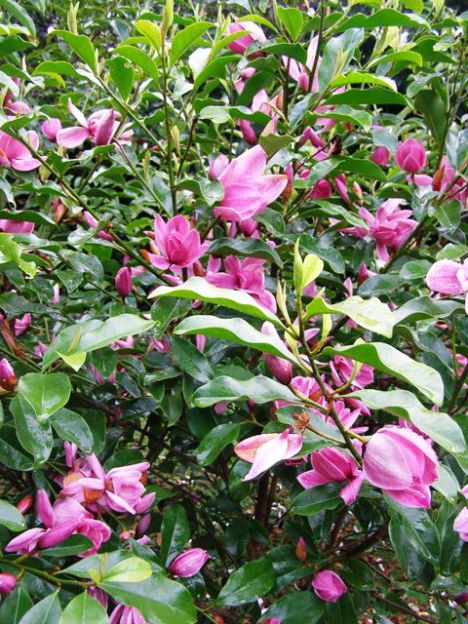
What makes these magnolias interesting to us is that Pat and Brian garden very differently to how we do. The magnolias are planted in the open, exposed to pretty much every wind that blows. They are not mulched and the ground around them is kept bare. They are not trimmed or clipped. I would guess that they were well fertilised when getting established but are now left to their own devices. In those exposed, open conditions,  they are performing better than many of the ones we have here in our own garden which is sheltered from most winds.
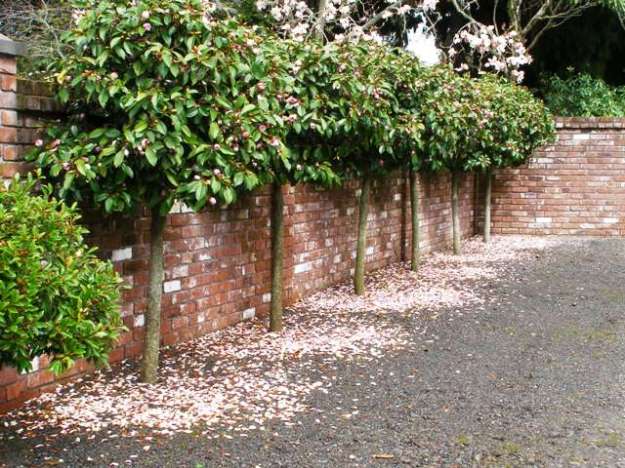
Serene is one of Felix Jury’s lesser known hybrids but worthy of more attention. A later season magnolia, it is very lovely.

Wind is a big issue in this country of long thin islands set amidst vast oceans. Wind hardiness is a big factor in the selection of magnolias in our breeding programme. Petals that are of a softer, thinner texture and flower forms that are looser in structure fall apart when it blows hard. We see it every year on some of the magnolias here – particularly M. sprengeri ‘Diva’, M. sargentiana var. robusta and even the stellatas (star magnolias) and their hybrids. We have seen spectacular displays on some of these and similar magnolias in less windy countries – memorably in the Dandenongs in Australia and in the north of Italy. We don’t have that leeway here. So, it is interesting to see the Jury magnolias in very open conditions, still putting up mass displays of blooms that are largely untroubled by the many storm fronts that pass over in our early spring time.

A small plant of Magnolia Iolanthe with many OTT blooms

A few doors down from Pat and Brian’s home is a house with this little Magnolia ‘Iolanthe’ in bloom – showy enough for me to stop the car and photograph from the roadside. The plant can only have been in the ground two or three years and I haven’t noticed it in flower before, although there is a young plant of ‘Felix Jury’ a few metres away in the same garden that catches my eye when in flower, every time I drive past. But look at ‘Iolanthe’ strutting her stuff! I counted around 30 blooms and opening buds on this very small plant.

Magnolia Iolanthe

I am a big fan of front gardens and roadside plantings. They make the world a better place for us all, or at least for those of us who notice them.

Then and now. A magnolia (michelia) story.

Fairy Magnolia White on the left, ‘Bubbles’ top right and the first flowers to open for the season on Fairy Magnolia Cream bottom right

In the early stages of the magnolia season, our display is dominated by red deciduous magnolias and white michelias. The other colours come later in the season and that is particularly true of the michelias, where we now have significant variations.

Michelias are now classified as a subsection of magnolias and technically are named Magnolia xxxx but we still find it helpful to refer to them as michelias for clarity. They are, of course, evergreen but not with the big leathery leaves of the American Magnolia grandiflora types.

Magnolia x foggii ‘Bubbles’

It was finding M. ‘Bubbles’ in bloom with flowers at a height I could pick that started me lining them up. Back in their day, ‘Bubbles’ and its sister seedling ‘Mixed Up Miss’ were breakthroughs in the world of michelias. There is a third named one in that set but I have only ever seen ‘Hint of Pink’ in Auckland Regional Botanic Gardens. They were the work of the very late  Os Blumhardt – a notable plant breeder who lived in Whangarei and is probably best known internationally for his successful deciduous Magnolia ‘Starwars’.

He didn’t raise many michelia seedlings, as far as we know just the one batch. I see we first started selling ‘Bubbles’ and ‘Mixed Up Miss’ around 1992 and we would have been onto them pretty early because Os was a personal friend and very generous with his plant material. He probably did the cross in the late 1970s, maybe early 1980s and he provided the inspiration to Mark to see what he could do with this plant family.

‘Mixed Up Miss’ at Auckland Botanic Gardens. The flowers are small and so high up on our tree that I can’t photograph it

In their day, they were terrific. ‘Bubbles’ was harder to propagate from cutting and had larger flowers and foliage. ‘Mixed Up Miss’ was the perfect nursery plant – easy to propagate, set flower buds on a young plant and looked extremely attractive and neat standing about a metre high in its pot. It has smaller flowers with slightly more colour but there isn’t a lot in it.

M. doltsopa flower

Os was doing this work before M. laevifolia (formerly known as M. yunnanensis but more widely marketed under a plethora of names including ‘Honey and Cream’) was even in the country. He used two of the common species that were here – M. doltsopa and M. figo. In the world of magnolias, this particular cross is referred to as x foggii (after American breeder John Fogg who is credited with the first hybrids from this cross in 1972).

All that white in the centre is our Magnolia (michelia) doltsopa. Yes, it is somewhat large

M. doltsopa is a variable species. I only have photographs of our specimen which is spectacular and takes up an area of space roughly equivalent to a small, urban apartment block. They are not all as huge as that but they do have large flowers.

Magnolia (michelia) figo.

M. figo will be better known to many readers. It is smaller growing and sold widely, particularly favoured in warmer areas. Its flowers are verging on insignificant to the point where I have never bothered photographing them so I had to grab an image from Wiki Commons. It is a handy, evergreen plant that you can keep compact by pruning often, although its foliage turns rather yellow in full sun. It is mostly grown for its strong fragrance which has always reminded me of Bubblegum chewing gum so loathed by my mother. It only gets fragrant in the late afternoons and evenings, though.

‘Bubbles’ in the centre after 35 years or so. It is in full flower but not exactly a showstopper
For comparison, Fairy Magnolia White in flower with Camellia yuhsienensis in front. The larger, more open flowers are much more distinctive

These new hybrids of Os’s were a breakthrough in terms of more user-friendly garden plants. Alas, some plants get significantly more spectacular with age but others don’t. And on a property with literally hundreds of white michelias from Mark’s breeding programme, you would not look twice at our specimens of ‘Mixed Up Miss’ and ‘Bubbles’. Picking flowers of ‘Mixed Up Miss’ defeated me because I would have to carry a ladder to the farthest reaches of our park where it is now very tall and leggy. You could keep them more compact and bushy by frequent pruning if you are in a smaller garden but the following generations of hybrids are a significant improvement.

Magnolia laevifolia (formerly Michelia yunnanensis) ‘Velvet and Cream’

Mark has used both ‘Bubbles’ and, more often, ‘Mixed Up Miss’ extensively in his breeding but he also had the huge advantage of being able to add in M. laevifolia. While he has tried a few of the other species michelias we have in this country, it is line breeding with those early x foggii hybrids (so doltsopa and figo) with laevifolia that has given the huge range in flower colour and growth habit that he has reached in his later generations of michelia hybrids. The first three releases are all under the brand of Fairy Magnolia (White, Cream and Blush) and are now widely available here and overseas.  

Mark’s Fairy Magnolia Cream on the top left with Fairy Magnolia White below and a random selection of seedlings which are also coming into flower. There is a whole lot more to selecting a plant for release than just a pretty flower but even that is difficult when looking at 80 or 100 plants of the same cross, all of which are white.

None of the later selections are on the market yet although there are three coloured ones being built up for release and there will likely be another three to follow at some stage when we have made the final selections. It is not a quick process so don’t hold your breath.

Yes, we have colours coming through. Not all michelias are white or cream.
Fairy Magnolia Cream and Fairy Magnolia White. Blush has yet to open its pale pink flowers.

Petal Pushers – the Jury Michelias


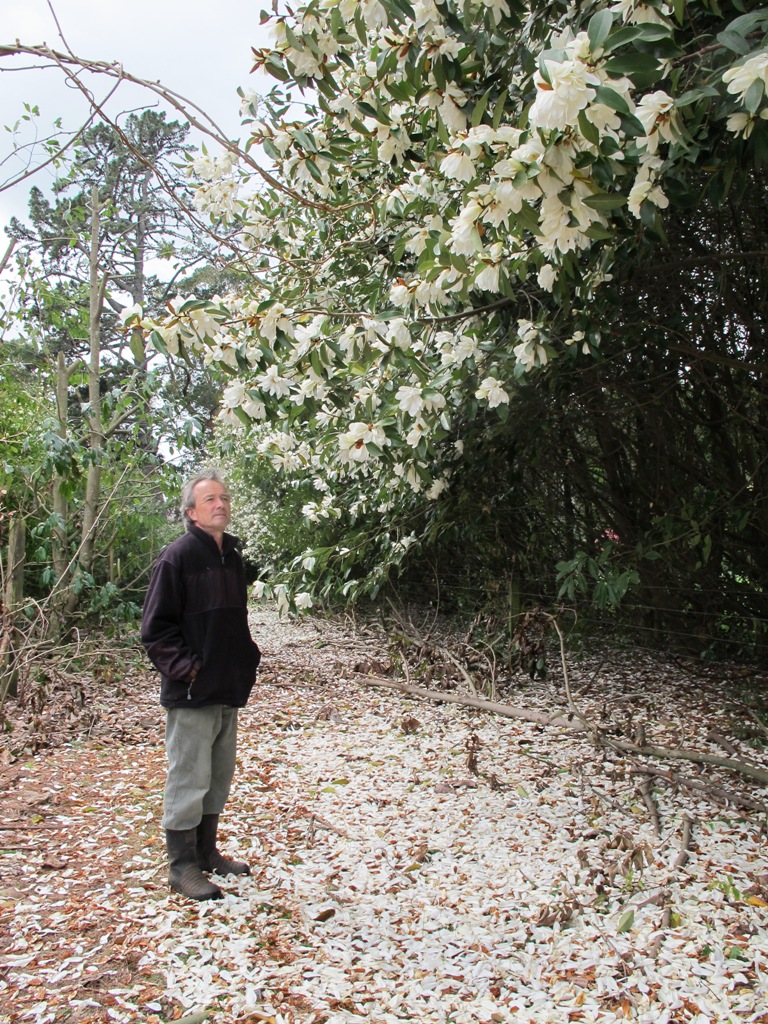
Mark Jury standing on a carpet of fallen scented petals, surveying one of his early shelter belts planted with michelia hybrids

Mark Jury standing on a carpet of fallen scented petals, surveying an early shelter belts planted with michelia hybrids

All michelias are magnolias but not all magnolias are michelias. We have always known them as very close relatives to magnolias but they sat in a group of their own. Now there has been some international reassignment after DNA testing and they have become magnolias, which has led to some confusing name changes. In common usage, they are still often referred to michelias and we are a bit betwixt and between on names.

Until very recent times, there weren’t many different michelias in New Zealand. Doltsopa (the best known cultivar being named ‘Silver Cloud’) and figo (common name of port wine magnolia) have been here for a while. It was an early cross between these two by the late Oswald Blumhardt that gave us ‘Mixed Up Miss’ and ‘Bubbles’.

Interest started to grow when yunnanensis was brought in some twenty years ago. It has spawned a gazillion named selections because it sets seed readily, but just to confuse you, it is now correctly referred to as Magnolia laevifolia. There are a few other species which are not widely available, including maudiae, and some obscure ones that are of interest to collectors only. But our borders closed to new introductions so there are a number of recent discoveries in Asia that we don’t have here. Yes, new plants are still being discovered in this world of ours but we can only look at them from afar with our bio-security rules.

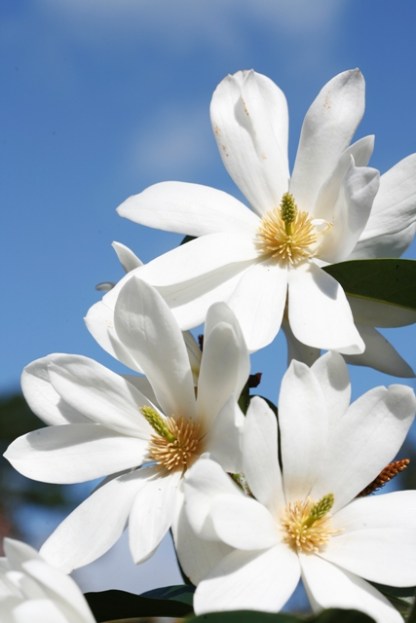
Fairy Magnolia White

Fairy Magnolia White

Mark started hybridising them here back in the 1990s. He figured there was room to improve on them as garden plants. Figo’s flowers are a bit insignificant and the foliage tends to go yellow in full sun. ‘Silver Cloud’ has a wonderful fragrance but the flowers are very floppy and lack good form. It also grows too large for many town gardens and it can defoliate – dropping all its leaves – after flowering. Laevifola (yunnanensis) can defoliate too, in spring conditions which are wet and cold. These are evergreen plants so defoliation is not a great look. ‘Bubbles’ and ‘Mixed Up Miss’ look great as juvenile plants but are pretty ordinary when they get bigger and older. Mark could see possibilities.

September and October are exciting months for us as the michelias bloom. We live and breathe michelias and magnolias at this time of the year. There are six hundred new michelia seedlings ready to flower this spring alone, part of a long term breeding programme. Out of the thousands he has raised, only three have been named and released so far.

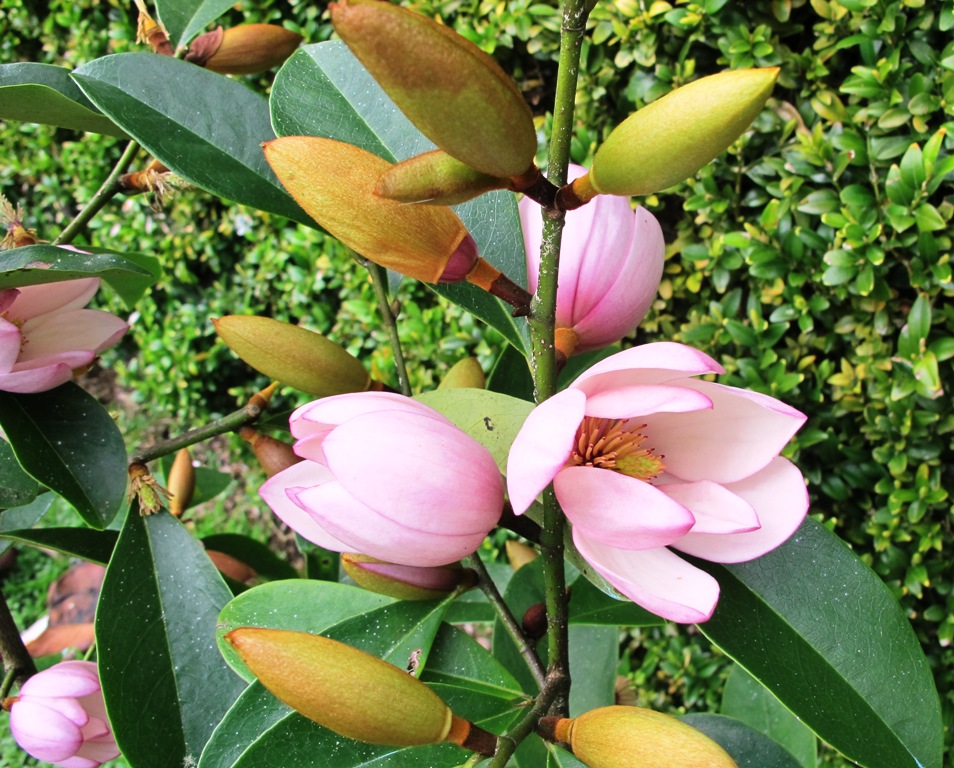
Fairy Magnolia Blush

Fairy Magnolia Blush

There is a long way to go yet but some directions are emerging. Despite the vast majority of michelias being basically white, he has reached reds, purples and deep pinks and is working on deepening the pale yellows to get stronger colour. Along the way there are an awful lot of murky colour combinations that get the chop. There is a big range of flower form, foliage and growth habits. Perfume can be an issue when two of the most fragrant species spawn offspring with no scent at all. Bringing together all the different elements to get a new plant is an absorbing and time consuming occupation.

Along the way we have also learned that michelias are very tolerant of cutting and clipping and sprout again from bare wood. The row of lollipop Fairy Magnolia Blush at our entrance has been clipped and shaped over ten years now and we can keep it to the size we want by trimming just twice a year. They make excellent hedges and some of our roadside shelter belts are a feast of flower and fragrance at this time.

The sustainable wood lot

The sustainable wood lot

Regrowth

Regrowth

An unexpected bonus has been the sustainable woodlot. Because we heat our large house entirely with wood, we burn through a prodigious amount every winter. Mark had been thinking along the lines of establishing a sustainable woodlot for the future that we could harvest on a rotational basis. I even sourced a book on the very topic. But lo, he realised a few years ago that his reject michelia seedlings already filled that very niche, doing dual duty as winter feed for our very small herd of beefies that we keep to eat the paddock grass. I say very small herd – there are only four at the moment. Cut off close to the base, the plants soon shoot away again with long straight whips that could be used as poles or left to grow for firewood. Mark drags the branches into an adjacent paddock where the cattle enthusiastically eat the foliage. He then gathers the remaining trunks to cut up for next season’s firewood. It seems a good multi-purpose use of a plant breeding programme.

Fairy Magnolia Cream

Fairy Magnolia Cream

Mark’s three michelia selections to date are sold under the Fairy Magnolia brand and are widely available in New Zealand garden centres and in some overseas countries. Blush is a soft pink, Cream is very fragrant and grows in a similar, compact manner to Blush. White is a larger grower and the first in the season to flower. Mark has always seen it as a garden-friendly alternative to “Silver Cloud” with good fragrance and beautiful flower form.

First published in the September issue of NZ Gardener and reprinted here with their permission.

Lollipop Fairy Magnolia Blush at our entranceway. The smaller michelia to the left is an unnamed figo hybrid with masses of creamy yellow flowers.

Lollipop Fairy Magnolia Blush at our entranceway. The smaller michelia to the left is an unnamed figo hybrid with masses of creamy yellow flowers.

The Jury Magnolias from New Zealand

First published in the spring journal of the American Magnolia Society, Issue 93.

Magnolia ‘Iolanthe’ is one of our star performers here and has achieved considerable stature after 50 years. It has necessitated relocating the vegetable garden

Magnolia ‘Iolanthe’ is one of our star performers here and has achieved considerable stature after 50 years. It has necessitated relocating the vegetable garden

The Jury magnolia reputation has been built on a small number of named varieties. Felix Jury only ever named eight of his own breeding – Magnolias ‘Apollo’, Athene’, Atlas’, ‘Iolanthe’, Lotus’, Milky Way’, ‘Serene’ and Vulcan™ . We don’t include the variety M. ‘Mark Jury’ in that list because it arrived here as a seedling of Lanarth purchased from Hilliers and all Felix did was to grow it and, in due course, name it. There is no record of how many seedlings he raised. Mark’s comment is that it wasn’t a huge number and he guesses somewhere between 50 and 100 in total. Mark curbed his father’s suggestion of naming a few more because they were too close to ones already selected, although we have a few fine sister seedlings from those breeding lines in the garden here.

In his turn, Mark has raised many more controlled crosses. He has never kept track of the number, but a rough guess brings him around the 1000 total of deciduous magnolias grown to flowering size so far. Of those he has named a grand total of four. He is discerning. All were chosen because they represented a breakthrough in some aspect: an ability to produce flowers on young plants, not grow so rapidly as to indicate that they will become forest giants, propagate relatively easily and flower reliably every year while setting buds down the stems to prolong the season.

Black Tulip - good form, solid, dark colour and heavy petals

Black Tulip – good form, solid, dark colour and heavy petals

Magnolia Black Tulip® was selected because it sets flowers freely on young plants and achieves a depth of solid dark color with heavy textured petals in an attractive goblet form which holds its shape. M. ‘Burgundy Star’ offered a totally different habit of growth, strongly fastigiate, and the large star-shaped blooms over a prolonged period are a purer red at their best.Being three parts M. liliiflora ‘Nigra’, he hoped it would also prove hardier and maybe hold its color in colder climates. Felix® is our personal favorite so far. It is big, up to 30cm (12 in) across. It is very showy. With us, it can appear a rich red, but even when the color gets bleached out in colder climates, it retains a good depth of deep rosy pink. It was everything that Felix Jury himself was trying to breed – a big, rich-colored M. ‘Iolanthe’ – and he lived long enough to see it bloom. This is a cultivar that we think is just going to get more spectacular with age and size.

Magnolia Honey Tulip™ is a soft golden version of M. Black Tulip® scheduled for release in 2013. The rounded flower form and heavy textured petals appear to be an advance in the yellow magnolias. (photo by Sally Tagg)

Magnolia Honey Tulip™ is a soft golden version of M. Black Tulip® scheduled for release in 2013. The rounded flower form and heavy textured petals appear to be an advance in the yellow magnolias. (photo by Sally Tagg)

This year will see the first release of Mark’s newest cultivar called Honey Tulip™. It is a golden honey version of Black Tulip® and represents a breakthrough in flower form and petal substance in the yellows. It retains its color through the flowering season where the comparators (Magnolias ‘Yellow Fever’, Sundance’ and ‘Hot Flash’) all become increasingly pale. Magnolia Honey Tulip™ is a soft golden version of M. Black Tulip® scheduled for release in 2013. The rounded flower form and heavy textured petals appear to be an advance in the yellow magnolias.

For our climate, it is particularly significant that it flowers on bare wood, whereas most of the yellow hybrids flower at the same time as they come into leaf. It is also less vigorous, which is to its credit, given that the yellows tend to compete with timber trees here in their rate of growth.

What takes time to sort out is how well these magnolias will perform overseas in different climates. M. Vulcan™ has been patchy at best internationally and washes out to a muddy purple in cold climates. M. ‘Iolanthe’, too, has not matched up in many overseas locations. Yet, here in New Zealand it is a flagship magnolia. The original plant is now somewhere over 50 years old and planted in the most prominent spot in our garden. Year in and year out it takes our breath away with its sheer magnificence. There is a lot of trial and error involved in how these plants perform overseas and we have been particularly delighted to see that M. Felix® seems to be measuring up across a range of climates.

Felix®, bred by Mark, fulfilled the magnolia breeding ambitions of his father, Felix Jury. It is heartening to hear reports of how well it is performing internationally.

Felix®, bred by Mark, fulfilled the magnolia breeding ambitions of his father, Felix Jury. It is heartening to hear reports of how well it is performing internationally.

Mark continues with breeding deciduous magnolias. The quest here is for a yellow M. ‘Iolanthe’ (in other words, a very large cup-and-saucer bloom in yellow). He is after pure reds which lose the magenta hue common to the first generations of new hybrids and he is getting very close to it. There is certainly room for an improved M. Vulcan™ which would bloom with better color in other climates and fade out with more grace as its flowering season draws to a close. There is a way to go yet in a pure purple.

The process here is to grow seed to a large enough size for planting out, which usually takes about 18 months. They are then planted wherever there is space. Our shelter belts (windbreaks) are rows of trial plants, including magnolias. Some are in groves, some edging a stand of native forest, some lining our road verges and he has now resorted to rows in the open ground. From time to time, Mark heads out with the chainsaw. If the seedlings haven’t flowered by five years old, they get the chop. If it becomes clear that a cross is of no particular merit, the batch will be felled. If one is looking very promising, others will be cleared to give it space. Over time, the first groves have been thinned down from about 120 to the best 20, which will remain in situ. Because, of course, if you are only naming about four out of a thousand, there are a rather large number of also-rans which are too good to cut out, but not good enough or sufficiently different
in the eyes of the breeder to release.

The Michelias

Venturing into the michelia branch of the magnolia family has been much more recent. The first crosses only go back about 17 years, but the turnaround is much faster so the total number raised is already larger than the deciduous magnolias. One has been widely released and is on the market as Fairy Magnolia® Blush. The next two are scheduled to be released this year – Fairy Magnolia® White and Fairy Magnolia® Cream.

The decision to brand these with the trademarked name of Fairy Magnolia® was made by our agent, Anthony Tesslaar Plants. With the reclassification by taxonomists of Michelias to Magnolias, it seems important to highlight the difference between these and the larger, evergreen grandiflora types.

Michelias flower in two to three years from seed so it is possible to use them for further hybridising and to see directions quickly. However, there is an additional hurdle. Deciduous magnolias are usually budded and it is only the occasional one which falls at the propagation hurdle. Michelias are much more of a mass market proposition and have to propagate easily from cutting and in tissue culture. We have a far higher fall-out rate when it comes to trialing for ease of propagation. We were disappointed when a green-yellow full sister to Fairy Magnolia® Blush, which had very distinctive large green buds encased in brown velvet, fell at the last hurdle. It’s a good plant. It just doesn’t propagate reliably. With hindsight, it is a little sparse in foliage, too, so maybe it is to the good that it didn’t make it to international release.

While Mark is getting some interesting colors in the michelia hybrids, none has yet passed the propagation trials.

While Mark is getting some interesting colors in the michelia hybrids, none has yet passed the propagation trials.

Similarly, the colored varieties appear to be problematic when it comes to propagation. The breeding program has yielded some good pure yellows which are easily on a par, color-wise, with the yellow deciduous magnolias. None so far have propagated reliably. Even more disappointing have been the purples. Hopes are raised when a plentiful number of flower buds open to good-sized, distinctive purple flowers, but none of these seedlings has so far passed the propagation test with high enough percentages. If they are reluctant to strike from cutting, it appears that they are equally problematic in micropropagation.

Fragrance has been another issue. Even when using two strongly fragrant parents, a large proportion of the offspring are bereft of any scent at all. We have many visually splendid plants, some representing real breakthroughs in form or flower, but doubt the willingness of the buying public to embrace a michelia with no scent. Mark has been backcrossing some of these to scented species to see if he can get the fragrance back.

Others are rejected because they are too fertile, setting far too much seed, which will lead to a scraggly plant over time, and a scraggly plant with weed potential in some conditions. Some crosses have simply been too vigorous in growth to contemplate them as garden plants of merit no matter how lovely the blooms.

New Zealand’s borders are now well and truly closed to any imports of new species of any genera so Mark has not had access to recent introductions. In fact, he is working on a limited range – mostly M. doltsopa, M. figo, M. laevifolia and M. maudiae. M. alba and M. champaca have proven to be blind alleys so far and the obscure and as yet unidentified wild-collected michelia species brought back from Vietnam by the late Os Blumhardt has little merit or breeding potential. Mark observes that he has not seen other new species that he covets or that he thinks will add much of significance to the hybrids, so the closed borders have not been the problem that he initially feared. He has ruled out using allied plants such as Mangletias because they lack the floriferous characteristic that is a bottom line for any hybrid. By this stage he is down to about the sixth generation of crosses and back crosses using the sought-after characteristics of favored species and hybrids, so the genetic makeup of individual hybrids has become increasingly complex.

Fairy Magnolia® Blush clips very successfully. These plants are kept to this size with trimming in late spring and a light follow-up in late summer.

Fairy Magnolia® Blush clips very successfully. These plants are kept to this size with trimming in late spring and a light follow-up in late summer.

Fairy Magnolia® Blush brought consistent pink coloring into the range along with bushy growth and floriferous characteristics over a long season. The natural bushiness and the ability to take hard trimming are both important characteristics. The early M. doltsopa x foggii crosses from Os Blumhardt (particularly ‘Mixed Up Miss’ and ‘Bubbles’) make splendid juvenile nursery plants, but as they mature, they become leggy and open and most people would not look twice at them. We have had many seedlings the same and discard any which make only tip growths. Blush has a light and pleasant scent and, despite having doltsopa and figo in its parentage, it has proven much hardier in the US than we dared to hope and appears to be coping as low as zone 6 with winter protection and comfortably dealing with zone 7b conditions through the years of pre-release trials in the USA. It is hard to breed the perfect plant – the foliage can be a little more olive green than we would like and it would be good to get a larger, pinker bloom, but it is maturing well here.

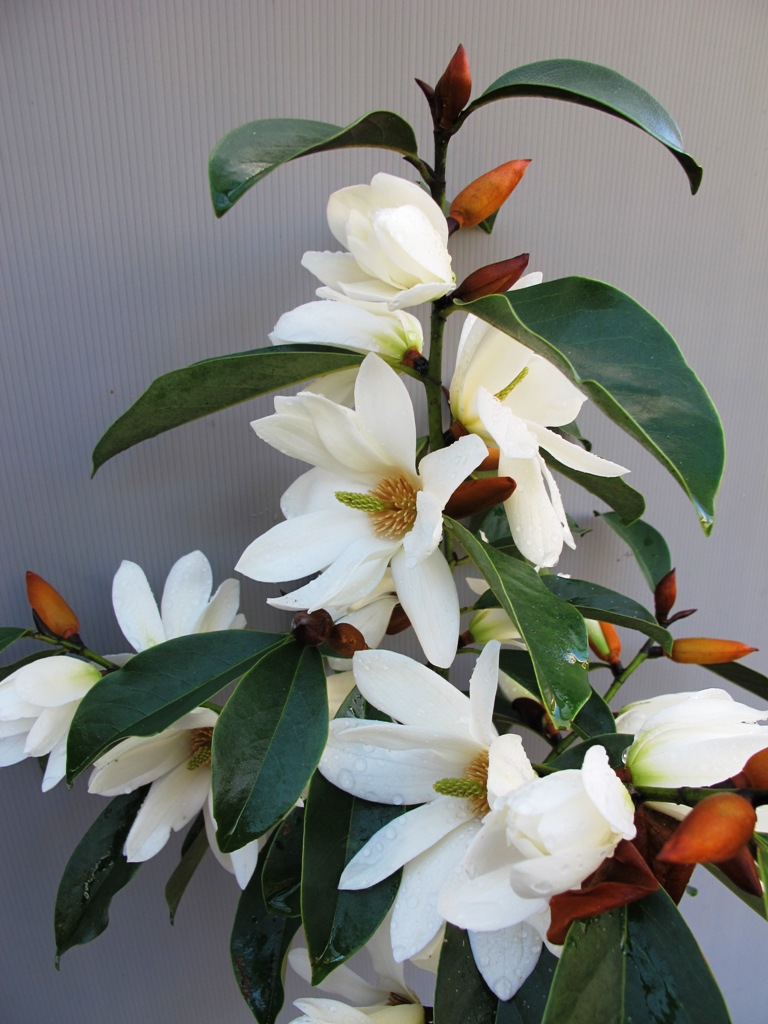
Fairy Magnolia® Cream has very fragrant, large cream flowers over a long season and will be released internationally in 2013. (photo by Sally Tagg)

Fairy Magnolia® Cream has very fragrant, large cream flowers over a long season and will be released internationally in 2013. (photo by Sally Tagg)

Fairy Magnolia® Cream, to be released this year, is similar to Blush in breeding and performance, but with desirable brighter green foliage and a very strong fragrance. Its peak flowering season extends into months and the blooms are a little larger than Blush, measuring at least 10cm across. Fairy Magnolia® White is from a different breeding strain. It has been selected from a very consistent run of seedlings which we have long referred to as the Snow Flurry series. It is one of the earlier flowering michelias, opening in winter, and with a higher proportion of M. doltsopa it is not likely to be as hardy in cold climates as Blush and, we hope, Cream. Where climate and space allow, we think it should prove to be a big improvement on existing doltsopa types. It has smaller leaves and wonderful
velvet brown buds opening to the purest of white starry flowers with excellent fragrance. It is much bushier in habit and has never shown the tendency to defoliate after flowering which can be problematic with some doltsopa types (and indeed with many M. laevifolias here). While it forms a plant of some stature (maybe 5m x by 4m, or 16 ft x 13 ft, if not trimmed), it is not going to become a giant like the M. doltsopa, which now takes up a greater area than an urban house plot in our park.

Fairy Magnolia® White is from a different breeding line and we see it as a garden friendly M. doltopa type with very beautiful, perfumed flowers. (photo by Sally Tagg

Fairy Magnolia® White is from a different breeding line and we see it as a garden friendly M. doltopa type with very beautiful, perfumed flowers. (photo by Sally Tagg

In recent years, we have wound up the wholesale and retail nursery here in order to concentrate on the garden and plant breeding. At the rate he is going, Mark may eventually end up naming and releasing a few more cultivars than his father, but the selections will have been made from trials involving a much greater number of cultivars.

Magnolia Burgundy Star - as yet unproven overseas but we are hopeful it may prove hardy and keep good flower colour

Magnolia Burgundy Star – as yet unproven overseas but we are hopeful it may prove hardy and keep good flower colour