Tag Archives: Felix Jury magnolias

Magnolia delight

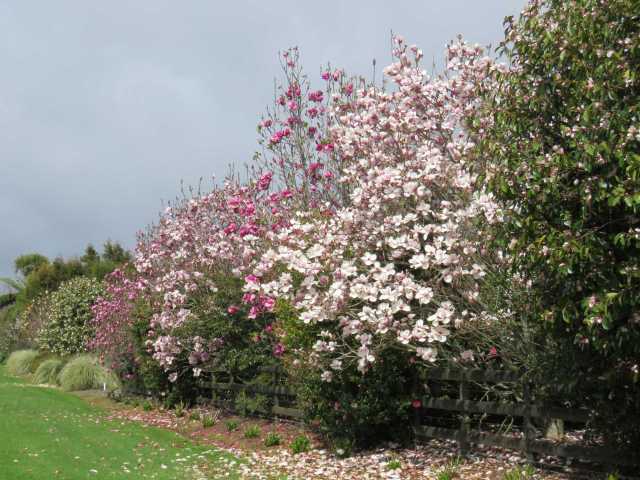
The roadside. On the far left is Honey Tulip and there is a Black Tulip also there that is not visible. Fairy Magnolia Cream, Serene, Iolanthe, Felix Jury, Athene and Fairy Magnolia Blush.

I see it was twelve years ago that I wrote about generous gardeners. Not those who readily share plants but those who plant up areas for other’s enjoyment. I remembered that article this week because of a beautiful stretch of roadside on the outskirts of our small town that I drive by almost every time I leave our property. It is a spectacular row of magnolias that goes from strength to strength every year. It edges grass paddocks where the owners graze a few stock.
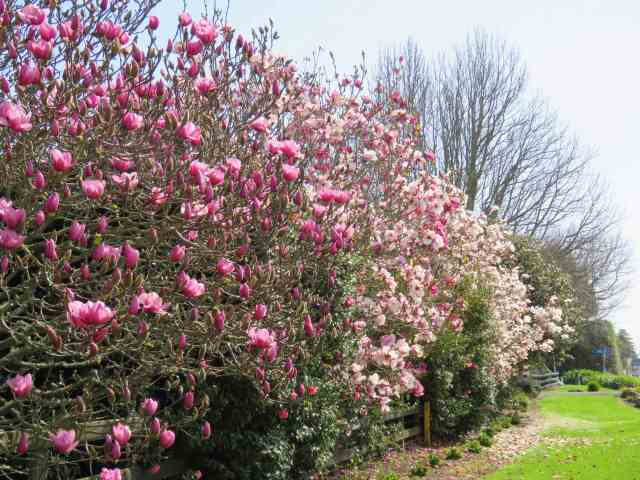
Looking back from halfway along the row

The thing about this row of magnolias is that its purpose is to delight passers-by. The owners, Pat and Brian, can’t see it from their house which is on the adjacent section. Pat, in particular, is a keen gardener and they keep a detailed and heavily ornamented garden around the house but the row of magnolias is for the benefit of passing traffic, be it in vehicles or on foot.
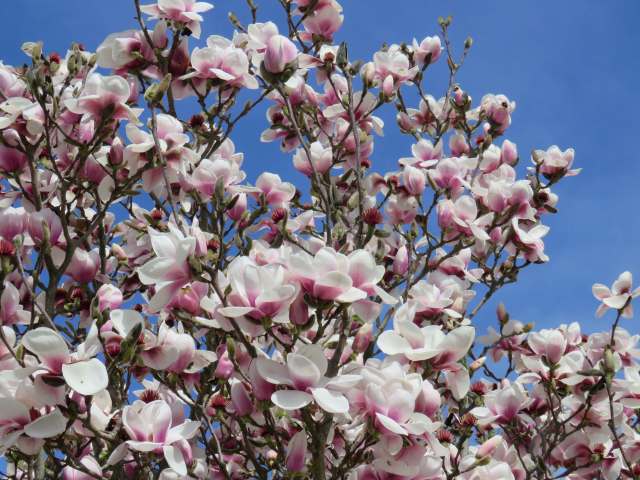
Magnolia Athene
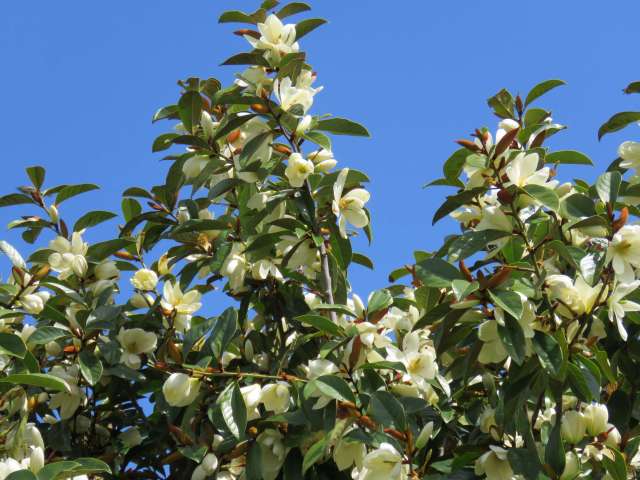
Fairy Magnolia Cream

I called in yesterday to ask their permission to share the photos and, with their usual generous spirit, they said ‘any time. Our garden is your garden’. I had thought I might ask Pat if I could photograph her but it was a rushed visit and I didn’t want to embarrass her. She commented that she thought the magnolias were better this year than ever before and many people are admiring them. “I tell everybody they are Abbie’s magnolias.”
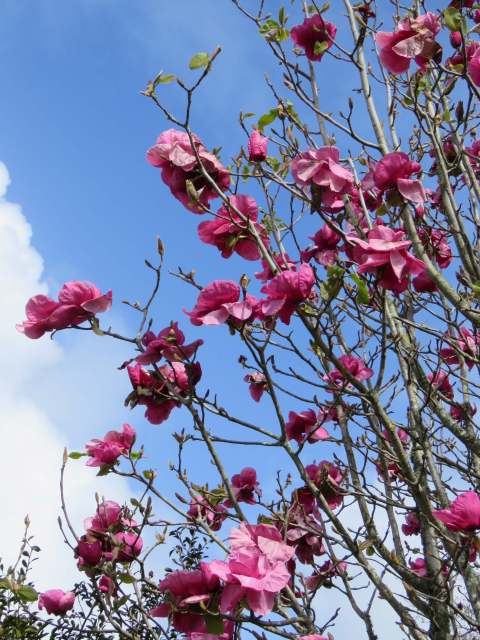
Magnolia Felix Jury just finishing flowering in Pat and Brian’s roadside row

We have had this conversation before. What you have to understand is that this row of magnolias is not far off being a complete collection of Jury magnolias. In vain, do I tell her that they are Felix and Mark’s plants. In Pat’s mind, they are mine.
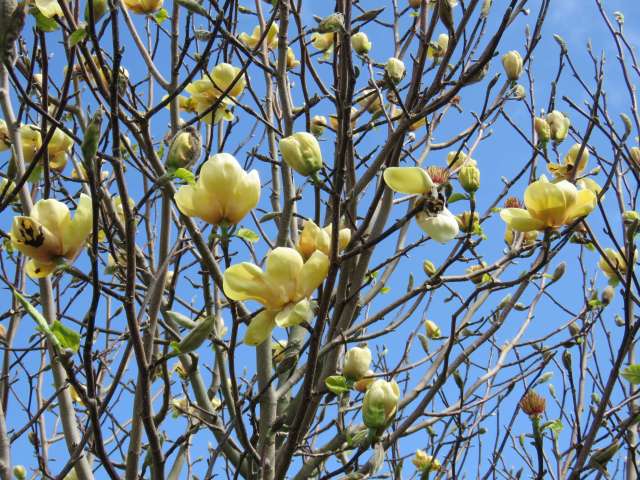
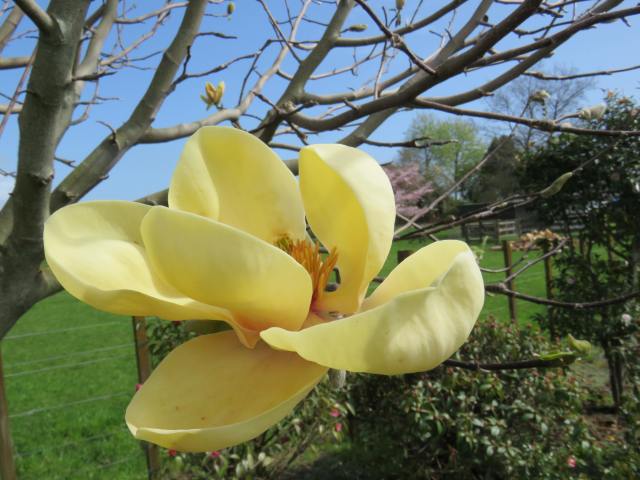
I do remember giving Pat this plant of Honey Tulip
Honey Tulip – Mark’s only yellow on the market. So far.

She remembers me giving her most of the plants. I remember giving her one and may have given her a few more but she was a very good customer of ours in the days when we used to retail plants. I have always admired Pat’s eye for a good plant. She lacks any curiosity about plants, rarely remembers names, won’t grow bulbs because they are untidy when they finish flowering but she has a good eye and picks out plants she likes solely on their appearance. She has a garden with plants like Camellia yuhsienensis, Rhododendron veitchianum and other choice varieties tucked in with garden centre utility options and plants she has picked up on special. I find her approach to gardening refreshingly honest and unpretentious while also being very capable.
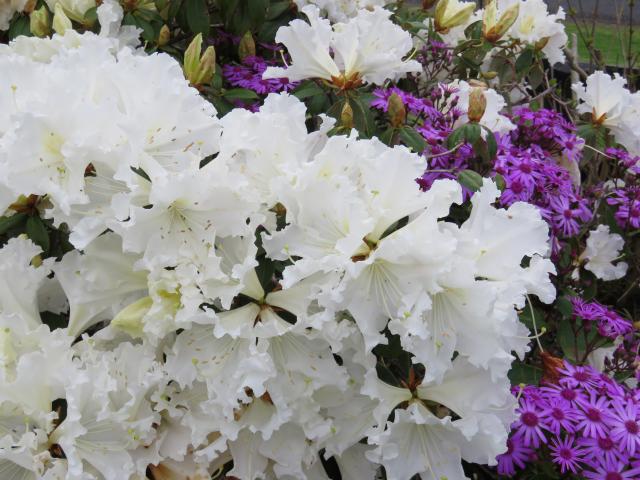
Pat’s plant of Rhododendron veitchianum. It wasn’t until I got up close to it that I realised the striking colour contrast was cineraria.

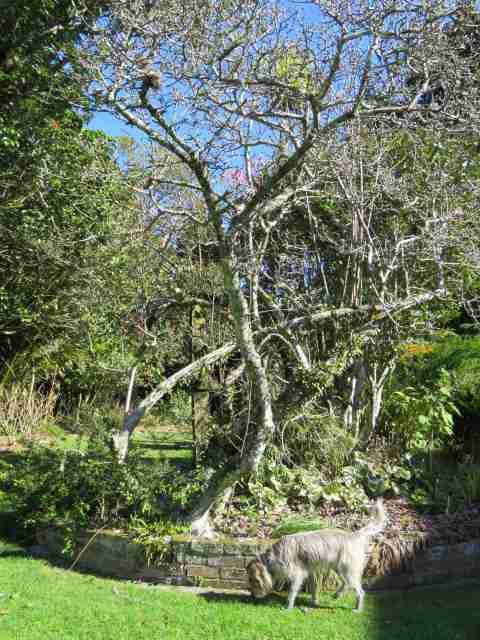
What makes these magnolias interesting to us is that Pat and Brian garden very differently to how we do. The magnolias are planted in the open, exposed to pretty much every wind that blows. They are not mulched and the ground around them is kept bare. They are not trimmed or clipped. I would guess that they were well fertilised when getting established but are now left to their own devices. In those exposed, open conditions,  they are performing better than many of the ones we have here in our own garden which is sheltered from most winds.
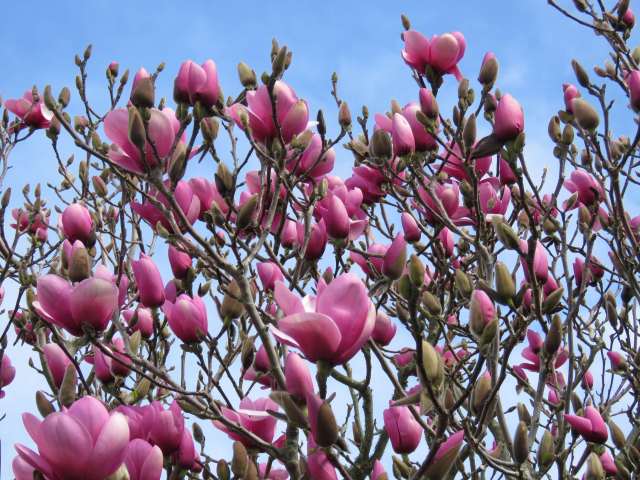
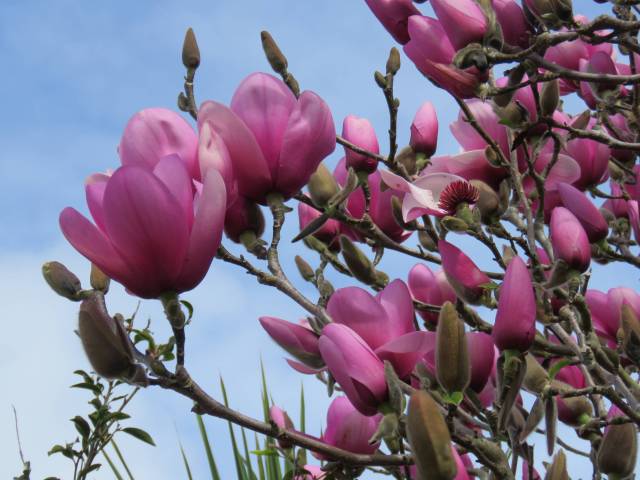
Serene is one of Felix Jury’s lesser known hybrids but worthy of more attention. A later season magnolia, it is very lovely.

Wind is a big issue in this country of long thin islands set amidst vast oceans. Wind hardiness is a big factor in the selection of magnolias in our breeding programme. Petals that are of a softer, thinner texture and flower forms that are looser in structure fall apart when it blows hard. We see it every year on some of the magnolias here – particularly M. sprengeri ‘Diva’, M. sargentiana var. robusta and even the stellatas (star magnolias) and their hybrids. We have seen spectacular displays on some of these and similar magnolias in less windy countries – memorably in the Dandenongs in Australia and in the north of Italy. We don’t have that leeway here. So, it is interesting to see the Jury magnolias in very open conditions, still putting up mass displays of blooms that are largely untroubled by the many storm fronts that pass over in our early spring time.
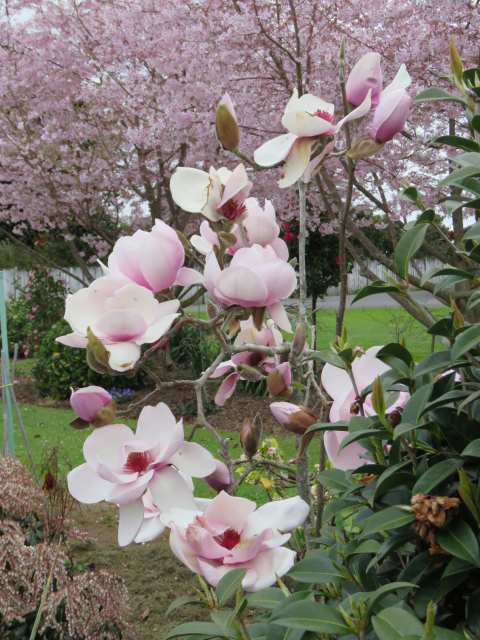
A small plant of Magnolia Iolanthe with many OTT blooms

A few doors down from Pat and Brian’s home is a house with this little Magnolia ‘Iolanthe’ in bloom – showy enough for me to stop the car and photograph from the roadside. The plant can only have been in the ground two or three years and I haven’t noticed it in flower before, although there is a young plant of ‘Felix Jury’ a few metres away in the same garden that catches my eye when in flower, every time I drive past. But look at ‘Iolanthe’ strutting her stuff! I counted around 30 blooms and opening buds on this very small plant.
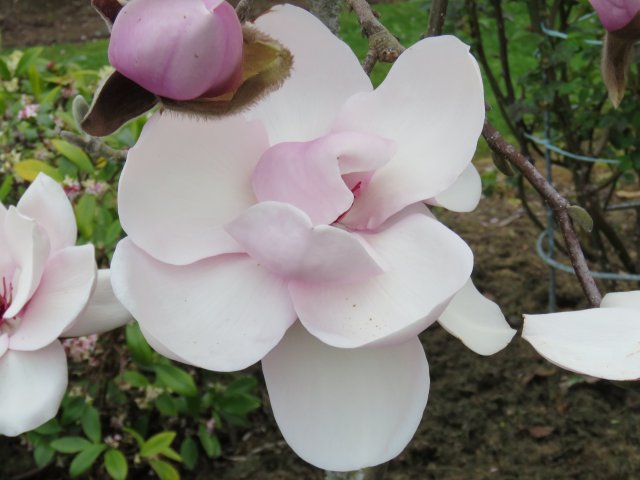
Magnolia Iolanthe

I am a big fan of front gardens and roadside plantings. They make the world a better place for us all, or at least for those of us who notice them.
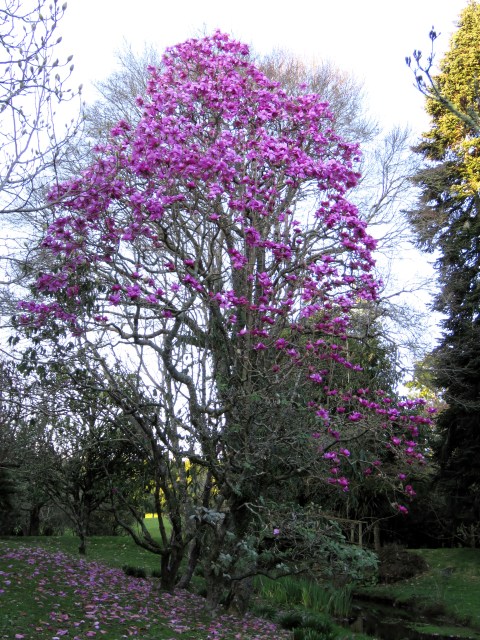
The legacy of Magnolia ‘Lanarth’ and modest Magnolia liliiflora ‘Nigra’

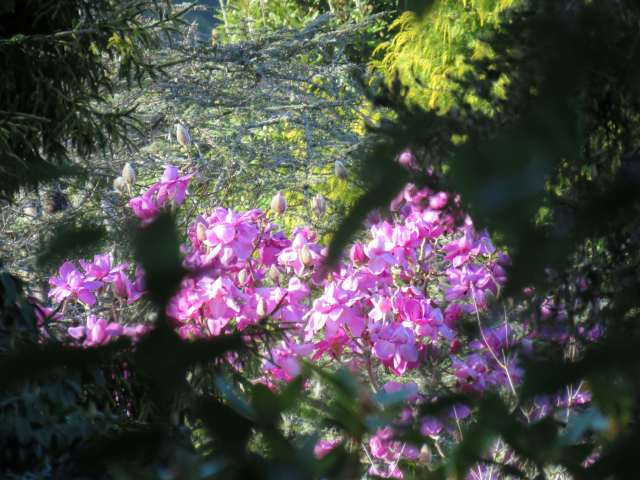
Not the best photo but I can assure you it was the best sight on its day – looking through trees to ‘Lanarth’ in the distance

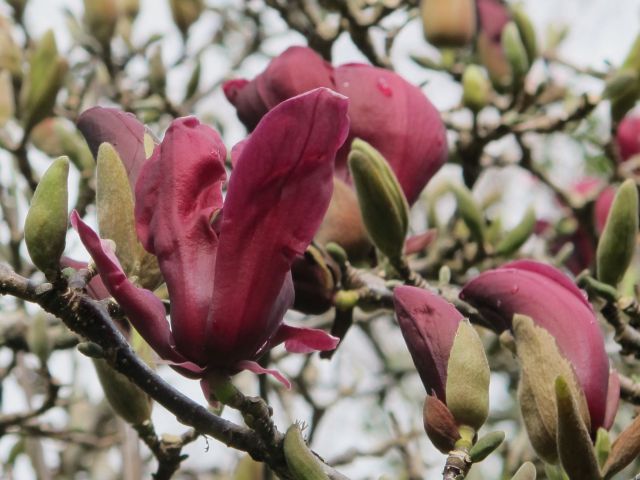
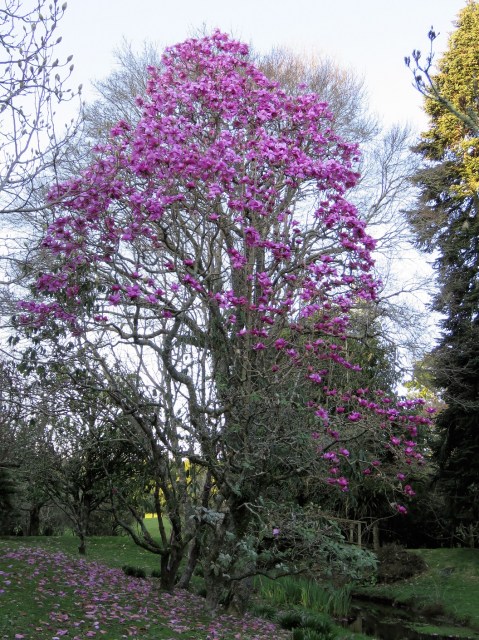
As I paused to admire the glorious purple of Magnolia ‘Lanarth’ through the trees, the thought occurred to me that the vast majority of the red magnolias raised and released around the world since the mid 1980s have descended from this particular tree down by the stream in our park. Some are several generations down the line but they trace their genes back to our tree.

Our plant of Magnolia campbelllii var mollicomata ‘Lanarth’

Botanically, our Magnolia ‘Lanarth’ is the form distributed by leading UK nursery, Hilliers, back in the 1960s, Magnolia campbellii var. mollicomata ‘Lanarth’. Felix Jury imported it at considerable expense and thank goodness he did.

Magnolia liliiflora Nigra – red but otherwise unremarkable
and the shrubby tree of M liliiflora Nigra at about 60 years of age. It flowers later in the season so we think must have been the mother of the red hybrids, not the pollen donor.

To be fair, it wasn’t just ‘Lanarth’ that launched the platform for new generations of red magnolias. The plant of Magnolia liliiflora ‘Nigra’ in the garden border behind our house was the other parent, almost certainly the seed-setter. In the heady world of magnolias, liliiflora is not a showstopper. Our plant is more sturdy shrub than tree, the blooms are not large, typical liliiflora form which is not showy and the flower colour has none of the rich glow that magnolias can have. But it is red both inside and outside on the petals. Mark tells me we are reputed to have a particularly good form of liliiflora ‘Nigra’ in this country in terms of its solid red bloom without the inner petal being white.

Breeders and enthusiasts around the world had been trying to create good red magnolias before, like the optimistically named ‘Chyverton Red’,  ‘Pickard’s Ruby’ and ‘Pickard’s Garnet’. We have one example here but I only have one tiny photo of it and I have just found out that the name we have on it is wrong. I will have to take more notice of it when it flowers this year and try and work out what it is, only out of curiosity because it is not remarkable.  

Felix looked at his plant of ‘Lanarth’ and wondered if he could get a good-sized, red campbellii-type flower. He had already done his other breeding to reach ‘Iolanthe’, ‘Milky Way’, ‘Athene’ and the other four Felix Jury cultivars. And so he created ‘Vulcan’, a breakthrough in its day. ‘Lanarth’ contributed the flower size and form, solid colour inside and out but also the translucence, tree form and scent. M. liliiflora ‘Nigra’ contributed solid colour, smaller tree stature and, importantly, red.

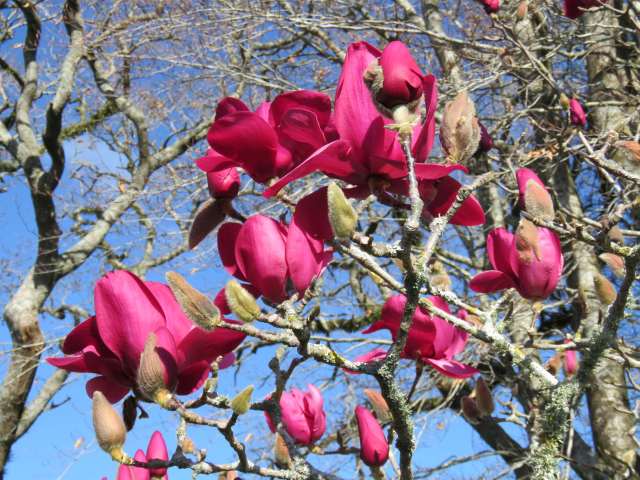
Magnolia ‘Vulcan’ this morning

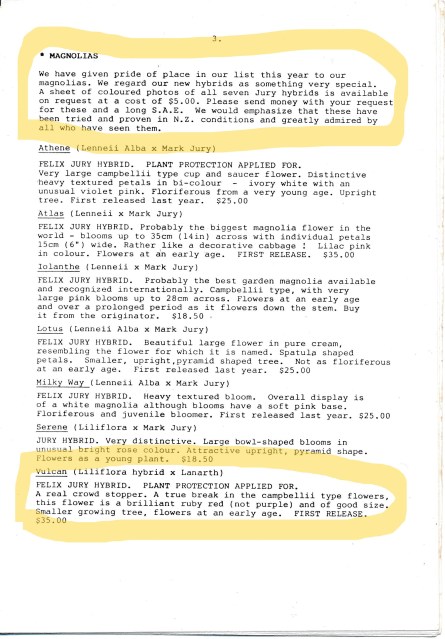
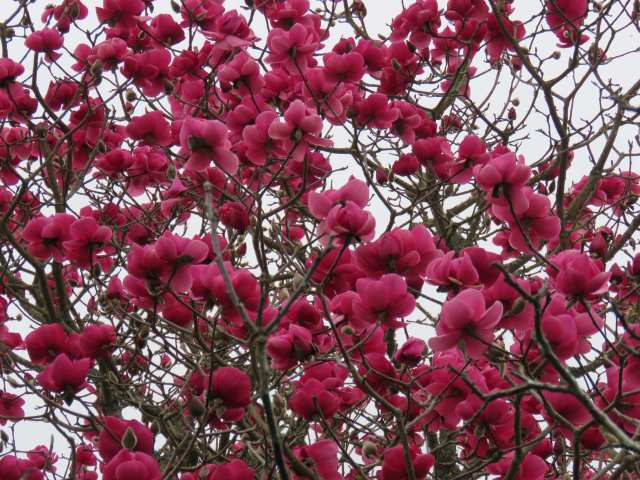
We first released ‘Vulcan’ in 1989, in that wonderfully under-stated way of that era. I don’t think we sent any plant material overseas at the time but bits of it soon winged their way around the world and the rest, as they say, is history. ‘Vulcan’ is not without its flaws. It flowers too early for frosty areas (as does ‘Lanarth’); it only achieves its density and purity of colour in warmer climates and even then tends to fade out to murky purple as the season progresses. But for its time, it was a breakthrough. It was the only plant we ever released that we could track its flowering from north to south of the country by the telephone calls we received. Even today, 35 years on, it is a showstopper at its best. I had two young tradeswomen painters in a couple of weeks ago and one of them asked me about the ‘black magnolia’ as she spotted the first buds opening, declaring she had never seen anything like it before.

Our mailorder catalogue from 1989

Felix didn’t go any further with breeding magnolias after ‘Vulcan’ but encouraged Mark in turn. And it was Mark who created the next generation which included ‘Black Tulip’ and ‘Felix Jury’.  Other NZ breeders followed suit – notably Vance Hooper and Ian Baldick.

It seems that ‘Black Tulip’ and Felix Jury’ have become two of the more significant breeder parents around the world. I see many, many red seedlings on international magnolia pages and they are clearly descended from those early red hybrids here.

Magnolia ‘Vulcan’

Felix named one red magnolia, Mark has named and released three but there is a fourth in the pipeline. We are hoping it will be ready for release internationally next year or maybe 2026. We describe it as a ‘Vulcan’ upgrade. It flowers a little later and has an exceptionally long blooming season and is a different hue of red, without a tendency to the purple undertones inherited from ‘Lanarth’. Solid colour and cup and saucer form which is our preference – it stands out here as good and we have high hopes for it across a range of climates. I won’t share photos until we have a release date.

Magnolia campbelli var mollicomata ‘Lanarth’

The new selection also traces its origin to the lovely ‘Lanarth’ in our park. That ‘Lanarth’ originated from a seed collection by plant hunter, George Forrest, in 1924 in southeastern China, near the Burmese border. Only three seed germinated back in the UK and this one was the best, named for the garden where it was raised in Cornwall. Those are quite long odds for what turned out to be such a significant plant.

While we may only have named and released four red magnolias from the Garden of Jury, with one more to come, we have many, many magnolias on the property that come from the same breeding lines. This lovely one that won’t be selected for release is another seedling from the batch that gave both ‘Black Tulip’ and ‘Felix Jury’.

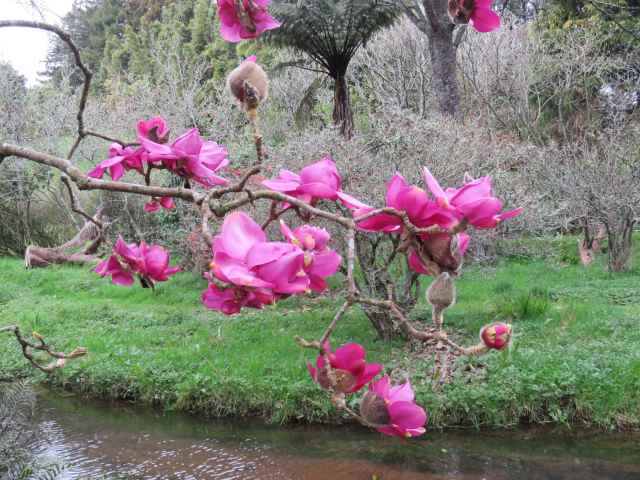
The colour purple. Magnolia Lanarth

Lanarth in all its purple glory

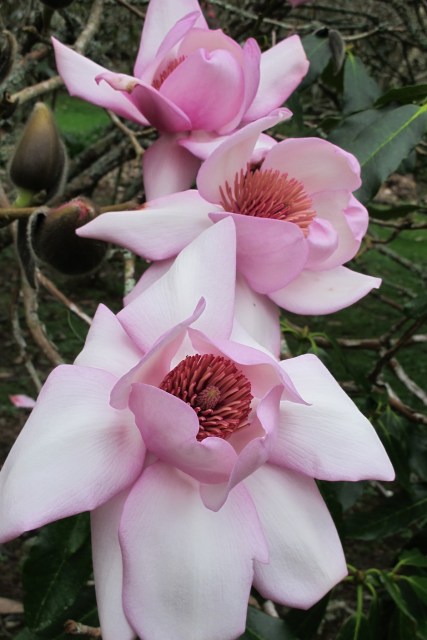
Ah, the colour purple. I have yet to see a purple magnolia that eclipses the glorious sight of ‘Lanarth’ in full bloom. That is Magnolia campbellii var. mollicomata ‘Lanarth’ to be precise, not to be confused with the pink and white Magnolia campbellii var campbellii about which I wrote last month. Same species but different variants.

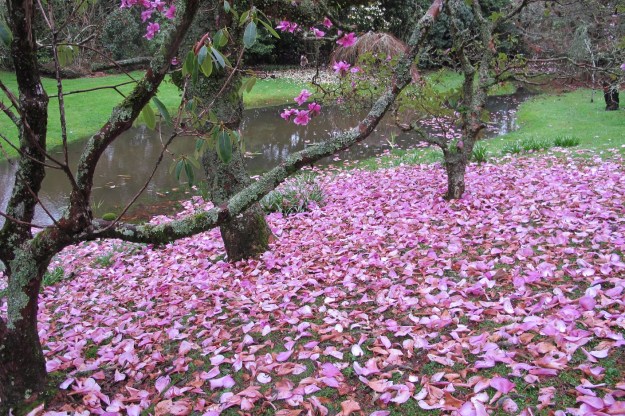
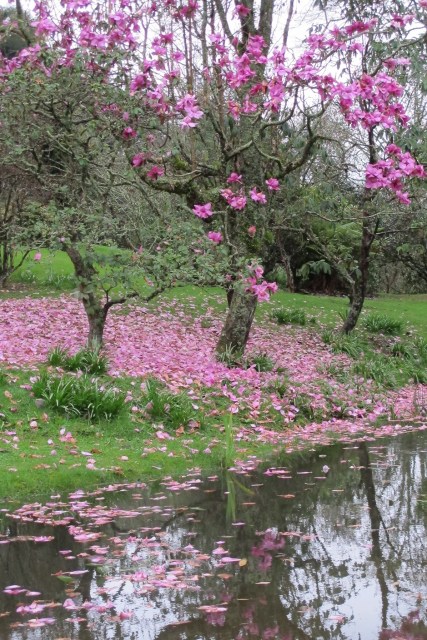
‘Lanarth’ is another example of a variety that belongs in every magnolia collection but, as a single specimen for the home gardener, it is not without its issues. Even if you can find one for sale – and it is not easy to propagate and get growing strongly – it is not what is known as a reliable, commercial plant. Its biggest problem is that it only sets flower buds on its branch tips. This means that all of them come out at once, giving a spectacular but brief show and a bad bout of spring weather can cut that display overnight. Modern hybrids are often selected for the plant’s ability to set flower buds down the stems so they come out in sequence over a longer time. We are happy to enjoy this species in its glory and I have a particular affection for what I call petal carpets. ‘Lanarth’ creates a wonderful carpet down by our largest pond.

Besides, this particular magnolia has a special place in our own family history. Mark’s father Felix imported what was meant to be ‘Lanarth’ in the early 1950s when first planting out the park area  here. It took some years to get large enough to flower and when it did, it was clearly something else. Enquiries from the nursery source, Hilliers in the UK, established that what he had was most likely a cross with M. sargentiana var robusta. They sent a replacement, grafted this time to ensure that it was correct and that is the plant we have growing as a splendid specimen. Felix named the earlier seedling for his youngest son and Magnolia ‘Mark Jury’ went on to be the not-so-secret Jury weapon in breeding a whole new range of magnolias. It is the father of ‘Athene’, ‘Atlas’, ‘Iolanthe’, ‘Lotus’, ‘Milky Way’ and ‘Serene’ and is also influential in the following generations of ‘Felix Jury’, ‘Black Tulip’ and ‘Honey Tulip’.

The true ‘Lanarth’ finally flowered here in the 1960s and it became the key to Felix’s best known success – the colour breakthrough from purple into red tones, first seen in Magnolia ‘Vulcan’. The rest, as they say, is history and New Zealand is now recognised internationally as the home of the best red hybrids. These days with the downstream breeding, the purple tones of ‘Lanarth’ are being eliminated in favour of purer red shades. Now it is the case that there are several  good red magnolias on the market, but no large, purple-flowered, garden-friendly improvement on the original ‘Lanarth’ that we have seen. It has been attempted. We just haven’t seen one yet that we think is as good as, let alone better than the original.
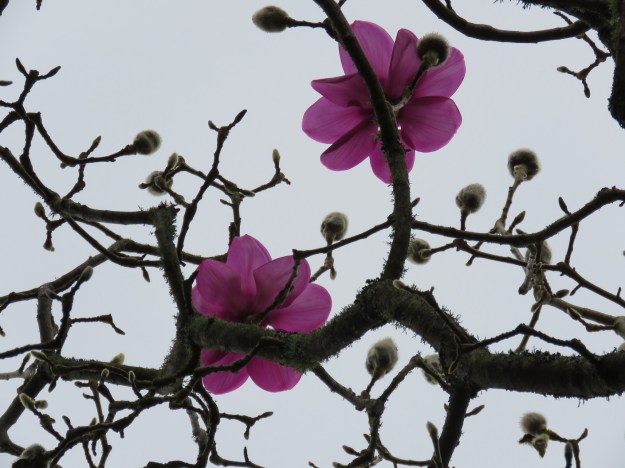
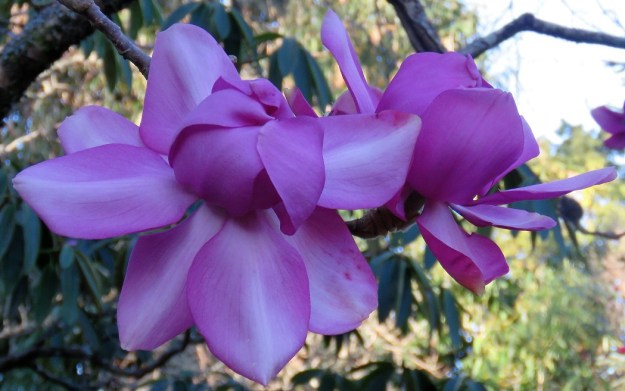
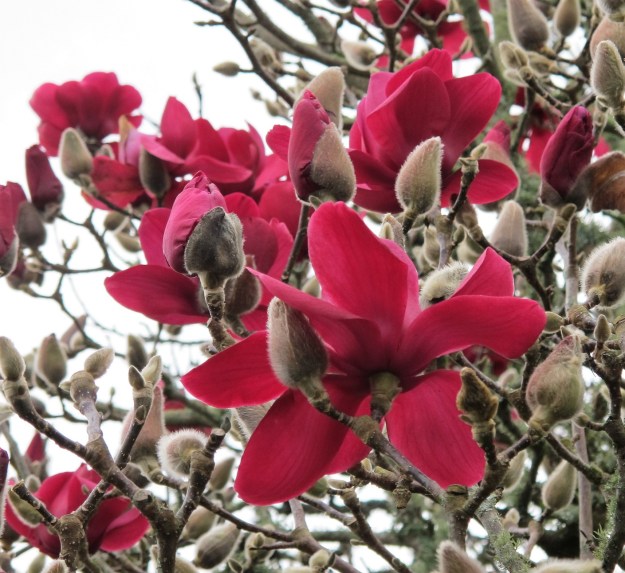
Looking up into the sky, the petals can take on the look of stained glass

‘Lanarth’ originates from a seed, one of only three that germinated from those collected by plant hunter George Forrest in southern Yunnan, China, near the border with Burma in 1924. There were other collections of Magnolia campbellii var. mollicomata around that time but most flowered pale. Being raised from seed, there was the typical seedling variation that one expects from these early specimens and ‘Lanarth’ was the stand-out plant, particularly in flower colour. In order to maintain the desirable characteristics of ‘Lanarth’, it is necessary to propagate subsequent plants vegetatively (not just to raise seed) – which means layering, budding or grafting because it is does not generally strike from cutting. So every magnolia named ‘Lanarth’ should be a genetic carbon copy of that first plant that was raised in the garden of the same name in Cornwall. Raised from seed, there is no guarantee that it will be the same as ‘Lanarth’ and it then goes back to its species name of M. campbellii var mollicomata.

There is always something to learn and we had not realised that Magnolia ‘Charles Raffill’ is a cross between the two different species of campbellii – that is var. campbellii and var mollicomata (though a paler form) so it is still technically a species, not a hybrid. If that is as clear as mud, then just accept the glory of purple ‘Lanarth’ for what it is.

The pollen of Lanarth is in the genes of the red Jury magnolias

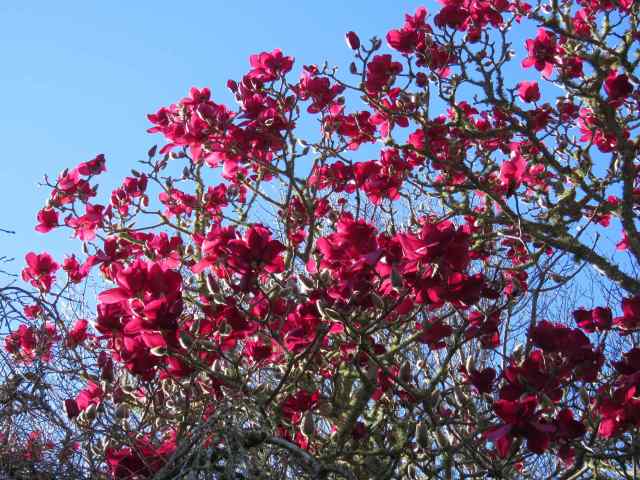
It was Lanarth that enabled the colour breakthrough to the reds – in this case Vulcan looking at its very best

Magnolis ‘Mark Jury’ is thought to be half ‘Lanarth’ in its genes and has been a brilliant breeder parent.

First published in the August issue of New Zealand Gardener and reprinted here with their permission.

Lanarth by our big pond