
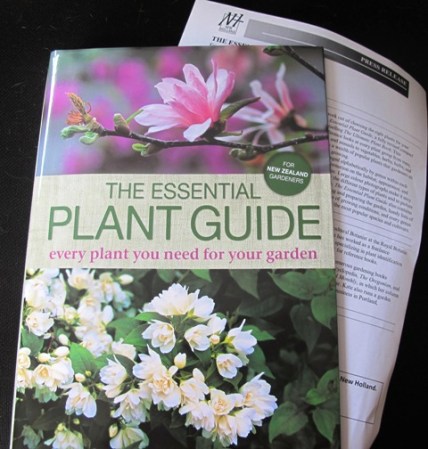
 The subtitle of this large book is “Every plant you need for your garden” and the cover, presumably generated specifically for the NZ market by the publisher and the NZ distributor, New Holland, boldly states “For New Zealand Gardeners”. It isn’t. The authors are Australian and American and the text has not been adapted for NZ conditions which are very different. Including plants like meconopsis (which will seed down and naturalise, don’t you know?) and trilliums as great garden plant options is problematic. There are reasons why you don’t see many crepe myrtles (lagerstroemia) growing in this country (they need hot, dry summers) and cornus are not great in the mild north and mid north. Arisaemas – we know quite a bit about arisaemas here. A. sikokianum is incredibly difficult to keep going as a garden plant but that is at least better than the recommendations for some which we think aren’t even in this country. Recommended camellia and rhododendron varieties are often (mostly?) ones more popular in the authors’ home countries and are not the NZ market choices. I would not be sure that they have all been imported to NZ, let alone in production.
It is a nice looking book which runs to over 800 pages. There is a double page spread on most genus, cheapened by the ubiquitous “Top Tips” which sometimes aren’t. The organisation into sections (trees, shrubs, fruit trees, cacti and succulents, orchids etc) makes it a little clumsy to use. Ferns are lumped with palms and cycads.
The bottom line is that a book for NZ conditions would take into account what performs here and what is available here. This is just a generic plant reference book with no specific application to gardening in this country.
The Essential Plant Guide by Tony Rodd and Kate Bryant (Global Book Publishing; ISBN: 978 1 74048 035 2).
First published in the Waikato Times and reprinted here with their permission.
 While I am a big garden specialist, I recognise that the allotted outdoor space for most people is getting ever smaller and tiny urban sections, teensy courtyards or even a balcony is now the lot for many. This is an excellent book of ideas for those who want to make the most of turning small outdoor areas into attractive living spaces.
 Twenty three gardens by twenty one New Zealand designers – this book has certainly prompted a great deal of discussion here over the past couple of weeks. There is a heavy bias towards high budget properties with stunning views in or around Auckland, often with hard-edged modern, architecturally designed houses. The response is dominated by hard edged, angular gardens, pared back planting schemes largely stripped of colour and heavily dominated by native plants. Water features and swimming pools abound, usually with wet edges of the infinity style (so that the body of water melds into the sky or sea in front) and sometimes with the water lapping at the walls of the house. Generally, there is little evidence that the property owners want to garden themselves. Most want an exterior which will complement their homes, their lifestyle and, apparently, the environmental context of the property.
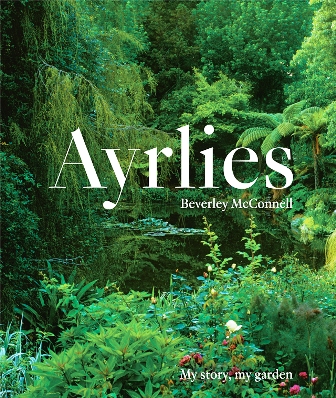 The subtitle of this book is “My story, my garden” and that pretty much captures the flavour. These are Bev McConnell’s memoirs and as both the author and her garden reach maturity, the timing seems entirely appropriate. Her garden, Ayrlies, is located at Whitford, south east of Auckland and over the past 40 years, both the garden and the gardener have earned a leading position. This is a book about a garden, not a gardening book as such. The author writes about her own experiences and while there is wisdom and advice contained in the text, it is not a manual or a reference book.
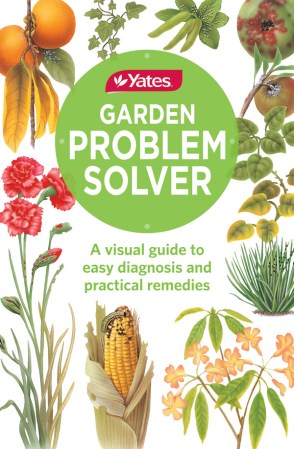 This is a handy reference book for diagnosing many common problems in the garden, predominantly of the pest or disease variety. It is reasonably comprehensive though not encyclopaedic. Each ailment is given a brief description, usually with a clear illustration, and then advice for dealing with it or avoiding the problem happening again. I like the fact the illustrations are paintings, not photographs because it gives a much clearer picture. I also like the fact that not every recommended treatment involves buying a Yates product. So when spinach bolts to seed prematurely, the advice is that this can be caused by long days, summer temperatures, dry conditions and overcrowding. Sow summer spinach (well, ‘Summer Supreme’ actually – presumably one of Yates’ own). There is a fair amount of handy general information which is not commercially driven, though the organic section is pretty perfunctory. That said, we are talking an interventionist approach to gardening and where products are recommended, they are branded Yates products – it is their book after all. We double checked the ingredients of branded sprays and the in-house expert here gave the advice a general thumbs up for accuracy. I am a bit suspect about spraying cheap annuals like pansies and hollyhocks. I am more of the view that you rip out diseased plants and try a different strategy with replacements but if you are an older style gardener who reaches for the sprayer at the drop of a hat, at least you will have a diagnosis and know which spray to use.
 Tikorangi The Jury Garden