

Not Duquette’s garden. Just a photo from a NZ garden I have in my files.
Mark and I were sitting watching Monty Don’s series on American gardens when he came to the garden of the late Tony Duquette. Think Hollywood in the 1940s and 50s, a flamboyant set decorator, costumier and interior designer with extreme, international magpie tendencies who crammed much of what he collected into his own, quirky garden. Google him if you want to know more. Monty Don referred to some of it as being cobbled together with ‘cardboard and string’.
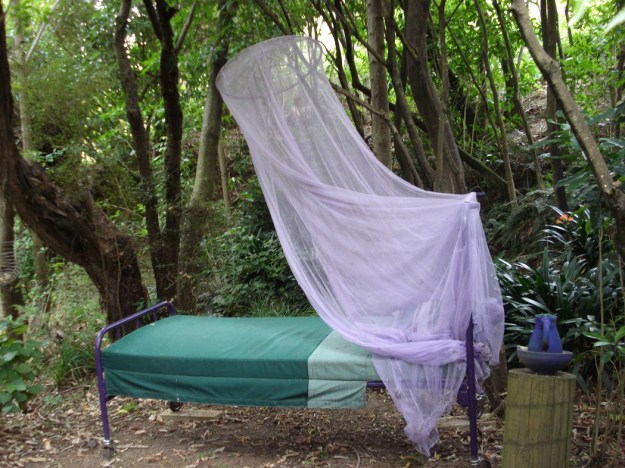
Not The Laskett, either. Just another example from a NZ garden
It started me thinking about those who approach their gardens as a theatre set. We have never been to The Laskett, the much-acclaimed UK garden of Sir Roy Strong and his late wife, Julia Trevelyan Oman. It too, comes out of the land of theatre design, I understand. It is not a garden style that we feel an affinity with so we tend to seek out other gardens when we travel.
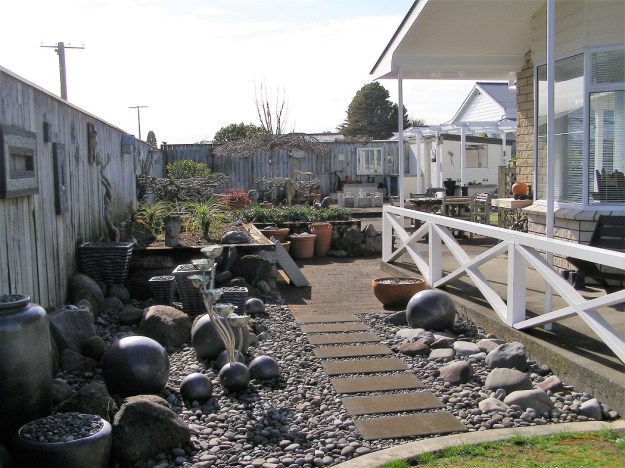
A much loved local garden that belongs to Sue
But it is a style that some people enjoy. At its best, it may be described as quirky, eclectic, imaginative, flamboyant. At its worst, tacky, veneer gardening. I shall try not to be judgemental. It is just that at times, I wonder how very different set design in acclaimed gardens is from the folk art that abounds in some of the more loved gardens in my local town. They seem to me to be on the same continuum, at times distinguished as much by social prestige, acreage and financial resources as by flair. Some people just really like heavily decorated gardens.

The D.I.Y trompe l’oeil, constructed from trellis timber
I think what worries me at times is when this theatrical approach to garden design and ornamentation brings rather too much of the two-dimensional, temporary nature of the theatre into the garden. I prefer gardens where features are well made, substantial and underpinned by quality. The 10cm deep pond lined in plastic is never going to delight me like a well thought-out pond, constructed from permanent materials where consideration is given to its longevity and sustainability. More substance, less illusion. Preferably not constructed out of tanalised plywood, either, and three dimensional as befits its outdoor setting.
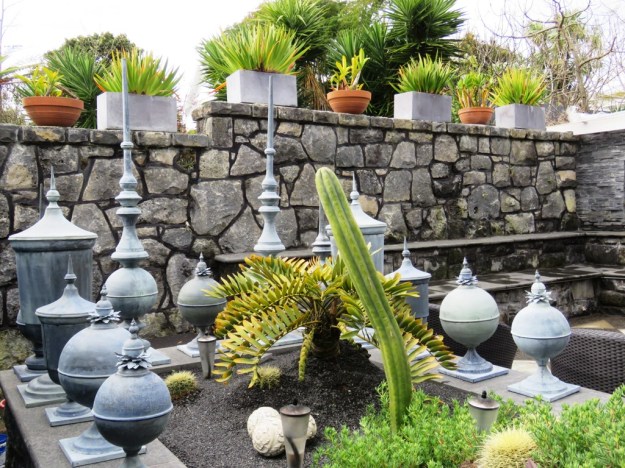
Not for the faint-hearted, the Dawson garden
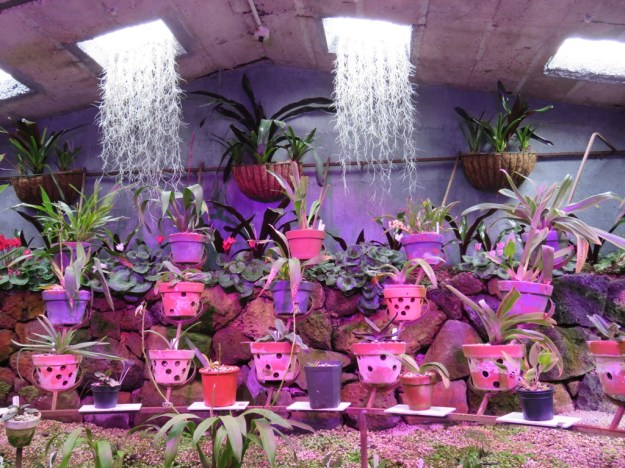
The orchid theatre, based on the auricula theatre and it certainly was… theatrical
That said, the one theatrical garden that did surprise me and make me laugh out loud is in Auckland. Or it may be ‘was’, in the past tense now. When I last saw it, it was on the market and it was such a very personal garden that it is hard to imagine new owners coming in and leaving it in the same state. The first time I saw it, it was a private visit with its creator, Grahame Dawson. The second time I visited as part of a busy garden festival. The place was jam-packed with visitors and the two owners were leaping around, hosting with the most. It was indeed like watching energetic producers directing a cast of many in a theatre scene.
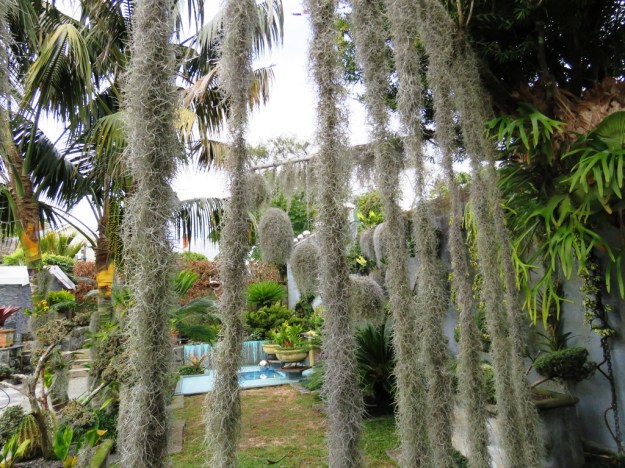
The theatre curtain in tillandsia
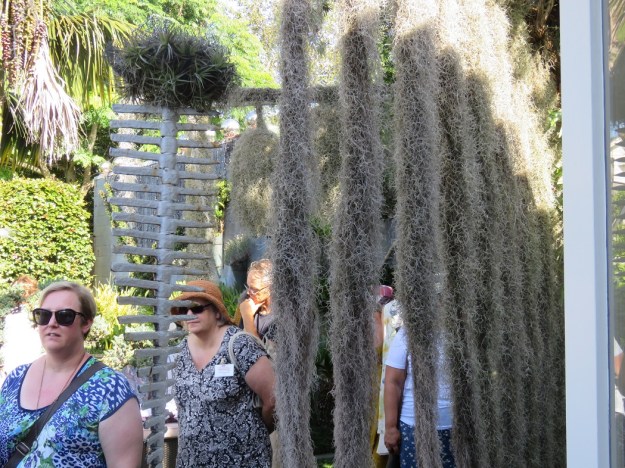
There was such a crush on the second visit that this was the only photo I took
What set the Dawson into a different class for me was the underpinning quality. Yes it was quirky and individualistic. But it was executed with attention to detail. It was solid and three dimensional, a garden designed to be lived in and enjoyed by the owners and their friends, not done for show. To me that matters but others may be perfectly comfortable with the ephemeral nature of theatre set design in a garden.
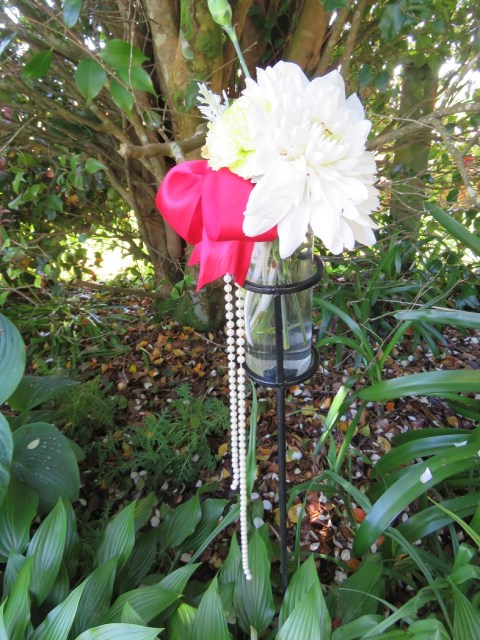
Sometimes, theatrical touches can fall short. NOT from the Dawson garden.

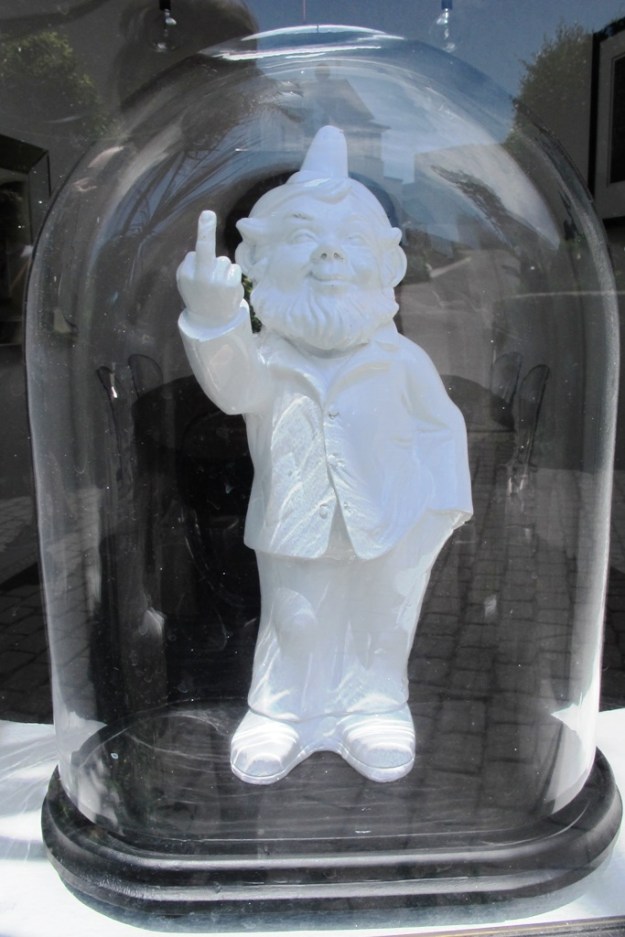

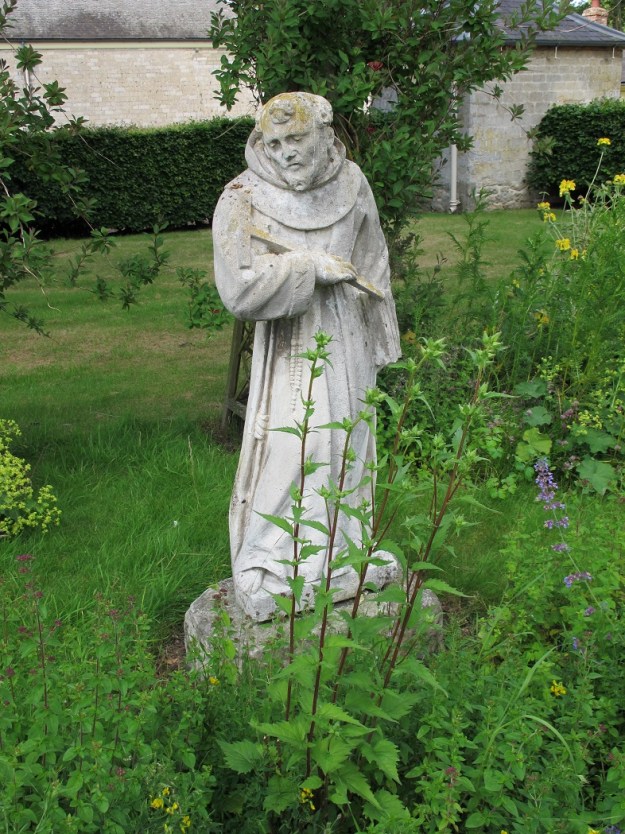
 Godwottery! A friend gave me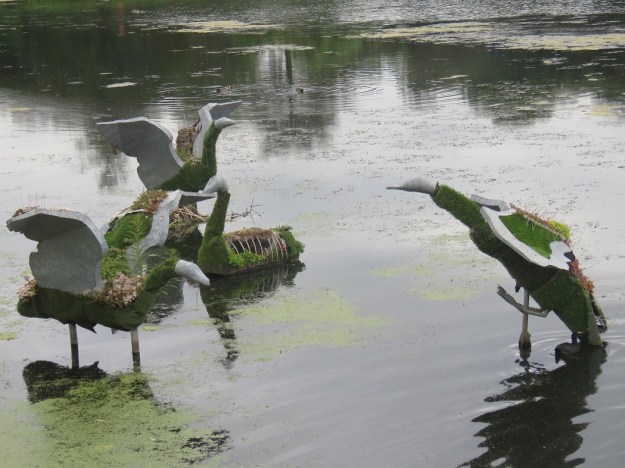


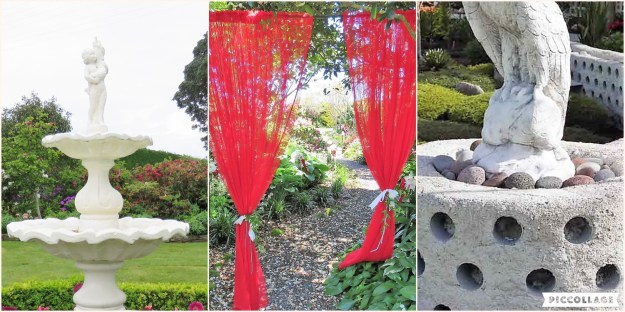
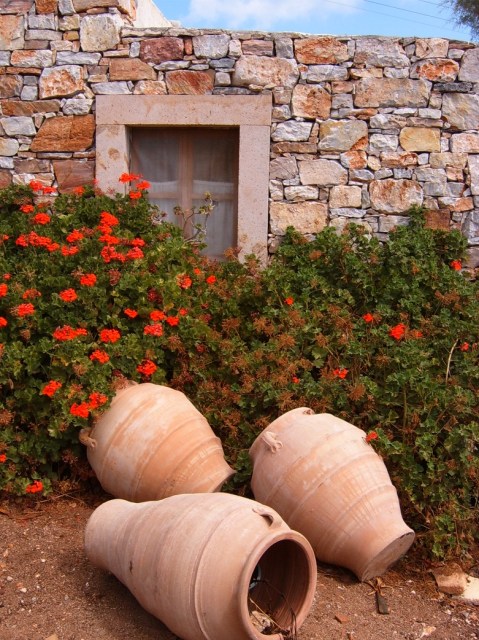 These are the genuine article when it comes to terracotta urns – Greek oil jars. I spotted them just lying about looking absurdly decorative out the back of a shed on a tiny island just off Patmos. It was not until I saw Greek oil jars that I ever considered the different shades of terracotta that come depending on the local clay. On the eastern isles, the terracotta was quite pale with a white powdery finish which I find much more attractive than the more usual orange shades. If I could have shipped some lovely oil jars home, I would have.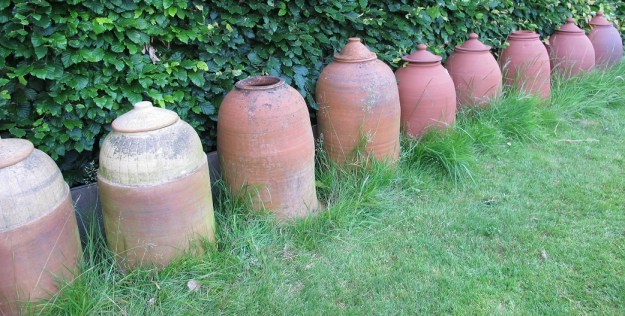
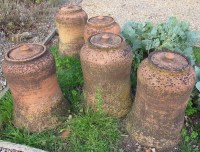 Hardly urns, but a handy segue on how attractive older utility gear can be, forcing pots, just hangin’ about waiting to be used again in the vegetable garden. Placed over vegetables that need blanching (rhubarb, kale, white asparagus, celery and the like) they produce more tender shoots. We saw them in more than one English garden. I think they are available in New Zealand but with a hefty price tag that will ensure they are used as ornament, not their designated purpose.
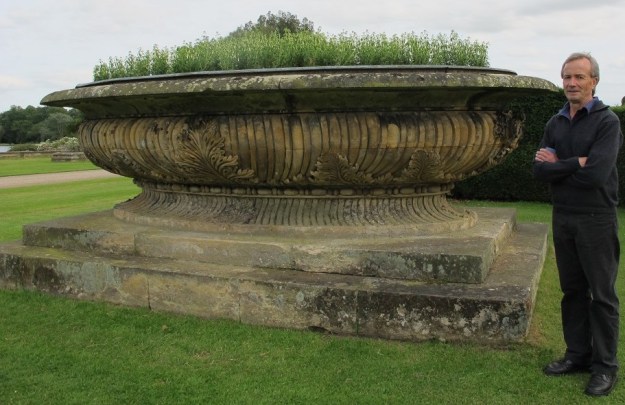 If you are going to have an urn, or a font, maybe, and have a property that is of a suitable scale, then you might as well make it a B I G one. This is at Castle Howard in Yorkshire with Mark standing beside it. I am not sure what is growing in it but it did not really enhance the Experience of the Urn. It may have been more effective left empty.
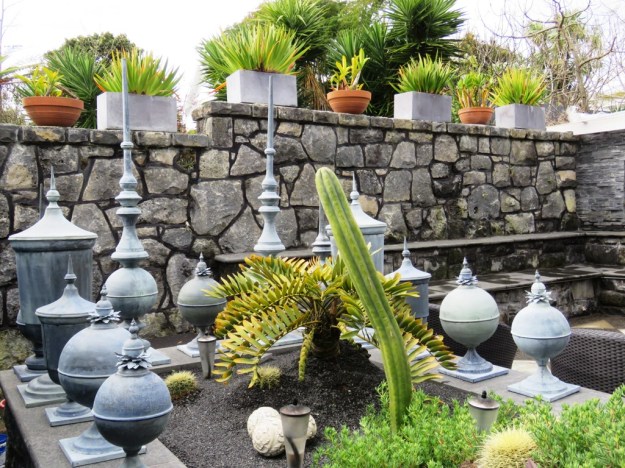 When it comes to lidded urns that bear a slight resemblance to a certain style of funeral urn, the same principle may apply. If you are going to have one, it may well look considerably more dramatic if you have many, as in this interesting and contemporary small Auckland garden.
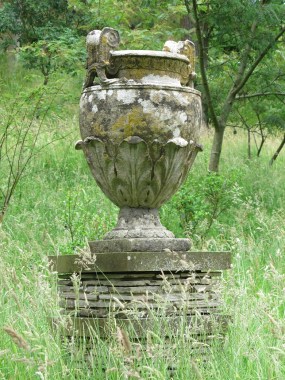 Still with the greys, these two handsome urns are from Arabella Lennox-Boyd’s garden at Gresgarth. The squatter pot was nestled into the garden by the stream, making a charming scene to be viewed at close quarters. The use of a plinth makes the taller pot a statement all on its own. I admired it enormously, even more so in its understated meadow setting.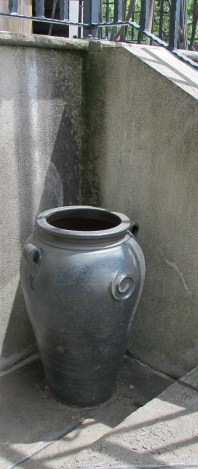
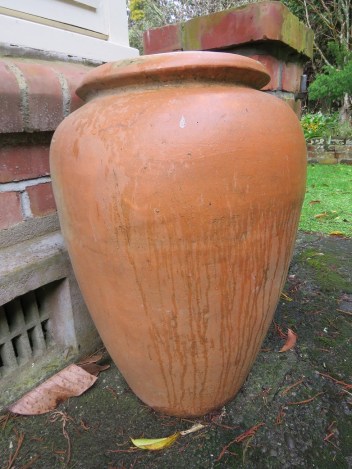
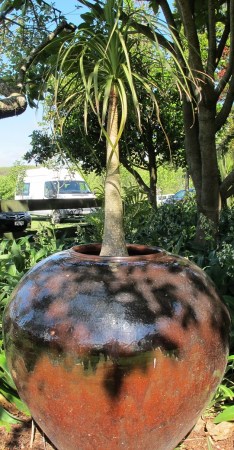
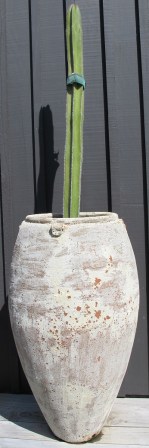 I feel some gardeners haven’t quite taken on board the message that some pots are sufficiently elegant to exist simply as a decorative pot, without a plant in it. Very deep pots can drain poorly – some even come without any drainage holes in the bottom at all – meaning that the roots are going to be very wet all the time. A tall pot on a narrow base is not the most stable design. Adding in a tall plant will make it even more top-heavy. Further, to keep container plants healthy and growing well, they really need to be completely repotted in new mix at least every second year, if not annually. Getting a plant out of a pot with a narrow top is a mission and usually involves either damaging the plant or breaking the pot.
 This modern urn filled with copper foliage (posssibly a cirsium -one of the ornamental thistles) sat on a plinth in an otherwise austere setting – the stable yard, I think it was – in a private Yorkshire garden. One of a pair or maybe even more, I am sure they were not cheap to buy but they were very effective. I thought from one of my photos that they were marble, but looking at the others, it appears they may be a composite stone that is made to resemble marble and the run-off from the copper is giving a subtle patina over time,
 Nobody does cheerful urnage like the Spanish and the Portuguese. At least nobody that I have seen. I photographed these two in Seville because they were so shamelessly flamboyant. The amazing thing is that these pots can be placed in a public area and not be smashed as they would likely be in this country. But honestly, I think it is very difficult to transfer this sort of decoration away from that bright light and cultural context of southern Europe without running the dire risk of it simply looking, well, vulgar. The only time I have seen something similar done successfully was by Lynda Hallinan in Auckland. Her elaborate pot sits empty, you will notice (filling it would really be over-gilding an already gilded lily), nestled in amongst lots of foliage and flowers where it caught my eye.
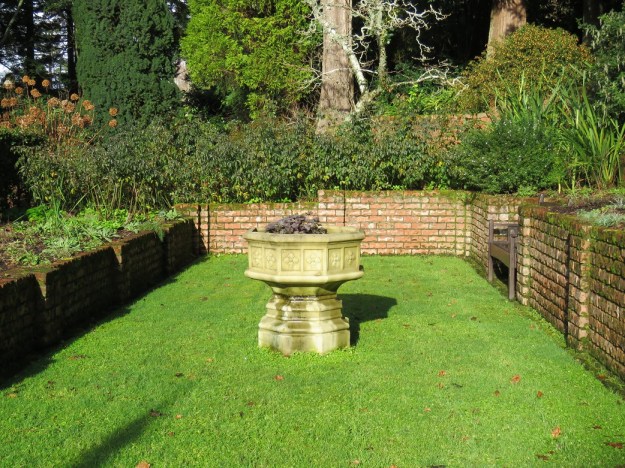 And the modern take on the baptismal font? This is in the middle of the raised beds at Tupare Garden in New Plymouth. I am not sure it is a good enough piece to take centre stage. It may have looked more at home were it in grey stone but that sort of modern take on mellow Cotswold stone is not so much at home across the world. But I guess it comes down to personal taste.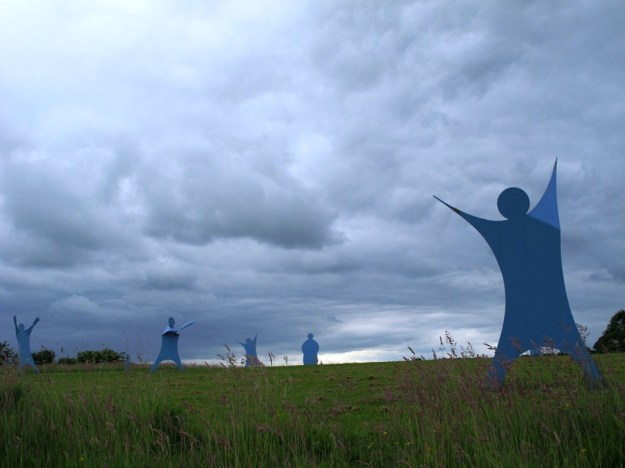
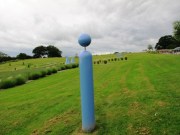
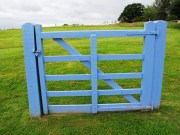
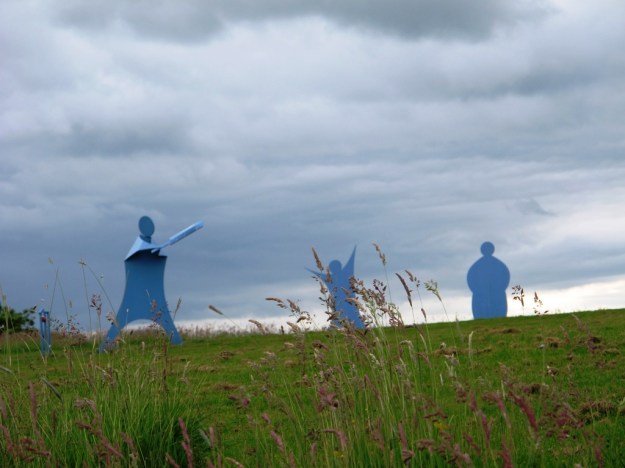 Maybe it was our national cricket team playing in Yorkshire that brought this scene back to mind. I photographed it at Yorkshire Lavender near Terrington, about this time last year. I was greatly charmed at the time. It was set on top of a small hill with a big sky and big vistas. I admit I like cricket – well, I like it when our team is winning and they did win the test match a few weeks ago – but it was the large scale whimsy that I appreciated with this scene.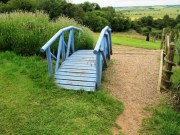
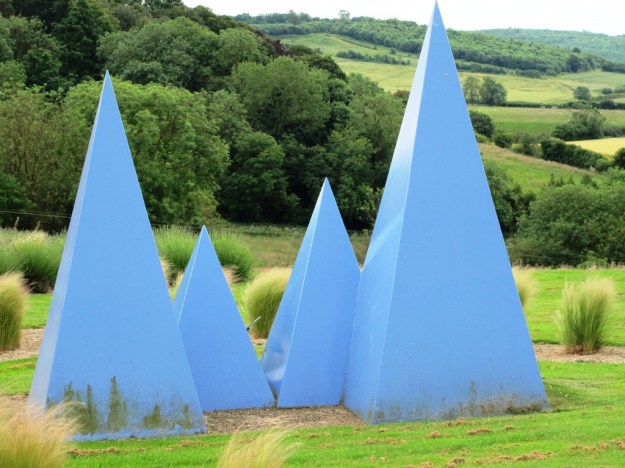
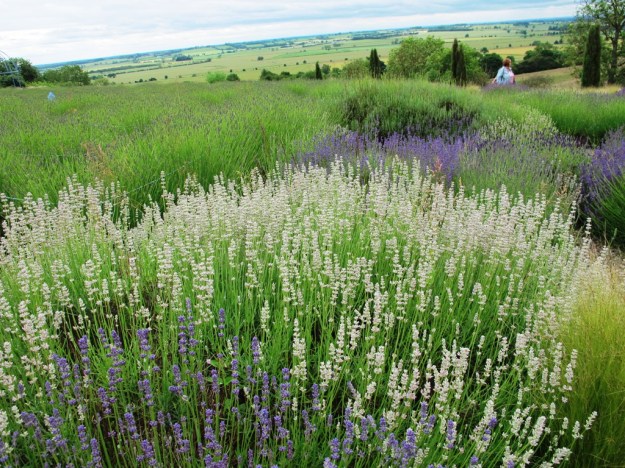 I like lavender. I really enjoy the open fields of lavender which are so evocative of a different climate. It is not a plant for our fertile conditions with high humidity and high rainfall all year round. I have just one plant left and it lurches on from year to year, clutching at the remnants of its life. I liked the way Yorkshire Lavender didn’t just keep to lavender but were extending into the New Perennial style as well with their mixed plantings and the mandatory grasses.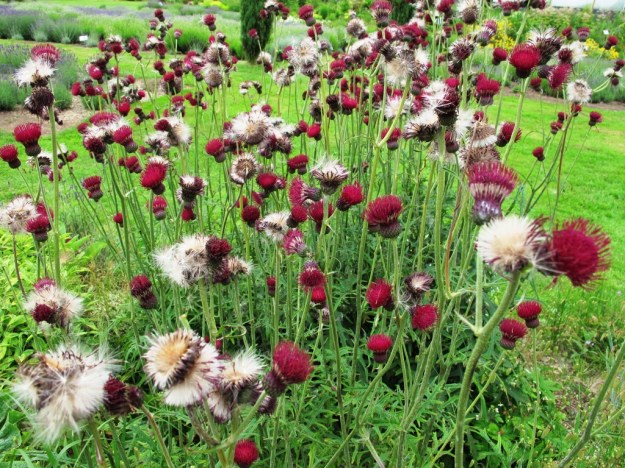

 Tikorangi The Jury Garden