
• I am reliably informed that the autumn colour in colder inland areas is at its very best. The sudden cooling of temperatures in March followed by a long, dry and calm autumn has resulted in a splendid display. If you are wondering why we never get great autumn colour in coastal areas, it is because we lack the sharp seasonal changes which trigger deciduous trees to colour before dropping.
• Cleaning up fallen leaves and spoiled fruit from under your fruiting trees helps to reduce pests and diseases which can winter over in the debris. This is particularly true with apples and pears. Lay a blanket of compost after the clean-up to suppress weeds and to condition the soils.
• If you are wondering how to prune your raspberry bushes, we will do an Outdoor Classroom on this shortly. While timing is not critical, it is easier to see what you are doing when the leaves have dropped. The rule of thumb is that you remove all fruiting canes from this summer and just keep the new canes.
• Finish the autumn feeding round as soon as possible. While evergreen plants don’t go dormant like deciduous plants, their growth slows right down over winter which slows their ability to take up fertiliser. There is no point in feeding deciduous plants which are dormant or in the process of going dormant.
• Despite being horrified at the price and initially suspicious of an approved organic spray for aphids, Mark was pleasantly surprised to find that Yates’ Nature’s Way did actually work on the swan plants – killed the aphids without affecting the monarch caterpillars at all though it needed repeat applications because it is nowhere near as powerful as the pyrethrum based sprays. On the other hand, the Tui product, Eco-Pest, which is primarily canola oil, had absolutely no effect at all on the aphids when applied at the recommended dosage.
• Most gardeners will be looking at some pretty sad and leafless tomato plants by now. Unblemished tomatoes can be ripened off the vine so harvest these now and keep in an airy, light place to ripen. Gather up all the spent tomato plants and leaves and dispose of them in the rubbish or by hot composting to reduce fungi spores wintering over. I see the advice from Andrew Steens in the Weekend Gardener magazine is to put such diseased foliage on your lawn and then run over it repeatedly with a mulcher mower to chomp it up and leave it to feed the worms in your lawn. This of course assumes that you not one of those ecologically challenged types who kills out the worms in your lawn to preserve a better green sward.
• Some time ago, I wrote a glowing review of The Artful Gardener by Rose Thodey and Gil Hanly. I see it has been reduced from $60 to $25 on special at Touchwood Books (www.touchwoodbooks.co.nz). It was worth its original price, let alone the reduced price.
Tag Archives: garden diary
In the garden this week: April 9, 2010
- Autumn is well and truly here so the summer hiatus in the ornamental garden is over. This is a splendid gardening month. Our temperatures should stay mild well into May so there is some time left in the growing season for plants to settle in. It is a better planting time, as used to be traditional, than in the spring because the plants can establish themselves and prepare to put on a show as soon as the weather warms after winter. Spring is the planting time for very cold climates and none of Taranaki ranks as very cold by international standards.
- If you have been intending to plant a few fruit trees or even an entire home orchard, get out to the garden centres now and see if they have the plants you want in stock yet. However, don’t be like Mark who has already purchased many fruit trees and bushes in anticipation of his new orchard but alas the space has not yet been made available as there is still the remnants of a nursery in it.
- Make sure you buy grafted or budded walnut trees and avocados. Seedlings are a waste of time and space. Walnuts are by far the most widely successful nut in our climate. If you want to try macadamias, keep to grafted named varieties and remember they come from warmer climes so you have to live in our temperate coastal strip and to give the trees maximum warmth and shelter. Walnuts are a great deal hardier and easier to get out of the shell for the home gardener.
- Plant hedges. Plant trees. Plant shrubs. Plant bulbs. Don’t forget the anemones, ranunculus and tulips you may have chilling in the fridge.
- Divide clumping perennials without delay. They will settle in nicely and start re-establishing themselves so as to reward you earlier in spring and summer.
- Don’t delay on sowing new lawns or over sowing bare patches in existing lawns. The grass needs to germinate and get established before growth slows down in winter.
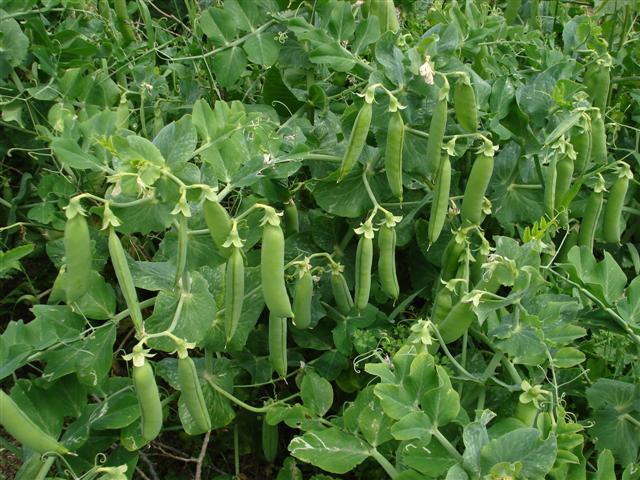
Plant peas now in the hope of a super crop later
- Continue with the autumn feeding round on ornamentals but get this done as soon as possible so the plants have a chance to take it up into their systems. Slow release fertilisers are designed for container plants not for general garden use and they are a great deal more expensive. Keep to the cheaper all purpose fertilisers for spreading on lawns and gardens – blood and bone, nitrophoska blue and Bioboost types. Good compost is also nutritious.
- You can sow peas now for a change from brassicas and green leafy veg. Continue the autumn clean up in the vegetable garden, removing all diseased foliage from the site to break the cycle of re-infection. Sow down bare areas in a green crop. If you just leave it, the weeds will make a green crop but you are building a major problem for next summer when the weed seeds in the soil will explode exponentially.
In the garden: April 1, 2010
- If you have harvested potatoes with a nasty brown split and blemish inside tubers which look perfect from the outer (our Agria are particularly badly afflicted this year), Plant Doctor Andrew Maloy says the most common cause is a fungal blight. As the spores remain active in the soil, make sure you plant your potatoes in a new area next time where you have not grown solanums (potatoes, tomatoes, aubergines, capsicums etc) for several years. Fungal diseases are exacerbated by heavy soils, too much water and too little air movement so free drainage, full sun and space will reduce dependence on fungicides.
- Easter, like Labour Weekend, is a big time for garden centres – long weekends and the change of seasons gets people focussing on gardening. Quite often there are clearance sales of last season’s woody plants and if you are tempted by these, they may need some TLC to thrive. Water, water, water to combat our dry soils. Make sure the root ball is saturated because if it is very dry it can actually repel water, even after planting. That is why you soak the root ball before planting. Cultivate the soil well – don’t just dig a hole that fits the plant. Dig at least twice the size and break up clods of dirt well so the roots have some good soil to extend into. Make sharp cuts down the root ball if it is really congested, cutting through any roots which have wound round and round the pot or bag. Cut the bottom of the root ball if it has folded in to its planter bag (like an envelope). Resist the temptation to tease out the roots – you will do more damage than good. Put any fertiliser around the roots at the side, rather than sprinkling on top and mulch with compost.
- Sow your new lawns this weekend and over sow bare patches in existing lawns.
- It is time to do the big autumn clean up in the vegetable garden. Remove any badly blighted or mildewed plants altogether to reduce future infestations. Don’t dig them in and only compost them if you are very confident that you make a hot compost mix. Ditto any seed heads.
- Save seed of crops as you harvest – beans, peas, corn, tomatoes, capsicums, melons etc. Most experienced veg gardeners agree that saving your own seed is a most satisfying part of the cycle. Always save the seed from the very best, strongest, healthiest specimen not some poor thing that is hardly worth eating.
- There was an alarming news item at the weekend to the effect that fresh fruit and vegetable sales dropped by over 30% during our latest recession. While I hoped that this might be an indicator that more people were growing at home (it is enormously satisfying to walk briskly through the produce section at the supermarket without needing to stop because you are self sufficient), the fact that takeaway food sales increased massively tends to suggest this is not the case. So be virtuous and get out to the garden this weekend to plant winter vegetables while there is still a month or longer of warm weather to get them growing. All the brassica family except Brussels sprouts, winter leafy greens, broad beans and even a late crop of beetroot can be planted.
In the Garden: March 19, 2010
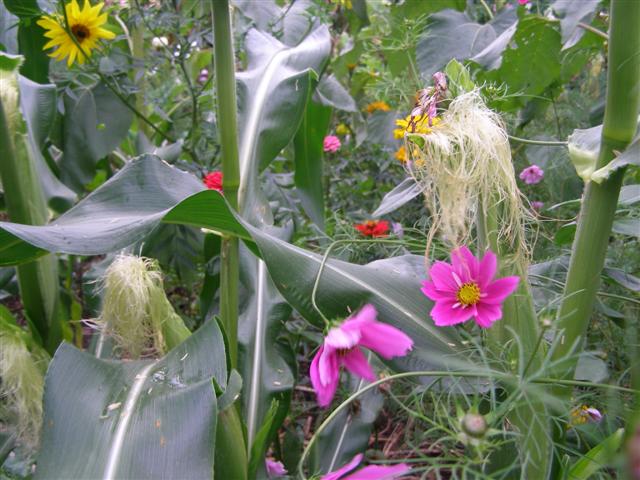
The rows of corn in the garden are interplanted with food for the butterflies here
- The push hoe is an invaluable tool but one best used in dry conditions when severed weeds can be left on the surface to wither. This means that our current dry early autumn conditions are still a good time to do a push hoe round. This week’s rain has only penetrated the top centimetre or so of the soil here and unless we get some gentle, steady rain over a few days we will remain dry a while longer. Hoeing also gently tills the soil and discourages the build up of liverwort and moss which you see on compacted ground. Keep your hoe sharp for best results – using a file on it is fine.
- Naturally everybody has heeded our oft repeated advice and rushed out to plant brassicas in abundance for winter. Keep an eye on the white butterflies which may be hovering around your plants and laying eggs already. The hatching caterpillars will wreak havoc on your baby plants. They will be less of a problem when colder, wetter conditions set in but you may need to take action now. If you don’t wish to use a proprietary insecticide, you can resort to common flyspray for a quick hit or one of the organic based oil sprays (up to 10 ml of light cooking oil and a squirt of detergent per litre of water). Thuricide is a bacterial spray that attacks the caterpillar gut and is effective and selective (only attacks the one target) – you can buy it from your garden centre. If you have a really heavy infestation, you may need to spray and then cover your crop with old net curtaining to prevent reinfestation.
- If you have cauliflower or broccoli maturing already, bending the outer leaves over the head is the practical and time honoured means of stopping sun burn on the edible portions.
- Start the autumn feeding round now while plants are still in growth and can absorb the nutrients. It is a waste of time and money to feed when conditions are cold in winter and plants are dormant or semi dormant. More is not better with fertiliser and if conditions are too dry, it can burn the foliage so keep to recommended application rates and preferably spread it immediately before rain.
- It is trimming time for formal hedges. We plan an Outdoor Classroom on the topic next week.
- It should be safe to sow grass seed for new lawns now although you may have to get the hose out if we get another dry spell. What you don’t want to happen is for the seed to germinate and then fry in sunny, dry conditions so keep an eye on it.
- We are enjoying a fantastic crop of sweet corn here and Mark, who harvests it only as required so it is a matter of minutes from being picked to being cooked, is warning that there is a veritable deluge of corn to come over the next two to three months. This compensates for the lack of onions and water melons this season.
In the garden: March 19, 2010
- Don’t be tempted to sow lawns until we have quite a bit more rain and the moisture has penetrated deeper down. If you scratch around the soil, you are mostly likely to find that it is as dry as a bone a few centimetres down. However, the more work you do getting the ground levelled and taking off successive waves of germinating weeds, the better your lawn will be when the grass seed germinates. We favour a mix of fescue and rye for lawns here though in reality there are now many other micro greens in our grass. We try and keep out flat weeds, onehunga weed, kikuya and paspalum but beyond that, as long as it is green when mown, we are resigned to our mixed colony. We prefer that to the constant application of chemicals necessary to maintain a pristine lawn.
- Root vegetable crops take longer to grow and mature so you have pretty much missed the boat on winter root veg but you can still plant the leafy harvests such as winter spinach, silver beet and winter lettuce along with the brassica family. It is the leafy crops which require most fertiliser so be generous with the compost or liquid feed. Vegetable gardening is like any form of cropping – you can’t keep taking harvests and expect the soils to remain fertile unless you keep feeding and replacing the goodness that is being stripped out. Using composts, green crops and manures is more sustainable than continually relying on proprietary fertilisers and also helps to build good soil structure and texture.
- Compost chicken manure before use because when fresh, it can burn plants. If you don’t want to compost it, at least leave it until it is mature. Seaweed can be spread directly onto the soil and does not need to be washed first. Horse, cattle, pig and sheep manure can be spread directly on the soil. You may prefer to compost all fresh manure or leaving it to dry for several months before spreading around edible crops.
- If you are not planting all your area in winter vegetables then plant a green crop as you take out the autumn harvests. At this time of the year, we recommend lupins, oats, ryegrass or mustard. We are trying vetch for the first time. You should avoid using lupins where you have been growing beans or peas because they come from the same legume family and it is wise to rotate crops.
- As cooler temperatures set in, mice will start to migrate indoors so make sure you have any seed you are storing in rodent-proof conditions.. A disused fridge in the shed is good or plastic containers for smaller quantities. However, while rodent proofing is necessary, some seed, including fleshy types, do not want to be sealed off from all air so you may need to devise some compromise if the plastic containers have a tight seal.
- If your strawberry plants have put out strong runners, these can be planted now to give vigorous cropping plants next spring. Strawberry plants are best replaced entirely every two years and some gardeners replant every year, using runners and divisions. If you plan to leave existing plants for another year, cut any runners off.
- If you enjoy the mass display of annuals, you can sow seed now for an early spring show. Pansies, cineraria, alyssum, lobelia and snapdragons are all easy and reliable. Hollyhocks get badly mildewed in our climate, alas. Some perennials such as aquilegia, wallflowers, carnations and gypsophila can also be done easily from seed. Use seed trays for much better results. Don’t delay on taking cuttings of perennials and fuchsias. Hydrangea cuttings are best left until winter now and treated as deciduous cuttings.
 Tikorangi The Jury Garden