Tag Archives: garden diary

In the garden, February 5, 2010

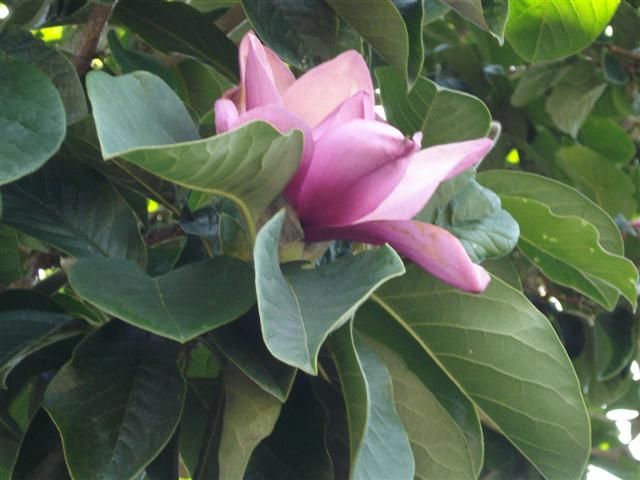
Some deciduous magnolias repeat flower in summer - this one is Apollo

  • If you have deciduous magnolias which have flowers on them, this is not some freaky abnormality. It is all in the parentage. Some varieties repeat flower in summer. This second flowering is but a shadow of the early spring display but it is a bonus. Black Tulip has had particularly good, dark flowers this summer but proved too difficult to photograph.
  • Naturally you will be attending to your bearded irises, as per today’s Outdoor Classroom. Just make sure that the replants don’t frazzle if we get a run of sunny, dry weather.
  • Some readers may have seen the media coverage of the unfortunate arrival of the hadda beetle which so resembles the charming lady bird. In fact the potato and tomato psyllid that we referred to two weeks ago is already here, established and wreaking havoc. The psyllid attacks all solanums which includes tamarillos, cape gooseberries and capsicums. Sudden, unexplained deaths in any or all of the solanum family (which includes a range of ornamentals too) may indicate a psyllid presence. In the short term, worry more about the psyllid than the hadda beetle especially for those who prefer to garden organically. Garden centres should all be able to offer advice on controls but there is no simple answer to effective management of the psyllid.
  • Spring bulbs in the garden are starting to show white roots which means they are breaking dormancy. If you were planning to lift any congested clumps of daffodils or the like, get onto the task without delay.
  • In the vegetable garden, thoughts are turning to planting for winter. The idea is that most plants do their growing while temperatures are still warm and then they hold in the garden through winter so you can pick them fresh. So you can be sowing parsnips, carrots, dwarf beans and brassicas now for winter harvest.
  • If your garlic harvest this year is poor, take heart. You are not alone. The wet and cold November and December probably did not help.
  • Pinch back cucumbers, melons, courgettes, pumpkins and similar spreaders to keep them under control and to encourage fruit set. Tender pumpkin tips are delicious to eat, as are stuffed courgette flowers, if they are not infested with white fly. I have never seen any merit in the fruit of chokos, but we have always enjoyed eating the tender tips when lightly steamed as a fresh green.
  • The rains this week and the warm, humid conditions means that the weeds will be growing and spitting out seed even as you turn your back. Ignore these at your peril.

In the garden this week January 22, 2010

  • Only mad dogs, Englishmen and dead keen gardeners are doing much in the ornamental garden at the moment. But do stop weeds from going to seed if you want to save yourself a great deal of work later. If you catch them before the seeds are set, you can push hoe them or just pull them out and leave them to frazzle in the sun. But if you can see seed heads formed already, you will have to gather them up and either put them out in the rubbish or hot compost them. Weed seeds will survive baking in the sun and indeed survive most people’s compost heaps which don’t get hot enough to sterilise. If you have rubbish collection, the wheelie bin is the safest option for seeds.
  • While you can’t be doing much planting in the ornamental garden, you can at least summer prune, limb up, tidy up and deadhead. We tend to be spring garden specialists in this country and can look rather dull, green and tired in full summer. A grooming round can freshen it all up considerably.
  • We summer prune the roses constantly, trimming back to leaf buds where possible, deadheading and generally tidying up the bushes. If you don’t spray your roses, this is an important process to look them looking half way decent. The books all recommend watering and feeding too, but we don’t tend to get around to this.
  • Most clematis which have finished the first flush of flowering and which may now be sporting an unfashionable powdered white look (powdery mildew) can be cut back to a few centimetres of growth. Feed them, give them a good drink and they will spring back into fresh growth and even flower for you in about six weeks. You can not do this to all clematis, but most of the hybrids that you buy will respond to this treatment.
  • In the vegetable garden, harvest continually to encourage the likes of beans, cherry tomatoes, cucumbers and courgettes to continue producing fresh crops.
  • Even though we have had little real summer yet, the end of January signals the time to get late sowings of corn in to carry you through to early winter. Planted after that, they are unlikely to mature in time.
  • Basil is best pinched out to encourage bushy plants.
  • Most garlic will be ready to be harvested and alas after a bumper crop last year, we are going to be lucky here to have sufficient to keep the vampires at bay. Store in cool, dark conditions with good air movement – in other words plait them in traditional style or recycle mesh onion bags.
  • If you enamoured of the Brussels sprout, you need to be getting in plants right now if you want to be confident of a harvest later. Keep up with sowing fresh salad greens – a little often is the key.
  • The new gardening programme on Prime (Sunday at 7.00pm) is all about learning to veg garden but unless you fit the demographic (urban dwelling female, under 40, upwardly socially mobile and probably drinking skinny milk decaf latte and driving a people mover), it may not inspire you.

In the garden this week January 15, 2010

  • Mark is keeping an eagle eye out for the nasty potato and tomato psyllid which has made an unwelcome arrival in this country. A call from a Central Taranaki gardener describing psyllid-like symptoms had him searching the internet for additional information. The psyllid is a bit like a white fly but it will destroy crops if left untreated. It injects a bacteria into the plant in the process of sucking the sap and that bacteria weakens the host. Alas it has been found already in Taranaki. If your potatoes or tomatoes have symptoms which don’t look quite right for standard blight, seek out additional advice. All garden centres have apparently been circulated with information on this pest from Crop and Food. It appears that the psyllid may be easier to control than whitefly and can be treated with a pyrethrum but early action is essential. Plants can grow out of it if you get onto it early enough.
  • It is time to get a summer copper spray onto citrus trees. Whilst mostly easy care, the occasional preventative spray on these can pay dividends in avoiding premature fruit drop.
  • Winter firewood needs to be felled without delay if it is to dry in time. This is by way of motivating you to get out and prune your cherry trees now. Cherry wood burns well.
  • Now is also a good time to get out and carry out summer pruning and limbing up on evergreen trees and shrubs. Cleaning out the accumulated debris from dense conifers can reduce the habitat for slugs and snails and keep the plant in a healthier state with better air movement.
  • • Do not let your vegetable garden dry out. Most vegetables put on a great deal of rapid growth and adequate moisture is essential to sustain that.
  • Keep mounding up the earth around potatoes. This protects the tubers from the sun which is what turns them green and there is a school of thought that says it leads to a heavier crop but we have not seen proof of this.
  • Continue planting successional salad vegetables, green leafy veg, corn, beetroot and dwarf beans.
  • The article on the food pages on Tuesday listing edible flowers missed out courgette flowers (divine stuffed with a ricotta mixture – pumpkin flowers can also be used) and day lilies. If you don’t mid sacrificing the flowers, day lily buds are surprising tasty and can be a good addition to salads.

In the garden 08/01/2010

  • In the nursery, our rule of thumb has always been that cuttings of deciduous plants should be in by now but you have perhaps another week up your sleeve. If you have a controlled propagation set-up of some form (a heated mat, hot box or similar), you can get more difficult cuttings to root. Easy plants like hydrangeas, some viburnums and grape vines are not so time sensitive, but now is optimal. The general rule for most cuttings is to pick fresh season’s growth which is still green but firm, not floppy or brittle.
  • Don’t even think about major re-organisation in ornamental gardens or planting trees and shrubs. Full summer is not the time to do this at all. It is, however, ideal for lifting and dividing bulbs. The spring flowering ones are dormant now while the autumn flowering ones are just going into growth so do them first. When bulbs get too congested, they don’t flower as well or as long. When replanting, remember that they always need good drainage as they can rot out, especially when dormant. Most also do better in full sun.
  • Learn from our schools and the current generation of children. Be sun smart. Work in the shade or move a sun umbrella around the garden where you are working during the heat of the day. It is quite pleasant sitting out digging and dividing bulbs under a sun umbrella.
  • If your container plants are so dry that water just runs straight through, you will need to take action. Adding a squirt of detergent or surfactant to the water can help as can plunging the entire pot in water, if you can. A little water often is more likely to soak into container plants so water dry plants twice a day.
  • In the vegetable garden it is the very last chance to get main crop potatoes in. You can still get a late tomato crop through if you plant strong plants. Corn can continue to be sown until the end of the month with a reasonable expectation of success.
  • While some of us are still waiting for summer to make its full statement as opposed to the teasers so far, vegetable gardening is such that one is always looking ahead, in this case to winter (ssshh). If you are really keen, you can be sowing Brussell sprout seed now. February is the month to start swinging into planting most winter veg.
  • We are currently harvesting raspberries, loquats, a few strawberries when we beat the birds who have built a secret tunnel into the cloche, rhubarb, tangelos, early season plums (the red Phillips plum), pawpaws, the never ending oranges and avocados. Alas the vegetable repertoire is a little more limited but Mark promises to try harder.

In the garden 02/01/2009

Not so much In the Garden This Week as New Year’s resolution time for the garden this year. You may like to resolve all or some of the following:

  1. Keep a garden diary. They are genuinely useful to refer to in the future and the more detailed, the more use they are in avoiding repeating mistakes and in getting timing right.
  2. Stay on top of weeds and prevent them getting large enough to seed. One year’s seeding really can lead to the next seven years of weeding.
  3. Curtail the routine use of chemical sprays and fertilisers and only resort to these when absolutely necessary. Replace plants which you have to spray regularly to keep looking good.
  4. Plant at least one good long term tree or gift same to somebody with more space if it is not practicable for you. Planting many good long term trees is better, but one is a start.
  5. Plant a fruit tree at home for both yourself and future residents.
  6. Compost your own green waste at home. Spare the landfill, save money and enrich your soil with your own compost.
  7. Resolve to lay mulch on your garden this year to nourish the soil and to reduce water loss.
  • If you have yet to try your hand at vegetable gardening and are wondering where to start, now is the time to prepare a patch for sowing winter crops. Make sure you have an area with maximum sunshine all year, good drainage and preferably not too exposed to wind. Start digging. If it is currently in grass, you need to remove the layer of turf completely (you can compost it) or all the grass will just grow again and choke out your little vegetable seedlings. Once it is dug over, push hoe all the first flushes of weed seeds which will germinate rapidly. Don’t rush this first stage of soil preparation. If you have a well cultivated patch to plant in to with at least some of the weed seeds dealt to, your chances of success are much greater and you still have plenty of time to get winter veg in.
  • There is time to sow seed of summer annuals for late summer and autumn colour. You will have more success if you sow the seed in trays and keep watered for planting out in a few weeks time when they have some size. Gaily broadcasting dry seed onto the garden beds is much easier but generally a waste of time.
  • If you have a problem with thrips on rhododendrons (the leaf sucking critters which turn leaves silver), you can get a really good hit rate by spraying now. If you use a systemic insecticide, the plant sucks it in so you do not need saturation coverage. If you use a contact insecticide, you need to get good coverage underneath the leaves where the thrips hide because it will only kill where it touches.

To close, some advice from Anne Raven:

Don’t wear perfume in the garden – unless you want to be pollinated by bees.