Tag Archives: garden diary

In the Garden: January 7, 2011

• Now is the time to get straight on to dividing and replanting autumn bulbs because they will be starting to come into growth very soon. Belladonna lilies and nerines both get planted with their necks above ground level. Cyclamen hederafolium (I spotted the first flower this week), sit just nestled into the soil, like round discs. Their roots and their flowers both come from the top so it does help to get them the right way up. Ornamental oxalis and colchicums (autumn crocus) are other common autumn bulbs to divide now.

• Summer is the best cherry pruning time to avoid the dreaded silver blight getting in to the cut surfaces. If you have a flowering cherry with patches which did not flower last spring and the leaves are clustered much more densely, you have witches broom which needs to be cut out before it takes over the entire tree. Unfortunately the very popular Prunus Awanui is susceptible to witches broom, as are many other ornamental cherries of the Japanese type.

• You can cut most hybrid clematis off close to the ground if they have finished flowering or are looking mildewed (powdery white leaves). Feed them, keep them watered and they will grow again and flower in six weeks. This works for most of the large flowered types.
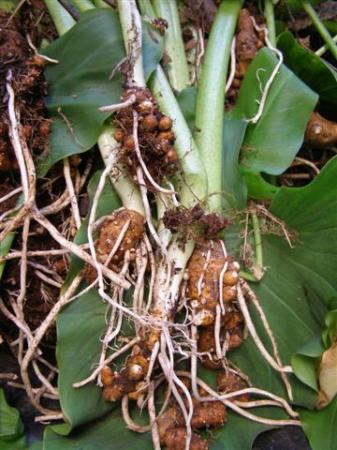
Arum lilies may be prized as cut flowers overseas but one look at the root system shows why they are a noxious weed on the banned list here

Arum lilies may be prized as cut flowers overseas but one look at the root system shows why they are a noxious weed on the banned list here

• If your New Year’s resolution was to start a vegetable garden, start preparing the ground now for planting winter vegetables soon. It needs to be in full sun. If you make the effort to get the soil right, it will pay dividends. If you are starting with lawn or grass, skim off the turf before you start digging and stack it to one side to rot down. Then start digging, and digging again to get the soil light and friable. Add in compost or manure and then leave it all to settle, push-hoeing off any germinating weed seeds as they appear.

• Garlic can be harvested now, but leave onions until the tops turn brown and bend down. To store garlic for the rest of the year, it will need drying – plaiting and hanging is the traditional method but you can also lay it out in a well ventilated area. Super fresh garlic is delicious to use in cooking.

• Arum lilies are a menace and on the banned list. I dug out a few remnant plants of the green and white flowered form called Green Goddess. You can see in the photograph how the roots are a rhizome with a multitude of little round babies ready to detach from the main body and to grow. These need to removed from the site too or they will continue to cause problems. We put them out in the rubbish, rather than trusting to the composting process and I will keep checking the area on the look out for babies germinating.

In the Garden: Friday December 31, 2010

• There is a rumour that now Christmas guests have mostly headed home, summer is going to return. There were hollow laughs of disbelief from our house guests when we talked about the drought, the earlier hot temperatures and the fact that we started swimming in late November. Personally, I lean to the theory that it was the disaffected surfers from down the coast conspiring to keep the best points of Taranaki secret, lest we be inundated by fans. At least the drought is over and our lawns are green again.

• All the rain means high humidity levels which encourages every nasty fungal spore to multiply. Keep a very close eye on your tomatoes, cucumbers, potatoes, courgettes and the like and take action immediately you spot blight. We don’t worry about mildew (seen as white powder) at this time of the year because the plants will generally grow out of it. You can get a certain distance taking off the affected leaves and stems but remove them entirely from the site. It is safer to put them out in the rubbish than to trust your compost, unless you know you make a hot mix. Cold composting doesn’t kill the fungal spores and you will merely be spreading it. Keep conditions as open as you can around the affected plants. A spray with copper is the recommended treatment for blight (follow the instructions on the container), and you can use baking soda for mildew if you wish (a teaspoon to a litre of water).

Clematis - pretty as a picture but junk those that are prone to mildew

Clematis - pretty as a picture but junk those that are prone to mildew

• Given that we usually have high levels of humidity in our area, we are leaning to the removal of some ornamental plants that consistently turn a silvery colour, indicating powdery mildew. Some clematis are far more vulnerable than others. We have given up persisting with ones that get affected every year and have dug them out in favour of varieties that show good resistance. The same goes for roses.

• Seed sown vegetables will probably need thinning in the veg garden. Most of these thinnings can be eaten as micro veg and they are delicious at the juvenile stage. If you don’t thin the rows, there won’t be sufficient space around individual plants to allow them to reach a decent size.

• Mark was amused to read a recent column in our local paper where the writer mentioned summer employment jobs in his youth. One was separating the Greenfeast peas from the Onward variety. Despite the fact that the writer’s university days were a long way back, these two varieties of peas remain Mark’s recommendations as the best to grow here. Over the years, he has tried many other varieties but now falls back on the tried and true. The bean crop here has not been up to its usual standard but the pea harvests have been abundant – far more than even I could ever eat raw from the garden. That said, it is the wrong season to plant peas now. Wait until early autumn to sow the next crop. Mildew will hit summer pea crops hard.

• Outdoor Classroom next week will be on the topic of summer care of apple trees, in case you are puzzled by what to do with yours.

In the Garden this week: Friday December 24, 2010

• Dear Santa, thank you for the pre-Christmas gift of rain. But enough is enough. Water tanks are overflowing, the grass is growing again and we really could do with a return to sunshine and warmer temperatures for the Christmas and New Year break.

• Watch for an explosion of fungal ailments in the humid conditions, especially on tomatoes, cucurbits and potatoes. Roses will also suffer but they can grow out of it whereas vegetables can succumb entirely. It will almost certainly be necessary to get a copper spray on when the weather dries out. If you would rather try baking soda, a level teaspoon per litre is the recommended dose. The big problem with baking soda is that you have to spray a great deal more frequently – probably weekly.

• The wet weather means that you can still lift and divide many clumping perennials even now. Most of them are in full growth, so as long as you make sure they don’t dry out, they will recover quickly. Replant into well cultivated, tilled soil enriched with compost.

• Grapes need thinning out. We keep to one bunch per side branch. More is not better and you can over crop grapes, leading to inferior fruit. Trim back laterals. If they get too heavy, they can break away too easily and you will lose your bunches of fruit. You also want the plant to concentrate its energy on the fruit, rather than the excessive leafy growth.

• If you have not mulched your garden beds and were alarmed at the recent dry spell, this week’s rain has probably raised the moisture levels sufficiently for you to get a layer of mulch on now. We much prefer vegetative mulches which break down and get incorporated into the soil over time – compost, leaf litter, bark or shredded wood waste and the like. Inert mulches like stones, gravel or lime chip do work to keep the soil moist and suppress weed seeds to some extent but they are not suitable for gardens that you want to dig over or replant at any time and they certainly do nothing to add nutrients or texture to the soils. They are best for areas you don’t actually garden and even then, they are a bit of a mission to keep clean unless you have a handy blower vac.

• Keep up with deadheading (basically anything that has finished flowering) and try and stay on top of the weeds which will have been triggered into rapid germination and growth by the rains.

• If you had a problem with silver leaves on rhododendrons last year and haven’t sprayed this spring, check underneath the leaves for something that looks like dirty threads. These are the thrips which suck the chlorophyll out of the leaves. Photinia and honeysuckle both harbour thrips too. If you are going to spray, it needs to be a systemic insecticide so the plant sucks it into its system (as opposed to a contact one which only kills insects where it touches). Bands soaked in neem oil secured around the trunk are getting good reports. If you want to make your own, soak a strip of old woollen carpet in neem and then secure it around the main stem with the carpet pile inwards. Thrips don’t usually go away of their own accord. You either need to change the growing conditions, kill the insects or remove the host plants altogether.

In the Garden this Week: December 17, 2010

• The rain earlier this week was welcome for those of us who received it, but hardly sufficient to break the drought. However, it is easier to keep water levels up than to let everything dry out to dust before you start to water again. That said, in our conditions, it should only be necessary to water recent plantings, container plants, fresh sown seed and parts of the vegetable garden. Devotees of roses will water them too. The rest of it can pretty much take care of itself unless you are on fine, sandy soils right on the coast.

• We watched aghast as the Yates representative on Prime TV’s Get Growing programme last Sunday demonstrated the use of Blitzem slug and snail pellets. She poured what must have been half a packet in a carpet of green on a very small area. Don’t copy her. You do not use this poison like fertiliser. You do not need to lay so much that every snail and slug must trip over it. The pellets have an attractant and you only need to use a few – no more than you can count on the fingers of one hand – in each target spot. These pellets can be fatal to pets and poultry and are not great for humans. Use very sparingly.

• If you are a traditionalist with a proper tree (as in one that used to be growing til it was lopped off in its prime to serve as a framework for your lights and decorations), keep the water topped up. If it is on the agenda for this weekend, the best way to extend its life is to re-cut the base as soon as you get it home and then plunge it into a bucket of cold water. Forget the aspirin in the water and the other suggestions – a fresh cut and plenty of fresh water is all that is required to make it last the distance.

• If Christmas dinner this year is at your place and you need to tidy up in a hurry, in order of importance the following steps will have the biggest impact: mowing the grass, removing large debris and rubbish, sweeping paved areas and entranceways, cutting clean edges to lawns and gardens and removing weeds from paved areas (boiling water is the fastest way). You may be surprised how quickly you can give the appearance of sprucing up.

• Give roses a summer feed to encourage them to keep healthy and produce more flowers. Clip off the spent flowers and diseased foliage as you go and remove them to the rubbish, not the compost.

• Give planting brassicas (the cauli, broc, cabbage family) a break over summer unless you are willing to wage constant war on white butterflies. There are many other crops you can grow instead, including most of the leafy greens which mature quickly. It is too late to sow peas now (we have had the best ever crop this year), but you can still be planting sweet corn, green beans, potatoes, carrots, courgettes, pumpkin and beetroot.

In the garden this week: December 10, 2010

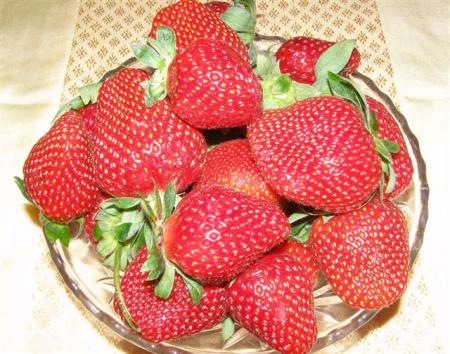
Alas, not from our garden

Alas, not from our garden

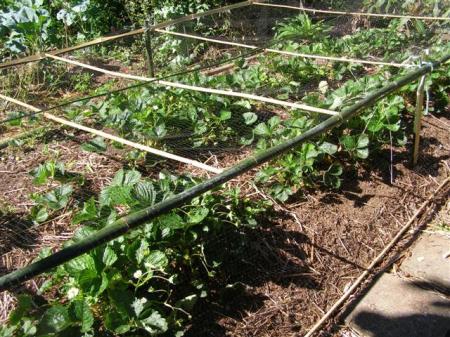
Better late than never - covering the strawberries

Better late than never - covering the strawberries

· The bright side of the current dry spell is that fungal diseases are not as common as usual. These tend to flourish more in times of high humidity. Despite that, it is a good idea to get a copper spray on to citrus trees as flowering finishes. We will not stay this dry and a copper spray can prevent premature fruit drop and a tendency to drop leaves.

· Pinch out laterals on tomatoes to keep them to one or two stems only. You want the plant to put its energy into forming fruit, not leafy growth.

· You can still plant for a late crop of tomatoes but you need to use small plants now, rather than seed. Get pumpkins and main crop potatoes in without delay.

· With summer just starting, it may seem far from your mind, but get leeks and celery in now if you want to be eating them in winter. They need all summer to reach a decent size.

· It is the last chance to start annuals from seed for late summer and autumn colour.

· There is not a lot you can be doing in the ornamental garden in this current extended dry spell, but continue with deadheading and deal to weeds. Push-hoeing is ideal in the current weather because the weeds will wither and die very quickly.

· The first flush of monarch caterpillars has eaten the swan plants of many, as far as I can tell from Google searches. You can finish off relatively large caterpillars on sliced pumpkin but it is not a total diet so no good for little ones. If you have the space, sowing a row of swan plant seed right now and making sure you keep it covered, will give you feed for later flushes of caterpillars. We target the late season, so we can get the monarchs wintering over in the garden, by sowing seed now but you do have to protect the crop to stop any eggs being laid on small plants. Very hungry caterpillars will demolish the lot extremely quickly with no regard for later generations.

· Mulch asparagus beds and let the remaining spears develop into leaf to strengthen the crowns for next season. Asparagus is a permanent crop but the crowns do have a finite lifespan – usually said to be about 15 years. Ours are considerably older than that but the crop this year was so poor, despite regular care, that we have had to resign ourselves to the thought that the bed has passed its use by date.

· Shamed by the very handsome strawberries I brought home from a local PYO place, Mark finally built an impressive netting cover for our bed, using our own bamboo, and we look forward to beating the birds to fresh fruit on Christmas Day.