Tag Archives: garden ladders

Spring panic, camellia pruning and a good ladder – a very good ladder

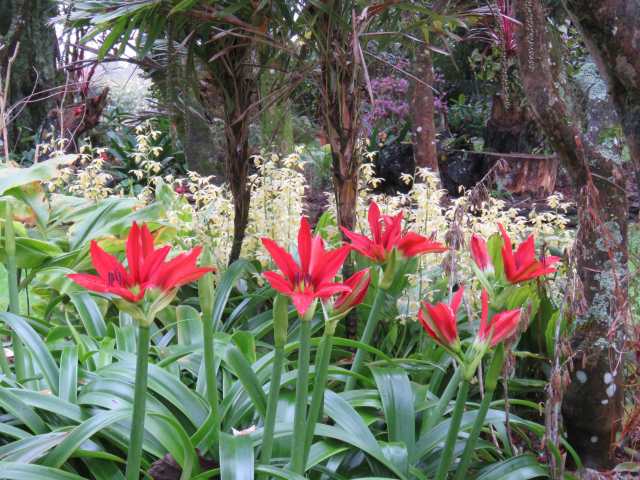
The Hippeastrum aulicums are coming into flower and the calanthe orchids are in full bloom.

As we hurtle into the full flush of spring, after a remarkably calm and mild winter, not only is the weather breaking up but I can feel the old sense of rising panic. The weather is entirely to be expected. Mark calls it ‘the magnolia storms’ on account of them always hitting during magnolia season – the confluence of cold fronts from the South Pole and warm fronts from Australia and the Pacific Ocean, I believe.

The sense of panic is more personal. I am the last of the generations who came through an education system where everything depended on the final examinations. There was no internal assessment. I was particularly good at exams which was just as well because I was never very diligent during the year. The arrival of spring meant I had to focus and cram in preparation, which I did. My last two years in school and then five years in tertiary education were marked by deep anxiety and stress in spring and exams generally finished towards the end. It was not my favourite season.
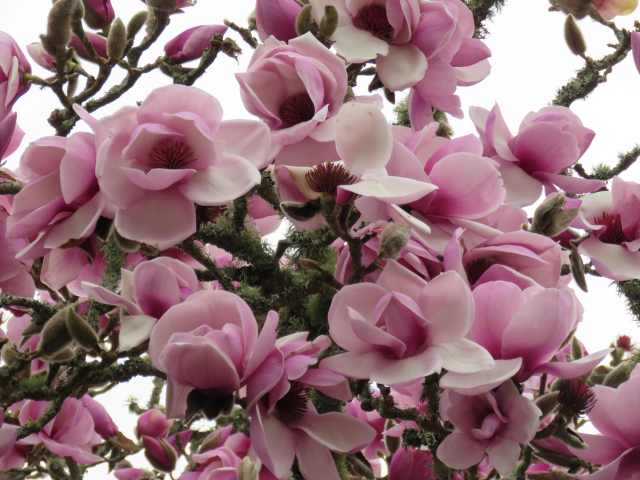
Some plants just get better with age and some do not. A magnolia should be amongst those that do get better and Magnolia Iolanthe fits that brief, even after 70 years.

I had barely recovered from repetitive stress dreams that dogged me well into mature adulthood when we inflicted springtime stress on ourselves in a different form. Many years of opening for the Taranaki Garden Festival meant that the advent of spring signalled the time the pressure came on to make sure every corner of the garden was up to opening standard. In a garden the size of ours, that was a big task that took planning, personal deadlines and a lot of hard work that wasn’t always fun.
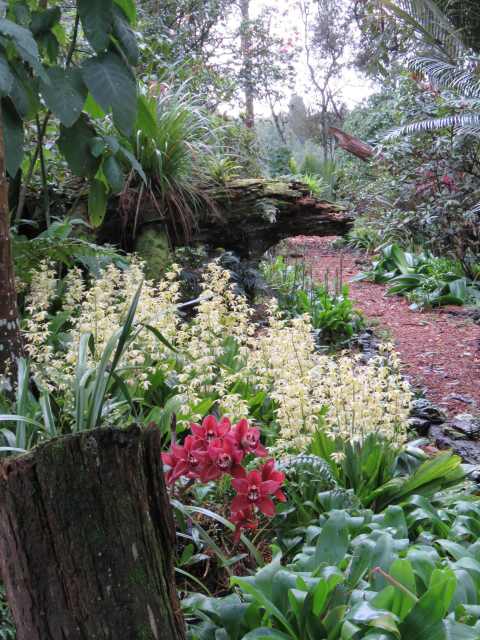
The exams are a very long way in the past and we no longer open for the garden festival. Any stress these days is entirely self-inflicted but I still felt the old anxiety rising as I walked around the garden this week.  The onset of spring has been so rapid this year, that I found myself worrying that if I was distracted or forgot to look for a few days, I could miss something entirely. I had to speak sternly to myself, pointing out that this is what we garden for and that I need to take the time to breathe, to look and to enjoy. I listened to my own advice and truly, the seasonal sights are a joy to experience and yes, I do have the time these days to appreciate them. Every day, another plant will open in bloom to add to the floral tapestry already on display.

I have almost finished pruning the camellias that need it and I pondered the thought that two skills which are under-rated in gardening are pruning and staking. It is awfully obvious when they are done badly and doing them well can seem to take quite a bit of time.
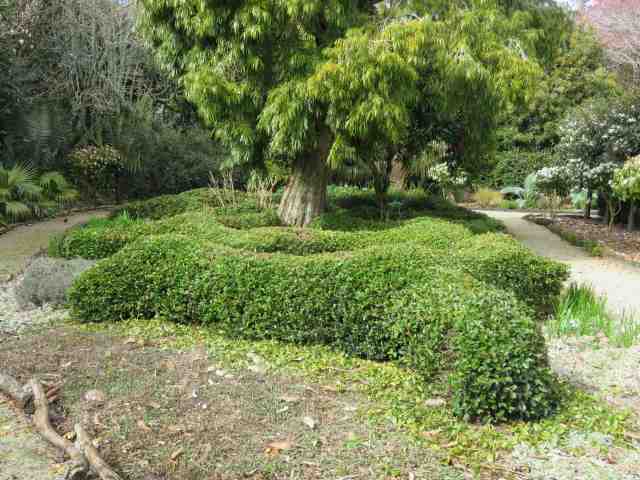
The undulating hedge in the Wave Garden – cut with an electric hedge trimmer.

We use a variety of pruning techniques on the camellias, depending on the situation. If we are doing a full rejuvenation, it is easy. We just cut off to a good framework and then practise patience for two years while the plant recovers and makes bushy, fresh growth. Camellia hedges are done with the electric hedge trimmer. Mark did the Wave Garden hedges and I spent probably as long going through afterwards with secateurs to tidy up wayward branches and bits that were still out of place.

Camellia Tiny Star was cut back pretty much to bare wood two years ago after getting way too tall and leggy. This is two years of regrowth.

It was the four umbrella camellias surrounding the sunken garden that have taken the most time. These are top-worked, so grafted about a metre off the ground. They are a seedling from Mark’s breeding programme that we never sold but Mark has always referred to as Pink Poppet. For years, he has kept them in shape with the hedge clippers. When I say years, I have no idea how long. Maybe fifteen or so? They had become very dense and full of debris and dead twigs. I decided they needed a good clean out and thinning.
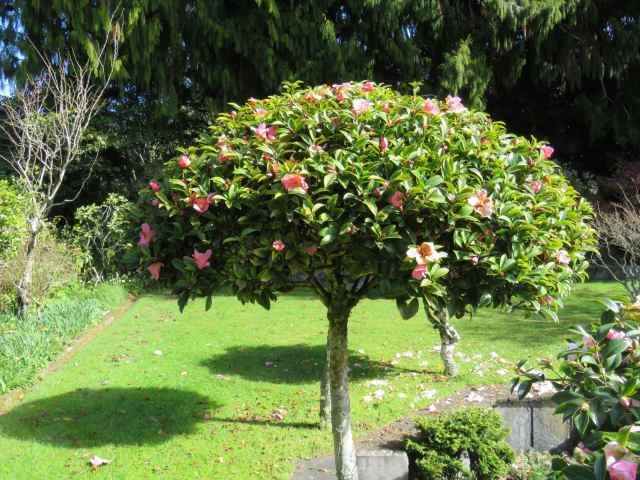
Untouched as yet.
Spot the difference? These are two down the other end of the sunken garden that have just had hours of attention and you can see in the wool bale how much has been removed.

I may not have started, had I realised how long it would take. The first one took me around four hours. I did speed up but even so the last one would have been two and a half hours and I could have spent longer and done a more thorough job. At the end of it, I had removed at least a third of the bulk and they did not look any different. But that is the whole point and the reason why it took so long. I didn’t want them to look any different, I wanted them to be able to breathe, to shed spent blooms and leaves and to get rid of the growing issue with black mould on some of the foliage. Invisible pruning. I am hoping they may last another decade.
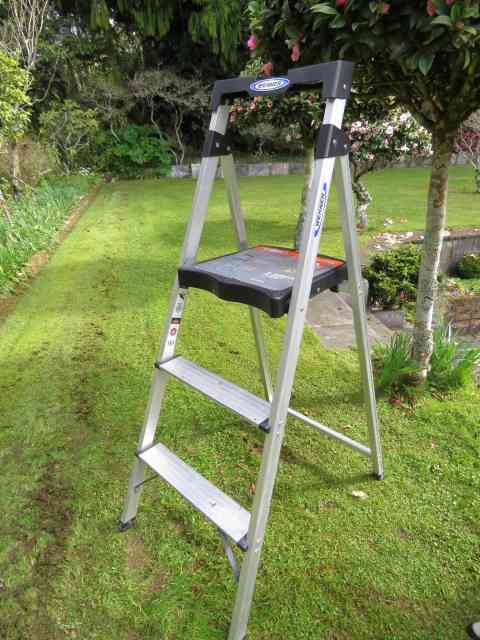
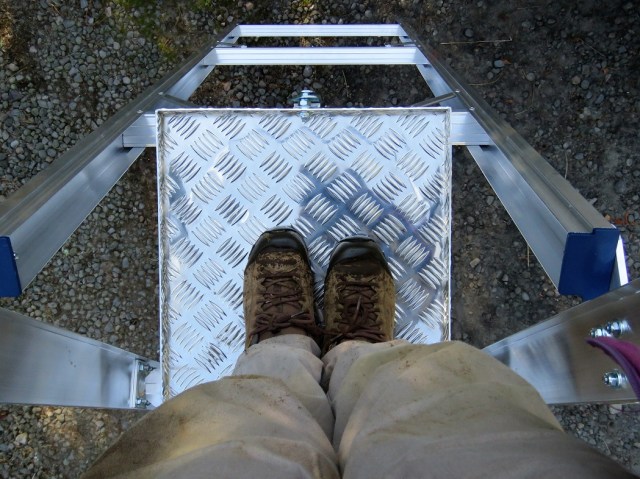
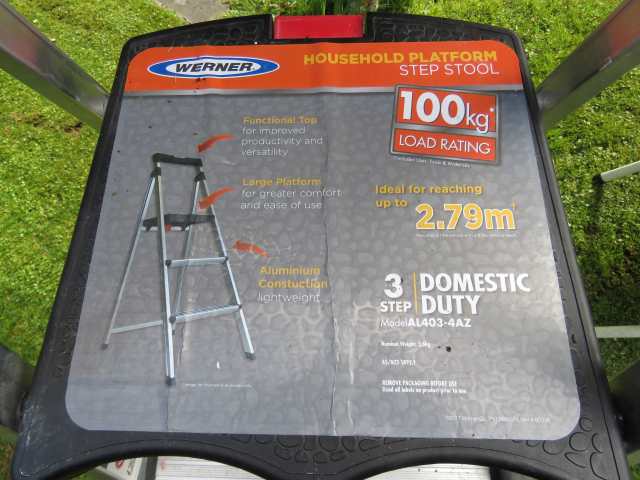
Behold my ladder. In an establishment with many ladders (about eight different ones), this one is mine, all mine. I bought it to use in the house. We have a higher ceiling stud than modern houses and I couldn’t reach the top cupboards from the kitchen step ladder. So it lives in the broom cupboard in the house but I also use it in the garden. It is so lightweight, I can lift it with a single finger. It is very stable with a platform for comfortable standing, rather than a narrow step at the top. There is even a handy top shelf for small tools. I can’t recommend it highly enough for anyone who needs a convenient ladder for outdoor or indoor use. Lloyd was so impressed when I let him use it indoors for a task that he said he was going to get one for his home. For New Zealand readers, I bought it at Mitre 10 Mega and it wasn’t hugely expensive – a bit over $100, from memory. It is worth every cent.
When life requires ladders

Pruning the Prunus Awanui has been a two ladder job for Mark this week, involving one of our old A-frame ladders and the extension ladder at the back.

Ladders feature remarkably large in our life here and not just because Mark and I are of shorter stature. Lloyd is tall. Many of our plants are much taller than he can reach. For many years we have operated on four aluminium ladders – three typical A-frame type and a full extension ladder. A few months ago, Lloyd stopped a pruning job halfway through and said that he did not feel safe continuing with it because of the state of the ladders. Lloyd is not one for complaining so, on the rare occasions when he red-flags a workplace safety issue, we take it seriously. Besides, we knew our ladders had become dodgy and rickety.

The new platform ladder
A platform ladder has a comfortable platform at the top

It has taken a couple of months, some research and many discussions but the first two of three new ladders arrived this week and it is ridiculously exciting. This is what is called a platform ladder. Now any of us can feel quite safe standing on the top rung because it is a larger platform with a safety bar on a very sturdy base. We bought the tallest one because it is the higher jobs that had become problematic here but I can see that this ladder may also give new options for my garden photographs. I may finally be able to get some elevated vistas of the summer gardens, particularly the Court Garden. It is heavier than a straight A-frame ladder but still light enough for me to move short distances on my own although I think it will be Lloyd who uses it the most.

Look at the view from the top!

The second ladder has yet to arrive. It is what is called an orchard ladder with just three legs, the back one of which is a prong. This means it can be located closer in to the plants and will do less damage in a garden because it is only the front two legs that need to be placed with care and it can be used safely in areas with more slope. We have gone for the tallest option again. We had been thinking about buying one for several years but even before it has arrived, I can see how helpful it will be. Mark is particularly looking forward to this one.

This is the orchard ladder we have on order

We will still keep the rickety A-frames and the extension ladder. The A-frames are lighter and easier to move around for small jobs, as long as we are mindful of their limitations.

While I was busy learning about ladders, I bit the bullet and found another shorter ladder, primarily for indoor use. It was way cheaper than the other two ones, says she justifying what feels like an extravagance. A snip at just under $80. Being of shorter stature, kitchen stepladders have always been a part of my life but even so, I cannot reach the top cupboards without bringing in a taller ladder. In a house with a high ceiling stud and five of the downstairs rooms having cupboards right to the ceiling, it does mean that anything on the top shelves languishes there, ignored and probably useless, except for once every five years or so when I might remember something or wipe down the toppest of the top shelves. No more! All is now within my reach. I wonder if it is time for me to declutter?

A corner of my kitchen (yes, those are old fashioned pullout bins on the right) with the rather large new ladder which will need to be stored away in a handy cupboard and brought out as needed.

True, I bought it online and I may have hesitated had I seen it in person. It is a little larger than I had anticipated. Quite a bit larger. To balance out the extra height, it has a wider base. Note, it is another platform ladder which is helpful because these are way more comfortable to work from. Clearly it will not replace the modest, utility kitchen steps that we use every day so I must keep those, too.

When I was a child, we used to have just one type of flour for cooking. Now we have six on hand at all times (wholemeal, high grade white, ordinary white, self-raising, cornflour, spelt flour and tapioca flour). We probably only ever had one ladder too, and that would have been a solid old wooden one in those days. Now we have a ladder for almost every occasion.

ACC* would be proud of us.

Footnote: For overseas readers, ACC is our Accident Compensation Corporation – a longstanding, taxpayer-funded body that acts as an insurance company paying out on a no-fault, no-blame basis for medical and related costs – including wages and loss of income – for all injuries and accidents. It is not a perfect system and we all like to moan about it but it has freed this country from the litigious nature of many other countries. ACC also likes to educate us on dangers around the home and unsafe ladders feature regularly.

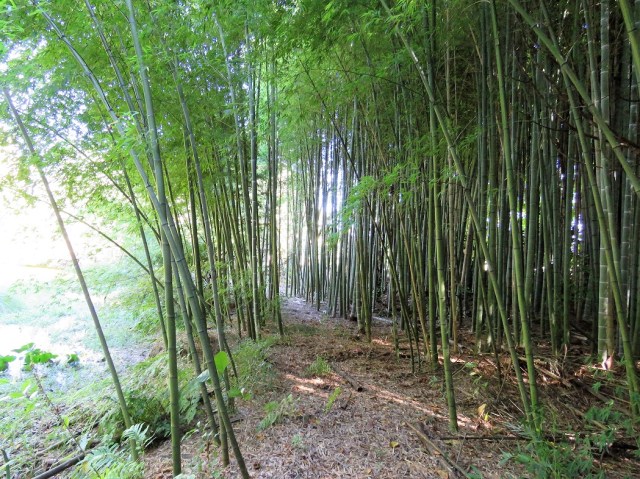
A quick garden update. Zach has reached as far as the bamboo grove in the Wild North Garden and we now have a path through it which I found quite exciting.

Mark’s low meadow (formerly the front lawn) had finished flowering so Lloyd ran the mower over it for the first time in over three months. I expect we will have a lawn back soon and that will continue until late spring this year when Mark will want to grow it again.