Tag Archives: garden quotes

Garden Lore

What is a weed? A plant whose virtues have not yet been discovered.

Ralph Waldo Emerson Fortune of the Republic (1878)
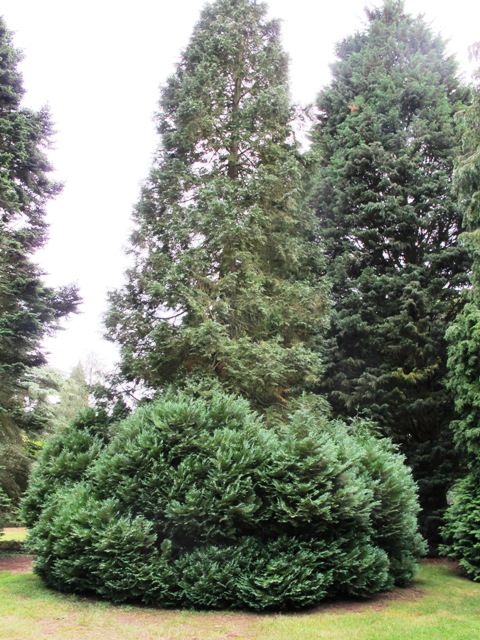
Chamaecyparis lawsoniana ‘Alumii’

Natural layering

This tree reminds me of that old song (and this will date me) “Look there Daddy, do you see, there’s a horse in striped pyjamas” except that it is a tree wearing stiff petticoats and a frilly skirt. No that’s not what it is at all, that’s a fine example of what people call layering. The tree is Chamaecyparis lawsoniana ‘Alumii’. Over time the weight of the lower branches must have dragged them to the ground where, left undisturbed, they have sprouted roots. While the original part of the tree looks a little thinner and paler with ageing, the skirt shows juvenile vigour. It is not common to see a tree layer so evenly all round.

The layers could have been cut off from the parent plant at an earlier stage, dug up and replanted elsewhere. Left to their own devices over time, the strongest growths will flourish at the expense of the weaker ones but there will be a thicket of Lawson Cypress.

First published in the Waikato Times and reprinted here with their permission
Garden Lore

“A little studied negligence is becoming to a garden.”

Eleanor Perenyi Green Thoughts (1981)

Neither spray damaged nor sickly - just hard to use well

Neither spray damaged nor sickly – just hard to use well

Modern heucheras

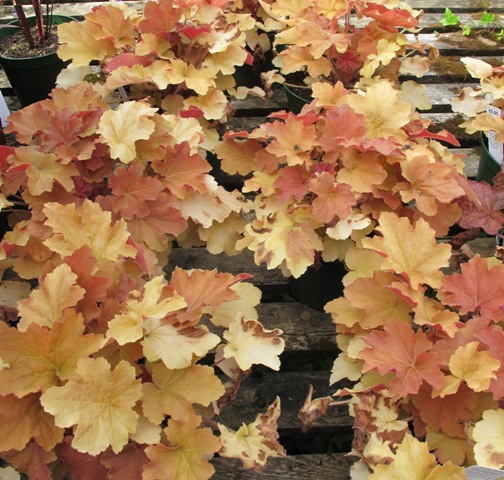
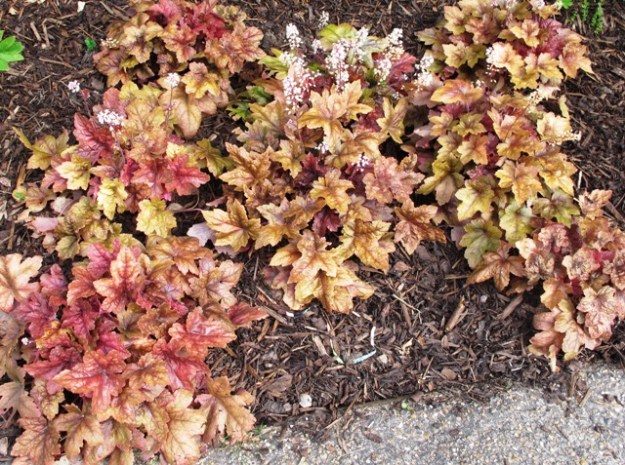
Having used Plant Collector this week to whole heartedly recommend a new plant, the same can not be said for the yellow and orange heucheras which you will also see in almost every garden centre. I have long raised my eyebrows at these and photographed some clumps on our recent garden ambles, garnering agreement from a number of other gardeners that not all heucheras are equal and some may be best avoided.

Heucheras are North American leafy perennials and have proven most amenable to the whims of the hybridists. Not all are a triumph in terms of garden performance and appearance. The lime green form looks attractive and useful but a retailer told me it is not as reliable as the others. This discouraged me because, despite considerable efforts, I have never been very successful growing the handsome deep burgundy foliaged ones. I have, however, admired them in others’ gardens where they make an attractive show.

It is just those yellow and orange autumn tones. Novelty plants, I call them. Plant them out and how do they look? Spray damaged, is Mark’s verdict. Sickly, I say. I have never seen those particular coloured heucheras used in a way that is attractive. Be cautious of novelties. I am reserving judgement on the coral shades at this stage.

Just don’t do what I saw one gardener do – buy one of each colour and plant them in a ring around the base of a deciduous tree. Not only will they suffer from root competition, it is the look of a novice gardener.

Great nursery plants - the autumn-toned heucheras look so interesting in the garden centre but I have yet to see them perform as garden plants

Great nursery plants – the autumn-toned heucheras look so interesting in the garden centre but I have yet to see them perform as garden plants

First published in the Waikato Times and reprinted here with their permission.

Garden Lore

Sir Frank Crisp’s eccentricities were reflected in his garden. In 1905 Lady Ottoline Morrell visited Friar Park where she found Crisp, dressed in frock coat and top hat, proudly showing his visitors around the garden, which had ‘Sham Swiss mountains and passes decorated by china chamois’. Twenty-three thousand tons of rock were used in the construction of this garden which accommodated an extensive collection of alpine and other rock garden plants.

Alastair Forsyth Yesterday’s Gardens (1983)

graft incompatibility
Graft incompatibility

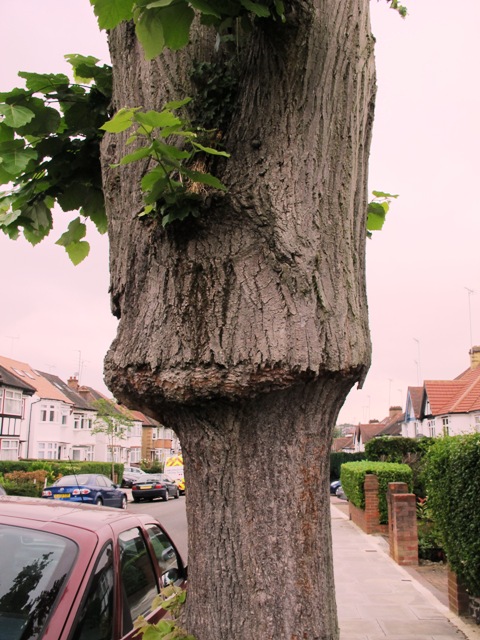
The odd growth on this tree is a fine example of what is called graft incompatibility. Many trees and some shrubs are grafted or budded – in other words the roots of a different cultivar are used to grow the desired top. There are many reasons to do this. Sometimes dwarfing stock is used to keep fruit trees – particularly apples and citrus – small enough for home gardens. Often a plant will have special characteristics – maybe variegated foliage, bigger flowers, weeping habit – but it cannot be raised true from seed and getting it to root from cuttings may be difficult, too slow or impossible. In that case, it is budded or grafted.

A closely related plant has to be used as root stock and as a customer you are reliant on the propagator or nursery knowing what root stocks to use. If they make a poor choice you can end up with this effect over time. It will be a weak point on the trunk. Where the top and bottom are fully compatible, it is hard to pick the join although it always pays to keep low growth removed in case it is the root stock coming away. It can out-compete the grafted top if left to its own devices.

This is a lime tree, or linden on a London street.

First published in the Waikato Times and reprinted here with their permission.

Garden Lore

Don’t think I haven’t tried; I have fertilized my crops with a variety of stimulants. I have scattered Hitler’s speeches and most of DuPont’s most expensive chemicals over their stunted growths, but so far all I have to show for my trouble is a small bed of wild marijuana, a sprig of mint, and a dislocation of the trunk muscles that has an excellent change of developing into a full-blown rupture… I only hope that Uncle Sam isn’t relying too heavily on my Victory Crop to sustain the nation through the coming winter.

Groucho Marx, Groucho Marx and other Short Stories and Tall Tales (1993) edited by Robert S. Bader

green?
I have mentioned before the folly of thinking that painting something green will somehow make that object blend better into a predominantly green garden environment. I could not resist photographing this fine example of how wrong that green premise can be. It is at Wisley (the RHS garden) and there were many such ground items painted this garish aqua tone, presumably in an attempt to render them less visible. Charcoal, dear readers. I keep telling you to paint things charcoal if you want them to blend. Or leave them au naturel. Gently rusting metal would have looked less intrusive in this case. If you feel you must go green, at least pick a green from the yellow tones, not the blue toned column to avoid this look.

First published in the Waikato Times and reprinted here with their permission.

Garden Lore

By the time one is eighty, it is said there is no longer a tug of war in the garden with the May flowers hauling like mad against the claims of the other months. All is at last in balance and all is serene. The gardener is usually dead, of course.

Henry Mitchell The Essential Earthman (1981)

black gardens. Yes, black.

Black gardens. Yes, black.

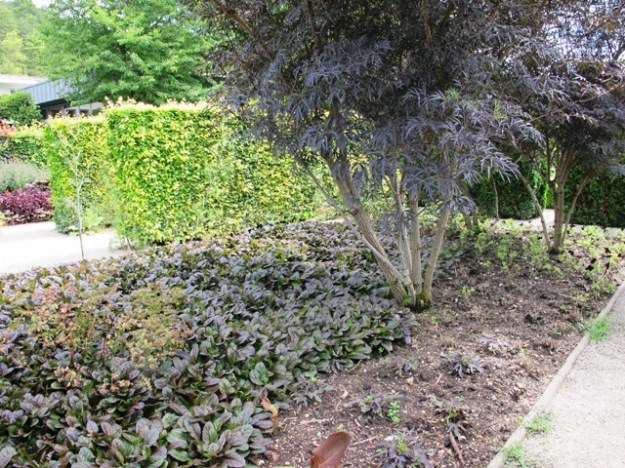
If you have ever wondered what it would be like to do a black garden as counterpoint to the many re-creations throughout the world of the famous Sissinghurst white garden, I found you an example. This is one of a couple of “black” garden rooms at the Musée des Impressionnismes in Giverny.

Hmmm. There was no black mondo grass which would be the usual starting point for a black garden here but it illustrates the problem that there are very few all black plants. What you are likely to end up with is a sombre deep burgundy garden which is very flat in colour, brown-toned, even. The centrepiece here is Sambucus nigra or the cut-leafed dark elderberry which can look effective in some settings, if a little like the poor man’s maple. Clearly the dark ajuga groundcover is doing well but none of this is black. At the rear, you can see a quandary. The freshly planted pansies have flowers that are indubitably noir, but is the green foliage acceptable? Elsewhere were very dark foliaged plants sporting bright orange or red blooms. Should one cut the flowering stems off in the quest for purity of vision?

A black garden is perhaps best described as a novelty garden, better in concept than execution as most experienced gardeners will realise if they think through the plant options.

First published in the Waikato Times and reprinted here with their permission.