
- Don’t be tempted to sow lawns until we have quite a bit more rain and the moisture has penetrated deeper down. If you scratch around the soil, you are mostly likely to find that it is as dry as a bone a few centimetres down. However, the more work you do getting the ground levelled and taking off successive waves of germinating weeds, the better your lawn will be when the grass seed germinates. We favour a mix of fescue and rye for lawns here though in reality there are now many other micro greens in our grass. We try and keep out flat weeds, onehunga weed, kikuya and paspalum but beyond that, as long as it is green when mown, we are resigned to our mixed colony. We prefer that to the constant application of chemicals necessary to maintain a pristine lawn.
- Root vegetable crops take longer to grow and mature so you have pretty much missed the boat on winter root veg but you can still plant the leafy harvests such as winter spinach, silver beet and winter lettuce along with the brassica family. It is the leafy crops which require most fertiliser so be generous with the compost or liquid feed. Vegetable gardening is like any form of cropping – you can’t keep taking harvests and expect the soils to remain fertile unless you keep feeding and replacing the goodness that is being stripped out. Using composts, green crops and manures is more sustainable than continually relying on proprietary fertilisers and also helps to build good soil structure and texture.
- Compost chicken manure before use because when fresh, it can burn plants. If you don’t want to compost it, at least leave it until it is mature. Seaweed can be spread directly onto the soil and does not need to be washed first. Horse, cattle, pig and sheep manure can be spread directly on the soil. You may prefer to compost all fresh manure or leaving it to dry for several months before spreading around edible crops.
- If you are not planting all your area in winter vegetables then plant a green crop as you take out the autumn harvests. At this time of the year, we recommend lupins, oats, ryegrass or mustard. We are trying vetch for the first time. You should avoid using lupins where you have been growing beans or peas because they come from the same legume family and it is wise to rotate crops.
- As cooler temperatures set in, mice will start to migrate indoors so make sure you have any seed you are storing in rodent-proof conditions.. A disused fridge in the shed is good or plastic containers for smaller quantities. However, while rodent proofing is necessary, some seed, including fleshy types, do not want to be sealed off from all air so you may need to devise some compromise if the plastic containers have a tight seal.
- If your strawberry plants have put out strong runners, these can be planted now to give vigorous cropping plants next spring. Strawberry plants are best replaced entirely every two years and some gardeners replant every year, using runners and divisions. If you plan to leave existing plants for another year, cut any runners off.
- If you enjoy the mass display of annuals, you can sow seed now for an early spring show. Pansies, cineraria, alyssum, lobelia and snapdragons are all easy and reliable. Hollyhocks get badly mildewed in our climate, alas. Some perennials such as aquilegia, wallflowers, carnations and gypsophila can also be done easily from seed. Use seed trays for much better results. Don’t delay on taking cuttings of perennials and fuchsias. Hydrangea cuttings are best left until winter now and treated as deciduous cuttings.
Tag Archives: garden tasks
In the garden: March 12, 2010
- With temperatures cooling, particularly at night, conditions are good for gardening. Leave planting or shifting of woody trees and shrubs until later in autumn but you can turn your attention to clumping plants and perennials. Lifting overcrowded plants and splitting them up at this time of the year means that the plants can recover and re-establish before winter. This can avoid bare patches in the garden in spring which is particularly important for those who open their gardens. Always dig the ground over to loosen up the soil and add some compost or other soil conditioner along with a dressing of fertiliser. To reduce the shock to the plants, cut back the top foliage by about half and water the plants in well. Keep watering for a few days if we don’t get rain.
- While working with your perennials, you may want to try taking some cuttings from types which only grow from a few stems rather than forming a clump of many shoots. We demonstrated this in an earlier Outdoor Classroom but the rule of thumb is to use firm new season’s growth and to take off any flower buds or stems. We are about to do some gypsophila cuttings.
- Flaxes, astelias and grasses will respond very well to being divided at this time of the year but they need their tops cut back. The Mohican hair cut is not a good look but done now, the clumps will spring into fresh growth and cover that. Done later, you will have the ugly cut leaves until late spring.
- A sharp spade makes digging and cutting hugely easier. We sharpen our spades by securing them in a bench-top vice and using a file. Remember to only sharpen the side which faces outwards when you use it. Once you have used a sharp spade, you will appreciate just what a big difference it makes.
- In the vegetable garden, you are really too late now for Brussels sprout, leeks, carrots and parsnips but you can still plant Florence fennel, winter spinach, peas, winter lettuce and all the obliging brassica family.
- Gardeners in colder, inland areas should be thinking about starting the autumn hedge trimming round. The trick to timing is to allow the hedge to make a light flush of fresh growth only and have time to harden it slightly before the onset of winter stops all growth. Get a man in, was the suggestion of friends over dinner at the weekend. We own up to having just such a treasure here (and he is not Mark) who is a perfectionist when trimming sharp hedges, even using a string line to keep the levels straight.
In the Garden, March 5, 2010
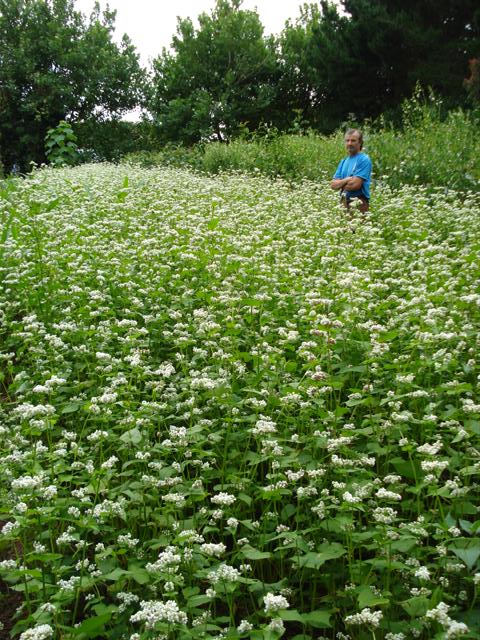
Mark surveys his field of buckwheat, swan plants to the right
- This is the first year we have tried buckwheat as a green crop and we notice it has the added benefit of feeding the bees. Bees are critical for pollination so having a bee-friendly style of gardening can help counteract the well publicised problems with declining bee populations. We bought the buckwheat from Kings Seeds (www.kingsseeds.co.nz). Green crops are a time honoured method of restoring fertility to land which is repeatedly cropped and are just as relevant today for the home vegetable gardener as they were hundreds of years ago when readers may remember from school history lessons about early agricultural practices of leaving a field fallow.
- More than just a green crop, if you let the buckwheat go to seed, it can be used as bird food for hens or pigeons. Feed the whole seed head out and the birds will do the rest.
- It being March, the winter vegetable planting calls. Fresh vegetables tend to be quite expensive in winter so home produce can be economic as well as satisfying. If you are anything more than a dilettante, ignore the trendy advice to grow your vegetables all together in a style reminiscent of the herbaceous border. This means you can not possibly practice rotation where you alternate different types of crops through the same piece of ground. A green crop is followed by the greedy feeders such as potatoes and corn, followed by brassicas and leafy crops and ending up with the root vegetables which do better in soil which has not been freshly fertilised.
- If you can’t remember the sequence of crop rotation, it is good practice to always plant a different crop to the one just finished. This greatly reduces the chance of building up diseases in the soil and pesky pests in the surrounds.
- It is time to be festooning outdoor grapevines in netting to keep the birds out, if you want a crop. As soon as they start colouring, the birds will be in like a shot. Even when netted in, they will find the one hole or gap you may have left.
- Feed deciduous fruit trees and plants now so that they have time to take up the nutrition before they go dormant.
- As a postscript to my column last week about monarch butterflies, a reader rang with the handy hint to use spring clothes pegs to suspend chrysalises which have become dislodged. You can only do this where there is sufficient stem attached to the top of the cocoon – do not peg the cocoon itself or you will damage the butterfly forming inside. She also commented that when a caterpillar in the process of metamorphosis becomes dislodged (that is the stage when the caterpillar hangs like an upside down question mark and starts to turn green) she has had success constructing small hammocks out of Chux dishcloth. They can still turn into a chrysalis and she then pegs the Chux so they subsequently hatch out successfully. There is a slight question mark over Mark’s dedication in that he has yet to enter the stage of constructing chrysalis hammocks.
In the garden – 26 February, 2010
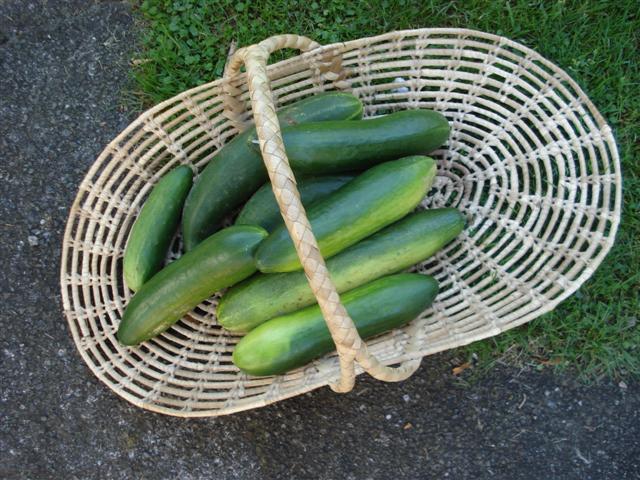
The challenge of the ongoing cucumber harvest
- We have a surplus of cucumbers here. Our formerly well travelled staffer tells us that in Turkey, street stalls sell cucumbers which they peel on the spot, slice in half and sprinkle with salt. The smaller, younger ones are pleasant eaten as a fruit though the Heart Foundation would no doubt prefer the salt omitted. I failed to convert Mark to cucumber juice last year but adding them to unsweetened yoghurt is tasty and ups the quantity consumed.
- Regrettably we are cooling off somewhat and the days are noticeably shorter. The upside of this is that if you are dying to get into the ornamental garden, you can plant or dig and divide clumping perennials. These are more forgiving than woody trees and shrubs and as long as you water them in well and follow up in a few days time, they should be fine. Most perennials will keep growing until winter arrives so there is plenty of time for them to recover. If you have clumps which have fallen apart and are looking really scraggy, it is likely that they are congested and need to be split up. Make sure you replant in well cultivated soil and preferably add compost.
- As summer crops are harvested from the vegetable garden, it is time to be sowing and planting winter crops. Pretty well every novice gardener ends up with far too many cabbages, broccoli and cauliflower all maturing at exactly the same time. It is better to sow a few seed every fortnight or so because you want them to mature in stages. If you buy small plants, look out for the punnets of mixed brassicas which are widely available – these usually have two of each vegetable.
- You can also be planting winter lettuce (which is leafy not hearting), mesclun (which bolts to seed too fast in the heat of summer), Florence fennel (the most versatile of vegetables), spinach, beetroot, parsnip, peas, and carrots. Do leeks from plants now in preference to seed. Mark has just put in his last crop of beans though he is a little worried it may be too late. Don’t delay past this weekend on these in coastal areas. It is too late inland.
- If you are harvesting rhubarb, make sure you feed and mulch the plant to encourage it to grow again. Rhubarb is deemed a gross feeder, which means it is a hungry plant. Adults may like to try adding grated fresh ginger when stewing their rhubarb. To make it palatable for children, cook it up with a bit of sago (tapioca takes too long to cook) which reduces the sharpness and therefore the amount of sugar you need to add.
- Further to today’s column, if you have run out of swan plants for your monarch caterpillars, you can finish the larger ones on sliced pumpkin but apparently it is an insufficient food for young ‘uns and leads to deformities. You do have to imprison them in a box with the pumpkin or they will migrate in search of another swan plant, even if there are no more around. You can find more information on www.monarch.org.nz .
In the garden, February 19, 2010
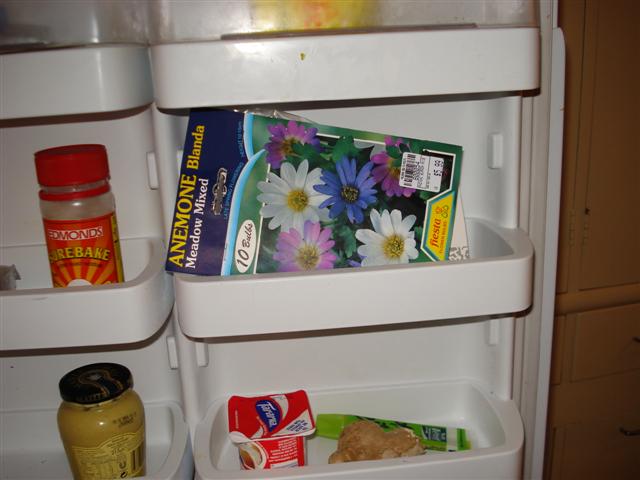
Simulating winter chill before planting out the anemones
- The distinct cooling of temperatures this week and intermittent rain has me fearing that summer may beat an all too early retreat after a late arrival. Mark delights in pointing out that technically we have under two weeks of summer remaining because March officially signals the onset of autumn. But generally we can look forward to settled, summery weather until April.
- If you have been tempted into buying anemones and ranunculus, remember to plant the former pointy side down and the latter with the claws down. The advice from Aorangi Bulbs is to place the bulbs in a paper bag (not plastic) and refrigerate for a few weeks – six weeks for anemones and four weeks for ranunculus. Then soak them overnight in tepid water before planting. The refrigeration is to simulate the winter chill so that they spring into growth with the warm water. If you have bulk-bought bulbs (and some are ridiculously cheap in quantity), staggering the planting over several weeks is likely to extend the flowering season this year. The chilling process is called stratification.
- Unless you are willing to refrigerate your hyacinth bulbs every year, you need to treat them as annuals in our climate. Bulbs purchased this year have already set their flowers so you will get one season of lovely blooms. But they need a winter chill to trigger them each year and few gardeners in our area will have sufficiently cold conditions to have them continuing to flower year after year. By no means all bulbs need that winter chill, but hyacinths and many tulips do.
- The rains this week will trigger winter and autumn flowering bulbs to break dormancy so you are running out of time for lifting and dividing congested clumps.
- The rains and mild temperatures will also see an explosion of fungal disease in vulnerable plants. Dig main crop potatoes as soon as it appears they are ready, to avoid losing them to blight. You may have to get a spray applied for mildew on crops such as grapes, tomatoes and cucurbits. If you don’t want to use proprietary sprays or copper, you could try baking soda – a level teaspoon to a litre of water.
- If you have been seduced by the current fashion for growing vegetables in raised beds (ideal for over 70s, those with bad backs or otherly abled but otherwise over-rated in our area with wonderful friable soils and drainage) don’t fill the beds to the top. If you do, you can’t dig the soil without much of it spilling over the edge which makes a mess of the surrounding paths. Nor can you keep adding compost and humus to enrich the soils unless you dig the level lower each time and barrow away the excess.
 Tikorangi The Jury Garden