Tag Archives: gardening

The answer truly lies in the soil

005 (2)Who has never complained about the absence of flavour in supermarket tomatoes, particularly when out of season? Almost without exception we laud the merits of homegrown produce as being much more flavourful, even more so if crops have been grown from heritage varieties. Very hipster these days. Many people believe that the flavour has been sacrificed in commercial crops in the quest for high production.

Things are never that black and white. For some years, we have been pondering the triggers for flavour. I cite my experience with tomatoes in Southern Italy. A taste treat beyond compare, so full of flavour were they. But it was only the first week of June so it wasn’t a hot, dry summer that determined the quality of the taste. Nor, indeed, was it the variety. In recent years there has been an explosion of heirloom or heritage seed varieties becoming available in this country. We have tried growing a fair number of different ones and, to be ruthlessly honest, while better than the wishy washy supermarket ones, they all fall well short of those I ate in Italy. That leaves the soil as the key variable.

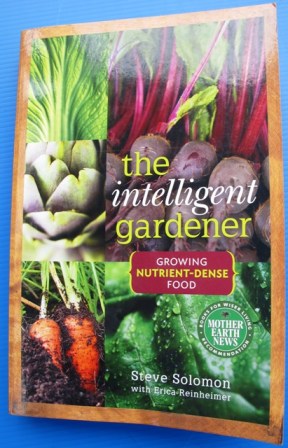
The answer may indeed lie in the soil. Unfortunately the solution is not as simple as scattering fertiliser with added trace elements, which is the usual recommended treatment. We have taken good care of our soils here and believed that we made good, balanced compost to nourish them. I use the past tense – believed. Summer reading here is “The Intelligent Gardener” by Steve Soloman. That is to say, Mark is reading it and sharing the highlights as he goes. While some of the book drives him nuts, the underlying premises make a lot of sense. Our soils are almost certainly nowhere near as good as we thought.
008
The subtitle of the book is “Growing Nutrient-Dense Food”. Nutrient density has been hovering on the periphery of our lives ever since Kay Baxter started writing about it. It is the principle that you can have two apparently similar crops but one has a much higher nutritional value than the other. Kay Baxter is the leading light of the Koanga Institute and a true pioneer of organics and the preservation of heirloom and heritage varieties in this country. She advocates the use of Brix measures to determine nutrient density. Brix are commonly used in the wine industry to measure sugar content.

It may be something of a leap to link flavour to nutrient density, but it seems logical that there may well be such a link and certainly both go back to the nature of the soil.

As a country, New Zealand has some widely recognised soil deficiencies. Insufficient naturally-occurring iodine is why we have iodised salt in this country. Prior to that, goitre was very common in humans and indeed in animals. “Bush sickness” is a widely recognised problem attributable to cobalt deficiencies on pumice soils. Selenium is deficient. At the risk of treading on sensitive ground in the Waikato, I understand that the trace element fluorine is deficient in NZ which is a major contributor to why New Zealanders have long been renowned for poor teeth. According to my father, who was a medico in the British army in WW2, they could pick the NZ soldiers at time of autopsy because most had false teeth. Correspondingly, pre-dental bleaching, all those beaming white toothy smiles of many Americans were apparently attributable to higher levels of naturally occurring fluorine.

If you are really keen on running a closed system of food production with no external inputs, it matters a great deal that you understand the exact composition of your soils in considerable detail. Even then, it is not as simple as topping up a certain element because there are reactions and inhibitors which can affect the ability of soils to incorporate additions. But most of us get our food from a variety of sources, which means deficiencies don’t usually have dire effects on human health because there is a degree of balancing out which occurs.

Mark is planning to delve further into the exact compositions of our soils. We are interested to see whether better balanced soils will give us better flavoured food. We will be watching to see if the link between flavour and nutrient density is proven. Certainly, it is disconcerting to have our existing notions about the quality of our soil and compost turned upside down. But this is not a once over lightly project which will appeal to all gardeners.

If you want to know more, the Koanga website is: http://koanga.org.nz/ The book referred to is “The Intelligent Gardener” by Steve Soloman. (New Society Publishers; ISBN:978 0 86571 718 3). Elder daughter purchased it for her father from the bookshop of Canberra Botanic Gardens. In this country, you may need to order it, in which case the ISBN number is important.

First published in the Waikato Times and reprinted here with their permission.
Plant Collector: Pachystegia insignis

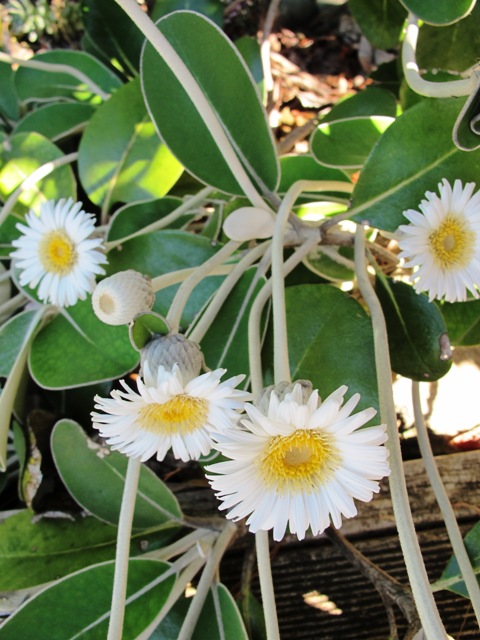
Pachystegia insignis - one of our loveliest native plants

Pachystegia insignis – one of our loveliest native plants

We do a good line in native daisies in this country but few, if any are lovelier than this Marlborough rock daisy. The flowers are pristine white, but even when it is not flowering season, the leaves are big, rounded and heavy textured – glossy green on the upper side and felted white on the under side. That felting is called indumentum (sometimes tomentum).

In the wild, P. insignis grows on the eastern side of Marlborough. Apparently you can see it as you drive down the state highway but the only times I have driven it in recent times, I have been behind the wheel with my eyes fixed firmly on the road. It hangs onto the rocky banks, coping with drought and salt spray. This means it is not the easiest of plants to grow in a lush garden situation. It needs perfect drainage and an open, exposed site. Even then, we find mature plants can keel over and suddenly die from time to time.

To our ongoing embarrassment, our particularly good form here was stolen by my late mother from the Dunedin Botanic Gardens. She died 12 years ago (almost to the day), but her legacy lives on here. Pachystegias are small shrubs belonging to the asteraceae family. The “insignis” seems to mean distinguished or remarkable in this context.

First published in the Waikato Times and reprinted here with their permission.
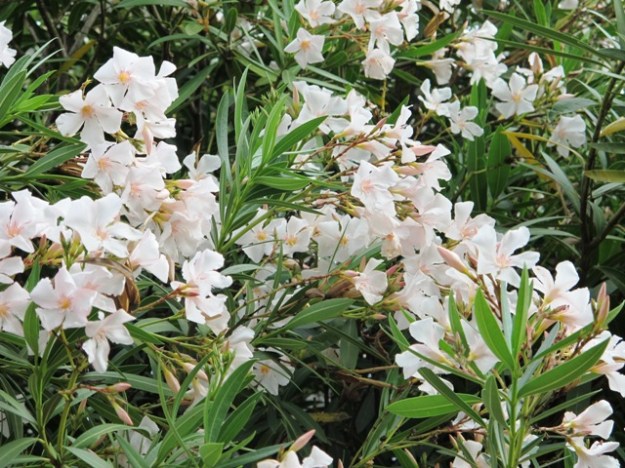
Plant Collector: Nerium oleander

Oleanders - internationally popular for harsh growing conditions

Oleanders – internationally popular for harsh growing conditions

I photographed this oleander in Canberra which rather gives lie to the notion that these are sub tropical plants. Oleanders are so widespread internationally that their original habitat has not been isolated though it falls somewhere in the band stretching from Southern Europe and North Africa through to Central Asia. Some of these areas can get cold winters but what they all share is hot, dry summers. Years ago we saw oleanders used as street trees near the beachside motor camp in Gisborne. Not having been back there for some years, I don’t know if they are still there but similar conditions will apply in the drier, coastal areas of mid to north New Zealand. These plants are tolerant of both drought and salt spray.

Oleanders are evergreen and form large shrubs to small trees, several metres high. They generally grow with multiple stems and can be cut back hard without turning a hair though it may impact flowering the following season. Their tolerance for poor soils, hard conditions and drought means they can be grown in situations where most plants will struggle but it is their ability to flower freely for months on end that makes them a hugely popular plant of choice for many, despite lacking much natural form and elegance. Flowers are whites, pinks and reds, both doubles and singles.

Oleanders are renowned for being poisonous, but so are many plants including daphne. Just don’t ever use it in tisanes, herbal preparations, or anything else that may see you ingesting it. Never use them as kebab sticks. Yes somebody did, with unfortunate results. However, oleander poisoning incidents are generally deliberate rather than accidental. Mind the sap, too when pruning. It can cause skin irritation.

First published in the Waikato Times and reprinted here with their permission.

The call of gardening in less hospitable situations

Indubitably Australia

Indubitably Australia

I went to Australia last week – Sydney and Canberra. We have a daughter in each city and both are putting roots down across the ditch. Literally. It is very interesting watching one’s children become inspired by gardening.

Sydney daughter is the younger of the two and still in rental accommodation. But having lived in upper floor apartments before, she is now adamant that she needs outdoor space, be it ever so compact. Her current garden is not much larger than our dining room at home. I recall her growing huge and productive Sweet 100 tomatoes when she was a student at Waikato University. In an upper floor apartment in London, she acquired small window boxes to grow herbs. The current space, be it ever so modest, is palatial by comparison.

As the space also accommodates the accoutrements of modern life (outdoor dining table and chairs, barbecue and sun umbrella), her actual gardening space is limited to two narrow, raised beds along the perimeter and an assortment of pots. But she has made space for the two critical requirements for the hipster urban gardener – a worm farm and a covered compost box. She is limited to growing herbs and a few vegetables at this stage but I can see the makings of a lifelong gardener.

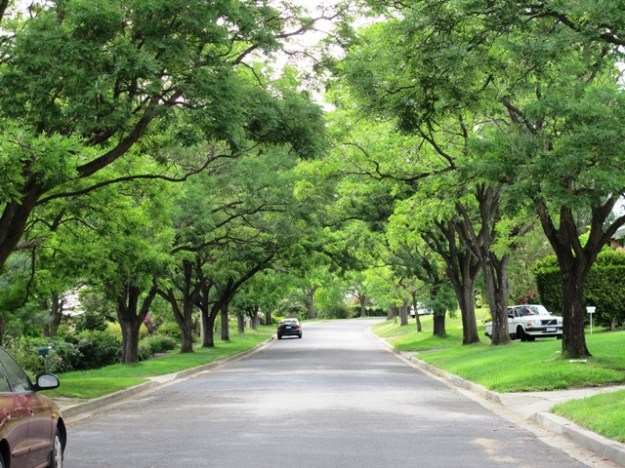
We could learn a thing or two from street trees in Australia - this pleasant leafy road is in in Canberra

We could learn a thing or two from street trees in Australia – this pleasant leafy road is in in Canberra

Elder daughter is now a proud home owner and that is an entirely different kettle of fish. She too started gardening as a student and is a reasonably competent vegetable gardener with over a decade of experience behind her. But now that she has some security and stability in her life, she is looking to expand beyond the quick turnaround of veg and herbs. She was after ideas to develop the ornamental garden.

Canberra is not the easiest of places to garden. Not at all. She commented it is not possible to put plants or seeds in with a reasonable expectation that they will grow and flourish. It takes hard work to get plants established. I walked around her pleasant, leafy suburb to get a feel for the place and it was clear that gardening was a challenge and it was the street trees that gave the area its appeal. We could learn a thing or two from street plantings in these Australian cities.

I realised, however, that this was not a place where that tenet of modern living applies – the indoor/outdoor lifestyle. That is because the winters are cold. I have visited in winter and I doubt that many people sit out in their gardens drinking their morning coffee, even on a fine winter’s day. The summers, on the other hand, are hot. Very hot, even as November became December. It was too hot to be outdoors after 10am and temperatures will rise considerably. So for a good six or maybe seven months of the year, it is an indoor lifestyle.

Then there is the dry. There has been a great deal more rain this spring than usual so the grass (one hesitates to call it lawn) is still green rather than dead. This is unusual.

There were clearly many who found the call of gardening too difficult so they just kept to a few trees and shrubs, mostly in hedges. Nandinas grow well, as do oleanders, crepe myrtles, camellias and pittosporums. The ornamental plum (a selection of Prunus cerisifera) is widely grown with its striking deep burgundy foliage which looked particular fetching with a white cockie feeding in it.

My advice to daughter was pragmatic. Because they have two small dogs (fur grandchildren, Mark and I call them), they only use the fenced back section, which now has a fine veg bed and a well organised compost alley. Concentrate her efforts there, I suggested, and indulge her interest in prairie gardening. It suits the climate.

What to do with a front yard which is merely access to the house?

What to do with a front yard which is merely access to the house?

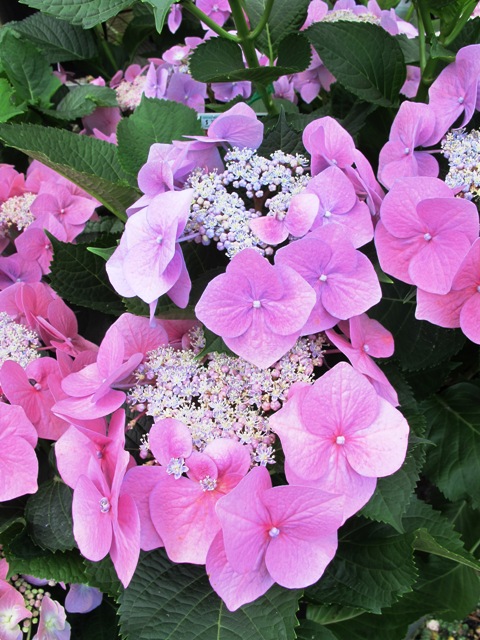
The front can then become low maintenance window-dressing for kerb appeal. I suggested they get rid of all but one of the finicky garden beds and all the plant containers out the front. These need watering every day. What is more, the beds are raised which means they dry out even faster. Drop the level of the one remaining bed to ground level to reduce watering and the constant spillover of garden mulch. Plant that one remaining bed in easy care, shade tolerant plants – hydrangeas and hellebores – and retain the boundary hedges. Mow the rest. They only have to mow for four months of the year. I bought her my favourite tool for digging out the flat weeds. If you are stuck with fairly rough grasses, it looks much better without the flat weeds.

The same advice may well be applicable for people in coastal situations here. New Zealand lacks the extremes of temperature, but people gardening on sandy soils will experience similar problems. Emulating the lush growth more commonly prized in most gardens is fighting nature in such conditions. It is better to work with what you have.

Hydrangeas - easycare plants. They are all pink in Canberra.

Hydrangeas – easycare plants. They are all pink in Canberra.

First published in the Waikato Times and reprinted here with their permission.
Plant Collector: Swainsona formosa

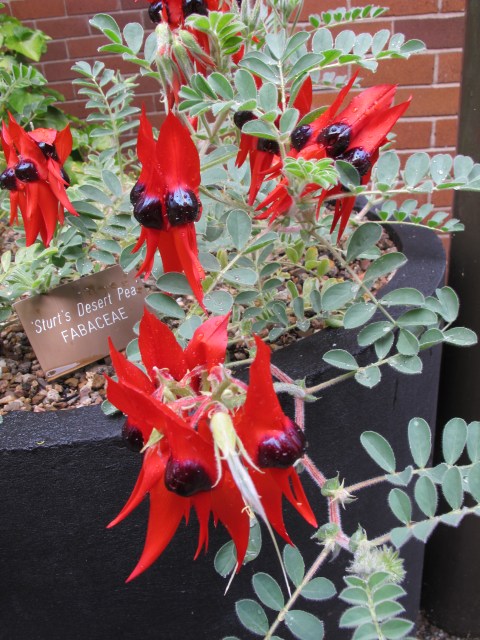
The remarkable Sturt Desert Pea or Swainsona formosa

The remarkable Sturt Desert Pea or Swainsona formosa

Continuing the Australian theme this week, I was very taken by this striking flower, commonly referred to as the Sturt Desert Pea, after Charles Sturt who recorded it flowering extensively in central Australia during his 1840’s explorations. This particular plant was in a tub outside the bookshop at Canberra’s botanic gardens. The scant foliage was visibly leguminous but it was the flowers that were spectacular. They are up to 9cm long and bright scarlet with a showy black boss in the centre, held in clusters. They a little pea-like (as indeed wisterias are) but more distinctive than any pea I have seen before.

It is regarded as one of Australia’s showiest wildflowers. While native to the central and north western areas, it is found throughout much of the country so maybe it is worth a try here in a sunny, dry position. Generally it is a low growing annual, flowering in spring though to early summer before setting seed and dying off.

I bought a packet of seed, unsure on whether I could bring it in to NZ but figuring it was only $4 lost if it was confiscated at the border. There was no problem. It is on the list as being here already so is a permitted import. In fact doing it all properly and declaring it got me through customs faster than had I lined up with everybody else for baggage x-ray. I have seen enough to be a strong supporter of good border control.

First published in the Waikato Times and reprinted here with their permission.