Tag Archives: gardening

Plant Collector: Daphne bholua

Daphne bholua - oh the fragrance

Daphne bholua – oh the fragrance

It is a rare plant that can stop you in your tracks from several metres out and have you sniffing the air to locate the source of scent. The Himalayan D. bholua is one of those plants. In our experience it is the strongest and sweetest of any of the daphnes and it has a very long flowering season because it sets buds down its stems. It is also very hardy. That is about the sum total of its merits.

As a garden plant, it becomes leggy, scruffy and untidy with age. It seeds down too freely and suckers around the place so when you think you have dug out one plant, it is just as likely that the suckers will pop up all around to confound you. It is semi deciduous. In cold conditions, it will drop all its leaves. In temperate conditions it drops some and of those it retains, only half look healthy while the other half look as if they are dying. Its natural form is upright but twiggy and untidy. Even the named cultivars we have tried are no better.

But we would not be without it. Oh, that scent. It all comes down to placement. Basically, you need to hide the plants behind something more attractive so you enjoy the scent while not expecting to admire the plant. I cut back and try and shape some of our larger plants from time to time, but it does not make a lot of difference to the overall appearance. You can never have too many fragrant daphnes in a garden and the narrow, upright habit of bholua means those plants are not going to hog too much space.

First printed in the Waikato Times and reprinted here with their permission.

Garden lore

“Of all the ugly things, nothing is worse than the variegated conifer, which usually perishes as soon as all its variegated parts die, the half dead tree often becoming a bush full of wisps of hay.”

William Robinson ,The English Flower Garden (sixth edition, 1898).

Crop rotation

Crop rotation has been followed for many hundreds of years for good reasons. Those medieval agriculturists knew a thing or two when they practiced crop rotation, including a fallow year – one in seven, if my memory serves me right. Planting quick maturing green crops and using compost can remove the need for the fallow year (which was all about returning fertility to the soils). The crop rotation part remains important because if you keep planting the same type of vegetables in the same place every year, you will get a build up of pests and diseases.

There is a wealth of information on crop rotation, but in its simplest form, think about plant families, not individual vegetables. There are the solanums (potatoes, capsicums, aubergines, tomatoes), the brassicas, (cabbage, cauliflower, Brussel sprouts, many of the Asian greens and broccoli), legumes (peas and beans), other leafy greens and beets, alliums (onions and garlic), the carrot, celery and parsley family of Apiaceae (or Umbelliferae), and the cucurbits (pumpkin, cucumber, courgettes, melons).

There are six families above plus a few like sweet corn which don’t fit anywhere. Rotate them round the veg patch every year and you will get a break of several years (minimum of four is desirable) before they end up back in the same spot. That simple process will greatly reduce your need to resort to intervention with sprays and powders.

If it all sounds too complicated, just keep the brassicas and the solanums moving. They are the most vulnerable crops.

First published in the Waikato Times and reprinted here with their permission.

.

Fruit hedges

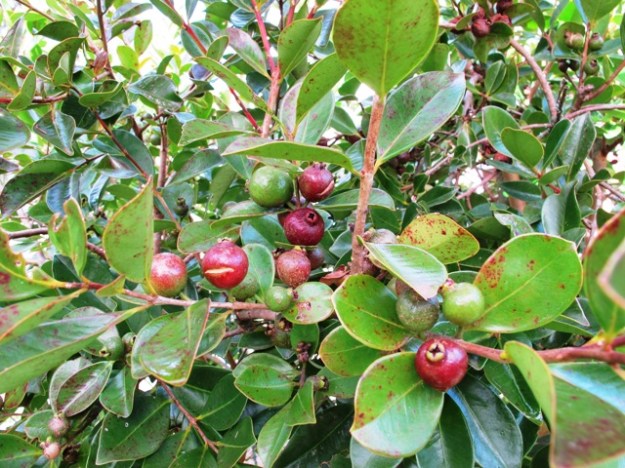
Psidium littorale or strawberry guava

Psidium littorale or strawberry guava

“Write about fruit hedges.” That was a request that had me thinking but good options are not that easy.

You can plant anything in a row and call it a hedge. If you live in the country and it gets tall, it is then called a shelter belt. If it is a double row it becomes an avenue. A grid-planted orchard with social pretensions is a phalanx. If the hedge is comprised of all the same plants and clipped at least once a year, it is a formal hedge. If it is comprised of different fruiting plants it becomes (drum roll), a contemporary food forest. All the rage in some circles, are food forests.

As the enquiry came from a gardener on a very small town section, I think it likely that she wanted the formality of a smaller hedge combined with the function of an edible crop. There aren’t many candidates for that. The problem is that if you clip hard, you will frequently be trimming off next year’s fruiting stems. Added to that, most fruiting plants thrive best with maximum sun, plenty of air movement and away from root competition. That is pretty much the antithesis of a hedging situation.

The other issue is to consider how many of a particular plant you want. It has to be delicious to warrant having a whole hedge line in one fruit though it is more likely that most people chose on criteria of being edible and tolerant of conditions, rather than hugely delectable.

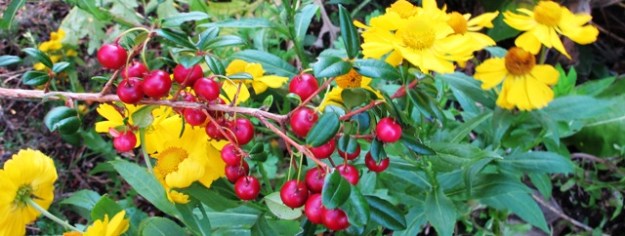
Ugni molinae or NZ cranberry

Ugni molinae or NZ cranberry

If you live way down south, you could probably hedge gooseberries (a bit prickly) or currants but these are not happy or rewarding crops in the more temperate north. Some swear by Ugni molinae (also known as Myrtus ugni, the NZ cranberry or the Chilean guava). I love the sweet little fruit and think every family garden needs a plant. A plant, singular. But as a hedging option, you would have to keep working hard to have it looking good. It is a bit sparse and twiggy and is prone to infestation from thrips.

The other guava (Psidium littorale, also known as the Chilean guava or the strawberry guava) is probably the single best evergreen, fruiting option we can think of for hedging. It is a lot more forgiving when it comes to clipping and pruning and could be kept to a tidy hedge below 200cm. The problem with it is that you want to grow one (or maybe two – a red one and a yellow one) to feed browsing children, attract kereru which love the fruit, and to make the odd jar of jelly. But few of us would think they are sufficiently delicious to want a whole row of them.

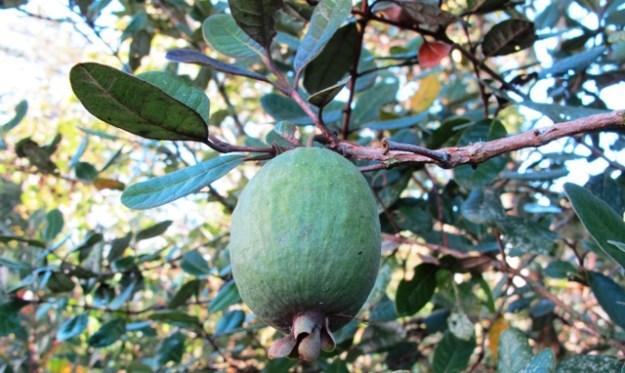
The ubiquitous feijoa

The ubiquitous feijoa

Feijoas, I hear some of you saying. Yes, feijoas make an excellent hedge but if you keep them well clipped you will be cutting off next year’s fruiting stems. These are plants which are best grown with plenty of space, just given the occasional light thinning or pruning and left to their own devices. That is not hedging. When our children were small, we owned a property with a row of four mature feijoas. They ripened in succession so we had fruit for months and the children would head outside with a teaspoon each in their little hands and sit beneath, scooping out the pulp to eat. They also occupied a space that probably measured close to 10 metres by 4 metres. As a productive road boundary planting, they were great. But a hedge, they were not.

If you follow English garden trends, you may have seen step-over espaliers. They appear to be a hot ticket addition. Generally apples or pears, these are beaten into submission by training along wires at knee height. Being deciduous trees, there will be no winter foliage but apparently you can get a worthwhile crop if you manage it right and you can ring your productive garden with these step-overs which therefore function as a type of hedge.

Do we think this is a good idea? Not really. For starters, the fruit is going to be at just the right height for the dog to cock its leg and pee on it. Or the neighbour’s dog, if you don’t have one. It is also a dry climate technique. With the relatively heavy rains most of us experience in the mid north, soil splash is a problem and will spread disease. Good air circulation, full sun and being above the splash zone will reduce problems. We are certainly not rushing into trying step-over espaliers.

In the end, fruit trees are probably most productive and healthy when grown as individual specimens. Fruiting hedges? Not such a practical option, in the greater scheme of things.

First published in the Waikato Times and reprinted here with their permission.

Reviewing roses

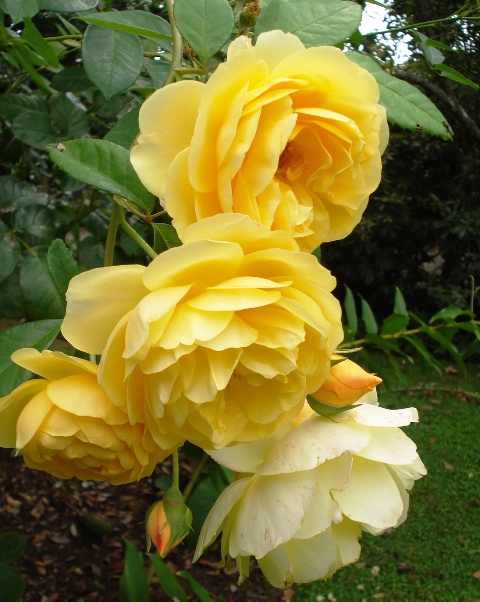
Graham Thomas has stood the test of time

Graham Thomas has stood the test of time

Who does not love the rose? The flower, I mean, for few could love the bush. While there are exceptions, most rose bushes are not noted as attractive and interesting shrubs. We grow them for the blooms.

I am no rose expert so the arrival in my letterbox of the NZ Rose Review for 2013-2014 was welcome. As far as I know, roses remain the top selling ornamental plant in this country despite the changing habits of gardeners.

Gone are the days when gardeners were willing to get out with their sprayer every couple of weeks, huffing on all manner of poisons to counteract diseases and fungi. I never did it but others told me it was pretty expensive and it certainly was not good for the soils or indeed the lives of beneficial insects. But the devotees got fine roses out of it. Environmentally, the rose spraying regime will not go down in history as one of gardening’s finest moments and much tighter restrictions on the sale of garden sprays have forced a change in attitude and management for most gardeners.

But what is a garden without roses? I want roses with masses of beautiful flowers on bushes which will thrive and stay looking okay (and okay is all I generally manage) without spraying. I don’t mind pruning and I will dead head, feed and mulch. But we do not regularly drench or spray any plants in our garden and we sure ain’t gonna do it for roses.

Enter the Rose Review. The most interesting pages for me are at the front of this 48 page booklet. There are rankings of the top roses in various categories as voted on by experienced rosarians. This is the sort of shortcut to information that I find useful in the case of roses because I want to have them in the garden but I am not sufficiently dedicated to spend a lot of time getting to grips with the detail.

Paddy Stephens - the top ranked rose overall. Again. (Photo: NZ Rose Soc)

Paddy Stephens – the top ranked rose overall. Again. (Photo: NZ Rose Soc)

‘Paddy Stephens’ is a clear winner. It tops the Hybrid Tea list for the tenth year in a row. A higher accolade in my books is that it also ranks number one on the Healthy Roses list. So as long as you want a coral orange Hybrid Tea, this is the one to get. I don’t grow Hybrid Teas, but many others do and it is a matter of personal taste.

Interestingly, for patriotic Waikato readers, ‘Hamilton Gardens’ is a proven star, too. It is ranked number 4 in the Hybrid Tea class and 3 in the Healthy Roses class. I looked it up and I see it is a sport of Paddy Stephens, so it is hardly a surprise that it is also a top performer. These are the work of this country’s foremost rose breeder, Sam McGredy.
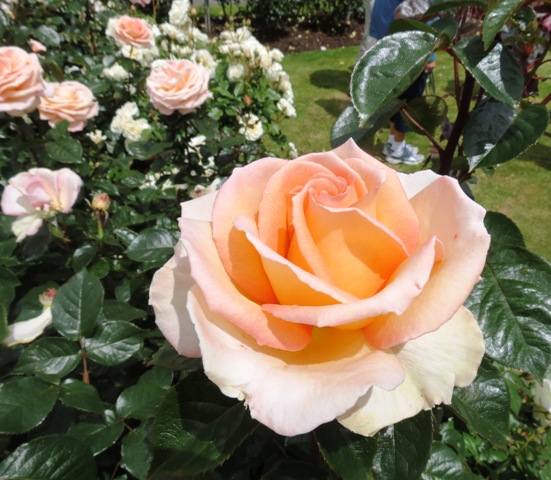
Hamilton Gardens - sport of Paddy Stephens (Photo: NZ Rose Soc)

Hamilton Gardens – sport of Paddy Stephens (Photo: NZ Rose Soc)

‘Dublin Bay’ is still up there as the best large-flowered climber. In an industry driven by constant new releases, it is interesting that this variety which dates back to the 1970s has remained top of the pile. It is another McGredy rose. The world of roses owes a huge debt to this man.

I much prefer the floribundas and the shrub roses. ‘Raspberry Ice’ is top in the floribundas, and ‘Sally Holmes’ in the shrubs, with the tried and true ‘Graham Thomas’ coming second. I have Graham and Sally was already on my shopping list for this year. I can see I should have bought her years ago. We can’t credit her to our own Sam McGredy. This is the first rose ever bred by an amateur (Robert Holmes of the UK) to be inducted to the elite Rose Hall of Fame. Also in that heady company are “Graham Thomas’, ‘Iceberg’ and ‘Peace’ which are well known, even to non gardeners.
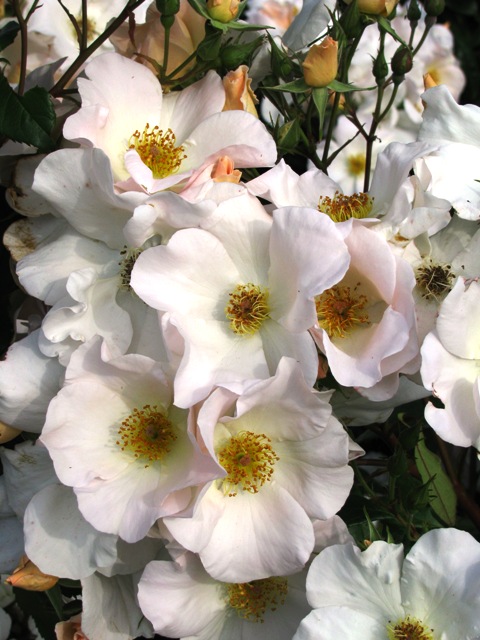
Sally Holmes - tried, true and still a top ranked variety (photo: NZ Rose Soc)

Sally Holmes – tried, true and still a top ranked variety (photo: NZ Rose Soc)

Most Fragrant Rose is topped by ‘Margaret Merril’ for another year. Patio roses are even further down my list than hybrid teas so I shall just say ‘Irresistible’, if you must.

If you are beyond the novice stage (and I have no illusions that I am anything above a novice when it comes to roses), the greater part of the Rose Review booklet is reviews of newer releases. They are all rated out of 10 as garden plant, exhibition bloom, on health and fragrance, with grower reports from around the country. All entries are accompanied by photos.

This is not an infomercial but it looks mighty good value for $7.50 (including postage). If you want your own copy, you can contact the secretary of the NZ Rose Society, Mrs Heather Macdonell (email: secretary@nzroses.org.nz, phone or fax 06 329 2700).

Don’t expect to find any of the handy Rose Flower Carpets mentioned anywhere. These are produced by nurseries outside the small circle of specialist rose growers who are major contributors to this publication and the main market suppliers. There is another story in those sometime, perhaps.
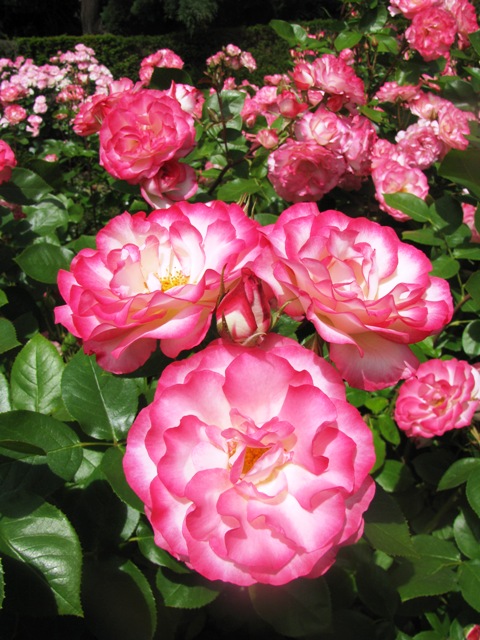
Raspberry Ice (photo: NZ Rose Soc)

Raspberry Ice (photo: NZ Rose Soc)

First published in the Waikato Times and reprinted here with their permission.

My favourite white camellias

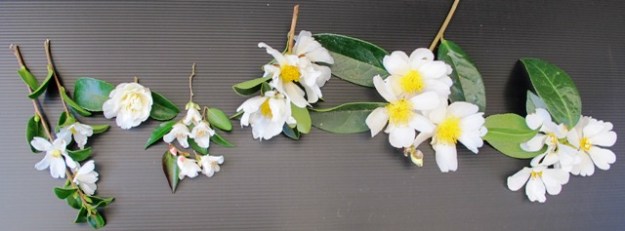
Left to right: C. microphylla,  sasanqua Silver Dollar, transnokoensis, drupifera, gauchowensis, yuhsienensis

Left to right: C. microphylla, sasanqua Silver Dollar, transnokoensis, drupifera, gauchowensis, yuhsienensis

When you think about it, it is likely that at least two thirds of camellias are pink with the remaining third shared by red and white. In this country, we have a passion for white flowers. Indeed it is seen as a mark of sophistication in some quarters to create a garden with only white flowered plants (Sissinghurst’s famed white garden meets new-age minimalism in the far flung colony), perhaps alleviated by the occasional addition of one extra colour – touches of red maybe, or black for the ultra sophisticates.

That love affair with white extends to camellias, especially where hedges are concerned. I would guess there are many more white camellia hedges than pink or red ones. While I don’t put the whites on a pedestal above their coloured cousins, there is a charm in pristine, white flowers – though not if they then turn to sludge brown and stay on the bush.

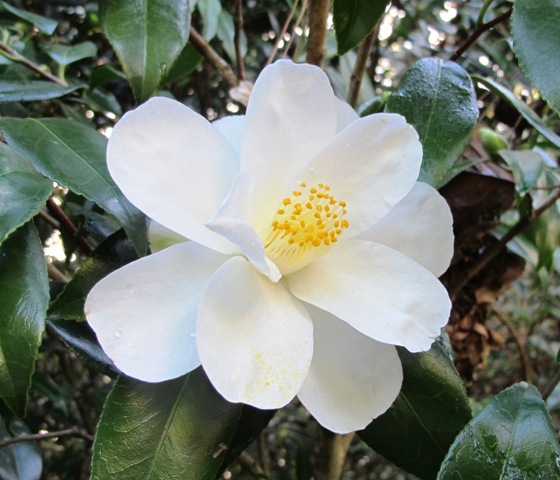
I mentioned Camellia gauchowensis last week. After many weeks, it is still looking splendid and has plenty of flower buds yet to open. We think this is a sasanqua – the Japanese camellias which start flowering in autumn. Many sasanquas have a sort of mossy, earthy scent which is peculiar to this family and C. gauchowensis certainly has it. Some optimists on overseas websites refer to its wonderful fragrance but it is just that typical wet moss sasanqua smell.

The sasanquas bring us the greatest range of good performing pure whites. Pretty much everybody knows Setsugekka with its medium to large semi double flowers and golden stamens. In fact it is not dissimilar to C. gauchowensis, or Weeping Maiden for that matter. There is a whole string of them that are similar, varying more in habit of growth than in flower. C. gauchowensis is probably my favourite only because that is the one I have planted in a prominent spot where I see it frequently.

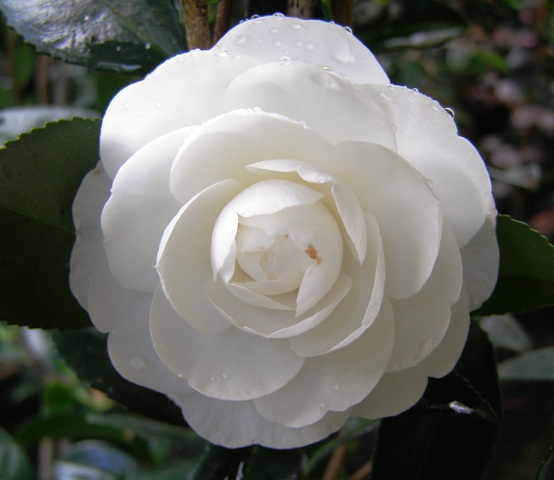
Early Pearly, one of the loveliest white sasanquas of them all

Early Pearly, one of the loveliest white sasanquas of them all

For beauty of white bloom in the sasanquas, it is hard to go past Early Pearly. It has what is described as a formal flower (a full set of petals with no visible stamens, held in tidy, overlaying circles). If I were to go for a white sasanqua hedge, I would probably pick Early Pearly but it is a matter of taste (and availability). It is the only white sasanqua I know with that flower form.

Away from the sasanquas, there are a fairly large number of species with small, white, single or semi double flowers. Tsaii is well known, though not my favourite. I think as it gets ever larger, it can be a little sparse in the foliage department. I have commented before about our choice of C. microphylla as both hedging and specimen plant. It has all but finished flowering for the season. We are also fans of C. transnokoensis (colloquially abbreviated to ‘transnok’) which has good dark foliage and masses of tiny white single flowers. In fact we are so keen on it that we have just planted two lengths of hedging and it is starting to open its flowers now. We are impressed by the somewhat obscure C. drupifera with its compact habit, dark foliage and plenty of mid-sized pure white flowers.

These single and semi double types have two big advantages. Many feed the birds in winter because the pollen and nectar are readily available in the visible stamens. They also fall and disintegrate quickly, so there is no sludge of spent blooms below. Most have blooms which are pretty short lived but to compensate for that, they set masses of flower buds so there are fresh flowers opening as the spent ones fall.

Whites are far more problematic in the japonica and hybrid camellias. These types tend to have flowers with much more substance – stiffer, more solid. This is where the show blooms come from and there is a wider range of flower form and blooms are often much larger. They also hang on to the bush for longer and the problem with white and pale blooms is that they show all weather damage and then hang about for longer in a brown and white state on the bush.

This one is Superstar. We can't pick it from Lily Pons

This one is Superstar. We can’t pick it from Lily Pons

The only ones I can honestly recommend in these larger flowered, mid season blooming types are Lily Pons or its twin sister, Superstar. We have never been able to pick the difference between the two. They are more semi doubles with fluted petals and golden stamens, showing better weather tolerance and more graceful ageing than other large whites of this type. We have never found a top performing, formal white japonica which doesn’t show every blemish.

In the end, it will come down to availability these days. The range of camellias offered for sale in this country has contracted dramatically. You may have to settle for what you can find, but take heart. There is a fairly high degree of flexibility possible because many actually look similar. In the end, choose on overall performance as a garden plant, not on the beauty of a single bloom.

First published in the Waikato Times and reprinted here with their permission.