Tag Archives: gardening

Plant Collector: Lachenalia aloides quadricolor

The first lachenalia of the season: L. aloides quadricolor

The first lachenalia of the season: L. aloides quadricolor

The first of our lachenalias has come into bloom. ‘Quadricolor’ refers to the four colours in the blooms of this particular variety – lime green tubes with maroon tips are attached to the stem by a cap of orange and yellow. The commonest lachenalia that is seen in New Zealand is the somewhat garish, strong growing scarlet and orange which looks to me as if it should be sold amongst the plastic flowers in the red sheds. It is not in bloom yet. It used to be sold as ‘Pearsonii’ but that is an incorrect name, peculiar to this country. It is just a different form of L. aloides which is a variable species. We also grow L. aloides tricolor which is much later flowering and lime green with pale yellow and orange and the very different L. aloides var vanzyliae which is a striking pale blue and white with green tips.

Lachenalias are native to South Africa, predominantly the Cape Province. Most are winter flowering and summer dormant. We have different varieties flowering from now until early November in the garden. Many are easy enough to grow in sunny positions with good drainage, as long as you don’t get very heavy frosts. The foliage is not overpowering and doesn’t hang on too long after flowering finishes which makes for a tidier garden bulb. The highly desirable blue species come later in the season and not all are as easy to grow as L. aloides.

First published in the Waikato Times and reprinted here with their permission.

Know thine species

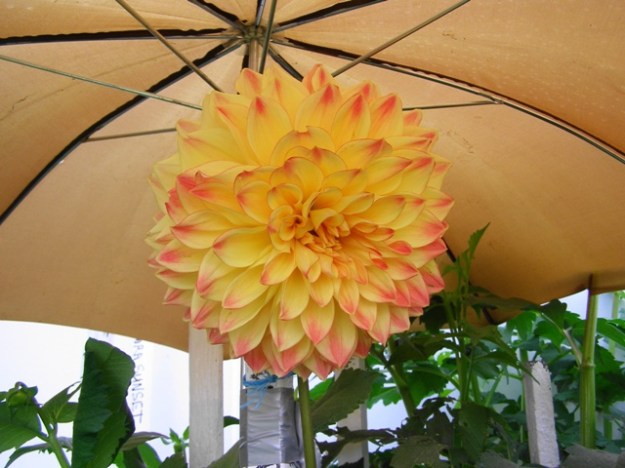
The show dahlia

The show dahlia

You can quite easily live out your gardening days without ever worrying about species and hybrids. Indeed you can, but as with most activities, many people will find that the more they know, the more they enjoy what they are doing.

At its simplest level, species are the natural form of a plant in the wild. And all plants originated somewhere in the wild.

Hybrids are mix of two different species in the first instance and after that they can quickly become a mix of many different species and resulting hybrids getting ever more complex genetic makeup. There is no value judgement in the rights and wrongs of that. Sometimes these hybrids occur in the wild without any human intervention (usually referred to as “natural hybrids”). Often it is done deliberately to try and improve plants.

A variation on controlled hybridising is line breeding – raising many seed from a plant and selecting only the very best with which to continue. Then seed from those best plants is raised time after time until it shows stability. Seed can be extremely variable and this form of line breeding is trying to edit out the less desirable aspects over several generations.

It happens all the time with edible crops. Think how much sweet corn and kiwifruit have changed over the years. The original, wild collected species of edible crops are often poor shadows of what we have now in terms of yield, reliable production, ease of handling and palatability.

It is not always true, of course. Sometimes commercial imperatives have seen us saddled with inferior tasting product – tomatoes are a prime example. And there are concerns about the loss of the wild species which are important to maintain the gene pool for food crops.

As far as ornamental plants are concerned, most of us will have gardens which are a mix of species and hybrids. There are no hard and fast rules although I have met a fair number of gardeners in my time who parade a collection of species only as a badge of status.

Species Camellia gauchowensis

Species Camellia gauchowensis

Some species have a simple charm which is lost in their showier hybrids. Others are nondescript in the extreme. Some highly desirable species are simply damn difficult to grow whereas the hybrids bring new vigour which makes them much more rewarding garden plants. Sometimes there are species which make splendid garden plants but they can be overlooked because their names are not appealing. Camellia gauchowensis has been the standout star of that family here recently and why anybody would grow the likes of Mine No Yuki instead of C. gauchowensis, I don’t know.

We have been revisiting the camellia species as we pick over the best options in the face of the devastating camellia petal blight which has so affected many of the hybrids we grow. It is not that the species don’t get it. It is just that some of them have less susceptibility and have other good characteristics which are worth looking at. More on this in the future.

Show blooms, no matter which plant family, often tend to be over-bred hybrids which are but distantly related to original species. Dahlias which are too heavy to hold their heads up without staking, bizarre daffodil forms, overblown cyclamen or chrysanthemums, enormous begonia flowers – anything that is bigger, allegedly better or a novelty genetic freak.

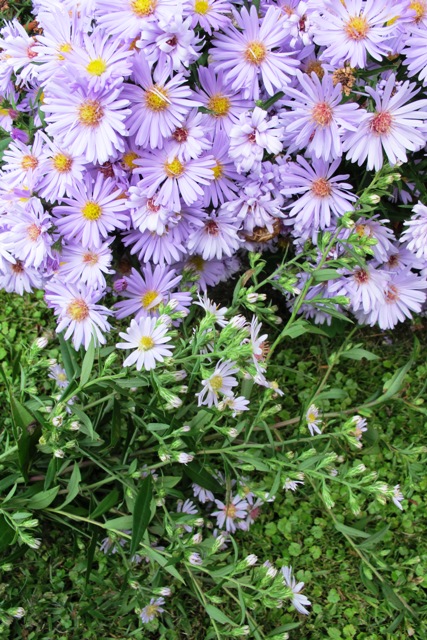
Named hybrid aster at top, self sown seedling at bottom

Named hybrid aster at top, self sown seedling at bottom

But controlled hybridising can also give us garden plants which are hugely better performers. You can see in the photograph of asters that the abundance of blooms at the top are from a named hybrid whereas the few poor specimens at the bottom are from a self sown seedling which has probably reverted closer to how the original species looks.

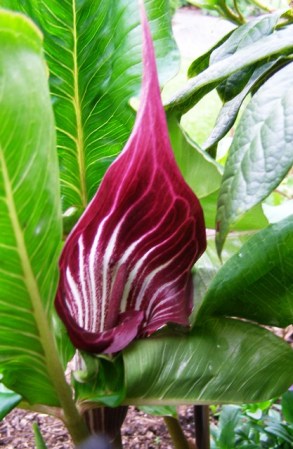
Hybrid arisaemas for our own garden

Hybrid arisaemas for our own garden

I am of course married to a plant breeder who is driven by the desire to create better performing garden plants. Sometimes it is just to get plants which will grow better in our garden here. His work with arisaemas is of this ilk. Many of the desirable arisaemas are a battle to grow in our conditions with insufficient chill and they simply don’t come back a second year. By hybridising two different species, he can get hybrid vigour which means they are much more reliable and stronger growing.

Other plants may be hybridised to look for new or improved characteristics – extending the colour range, reducing the impact of disease, getting more compact growth, better floral display, a longer season, sterility (to avoid unwanted seeding) or bringing the best features of different hybrids together in one plant. There are many reasons to hybridise and one of the final tests before selecting a new cultivar for release is to measure it against both the originating species and the actual parent plants. If it is not a significant improvement, then it won’t get released on the market.

Hybrids have their place in the ornamental garden and in the edible garden. But in a world which is squeezing the natural environment in every way possible, we need to retain the original species for reasons of ecology and bio-diversity. The more people who understand the difference the better – even more so if they can move away from the modern “green” cliché that says the original species are, by definition, better. They are not, but they are important.

First published in the Waikato Times and reprinted here with their permission.

Managing garden maintenance

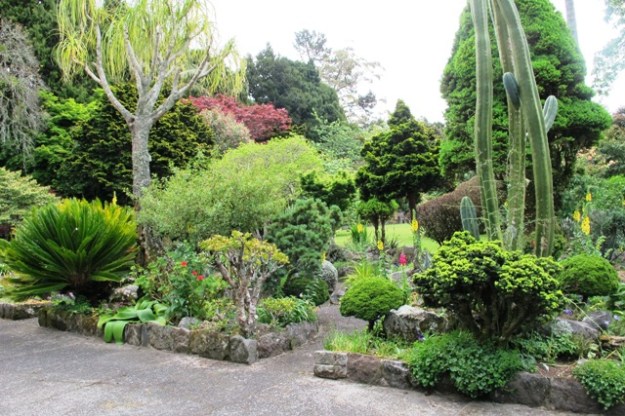
Close in by the house is under constant maintenance

Close in by the house is under constant maintenance

Garden maintenance. Oh yes, it is often like housework outdoors. No matter how much you do, it always needs to be done again. Vaccuming, tidying, dusting, spring cleaning – there are garden equivalents for the lot.

I admit I am not the world’s most dedicated housekeeper. I do it because I have to. If I found a gem of a reliable cleaner, I would find the money to pay this person to do it for me. But the times of my life when I have paid regular cleaners have also been somewhat irritating because they do not do it to my standards. Gems are hard to find.

Good garden help is equally difficult to find, I believe. Fortunately, because I don’t mind the garden maintenance side, I don’t feel the need to pay someone to do it for me. I have a wonderful book from 1984, vintage Alan Titchmarsh who is now a doyen of English garden television but who was a lesser known, bright young wit 30 years ago. It is called “Avant-Gardening, A Guide to One-Upmanship in the Garden.” In it he has a chapter entitled: “Having a Man In” and his opening line is: “Or a woman; but most likely a man.” He divides gardening help into Treasures and Tolerables. The Treasures, he declares, are rarer than blue roses.

I would love to quote the lot about The Tolerables, but it is too long. Edited highlights include: “They resent change. Their favourite flowers are …scarlet salvias, orange French marigolds, standard fuchsias and lobelia and alyssum. They love ‘dot’ plants. They have difficulty in recognising your treasures and pull them up as weeds…. The vegetables they grow will be their favourites, not yours. ….They dig beds where you don’t want them and act on ‘initiative’ without asking if you actually wanted the orchard felling…. They don’t let you know when they are not coming in (it pays to keep you guessing).” There is more in that vein.

Judging by the number of enquiries I have had over the years, good garden help is just as scarce nowadays as it has ever been. But, as with anything else, if you are only willing to pay the equivalent of minimum wages, you are unlikely to find a Treasure who knows what he or she is doing in your garden. A Treasure whom you can trust is even rarer and will need to be cherished.

The bottom line is that most of us end up doing it ourselves and gardening as a DIY ethos is deeply ingrained in this country to the point that it is often worn as a badge of pride.
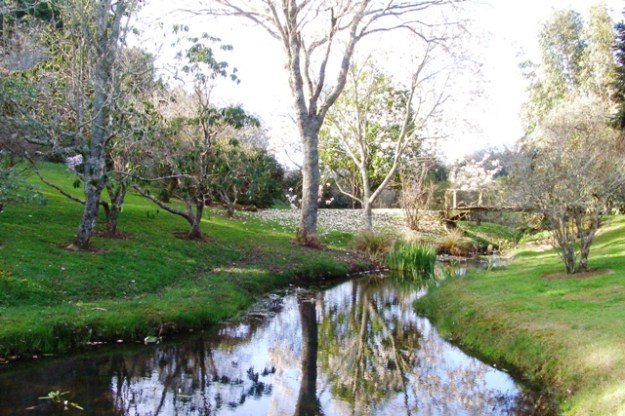
The outer areas are on a once a year maintenance cycle

The outer areas are on a once a year maintenance cycle

I credit the potted wisdom on garden maintenance I received years ago to senior NZ gardener, Gordon Collier. Think of the garden as radiating circles, he told me. The circle closest in to the house is where you carry out the most garden maintenance to keep it well presented. Essentially, you stay on top of it by keeping at it all the time. The next circle out should be on a seasonal cycle so you get around it four times a year. Then there is the outer circle which you do once a year.

This of course is big garden advice. A smaller urban garden probably does not take you beyond the second circle. I have always remembered his words because it gave a sensible and manageable framework for a large garden, and we are large gardeners here. It is worth thinking about if you are extending your garden. The further out you go, the less you will do in terms of regular maintenance. Plan from the start to keep it on an infrequent cycle and you won’t be making a yet bigger rod for your own back.

He Who Does the Majority of the Weed Control here (aka my Mark) would like it pointed out that this does not apply to weeding. Depending on the time of the year, he will start a weeding circuit as often as every three weeks. If you leave the weeding circuit to three monthly, or annually, you will never keep invasive weeds under control. The convolvulus will have smothered its host, the seedling cherries grown too large to hand pull and there will be a permanent carpet of bitter cress. Most weeds will have viable seed on them by six weeks – hence the three weekly cycle to catch the weeds missed on the last round.

That outer round of maintenance is the pruning, cutting out dead wood from shrubs, the removal of large debris, seasonal dead heading where necessary, cutting bank rank grass and a general tidy up. It is what I am doing right now.

The middle circle is hedge trimming, digging and dividing perennials, cutting back, staking, pruning, shaping, clipping and mulching.

The close in circle is… well… like vaccuming the living areas and washing the kitchen floor really. Frequent and ongoing. I just prefer to work outdoors and, in my case, without power tools.

First published in the Waikato Times and reprinted here with their permission.

Plant Collector: Guichenotia ledifolia

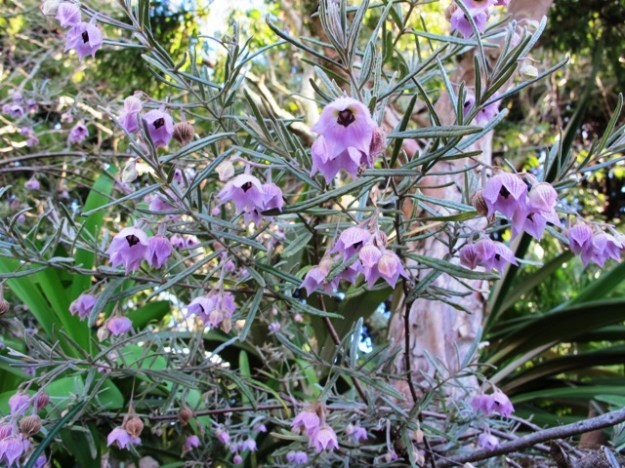
Guichenotia ledifolia

Guichenotia ledifolia


We learn something new every week, though whether the name of this charming little shrub embeds in the memory banks remains to be seen. It doesn’t seem to have a common name and Guichenotia does not trip off the tongue easily, let alone ledifolia.

But what a little pet this Western Australian shrub is. It has rangy growth and evergreen foliage somewhat like a sparse, grey-toned rosemary (without the aromatic properties). The charming, nodding bells are mauve with little dark centres like a quilted pin cushion.

As with a fair number of Australian native plants, it tolerates a wide temperature range but it needs very good drainage and favours a somewhat drier climate than we have. This specimen is in a raised bed in full sun. It has never exactly romped away to reach its promised 100cm in height, instead arching out and staying low. It is not rare. Nor is it endangered in the wild. It is just one of those lesser known gems that adds a quiet charm to its corner of the garden gently flowering for much of the year. It is the winter flowering now, however, that we value the most.

First published in the Waikato Times and reprinted here with their permission.

Garden lore

“In fine weather the old gentleman is almost constantly in the garden; and when it is too wet to into it, he will look out of the window at it by the hour together. He has always something to do there, and you will see him digging, and sweeping, and cutting, and planting, with manifest delight…; and in the evening when the sun has gone down, the perseverance with which he lugs a great watering-pot about is perfectly astonishing.”

Charles Dickens, Sketches by Boz

???????????????????????????????

Dealing with large container plants

Woody trees and shrubs cannot be left permanently in tubs and containers and expected to prosper. At some point they will start to go back badly because you have put them into an artificial, controlled environment. While you can extend by regular feeding, there comes a time when you have to repot, which is easier said than done with large plants and heavy pots. Get a large piece of plastic and gently tip the pot over on its side. You may need to support the plant to prevent damage. Then with an old carving knife, start excavating the old potting mix, rolling the pot as you go. This is not usually a three minute job.

Once you can get the plant right out of the pot, remove all the old potting mix that you can. I finish off by using the hose to wash out more. If it is going back into the same pot, you will probably have to trim the roots. Make sure you trim the top as well, to reduce stress on the poor plant. Repot using a good quality potting mix, making sure you get mix all through the plant as well as underneath and around it. Most mixes come with slow release fertiliser already added, in which case don’t add extra. Keep the final level about 2.5cm below the rim of the pot to make watering easier.

First published in the Waikato Times and reprinted here with their permission.