Tag Archives: gardening

Reflections and plans (with unrelated photos)

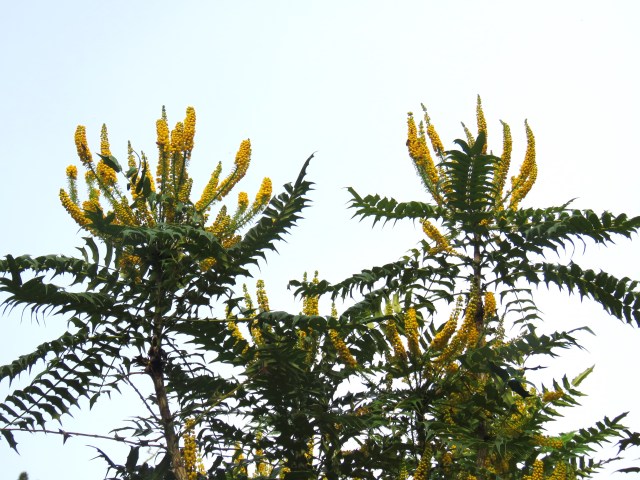
Mahonia. Which one we don’t know. Neither of us has ever been interested enough to look into the different mahonias but this one does put on a good display in autumn and is alive with the hum of bees.

I had cause recently to look up how many years I spent writing weekly for newspapers. EIGHTEEN YEARS, first for Taranaki Daily News, then adding the Wanganui Chronicle and finally the Waikato Times.  You could knock me down with a feather. It is so long ago that I started by faxing my articles to the paper. There are children alive now who don’t even know what a fax machine was and how magical it was for its brief office reign. No wonder I have such a big back catalogue of writings because on top of the newspaper contracts, there were shorter stints with magazines.

More of the mahonia

The high point was probably when a survey conducted by one of the newspapers had readership of the garden pages (where I was the main contributor) ranking higher than the sports pages. You would never guess that by the current invisibility of gardening in the media and the amount of space and time still given to sports coverage. But times change.

There are times, I admit, when I feel I have nothing left to say that I have not written before and I wonder what I can photograph that I have not shown before. Quite a large part of that is the result of our personal world becoming so much smaller. I have always relied on seeing gardens that are new to us, new landscapes, talking to more people for the stimulation of new perspectives. The last time we did a major trip overseas – I don’t count Australia as overseas – was 2017. Covid saw us cancel our 2020 plans.

Self-sown Moraea polystachya just out from the back door. it is probably the longest flowering of any of the autumn bulbs and belongs in the iris family

I am flying off to the south of France in ten days time, via Barcelona as the closest airport to where our second daughter, her partner and their beautiful baby live across the border. I think it may be my last long-haul trip in the face of an uncertain future with climate change and geopolitical upheaval. I haven’t been to that northern corner of Spain or any of the south of France so I expect to be invigorated with new sights and experiences. We have scheduled Gaudi’s Park Güell for the day after I arrive.
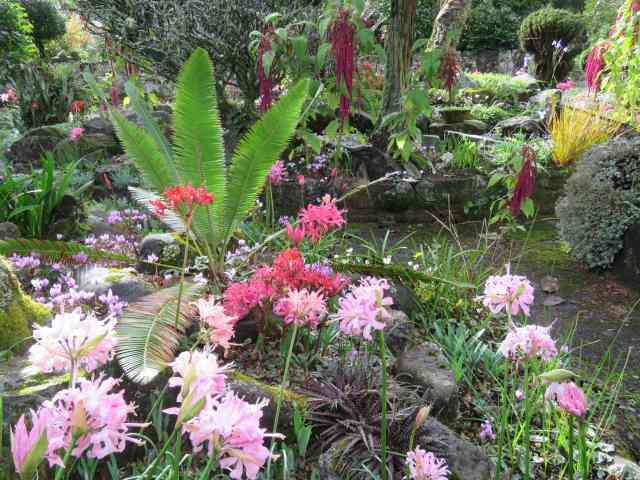
The rockery is bursting with colour as it hits its autumn peak.

In the middle of my trip, I am heading east, to what used to be known as the French Riviera. There I am joining a six day tour of the gardens in the area around Nice, starting with Lawrence Johnson’s indulgence called Serre de la Madone. Johnson is most famous for creating the garden at Hidcote Manor, which which just blew our minds when we first saw it, back in 2009 I think. At the time it was, quite simply, everything we aspired to with our own garden. In the years since, our directions have changed and I doubt that we would respond so intensely now but I have always wanted to see his French garden which is, I believe, very different to his English one.

I expect to return stimulated and inspired from seeing these largely classical French gardens with forays to Monte Carlo and across the border to Italy. Crossing borders in Europe never fails to delight me, as a New Zealander whose nearest neighbour is a minimum 3 hour flight away. I am anxiously watching the situation in the Middle East and the flooding in Dubai because I am flying that way. For overseas readers, to get to Europe or the UK from here involves two long-haul legs. We can do it via USA or Asia with with two flights of 12 hours each, give or take. Or we fly via Dubai or Doha and that starts with a non-stop 17 hour flight from Auckland, followed by a shorter second leg. That 17 hour flight is quite a lot … a lot of something, probably endurance.
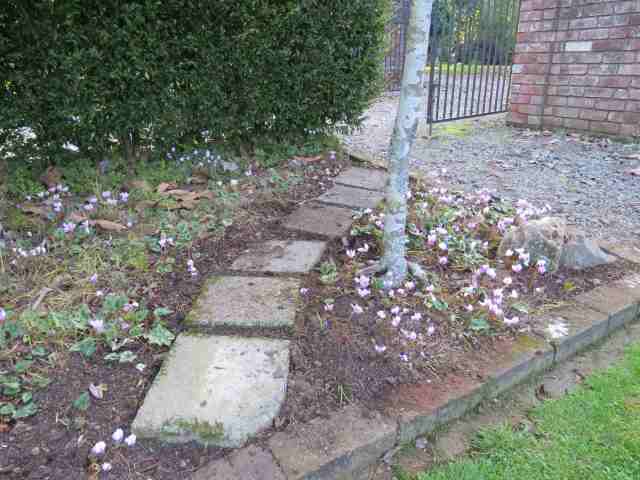

Back to more local concerns: this path of pavers marks a degree of resignation to the inevitable. Ralph had established a speed track across the bed – the shortest distance out to the carpark. After all, he needs to respond quickly to any vehicle or strange voices because, you understand, he is never sure whether it is a maniacal axe-wielding man intent on doing harm or the lovely electricity meter reader who feeds him dog biscuits. Speed is of the essence.

I debated about trying to block him off but he would jump any barrier up to a metre high and the potential for injuring himself on bamboo stakes is pretty high. I think we can conclude Ralph won that round.
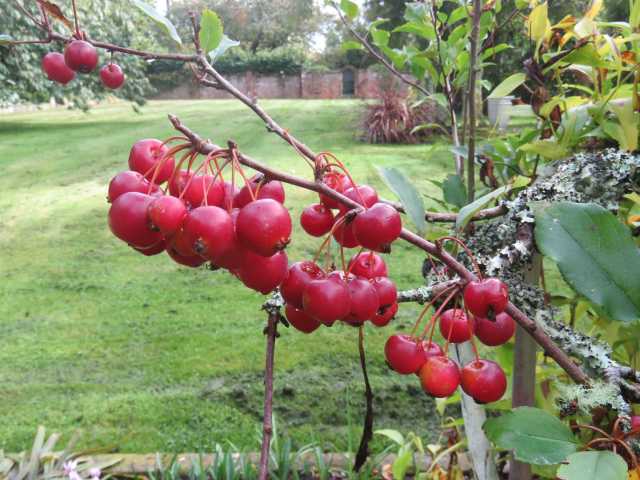
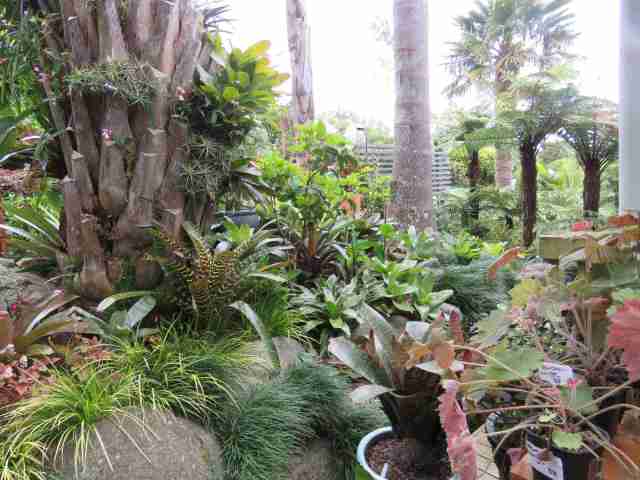
A dwarf crabapple in the rockery . Its name is lost in the mists of time but in all the decades it has been there, it is still only a metre and a half in height.

Three gardens (not ours)

Three Elms Garden

Despite my intentions, life has got in the way and I have not been out and about visiting gardens and artist’s studios open on various trails this week in Taranaki as much as I thought I would. But I did get to three gardens on Thursday, which is about my limit for a day.

How to completely screen your neighbour’s house from view when it is very close – at Three Elms

First up was Three Elms, in New Plymouth which exceeded my expectations. The owners, Shane and Lisa McNab, have always credited us with inspiring them to garden – albeit several decades ago – and they tell me they made their first plant purchase from us. It was a pot of rhodohypoxis. They have clearly learned a huge amount in the time since.

It takes a lot of skill to manage a very steep section but Three Elms show it can be done in such a way that the changes in level seem effortless

Three Elms is a town garden on a section that is not large but started out as a steep challenge. It is a due to their hard work and thoughtfulness that the gradient is no longer a problem. They have created small terraces with fairly easy transitions between them, belying the original slope and making moving around the area straightforward. Talk to Shane, if you visit, about the lengths he had to go to installing the large boulders and rocks that are used extensively. They are a feat of determination and physical effort.

That is a tropical cordyline, believe it not, with strelitzia, a dwarf maple and a palm.

The hard landscaping provides the framework but it is the plantings that star. As they should, in my opinion. Pretty much every square metre has been carefully thought about and tended with skill and care over many years and it shows in the plant selections, the health of the plants and the harmonious combinations. There are a lot of bromeliads but it is not only bromeliads, by any manner of means.

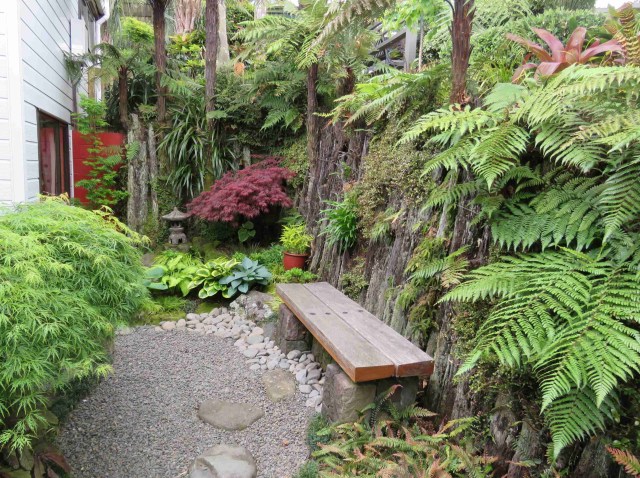
A nod to Japan makes use of a challenging space between the back of the house and a ponga (tree fern) retaining wall.

Gardens are only work if you don’t enjoy what you are doing. Three Elms has had a lot of time, thought, skill and – yes – love given to it over many years and it shows. If you are out and about garden visiting locally this weekend, go and see it.

Hurworth Country Garden

Hurworth Country Garden also delighted me. I had been to an event there late last year but events distract from looking at a garden and I wanted to have a better look. I was about a third of the way around it when I found myself thinking, “This is a really graceful garden” and that is not a descriptor that I have ever used about a garden before.

It is pretty large for a retirement garden situated just beyond the city limits and immaculately presented, but that high level of maintenance doesn’t interfere with the feeling of relaxed charm and space – and indeed, grace. Again, it reflects the skill, experience and thought of its owners, Jan and Graeme Worthington. I do like a thoughtful garden.

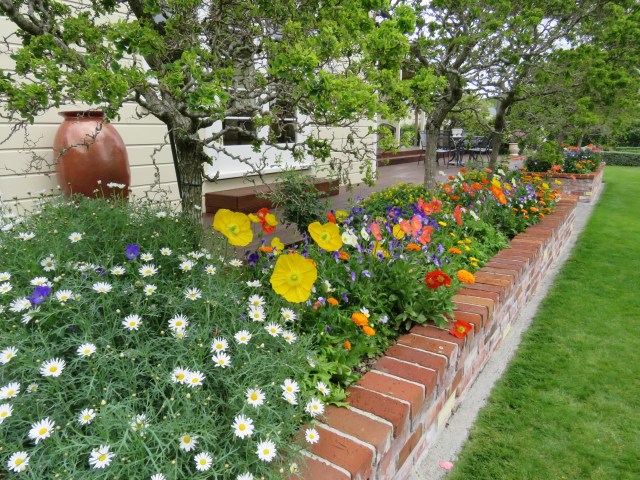
I loved the vibrant colour of the raised beds edging to the house verandahs, contrasting with the more subtle colours of much of the rest of the garden.

Jan’s use of colour is subtle but not monochromatic. When I commented on this, she put it down to her experience in quilt making. I haven’t seen her quilts but I imagine they are as immaculate and harmonious as her garden.

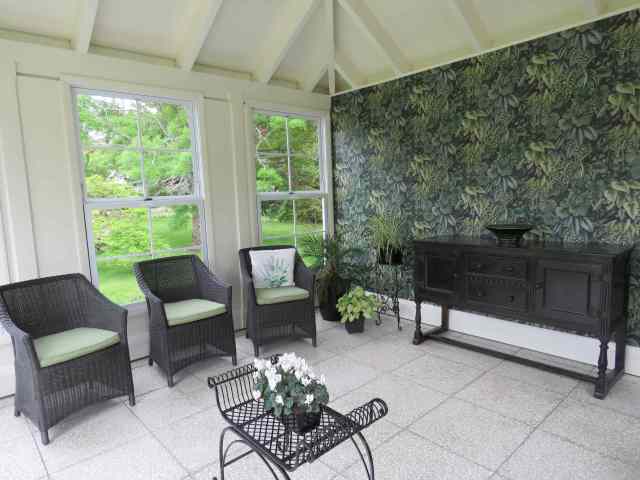
I coveted Hurworth’s garden room

They also have one of the loveliest garden rooms I have seen and I do like a good garden room. I didn’t even think to ask how and when they use it when the garden is not open to the public; it is perhaps a little too far from the house to use for summer meals and entertaining but it is the sort of room I could visualise sitting in myself, just to enjoy the ambience and views. Hurworth is a garden with a particularly lovely ambience.

Kowhai Garden

The third garden I went to was Kowhai Garden which has a remarkable collection of rhododendrons – over 900, I believe. It is not just rhododendrons but they are the stars at this time of the year. I entertained myself identifying those I knew, dredging my memory banks from the days when we had a nursery that specialised in the genus. Again, it is an example of how people cope with gardens that include a very steep slope, as much of this large garden has. What stood out for me were the rhododendrons that are thriving in a low maintenance environment – not only flowering well but also keeping good foliage and good plant form. Some are performing much better than others.

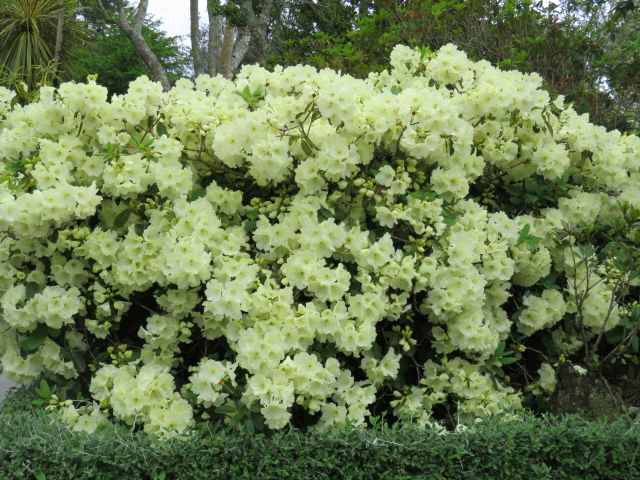
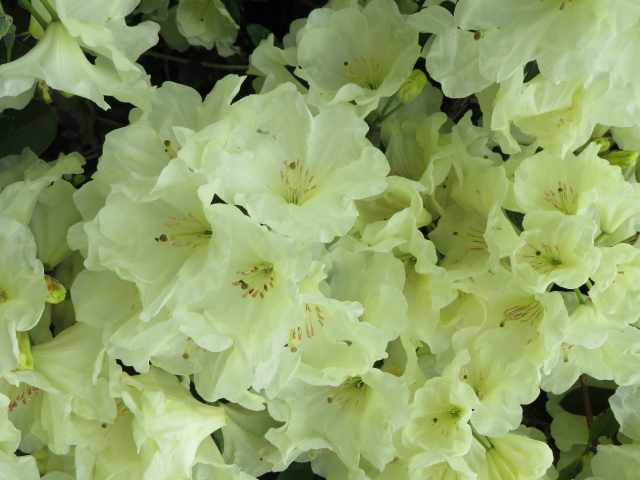
Rhododendron ‘Lemon Lodge’

Near the house is an outstanding plant of ‘Lemon Lodge’ – simply the best specimen I have ever seen.

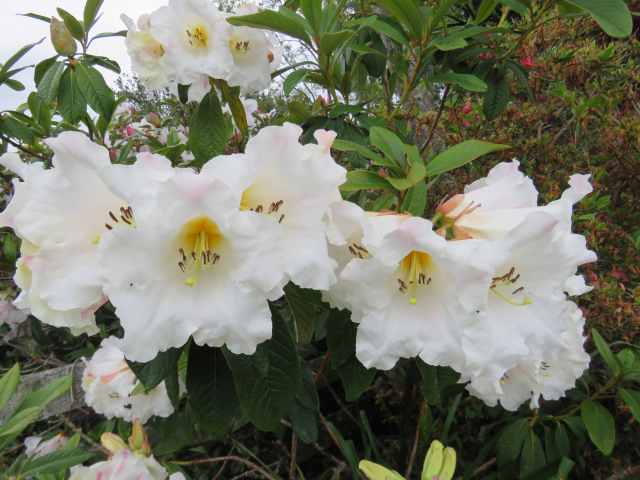
Rhododendron ‘Floral Fete’

Also looking lovely were plants of R.nuttallii x lindley hybrids – these ones are ‘Floral Fete’, the owner, Neil Tapsell told me. There used to be a number of named forms of this cross around including the likes of ‘Mi Amor’, ‘Stead’s Best’ and ‘White Waves’. I am not sure how many are still available commercially but it remains a beautiful hybrid and ‘Floral Fete’ is as good as any of the forms I have seen and arguably better than ‘Mi Amor’.

Here endeth my summary of Thursday’s garden visits. I am hoping to get to see another couple over the weekend but the arrival today of our most beautiful Jury hybrid, our little baby granddaughter accompanied by her mama, may yet derail my plans.

Finally, I add this photo from Three Elms not because it shows much of the garden but I am always interested in how gardeners manage their behind the scenes workspaces in small town gardens. Tidily and discreetly, in this case, I would say. Our behind the scenes spaces are much more expansive and untidy and I am in awe at anybody who can manage to screen and disguise garden service areas so well.

The first autumn blooms and the journey to gardening nirvana

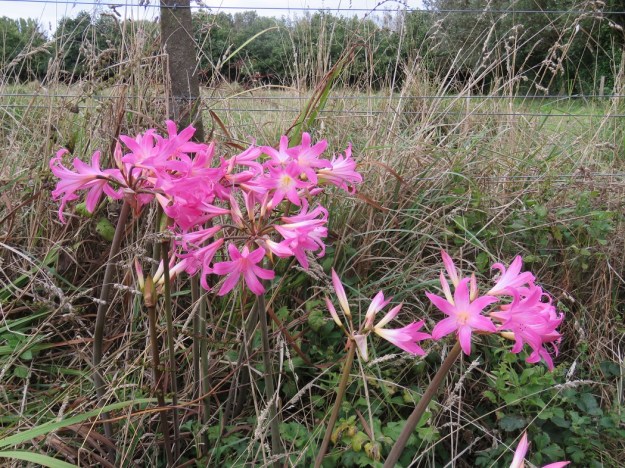
Amaryllis belladonna – more roadside flower than garden plant in our conditions

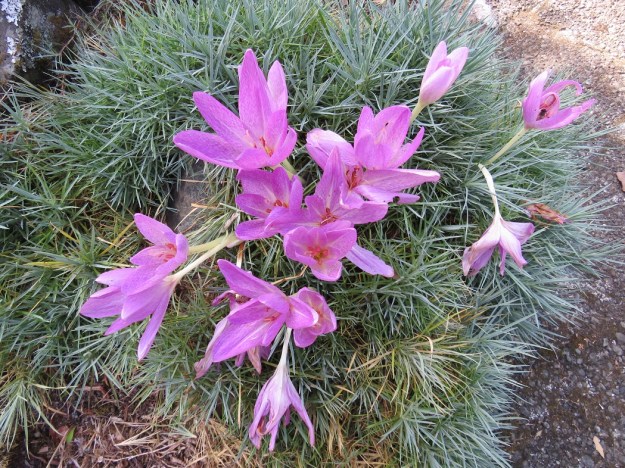
As the calendar moves into March, the autumn bulbs are the first reminder that summer will not be endless. First Cyclamen hederafolium and Colchicum autumnale remind is that the seasons wait for no man or woman. Now they have been joined by the belladonnas and the truly tiny Leucojum autumnale.

Colchicum, not autumn crocus. The foliage is unrelated, being a dianthus

Colchicums are often referred to as autumn crocus but there is no botanical connection, just a visual perception. The best known leucojum is L. vernum or the common snowflake which flowers in spring – a vigorous bulb that is widely found around old house sites that date back to the nineteenth century. The old brick chimney may be all that is left standing but it is highly likely to have clumps of the double daffodils and snowflakes, maybe some violets and a couple of really old camellia trees. For overseas readers, almost all the early European settlers’ homes were built in wood and house fires were common which is why the chimney is the only remaining evidence.

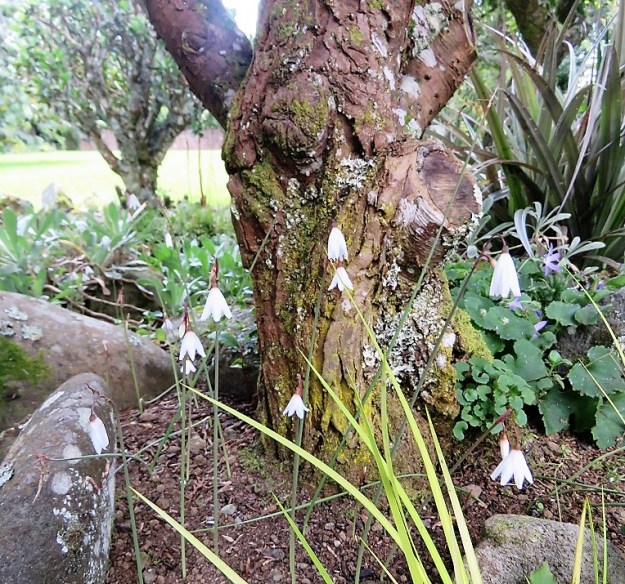
Blink and you may miss the delight of tiny Leucojum autumnale

Little Leucojum autumnale is a very different creature, a fleeting, dainty little flower that has to be measured in millimetres, not centimetres. It is very cute but easily swamped by larger plants if you are not careful. I see it is now classified as an acis, not a leucojum but it may take me a while to remember that. It comes from the western areas of the southern Mediterranean so places like Spain, Morocco, Tunisia and Sicily which are very hot and bone dry but the first autumn rain will trigger the bulbs into their very short flowering and growing season.

Some welcome rain fell this week – 62ml to be precise, which was very welcome after an exceptionally dry summer. Sadly it was followed by the first chill wind of autumn which rather reinforced the message of the autumn bulbs. Summer 2020 is over and we are now entering our long autumn season. I have removed my togs and towel from the swimming pool and put them in the laundry basket although the younger visitors here are still swimming.

What I call English manor house style of twin borders – seen here at Parham House

Cottage garden style as per Margery Fish at East Lambook Manor

Beth Chatto’s dry garden

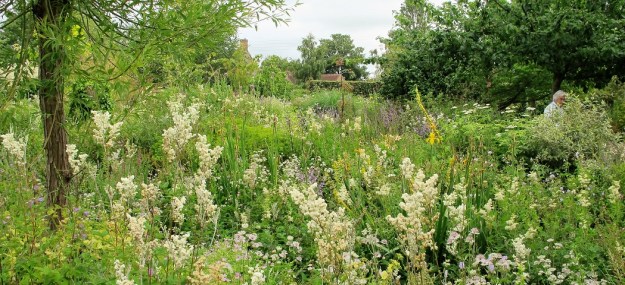
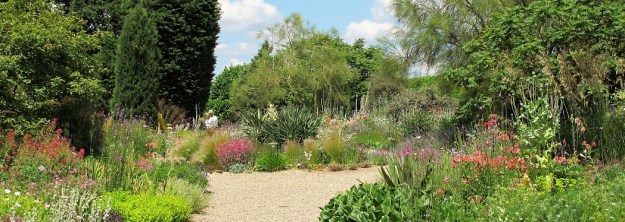
As the summer borders reach their point of peak profusion, I ponder again how full I want these borders to look. The tradition of herbaceous borders is to have them packed so full that no soil is visible. Cottage gardening encourages the plants to meld and run together whereas herbaceous tradition says that each plant occupies its own space without much intermeshing with its neighbours. And then there is the Beth Chatto dry garden where, even in a mature garden, she kept each plant standing alone in its own space. Mark likes the Chatto approach because it displays the individual plants to their best. It is a style he has used extensively in the more detailed woodland areas. If you analyse the Chatto dry garden, they are predominantly smaller plant varieties growing in very hard condtions (dry river bed with very low rainfall) which could not be further from our summer garden conditions which foster lush and exuberant growth.

I am leaning to the traditional herbaceous position for these summer borders but it is a constant learning process about how each plant variety performs. I want to be able to walk amongst the plants to weed, stake and dead-head and that means knowing how much space to leave between each different clump that they may floof themselves over the space to fill it but still leave me passage between the plants at ground level without tramping on them.

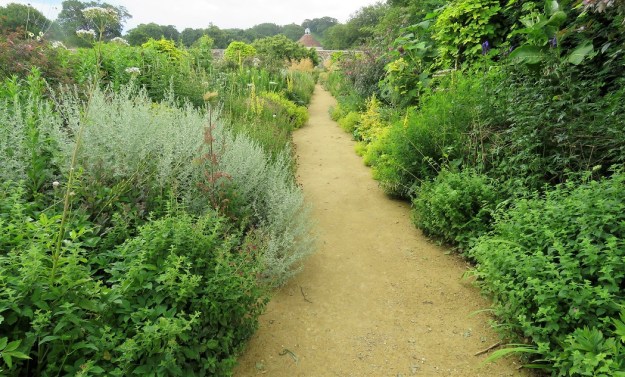
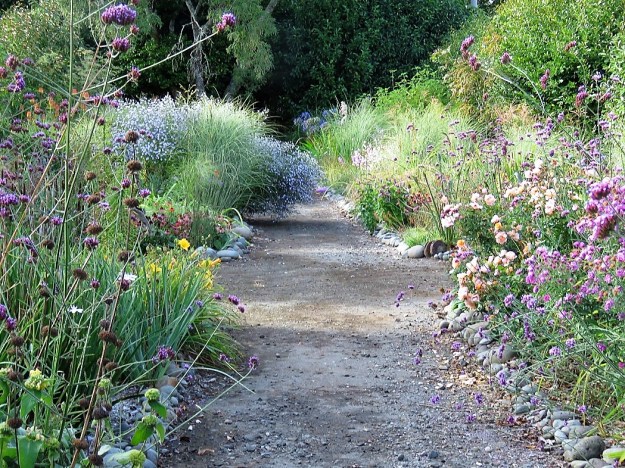
The summer borders here

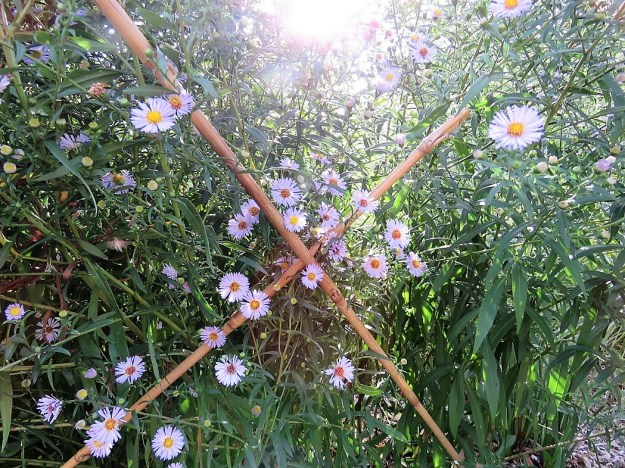
The bouffy aster needs staking to keep the path clear. I do it very simply and this is not visible when the plant is allowed to flop back

I love this big, bouffy aster coming into flower. We have the more compact version that makes a low carpet in bloom and another similar one that is just above waist height. I am guessing this larger version is a species – or close to it – with its daintier, paler blue blooms that are like a cloud of butterflies dancing on the bush. This year I have had to stake it to keep the path clear and it is obvious I have too much of it too close together for future seasons. Some at least will need to be moved to another area before next summer.

It is a constant learning process but that is what makes gardening interesting. Once a garden is all planted up, most of the gardening activity is simple and repetitive maintenance – outdoor housework, in effect. The interest levels in that are not high. It is the ongoing learning and constant tweaking in search of the impossible state of perfection that makes it interesting. That is how I see it for those of us who actively garden.

As a final comment: the new summer gardens have all been planted following the modern trends of lower labour input and management than the older, more traditional herbaceous plantings of the English manor house style of borders. But they still involve me in quite a lot of deadheading, dividing, staking and cutting back. I enjoy doing it but it is certainly more than I originally anticipated. My gardening nirvana may be when I have tweaked the plantings to the point where such a high level of intervention is no longer required.

Tikorangi notes: Iceland poppies are not from Iceland, naturalising trilliums, bluebells and escaping root stock

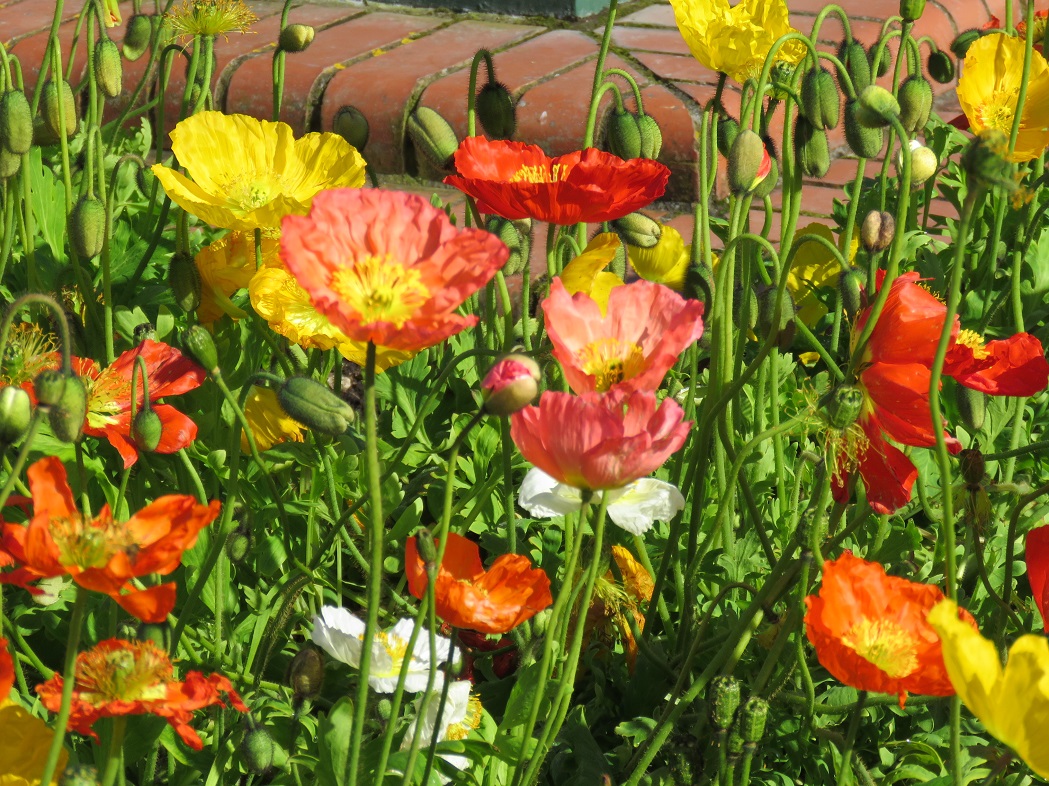
I have never been a fan of Iceland poppies. They were the one flower I remember my mother buying  when I was a child – a bunch of stems still in bud. She would burn the stems and then put them in a vase where they would open to what seemed garish and unappealing flowers to me. Tastes change and in recent years, I have found my eyes drawn to mass displays of these simple blooms. This patch is on a traffic island which holds the very modest clock tower in my modest local town of Waitara and it makes me smile when I pass.

The Waitara clock tower in a traffic island 

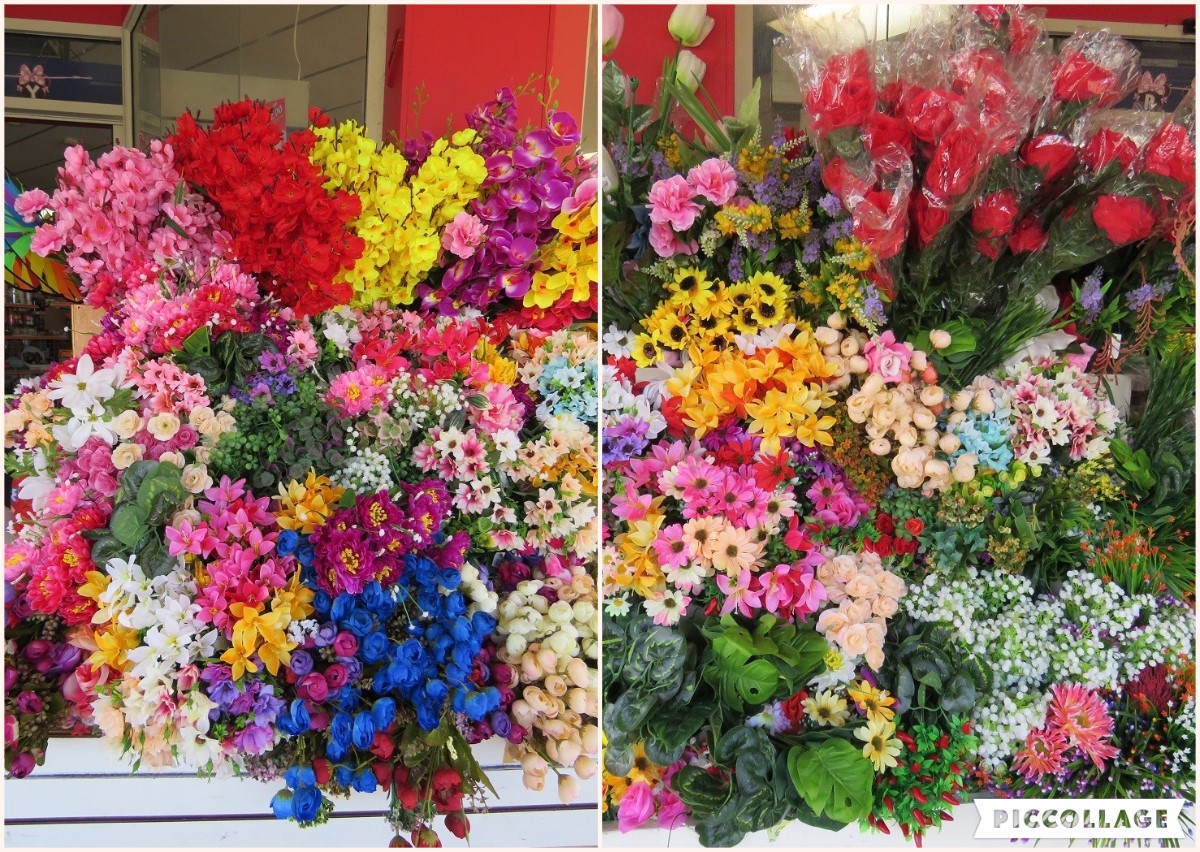
Ironically, on the opposite corner was this stand of fake flowers outside a Gold Coin shop.

Iceland poppies do not come from Iceland. I finally checked and in fact they come from the chilly areas of Europe, Asia and North America – sub polar territory, so presumably alpine meadows.  In the wild, Papaver nudicaule  (nude because of its bare stem which makes it a good cut flower) are pretty much all white or pale yellow. The other colours are recessive genes which have been brought out by plant breeding – presumably line breeding which is selecting down the generations of individual plants to pick out the stronger colours until those coloured genes have come to the fore.

Puketarata Garden near Hawera

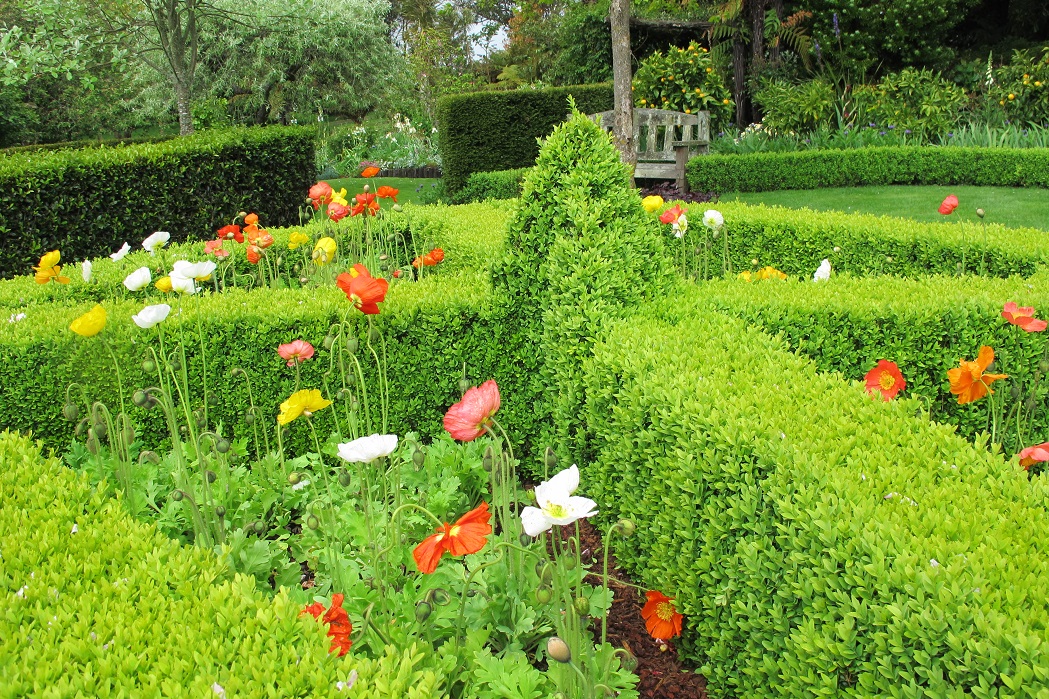
This is not a plant I have ever felt the need to grow myself but there is a simple appeal to a mass display. I remember being quite charmed by their use in the clipped buxus formation at Jen Horner’s garden, Puketarata, one spring. It is hard to beat the simplicity of a single poppy, or indeed a daisy flower.

This poor little white one survived being taken off at the base with the strimmer last spring

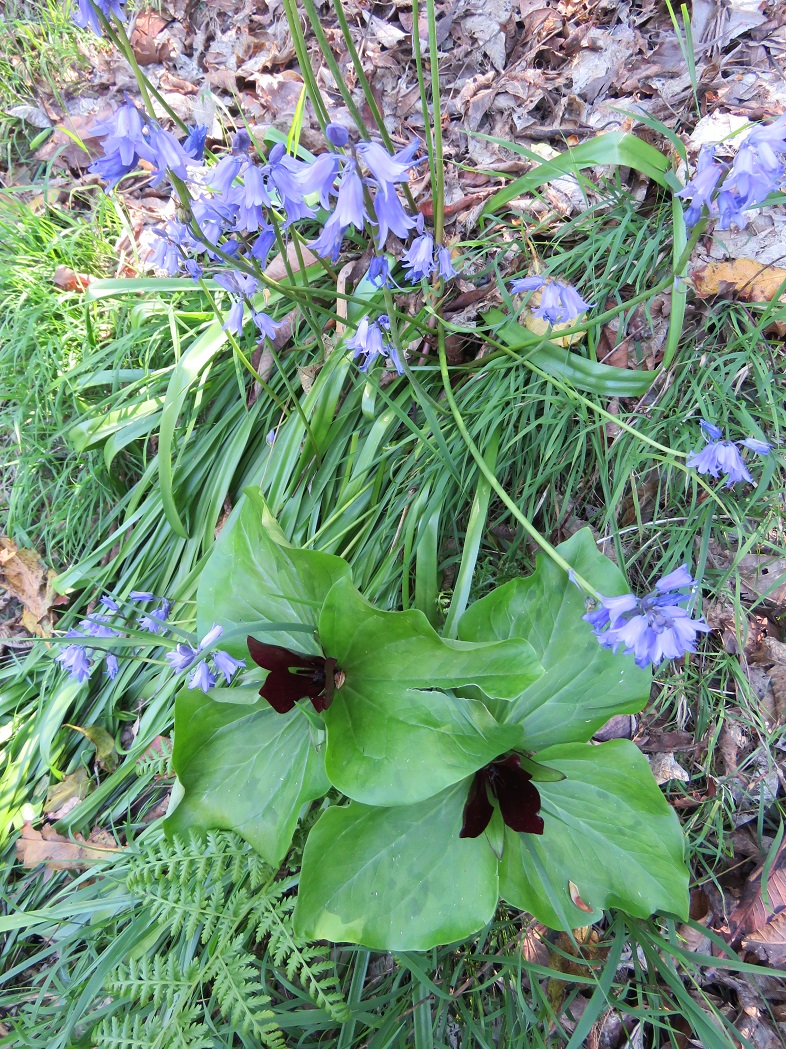
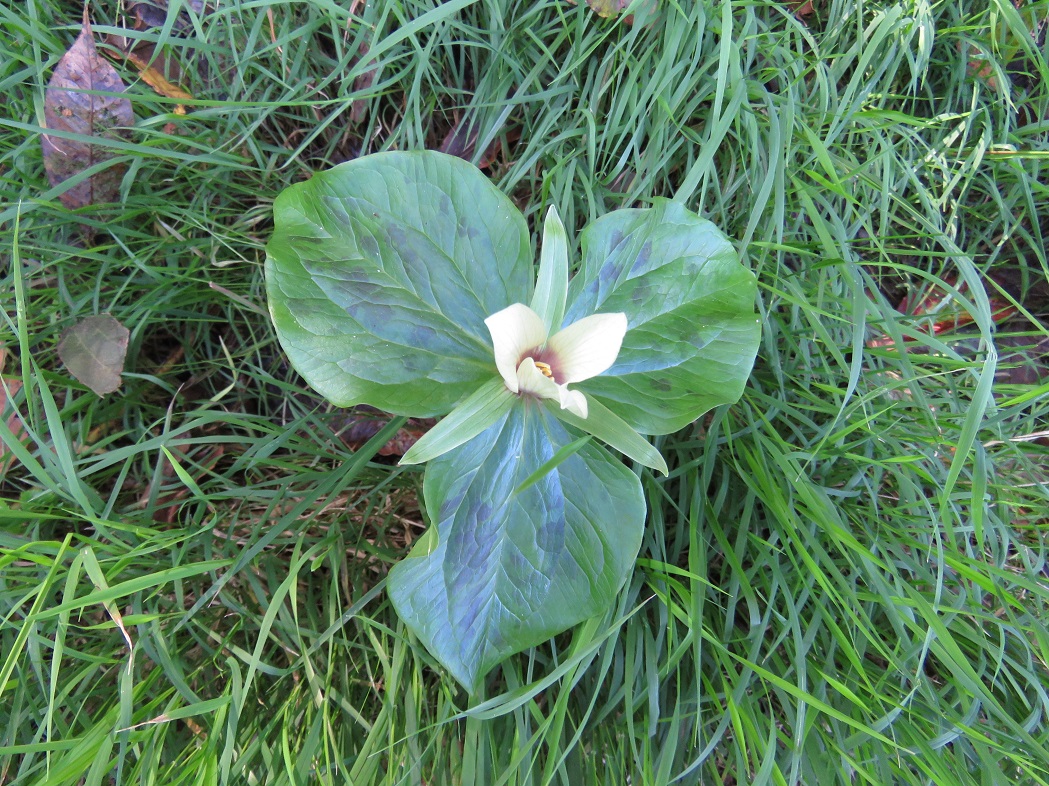
These trilliums represent a minor triumph in Mark’s experiments with plants he can establish in meadow situations. We have plenty of trilliums in our woodland gardens but establishing them in a cultivated garden is different to getting them to naturalise on his bulb hillside. When I say “naturalise”, I mean that they are now sufficiently well established to return each year, able to compete with the grass and uncultivated soil. They are not actually increasing yet but they are at least established.

Mark has raised more seed and has about 70 pots of them in flower in the old nursery area. He is disappointed that most of them have come up white and said that he wants the red ones for planting in the meadow and he asked that the pale yellow ones be kept together as a group in one area. For him, this is all part of blurring boundaries in gardening again. He really likes the idea of trilliums thriving in managed garden conditions and then, as the garden becomes looser and more informal further out, the same plants popping up as wild flowers. Especially when it is something as choice as trilliums. Maybe I could surprise him with the surplus Paris polyphylla making an appearance on the bulb hillside, too.

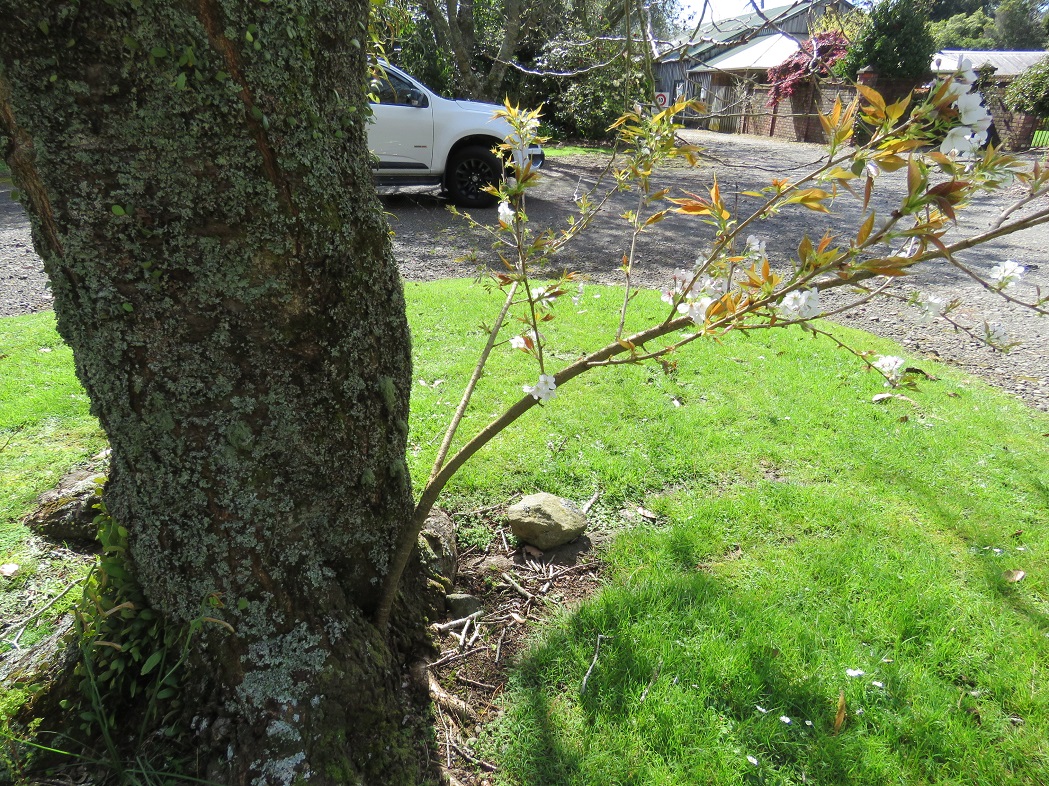
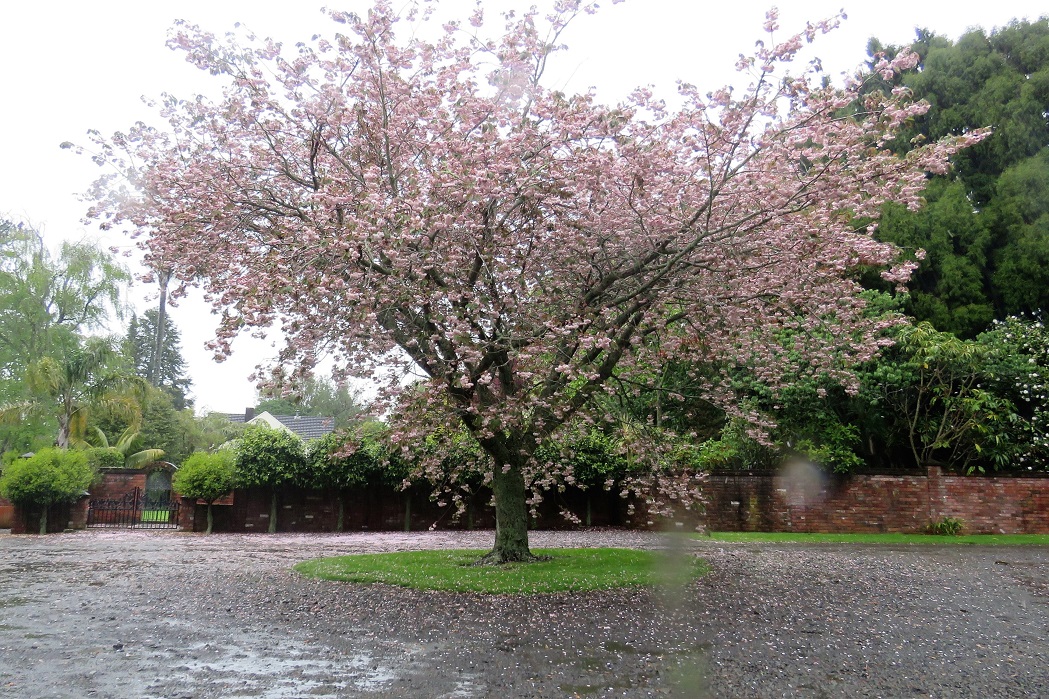
I photographed this small flowering growth on Prunus Pearly Shadows as an example of unwanted root stock shooting away, even on a very well-established tree. Many plants are budded or grafted onto other rootstock so that the desired cultivar can utilise the strength of strong growing root stock. Which is well and good when the rootstock is compatible and doesn’t escape. If you don’t cut off the root stock, it can overwhelm the grafted selection so it is best to see to it as soon as you spot it. How do I know it is rootstock? It is a single white; Pearly Shadow is a fluffy pink double and is not yet in flower.

Prunus Pearly Shadows

This particular tree is a splendid example of what is described as a ‘vase-shaped form’. It has not been shaped. It grows naturally in that upward Y shape. It is in our car park area and has so far attracted three reversing cars. I am not quite sure how people fail to see it in their rear vision mirrors.

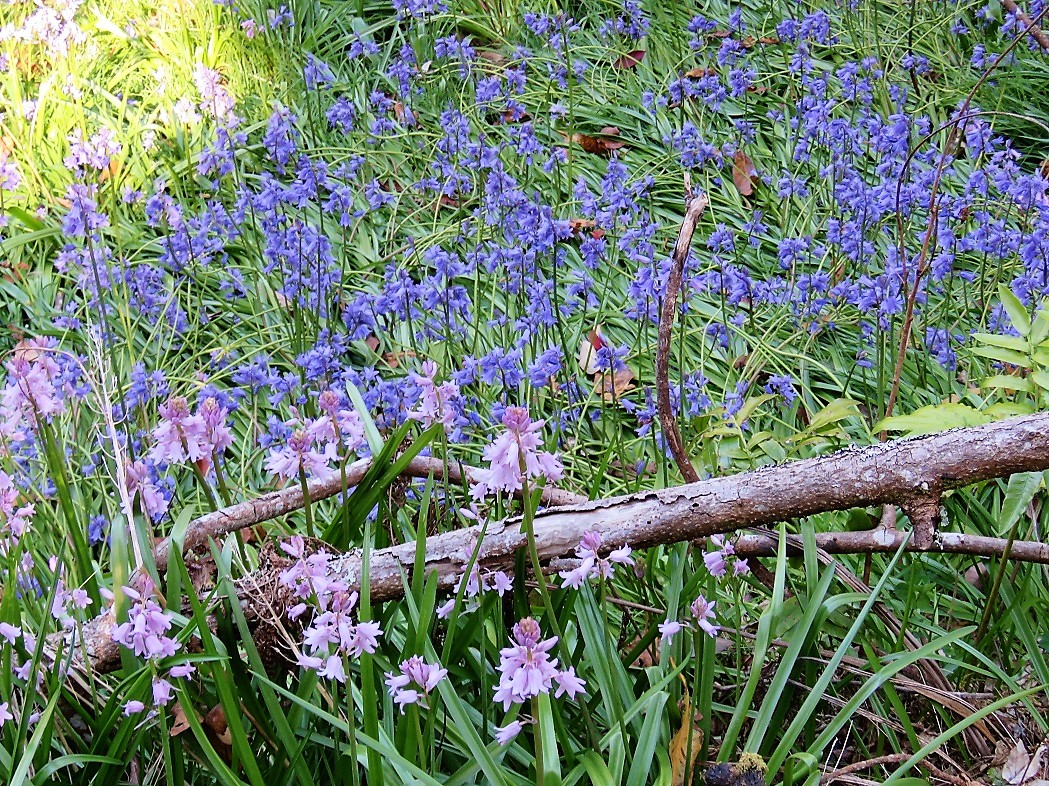
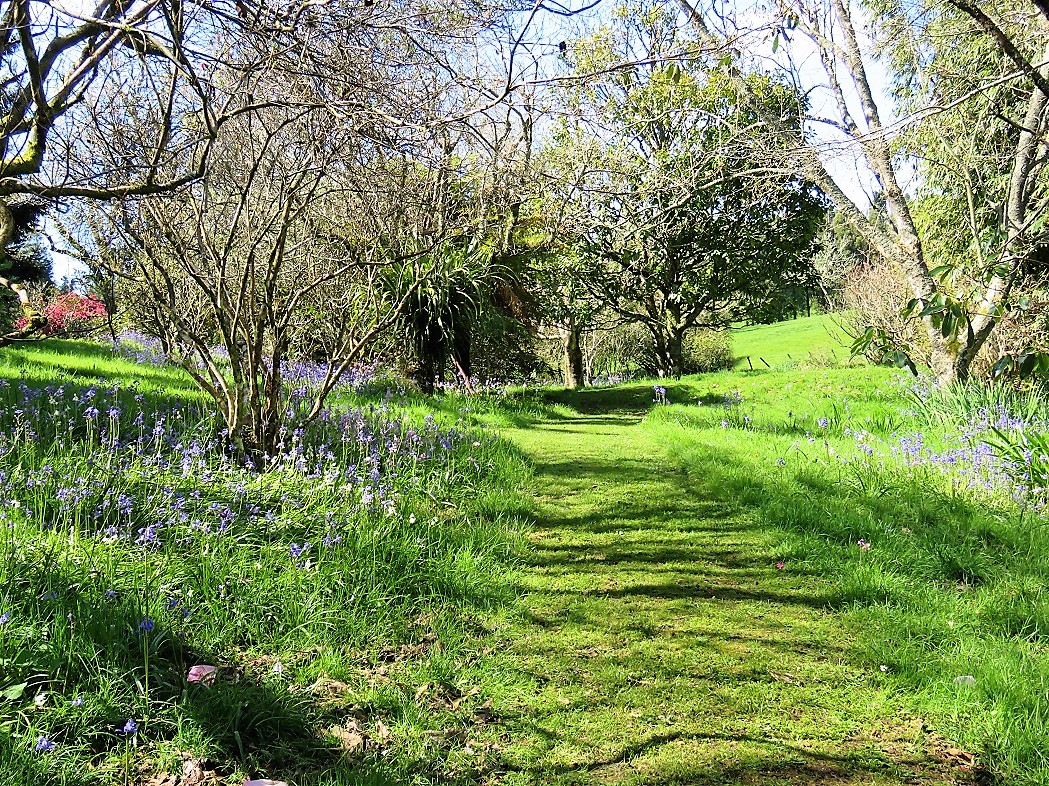
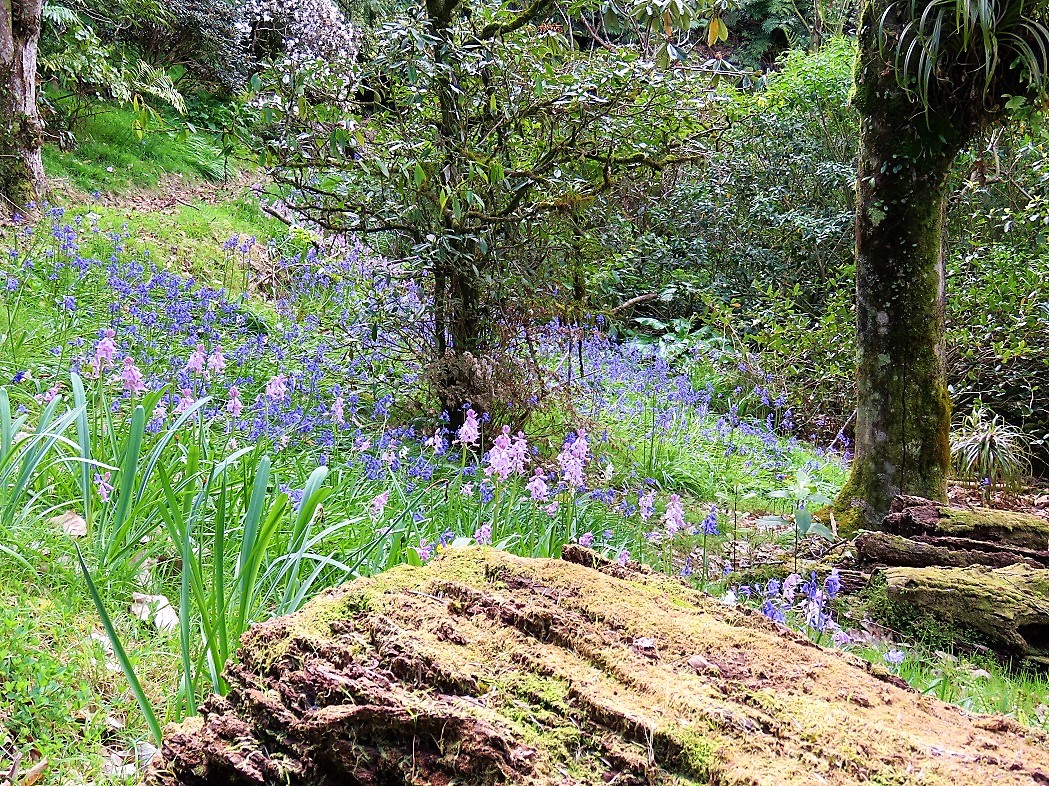
It is peak bluebell time in the park and even if these can be weedy, the drifts of colour are very pretty. Bluebells should, in our opinion, be predominantly blue. But the addition of a few white or pink ones amongst the blue gives a contrasting accent of colour that can lift the blue. The pink is also a strong grower, the white less so. We don’t want bluebells everywhere so I am removing them from some areas of the garden they are attempting to infiltrate but we are happy to let them spread in our meadows.

Lagerfeld Rules – should he ever turn his attention to gardening

The man himself - Karl Lagerfeld (photo: Wikimedia Commons)

The man himself – Karl Lagerfeld (photo: Wikimedia Commons)

In honour of the now late Karl Lagerfeld, I recalled a piece I wrote back in April 2012 when I was still writing for The Waikato Times. I don’t usually republish, but I thought maybe it was acceptable at this time.

I admit I had never really registered Karl Lagerfeld until last week. Sydney daughter sent a little clip of his quotes. “Sweatpants are a sign of defeat. You lost control of your life so you bought some sweatpants.” Ouch. “Florals are for middle aged women with weight problems” and “Having adult children makes you look 100 years old. I don’t want that.”

I started to feel vulnerable until daughter pointed out to me that while I am upon occasion seen in public with one or more of my adult children (and isn’t Lagerfeld so right that it makes one look old?), she could not recall me wearing florals or sweatpants.

In case you are equally ignorant about Lagerfeld, think elderly German fashion designer, made his name with Chanel, now slim, white haired, permanently suntanned and always wears dark glasses. These days, his main claim to fame appears to be his capacity for pithy, outspoken comment. I could find no evidence whatever that Mr Lagerfeld has had anything to say about gardening. But let that not matter. Shamelessly putting words into his mouth, we started a meme: Karl Lagerfeld on gardening. This is what we consider he would be likely to say, should he ever turn his attention to botanical issues.

Only the real thing will do

Only the real thing will do

“If you can’t afford the real thing, then it is better to go without.” There would be nothing armless, legless or headless in Karl’s garden, especially nothing white unless he could persuade the British Museum to loan him some of the Elgin marbles. Reproduction classical just wouldn’t do.

“Never plant an avenue of the same tree unless you can afford to replace the lot should one ail. A gap in an avenue is like a toothless smile – engaging in children but an indication of lack of care in an adult.” Karl understands that when an established plant dies, it is almost always an indication of a problem below ground so there is no point in replacing like with like. The incoming plant will succumb to the same problem sooner rather than later. And avenues with gaps look, well, like avenues with gaps or a smile with missing teeth, really.

“Glazed blue pots are so last century. There is nothing aesthetic about a bright, shiny blue pot from Vietnam. Leave them to women who wear floral prints or straw hats adorned with fake flowers.”

“Buxus hedging,” declaims Karl with withering scorn, “is the polar fleece of the garden. Ubiquitous, utility but the comfort refuge of the unimaginative.” Harsh this may seem, but edging garden beds in rows of grassy plants gives rise to even stronger condemnation: “Reminiscent of crimplene trousers with elastic waists.”

Karl would put the not into knot gardens – as in advising not to be seen dead with one in your garden unless you have a European title (minor nobility is fine), live in Europe and can claim direct lineage to the design. Otherwise it is a knock-off copy and Karl does not do knock-off copies. Ever. Accordingly, he rejects chevron gardens, parterres, potagers, rills, canals and the like, unless you have the castle or palace to go with them. At the very least, a stately home is required.

Perhaps better than the toilet bowl recycled as a garden feature, but blue pots are problematic

Perhaps better than the toilet bowl recycled as a garden feature, but blue pots are problematic

“Unspeakable. I will say no more,” is his response to any toilet humour in gardens. He shudders in distaste at the thought that anybody, anybody at all, could ever think it was witty or clever to recycle an old toilet bowl as a plant container. In fact Karl is equally unimpressed with any efforts to recycle old baths, laundry tubs or other accoutrements as garden features. “We don’t have a bathroom in our dining rooms. Some things are best kept discreetly out of view at all times if you want to retain any mystique.”

When faced with the new breed of gardener who will only grow plants that are edible, Karl sniffs. “You might just as well say that you will only wear clothes that can be machine washed and never need ironing. Fashionistas would not be seen dead in polyester. Just as high end fabrics are used for high end clothing, so too are high end plants used for high end gardening. Some things exist because they are beautiful. That is enough. Broccoli is never beautiful.”

Long an advocate of the little black dress, Karl is only too well aware that the same little black dress on one woman will look like a shapeless sack whereas another will carry it off to perfection and on most men it will simply look silly. So too with gardening. “You cannot fake chic,” he says (yes he actually really did say that!) “Some do it with style. Others just follow the rules and it shows.”

“I am a fashion person, and fashion is not only about clothes – it’s about all kinds of change”. Karl is well used to ringing the changes, to leading the way. Not for him to slavishly copy and follow rules.

We will leave the penultimate comment to the man himself: “I’m very down to Earth, I’m just not from this Earth.” If he thought about it, he would be likely to add the advice that you should not think that just because you are working in your garden, trackpants or floral attire are acceptable.

First published in the Waikato Times and reprinted here with their permission.