Tag Archives: gardening

Garden lore

“What is a weed? I have heard it said that there are sixty definitions. For me, a weed is a plant out of place.”

Donald Culross Peattie, (1896 -1964).

Weed plants
After my recent faux pas with Lilium formasanum, I was contacted by Carolyn Lewis, the national coordinator of Weedbusters, an organisation with support from many interested parties, dedicated to raising awareness of the problem weeds in this country. Too many of these are garden escapes and gardeners need to take some responsibility for unleashing vegetable time bombs. The website http://www.weedbusters.org.nz gives extensive information on individual weeds including how to eradicate each species in your area and useful suggestions of alternative plants to use instead.

Weedbusters are not covering the plants included in the National Pest Plant Accord (which are the banned ones) although there is a link through to the Ministry for Primary Industries section on these agreed pests. Some of the inclusions surprise me (Bartelttina sordida for one), others don’t. The arum lily, aristeas and agapanthus are widely recognised as problematic. I would have liked to have seen more information on where these plants are problems (national, regional or specific to just one area) because one region’s weed can be another region’s valued garden plant.

Without becoming too paranoid, take notice of those that seed down too freely or spread rampantly in your domain. If they are popping up all round the place, threatening to invade well beyond their allotted space and choking out other plants, or are extremely difficult to eradicate then you are probably looking at plants with significant weed potential for your conditions. While purists may advocate total eradication, in some cases we choose to manage such plants. We don’t want to be without our campanulata cherries that feed the tuis but we take responsibility for the seedlings and are vigilant weeders. The vegetable garden is not exempt either. We rated strawberry spinach as downright dangerous and went for eradication.

We don’t need more weeds in this country.

First published in the Waikato Times and reprinted here with their permission.

A gem of a garden

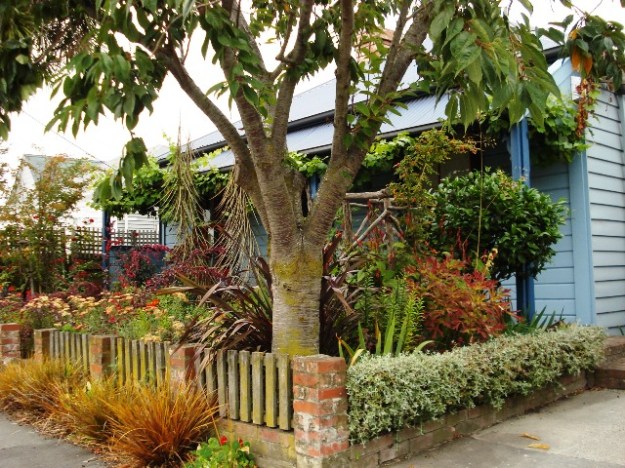
The front garden of Number 11 in tawny and red tones

The front garden of Number 11 in tawny and red tones

Tiny gardens have not featured large on my radar. They are just not part of my life experience so far but they are a reality for many people, whether by choice or circumstance.

When your allotted physical space in life is to have only one of those smaller garden spaces, it is undeniably different. I stayed with garden writer and gardener, Robyn Kilty, in Christchurch. Her own garden which has been acclaimed as one of the best examples of its type, is huge in charm but very small in size.

If you are working in a small space, you can go the Ellerslie show garden way and produce a static scene which is primped and starched to perfection as if frozen in time. Show gardens leave me cold, personally, and the idea of creating and maintaining that in my own environment around my home is even less appealing. So you will need to look elsewhere for ideas on that approach. Try magazines because that is what you will be creating – the glossy feature look. It will probably be unchanging through the seasons and it will not usually have a specific sense of place but be more universal in style. To me, that is like making more housework outdoors because it will need tidying, dusting and vacuuming twice a week to keep it pristine.

I was far more interested in what Robyn was achieving – seasonal change, interesting plants with plenty of colour, texture and detail and a garden which invited you take a little time to enjoy it. But in small spaces, everything has to be thought out, carefully controlled and restrained. “If you get something wrong in a small garden,” Robyn said to me, “it is in your face all the time. You can’t ignore it or get away from it.”

It is a mistake to think that all plants have to be tiny to be in proportion. Sure, if your garden bed is only 3 metres long and 1 metre wide, you don’t want a plant that is going to spread to a couple of metres across. But if you keep everything itsy bitsy, you will end up looking as if you have planted a traffic island. You still need height and some plants with stature in their foliage to give grace and proportion. But you need height without width. You can still be bold in a tiny space.

You will probably end up having to prune and clip regularly to keep plants to their allotted space. Bold foliage may be fine but triffids you can do without.

It is not compulsory to have lawn. If you have grass, you need a lawnmower which will also mean a shed to contain it. Sometimes it is better to manage a little open space by paving and do away with lawn altogether.

Achieving some level of continuity is pleasing in any garden, no matter the scale. In a tiny garden, it might be by a little formality in design, by small groupings of the same plant, mirroring a planting on one side of the path to the other, or by very careful colour management. In late summer, Robyn’s front garden was in tawny autumn shades and red whereas her even smaller back area was featuring deep burgundy with just touches of pure blue and yellow to give it zing.
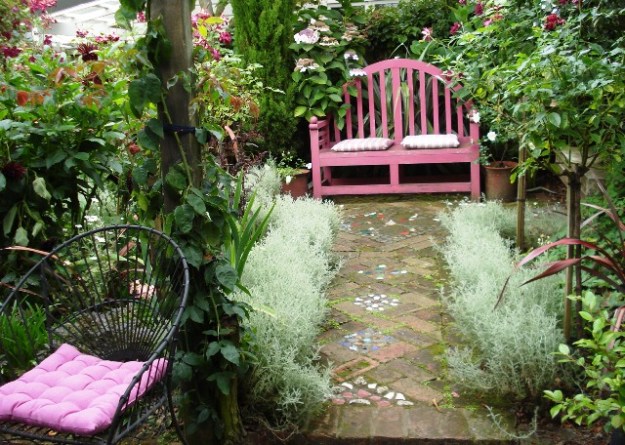
A touch of formality, careful colour choices and paving instead of lawn in a tiny back garden area

A touch of formality, careful colour choices and paving instead of lawn in a tiny back garden area

You have to be more restrained in a small space, even if you are creating a colourful or maybe flamboyant display. Every plant has to justify its place. The real gardening skills come in managing changes through the seasons, which make it all a great deal more interesting. Bulbs need to be used so they can star when in flower, but not look awful and scruffy when they are passing over. As one dominant plant passes over for the season (maybe a hydrangea that has finished flowering or a hosta that is going dormant), another nearby plant needs to be coming into its own. The challenge in a small garden is to make the whole area work for you all year, giving you lovely views out your windows, from the road frontage and from all your viewing points within the space.

Ever the practical type, I would find it hugely challenging to manage without the hidden areas “out the back” as we call them. If you have plants in containers, you need somewhere to repot them. You still need a shed or cupboard for tools and packets, even if your space is too small to warrant a wheelbarrow. Dealing with green waste would be a challenge without a compost heap. Yet if you have a small one of those, there will be trimmings and prunings that are too large for it. You probably can’t run a closed system in a tiny garden, recycling your own waste.

I am not ready to trade down on space, but when I thought about tiny gardens, I developed a new respect for the few I have seen where the owners have made them into something special. It is harder than it looks to do it well.

First published in the Waikato Times and reprinted here with their permission.

Plant Collector: Cyclamen hederifolium

???????????????????????????????
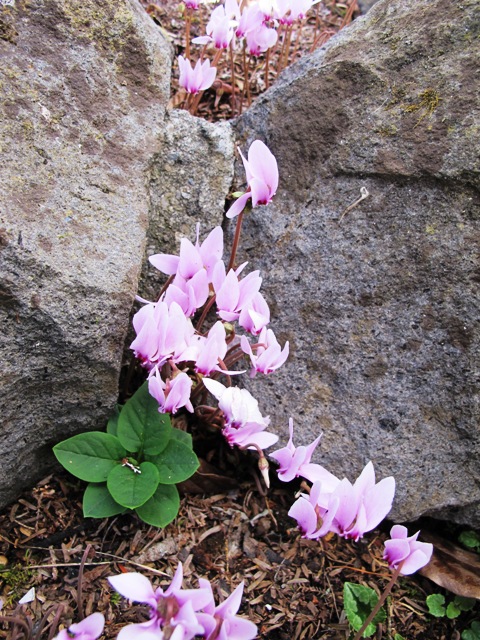
As early as January the first flowers on Cyclamen hederifolium start to appear on parched soils, though they are just coming into their own now. Some of you may know C. hederifolium by its earlier name of neapolitanum. It is the easiest of the dainty species to grow with one of the longer flowering seasons. The heart-shaped leaves, usually mottled and marked with silver, appear towards the end of flowering and make an attractive ground cover through until early summer.

Hederifolium comes in a range of pinks from light to mid, as well as in pure white. It hails from southern Europe through to Turkey and grows in hard, poor conditions, tolerating both heat and cold. What it doesn’t want is wet ground. We use it in open sun to semi shaded woodland margins where drainage is good.

Cyclamen grow from tubers which can develop to large, flat discs. Over the years, some of ours have reached up to 20cm or more across.

If you can’t find C hederifolium for sale, it is easy to grow from fresh seed and gently seeds down in the garden. If you know of somebody who already has it, the seed forms later in the year as a fleshy capsule at the end of a corkscrew stem. The secret is to sow it immediately and not try and store it.

The species cyclamen have a gentle charm which I personally find lacking in the big flowered hybrids which are sold as house plants. However most of those will survive as garden plants and live on if you find a suitable spot where they won’t get outcompeted by overhanging plants.

First published in the Waikato Times and reprinted here with their permission.
Banned plants in New Zealand

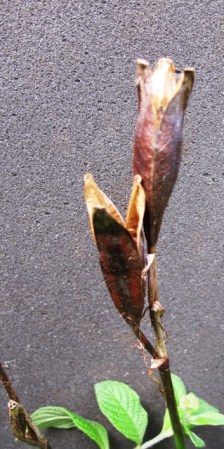
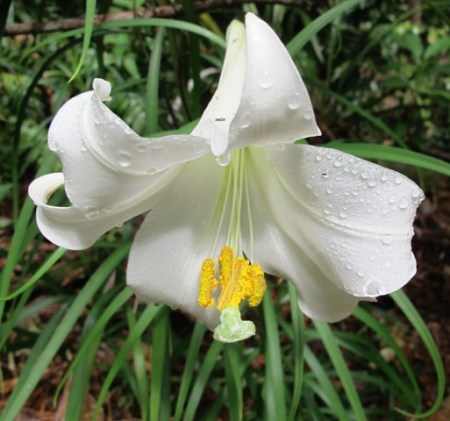
The offending Lilium formasanum

The offending Lilium formasanum

I have to start with a mea culpa today. Last Friday I featured Lilium formasanum on Plant Collector. I wouldn’t have done so had I known it was on the Pest Plant Accord list. In other words, it is banned from propagation and sale in this country.

To be honest, we are a bit surprised it is on the banned list. While it seeds down, in our experience it does so gently and has never shown invasive tendencies here and it is not strong enough to out-compete native plants that we can see. However, we respect the spirit of the Pest Plant Accord and I would not have praised the merits of this lily had I known.

Being on that list, does not mean it has to be eradicated – just that it can’t be produced for sale and that gardeners should be cautious with it. My general advice is that if you live near native bush or a reserve and certainly near a national park, the responsible action to take is to get rid of these plants from your garden altogether. In more suburban areas, it is not likely to be a problem but keep an eye on what they are doing and don’t let them escape. You also need to be careful what you do with garden waste because too many of our weeds are garden escapes.

So embarrassed was I at having been caught out making a public slip-up that I started to browse the National Pest Plant Accord booklet, the website of the Ministry for Primary Industries and some of the regional council websites. After encountering some of the most confused and badly designed websites I have seen in a while, I rang our local pest plant person to confirm my interpretations. There are no simple answers and there is a wonderful level of inconsistency in language, classifications and recommendations. It is all as clear as mud really. So here is my attempt to translate it to home gardener level.
???????????????????????????????
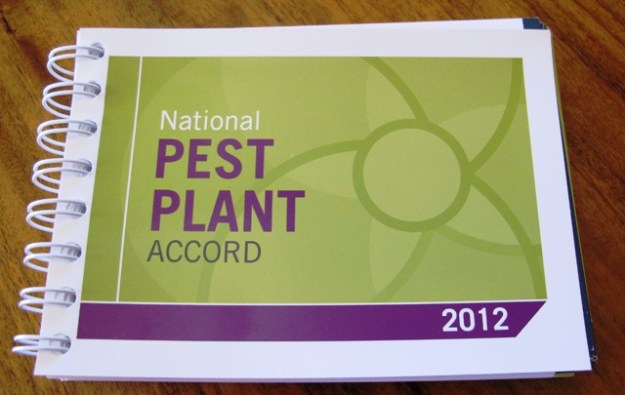
The handy little spiral-bound book entitled the National Pest Plant Accord is a listing agreed to by various bodies including the Nursery and Garden Industry Association of NZ. You can request a copy of this booklet from the Ministry or your regional council. It has photos and descriptions (one plant per page) but no advice on dealing to individual plants – every page tells you to contact your regional council for this advice. The plants included are a little… random, shall I say. Lilium formasanum is there but I don’t know where it is a particularly problematic weed.

Curiously, Rhododendron ponticum is also included. Now, R. ponticum is a blue rhododendron species that has been used extensively to breed many of the big blue hybrid rhododendrons favoured by gardeners. It is a real problem in the UK where it has established itself in the wild by layering and seeding but I am not aware of it ever being produced much, if at all, in the nursery trade in this country because the hybrids are so superior. The hybrids are not a problem. In other words, ponticum is not a problem in this country but it could be if we let it get established. Well, if this Pest Plant Accord were to include every potential weed in the world that could establish here, it would be a massive tome.

We have not cut our bangalows out at this stage, but we are alarmed at their weed potential

We have not cut our bangalows out at this stage, but we are alarmed at their weed potential

But the Accord misses out on some significant plants because the nursery industry has dug its toes in and refused to play ball. I have written before about the bangalow palm (Archontophoenix cunninghamiana) which we regard as having significant pest potential, and we are not alone in that opinion. Similarly the Chinese Windmill Palm (Trachycarpus fortunei) is pretty questionable but so strong in the trade that it may never make the Accord. We’d say the same about the Himalayan Daphne bholua too.

The problem with the Accord is that it is national and what is a significant or major weed in one area, may not be at all problematic in another. That is where the regional councils come in. As far as I know, their pest plant lists are not dependent on cooperation from the nursery industry and being based on local experience, they are more relevant to local gardeners.

In Northland there are huge issues with seedling campanulata cherries and I have been told that only sterile varieties can be sold there now. Similarly Buddleia davidii and agapanthus, but they are not on the national Accord. Taranaki completely bans both species of the giant Chilean rhubarb (Gunnera tinctoria and manicata) and insists on total removal.

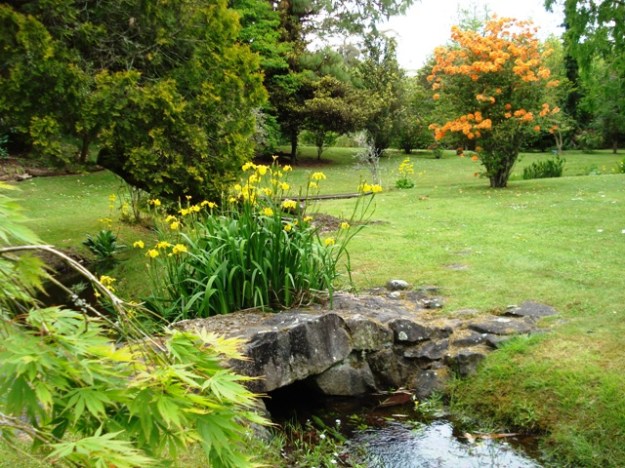
Waikato Regional Council has lists on its website though you do have to know the common name (often confusing) because apparently it is too complicated to list under both botanical and common names on the directory page. Plants are classified as eradication (Council will deal to it for you), containment (landowner’s responsibility), potential pest and merely nuisance status (presumably waiting to move up the ranks). There is information on how to deal to these plant pests. A quick look suggests that not many of them are common garden plants (though we will be getting rid of our yellow flag irises here), but it is worth having a look.

I just can’t help but think that some analytical thinking, better writing, consistency of information and good website design would make this stuff a whole lot more useful for responsible gardeners. These are important issues but the powers-that-be haven’t made it easy to use the information.

The days are numbered here for the yellow flag iris

The days are numbered here for the yellow flag iris

First published in the Waikato Times and reprinted here with their permission.
Garden lore

“Unless I’m missing out on something here, slug sex appears to be mightily different to human sex. The way slugs court is to circle each other for a while and produce a great big puddle of slime. Then, because they are hermaphrodite, they inject each other with sperm before slipping away to lay roughly three dozen eggs each.”

The Curious Gardener’s Almanac by Niall Edworthy, (2006). )

???????????????????????????????
Saving seed
If you are organised, you can save your own vegetable and flower seeds and save money but there are reasons why buying packets of seed can seem expensive. Saving seed is one of those jobs which is glibly recommended but takes some skill if you want to ensure success. Firstly and most importantly, save seed from the very best produce – not as an afterthought from a slow maturing or substandard specimen. If your crop is an F1 hybrid (and the only way to know that is from the original packet), seed will be inconsistent and patchy. You can stabilise a good seed strain over time but it will take a few generations. Sweet corn is often F1 (in other words it is the result of controlled pollination from two superior parents). Some tomatoes, cucurbits and cut flowers can also be F1s.

Clean the seed, label and date it. Pack it in paper and then store in a sealed plastic container with a sachet of silica gel or even rice, to absorb any surface moisture. So cool, dry, sealed, rodent-proof and mould-proof. The mice will find it if you leave it anywhere accessible. The fridge is a good place if your house partners accept your seed gathering ways.

Not all seed is dry seed. Some needs to kept on the damp side but not so wet that it rots. Generally these seeds have a fleshy coating (like belladonna seeds or cyclamen). It is often easiest to clean this seed and sow it immediately because it has a very short life span, especially if you allow it to dry out.

First published in the Waikato Times and reprinted here with their permission.