Tag Archives: gardening

Tikorangi Notes: Friday 20 April, 2012

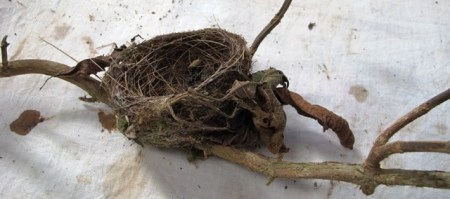
The perfection of the fantail nest

The perfection of the fantail nest

Latest Posts:
1) Lagerfeld Rules – what the fashion maestro might say, should he ever turn his attention to gardening.
2) Despite the tendency in New Zealand to think that there is only one sasanqua camellia and that is the white Setsugekka, there are others and even some which are not white at all. Crimson King in Plant Collector this week.
3) Grow it Yourself – kumara this week. You have to get your timing right where we live because it needs maximum warmth over a relatively long period to get a good crop but it can be done.

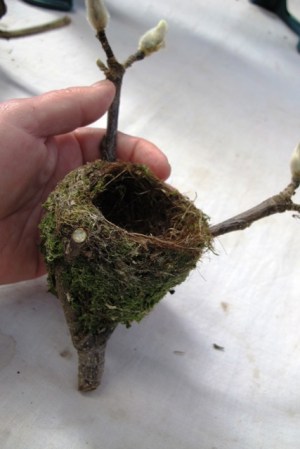
And a second fantail nest, crafted in the fork of a magnolia stem

And a second fantail nest, crafted in the fork of a magnolia stem

Grow it yourself: kumara

The world has many different types of sweet potato but the one we have made our own in New Zealand is the kumara. Had we grown them this year, we would be looking to harvest around now. But we didn’t so we will be buying them instead. Kumara are a warm climate crop so the further south and the further inland you are, the more problematic they are to get through. They need somewhere between five and six months of warm weather (preferably in the low 20s) to set plenty of tubers. You can help by planting in black plastic and using cloches early in the season. They are easier to grow well if you are right on the coast and gardening in sandy soils which heat up. However they don’t want to bake and dry out in midsummer.

Kumara will sprout like potatoes over winter so you can cover the tuber with soil or straw in early spring. That tuber will put out many shoots which can be pulled off and planted out when big enough and when roots have started to form. They don’t like any frost at all, so in inland or cooler areas, they can be started in pots for planting out in mid November. Plant them about 40cm apart in the hottest and sunniest spot in your garden and watch them r-u-n. It is easier to understand when you know they are close relatives of convolvulus. Besides keeping a little water up to them all summer, the other care they need is to have their wayward vines lifted every week or so, or trained over a wall or path. If you don’t do this, the vines start to send roots down along their length and a plant which is using its energy to create a whole lot of new roots is not developing good tubers. Harvest when the foliage turns yellow and store in dry conditions about room temperature.

First published in the Waikato Times and reprinted here with their permission.

Plant Collector – Oxalis massoniana

Oxalis massoniana

Oxalis massoniana

Envy the gardener who has not had to battle invasive oxalis. Most of us know only too well how difficult it is to eradicate the weedy ones. But there are only a few villains in a very large family and unfortunately, most people shun the lot because of those few. We wouldn’t be without the decorative oxalis and O. massoniana is just one putting on a splendid display at this time.

I think we must have around 30 different oxalis in pots and in the garden here and they are just a drop in the bucket of the many hundreds of different species. Flower colour ranges from white, through the gamut of pinks, lilacs and lavenders, crimson red, yellows and oranges. The foliage is also varied from the clover type leaves to fine and feathery, trailing and even miniature palm leaves. We must have them flowering for six to eight months of the year. I should comment that some have a flowering season lasting a long time, while others are a bit of a flash in the pan.

Some oxalis are garden safe but if in doubt, keep them in pots where they are wonderfully forgiving of benign neglect. The flowers only open in the sun so the pots make a lovely seasonal feature on a sunny doorstep. I have tried massoniana in the garden but it seems to be happier and showier in a big, shallow container.

The apricot and soft yellow two-tone colouring is very pretty and the flowering season lasts a good length of time. As with most of the autumn and early winter flowering oxalis, it is native to the bulb wonderland of South Africa. If you can’t bear the thought of growing oxalis, just call it by its more romantic sounding common name overseas – wood sorrel.

First published in the Waikato Times and reprinted here with their permission.

Raised beds and to dig or not to dig, that is the question.

Raised beds have their place, but not necessarily every place (Photo Joe Mabel, Wikimedia Commons)

Raised beds have their place, but not necessarily every place (Photo Joe Mabel, Wikimedia Commons)

Maybe the gardening world divides into diggers and non diggers. The non diggers favour raised vegetable beds and no dig gardening methods. We old diggers, on the other hand, are closer to our peasant ancestry.

Digging is not an activity to be feared. The physical effort is terribly good for you and it is only hard the first time. The more you work the soil, the easier it becomes. One of our vegetable gardens has been tilled for anything up to ten decades in some places and it is like working in potting mix. While Mark prefers to dig with a shovel, I swear by a good, sharp spade. People often neglect sharpening their spade but it makes a huge difference if you keep a good cutting edge on it.

Being of the digging persuasion, we have never felt the need for raised beds. If you put some effort into turning over the soil of your raised bed, it will fly in every direction, spoiling your surrounding paths. Lesson number one, should you decide you want them, is to keep the soil level lower than the surrounds and leave room to build up further as you add compost, green crops and all the additions which keep it fertile and friable over time.

Raised vegetable gardens have their uses in certain situations. Obviously they are of inestimable value for disabled gardeners or those who cannot bend comfortably. They can be useful where you are trying to garden in an area choked with old tree roots or with really bad drainage. They are, my daughter tells me, particularly useful in Canberra where a combination of clay, a new puppy and a heavy population of ground birds named choughs (pronounced chuffs) condemn any vegetables at ground level. But in the main, if you have halfway decent soil, I think it is actually easier to follow the traditional way and garden at ground level. The current vegetable garden craze has seen a building boom for raised beds and too little questioning of the rationale.

For starters, there are issues related to the construction of raised beds. Brick or concrete block is permanent and relatively expensive – devilishly difficult if you change your mind about your garden layout further down the track. Hardwood railway sleepers are expensive and heavy to handle. Most people end up with pine. Herein lies a major problem. If you use untreated pine in a high rainfall climate, it is going to start breaking down within a couple of years. Don’t forget it is permanently wet on the inside of the bed. So what about tanalised pine?

“No,” said my scientist daughter in Canberra. I trust her judgement in these matters and she did spend one summer as a chemistry student looking at sap staining on tanalised timber. She comments that the information on the internet is not particularly up to date, and in the absence of scientific evidence proving safety, she certainly would not want to be growing anything edible near tanalised timber. She points out that the preservative was, and may still be, a mixture of arsenic and chrome and plants are very good at absorbing and holding heavy metals. She wouldn’t risk it. She is constructing her raised beds out of untreated pallet timber which will break down in due course but is at least free, recycled and will last longer in her dry climate than here. She has also coated it with linseed oil.
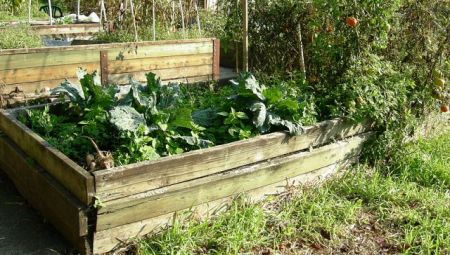
The conventional approach to vegetable gardens, though one hopes the timber sides are not tanalised

The conventional approach to vegetable gardens, though one hopes the timber sides are not tanalised

Once you have built your raised bed, you have the problem of filling it. Too often, I have seen people on TV wheeling in large, heavy grade plastic bags, each containing 40 litres of soil mix bought from the garden centre. I can’t think of much that is less environmentally friendly. If you are not going to go down the expensive, convenience route, you are going to have to find or create your own soil. It takes a much greater volume than you would ever dream of to fill a raised bed. Then you have to shovel or lift the soil in. Don’t underestimate the size of the task.

At this point, some advocate going the no dig route. I know the theory, but being diggers, we have never done it. It consists of layering a mixture of compostable materials and leaving the worms to do the task of breaking it down. So you layer green material (but avoid weeds, seeding plants and anything diseased such as mildewed tomatoes) alternately with dry matter (fine twigs, newspaper, even old woollen carpet, straw and the likes). Essentially you are building a cold compost heap. It takes time for it all to break down and form a tilth and longer term, it matters a great deal what your proportion of green matter to dried matter is. Kay Baxter of Koanga Institute has written about this and why she chose to abandon the no dig approach after many years to return to old fashioned double digging.

If you want to hasten your no-dig garden, you end up adding large quantities of compost and humus and this is where my vegetable growing husband draws the line. We make large quantities of hot compost here and as far as he is concerned, that compost is destined to be spread annually to a depth of no more than 5cm across as much garden as possible – thereby feeding and conditioning the soil while acting as mulch. There is no way he will allow a single garden bed, whether raised or not, to absorb more than its allotted share just to avoid having to dig the soil.

Raised beds and no dig gardening require higher inputs for the same, or often less output. We are waiting for practitioners with several decades of experience to convince us that these gardening techniques are an improvement, rather than recent converts.

First published in the Waikato Times and reprinted here with their permission.

Grow it Yourself: Broad Beans

People either love or hate broad beans but they are worth trying in the home vegetable garden where you can harvest them before they develop the tough grey outer skin which is so off-putting. Indeed, I have a friend who will only harvest them to eat when she can cook the complete young pod. We find them tasty at all stages and once the hard shell has developed, we let them mature and store them dry. The dried beans are delicious when reconstituted though I admit I peel off the outer casing of each bean after soaking them. Broad beans are often called fava beans overseas and in upmarket eateries where they have enjoyed a recent revival as a fashion ingredient.

Broad beans are one of the few crops which continue to grow through winter. Autumn planting means you will be harvesting in spring when there are not a lot of other fresh vegetables which are ready. Plant the beans directly into the ground at finished spacing. We favour a double row about 30cm apart and the plants in each row at least 15cm apart but not more than 20cm. The plants need some support as they grow, or they will fall over under their own weight. The quickest way we know is to support them either side with a long piece of horizontal bamboo suspended at about 60cm off the ground and supported at both ends of the row. You could achieve the same support by running a wire along but bamboo is good because you can easily incorporate cross pieces for added support. It saves having to stake individual plants. Once the plants have reached about a metre in height, we nip out the tops to eat as fresh greens.

If you sow in succession from autumn through to late winter, you can be harvesting from August to Christmas.

First published in the Waikato Times and reprinted here with their permission.