Tag Archives: gardening

In the garden this fortnight: April 12, 2012

A fortnightly series first published in the Weekend Gardener and reproduced here with their permission.

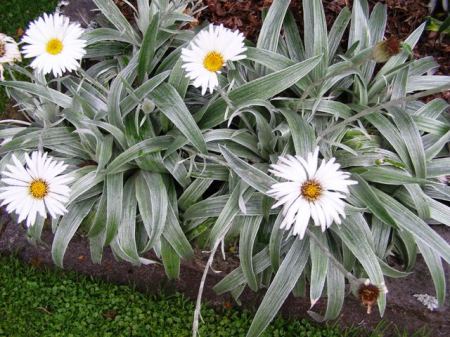
Celmisia (New Zealand's mountain daisy) are not within their normal climatic range here

Celmisia (New Zealand's mountain daisy) are not within their normal climatic range here

We have a garden where we are constantly trying to push the climatic boundaries and grow plants which are not naturally adapted to our conditions. For us it is what makes gardening really interesting. But we had a wry smile at the suggestion from Christchurch paeony growers that anywhere south of Auckland should be able to grow these herbaceous beauties. There are reasons why Taranaki gardens do not have paeonies and it is not for want of trying. We can grow some of the tree paeonies but those beautiful, over the top rose paeony types simply don’t perform. As they are not even successful in inland gardens where winters are much colder, it seems more likely that our high rainfall and high humidity levels are the problem. If we could grow them we would.

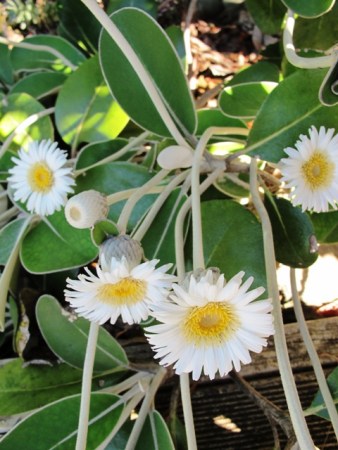
Pachystegia insignis (the Marlborough rock daisy) is also used to somewhat different conditions

Pachystegia insignis (the Marlborough rock daisy) is also used to somewhat different conditions

We have to work at plants which prefer drier, open conditions. The Marlborough rock daisy (Pachystegia insignis) can keel over for us but generally we keep it going on an exposed bank. To our ongoing embarrassment, the excellent form we have is one stolen by my late mother from the Dunedin Botanic Gardens. She was a fine gardener but she was also one of those old ladies to be feared with her handbag and secateurs when a normally strong moral code deserted her entirely. We only succeed with the celmisias (mountain daisies) and meconopsis (Himalayan blue poppies) because of the work Mark does to bring some level of hybrid vigour into his seed strains. It takes constant effort to keep them going.

We continue experimenting with orchids as garden plants. Cymbidiums are easy and we have a great deal of success with dendrobiums, calanthes and pleiones. The masdevalleas have not been successful and Mark is still working on the disas to see if we can naturalise them by our stream. Similarly, we push the boundaries with heat loving plants. While most sub tropicals will grow here, without real summer heat, the genuine tropicals are a challenge. We dream of a big solar heated glasshouse.

Top tasks:

1) Autumn planting. We are hoping for our usual long, mild autumn when conditions are perfect for gardening, particularly for planting out. Plants then get a chance to settle in and establish before the rush of spring growth.

2) Finish getting the piles of firewood under cover. We rely entirely on wood for winter heating and we get through a large quantity. Fortunately we are entirely self sufficient but the winter firewood does not cut itself up and get itself in. Free it may be, but it is not without effort.

Tikorangi Notes: Thursday 5 April, 2012

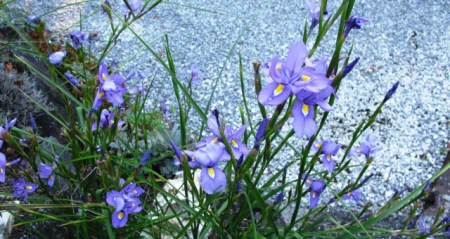
The lovely autumn peacock iris, Moraea polystachya, blooms for an exceptionally long time

The lovely autumn peacock iris, Moraea polystachya, blooms for an exceptionally long time

Latest Posts: Thursday April 5, 2012

1) The pros and cons of the decorative, formal vegetable garden – the potager which seems to have become inordinately fashionable. Personally, we lean more to the meadow style of vegetable gardening.

2) The Ornamental Edible Garden by Diana Anthony and Gil Hanly reviewed. And well done to publisher Batemans, for continuing with some practices we used to take for granted in reference books but which others have done away with in the trend to over simplify for novice gardeners who get treated like children.

3) Brugmansia Noel’s Blush – huge trumpets in peachy pink.

4) Grow it yourself – asparagus. A crop for the long haul, this one, but ranks as my all time number one favourite vegetable.

Tarting up the veggie patch

Setting the standard, really. The ultimate potager in the parterres of Villandry (Wiki Commons photo)

Setting the standard, really. The ultimate potager in the parterres of Villandry (Wiki Commons photo)

The arrival of a book on ornamental edible gardening set us thinking and talking about tarting up the veggie patch (in the vernacular), or the role of the potager (for those who aspire to a touch more class).

Keen vegetable gardeners may throw their hands up in horror. For some, there is beauty in a well presented vegetable garden with good straight rows, obedient plants in healthy condition and a succession of crops. There are sound reasons for planting vegetables in rows, including ongoing maintenance with a push hoe which is not only effective for weed control but also keeps the surface well tilled. I doubt that any other method of vegetable gardening can rival the traditional techniques for productivity. It takes ongoing work to keep it all in tiptop condition but that is to be expected. Why, some veggie gardeners may wonder, would you want to turn it into an even higher maintenance, yet lower productivity style of gardening by imposing ornamental values on what is essentially an unpretentious, utilitarian activity?

The ornamental edible garden, or potager, is almost de rigeuer today. Here is the marriage of food production with traditional garden design and practice, right? Well, yes and no. If you look at the history, it is another gardening style that has its origins with the rich and powerful of Europe, now democratised. Another example of prole drift, one could say a little unkindly. The stylised and designated herb garden, often laid out on formal principles dates back to times when herbs were more about medicine than cooking. As such, the range of plants grown was considerably more extensive and these gardens belonged in monasteries or designated apothecary gardens attached to institutions.

A word about parterres and potagers. The parterre is a highly stylised form of gardening, laid out on lines of rigid symmetry, much favoured in the sixteenth and seventeenth centuries. One of the grandest was created at Versailles for Louis XIV. The famous parterres of Villandry, also in France, are modern, dating back to the early 1900s. I liken the parterre to tapestry gardening. It is about building pleasing designs with plant blocks, originally planned for viewing by the lord from upper story windows. It doesn’t have a whole lot to do with the harvest, even when vegetables are included.

Potager is another French word, now widely applied to ornamental edible gardens. It is on a more domestic scale but its origins were also socially elevated. The peasants of yore would not have been growing in such a managed and decorative manner and the middle classes had yet to appear. So it was the upper echelons of society who could afford to indulge in creating formal gardens to grow edible crops in an ornamental style.

Rosemary Verey popularised the potager on a domestic scale (Photo:  Brian Robert Marshall)

Rosemary Verey popularised the potager on a domestic scale (Photo: Brian Robert Marshall)

The late English gardener, Rosemary Verey, is credited with popularising the potager in the last twenty years and in her hands it became a marriage of formal garden design, herbaceous traditions and food production. However, she seemed to refer to it, in the main, as simply a vegetable garden. The English show mastery of understatement. There is a pleasing symmetry in a well cared for ornamental edible garden and the formality means such gardens photograph well. It is a particularly feminine style.

It is just not a style to which we aspire personally. It is not quite one thing or the other. The principal criterion for plant inclusion is that it be edible or possibly medicinal, not that one will actually harvest it. Frankly, how many bay leaves will you ever use? One bay tree has its place, a row of topiary laurus nobilis is technically fitting the edible criterion but is primarily ornamental. And if one is going to grow ornamentals, I’d rather have topiary michelias, camellias or something more interesting than boring bay trees.

If you are gardening for looks, then the whole block of highly decorative red cabbages is going to mature at the same time so, unless you are into pickled cabbage big time, most will end up on the compost heap. Besides, you spoil the effect if you harvest one at a time, as required.

And then there are those tidy buxus hedges defining garden beds. Leaving aside the ravages of buxus blight and the fact that these tidy hedges harbour snails, buxus has an invasive root system. It sucks the goodness out of the soil and as the roots reach further afield, it becomes problematic to get crops of lush, healthy vegetables in the middle.

Often lavender is used as an edging plant but any of those big, floppy types of edgers are a problem if you have narrow paths (brick is the favoured option) and a high rainfall climate. I prefer to pop out to the garden to pick a lemon or a lettuce without getting wet lower legs.

More meadow garden than potager here

More meadow garden than potager here

We are pragmatic here. We would rather have good crops of vegetables, easily planted, tended and able to be harvested as required, with more permanent plantings of ornamentals elsewhere. That said, our vegetable gardens are by no means limited to vegetables. By this time in late summer, they are more akin to meadow gardens. Mark is fond of growing annuals for butterfly food but zinnias, marigolds and the like do not sit comfortably in our more restrained ornamental gardens so they get bedded in and allowed to seed amongst the vegetables. For us, the meadow has more romance than the potager. Besides, in this day and age when two raised beds out of tantalised timber and a citrus tree in a pot are claimed to be a potager, we would rather tread a different path.

First published in the Waikato Times and reprinted here with their permission.

The Ornamental Edible Garden

The Ornamental Edible Garden

The Ornamental Edible Garden

Should you covet a garden which is both edible and ornamental, then this is the book for you. That said, the definition of ornamental is formal in design so you need to be leaning towards a graph paper garden with central axis, quadrants, focal points and geometric layout. You then add the soft furnishings of colour toned or contrasted plants, predominantly edible or medicinal but there is plenty of flexibility in the name of aesthetics. It is a gardening genre which is currently very popular and can be managed on any scale, from tiny to large.

Chapters cover design, construction, planting and both the theory and practice of pleasing planting combinations, plus basic information on growing a whole range of vegetables, herbs, fruit and ornamentals which may qualify. There are hints on soil management and pest control so it is pretty much a complete manual for someone wanting to try this style of gardening. You probably need to be a very tidy, precise sort of person. All the examples in the book are immaculately presented and groomed. If you are a more relaxed gardener, you may want to look at more laissez faire gardening styles.

Although it is a New Zealand publication, the content and style is international, so you won’t get specifics for our conditions. I would have liked to have seen some discussion on the pros and cons of hedging in the edible garden (read: root competition) and building materials get the once over lightly rather than helpful in-depth discussion. I could be a pedant on some of the detail. Rudolf Steiner was many things but I don’t think a horticulturist was one of them – he was a theorist. Not all chemical pesticides are systemic and there are increasing options which are highly specific as opposed to killing indiscriminately. But in the end, these do not detract from what is a useful, credible and highly competent presentation of a gardening style.

Gil Hanly is one of this country’s most experienced garden photographers and it is encouraging to see the publisher willing to commission both an author and a specialist photographer. The book is well organised and well laid out. It has all those things we used to take for granted – index, table of contents, tables of information and charts, well captioned photographs, botanical names – in fact sufficient detail to appeal to gardeners beyond the novice.

The Ornamental Edible Garden by Diana Anthony, photographs by Gil Hanly (David Bateman; ISBN: 978 1 86953 812 5) reviewed by Abbie Jury.

First published in the Waikato Times and reprinted here with their permission.

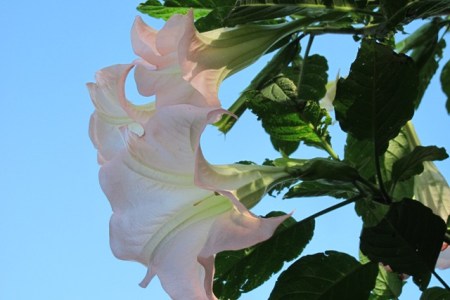
Brugmansia Noel’s Blush

Brugmansia Noel's Blush

Brugmansia Noel's Blush

The late summer sight of this brugmansia in full bloom is striking and the trumpets are a pretty peachy pink in colour. Each bloom can measure 25cm long and up to 20cm across which is on the large side. I was reading a description which said strongly scented which I can’t say I have noticed so I rushed out to sniff. No scent in the morning, I am afraid. It appears they are night scented which is an indication that pollination is carried out by night flying insects, usually moths. The plant itself is a big rangy thing of no beauty – you have to work at keeping it more compact and bushy if you want a tidy plant. Otherwise it is just an overgrown solanum which wows when in flower.

This particular one was named for the late Auckland gardener and plantswoman, Noel Scotting and it came into the country about twenty years ago. Brugmansias are all South American and there seems to be quite a bit of shuffling of species, even though there are not many different species to shuffle. I lean towards the likelihood of this being B. suaveolens from south east Brazil. Or it may be a hybrid. All brugmansias are frost tender.

Brugmansias used to be called daturas, to which they are closely related. They are also very toxic. South American tribes have long used them in traditional medicine for purposes as varied as treating dermatitis, arthritis, prophecy, a ritual hallucinogen and, most scary of all, apparently to discipline naughty children by opening them up to the voices of their spirit ancestors. It sounds like scaring them witless to me. All parts of the plants are toxic and fortunately synthetic illegal drugs have replaced their occasional recreational use which was all too often fatal.

The double white brugmansia featured earlier in this series.

First published in the Waikato Times and reprinted here with their permission.