Tag Archives: gardening

Grow it yourself: asparagus

Asparagus is a long term crop. For me it ranks as my number one all time favourite vegetable so I am happy to see it in our garden but, as a permanent crop which completely monopolises its allotted area for a decade or even two, it might not be such a worthwhile option in small gardens. Added to that, you can’t start harvesting it for the first couple of years so it is not ideal if you plan on moving or you are renting. We once moved just as an asparagus patch was coming on stream and remain scarred by the experience.

Asparagus does not fit into the current no dig craze. It is a clumping, deciduous perennial and it needs to go into ground which has been very well prepared and which has excellent drainage. The usual recommendation is to dig very thoroughly, creating a trench and adding plenty of well rotted manure and compost. Make sure that you are not planting on top of fresh manure. Give it time to mature. The aim is to create a bed of fertile and friable soil. Asparagus is generally planted as divisions in winter, reasonably deep at 15cm and about 30cm apart. Don’t refill the trench completely on planting. Just put a few cm of dirt on top and keep filling as the fresh shoots grow, otherwise they may never penetrate the surface. It is not the easiest crop to get established but once away, all that is required is regular hand weeding and annual mulching with compost. The compost feeds the asparagus crowns and discourages competing weeds.

If the asparagus crowns you have purchased look very small (and we have had that experience), you may find it more successful starting them in pots until they look sufficiently vigorous to plant out.

First published in the Waikato Times and reprinted here with their permission.

Tikorangi Diary: March 30, 2012

The lovely autumn oxalis - O.eckloniana

The lovely autumn oxalis - O.eckloniana

Latest posts:

1) Lycoris aurea – the golden spider lily
2) I guess it was inevitable that the thoughts here would be directed to trees after the casualties of last week. We accord them a rather higher value than many New Zealanders who see them as a disposable commodity. Abbie’s column.
3) Grow it yourself: rocket. Merely a humble, quick growing brassica that has been elevated beyond its status in the lexicon of vegetables.
4) In the garden this fortnight and the talk is about sustainability and our guilt over the use of motorised equipment.

The clean up continues

The clean up continues

... and Oxalis massoniana

... and Oxalis massoniana

Tikorangi Diary

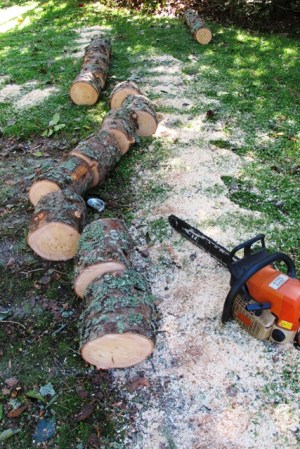
A magic week of weather has seen first Mark and then Lloyd out cleaning up the fallen totara and Picea omorika. It is done. I rather liked the piles of sawdust like a zebra crossing where the ramrod straight trunk of the picea was cut for firewood. While it looked wonderfully straight, the wood lacked heart and was pretty soft.

The pretty ornamental oxalis are all coming on stream. I used to pot some of each to sell but finally figured that too few people shared my pleasure in these autumn bulbs so it was a waste of time potting them. These days we just enjoy them ourselves. The nerines are starting but won’t peak for another week or two.

Plant Collector- Lycoris aurea

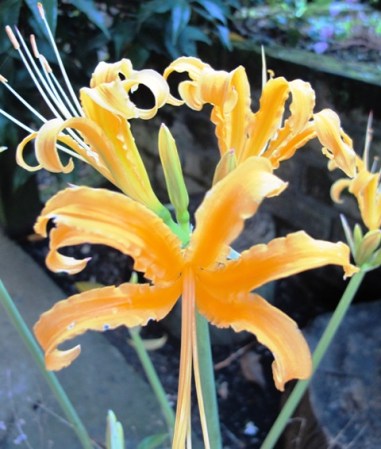
Lycoris aurea - the golden spider lily

Lycoris aurea - the golden spider lily

No, it is not a golden nerine in flower. Nerines do not come in yellow or gold and they hail from South Africa. The lycoris is a close botanical relative (both are from the amaryllidaceae family) but a distant geographic one. It comes from China through to Japan and is sometimes called the golden spider lily. Its native habitat is described as limestone country, which is interesting. Maybe it could be naturalised around Te Kuiti? It is a plant of the grasslands and forest margins in southern China and it has apparently naturalised in California.

The lycoris is not rare, it is just not widely available. But when you think about it, there are not many autumn flowering bulbs available commercially. Along with other members of the amaryllis family, it has a relatively large bulb although it prefers to be fully buried, unlike belladonnas and nerines which like to bake with their necks exposed. The lycoris does like a bit of summer heat to ripen the bulb which springs into growth in early autumn by putting up its flower spikes first. These will be followed by strappy green leaves which stay until the bulb goes dormant in late spring. It is renowned as an excellent cut flower.

It appears that lycoris was named for the Roman woman (not of noble birth) who counted various notable lovers including Mark Anthony. Aurea just means yellow.

First published in the Waikato Times and reprinted here with their permission.

Please, value trees

A totara, torn apart by strong winds

A totara, torn apart by strong winds

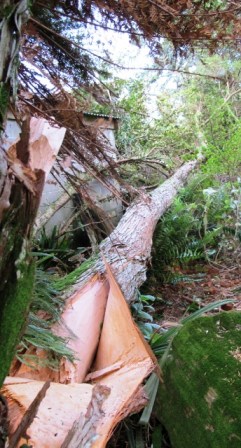
A fierce storm delivered us a sharp reminder last week. Avoid forked trunks in trees. Half a totara split out entirely. It had stood and grown for fifty years. Alas, early in life, the trunk had divided into two leaders and that meant a major structural weakness. The wind tunnel created as a result saw a triple trunked Picea omorika drop one of its leaders. It too was over fifty years old. Early intervention on both trees would have saved us a great deal of work and ensured that what remained was in better shape.

In years of retailing plants, I saw countless people debating over the selection of trees and seeking advice as to whether one tidy little specimen was going to be better than another equally tidy specimen of the same variety. It was very hard to sell a plant with what we call a hockey stick bend at the base. Sometimes this can occur with budded or grafted plants. I rarely bothered trying to explain that a hockey stick on a tree where the trunk is 2.5cm through will not be an issue at all when the trunk is 25cm in diameter. It may be true but it sounded too much like hard sell. The same goes for minor kinks in trunks on juvenile plants. They don’t look the best for the first year but it is not a long term problem. However, forked trunks are a different matter.
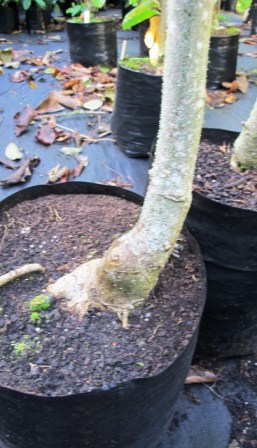
The dreaded hockey stick shaping

The dreaded hockey stick shaping

We are too cavalier in our attitude to trees in this country. Notwithstanding the customer angst about small imperfections, most people spend a great deal more time choosing the right carpet or curtains for their house than in deciding an appropriate variety of tree. Yet those furnishings will long have deteriorated to shabbiness and need replacing before a beautiful tree reaches maturity. You can’t magic up maturity in trees but they are frequently treated as disposable commodities. A combination of ridiculously cheap prices and extraordinarily rapid growth rates in this country has devalued them in the eyes of many.

That said, by no means are all trees equal. City council regulations which set a height above which resource consent is required before trees can be touched have an inbuilt contradiction. Such a rule catches all – trees worth protecting and valuing, trees simply planted in the wrong places and cheap nurse trees of neither long term value nor aesthetic merit.

There is no substitute for a little knowledge. Making an unwise choice may only cost a few dollars at the time of purchase but if it is a rapid growing, brittle variety or one that is shortlived in our conditions, you can pay dearly when it outgrows its allotted space or, in the case of filler trees, outlives its use. Not everybody has a handy person on site with chainsaw, trailer and mulcher and it is very expensive if you have to pay somebody to come in and do it for you.
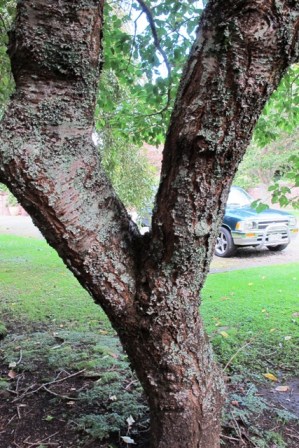
The forked trunk - an inherent structural weakness

The forked trunk - an inherent structural weakness

Similarly, planting trees and leaving them to their own devices can cause major issues further down the track. For the want of a five minute job keeping our Picea omorika and totara to single leaders some fifty years ago, we have faced a cleanup taking at least two days. Some trees naturally multi trunk like an overgrown shrub but most are better kept to a single leader. The sooner you carry out the shaping on such trees, the easier it is. At the really early stage, you can do it with secateurs. Select out the better or best looking leader and either remove competing growths entirely or shorten them to reduce competition for dominance. The longer you leave the situation, the more major the progression of tools becomes – to loppers, a pruning saw and then a chainsaw. Never having mastered the chainsaw, I am a strong advocate for a good quality pruning saw.

While some respond to these issues by deciding that trees are altogether too much of a potential problem and nothing will be allowed to grow beyond two metres in their garden, thank you very much, I would urge you to look beyond these gardening Philistines. I do not think any garden or landscape is complete without trees. It is just a matter of choosing the right ones appropriate to the situation and looking after them while they get established. Spend at least as much time on finding out about suitable selections as you would to choosing something major for your house. I try not to bag garden centre staff, but you might be placing altogether too much trust in many if you think they can give you expert advice on trees as well as on carrot seed. Either find someone who is genuinely knowledgeable or look to books. Some of the very best gardening books I know are about trees and one of the strongest and most knowledgable international horticulture societies is devoted to trees – the IDS or International Dendrology Society. The information is there to find.

Few of us will leave any legacy of note when we shuffle off the mortal coils. But good long term trees planted in the right situation and cared for during the early years of establishment are a fine legacy, to my mind.
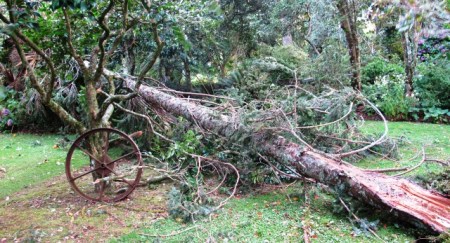
Felling of the Picea omorika by strong wind

Felling of the Picea omorika by strong wind

Recommended books on trees include:
New Zealand’s Native Trees by John Dawson and Rob Lucas (Craig Potton Publishing)
New Trees. Recent Introductions to Cultivation by John Grimshaw, Ross Bayton and Hazel Wilks (Kew)
Trees and their Bark by John and Bunny Mortimer (Taitua Books)
Trees and Shrubs for Flowers/ Fragrance/ Foliage. 3 volumes all by Glyn Church (Batemans)

First published in the Waikato Times and reprinted here with their permission.

Grow it Yourself: Rocket

How did we ever cope when salads were predominantly Iceberg lettuce? Now we expect a mix of leafy greens and the quick maturing rocket has become a bit of a star contributor with its peppery flavour. It is also frequently used as a generous garnish in modern cafe-style cooking.

There are in fact two plants referred to as rocket. The most common is an annual (Eruca sativa). It bolts to seed rather too quickly if grown in midsummer, but autumn and spring are perfect sowing times and you can expect to be harvesting in three to four weeks. Such a quick turn over crop is direct sown into the ground and some gardeners like to sow a small patch every week or two to ensure continued supply. It needs a regular supply of water (which is why it is not the best mid summer crop) to prevent it bolting to seed too soon and in the process getting unpleasantly bitter.

The other plant also referred to as rocket is arugula (technically Diplotaxis tenuifolia). The arugula is slower to mature (Kings Seeds says 55 days as opposed to about 28) and it is considerably slower to bolt to seed. Sometimes it is described as a perennial rocket but it is merely longer lived, rather than truly perennial.

Both forms are brassicas, originally from the Mediterranean. Being brassicas tends to mean they can get infested with white butterflies in summer but grown in the shoulder seasons, they are a tasty addition to salads. They are hardy, so planted now should hold well into winter.

First published in the Waikato Times and reproduced here with their permission.