Tag Archives: gardening

Tikorangi Notes: Friday March 23, 2012

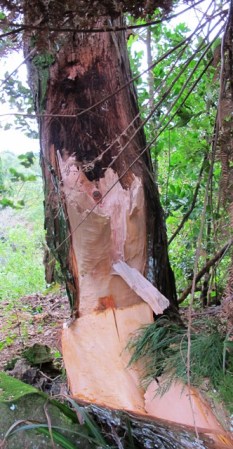
A salutary lesson in why trees should never be allowed to fork close to the ground - half the totara split out

A salutary lesson in why trees should never be allowed to fork close to the ground - half the totara split out

Latest posts:

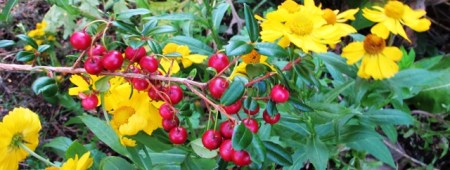
1) Ugni molinae or the New Zealand cranberry – a plant that every good family should grow. When it comes to encouraging children to venture out browsing in the garden, it ranks right up alongside fresh peas as a must. It is also easy care and a small shrub so once planted, it will last for years.

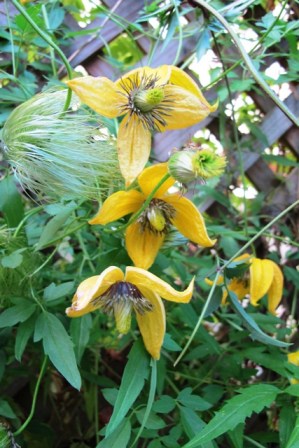
2) Clematis tangutica I was a little taken aback to discover that it is regarded as a weed menace in some areas. It has never been a problem here and instead is a source of pleasure in late summer with its lovely pure yellow flowers and silky, tasselled seed heads.

3) Lower maintenance gardening. I am unconvinced that there is any such thing as a low maintenance garden. There are certainly high maintenance gardens, moderate maintenance gardens and lower maintenance gardens but drop down below that and you end up with no garden at all. This week’s column focuses on lower maintenance options as befits a rental property.

4) The Easy Fruit Garden by Clare Matthews might make fruit gardening easy for gardeners in the UK but has little or no application here.

Tikorangi Notes:
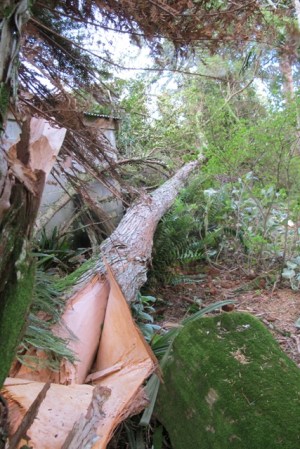
At least the falling totara missed the garage
At least the falling totara missed the garage

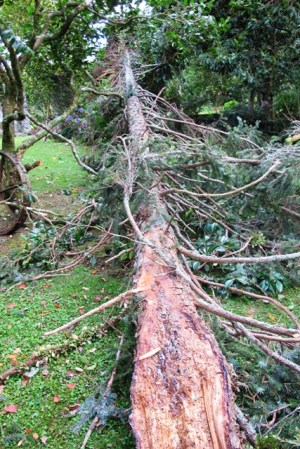
The Picea omorika felled itself

The Picea omorika felled itself

Last week was all about Womad and the weather held for a magic weekend of world music in the beautiful venue of Pukekura Park. By Monday evening, the magic was all used up and a storm of reasonably impressive proportions hit. Even Spike the dog was unnerved when we heard the unmistakeable sounds of large branches cracking and breaking. In the morning, the damage was clear. A large gust had taken out half a totara tree which would be around fifty years old. The wind tunnel created then broke out part of a Picea omorika around the same age. In falling, the totara twisted a large amelanchier and some drastic remedial action will be needed to save any of it.

The clear lesson here is the need to keep trees to a single leader and a good shape from the start. Forked leaders create a point of weakness, even though it may take 50 years to reveal itself.

We escaped lightly. Friends around Oakura report greater damage. It is only a few weeks since Patea to the south bore the brunt of hurricane force winds. The mess here is largely superficial and with the very large trees we have here, we are relieved that it was not a great deal worse.
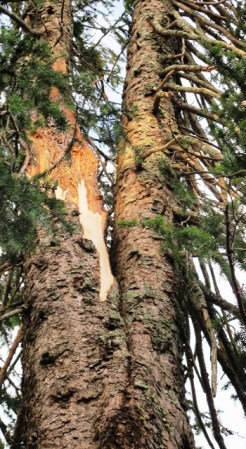
Damage to the multi forked Picea omorika several metres up
Damage to the multi forked Picea omorika several metres up

Grow it Yourself: Ugni molinae

It is a very undemanding little plant to tuck in to a sunny spot in the garden - Ugni molinae or the NZ cranberry

It is a very undemanding little plant to tuck in to a sunny spot in the garden - Ugni molinae or the NZ cranberry

I have to use the proper name for clarity because this plant has five names. The most useful name is the New Zealand cranberry (though it is neither a cranberry, nor a native) because that is what it has always been known as in this country. These days you may find it sold as the Chilean guava – its common name internationally though in New Zealand we mean an entirely different fruit when we refer to Chilean guava. In Australia it is the Tazzieberry. Oft-times, it is referred to by its former name of Myrtus ugni.

Whatever. Grow one, especially in families with children. It is a wonderful plant for browsing as one passes and the fruit is ripe right now. The highly aromatic fruit is small and red like a proper cranberry but only in looks. These are sweet little morsels. The plant stays small, about a metre high, and rangy if you don’t clip and shape it. It is an evergreen shrub that you plant at the end of a row in full sun in the vegetable garden. It roots easily from cutting or is cheap to buy. Sometimes you will see it recommended as a substitute for blighted buxus hedging but it isn’t really ideal. It doesn’t like shade, it can get attacked by thrips (especially when in the shade or clipped tightly) and it can develop bare patches. I have seen handsome trained lollipop specimens in a designer potager but they would take regular work to keep looking that good. We just have a longlived and productive plant that hangs about beside the rosemary bush being undemanding, scruffy but fruitful every year. The fruit is sure to be healthier for feeding small children than packet raisins.

First published in the Waikato Times and reprinted here with their permission.

Plant Collector: Clematis tangutica

The early autumn charm of Clematis tangutica

The early autumn charm of Clematis tangutica

We have been gently enjoying the bright yellow, hooded bell flowers of Clematis tangutica, one of the later flowering varieties for the season. There may be a mere four petals and some purple stamens in the centre and the flower is only 7cm across, but they are very charming. The silky seed heads are a particularly ornamental addition especially as we have both seed heads and flowers on the vine at the same time.

C. tangutica is one of the very best yellow coloured clematis. It hails from north western China into Mongolia which means it is completely cold hardy. It is a clematis type where all that is required is to cut it off about 20cm above the ground some time during winter when it is dormant and leafless. They don’t come much more easy care than that. It means you can grow it scrambling through other plants if you wish, and it shouldn’t smother them. Ours is growing up a trellis.

We have never noticed our plant seeding down but I see it comes with a warning to weed out seedlings so it must have that capacity. This means that it is highly unsuitable for planting near native bush and reserves and would probably no longer be allowed into the country. We don’t need another old man’s beard smothering our native forests. In a garden situation where we have had it for a decade or so, it has not displayed these wayward habits so we are happy to continue giving it garden space so it can charm us from late summer through to autumn.

First published in the Waikato Times and reprinted here with their permission.

The Easy Fruit Garden by Clare Matthews

The Easy Fruit GardenI do not understand why New Holland wanted to release this book in New Zealand. It is a nice enough book but of precious little relevance to New Zealand growing conditions. It is just so very English – in fact so English that it refers to John Innes number two and John Innes number three with the assumption that the reader will know that these pertain to potting mixes. Jostaberries, sloes, hoverflies and hazels – it is just so redolent of English gardening.
There is little of relevance for New Zealand gardeners. The cultivars they grow are different. Pests and diseases are often different. There is no information to guide NZ gardeners on the climatic ranges of plants. I don’t think citrus are even mentioned, yet they are one of the mainstays for many of us. Yes some of the techniques are transferable but in a colder climate with slower rates of growth, they just garden differently from us.

You would probably only want this book if you are a nostalgic Brit or you are planning on moving to rural Britain.

The Easy Fruit Garden by Clare Matthews (New Holland; ISBN: 978 1 84773 858 5) reviewed by Abbie Jury.

First published in the Waikato Times and reprinted here with their permission.

Plant Collector: Norfolk Island Pine (Araucaria heterophylla)

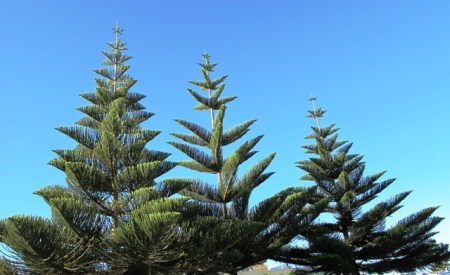
The urge is to put a Christmas star on top - Araucaria heterophylla

The urge is to put a Christmas star on top - Araucaria heterophylla

I am very fond of Norfolk Island pines in the landscape though they should come with a warning not to ever, under any circumstances, plant them in a suburban setting. We once owned a house where the neighbour’s Norfolk Island Pine robbed us of several hours of sunshine a day.

These are not actually members of the pine tree family. They are araucarias and this one is A. heterophylla. That name is used synonymously with its earlier name of A. excelsa but heterophylla is the correct one these days. The best known araucaria is the monkey puzzle tree (A. araucana) and it hails from Chile. At least these are true to their name in that they come from Norfolk Island which gives a hint to ideal conditions – mild and coastal. Last time I was in Napier, I thought their seafront avenue specimens looked a bit scruffy but any tree that can survive and grow in the full blast of salt spray and wind is a bit of a wonder. The tough, tightly whorled leaves encircling the branches will have evolved to cope with salt spray. Even so, any tree is going to look lusher with a smidgeon more shelter or planted a little further back from the seashore than those Napier specimens.

It is that perfect, open pyramid shape that makes it such a fantastic landscape tree where space allows. You just want to put a Christmas star on top every time you look at one. Potentially they can grow huge, up to fifty or sixty metres over time and that is massive. This is not a tree that will look attractive if you try and top it to keep it lower. Its application is probably limited to public plantings and farms but viewed from afar, they make a great visual contribution.

First published in the Waikato Times and reprinted here with their permission.