Tag Archives: gardening

Lunar planting – your very own personal organiser

Mark has had A Revelation. If he turns around three times in an anticlockwise direction in front a pot of fresh sown seed, the seed germinates and grows more rapidly. He is fairly sure this has something to do with channelling cosmic energy and just to prove it, he is going to sow two pots at the same time but hide one around the corner so it can’t see his actions. He is confident that the seed that has received the special attention will grow better and this experiment will give conclusive scientific proof.

Silly? Of course.

We have been looking at planting by the moon, in an attempt to see if there is any independent evidence to back up the claims. We are seeing lunar gardening being featured ever more widely in this country, almost to the point of becoming mainstream. Is there any scientific foundation to it? Not that we could find. Well, there is the work by Nicholas Kollerstrom but there is a bit of a credibility gap with him – he being best known as a leading Holocaust denier. Beyond that, it is all affirmation, testimonial and anecdote.

We could comprehend the theory that the times when the moon’s gravitational pull is at its strongest are the best times for plant growth. I don’t say we believed, but we could understand it. What we failed entirely to get a grip on was why this meant you could ONLY plant at this time for best results. Some seeds can take a long time to germinate. If you planted them two weeks early (when the gravitational pull is weaker), what is to stop them just sitting there waiting until the time is right? Why are they allegedly so disadvantaged when compared to seed planted 14 days later at the right phase of the moon? Logically, should not the gravitational pull be a deadline, not a tight time frame? We also failed to get to grips with the differentiation between the positive forces of a waxing moon and the negative forces of a waning moon when the gravitational pull is roughly equal at various stages.

There is a fair amount of wiggle room. There does not seem a definitive source of guidance so beyond the principles of gravitational pull and the lunar influence on tides, most other interpretations appear to be flexible. Some claim that you should only water on a waxing moon, others that if you mow your lawns or clip your hedges in the last quarter, you will slow regrowth. This might be termed residual effect? It appears that timing is everything and we can indelibly affect the long term behaviour and subsequent performance of plants based simply on the exact timing of planting, pruning and other gardening activities.

It didn’t get any better when we delved further. Fertile and barren days are apparently linked to the zodiacal belt. You know, the signs of the zodiac. That is astrology and you have to be of a certain ilk to take astrology seriously in your daily life.

We came to the conclusion you have to be a believer. Planting by the moon in modern times has more to do with pagan moon worship than scientific fact. And it arouses great passion and devotion amongst followers, a sense of belonging and a belief that all will go well – as long as you follow the rules.

Ancient practice alone is not validation. We are so selective in our use of history. Fortunately we no longer think that sacrificing the odd virgin or two will bring better harvests. In the days before calendars and clocks, it is likely that the ancients did indeed use the moon’s phases to determine planting times, along with other factors like day length, temperature change and seasonal rainfall. Productivity and harvests have long been wrapped up with religion and both the moon and the sun were objects of veneration. How curious that moon worship has persisted in this form and remains a major source of spiritual inspiration.

And yet, just as the outcome of biodynamic practices can be sound organic land management no matter how flaky some of the underpinning rules appear to be, so too can planting by the moon have beneficial outcomes. As far as we can see, it is the perfect tool for people who need deadlines to get themselves organised and motivated. “You must plant this carrot seed within the next three days or you will have to wait another month by which time it will be too late.” You obediently follow instructions. Whereas the non believer procrastinates and delays, thinking there is still plenty of time, so often doesn’t get around to planting the seed at all. Lunar planting is your own personal organiser but, as far as we can see, it does not actually have anything to do with the moon’s gravitational pull.

Organics, biodynamics, permaculture, planting by the moon – these are all ways of encouraging sound gardening practices which enhance the environment rather than harming it. I just wish some of the proponents and their devoted followers didn’t feel the need to use pseudo science to try and justify what are sometimes faith-based gardening systems.

First published in the Waikato Times and reprinted here with their permission.

Photos for this article here have been sourced from Wiki Commons. Photo credit for lunar eclipse time lapse: A. Skorochod.
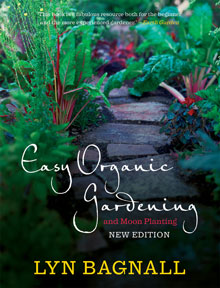
"Easy Organic Gardening and Moon Planting" by Lyn Bagnall

Easy Organic Garden

Easy Organic Garden

This is organic gardening as carried out by a dedicated moon planter but easy it is not. The author subscribes to the why-use-one-sentence-when-you-can-use-ten school of writing. It is very long and wordy, filled with so much detail that even the experienced and knowledgeable gardener can end up seriously baffled. You need to be a believer to want this book. As it is in its second edition, there are either a fair number of believers out there or there is a thirst for knowledge on the topic of organic gardening. I suspect the latter but I am not convinced this book will give the answers.

I am very keen to see books which will separate the organic gardening concepts from faith and mystique. Psuedo science does not do it. Nor do sweeping statements. When I read statements like: “I must confess to not fully understanding the science behind this particular portion of moon-planting principles, but I do know it works in practice,” I start to worry. The author is referring to the changed polarities of yin and yang in Virgo and Libra. I get irritated by the careless use of the word chemical as a synonym for all that is bad and destructive in gardening. A chemical is simply a substance or a compound. In itself it is neither good nor bad. I raised my eyebrows at the claim that synthetic fertilisers lock up essential nutrients in New Zealand soils. Really?

I am all for sustainable gardening practice and I think it is all to the good that we are questioning some pretty dodgy habits. If you are willing to drill down into this book, it promotes good environmental practice, aimed at the author’s homeland of Australia. It covers both ornamental and productive gardening and even has a helpful section on bushfire season. There is just an awful lot of smoke and mirrors to get through first and the husband still doubts that it is possible to get a tomato crop through in our climate without a little non-organic intervention.

(Scribe; ISBN: 9781921372605)

First published in the Waikato Times and reprinted here with their permission.

Plant Collector: Tecomanthe venusta

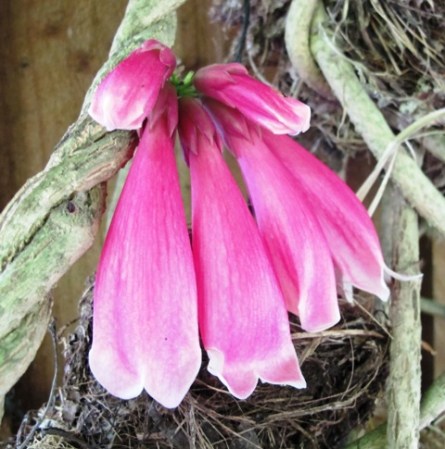
The pink bells of Tecomanthe venusta

The pink bells of Tecomanthe venusta

We are so excited by our Tecomanthe venusta in bloom. That is because it is tropical but we are not so it doesn’t often flower for us. And I have to admit that there are only a few clusters of these pink flowers in evidence. A garden visitor once told us there was a specimen at the entry to Whangarei Gardens’ glasshouse which flowers magnificently. We have not seen it but it would figure that it is happier further north because it originates in New Guinea and is the most cold-sensitive member of the tecomanthe family, all evergreen climbers in the bignoniaceae group.

The tecomanthe family is not large and some readers will know our own T. speciosa – a tender but rampant climber which was found in the wild as a single, surviving specimen on Three Kings Islands. It needs a frost free position which rules it out for most inland locations and it needs a bit of training and management if you want to see the lovely creamy trumpet flowers. It will shoot up the highest tree available and flower only at the very top if left to its own devices, but if you train it along a horizontal support, it can be encouraged to flower along its length.

Back to T.venusta. We grow it under the cover of a deep verandah with opaque roofing. When it does decide to flower, it puts out clusters from its bare vines, which is very obliging because they are so obvious. Most plants set flowers on either new growth or last season’s growth but venusta appears to be quite happy to do it on gnarly old growth. We get a far more spectacular display in spring from the species we have as T. montana, also from New Guinea, which is grown in the same conditions but there is a delicious unpredictability to venusta.

First published in the Waikato Times and reprinted here with their permission.

Grow it Yourself – oregano and marjoram

I am not alone in getting these plants confused. Marjoram is the sweeter, milder, softer option but they are all members of the origanum family and related to mint. Origanum vulgare is what is usually regarded as oregano while Origanum marjorana is marjoram (sometimes referred to as sweet marjoram). It also has smaller leaves. I grow both and tend to use them in tandem when cooking. It appears that in the wild and in harsher climates, oregano develops a much stronger taste and the flavour difference is marked. But in our soft and lush conditions, the flavours of both are very mild.

The relationship to mint gives a clue as to growth habits. These are clumping perennials, easily increased by division once established. In colder climates they are largely deciduous, but grown in a well cultivated garden border, I can harvest from them for most of the year. It is best to divide them in spring or summer when in full growth. If you are growing oregano for cooking, don’t succumb to buying the golden and variegated forms which lack the flavour. You can plant these herbs as ground cover in herbaceous borders though they can be so enthusiastic in growth they may swamp more retiring neighbours. They will grow happily in sun to part shade but the flavours will be intensified in harsher conditions – full sun and poorer soil. I have decided I am being too kind to my plants and am getting masses of lush leafy growth at the expense of flavour. Their Mediterranean origins are an indicator that they will take harder conditions. What is sold as Greek oregano is reputed to have the strongest flavour.

First published in the Waikato Times and reprinted here with their permission.

Tikorangi Diary: Friday 10 February, 2012

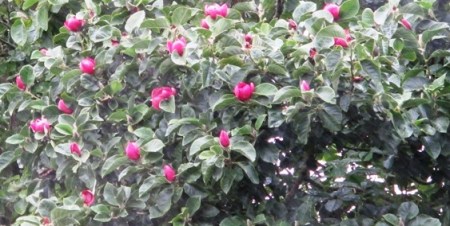
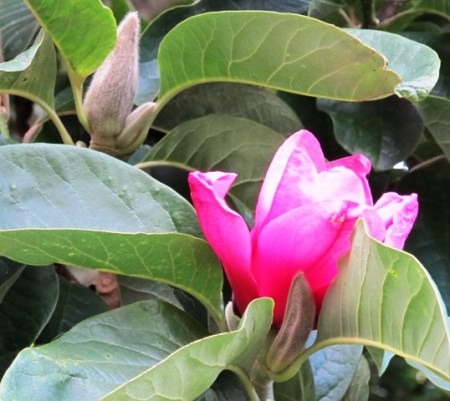
The bonus of summer flowers on Magnolia Black Tulip

The bonus of summer flowers on Magnolia Black Tulip

Latest Posts

1) From big picture gardening to small picture detail – Abbie’s column.

2) On the case with Ulmus “Jacqueline Hillier” in Plant Collector this week. It is not a dwarf grower as we were originally led to believe by somebody or other (probably the person we sourced the original plant from in NZ).

3) Grow it Yourself – spinach this week. Silver beet for refined tastes?

4) In the garden this fortnight – the latest instalment of our garden diary as written for the Weekend Gardener where we reference seeding and spreading plant pests (yes! Campanulata cherries, bangalow palms and Daphne bholua).

Magnolia Apollo in summer

Magnolia Apollo in summer

Tikorangi Notes:

In days gone by, the Jury name used to be synonymous with camellias. These days it is magnolias and we can chart the year by repeated requests for diagnosis. In late winter and early spring, it is always: “Help. My magnolia buds look fine but then the flower opens all distorted and misshapen.” In this country, the answer is that a possum has developed a taste for the buds and chewed out the centre at an earlier stage. They can do this without it being obvious from below. The solution is to catch the critter – we favour high velocity lead, as Mark says.

In spring and summer, the question is: “Help. The leaves on my magnolia tree are opening all yellow, distorted and sick-looking on one side. What can I do?” The answer is that somebody has used a hormone spray – usually a common lawn spray – at the time when the tree is just breaking dormancy and there is nothing you can do except wait to see if the tree can recover. Oh, and be more careful next year (or ask your neighbour to) because the slightest hint of hormone spray drift at the wrong time does major damage. Don’t spray your lawn in spring if you have magnolias nearby.

Magnolia seed pod, not a sinister growth

Magnolia seed pod, not a sinister growth

This summer, we have had repeated requests for information about alleged abnormal growths and cankers which have appeared. SEED PODS, dear Reader. There is nothing sinister. The plant has set seed and you have just noticed it. Some plants set a fair amount of seed, some none at all (they are sterile) and some only set seed occasionally. And yes, you can grow them but the chances of getting something exciting and better than the parent are extremely remote. And you need space because it may take many, many years before the seedlings get to flowering size – by which time they can be large trees. When the pod eventually turns brown and dry, it starts to crack open and release the red seed. For better germination, we rot that red coating off before planting the inner black kernel.

Out of season summer flowers on magnolias are often mentioned too. There is nothing unusual about this phenomenon. I wrote about it in Magnolia Diary 14. It is in the breeding, basically. And they are bonus flowers, not a major display.

The Tikorangi weather report is better this week – some sunny, warm, summery weather at long last though the lower than average night temperatures and sunshine hours mean the water temperature in our swimming pool remains too low to entice us in. The pool is unheated and would normally be a pleasant 26 degrees celsius by now, maybe more but it is not even close. The only consolation is that the entire country is having a cooler than usual summer. It is always nice to know that one is not alone. At least the auratum lilies don’t mind and flower on beautifully.