Tag Archives: gardening

Plant Collector – Philadelphus

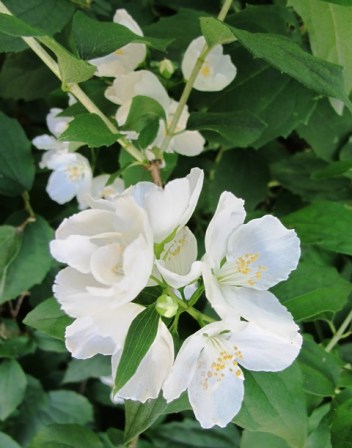
The exquisite simplicity of the fragrant philadelphus

The exquisite simplicity of the fragrant philadelphus

I went out to the garden looking for something Christmas-y but the recent rains haven’t helped. The perfect red dahlia did not quite cut the mustard for this column but my eye fell on the pristine, snow white flowers of the philadelphus. I think this one is P. coronarius, the most commonly grown species. The whole family is often referred to as mock orange blossom. Sweetly scented though this plant is, as one whose garden is at times awash with the genuine orange blossom scent, all I can say is that to label the philadelphus so was the work of either an optimist or a plant marketer.

Philadelphus only star when in flower. For the rest of the year, they are largely anonymous border shrubs but that is fine because gardens need some quiet fillers in order to highlight showier plants. While there are a few evergreen ones, they are generally deciduous. The simple blooms remain pristine white, not burning in the sun or turning brown with age.

We saw a large range of particularly showy philadelphus in early summer English gardens, many much larger flowers, semi doubles, doubles, even pink tones. We figured they are hugely more popular there because they are such an obliging plant in a wide variety of conditions including alkaline soils and hard winters. New Zealand gardeners tend not to be fans of twiggy, deciduous shrubs. Plants flower on the previous season’s new growth which means that it is better to prune and shape by taking out older, woody stems entirely rather than giving the plant a hair cut all over. However, these are well behaved shrubs which only need attention every few years.

Apparently they pick well. I may have to try combining them with my red dahlias for a Christmas themed vase.

First published in the Waikato Times and reproduced here with their permission.

Grow it yourself: basil

Was there life before basil? Surprisingly yes, but it probably amounted to soggy sliced tomatoes drowned in salt and fine white pepper with Maggi onion dip in place of pesto. Of all the herbs, nothing shouts summer like basil. In my opinion it is only worth eating fresh so it is very seasonal. It is not difficult to grow in rich vegetable garden conditions (the usual full sun and friable, fertile soils) but it won’t do much until summer is pretty much upon us because it needs warmth even to germinate – about 20 degrees of it. It is not too late to sow it now though you won’t get much to pick until late February. Enthusiasts start it earlier under cover and plant out into the garden as soon as temperatures rise sufficiently.

I see Kings Seeds now offer 17 different types of basil plus a gourmet blend for the indecisive. We have tried some different types but keep going back to the most common variety – Sweet Genovese, or its equivalent. To harvest, just keep picking leaves as required. Keeping the plants well watered encourages them to continue growing rather than bolting to seed early. Caterpillars can take a liking to the leaves but you can generally control these by hand.

The shortcut approach where time and equipment are a problem, is to buy the pot of smallest, least mature basil in the fruit and veg section of the supermarket and to repot these to a larger container with optimum conditions (good mix, full sun, plenty of water and liquid feed) and resist the temptation to start harvesting leaves immediately. The older pots of living herbs in the supermarket are leggy and stretched (reaching for the light) but if you get a fresh shipment they are sometimes a little more squat and juvenile. Elder Daughter used this approach to keep a year round supply going. Others recommend chopping up basil leaves, adding olive oil and freezing in ice cube trays. I have tried this but decided that I prefer to keep basil as a seasonal taste in summer, best picked with sun warmed leaves and eaten very fresh. Try it in a simple salad with slices of fresh, white mozzarella and ripe tomatoes – summer in a salad bowl.

First published in the Waikato Times and reproduced here with their permission.

Tikorangi Notes: Friday 16 December, 2011

The DIY Christmas tree

The DIY Christmas tree

Latest posts: December 16, 2011

1) Gardening books that have stood the test of time (or are likely to). Abbie’s column giving recommendations old (some positively vintage) and new.

2) Please do not buy me garden ornaments for Christmas (what we are up to in the garden this fortnight, first published in the Weekend Gardener). Using plants as focal points.

3) The delightful small Chinese tree Tetracentron sinense in Plant Collector this week.

4) Grow it yourself – leeks this week. An easy crop for winter harvest.

5) The DIY Christmas tree for 2011 – step by step instructions. Though this is not exactly a spur of the moment creation this year.

The black sands of a North Taranaki beach

The black sands of a North Taranaki beach

With rain every day this week, there has been little gardening going on here and little of the current flush of blooms will survive. The one consolation is that it could be worse – as it is in other parts of the country. Mark has been busy in the shed sowing seed while I made the Christmas tree but we may start to suffer from cabin fever, unless we get some sunshine soon.

Rather than battling out to try and photograph some sodden plant or garden scene this week, I have turned instead to two beach scenes from last Friday (when the weather was gratifyingly good – sunny, calm and mild) and we headed to the beach at Tongaporutu to gather oysters and mussels for dinner. On the west coast we have very fine black sand beaches. It used to amuse me that despite only ever seeing black sand, the vast majority of young Taranaki children still paint beach scenes showing golden sand. In mid summer, the hot sand can get too hot to walk on with bare feet above the high tide mark, but this early in the season, it is not a problem. Tongaporutu is about 30 minutes up the coast from us and is a wide open beach, often completely empty of people and completely magical. It felt like the essence of New Zealand, captured in a few hours

Mark, gathering dinner last Friday

Mark, gathering dinner last Friday

Gardening books that stand the test of time

Over the past decade or so, a fair number of new publications of New Zealand gardening books have come across my desk for review. Precious few remain on the bookshelf. After being critical of the recent offerings for the Christmas market, I wondered at the manner in which NZ publishers are reacting in the face of competition from the internet. With all the information in the world available on one’s computer screen with a click of the mouse, I would have thought that the future of the reference book was as a highly credible, accurate, reliable, expert presentation of related information in one place. After all, one has to wade through a vast amount of dross on the internet and weed out unreliable information. It is often easier and a great deal more convenient to reach for the traditional book, but only if you trust its contents.

Reference books often used to be peer reviewed before publication to iron out errors and to identify problem areas. Wide ranging topics often had multiple authors, each working in their own area of expertise. Authors had solid credentials and there was a general expectation that information be accurate. Books were produced on the assumption that they could last for years, maybe even decades, and good ones would be reprinted. It took time to produce a new book.

Not anymore. The NZ gardening book today is more akin to the glossy magazine. Here today and gone tomorrow but looks good in the short time it is in demand. Who cares about the rest of it as long as the customer is seduced into buying it right now?

In both NZ books and magazines, the advice being dispensed so freely in visually appealing ways is too often coming from commercial interests which want to sell product to the consumer. And it is not always accurate advice, let alone best practice. Bring back independent, non aligned advice and information, I say. You know – the sort of information we used to get from books. I like to think that readers are neither dumb nor gullible. Would that NZ publishers thought the same way. Alas, they have redefined readers as consumers.

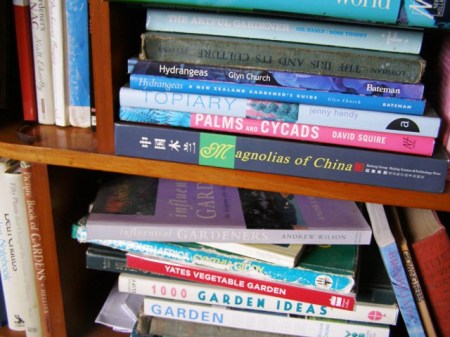
This train of thought led me to look at the books which we reach for regularly. We own a lot of gardening books. The dross goes to charity. Many of the specialist ones are particular to our interests but there are a few more general ones that we use regularly and which have stood the test of time and I am happy to recommend for any gardener’s bookshelf. Some will only be available second hand – try Touchwood Books who offer a mail order service.

1) Bulbs for New Zealand Gardeners and Collectors by Terry Hatch and Jack Hobbs. First published by Godwit in 1995, it may look a little dated and it is not the most comprehensive bulb book available. But it is accurate, written for NZ conditions and covers the bulb material available here. We trust it.
2) The Hillier Manual of Trees and Shrubs (Redwood Press). The version we have has no pictures but is still the best comprehensive listing of trees and shrubs we know. There are good reasons why it has had multiple reprints and editions.
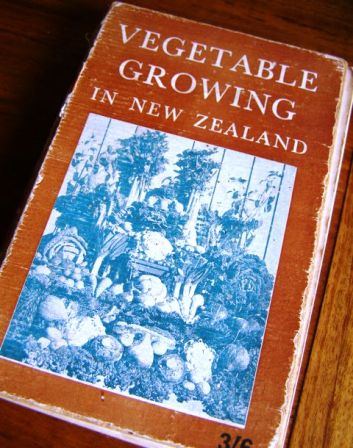
3) Grow It Yourself Vegetables by Andrew Steens (Batemans, 2010). It is not the smartest looking of the latest crop of vegetable books and the sow/harvest diagrams are an unreliable afterthought, but the text is practical, helpful and reliable. According to Mark, the real gem if you can find it, is Vegetable Growing in New Zealand by J A McPherson and F J E Jolie. It was published by Whitcomb and Tombs and we have the sixth edition with no date but it retailed for three shillings and sixpence.
4) Koanga Garden Guide by Kay Baxter (Body and Soul, 2007). Simply the best and most comprehensive guide to organic and sustainable fruit and veg gardening that we have found. It is self published and a little rough around the edges (the edition we have lacks an index which makes it harder to use), but serious gardeners will read it cover to cover and take heed. What is more, they will keep going back to it which is a measure of a good book.
5) Like a shining beacon of hope, came New Zealand’s Native Trees by John Dawson and Rob Lucas from Craig Potton Publishers this year. A comprehensive, high quality and credible publication which is likely to remain on the bookshelf as a key reference for decades to come. We never did get the definitive two volume edition of Eagle’s Complete Trees and Shrubs of New Zealand (latest version is 2007 from Te Papa Press) – equally credible and enduring but more expensive.
6) We still use the 1993 Perennial Gardening in New Zealand by Christine Dann (Bridget Williams Books), particularly for identification.
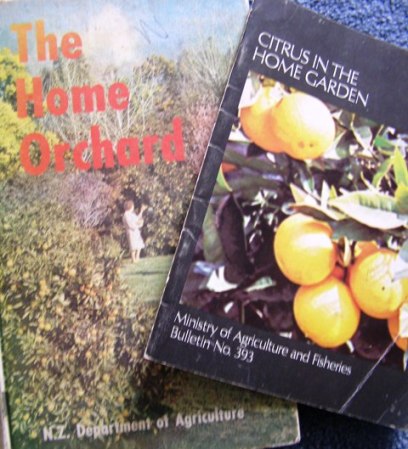
7) The old (and I mean really old) Department of Agriculture publications on fruit trees – the bulletins and their 1973 book “The Home Orchard”. Treasure these, if you find them. Technically they are still very good on basic fruits though they are way out of date now with modern options and new cultivars. Use them for information on planting, pruning and general care but with the proviso that the excessive and toxic spray regimes can be totally ignored. They have their origins in the Chemical Ali times and we have since moved on.

I cannot think that many of the New Zealand gardening books published in recent times will still be on the bookshelves in decades years to come. Even fewer will be a resource of first choice. What happened to professional pride?

First published in the Waikato Times and reproduced here with their permission.

In the Garden: Friday December 16

A fortnightly series first published in the Weekend Gardener and reproduced here with their permission.

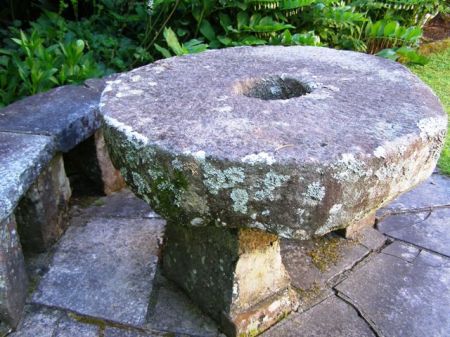
The antique stone mill wheels are fine as garden decoration

The antique stone mill wheels are fine as garden decoration

Ours is a garden that is very light on ornamentation and we prefer it that way. The last thing I want for Christmas is a garden ornament or colourful display pot. The three stone antique millwheels are fine, but generally we like to feature glimpsed views or plants as focal points rather than statuary or any type of installation. We are lucky that we garden on a sufficiently large scale to be able to use the glimpsed view, even the odd borrowed vista. It is a bit more problematic in a tiny, town garden with a view of next door’s washing line. But using plants as a feature point is possible no matter what size the garden.

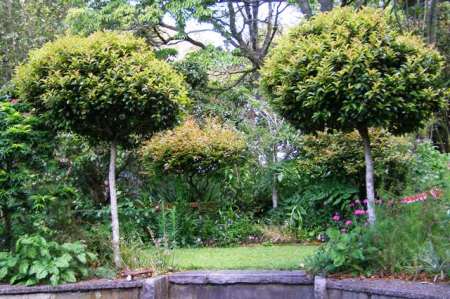
Before....

Before....

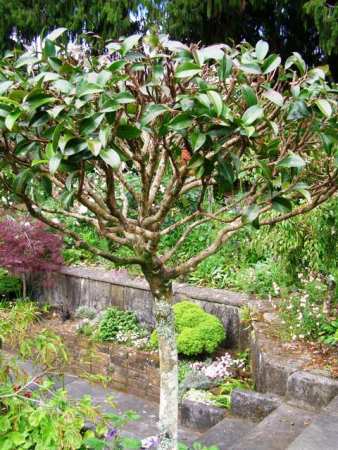
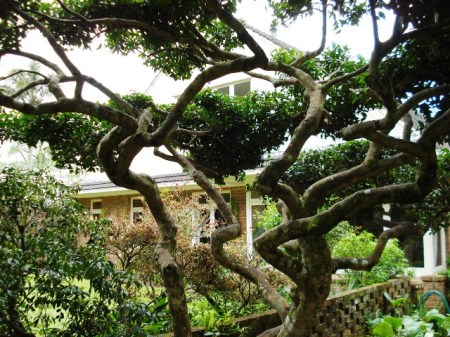
One of the delights of having a mature garden with old plants is that there is plenty of raw material for clipping and shaping. We don’t want to follow the Italian example and clip and shape everything, but the occasional large, cloud pruned specimen can be as strong as any man-made focal point. Camellias are wonderful for clipping and shaping because they will sprout again if you make a mistake and they grow densely if you clip every year. Some of the michelias also clip well when they are well established, as does loropetalum and the classic yews. The skill is in making

... and immediately after

... and immediately after

sure that not everything is turned into a lollipop (the easiest shape to clip), or a cake stand (which is just a vertical stack of lollipops). Mark favours the flatter topped mushroom shape or layers of clouds. We had four standard lollipops flanking our sunken garden but they had become too dense and rounded. Some radical cutting has seen them become much lighter mushrooms instead, giving a visual accent rather than completely dominating the area. He doesn’t rely on doing it all by eye, instead using lengths of bamboo to measure height and width. We don’t mind a bit of variation – these are living plants not artificial structures that can be like identical soldiers – but we want a sense of overall unity.

Top tasks:

1) Summer prune the wisterias. Turn your back for a moment and they can make a bid for world domination, or so it seems. I just tidy up the long, wayward tendrils at this time of the year and do a structural and shaping prune in winter.

2) Continue deadheading and light summer pruning of the roses. Because we never spray our roses here, I prune frequently to encourage fresh growth. They get a traditional winter prune so the summer effort is more like a nip and tuck. I rely on keeping the roses growing strongly and pushing out fresh leaf buds to keep enough foliage coming to replace what succumbs to black spot. I try and remove all spent blooms and damaged foliage to the wheelie bin, to avoid them harbouring pests and diseases on the ground at the base of the roses.

A large cloud pruned specimen of Camellia sasanqua Mine No Yuki

A large cloud pruned specimen of Camellia sasanqua Mine No Yuki