Tag Archives: gardening

Grow it Yourself – melons

The melons offer an annual challenge here because timing is of the essence. All melons like a hot summer so the further north you are, the more successful you will be. They also have a relatively long growing season of at least 3 months and you need heat at the end of the season to get sweet fruit. The trick is getting them out at the optimum time – early enough to get well established but not so early that they get checked in growth by inclement spring weather.

Melons grow on a vine, similar to a pumpkin or a courgette, each plant taking up at least a square metre. If you want to grow them vertically up a trellis, you will probably have to construct little hammocks for each fruit to support the weight. Because of the long growing season requirements, it is usual to put them out as small plants rather than starting from seed. You can try and hasten the initial settling in process by using a cloche or by planting into black plastic (which helps the ground to heat up more quickly). Mark has tried a new approach this year of building fresh compost beds in mounds for the melons, using grass clippings to generate initial heat. Ever the vigilant gardener, he has measured the temperatures and the mounds are sitting at around 35 degrees during the day, dropping to 18 degrees at night. He is hoping this is enough to really kick start the crop this year. It also has the advantage of supplying plenty of nutritious, organic material which the plants require.

Plants need to be well established and running profusely by Christmas if you are to have any hope of a decent harvest and even then, you are relying on a warm, dry autumn. So do not delay planting if you want to try growing them.

Water melons are a little more successful in marginal climates, though many of us may think they are a poor second to a good rockmelon.

First published in the Waikato Times and reproduced here with their permission.
Plant Collector: Geranium maderense

Geranium maderense

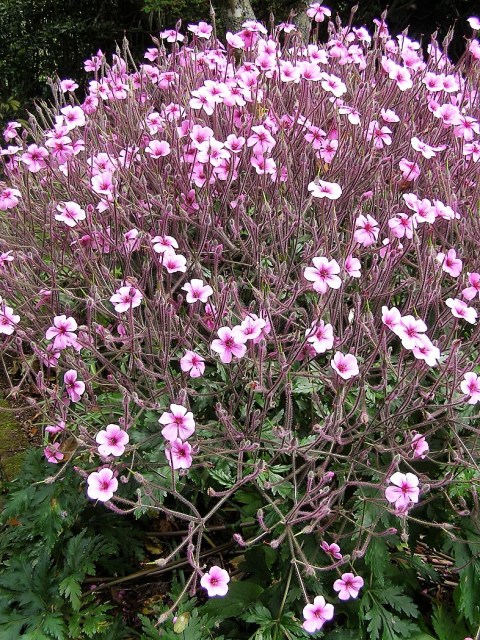
There is nothing rare about Geranium maderense but it is certainly eye-catching if you have not seen it before. The only tricky part seems to be getting the first plant to grow. It then sets seed prolifically and it will continue coming up for years to come. I weed out most of them, leaving two or three to grow on to flowering size each season.

This is the largest of the geranium family and it is biennial. It doesn’t flower until its second year and then it puts on a huge show, sets seed and dies. By this point it is at least a metre high and a metre across so it does require space. Curiously, its lower leaves (which are large and attractive in their own right) become elbows resting on the ground to enable the plant to stand upright without support when flowering time arrives. It comes from the island of Madeira and to save you looking it up, this island group belong to Portugal and is located southwards to the west (or left) of North Africa. So this geranium comes from a hot, dry, maritime climate and is not particularly hardy to cold areas but it seems to be resilient in a range of soil conditions.

Elbows!

Apparently the Romans used to call Madeira the Purple Isles which seems appropriate given the most common form of G. maderense is in cerise to purple tones. There is a white form available. Terry Hatch from Joy Plants on the northern border of the Waikato gave us three plants of the white form but, alas, they failed to survive with us. This may be because we didn’t get around to planting them out quickly enough though others have told me they have tried and lost the common purple form too. If you are going to try growing G. maderense, go for a position which offers warmth, sun, good drainage and space.

First published in the Waikato Times and reproduced here with their permission.

Postscript: I have just been alerted to the existence of an endangered geranium in Hawaii which would almost certainly beat G. maderense on size. Geranium arboreum can reach up to 4 metres high, though it does not appear to be as showy in bloom as the second place-getter in the big geranium stakes.

In The Garden: November 18, 2011

A fortnightly series first published in the Weekend Gardener and reproduced here with their permission.
Planting out hostas now

Planting out hostas now

With our annual garden festival (now the Powerco Taranaki Garden Spectacular) over, it is back into the garden with a vengeance. The festival is incredibly important to us but standing on concrete all day every day for ten days on end, meeting and greeting visitors is far more tiring than a hard day in the garden. Unless we have a very wet spell, it is late for planting out woody trees and shrubs. Large plants will now be heeled into the vegetable garden because it has very well cultivated soil and offers easy planting and growing conditions, to be relocated next autumn. Any planting now requires wetting the root ball thoroughly. We plunge the plant, pot and all, into a bucket (or a drum for large plants) until the bubbles stop rising which means the root ball is saturated. This can take anything up to 30 minutes. Once a root ball has dried out, it is very hard to get it to take up water again without soaking.

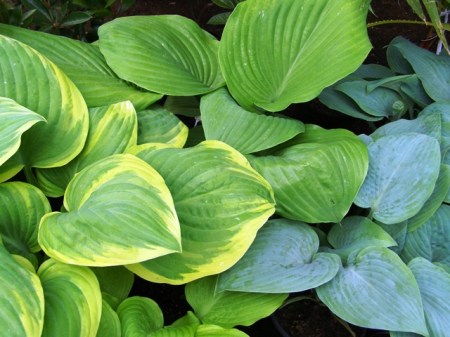
We will continue planting out perennials, particularly hostas and bromeliads. Perennials in full growth can be divided now, as long as they are well watered and planted into well dug soil where they can get their roots out easily. We mulch with compost as a matter of routine, to enrich the soil and to keep moisture levels up in the soil before summer arrives. It also controls weeds, as long as you make a hot compost mix which kills any seeds in the composting process.

Top tasks:

1) The daffodils in the lawn need to be lifted and separated. I will only replant the large bulbs. They have been there for many years and the flowering is now greatly reduced which means that either they need dividing or we have a problem with narcissi fly in them. If I leave it any longer, I won’t remember exactly where the bulbs are because the grass will cover them.
2) Narcissi fly are on the wing. They look like a small blowfly but with a yellow abdomen. Removing all foliage from narcissi bulbs will reduce problems as long as I cover the bulbs with dirt so the narcissi fly can’t lay its eggs in the hole left from the foliage. Mark also stalks the flies individually with a little sprayer of Decis, which is a synthetic pyrethroid.
3) Label overcrowded patches of spring bulbs which need lifting and dividing when they are dormant over summer.

Fairy Magnolia Blush picked for success in Australia

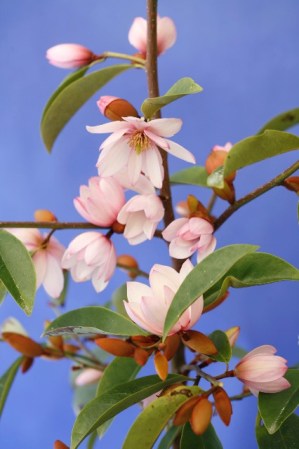
Fairy Magnolia Blush - Mark Jury's pink michelia

Fairy Magnolia Blush - Mark Jury's pink michelia

Australia’s leading garden magazine and TV programme, Gardening Australia, has named Mark’s new Fairy Magnolia Blush as one of its top ten selections for plants for the future in Australia. This is in addition to naming the Jury-bred Cordyline Red Fountain as one of the top twenty plants in the past twenty years. Gardening Australia is currently celebrating its own twentieth birthday.

Fairy Magnolia Blush is the first of a new series of michelias released by Mark, the result of a plant breeding programme over many years. It brings a distinct pink colour into a plant which is usually resolutely white or cream. It is an evergreen plant which clips easily and can be kept compact.

Blush is readily available from plant retailers in New Zealand.

On the case with Grandma’s violets (subtitled: it is hard to find the perfect groundcover).


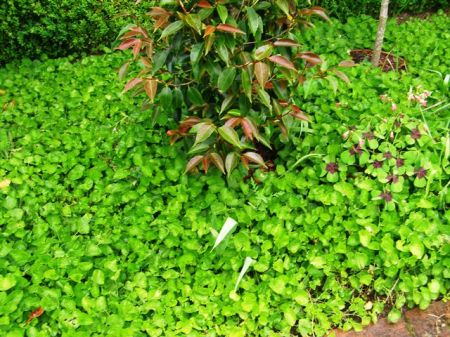
I see it was only a little over two years ago that I gave the death sentence to Rubus pentalobus (commonly called the orangeberry plant because few of us can recall its proper name) and chose Grandma’s violets as a ground cover instead. In fact they are more likely to Mark’s great grandma’s violets because they date back to the 1880s house site and have gently survived paddock conditions there ever since. Once divided and planted into the garden, they have taken off with alarming vigour. Sweetly scented and charming though they are in flower, they were starting to overwhelm everything in their path.

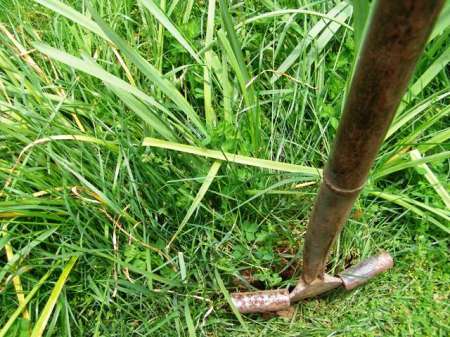
Last year we tried thinning the patch and it was a surprisingly difficult task because the violets had formed an impenetrable mat. I figured this year it would be easier to dig the entire patch and replant small divisions. Digging is only difficult when the ground is heavily compacted or with a blunt spade. Using a sharp spade, I cut the violets into squares as one does with turf. Each square was easy enough to lift.

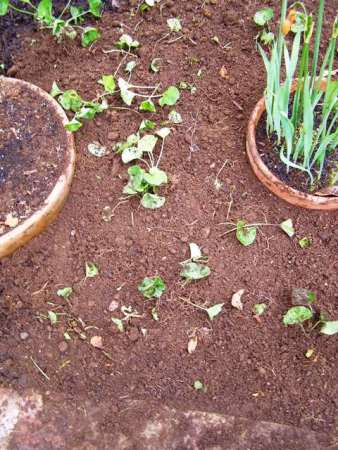
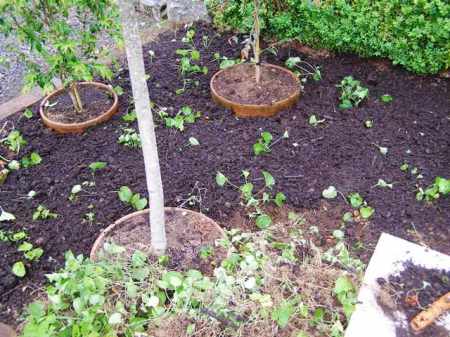
I raked over the bare soil to level it. Some of the clumps I had dug fell apart quite readily, giving me small divisions to replant immediately. Others, I pulled apart as required, spacing at around 15cm intervals.

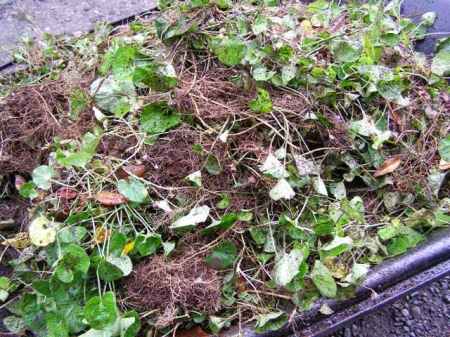
There was a large surplus of violets. Not every plant is precious. This barrowload (one of several) is destined for the compost heap.

A final topdressing of compost feeds the soil, reduces water loss from the poor stressed plants and makes the whole area look more attractive. There is an open verdict here as to whether I want to persist with a groundcover that looks as if it will need drastic digging and dividing every year. I will make the call next spring.