Tag Archives: gardening

Tikorangi Diary: Sunday June 25, 2011

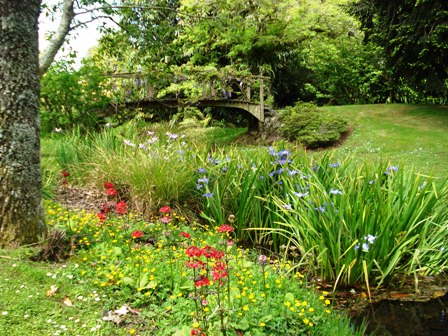
The wisteria festooned bridge in spring

The wisteria festooned bridge in spring

I have pruned the wisterias. I have a bit of a love-hate relationship with wisterias which seem to make a leap for freedom the moment my back is turned, but they certainly add to the spring display. The blue (sinensis Blue Sapphire) and white (floribunda Snow Showers) which festoon one of our bridges in the park look terribly romantic in flower, but they are inclined to try and join hands across the middle. And I am worried that some of their thicker branches are threatening the bridge timbers. We don’t worry about the borer attacks. Wisteria are not shy and backward plants which need nurturing so I just cut out badly affected branches as need be. Mark’s mother had a lovely blue wisteria up the wall of the house outside her bedroom window but Felix took it out. I can’t recall now whether he waited til after she died (when the climbing roses went west) but I can remember being a little sad at his actions. These days I know exactly why he removed it. I have had the spouting cracked outside my office window. The last thing we need is a rampant wisteria lifting the concrete roof tiles on the house and cracking our vintage spouting there.

I am also pruning the roses and my relationship with these leans more to hate than love. Yes they have beautiful flowers and fresh foliage in spring. Because we don’t spray, come summer they have some beautiful flowers but cruddy foliage. In winter, all they do is try and ensnare me as I work around the areas where they are planted. I do not feel the need to plant more roses until breeders start to offer us more options in beautifully full, fragrant blooms (of the David Austen type) on bushes that repeat flower and don’t get diseased, preferably without thorns. By far and away, the best performers here are Rose Flower Carpet white and coral, the rugosas and one called, I think, Golden Celebration which has fearsome thorns but very good habits otherwise. But none of these give me the soft and subtle flowers of the lovely Austens.

I had a matched pair of standard Mary Roses of which I was very fond. Note the past tense. Today I dug out the one that is all but dead and which has for a long time persisted in putting out strong shoots from the root stock. And therein lies a demonstration of the problem of matched, formal plantings. What do you do when one dies or ails badly? It is much easier to get the formal look with inanimate objects. I could probably source a replacement standard but I am not going to. I do not think anyone but me will notice that there is one half of a pair missing. It is a garden which, at its best, is full of froth and flower within a formal setting. I think the setting is enough – I will not worry about trying to repeat the formality in framework planting.

Repairing the stone wall (a pine tree fell on this section some years ago)

Repairing the stone wall (a pine tree fell on this section some years ago)

Shamed by a current shortage of greens, Mark is out planting a large quantity of broad beans and peas. I could tell he is going for overkill when he wanted to discuss whether broad beans would freeze well if picked young. The deep freeze is currently full of his frozen corn which, he pointed out to me, we need to be eating at the rate of one packet every 72 hours if we are to get through it before the next crop comes in. The garlic is long planted and is well into growth. These days, he takes Kay Baxter’s advice (from Koanga Institute) and aims to get it planted in autumn so it gets away before sodden winter conditions set in. He is also trying her recommended approach to plant it in a metre grid on a 10 x 10 arrangement (so at 10cm spacing) which is a great deal more economical in space than the usual rows. Keeping it to a metre square means it is easy enough to reach into the middle to weed. I am hoping Lloyd is going to remember that he said he would smoke me some garlic while we still have plenty of last summer’s crop hanging in good condition. Lloyd is the one who owns a smoker here. Smoked garlic is particularly delicious when raw garlic is called for in recipes such as aioli.

When not fluffing around with his vegetable garden, Mark has been giving his attention to his michelia propagation trials. With the flowering season just starting, the hybridist’s hat is back on his head and we face many months where the first call on his time will be his plant breeding. It is easy to underestimate just how much time and energy goes into a controlled plant breeding programme as opposed to people who just pick out chance seedlings (or worse: copy what other breeders have already done successfully. Expect to hear more on this topic, which is a sore point here).

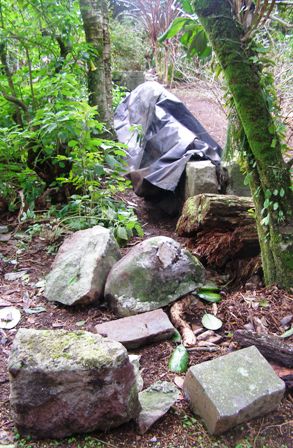
Lloyd is continuing with repairs to our stone wall. I did say last week that these activities are best measured in terms of results, not costs….

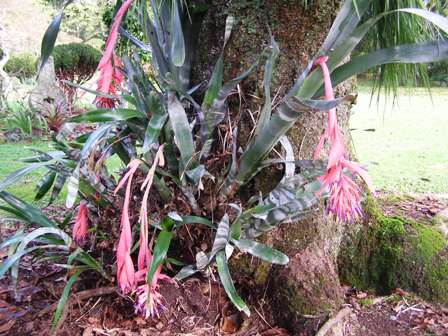
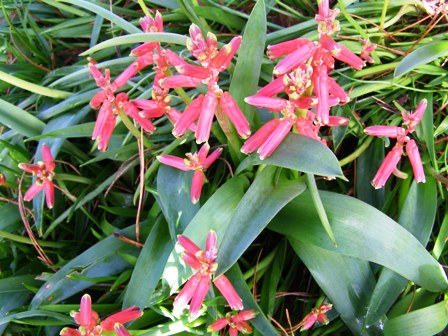
And while the winter/early spring bulb season is just starting (Narcissus bulbocodium, galanthus, leucojums and the early lachenalias), it is the bromeliads which are the unsung hero for winter colour this week. If you can grow broms, they sure are eye-catching in bloom.

Bromeliads for winter colour. This one is a Bilbergia.

Bromeliads for winter colour. This one is a Bilbergia.

Growing Citrus in the Home Orchard – our Taranaki Experience

Lemon and mandarin trees beside the driveway

Lemon and mandarin trees beside the driveway

We are never going to suffer from scurvy here. We have fresh citrus fruit in the garden twelve months of the year and our lunches are accompanied these days by a glass of fresh squeezed orange juice. It takes an average of six oranges each to get a full glass of pure juice.

Of all the fruit trees we grow, the citrus is probably the crop we take most for granted but would miss the most if we were to be deprived. Were it not for Mark’s parents, we would not be so blessed. As far as we can make out, they must have started planting grafted citrus back in the 1940s and 50s – a time when few people realised we could successfully grow any citrus other than lemons in our climate. Mark can remember some of them being mature when he was a young child. We did a quick count – we think we have about 20 productive trees dotted around the garden, mostly oranges, and that does not include the new plants we have waiting to be planted out.

The earliest trees planted here, a generation or maybe two earlier than Felix and Mimosa, were seedlings which grew too large and were erratic at best with fruiting. The breakthrough came with trifoliata root stock which is much more adaptable to our climate and is also a dwarfing stock. Most of our mature citrus trees are now in the 3 to 4 metre height range.

Oranges: When it comes to oranges, one variety stands head and shoulders above all others for us. The Lue Gim Gong on trifoliata stock is the breakthrough variety in this climate. When all the other oranges have finished fruiting, we can continue picking the Lue Gim Gong and it keeps us going twelve months of the year. When the fruits hang on to their second season, the skins turn a deeper orange and the fruit gets even sweeter and juicier. It is a form of the Valencia orange and dates back to Florida in 1876 where it was recognised as a breakthrough because it is sweet and more frost tolerant than other Valencias. If you can only grow one orange, our pick is definitely the Lue Gim Gong and it is still available for sale (try Google).

The distinctive navel orange - good eating

The distinctive navel orange - good eating

Because we can grow more than just one variety, we also have the Jaffa (excellent crop and flavour and most attractive on the tree as well as a long season) and a range of navel oranges. It appears that all navel oranges descend from the one specimen but some have sported over the years to give variations. Of them all (and I think we have tried most of them) the Leng Navel has the best flavour. It is hard to beat a good, tree-ripened navel orange for eating but the downside is that their season is comparatively short and they don’t hold on the tree. If you are not around to pick them, they fall off and rot. We have a blood orange waiting to be planted out. The flavour is good but the red colouring seems to be dependent on a hotter summer than we can give.

Lemons: Most New Zealanders grow a lemon tree except for people who live in the coldest areas. The Meyer is the most common because it is most tolerant of a range of conditions but it is not a true lemon, being thought to be a natural cross between an orange and a lemon. We planted a new lemon tree several years ago but we have lost the label. It is certainly not Meyer – it may be a Lisbon. We were very disappointed in it for the first couple of years because the fruit was thick skinned and unappealing but it has settled in well and gives us plenty of fresh lemons throughout much of the year. This specimen does require regular copper spraying to prevent leaf blights.
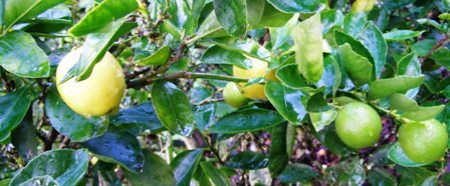
The Tahitian lime - a favoured crop for kitchen use

The Tahitian lime - a favoured crop for kitchen use

Limes: I prefer the old Tahitian lime we have which is under two metres high and a little wider. We tend to leave the fruit to turn yellow and use them like juicy little lemons. The fruiting season is not as long but the volume of fruit is excellent. The younger leaves are also aromatic for flavouring Asian dishes. I use the ripe yellow limes to salt for use in Middle Eastern dishes. They are a more convenient size to put in jars and have a thinner skin. If you are warm enough to grow a Tahitian lime, it is well worth its place in the garden. Preserved Lemons recipe.

Grapefruit: We have a couple of trees which fruit well but they are not in a convenient location so we tend to ignore them and the crop goes to waste. Proper grapefruit do not do well in New Zealand, apparently. It appears that they need a hotter climate than most citrus. What does grow here is the New Zealand grapefruit or Poorman Orange which was apparently introduced by Sir George Grey to Kawau Island. It came from Australia and is thought to be a natural hybrid, probably between a pomelo and a mandarin. Alternatively the Wheeny grapefruit is grown here (we have one) and it has a thin skin and a good flavour though it is not as hardy as the Poorman. My late mother in law was a splendid jam and marmalade maker and her advice was that neither the Wheeny nor the Poorman has sufficient pectin to set marmalade easily so it is necessary to add lemon juice.

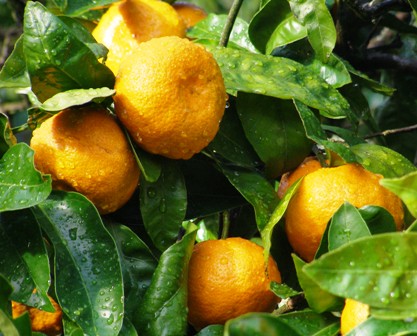
Mandarins: These are particularly decorative and ideal for families with children, especially when they are the easy peel varieties. Besides plucking fruit as we pass, much of the crop sits on the trees looking attractive here because in the end we would rather eat oranges. Silverhill, a named form of Satsuma, is the best producer for us. Our Clementine died which was a pity. It had a better flavour but because it is not as easy to peel, it is never going to be as attractive to children. Added to that, it has many seeds and seedless citrus is preferable for eating.

Tangelos fruit well and are easy to peel, though messy, and delicious when you get good ones. It is thought that the tangelo is a hybrid between a mandarin and a pomelo (also known as a shaddock). They are not a replacement for oranges but they are a good addition where space allows. They have an unfortunate tendency to produce some dry fruit for us but we have never worked out why – we suspect it is varietal rather than conditions.

A mature Jaffa orange grown as a lawn specimen

A mature Jaffa orange grown as a lawn specimen

Growing conditions and general maintenance:
When choosing a site for citrus trees, give them as much sun, warmth and air movement as you can, along with good drainage. We have some as lawn specimens and they appreciate the open conditions. However, they are now so old that there is a clear space under the canopy which stops grass competition. On young specimens, it would pay to keep the trunk clear and not to mow within half a metre or so. We do not go in for the urban fashion of growing citrus in containers so can not give specific advice on that practice beyond the generic techniques for growing plants in containers.

In the world of fruit trees, our citrus are remarkably easy care. Common advice is that they need plenty of feeding but we rarely bother. Years go by between feeds. That said, yellow foliage is usually a sign of nitrogen deficiency so if you have a sickly yellow citrus, give it some fertiliser or compost and make sure that whatever you use is rich in nitrogen. With regular rains twelve months of the year, we never water. It is often said that citrus need plenty of water to keep the fruit juicy but I have seen them growing extensively in Spain and Italy where conditions are bone dry and hard and I can’t imagine that watering was particularly consistent or thorough.

Control against the borer larvae

Control against the borer larvae

We do not regularly prune the trees. All we do is take out the dead wood or any wayward branches as required. Borer is one of the biggest problems but not so big that it threatens the entire tree. If you are more thorough, you can inspect the trunks and branches and kill out the borer larvae by injecting holes with oil, insecticide, kerosene or other variants. Look for the tell tale signs of holes with a ring of sawdust beneath. Spraying CRC down the hole using the fine nozzle works a treat, suffocating the grub, though Mark is of the view that flyspray with the same fine tube would be better. The borer can kill a whole branch which is why we need to prune out dead wood from time to time.

Neither do we worry too much about spraying the trees (except for the above mentioned lemon). They certainly do not undergo any regular spray programme. What little is done here is strictly on an as-required basis. Leaf roller caterpillars can be a problem because if they damage the skin of the fruit, it is enough to make the fruit drop off.

Sometimes we get an attack of brown rot which gives, surprise surprise, brown rotten patches on the fruit and causes extensive defoliation. Mark is out with the copper spray on the very next fine day when we notice this. In theory he does an autumn copper spraying round of all the citrus trees but in practice this can be hit and miss. We have enough trees here to ensure that if one or two have a bad year, we don’t run short of fruit. The use of trifoliata root stock is a major factor in enabling us to continue with such a laissez faire approach because it shows excellent resistance to many common problems.

All of which brings us to the thorny issue of climatic range. We can’t say, is the answer. We garden on volcanic loam about five kilometres from the coast. The disturbed westerly air patterns mean that such frosts as we get are only mild (a degree or two) and we never get very cold. On the other hand, we never get particularly hot either and we have high sunshine hours, high humidity and high rainfall twelve months of the year. The Meyer Lemon is the hardiest of these citrus. If you are in doubt, check whether it is growing nearby. If it is, then you could start experimenting with other options but don’t get too carried away until you can see some success. Coastal areas are always milder. While citrus are happy in places with hot summers, if the corollary is a very cold winter with heavy frosts and maybe snow (a continental climate), it will generally be too cold for them in winter.

Trifoliata coming away below the graft - our preferred root stock

Trifoliata coming away below the graft - our preferred root stock

In summary:

• Source trees budded on to dwarfing root stock or learn how to bud your own plants. Our experience is that trifoliata stock is successful. This root stock keeps the trees smaller and gives greater hardiness and disease resistance in less than perfect conditions. You can grow your own rootstock from cutting if you find a tree which is sending shoots from below the graft as shown in the photograph. You then need to bud or graft onto the rootstock. For general instructions on budding, check out our Outdoor Classrooms:
Autumn chip budding
T budding

• Citrus can be a decorative addition to the garden as well as being productive (and the scent at flowering time is divine). If you have space for several trees, you don’t have to be so particular on spray and maintenance programmes.

• Healthy, established trees in good conditions do not succumb as readily to pests and diseases.

• Lue Gim Gong on trifoliata stock is our single best orange variety here and guarantees fresh fruit twelve months of the year.

• In our conditions, the citrus range are probably the most rewarding and easy care tree crop we grow. You can go to a great deal more trouble and effort if you want, but you can get away with very little.

Lue Gim Gong as a lawn specimen - our top performing orange

Lue Gim Gong as a lawn specimen - our top performing orange


(Reference, in addition to decades of hands on experience here: Citrus in the Home Garden, Ministry of Agriculture and Fisheries NZ, Bulletin 393 [1972 edition].)
Tikorangi Notes: June 19, 2011

Spring Festival is one of the prettiest in flower this week  though spring is still a way off here

Spring Festival is one of the prettiest in flower this week though spring is still a way off here

Tikorangi Notes: Sunday June 19, 2011

Our mild autumn continues though technically we are now well into winter. It may be wet but it is not generally cold. The ski fields inland and south seem to be getting nervous (and I am wondering whether the Christmas gift of a season lift pass to our snowboarding son was badly timed for the one season in a decade when the snows will be patchy and unpredictable) but it does mean that we are enjoying great gardening conditions. Except for last Friday which was cold (calm but cloudy and cold), daytime temperatures remain in the late teens and night temperatures are not dropping much below 10 degrees Celsius.

Lachenalia bulbifera, naturalised beneath a large pine tree

Lachenalia bulbifera, naturalised beneath a large pine tree

Magnolia Vulcan is opening its first blooms on the various plants we have around the property. Mid June is early. We usually expect peak flowering later in July. A hail storm last night damaged those early buds and blooms but there are plenty more to come which will be undamaged. The early lachenalias are open – red L. bulbifera, the yellow of Mark’s L. reflexa hybrids and the common L. aloides. The first of the snowdrops are in flower. We never get snow here but Galanthus S Arnott is wonderfully successful on our climate and there are few plants as pretty as the simple snowdrops. The sasanqua camellias are passing over and the japonicas and hybrids are taking over. Spring Festival is particularly pretty this week. With petal blight already hitting before many varieties have even opened, it is probably time to be a little more meticulous in recording which varieties show less damage and still put on a good show. Petal blight is probably here to stay. It will take breeding and selection to find a way past the ravages.

Just one new post this week – our Tikorangi Diary which records Mark’s unsuccessful efforts so far to extract olive oil with a zero carbon footprint and plans for our designated Citrus Grove.

We have been discussing our citrus trees here – somewhere around 20 different specimens which are very well established (as in some are probably around 50 years old now) and I have plans for a series of posts on growing fruit trees and the aim for self sufficiency and variety and how realistic this is in our climate.

The first blooms on Magnolia Vulcan were hit by hailstones last night

The first blooms on Magnolia Vulcan were hit by hailstones last night

Tikorangi Garden Diary: Sunday 19 June, 2011

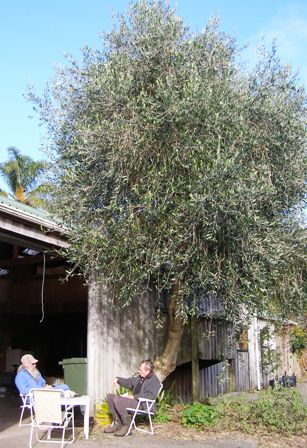
Morning coffee in our work area by the olive tree

Morning coffee in our work area by the olive tree


Rather optimistic, hoping to extract oil from the olives

Rather optimistic, hoping to extract oil from the olives

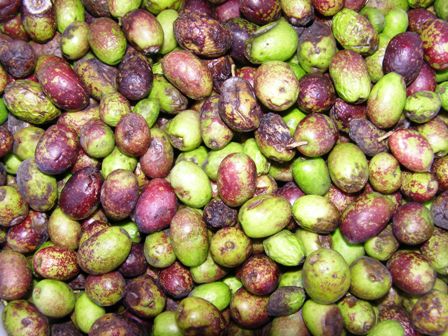
Mark has been much preoccupied by the olive crop this week. In the past I have tried with less than stellar success to pickle olives. Alas, the big imported olives I buy at the delicatessen counter are more delicious than my home grown efforts. We only have one olive tree which we keep primarily because it gives us some shade and privacy in the spot where we often have our winter workday morning coffee. But the olive crop this year was so bountiful that Mark felt compelled to gather it. I have taken a passive role on the attempts to extract some olive oil from this ripe crop but there may be good reasons why Google does not yield up a multitude of sites which give instructions on low tech olive oil extraction. His expectations were modest – a spoonful of pure, super extra virgin, zero carbon footprint oil would keep him happy but at this stage it looks as if pomace may be the winner, not oil. I do not think self sufficiency in the olive oil stakes is close.

The dominating presence of the original Magnolia Iolanthe

The dominating presence of the original Magnolia Iolanthe


Oranges (or mandarins here) and....

Oranges (or mandarins here) and....

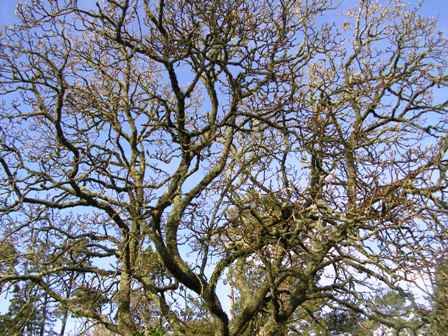
Having completed the once in decade (or longer) makeover of the Avenue Gardens, I have moved in to what we loosely call the kitchen garden or driveway garden. Over the years, this area which was traditionally the main vegetable garden has changed in character and use. The original Magnolia Iolanthe, heeled in temporarily in the very early 1960s, is now of such generous proportions and iconic status, that Mark has gradually been relocating most of the veg growing to other sites. These days it is a mix of quick maturing vegetables, herbs, butterfly garden, nurse area for holding plants which are destined for relocation, existing citrus trees (lime, lemon, tangelo, three mandarins and three orange trees) and the omnipresent Iolanthe. At least Mark came up with a splendid purpose for this area as we plan our new garden developments. A citrus grove, he suggested. We could designate it the citrus grove and underplant with some of the many, very beautiful Camellia yuhsienensis we have looking for a forever home, as well as the annuals for butterfly food. Sounds good to me – low maintenance, purposeful, attractive and an undeniably romantic designation. So I will do a holding pattern maintenance round while we plan the next stage of development.

... and rather a lot of plants of Camellia yuhsienensis looking for forever homes

... and rather a lot of plants of Camellia yuhsienensis looking for forever homes

On a practical level, we are chipping away at hydrangea pruning and rose pruning as each area gets a winter clean-up. The rose prunings go out in the rubbish. Burning is the only other option. They can not be composted or mulched.

Having finished cleaning up after me, (oh but I am blessed to have such a competent person following behind with the mulcher, chainsaw, leaf rake and tractor) and relocating a huge clump of self sown king ferns which had established in the wrong place, our multi-skilled Lloyd has started work on restoring a stone wall which had long ago collapsed beneath a falling pine tree. Stonework is incredibly labour intensive and it is best to measure it in terms of end result, not labour costs.

On a non gardening note, I have been spending hours working through proofing a biography of my brother. He died in an avalanche in the Himalayas in 1983. At the time, communications being pre mobile phones, it took two weeks for us to learn of his death. Around that time our second daughter was born and soon after a postcard arrived saying how much he was looking forward to seeing us and meeting our new baby on his imminent return. By then, we knew he was already dead. To me, he was a beloved brother who died too young. To the wider world, he was one of this country’s foremost mountaineers and it is quite an extraordinary experience to read the story of his achievements, much of which I never really grasped. The working title is Bold Beyond Belief and the biography of Bill Denz, written by Paul Maxim, is scheduled for publication towards the end of the year.

Tikorangi Notes: Sunday 12 June, 2011

Latest posts:

1) Introducing Roma Red, our first new camellia release for a decade.

2) Tikorangi Garden Diary – what we have been up to in the last week (including a few hints on timing for pruning of rhododendrons and camellias and why you should never try mulching your hydrangea prunings).

The first blooms on Magnolia campbellii - a new season starts

The first blooms on Magnolia campbellii - a new season starts

A little battered by the rains, but the first of the michelias has opened

A little battered by the rains, but the first of the michelias has opened

Tikorangi Notes: Sunday 12 June, 2011
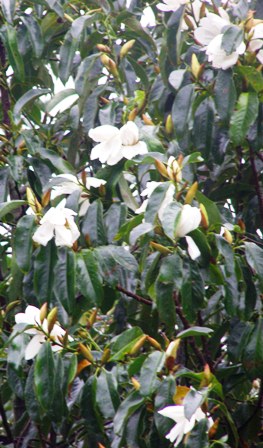
We measure our years by the start of magnolia flowering heralding a new season. This week, just the second week of June and winter chill yet to bite, Magnolia campbellii has opened its first two flowers. The leaves are still falling but the promise of a new season is already upon us. So too with the earliest michelia – the first of the fragrant maudiae hybrid series has quite a few blooms open already. The heavy rains of the past week have not been great for the flowers but we know they will just go from strength to strength over the next months.

The rains hit (again) this week – already over 120mm since last weekend. As our rain falls in torrents over a short space of time rather than in prolonged showers, that adds up to some very heavy downpours. It is all right outside – we are well used to rain and have free draining soils. But Mark has to patrol the roof and ceiling when the rains get too heavy. We once went to a slide lecture by the current owner of Villandry in France. The style of gardening bears no resemblance at all to what we do here but we were particularly amused by the charming Frenchman who is the current owner saying that whenever it rains heavily, he has to frequent the attics in search of leaks. Admittedly, he has a chateau on a grand scale whereas we merely have a house with ageing concrete tiles but there is some remote bonding in a shared task.