
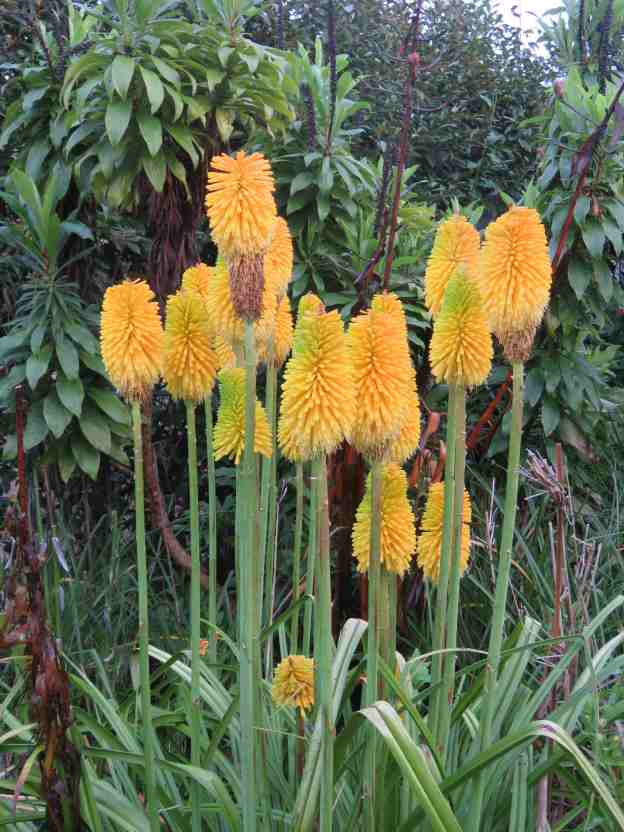
Today is the arbitrary date that is set to tell us that we are in the first day of winter. In colder climates and far-off places like the north of the northern hemisphere, the ground can be covered for snow for months or simply freeze solid. Gardens are put to bed for winter. People retreat indoors and the view from the windows becomes extremely important. Structure and form come into their own because that is all there is to look at.
Not here. We only get periodic warnings of winter until it strikes around the solstice at the end of June and even then, it only lasts about six weeks. I retreat indoors when it is either raining or bitterly cold but otherwise, I can continue in the garden.
So what do our summer gardens look like as winter arrives? These were designed to bring us summer colour and are largely planted in perennials.
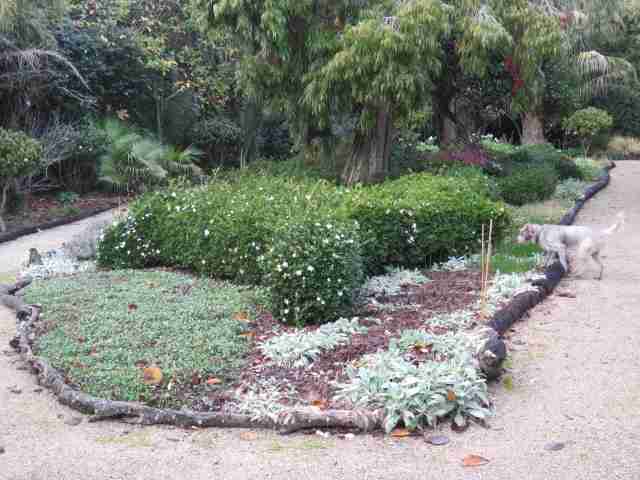
The Wave Garden is at its least interesting stage. Even the form is not strong until we clip the hedging when the little species camellia – C. microphylla – has finished flowering. The only other flowers out are the white alstromeria which seems to bloom effortlessly for about 10 months of the year.
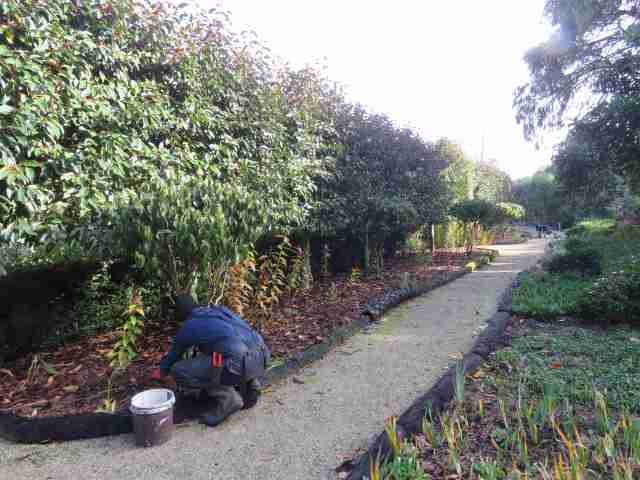
There is nothing to see in the adjacent lily border. In a few weeks, the Camellia yuhsienensis which punctuate that border will be in flower and they are eyecatching. I can see the first flowers opening now. The backing hedge of Fairy Magnolia White will start to bloom soon after but at this time, the only reason to look at it is to monitor the damage by the pesky rabbits digging holes.
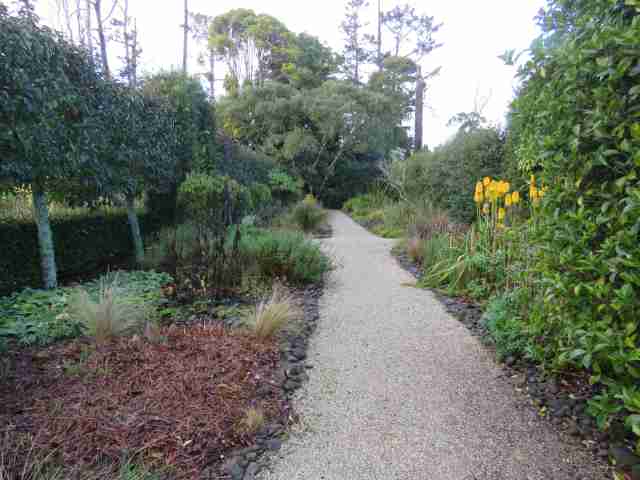
The twin borders are also largely put to bed. They are never totally flat and bare because many of the perennials are evergreen but the only point of interest at the moment is the startling delight of the yellow kniphofia.
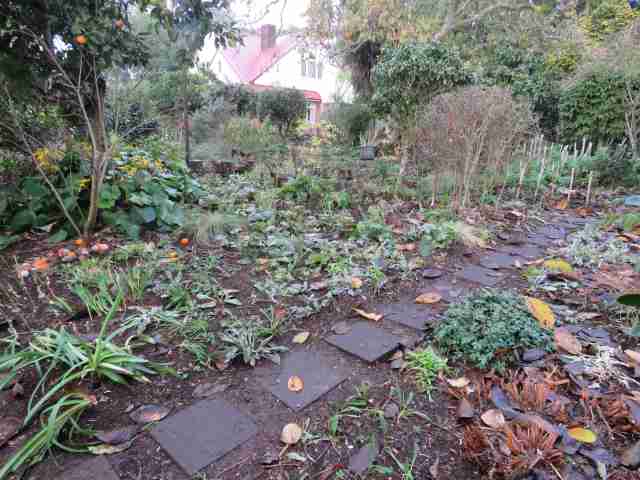
The Iolanthe Garden is currently receiving a great deal of attention but the fruits of Zach’s and my labours will not be seen until spring. The only colour is from the citrus fruit ripening.
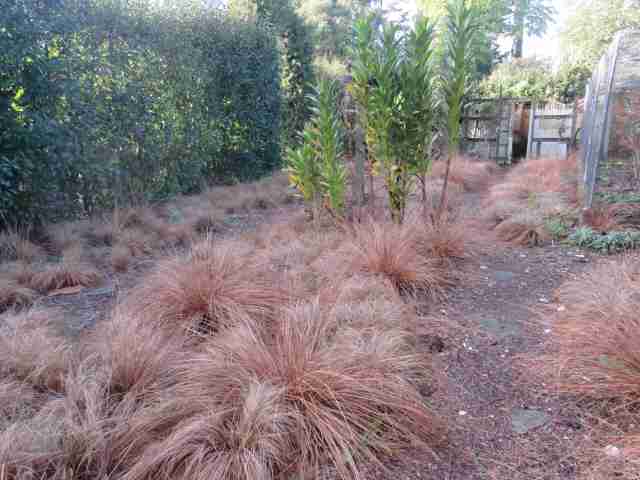
The grasslands, as we call the area linking the borders and Iolanthe Garden, uses two evergreen, native grasses (everbrown, in practice). At this time of the year, it lacks the zing from the scattering of bulbs and flowers planted between, but it remains well furnished, as it does all year round.
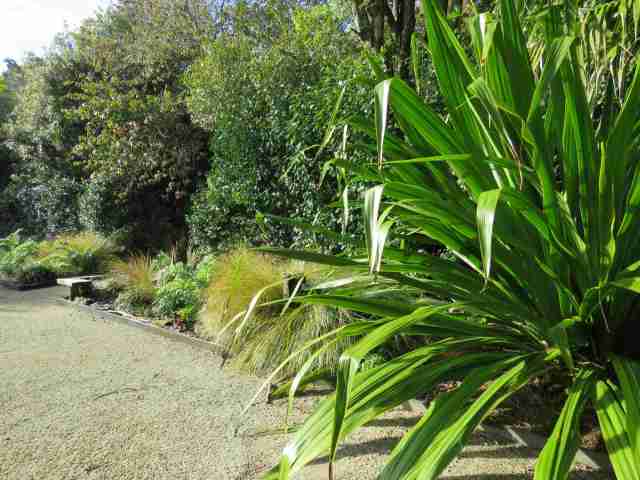
The back border of the summer gardens is like the back row of the chorus. It rarely gets to sing any solo lines but it adds depth to the whole area. The dominant plants here are another native grass – Anemanthele lessoniana, also known as gossamer grass – and cardoons which get too large and fall over in summer but look great in winter and spring. The Queensland spear lily (Doryanthes palmeri) adds a very dominant presence at one end.
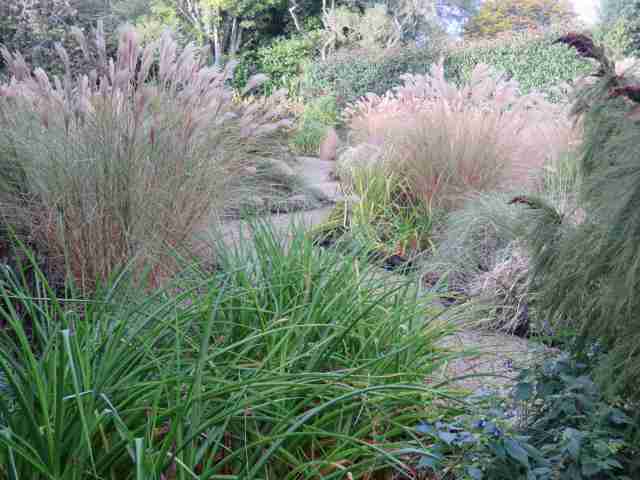
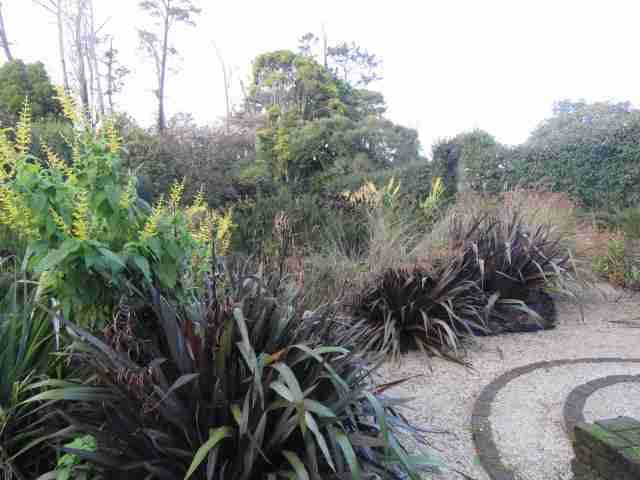
But it is the Court Garden that stars all year round. The only flowers at the moment are the late salvias, particularly the yellow Salvia madrensis (which tells you how mild our autumns and winters are) but whole area is lush and furnished with contrasting textures and tones of green, bronze, burgundy and silver. We have never gardened in this style before so it still comes as a surprise to me to see how this moderately large area (think tennis court size) performs well all year round.
I have seen gardens that claim to be ‘a garden for all seasons’ – particularly Pukeiti Rhododendron Gardens. I came to the conclusion that, at best, that means that there is something of interest all year round but you may have to search for it. Somewhat like our patch of yellow kniphofia in the borders. It rarely means that a larger area of the garden stars in the off season. It seems a little personal triumph that the Court Garden can change with the seasons but continue to star through all.
While we are doing a lot of work on preparing the summer gardens for next season, the woodland areas are coming into their own. The orchids, evergreen azaleas, bromeliads, schlumbergera (zygocactus) and early clivias are coming into flower. The quiet time for the woodland areas is summer but that is another story.
 Tikorangi The Jury Garden