
I must get out more. Well, I say that but truth is that there is nowhere I would rather be than in the garden here. What I miss is the outside stimulation of looking at different ideas and the absence of a Big Trip this year. The only travel we have done has been to see our children in Australia. I am contemplating something more adventurous next year. In the meantime, a trip to town must suffice.

Van Nes Sensation
When I say a trip to town, I mean New Plymouth. It is a small city of 75 000 people, 22km away from where we live. I was in town yesterday on a more leisurely schedule than usual so stopped to take a few photos. Behold Rhododendron Van Nes Sensation, looking, well, sensational on a suburban street.
Van Nes Sensation was one of the big trussed rhododendrons that was very popular here in the late 1980s and early 90s. I had assumed it was one of the big, showy hybrids out of USA from that era but the ever-handy Greer’s Guidebook to Available Rhododendrons tells me that it dates back to 1925 and was the work of C.B van Nes & Sons so it is of Dutch origin. There are prettier pink rhododendrons but it is hard to beat this display on its day. It was a nicely pruned and shaped specimen, too. 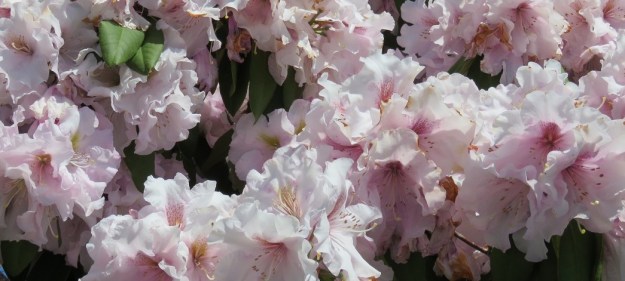
As I was photographing from the footpath, the neighbour was washing her car in a very tidy front yard. “Lovely, isn’t it,” she said before adding, “shame it makes such a mess”. And there were a few pretty pink florets that had blown on her drive. A mess? I wasn’t sure how to reply.
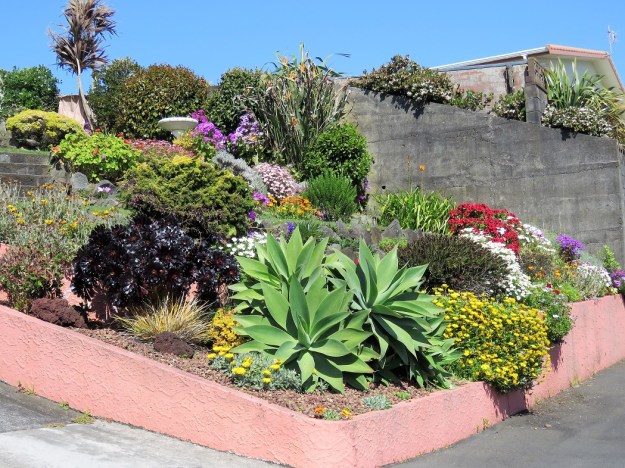 Down near one of the city beaches, I saw this very colourful front garden on a steep slope. I wrote a piece back in early 2013 about city gardening on a steep slope and I see it still comes up in internet searches. This one is clearly a big challenge, right by the beach, so subject to salt winds and the house is at the top of the section. The access driveway was so steep that it had steps up the centre of it, between the wheel tracks. It is also what I describe as a generous garden. It is not as though the owners will use this outdoor space for recreation. It exists primarily to bring pleasure to passers-by and the owners have worked very hard to achieve this colourful and lush view. The section has been terraced, retained and permanent steps made to give access. It may not to be everybody’s taste but it takes a keen gardener to create and present a garden well in such an exposed and unpromising situation. And it certainly eclipsed the hanging garden of Strandon on the neighbouring property.
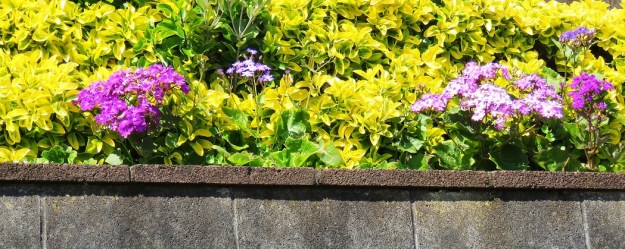
Purple and acid yellow atop a substantial, unadorned concrete block retaining wall.
There was another scene of a very tidy, pretty, palest yellow front fence with a roadside planting of nasturtiums but my photos in full sun do not do it justice. I had seen it first in the soft gold of early evening light and it caught my eye. I have never seen common nasturtiums used in a bedding plant setting before, but it was very pretty. I have been wondering about growing nasturtiums again because I once followed the advice to pickle the seed heads and buds as a substitute for capers. It worked brilliantly though it takes a long time to pick a jar full of nasturtium seeds. They are just a bit … determined, are nasturtiums, when it comes to having them in the garden.
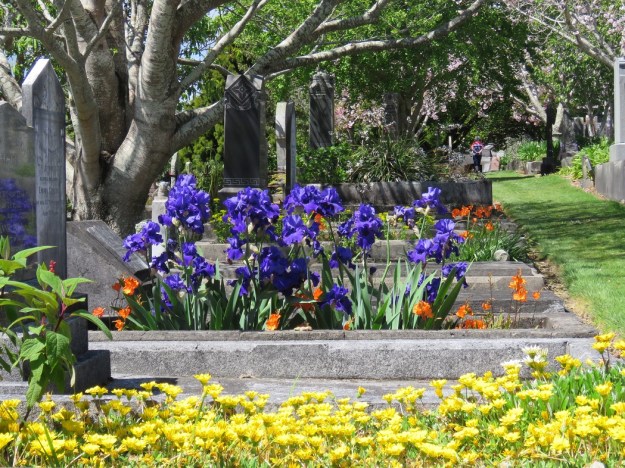
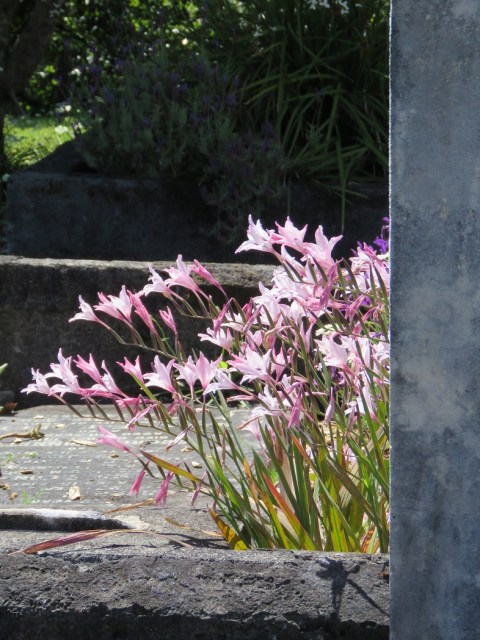
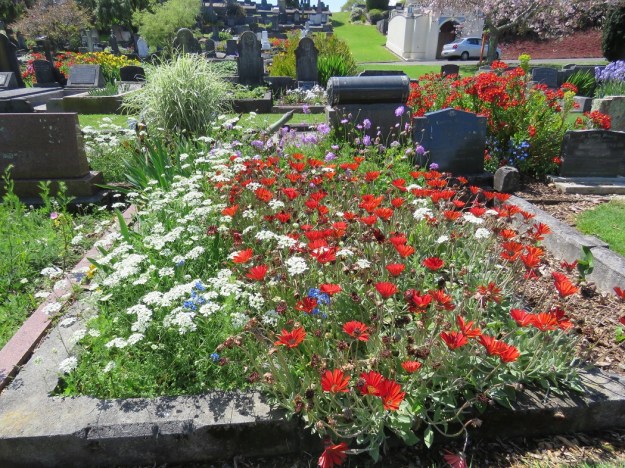
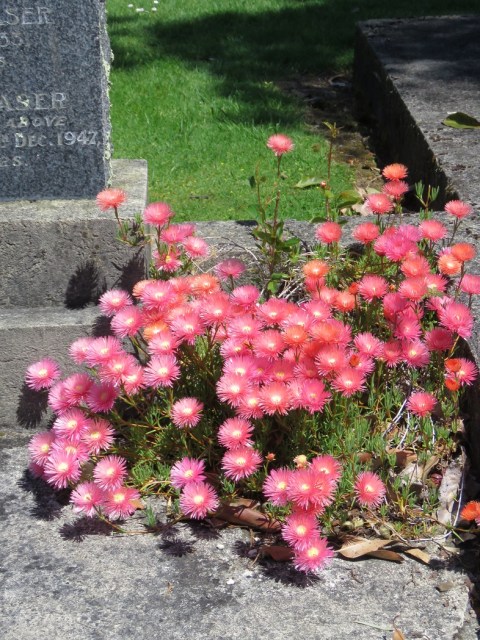
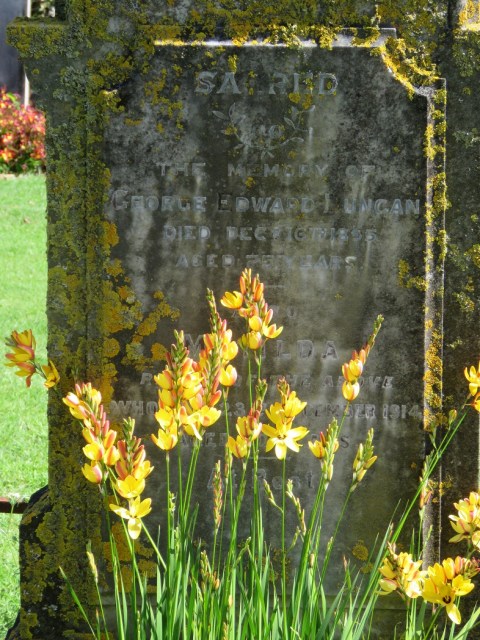
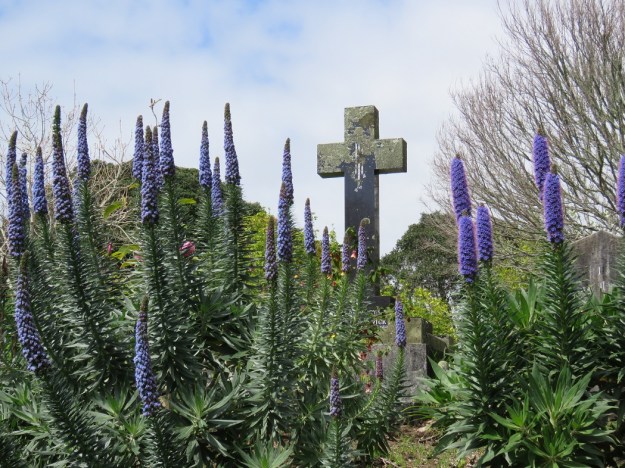
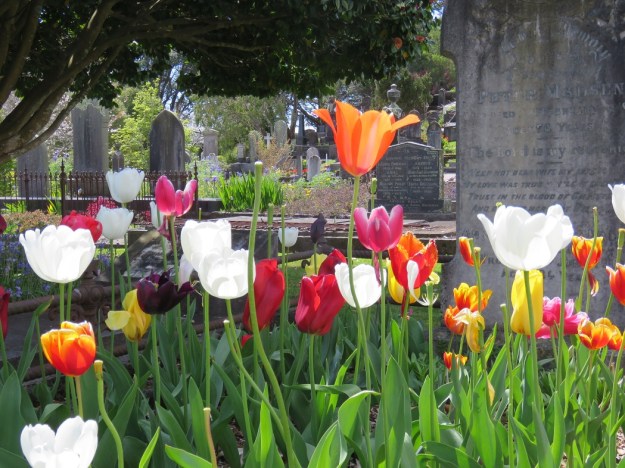
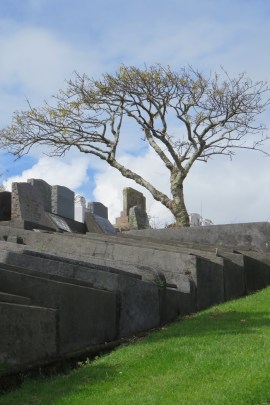
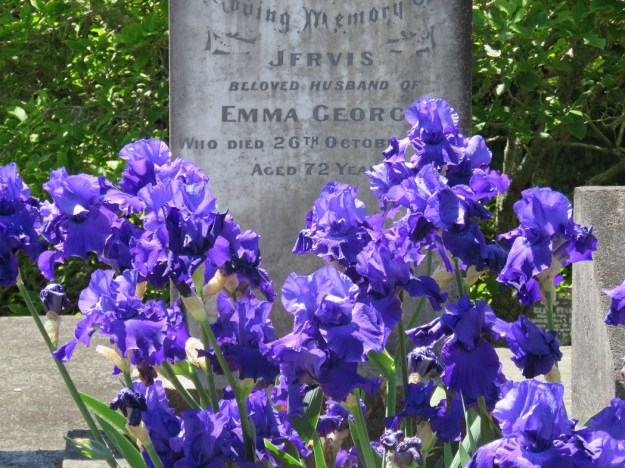 Finally, it was back to the graveyard (aka Te Henui Cemetery) because Sydney-based daughter was with me and she expressed a desire to see it. It is so pretty, so vibrant, and so unexpected. It is part of the garden festival this week. I asked one of the volunteers yesterday how it was going with garden visitors. “They seem to like it,” she said, in a self-deprecating way. “They arrive with very low expectations since it is a cemetery, so it is not hard to please them.” It is better than that. Do visit, if you are in the area.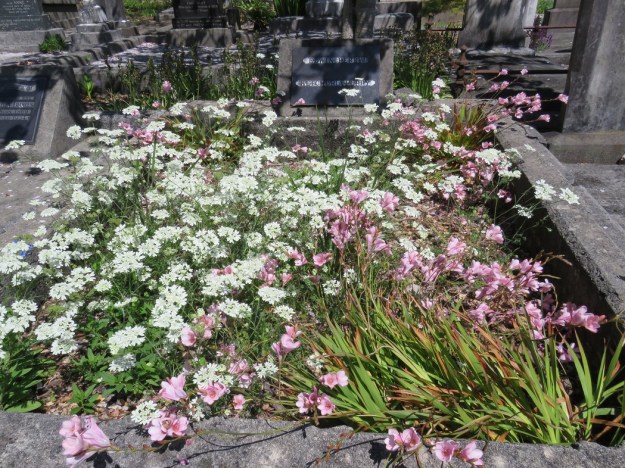
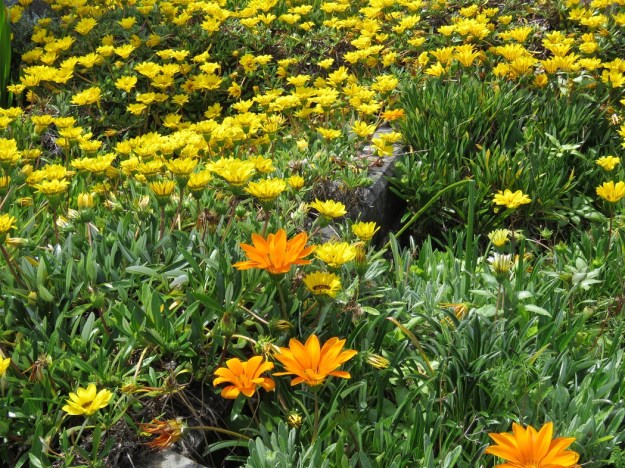 I don’t have any photos of sand saucers but if you Google images, you will find a resurgence on Pinterest. Where else? For anyone with a deprived childhood, it involves filling a saucer with wet sand and sticking the flowers into that to anchor them. The scope for imagination is limited. One memorable year, a junior teacher at the school our children attended – a woman who was not one for expending unnecessary effort – decided sand saucers were ‘messy’ so they decreed Vaseline saucers instead. For this, the saucer is used face down and coated in Vaseline with flowers stuck to it. This was a travesty of an idea, I tell you. Not the same at all.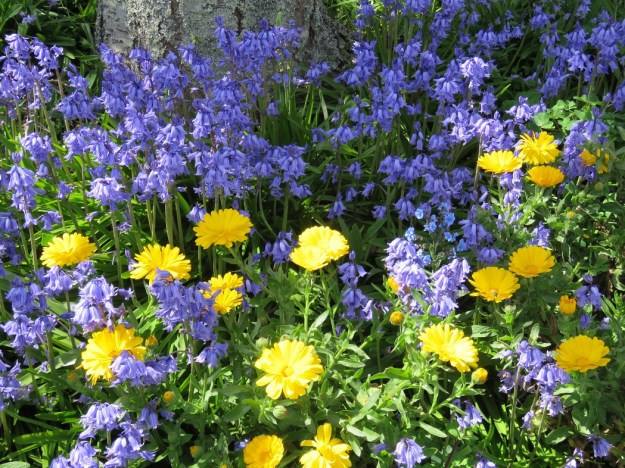
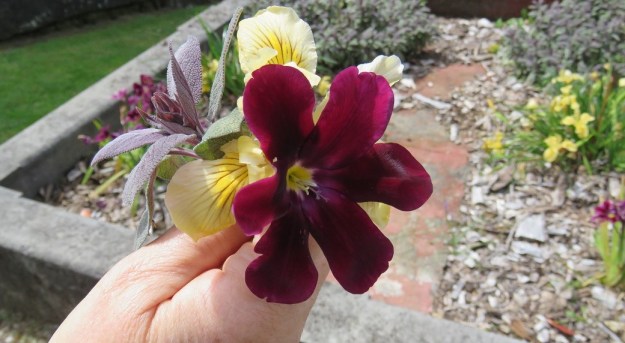
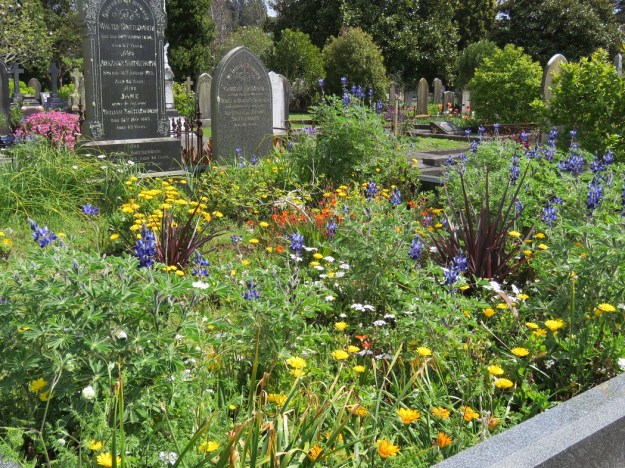
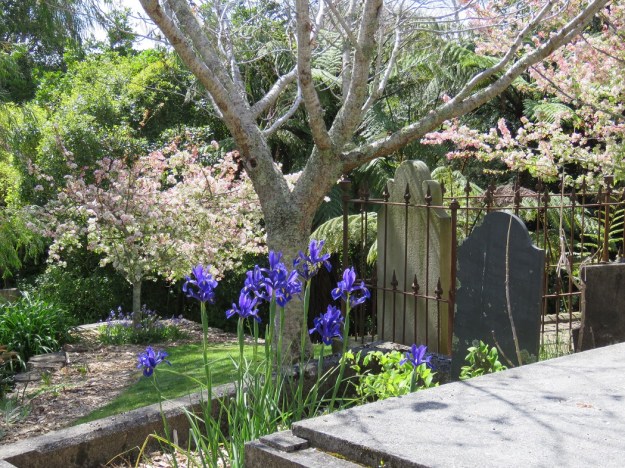
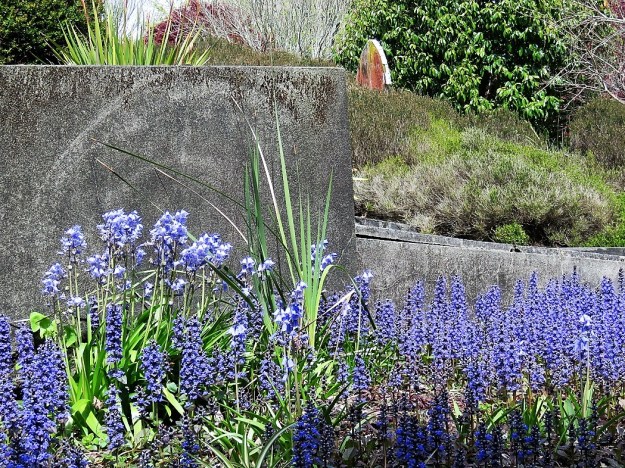
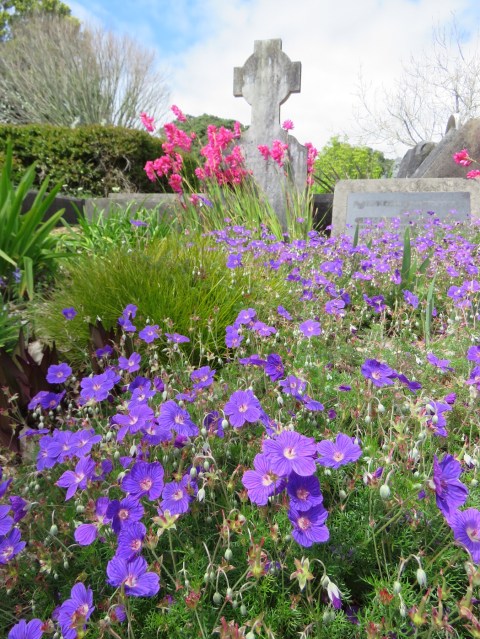 I quite like watching English real estate programmes (Kirstie and Phil assisting escapes to the country come to mind). They have many more little country churches complete with old graveyards surplus to requirements than we have. It is too late for me – and the wrong country – but the idea of creating a home within a traditionally sombre setting and a garden with all the hard landscaping features already in situ sounds appealing. These places may be there to remember the dead, but it does not mean that they must be sombre, morbid and gloomy. Death and taxes may be two of life’s certainties, but there can be life and colour wrapping around death and softening its raw finality, even if the same can not be said for taxes.
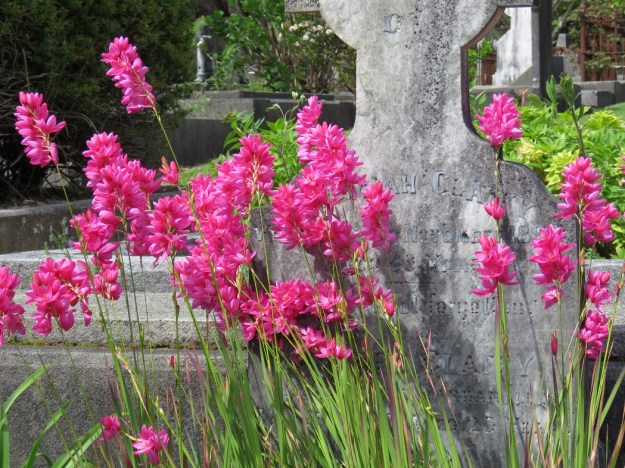 The one remaining mystery for me is why some families prefer to adorn their graves with fake flowers. It is a timely reminder, however, that some of these graves are intensely personal memorials with living descendants who choose to maintain the connection and to personalise the grave in their own way. It is just as well the volunteers are there to tend to the vast majority which would otherwise be largely forgotten and uncared for.
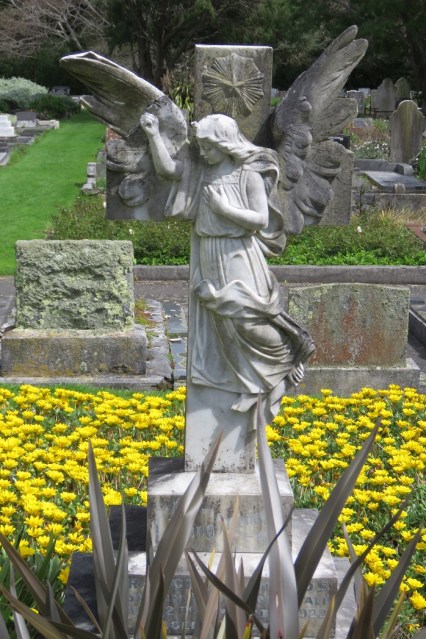
 Somebody, or probably several living bodies, must have lavished a lot of love and care on this section of the graveyard over many years. It was so well done and individualised that it did not have the look of institutional management. Nor indeed of relying on family or descendant management of individual graves – though there were some examples of these.
 It was the wide range of plants used, the attention to detail and the many delightful little pictures that were created as a result, the careful colour toning in some areas and the soft-edged maintenance that made me think it was not chance that created these scenes. Many are created as individual small gardens for a specific grave. I could not help but notice that the space of an individual grave back when the 1800s turned into the 1900s was considerably larger than a modern grave; family plots were larger again.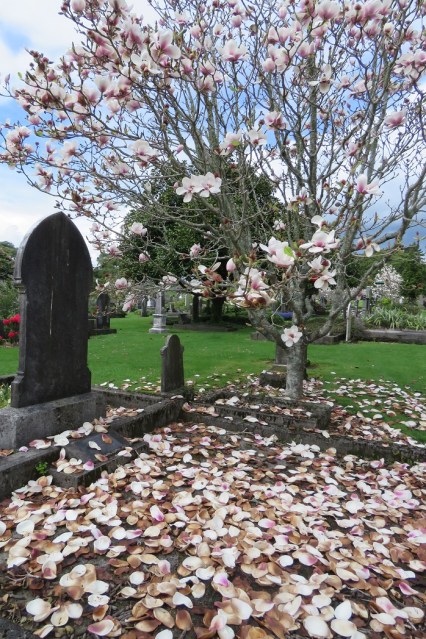
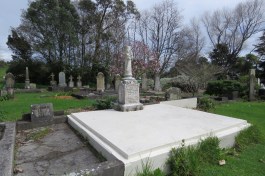
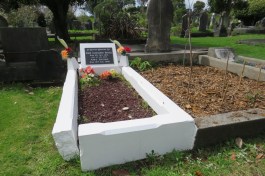
 For spring scenes, the cemetery was unsurpassed. I must go again in summer and see if the secret hands have wrought similar magic into the next season.
 If you are on Facebook, I have posted an album of additional photos to our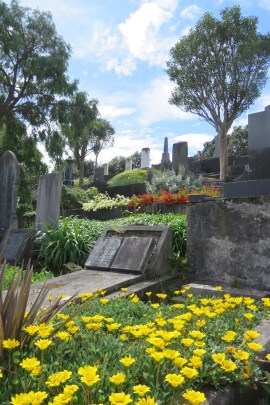
 Tikorangi The Jury Garden