

The genie is well and truly out of the bottle. Flaring on Mangahewa E site down the road. Photo: Fiona Clark
Never. Sign. Anything. No matter how careful you think you are being, you are signing away all your rights including future rights to things you may not even know are in the picture. We have signed two consents and have been badly burned on both. Ours is not an isolated story.
If you don’t sign, they will go ahead anyway if they possibly can. But at least you haven’t signed away what few rights you may have.
Being nice to a petrochemical company does not mean you will get a better deal. Better deals go to those who are the hardest negotiators. It is likely the reason why a petrochemical company insists you sign confidentiality agreements is because they do not want you comparing notes with your neighbours where you may well find they have negotiated a much better deal than you have. By way of example, when it comes to payments to farmers for the installation of gas pipelines across their land, a reliable source has told me he has seen agreements where the daily rate is four times higher than the base rate that is initially offered and accepted by most farmers.

Some may be grateful for a hamper containing Bluebird salt and vinegar chips and housebrand Pam’s Christmas mincemeat tarts
Some people go all out for whatever compensation or sweeteners they can get – and sweeteners come in many forms starting with modest Christmas hampers. A few refuse to touch anything. Most will take the sweeteners but, because compensation is rarely offered, they are too polite to demand it. We have never been offered or asked for compensation. In the past we have accepted some minor sweeteners. Whether you want to go all out for whatever you can get, whether you want to accept, maybe even be grateful to the company for sweeteners or whether you prefer the chilly moral high ground of refusing all such offers is entirely personal choice.

Save your home baking for friends and family
Keep records including notes of all interactions. Never delete emails. File all paperwork. Keep diary notes. You never know when you might need to refer to them. Do not make the mistake of assuming your emails to your *friendly* petrochemical company criticising Council will remain with that company. You may find them in your Official Information Act pack from Council, showing that the company has forwarded them on to the Council. I have.
When a company approaches you for your signed consent, never assume you are being told the truth, the whole truth and nothing but the truth. What you are told is likely to be well short of the whole truth. It will be best case scenario for you – but not the company whose best case scenario is very different. And nobody checks what they have told you to get your signature so if, in time, it proves to be inadequate or inaccurate, you have no recourse whatsoever. Because in signing, you signed away your rights.
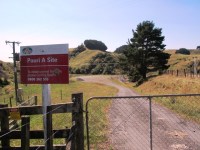
The way things used to be
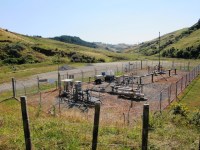
“Just a single well. Probably.”
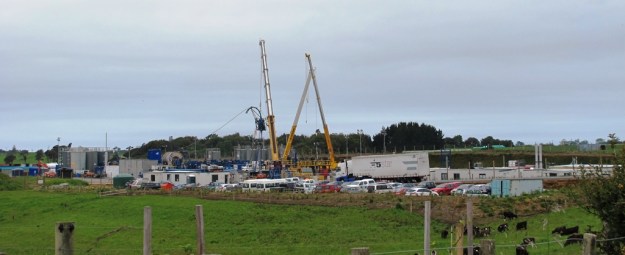
Or it could be a behemoth of a modern site
If a company leads you to believe that it will just be a little site – “you will hardly know we are there” one company is reported as saying – do not make the mistake of thinking you will get a little old-style site with a few pipes coming out of the ground and no noise or disruption. Modern sites are different, as evidenced by this behemoth of a site down the road from us and the even larger one on the farm next door. Check what they tell you against their applications for consent. Sometimes they are different. There is a big difference between “we are just going to drill one well” and their application for the full suite of eight wells plus production facilities, as one local family found.
Do not make the mistake of thinking that it will all be over when the holes are drilled. Oh no sirree. Not necessarily. Not at all. There is much ongoing work that will be done and with a big site, you can expect that frequent work to continue, we now find, for the lifetime of the site. But they won’t tell you that when they get you to sign.
Once in on a site, there is the potential for activities to escalate. Because of course they are already there so each small – or indeed large – increase in activity is just another building block on top what they have already laid. After all, in this industry it is impossible to plan ahead with any certainty and of course it is their right to escalate activities. They have invested all this money (for the good of the people, you understand, for private profit is never mentioned) and you signed away your rights back at the start.
Be prepared for the oft-repeated sneer from shallow thinking dumbos: “Well you drive a car, don’t you? You want us to go back to horse and cart? Hahaha.” This has nothing to do with fuelling our cars, even less so when it is gas, as it is in Tikorangi. Suitable replies may be: “I drink milk but I don’t think dirty dairying is okay,” or “I own a gun but it doesn’t mean I believe in war.” Glib, but parallel arguments. Derisory comments come from those who are either benefitting personally from petrochemical development or those who have no idea whatever how bad it can be for the residents living alongside the development.
Don’t expect your local councils to keep you informed. While they may and do have a great deal to do with the petrochemical companies and Their Processes allow them to assist the companies to repeatedly massage their resource consent applications until they fit the clipboard check list, these very same processes do not include keeping the most affected residents and ratepayers informed. At least not until the final decision has been made and it is too late for you to raise any concerns.
No matter how sympathetic some elected councillors may be, they cannot help you. The power base at local body bureaucracy level rests with the paid senior staff. The role of elected councillors is to be the public fall guys for staff actions and decisions and the sooner some new councillors realise this, the happier the organisation will be.
The Councils will assume that everything in the consent applications is complete and correct on the part of the companies and approve it accordingly. There is too little due diligence that I have seen. When you find out after the application has been signed off that it may not have been full and correct, it becomes a matter of personal pride for Council staff to defend their decisions. Catch 22 but no matter, the winners will be the companies.
You are on your own. There is nobody tasked with protecting the residents’ interests. You are just a small fry to be squishied as the Councils and the companies work “to get things right moving forward”.
Stress. Be prepared for considerable stress over a long period of time. I have heard the ongoing anxiety over company plans blamed for marriage breakups amongst residents. Who knows if this is the case, but I do know that the stress is protracted, genuine and very personal. And that stress is all your very own stress so if you feel your anxiety levels rising, you may need to look for help. It can take a year or two from when a company first comes a-knockin’ at your door to get all the consents in place and start the activity. They may drill one hole and then go away. But their consents are commonly for eight holes and they can come back repeatedly over the next two decades – longer for the earlier consents which don’t have an expiry date at all – and drill again. And again. Then they may apply for a variation to the consent to add more activity on the site. That stress ebbs and flows but it doesn’t go away and none of the official processes recognise the stress placed on residents. It drives some residents out but when moving is not an option, you just have to batten down the hatches and cope.
For all these reasons above, trying to work “within the system” is pretty much doomed to failure for the individual. Oh you may have some small victories to keep you happy along the way, but when it comes to the important issues that really matter, the system ensures that the powerful voices triumph.
Coming up soon: Toxic Transport and other delights from the Tikorangi Gaslands.

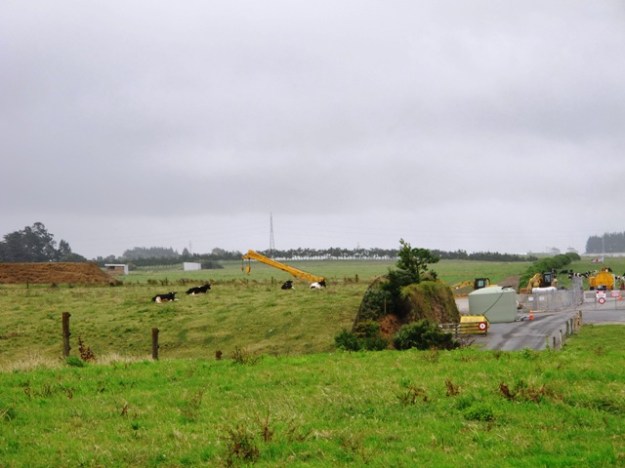
 This is Kowhai C site as seen from Mangahewa E site. These sites belong to two different companies drilling right on their boundary which happens to cut through Tikorangi.
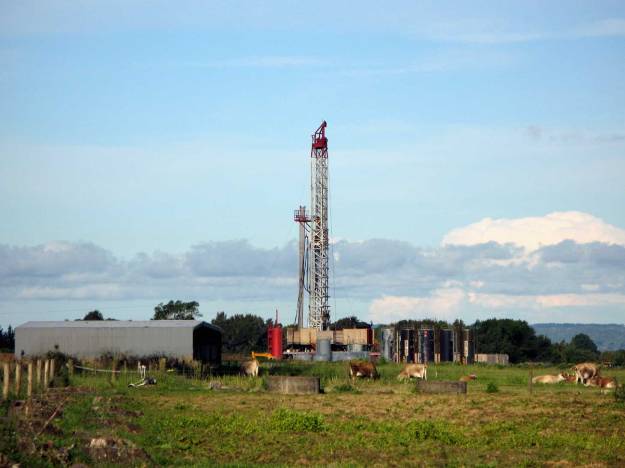 Here we have Kowhai C site – the one this community said it didn’t want but got anyway. This photo was taken 150 metres to the side of Kowhai B site in order to get a clear view. Both sites belong to the same company – Greymouth Petroleum. Kowhai B is consented for 8 wells. Only one has been drilled so far. Close by, so very close that one wonders why the company needed a second site, Kowhai C is consented for 4 wells.
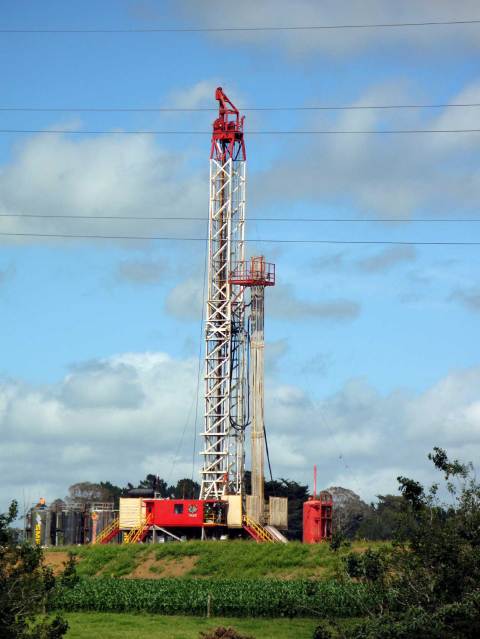 Kowhai C again, this time from Otaraoa Road. It is one of about 10 well sites Greymouth Petroleum has in Tikorangi. I know of 9 that have been consented – I am not sure of the current status of Urenui A (which is not in Urenui but is in Tikorangi).
 This photo taken about August last year – the rig has now gone but it was on Mangahewa C, as photographed from Kowhai C. It is like a quadrilateral of sites, already. These two belong to separate companies again.
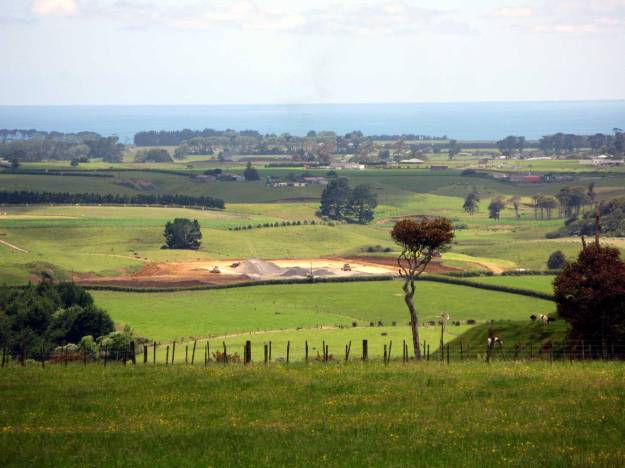 Mangahewa E site from Stockman Road (near Mangahewa C site). These two Mangahewa sites are Todd Energy’s but, to be fair, it should be pointed out that Mangahewa C site has 8 wells drilled on it so is at capacity on its current consent.
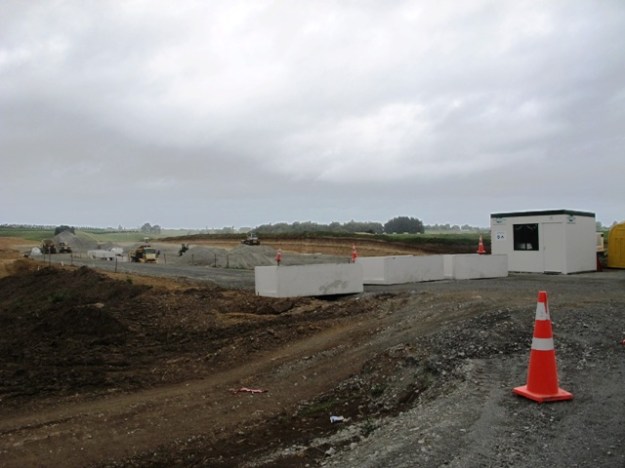 Work progresses on the new Mangahewa E site.
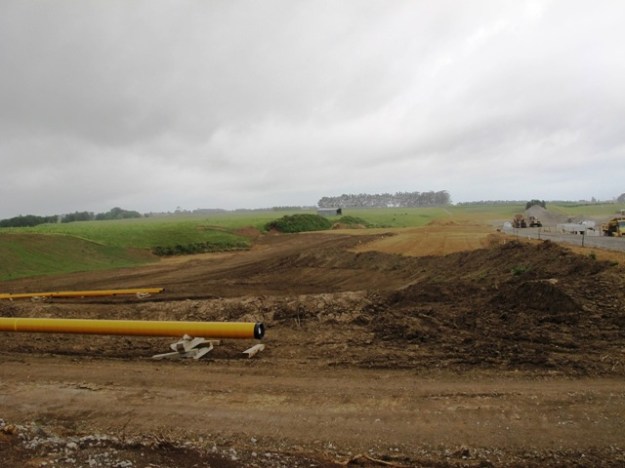 Mangahewa E site again. It is often stated that this petrochemical development (still called “exploration” but they are long past exploration in Tikorangi where it is decades since a dry well was drilled) is “temporary”. Does this look temporary? How can these developments be temporary when the majority of consents are open ended with no expiry date? Only the most recent three sites have a time limit on the consents – 15, 20 and 30 years. In whose books is this “temporary”?
 And work progresses on extensions at Turangi A site. These are the other company’s sites (Greymouth Petroleum).
 But wait, there are more. Turangi C site is, according to the company (Greymouth Petroleum) “about” 850 metres from Turangi A site. It can’t be any more than that from Turangi B site, in that case, because it is pretty much set back between the two. Neither Turangi A nor Turangi B have been drilled to capacity. So why does the company need a third site and could they not have deviation drilled from one of the other two sites? Who knows? Only the company and neither New Plymouth District Council nor Taranaki Regional Council seem inclined to ask them why. It looks mighty like speculative consenting to some of us – described by the company rep to me as “future proofing”. Right-o then. That is future proofing the company, not Tikorangi.
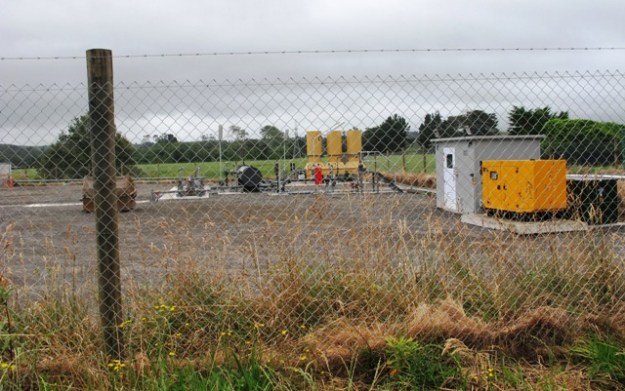 And Kowhai B site with one hole drilled, as viewed from the neighbour’s property. It doesn’t look “temporary” and it was anything but silent on the day I took this photo. It has a significant impact on the neighbour’s adjoining paddock and could well affect his future property options but he was never deemed an “affected party”. I think, to the right of centre at the front of the photo, that is an example of the screen planting done by the company. It’ll be quite a few years before anything is screened by that sort of planting.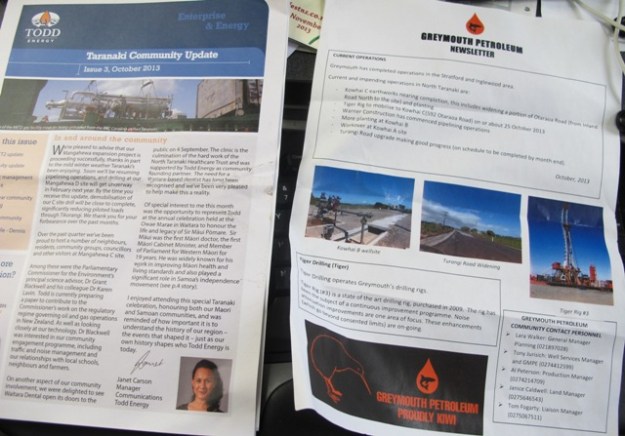
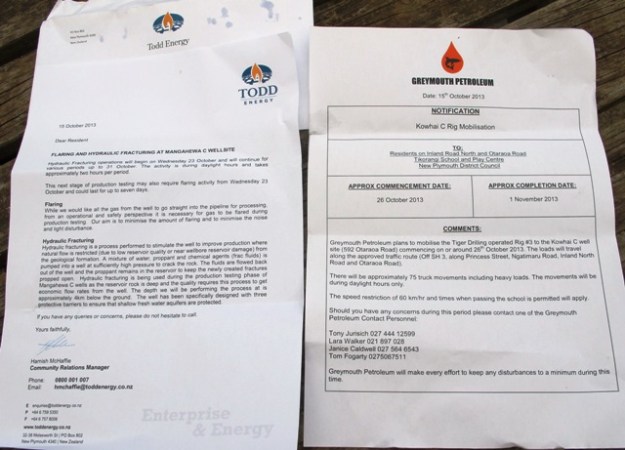

 Tikorangi Newsletter 4, Tuesday 10 September


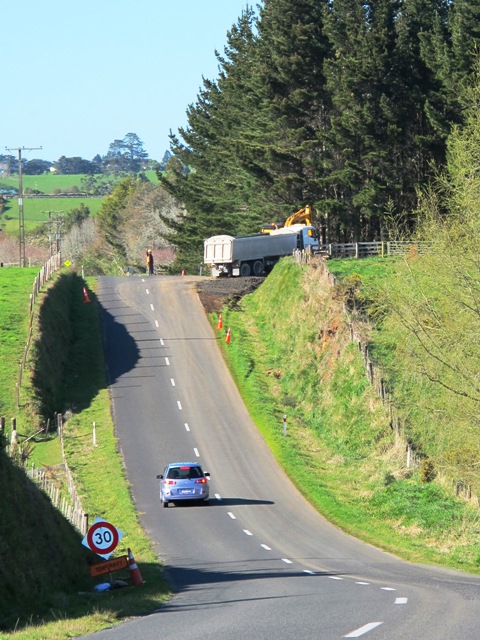



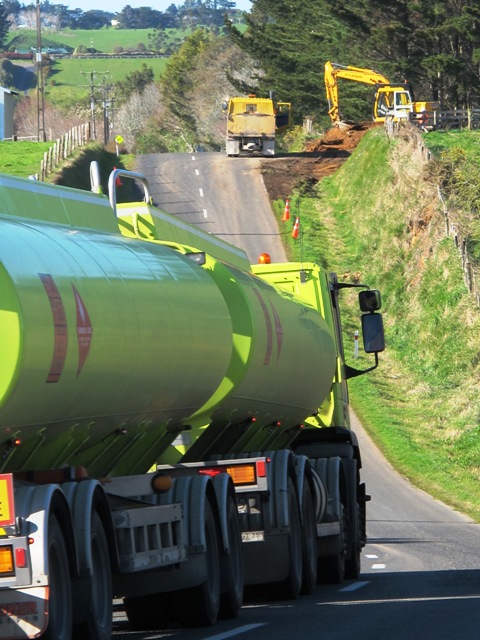
 * Tikorangi folk will be thrilled to see that, like Arnie, Greymouth Petroleum are back! They sure are back. Be reassured that we, here at Council, understand your concerns about safety issues at the entrance to their lovely new Kowhai C site but we are right across safety issues. All of us here at Council are well briefed on their Traffic Management Plan and there is no danger at all. It is perfectly safe.

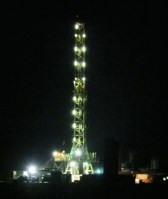 * The good folk at Venture Taranaki tell us they are well down the track of preparing their report on the economic benefits to Taranaki of flaring and night lighting sites. Local residents will be well aware that these activities have the positive benefit of lowering their household power bills. There are many other benefits and Venture Taranaki expect to be able to quantify the financial and employment benefits that accrue from the companies’ generosity with flaring and night lighting. Local residents may not realise that a side benefit of flaring is, reportedly, a reduction in flying insects and as a result the risk of a malaria or Ross River virus outbreak in Tikorangi has been greatly reduced.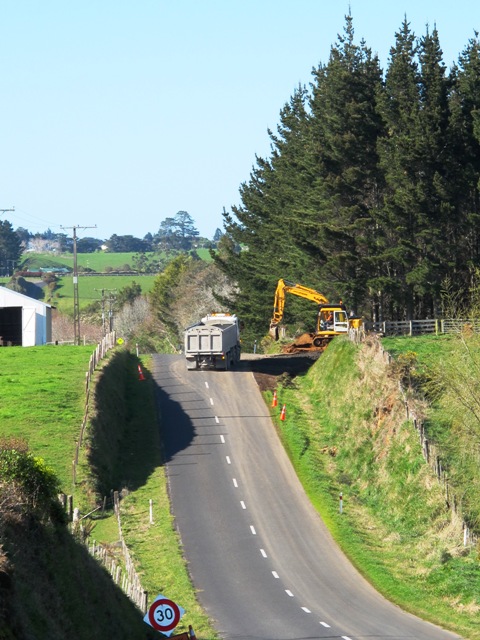
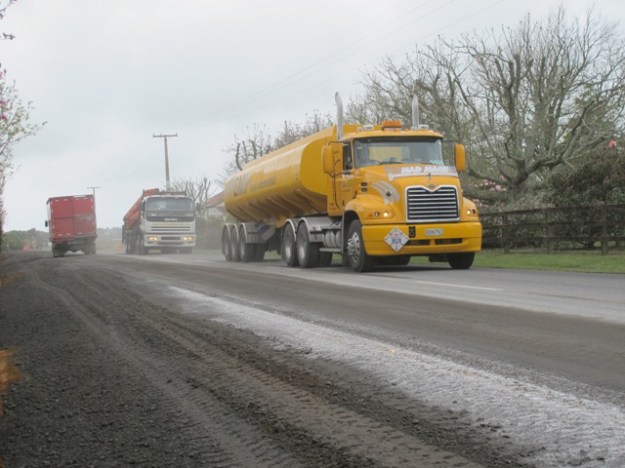
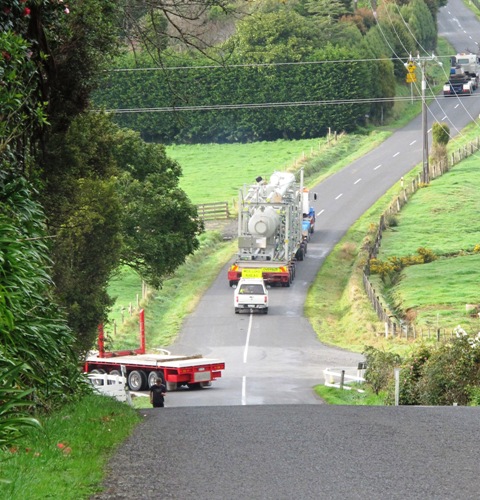
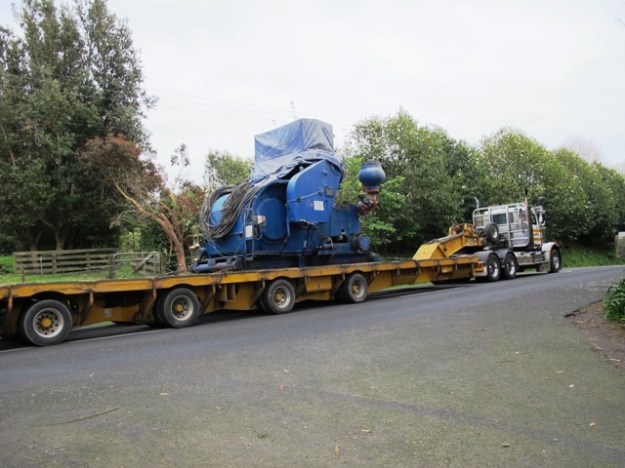
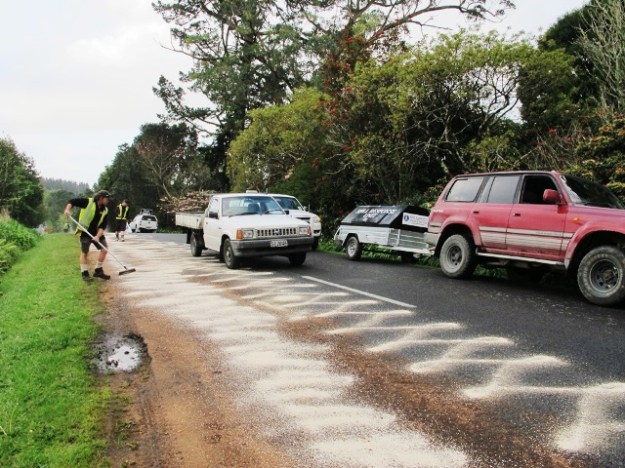
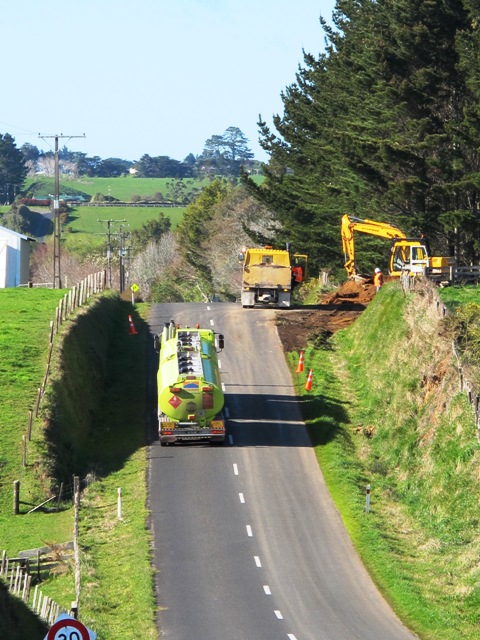
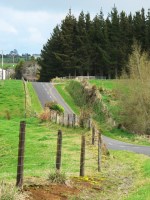 * Even we at NPDC have been astonished at just how quickly Greymouth Petroleum have been able to improve your local countryside. It took just one and a half days to change it from this boring and dull country road (shown to the left), into this lovely new scene shown below. You hardly know they are there, do you Tikorangi? This is the incredibly small environmental footprint they have.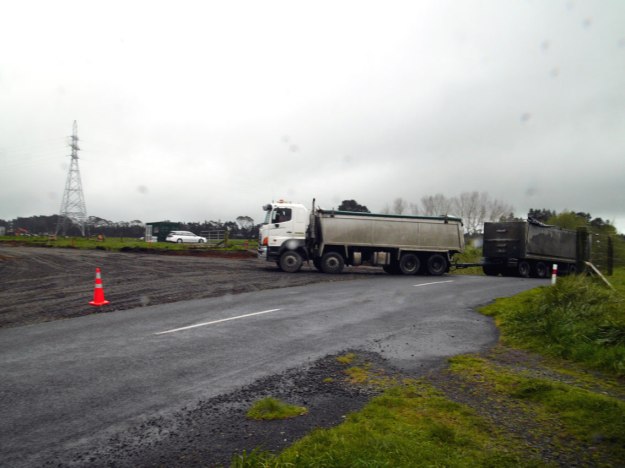


 *
* 
 Tikorangi The Jury Garden