Tag Archives: Historic gardens

Revisiting Le Clos du Peyronnet, but not in person

If I knew then what I know now, would my visit have felt different? When it comes to Le Clos du Peyronnet, the answer is probably yes. I have just finished reading ‘The Long Afternoon’ by Giles Waterfield. His late brother William and his even later Uncle Humphrey are credited with making the garden into a place of note.

I wrote about the garden after my visit in May last year in the second half of my post covering two English gardens on the French Riviera. I thoroughly enjoyed the visit. But now I would like to go back and experience it again, although that is extremely unlikely to happen. We were told a few historical facts but they were not of a compelling nature.
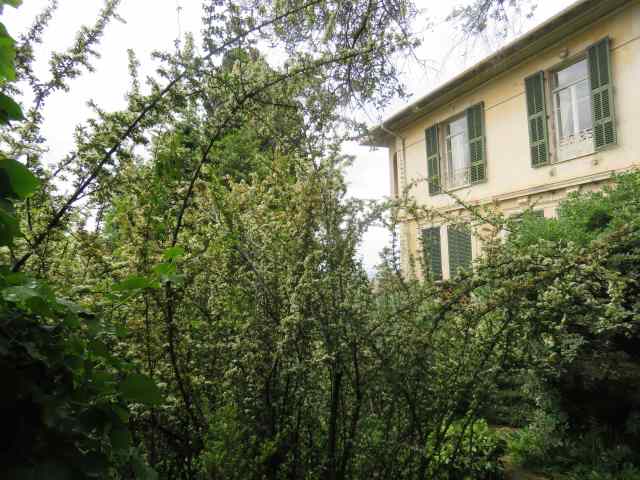
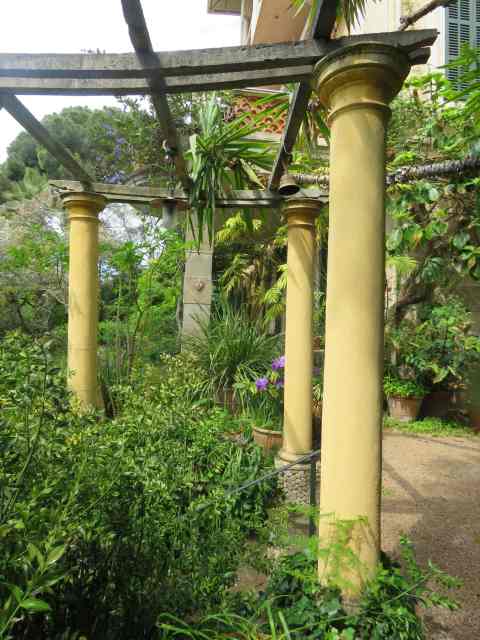
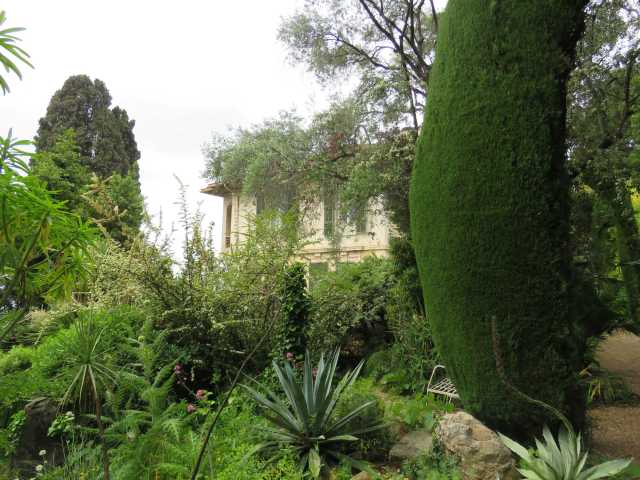
These were my only photos showing part of the villa, which I now know was built in 1896 by Annie Davidis, an Anglo-German artist.

We learned that the villa, purchased by the author’s grandparents in 1912, had now been divided into five apartments – but not that it was a move taken immediately after WW2 which was necessary to save both the villa and the garden. And we were told that one or more of the apartments’ occupants were hostile to William Waterfield’s widow continuing to accept and lead tour groups around the garden. Our movements around the garden were somewhat restricted and we descended from the top terrace and entirely missed the experience of the main entrance and the front of the villa. When I looked at an upper story window, I saw a figure standing there, possibly glaring. The vibes were bad, Reader. He seemed to radiate hostility so I averted my eyes and studiously avoided going close to the building, instinctively trying to minimise any further intrusion on that resident’s privacy. As a result, I have very little visual memory of the villa, just the garden

“You should read ‘The Long Afternoon’,” our Irish tour leader said to me. “It is Giles Waterfield’s account of his father and uncle growing up in the garden.” It was published in 2001 so I found a second hand copy which described it as a novel. It is sort of a novel but based on pretty accurate family history. The names have been changed. Barbara and Derick Waterfield became Helen and Henry Williamson, their sons Humphrey and Anthony became Charles and Francis. The name of the garden became Lou Paradou. The author has created the dialogue and placed his interpretations of events into various character’s minds. But the facts and events are real.
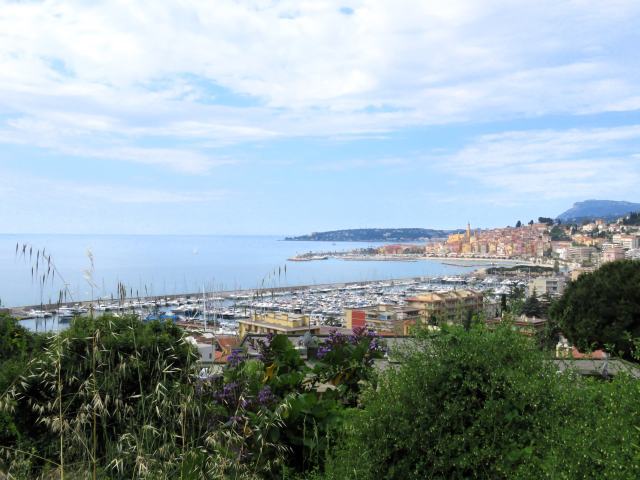
The view of Menton from the top terrace of the garden in 2025.

The garden and villa wrap around the plot, ever present – especially for me as I could visualise the garden and the setting and I have looked at that view of the Mediterranean and crossed the border to Italy to the Hanbury garden. The plot centres on the relationship between ‘Helen’ and ‘Henry’, leading lives of huge privilege in the sedate ex-pat community of British residents who had chosen to live in Menton in the first half of last century. New Zealanders may recall Menton as the place where Katherine Mansfield lived in her doomed quest to recover from tuberculosis. English people may know it as the place where Lawrence Johnston of Hidcote fame preferred to spend his time at his garden, Serre de la Madone. Both are of the same era as the Waterfields/Williamsons.
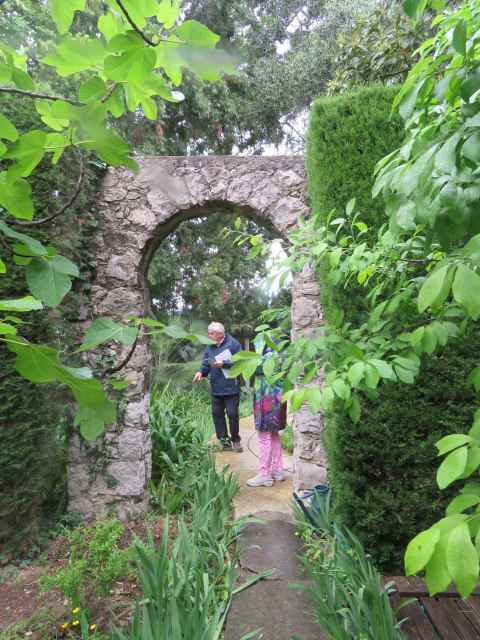
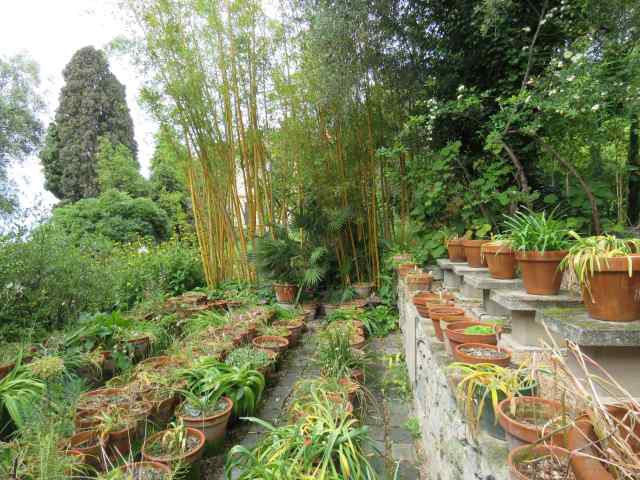
The structure and design is largely attributable to Humphrey Waterfield
William Waterfield was the first in the family to take up year-round, permanent residence (the earlier generations tended to split their time between there and England, preferring to spend summer in the cooler climate. William was a botanist and added the botanical detail to the garden, including an acclaimed bulb collection – all of which was over by the time I visited in late May.

Giles Waterfield is a good writer. Much of the book is a long, intricately drawn picture of co-dependence evolving over time between Helen and Henry, set against a backdrop of ennui and lassitude that comes with lives rich in privilege but lacking in purpose. No wonder she had plenty of time to supervise the gardeners.

There is a sharp change in writing style and tone as the inevitability of WW2 looms large, disturbing their tranquil way of life. Menton is right on the border with Italy and the fascists were already in control of that country. Life as it had been started disintegrating at a terrifying speed.

Spoiler alert: in the unlikely event that you are currently reading the book or plan to read it very soon, you may wish to skip the next three paragraphs.
I describe it as an explosive ending. In a suicide pact, they chose to end their lives together, by gunshot. A Luger, no less.  In June 1940. They were only in their early sixties. The war was too much for Helen – too inconvenient, too much unknown, too much to fear and too much potential chaos. Fourteen months of retreat to Pau (still in France but near the Spanish border rather than the Italian one) was all she could cope with.  The tone of the book makes it very clear that it was Helen’s decision and Henry acquiesced. Again. “She wants us to end our lives, and I still love her enough to do as she wants.” I am guessing the excerpt of the letter written to their sons which ends the book is likely the actual text from Derick Waterfield to his sons.

After the precision of an organised life that leads up to the end, those last four pages were shocking. I am with the reviewer who said of the book, ‘I can’t get it out of my head’. I had to start searching to see if the ending was true. It was. Then I became fascinated by the author whom, I suspect, took after his Uncle Humphrey (Charles, in the book). The empathy is clear.

That is the backdrop to Le Clos du Peyronnet. The garden as it is admired today, is credited to Humphrey who returned to it as soon as he could when the war ended and then to William. Humphrey was in the shadow of the war and the suicide of his parents, William was raised in a family where the deaths were not discussed at all (according to his brother Giles, in a lecture delivered to the Garden Museum Literary Festival in 2014. I told you I became fascinated.)
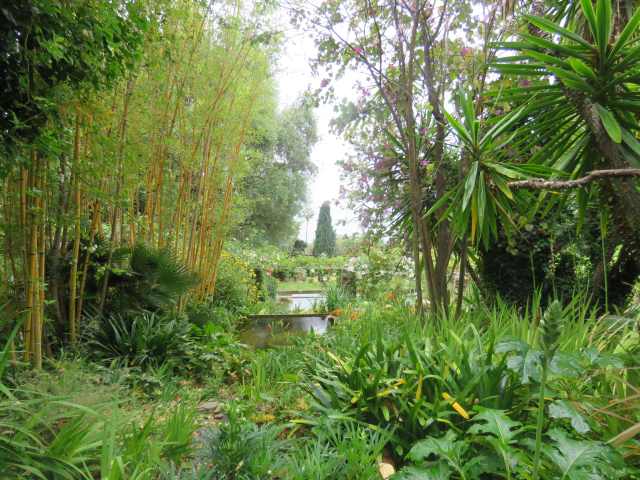
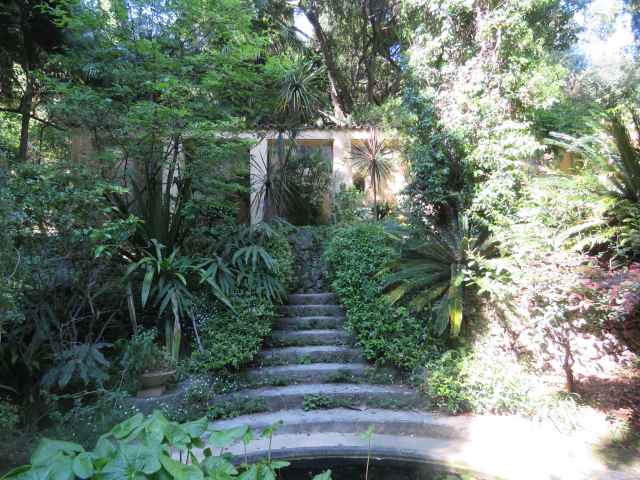
It was a grey and drizzly morning so it is not clear but the space around the conifer is the Mediterranean Sea. The famed ‘water staircase’ of five descending pools culminates in the borrowed view of the Med being the sixth pool, the design work of Humphrey Waterfield. That conifer may need to be removed soon.
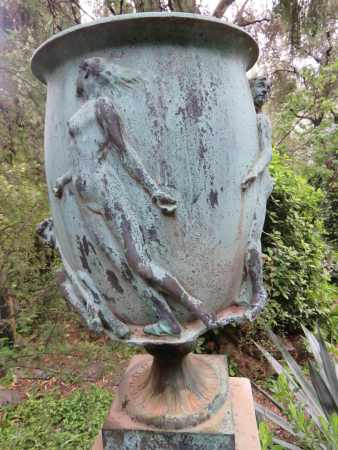
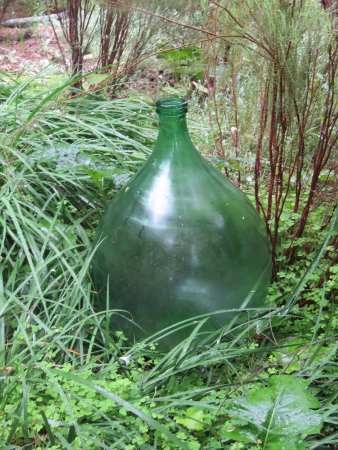
I now know that the ‘Anduz jars’ came from Lawrence Johnston’s garden nearby but what I don’t know is whether they are the urns or the glass jars. Or both. There seems to an absence of Anduz jars in this country so my education is lacking on this matter.

Knowing what I know now, I would be staring at that villa, locating the upstairs balcony that featured so often. I now know who built the grotto that William loved, who designed and constructed the cascading pools and so much more. It is a garden conceived, created and continued in an unbroken chain of ex-pat Brits on the Riviera, which is a very particular garden genre. It seems that the grandparents provided the canvas and showed the potential (the blue irises are woven through the family history), Humphrey lifted the design and layout to a new level and William was the plantsman who set about enhancing the garden with detail. Alas, there are no more Waterfields. The garden has been accorded historic monument status by the French Ministry of Culture but what that means in the mid to longer term, I do not know.  

Would it have enriched my experience to know all this when I visited? For me, yes I think it would. Private gardens are about more than pretty scenes, interesting plant combinations or good management. Their very existence is tied to their individual owners and their social context. Their stories are part of the garden’s being.

Note to self: do more research in advance of visiting gardens, especially overseas gardens that I may only get to see once.
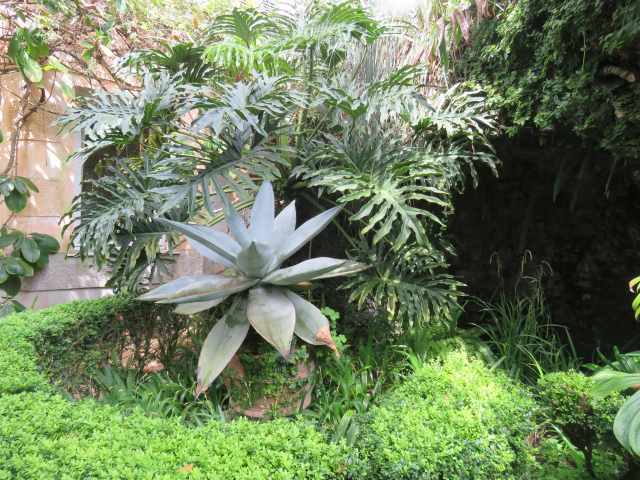
Curiously, William Waterfield once commented in an interview that this was his favourite part of the garden – a small grotto utilising a natural spring and one of the few original parts of the garden as created by Annie Davidis, who built the villa. The silver agave was added by William.

Preserving a period of time

Can a garden ever be frozen in time?

This train of thought came back to mind as I was sorting through the old slides of our garden dating back in its early days. We first came across the concept of freezing a garden in time when we encountered the Florence Charter being quoted twenty years ago, in the context of what are now referred to as the regional gardens here, particularly Tupare and Hollards.

I see the Florence Charter of 1981 built upon the earlier Venice Charter of 1964 and I can’t quite get my head past the glorious locations of these think-tank conferences on preserving historic monuments. Still, I doubt that the wise heads behind these charters were thinking about preserving gardens from the 1940s and 1950s. Only in colonial New Zealand do we think of 70 to 80 years warranting the descriptor of *historic*.

But how realistic is it to freeze a garden in time? For starters, it is probably limited to bulbs, herbaceous perennials or roses. Trees and shrubs grow. They can’t be lifted, divided, thinned, pruned and replanted in their original configuration. That rules out 99% of all gardens in this country; I cannot recall seeing any gardens here with no trees or shrubs in them.

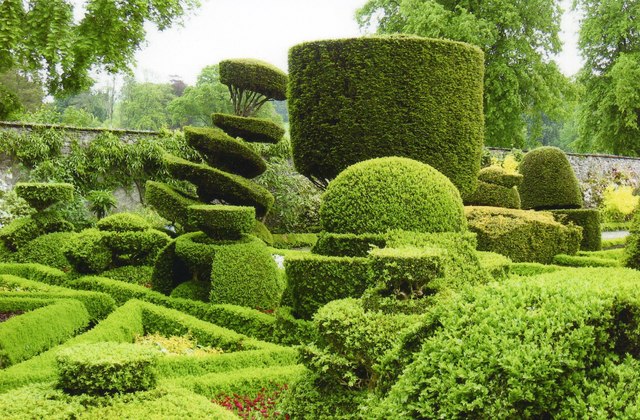
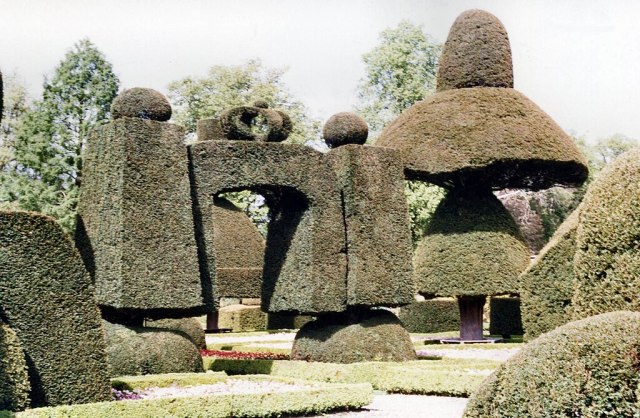
Topiary at Levens Hall by Peter Jeffery (via Wiki Commons)

What about topiary, I hear somebody ask. Even they evolve over time. Covid robbed us of the opportunity to visit Levens Hall in the Lakes District of the UK. That garden dates back to 1690 and is claimed to be the oldest known topiary garden. Some of the yew topiaries could well be original but I doubt they look the same now as they did in 1700. Even topiary and bonsai grow, mature and evolve over time.

Topiary in the garden at Levens by Simon Palmer (via Wiki Commons). That unbalanced, leaning, cake-plate topiary is an example of serendipity over time, adding quirkiness that would not have been there at the start.

Roses and maybe some other small deciduous shrubs can be kept to the required size and shape. Besides, you could grow on replacement plants out the back somewhere and bring them in as instant substitution when needed.

Herbaceous perennials and bulbs can certainly be lifted, thinned and replanted in exactly the same configuration, although why you would want to do so eludes me.

But, and it is a big but, you can have a perennial, bulb or rose bed and dedicate your gardening life to keeping it static in display but make sure it is in the middle of open space which will stay open. As soon as a bed or border is encircled in hedging, other gardens, trees, orchard or anything else, the time-clock of change starts ticking. The micro-climate you started with will change over time as other plants grow and may no longer be hospitable at all to the initial plant selections.

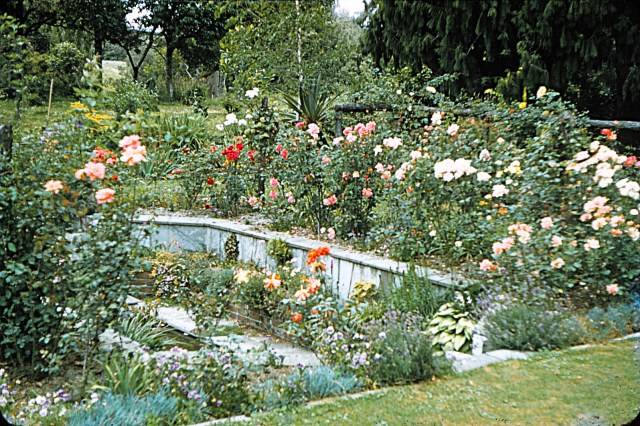
Mark’s mother’s rose garden in its heyday
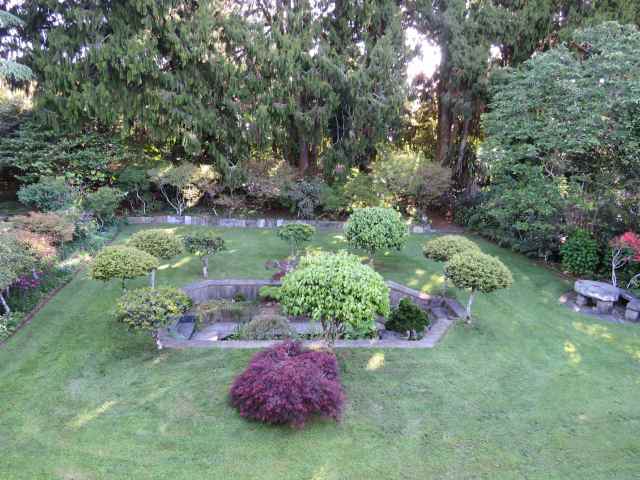
And how the area looks today. The line of rimu trees behind were planted in the 1870s and continue to grow with root systems spreading extensively.

We worked this out when our best efforts failed entirely to restore the sunken garden to the glory days when Mimosa had it looking lush, abundant and flowery. In the decades since it was first planted, the rimu trees that bound it on one side have pretty much doubled in size and their fibrous root systems have spread throughout much of the area. The trees and shrubs Felix and Mimosa planted on two other sides have grown like Topsy and the garden in the middle has long since stopped being sunny and open; the area once suitable for roses is now semi-shaded, very sheltered and filled with roots from surrounding trees sucking up all the moisture and fertility. We changed tack entirely.

Freshly planted azaleas on the sunken garden side of the rimu trees, probably in the early to mid 1960s
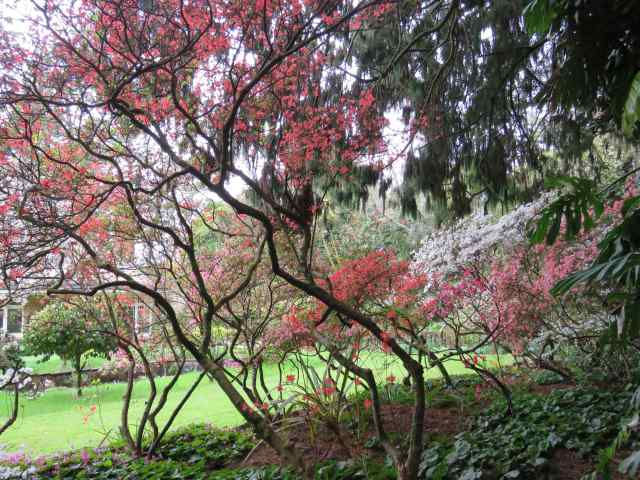
Looking back towards the sunken garden, these are the surviving azaleas from that original planting today. Now underplanted with Cyclamen coum and hederafolium as it is too shaded for the original narcissi.

All of this begs the question of why anyone would want to freeze a garden in time. Times change and with that, expectations and gardening values change. I was going to add in changing fashions, but long term gardens are about more than fickle fashion. The mark of good gardening, in my book, is the ability to adapt an existing garden, keeping it appropriate, relevant and in tune with current values while accommodating issues of changing microclimates and external conditions. Personally, I don’t see the value of trying to freeze even historic gardens to a particular point in their development.

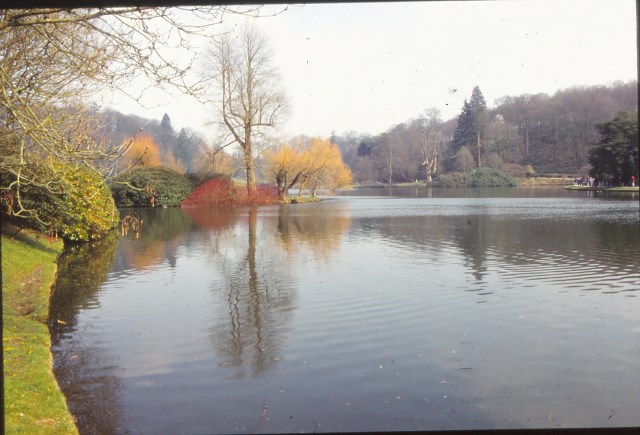
Stourhead, we think. Our memories are a little hazy now, given we visited in 1996.

Never have Mark and I forgotten our early visit to Stourhead in Wiltshire. The garden at Stourhead was created in the style of Capability Brown – sweeping landscapes and dearie me, is that a village located just where we want to put the lake? Move the peasants out now. So, a statement of wealth, power and privilege. Visiting in spring, the magnificent display of rhododendrons and azaleas delighted the modern hoi polloi amongst the vistas and the garden follies of past grandeur.

But there was a problem. Historically, the garden at Stourhead pre-dated the introduction of rhododendrons to the UK. The original lakeside plantings were, apparently, laurel and mass-planted laurel is never going to delight anybody, really. There was a purist, historical lobby group who wanted to pull out all the glorious rhododendrons and replant with laurels, in the interests of historical accuracy, you understand.

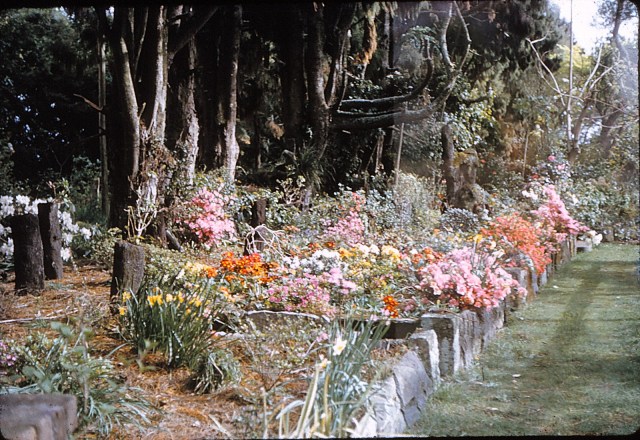
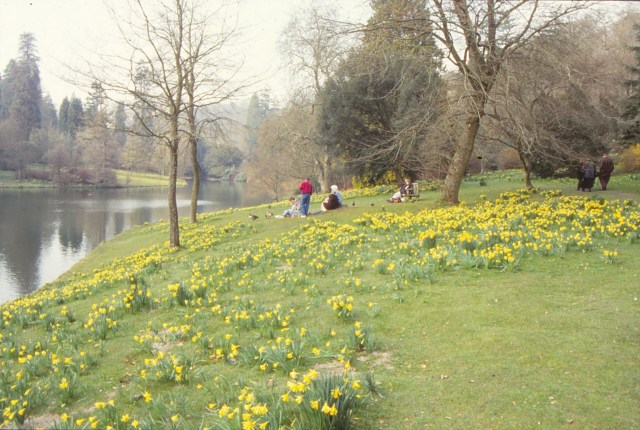
I admit we didn’t think to look closely enough back in 1994 to determine whether this host of golden daffodils were native narcissi species and not more recent hybrids.

I am assuming the historical purists did not win but we haven’t been back to see. It does illustrate the downside of picking an arbitrary time frame to freeze for the long term. You can do it with buildings and monuments but gardens? Gardens, by their very essence, change over time and we gardeners need to adapt to and enhance that change, not constantly try to wind the clock back.

Postscript: Theoretically, a rockery largely given over to bulbs and small perennials could be maintained as a static feature. It is clear that from the very start, Mark’s parents set out to plant in a mixed style.

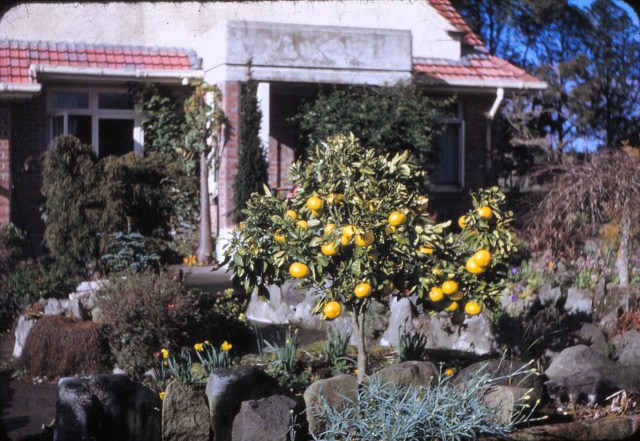
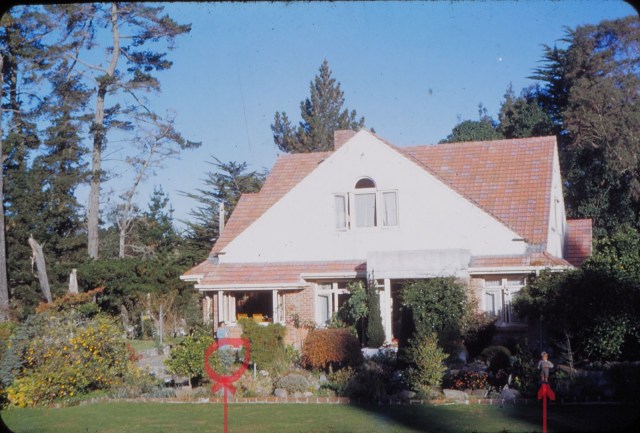
The house was built around 1949 and 1950 and the rockery must have been the first area of the garden to be created and then planted because this is as early as 1954 and many trees and shrubs are looking remarkably well established. That is a Wheeney Grapefruit which was moved out soon after.

We can date this to 1954 accurately because that is wee Marky at the red arrow on the right. Mark’s mum is above the red arrow on the left but the circle is what I wanted to highlight. You won’t be able to see much on a small screen but the circle is around a very small blue conifer. It was Abies procera glauca and you can read it’s story here.

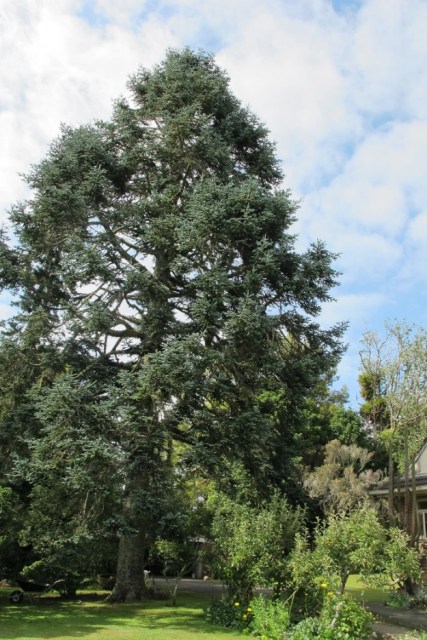
We felled it in 2019. It had been moved out of the rockery at some point in the later 1960s and by the time we dropped it for safety reasons, it looked like this.

The rockery is the the area where there has been the least change in structure and design. We have carried out a few running repairs but otherwise it is pretty much as constructed by Felix around 1951. The plant material, however, is something else. The turnover of plant material won’t be quite 100% but there is very, very little left that is original.

Freezing a garden in time seems a fruitless folly, really.

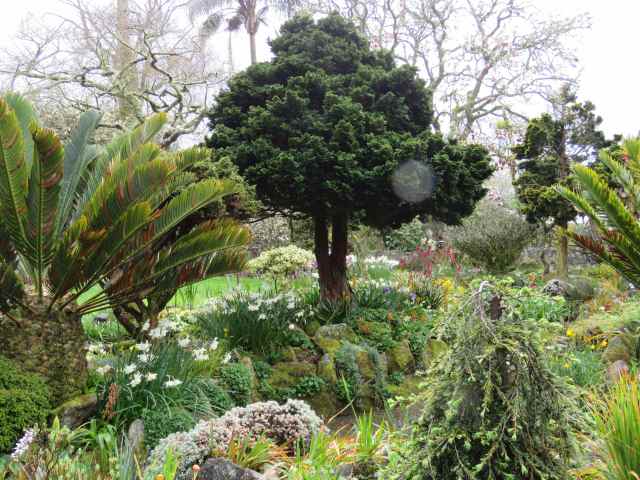
The rockery today

From Hidcote to Serre de la Madone – Lawrence Johnston’s two gardens

When I joined the tour of gardens of the French Riviera, I was particularly looking forward to seeing Serre de la Madone. It is the garden created from scratch by Major Lawrence Johnston, he whose main legacy is the renowned Hidcote Garden in Gloucestershire, UK. Serre de la Madone was his French retreat in the charming town of Menton.

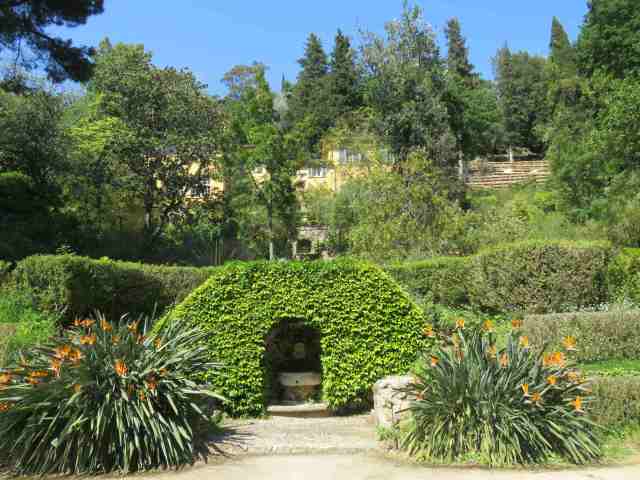
Serre de la Madone had areas that were quite Hidcote-ish in style. But with strelitzias.

When we made our one and only visit to Hidcote in 2009, it just blew us away. After several hours we walked out like stunned mullets. At the time, it was simply everything we aspired to for our own garden at Tikorangi except that we lacked major inherited wealth and ten gardeners. We have not been back on subsequent UK visits; in the years since, our garden aspirations changed and we never wanted to dilute the magic of that first visit by discovering that it was not, after all, how we remembered it. But I did want to see Johnston’s French garden, where he chose to spend most of his time in the last 30 years of his life.

Did it live up to my expectations? No. Not at all. Was I disappointed? Not really. As I get older, I get more philosophical and even the experience of something falling short can still be interesting. Hidcote is a large garden planted in a series of garden rooms so popular in the early 1900s, as also seen at Sissinghurst. Johnston sold it to Britain’s National Trust back in 1948 when he relocated full time to Menton and in the years since, Hidcote has had both money and skill lavished on it.

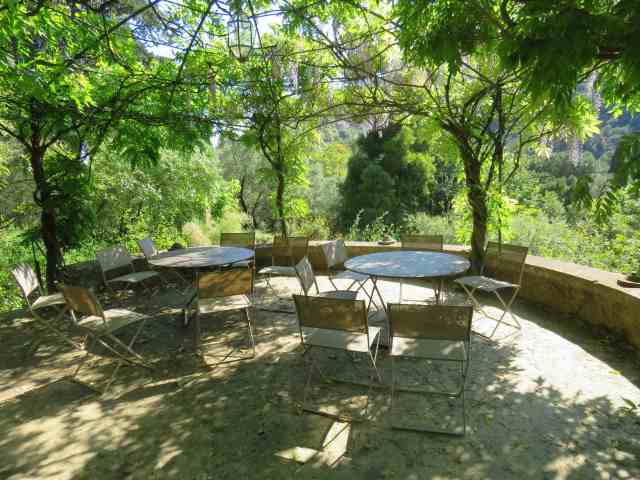
The belvedere may have started life with a view of the Med but is now more in that shabby chic style that the French manage with ease

Not so Serre de la Madone. After Johnston’s death in 1959, his French garden passed through various private hands, falling into disrepair before it was taken over by local authorities in 1999. Despite a major restoration in the years between 2000 and 2005, it is generally tired, messy, unloved and a shadow of its former glory.

Johnston was a keen plantsman and he originally planted his French garden with exotics from around the world, many of which were too tender to grow at Hidcote. Over time, the plant collection has dwindled away so what survives – the likes of agapanthus and strelitzia – are large a green framework for his historic structures and landscaping, rather than being interesting in their own right.

Never underestimate the quality of the British professional gardening tradition that sees both public and private gardens in that country maintained to exceptionally high standards. I have never seen it matched in other countries.

The central axis of steps leading up to the villa

Typical of many gardens in the area, Serre de la Madone is built on a fairly steep slope. If there is a view out to the Mediterranean Sea, I did not notice it but it is likely that there was in Johnston’s day. When dealing with creating a garden on a slope, it becomes necessary to create terraces, sometimes defined by a central axis with long paths on the intersecting horizontal axes. This gives long views to the sides.

Long views on the side axes

Johnston favoured plenty of hard landscaping and it is this that gives defining structure in photographs. I have to say that it all looks much better in the photographs than it does in person because you can’t see the general weediness and sense of neglect, let alone the poor quality of water in the pools. Photographs can create a sense of romantic abandon rather than tired shabbiness.

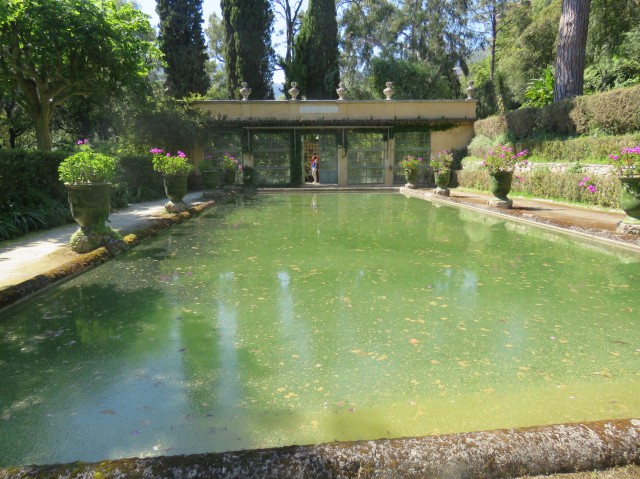
The water garden also served as a swimming pool, based on the steps. It was a lovely pavilion at the far end.

I looked at the water garden and wondered aloud whether it was also a bathing pool, as his round pool is at Hidcote. The person standing next to me doubted it so I felt vindicated when I looked closer at one corner and spotted the steps down into the water. It is an early swimming pool.

The Hispano Moorish garden

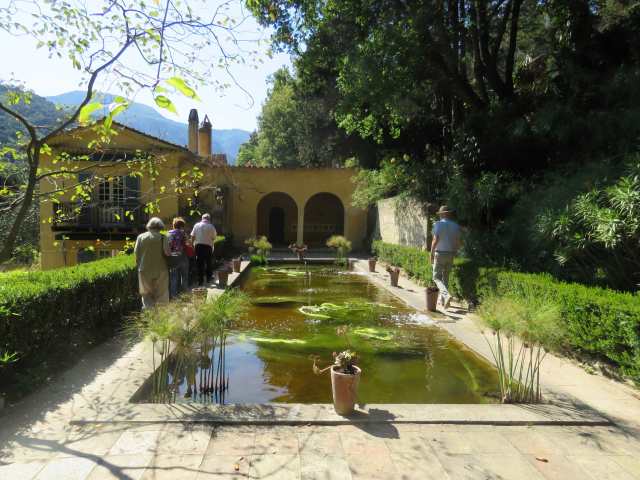
You certainly would not be wanting to swim or even paddle in the water in the Hispano Moorish garden, though.  But I could see why Johnston ended up preferring his French home. That Moorish look would not have fitted the aesthetic of Hidcote at all but is not out of place adjacent to his sunny yellow French villa.

Our tour guide pointed out the recent retaining work on the hill behind the villa. The south of France has had an unusually wet spring and the hillside had just slipped when he was last there in February. He was amazed at the fast progress on attempts to shore up the bank.

The hillside behind the villa where unusually heavy rains started a major slip

The lessons I took away from my visit are that detailed plantings can disappear with neglect but hard landscaping remains and gives form to the view; over time the vision of the creator can be lost and it takes particularly high level skills to keep that original vision in focus. Serre de la Madone has lost Johnston’s vision, at least as far as I could see.

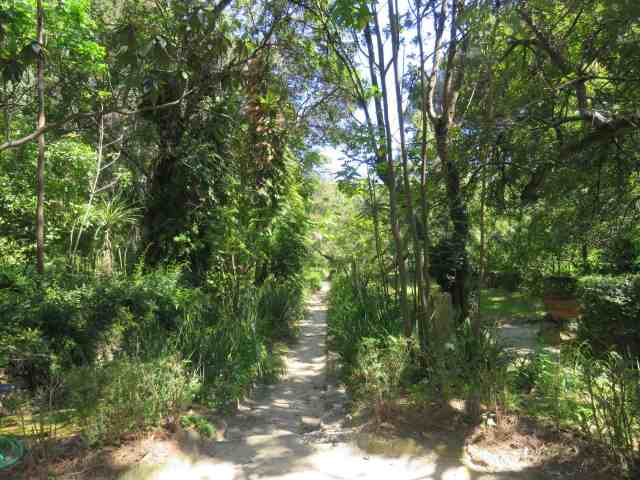
A fair representation of the current quality of the plantings in most of the garden
Garden structure can carry the day even when plantings and maintenance fall short