
As yet more heavy rain falls this weekend on already saturated ground in northern and eastern areas of Aotearoa New Zealand, I make no apology for pulling out photos I have used before, showing alternatives to huge slabs of concrete or paving around homes.
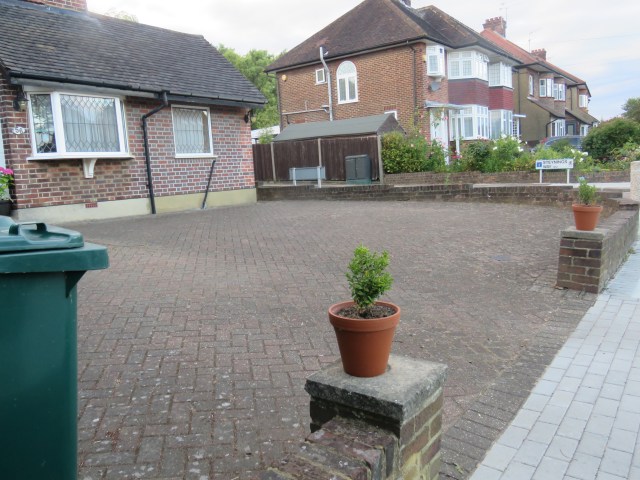
Most of us are not in a position to influence urban planning, but we can have an impact on our own property. Putting in large areas of sealing and paving, mostly to accommodate car parking or to ‘reduce maintenance’, is a significant problem contributing to urban flooding.
I have said it before, if you want a low or no maintenance section, move into an apartment – preferably one with underground carparking so the footprint of the building and housing cars remains as small as it can be. The alternative of concreting or paving your section is not only aesthetically unpleasant, it is environmental vandalism.
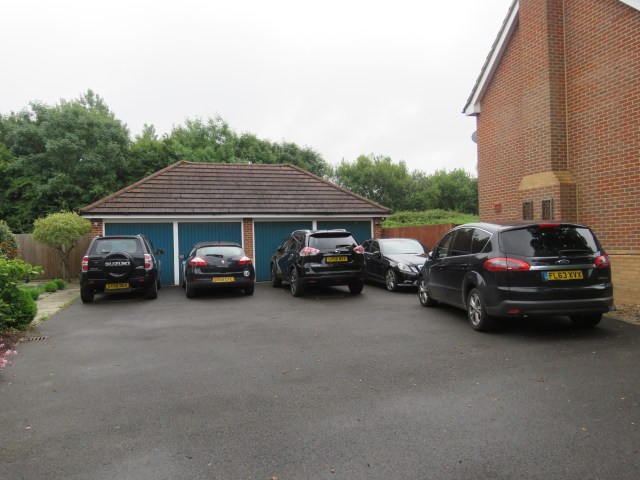
When I took these photos, the concern was more for preserving aspects of nature, providing habitats and food sources for the natural world. This month, it is about drainage, in this country at least. All that rain falling from above has to go somewhere and if you have surrounded your home with impermeable surfaces, it has no choice but to run off and contribute to storm water systems that are overwhelmed. When an area is planted, the ground is permeable and the root systems create little channels for the water to flow down deeper into the soil. Even mown grass will do this, once it is established.
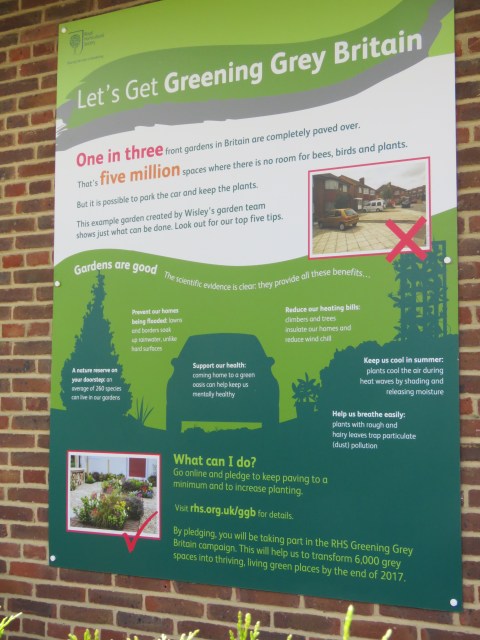
The education boards at RHS Garden Wisley in the UK claim that one in three front yards are fully paved now. Our major urban areas may not be lagging far behind in this country as sections get ever smaller and houses – almost all single storey and detached – get ever larger, leaving little space devoted to wheelie bins and car parking.
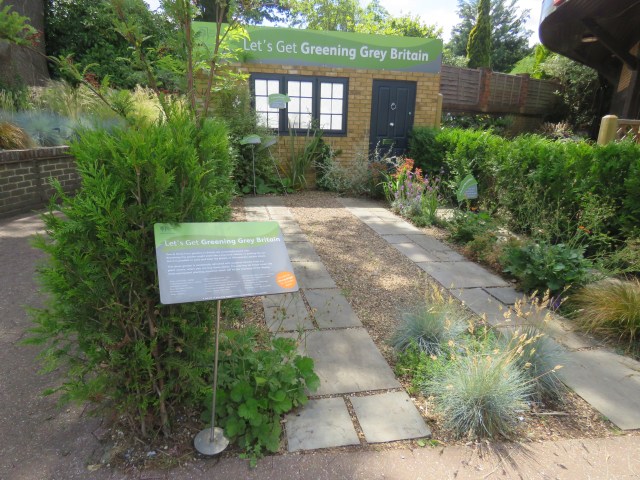
Wisley’s alternative display shows the use of spaced pavers, gravel with plants in it and recommends clipped hedging rather than solid fences on the boundaries. Just don’t lay an impermeable lining below the gravel – often recommended to ‘reduce maintenance’ but entirely defeating the drainage function of this type of driveway. Yes, it will take a bit more work to maintain than just getting the leaf blower out onto a slab of straight concrete or seal on a Saturday morning, but how much more pleasing is it visually? And it will absorb a whole lot more excess water.
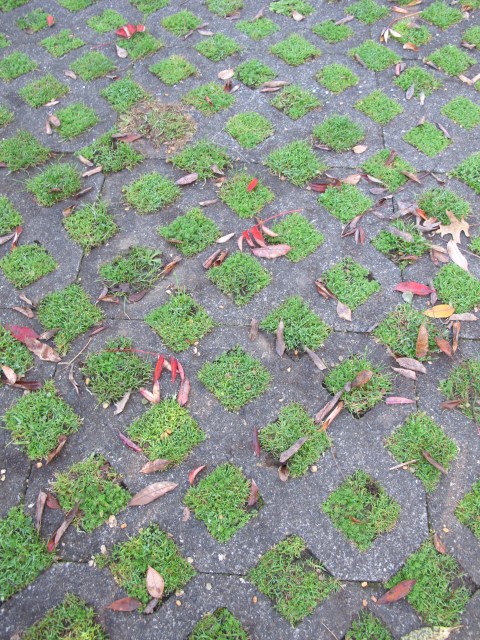
I photographed this driveway in Auckland. It is another alternative, allowing drainage while giving a hard surface on which to park the wretched motor cars that are so demanding on space. Laid properly, it should be level enough to run the lawnmower over it or to allow for sweeping, if need be.
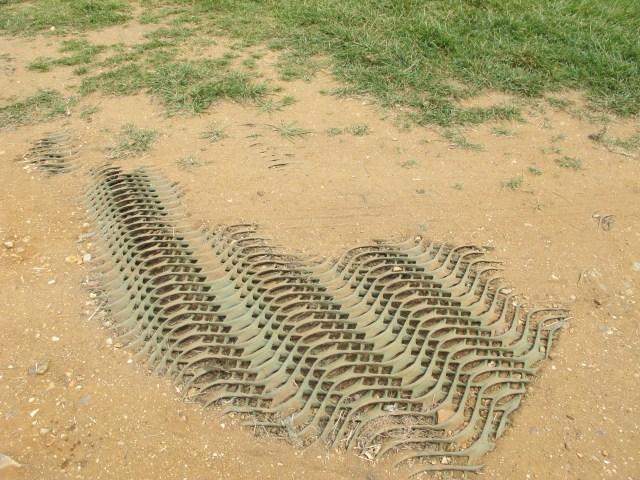
This subsurface reinforcement looks as though it may be made from recycled tyres. It was very dry at the time I spotted it exposed in a few places in a distinctly utilitarian carpark. It is another way to solve the problem of an area that would become a mud bath in wet conditions leading to a rough, rutted surface as it dries. It could be over-sown with grass to be mown in areas where there is lower vehicle traffic – like a front section.
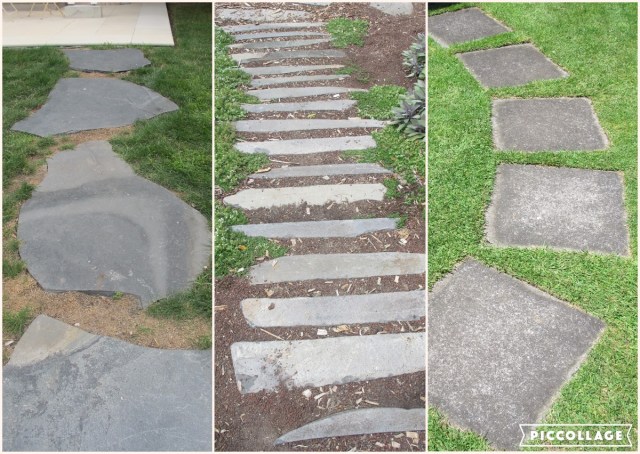
When it comes to paths, there are alternatives to a solid surface and the ones I have photographed are all using paving slabs. The one on the right would take a bit of extra maintenance to keep that sharp look because it involves using an edging tool around each paver but most of the time, the lawnmower would run straight over it. Don’t even think about spraying the edges because it would look awful with a brown, sprayed border around each paver. Again, the laying is important to get a flat surface that doesn’t become a trip hazard.
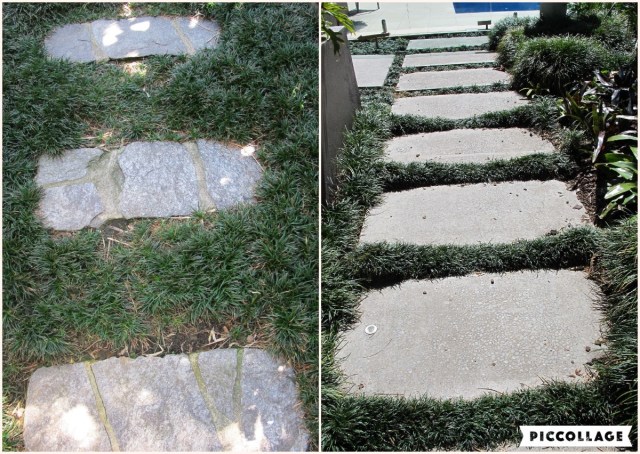
Planting around large pavers in mondo grass (Ophiopogon) gives a softer look that is really pleasing to my eyes. It is also one of the lower maintenance techniques because the mondo grass will choke out most weeds and it is extremely hardy, even to heavy foot traffic. Maintenance is just a matter of getting in and thinning it out when it starts to look too congested, which can be done with an old carving knife or a cheap flax cutter.
Wider pavers give a generous look befitting, even, to a main path to the front door.
When we last lived in a city – and I admit that was loooong time ago – we walked. A lot. It was pre-children so we probably had a lot more time on our hands. Walking in a city is a great way to get ideas, to see what is growing successfully and what is not, to influence your likes and dislikes and to look for alternative ways to accommodate modern life and vehicle dominance without damaging the environment. I don’t think many of us saw drainage as being one of the more confronting aspects of climate change.
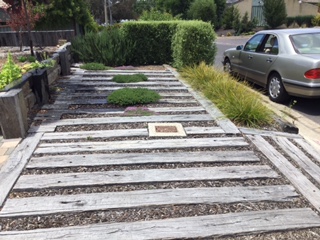
Reader Susan has kindly sent this photo of another design that combines functionality with both drainage and aesthetics. Those are railway sleepers filled with coarse woodchip. Fine woodchip runs the risk of either compacting in some conditions or simply floating away in a flood to block stormwater drains.
 Tikorangi The Jury Garden