
- The Living Art bonsai fraternity will be at Cedar Lodge Nursery on Egmont Road this Sunday from 10am to 4pm and are keen to share their knowledge and enthusiasm with anybody interested in learning more. Some might style this hobby as occupying the bondage and discipline sector of the gardening world and there is no doubt that the skills are highly specialized so it helps to learn from people who know what they are doing.
- You are running out of time for moving large plants. They need time to settle in and make some fresh root growth before the heat of summer starts. Take as large a root ball as you can manage and prune back the top to reduce the stress on the plant. Make sure you dig a deep enough hole to replant, ensuring that the level of the plant remains the same but no deeper than it was.
- September is nearly here and that is the big time for planting the summer vegetable garden. If you haven’t yet dug your green crops in, do it this very weekend so the process of breaking down in the soil can be well underway before you want to plant.
- Learning to grow vegetables from seed can save you a great deal of money as well as extending the range of different varieties you can grow. Some seeds, such as carrots, peas, onions, beet and lettuce can be sown directly into the position where they are to grow. Others, particularly tomatoes, melons, cucumbers, aubergines and pretty much anything exotic or needing a long growing season are started in seed trays or small pots for planting out later in the season. Egg cartons can be a useful quick turnover seed tray and, like the cardboard core of toilet rolls or even newspaper folded into tubes mean that when the seed has germinated and put on some growth, you can plant out the whole item without disturbing the roots. The temporary pot will decompose very quickly in the soil but keep this technique for germinating quick turn over crops such as lettuce, cabbage or bok choy.
- If you haven’t got a copper spray onto your deciduous fruit trees yet, do not delay. You want it done before bud break and that is imminent.
- Further to the article on growing apple trees at home by Glyn Church in the Taranaki Daily News last week, I have been looking at control of codling moth, the single most troublesome pest we have for apples. The short answer is that there is too much information to summarise in brief. If you are organic, Hort Research have been doing a lot of work on organic controls which you can find easily on the internet. There are no one-step answers – the pheromone traps need to be used in conjunction with other measures. The collar of corrugated cardboard around the main stems is not a stand-alone technique. If you had a problem last year and didn’t do anything, it will get worse this year. This is why we will be resorting to spraying this year, to try and break the cycle after a decade of total neglect which has allowed numbers to build up. Springtime is when you need to start the fight against codling moth.
Tag Archives: in the garden this week
In the Garden: August 20, 2010
- The season of panic for gardeners is nigh. The slow moving cold days of winter are over and the rush of spring means the pressure is on to get everything done. Priority number one has to be pruning grapevines if you have them – their sap is on the move already. If you are not sure what you are doing, our Outdoor Classrooms on the topic (both winter and summer pruning) show how – click on the Outdoor Classroom topic to the right or type into the search box immediately below the photo of yours truly on the top right.
- Kiwifruit are pruned in a similar manner to raspberries – take out old fruiting canes and weak growths, leaving the best of last season’s new growth to set fruit for next season. It is usual to tie kiwifruit along horizontal supports to increase crop yield and to keep them under control.. We saw them trained to cover pergolas in northern Italy where they were regarded as rather more exotic than here. They were very effective and we are thinking of trying it.
- Keep sowing peas fortnightly and sow onions from seed.
- Get a mulch onto the asparagus patch if you are lucky enough to have one. It is the optimum time for feeding this crop as it breaks dormancy and comes into growth.
- It is the last call for using hormone sprays on the lawn, if you feel you must. After this next week or so, put the spray right away to back of the cupboard until all deciduous plants in your own and your neighbours’ gardens have put on their fresh foliage later in spring. You can cause terrible leaf damage which can last until leaf drop next winter, or even kill the plant in bad cases, with even the slightest whiff of spray drift at the wrong time.
- It is the time for digging and dividing spring and summer perennials which will be coming into growth.
- Do not delay on sowing new lawns or patching balding old ones. The lawn we showed in the last Outdoor Classroom is now a pleasing swathe of green though still very fresh.
- Apparently the use of Cold Water Surf as a moss killer is widely known, judging by the calls I received after last week’s Countdown to Festival. And it is quick – I tried it on a mossy path and within three days it had turned brown. Don’t be too generous lest you be like the person who told me she laid it on so thick that her lawn foamed when it rained. Another caller told me it does not have to be CWS – any washing powder will do so I have bought the cheapest I can find to experiment. Be a little cautious though – it will either be the alkaloids or the phosphates or something caustic that causes the moss to die. In moderation, septic tanks show these are not a problem but you probably don’t want to carpet your environment in them. Vinegar also works.
In the Garden: August 13, 2010
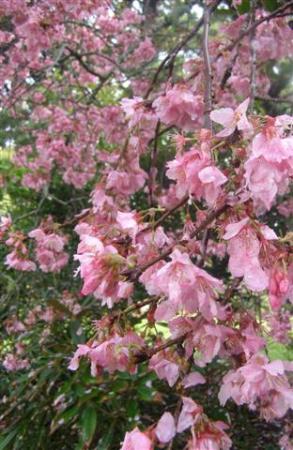
Prunus Pink Clouds - bringing in the tuis
• Spring has certainly made her presence felt this week and our tui have returned to the flowering cherries, including one distinctive golden brown tui in its third season here. It is the campanulata or Taiwanese cherries in flower at this time which attract the native nectar feeders. Try and buy sterile, named forms if you are planting them because some can seed too freely.
• With the warmer weather, there will be an explosion of germinating weed seeds so be vigilant and try and eradicate this crop before they get established and seed further. Spreading a thick enough layer of mulch will suppress weeds as well as retain moisture levels for when drier weather sets in but lay your mulch after you have done a weeding round, not on top of existing weeds.
• Slugs and snails are also getting more active. If you are looking for alternatives to poisonous baits, you can try baker’s bran in reasonably thick circles or mounds (irresistible to the slimy critters who then get picked off by the birds). Alternatively, ring plants in sand, grit or masses of crushed egg shell – it is not bullet proof but it helps discourage them. Or make traps from the time-honoured hollowed out orange skin or half empty cans of beer – but you do have to go round and squash them after you have encouraged them to congregate. Getting out with a torch at night, especially after rain, can show up quite a number of them too.
• Spare a thought for permanent container plants. They need their potting mix replaced every two years and they need feeding at least once a year in spring. You may need to hose all the old mix off the roots and trim the roots to fit back into the same pot. It is less stressful to the plant to do it now rather than when it starts to look very sad in summer.
• I read a hint in a gardening magazine to trample down green crops before you dig them in to the vegetable garden. The crushing process hastens the breakdown. It seems to make good sense. Get onto digging in any green crops without delay.
• If you still plan to plant fruit trees this season, get right onto it now. The sooner they go in, the better chance they have of getting established. The same applies to all trees and shrubs for the ornamental garden.
• And a bouquet this week to Todd Energy who have started the process to put in screening plantings to block their Mangahewa-C well site from public view. Living as we do in green countryside peppered with ugly, albeit small, industrial sites, we applaud this new move and hope that other energy companies will follow the lead. These sites can be rendered almost invisible to ground level view by simple plantings but it has taken a long time before one company has decided that this is an appropriate priority. By planting the right species, they can contribute to the environment as well.
In the Garden: Friday August 6, 2010
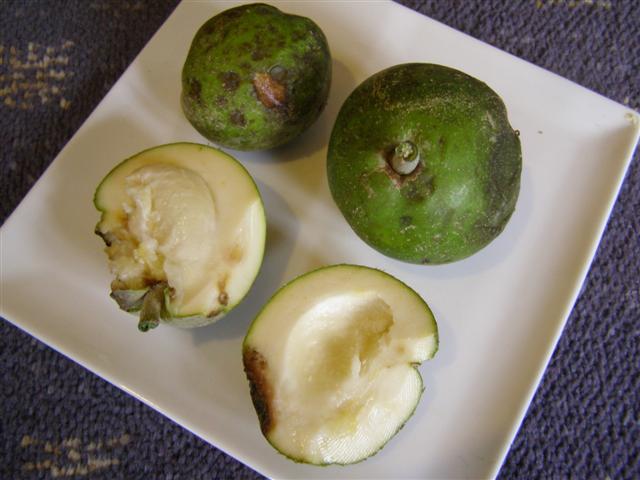
We are harvesting our white sapotes now
- If you can grow orange trees or avocados, you may like to try the white sapote or casimiroa edulis – an exotic taste of Mexico whose fruit ripens at this time of the year. I would describe it as a cross between vanilla icecream and creamy custard in flavour and texture. It will tolerate light frosts only but you can get a good crop in our coastal areas and it is an attractive plant, tropical in appearance.
- In case you are wondering after looking at our Outdoor Classroom this week, Mark sowed a rye and fescue grass seed mix for our lawn. He also added microlina – a fine native grass which he tries to encourage, for which he harvests his own seed. There are experts in grass seed mixes around if you wish to seek out good advice. Turf rye appears to be a good option for shady lawns but sandy lawns (which turn brown in summer) remain problematic if you don’t want to use kikuya.
- Esteemed colleague Glyn Church advised last year that all winter pruning should be finished by the time birds start nesting. Some readers may need to start panicking – it is clear that the birds are gathering nesting materials here and our first clutch of ducklings is imminent. Give grape vines and kiwifruit priority if you have them. Their sap starts to run early.
- If the tastes of Italy are what you covet, you can get Franchi seeds mailorder from Italian Seeds Pronto – the catalogue is available at http://www.italianseedspronto.co.nz or you can buy seeds off the shelf at Vetro or Fresha. These are large packets of seed with plenty to share and a range of Italianate goodies which go beyond the common tomato, capsicum and lettuce varieties.
- Keen veg gardeners will be champing at the bit to prepare the ground for planting out (dig in green crops and start cultivating the ground) and sowing seed in trays or pots to keep under cover in order to get an early start in a few weeks time. You don’t gain anything by trying to get summer seed sown or plants out before the soils have had a chance to start warming up and the risk of frost is past. If you really want to try and push the pace, get a cloche or build a cold frame from old windows. However, carrots, onions, parsnip, beetroot, peas and brassicas don’t mind the cold if you want to be out sowing and planting. Get early crop potatoes in now – by the time they come through in three weeks time, you can mound them over to protect them from late frosts.
- We gave the All Round Bad Idea of the Week Award to the recommendation in a national gardening publication that your wheelie bin makes a great container for growing potatoes (just drill holes in the bottom first, we are advised). Not only do few of us actually own our wheelie bin, as a container for growing potatoes it is miles too deep, will take far too much dirt or potting mix and that doesn’t address how one is supposed to get the harvest out from the bottom later in the season. If you can’t grow them in the ground, try stacks of tyres though why anybody would prefer to fiddle with potatoes in containers eludes us.
In the Garden: July 30, 2010

The low tech slug bait station
- The official start of spring may be another month away but gardeners know that it really starts earlier than that and we can expect significant warming of temperatures in August. This means the pressure is mounting to finish winter pruning. You really do want it done before September and time will run out all too soon. This refers to the usual candidates: grapevines, raspberries, apple and pear trees, hydrangeas, roses, wisteria, hybrid clematis, sasanqua camellias, rhododendrons and most deciduous plants.
- As you complete the winter clean-up round, it is the optimum time for getting fertiliser and mulch laid. Plants will leap into growth soon and that is the time when you see maximum uptake of fertiliser. Laying a good layer of mulch will greatly reduce the spring weed infestation if you do it properly (covering the whole area to a depth of 4 to 6cm). In areas prone to drying out over summer, the mulch layer will conserve moisture levels.
- September will signal the start of the busy planting time for summer vegetable crops. If you were good and sowed down bare areas in autumn green crops, you should be starting to think about digging these in. We are still cold and you need to allow six weeks for the crop to break down in the ground before you start planting again. This means you can be using the ground about mid September.
- If you have already sown early potatoes, keep mounding up the soil around the shoots as they grow (commonly referred to as earthing up). This helps the soil to warm up faster, encouraging more growth, kills the weeds and gives some measure of frost protection to the tender shoots. Early potatoes need every helping hand you can give them and particularly to be given protection from frosts (which means you can’t plant them inland yet).
- Keep an eye on slug and snail attacks on emerging bulbs. I found a treasured spring crocus which I don’t think was meant to have frilled edges to each bloom. Don’t broadcast slug bait like fertiliser. One bait can kill many. Our practice is to establish little bait stations where necessary – a screw top lid from a milk container with a couple of baits and a large shell semi covering it. The shell looks unobtrusive and keeps the bait dry while allowing the varmints in to feed. Don’t forget that slug bait has an attractant in it so you don’t need to carpet the ground so thickly that they trip over the stuff.
- Heavy lichen infestations on plants can be unsightly but rarely poses a threat to plant health. Lichen growth is an indication of very pure air (lichens are one of the first organisms to succumb to pollution). If it worries you, you can do a clean-up spray with copper or lime sulphur. If you are using the latter, keep it to deciduous plants in winter and cover any plants below with a tarpaulin so that they do not get damaged or killed.
 Tikorangi The Jury Garden